

Shares may move sideways before inflation report

PHILIPPINE SHARES may move sideways as trading resumes after a two-week break as investors weigh geopolitical risks and domestic March inflation data that could reflect the initial impact of the Iran conflict on the economy.
On Wednesday, the Philippine Stock Exchange index (PSEi) rose by 0.83% or 49.74 points to close at 5,998.68, while the broader all shares index went up by 0.59% or 19.68 points to end at 3,353.60.
Week on week, the PSEi went up by 25.85 points from its March 27 finish of 5,972.83.
Philippine financial markets were closed on April 2 and 3 in observance of Holy Week.
“Hopes for potential de-escalation of the Middle East conflict placed gauges on positive terrain as sentiment glided with US markets,” 2TradeAsia.com said in a note.
“Hopes that the war in the Middle East would end soon fueled the local market to a positive close last week. With this, the bourse was able to snap its four-week losing streak,” Philstocks Financial, Inc. Research Manager Japhet Louis O. Tantiangco said in a Viber message. “However, it still fell short of closing above the 6,000 line.”
For this week, he said sentiment may remain weak amid lingering uncertainty over the war involving the United States, Israel and Iran. “The US’ military threats towards Iran which risk further escalation of the conflict cast doubts on the former’s claim that the war would end in two to three weeks.”
“On the other hand, encouraging developments with respect to the Strait of Hormuz including: the Philippines’ safe passage through the Strait as granted by Iran; the discussion of around 40 countries of means to reopen the Strait; and Iran and Oman’s drafting of a protocol to monitor traffic in the Strait, may give the market relief.”
Mr. Tantiangco said investors are also expected to monitor the release of Philippine inflation data on March scheduled for Tuesday (April 7), as this could provide a look into how the Middle East conflict is affecting the economy.
A BusinessWorld poll of 18 analysts yielded a median estimate of 3.8% for the March consumer price index in March, faster than the 2.4% in February and 1.8% a year ago. This is within the Bangko Sentral ng Pilipinas’ (BSP) 3.1%-3.9% forecast for the month and 2%-4% target.
Mr. Tantiangco said the PSEi’s support is still pegged at 5,800, while resistance remains at 6,000.
For its part, 2TradeAsia.com placed the PSEi’s immediate support at 5,800, resistance at 6,050, and secondary resistance at 6,300.
“At home, the oil crisis continues to bite hard and fast… Headline inflation and BSP policy risks have ticked higher on the back of the shock; we maintain that the central bank’s room for maneuver is more constrained versus last year, making stimulus from that end supplementary at best,” it said.
“With demand destruction from elevated pump prices compounding supply-side pressures that cascade into grocery shelves and services, expectations are set for this summer season to post the weakest consumption and output figures since the pandemic.” — Alexandria Grace C. Magno
UST grabs solo third at UAAP 88 women’s volleyball tournament

Games on Wednesday
(Mall of Asia Arena)
9 a.m. – Ateneo vs UP (Men)
11 a.m. – FEU vs DLSU (Men)
1 p.m. – Ateneo vs UP (Women)
3 p.m. – FEU vs DLSU (Women)
UNIVERSITY of Santo Tomas (UST) handed University of the East (UE) its 25th straight loss, 25-21, 26-24, 25-20, and shored up its final four drive in the UAAP Season 88 women’s volleyball on Sunday at the UST Quadricentennial Pavilion.
The UST Golden Tigresses survived a second-set meltdown to notch their fifth win in the last six games, slowly but surely peaking at the right time with a 7-4 slate, including a 3-0 record at home as the UAAP’s alternative venue since last season for basketball.
With a crucial streak entering the last three games, Santo Tomas momentarily seized solo third spot to stay in the thick of the race of a twice-to-beat incentive in the semifinals.
Top MVP contender Angge Poyos fired 17 points on 14 hits, two aces and a block laced by nine digs and six receptions for yet another all-around brilliance.
Cassie Carballo provided 17 sets as Regina Jurado added 11 points while Avril Bron (8), Blessing Unekwe (6) and Xyza Gula (5) chipped in key contributions for the wards of coach Shaq delos Santos, the author of Santo Tomas’ last UAAP title in 2010.
But the Golden Tigresses are far from satisfied, staying hungry to snatch the win-once edge from reigning champion National University (NU), ahead of its vital encounter against Adamson University this Saturday.
That resolve was on full display in the second set as Santo Tomas recovered from wasting a massive 24-15 gap.
After allowing a deuce as UE launched a staggering 9-0 rally, Shania Olmoguez served an ace before Ms. Bron finished it off with a kill block as the Golden Tigresses coasted to a sweep in the third set.
Khy Cepeda (17) and Bea Zamudio (12) led the way for the also-ran UE Lady Warriors, who slid to 0-11 entering another tall order to snap a long skid since last season against NU this Sunday at the same venue.
In the men’s division, Santo Tomas (7-4) eliminated UE (1-9), 22-25, 25-15, 25-19, 25-23, and firmed up grip on the third spot behind the 25 points of two-time MVP Josh Ybañez. — John Bryan Ulanday
Alex Eala and Iga Swiatek had joint workout at Rafael Nadal Academy ahead of clay season

FILIPINA pride Alexandra “Alex” Eala and Polish ace Iga Swiatek reunited over the weekend in Spain ahead of their much-awaited campaigns in the clay season.
Both products of the Rafael Nadal Academy (RNA), the two tennis stars had a joint workout at their headquarters in Mallorca before trooping to Austria and Germany for the start of the clay season, which is considered as Ms. Swiatek’s pet surface with four French Open titles.
“Feels like yesterday, do you remember the last time?” said Mr. Nadal’s academy, also sharing the 2023 throwback photo of Mses. Eala and Swiatek.
Ms. Swiatek served as the guest of honor and speaker in Ms. Eala’s graduation from the tennis school of the Spanish legend back in 2023.
“Still can’t believe I have this picture with you,” added Ms. Eala, who arrived in Austria on Sunday, on the flashback photo of RNA along with their recent encounter. Ms. Eala, after reaching a career-best No. 29, in the Women’s Tennis Association (WTA) rankings, has slipped to No. 45 while Ms. Swiatek also slid to No. 4 from No. 3 ahead of the clay season.
The first order of business for the 20-year-old Ms. Eala is the Upper Ladies Linz Open in Austria, which the 24-year-old Ms. Swiatek however is skipping.
It will serve as Ms. Eala’s debut in Austria albeit the official draw for the main tourney is yet to be released pending the ongoing qualifiers.
Both will share the court in Germany for the Porsche Tennis Grand Prix in Stuttgart, Germany on April 13 to 19 and the Mutua Madrid Open in Spain on April 21 to May 3.
The Madrid Open last year served as the most recent duel between the two with Ms. Swiatek exacting vengeance on Ms. Eala, 4-6, 6-4, 6-2.
Ms. Eala months before stunned Ms. Swiatek, then world No. 2, with a 6-2, 7-5 win in the Miami Open quarterfinals for a magical final four finish from being a wildcard qualifier.
That served as Ms. Eala’s breakthrough moment to enter the Top 100 with 390 additional points and qualify as direct entries to the WTA 1000 and Grand Slam tournaments
Ms. Eala, however, failed to protect those ranking points this year with only a Last 16 finish in Miami that prompted her fall in the rankings.
The two could have played in a trilogy in the third round of the Miami Open but Ms. Swiatek absorbed a 1-6, 7-5, 6-3 defeat to compatriot Magda Linette.
Mses. Eala and Swiatek are expected to figure in more tournaments leading up to the Roland Garros on May 18 to June 7 in Paris. — John Bryan Ulanday
Letran stuns College of St. Benilde in thrilling game one of NCAA women’s volleyball finals

A NEW era is fast emerging while a dynasty is crumbling in NCAA women’s volleyball.
And that new order could be Colegio de San Juan de Letran, which stunned reigning five-peat champion College of St. Benilde, 17-25, 25-23, 20-25, 25-14, 15-11, on Easter Sunday titular showdown at the Rizal Memorial Coliseum to move on the cusp ruling NCAA Season 101 and ending the latter’s long reign.
The Letran Lady Knights were unrelenting in essaying an epic comeback win that gave it a 1-0 lead in their short but sweet best-of-three series that resumes on Wednesday at the same historic Manila venue.
A decider, if necessary, is on Friday.
“We really prepared hard for this and preparation and plans worked in this game,” said Letran coach Mayeth Carolina, who was interestingly an integral part of the pontifical school’s last NCAA crown 27 years ago.
Judiel Nitura unloaded 21 points including a pair of service aces in the deciding set that helped Letran erase a 10-8 deficit and snare the Game One triumph.
“I just told myself when I was on the service spot that it’s now or never and I have to help finish it,” said an emotional Ms. Nitura.
She did. — Joey Villar
Tight and exciting race seen in 2026 MPTC Tour of Luzon — Dolosa

A BATTLE.
That was how Renato Dolosa, a two-time champion of the fabled Marlboro Tour, described the 2026 MPTC Tour of Luzon (ToL), which is set April 29 to May 14 from Calatagan, Batangas to Baguio City.
“Look at the difference in prizes between the champion and the runner-up, that’s a lot to fight for to the end,” said Mr. Dolosa, now a road race commissaire of the ToL.
The legendary cyclist then known as the “Sorsogon Cyclone” was, of course, referring to the disparity of the champion’s purse worth P1 million and P2 million for the individual and team winners from the individual and team runners up amounting to P500,000 and P1.5 million, respectively.
Mr. Dolosa, of course, knew how intense the competition was after he won his two Tour crowns and the P500,000 — the biggest prize in the history of the annual summer spectacle back then — that went with a brand new car.
Arrey Perez, chief organizer and chief executive officer, agrees.
“Expect the battle for victory to rage on until the checkered flag waves,” he said. “With the peloton neck-and-neck, every pedal stroke counts, and only the strongest will claim the top spot.”
“The race is expected to be tight and exciting to the very end,” he added.
The third-placed rider gets P400,000; fourth P300,000; fifth P250,000; sixth P200,000, seventh 175,000; eighth P150,000; ninth P125,000; and 10th 100,000 while team prize breakdown for third to 10th place are pegged at P1,000,000, P500,000, 400,000, P300,000, 250,000, P200,000, P150,000 and P100,000, respectively.
Other prize breakdowns were P350,000 for the Eagle of the Mountain (polka dot jersey wearer), P300,000 for Sprint King (green), P200,000 for Best Young or Under-23 Rider (white), P10,000 for stage winner (violet), P3,000 for Most Combative (red) for 11 selected stages and P15,000 each stage for the leader’s or yellow jersey wearer. — Joey Villar
Karl Eldrew Yulo eyes second gold at gymnastics World Cup Series

KARL ELDREW YULO continued to preserve family tradition as he earned a second apparatus finals seat in the horizontal bar of the FIG Artistic Gymnastics World Cup Series in Cairo, Egypt on Sunday.
The 18-year-old younger brother of Olympic and world champion Carlos was third among the eight finalists after registering a score of 13.466.
Another Filipino in Juancho Miguel Besana missed the cut after winding up 10th with a 12.233.
The day before, Mr. Yulo made the floor exercise finals after winding up fifth in the qualifying round with a 13.900.
The horizontal bar finals is set Monday while the floor exercise was being played as of this writing.
Mr. Yulo was hoping to snare a second gold after capturing one in floor exercise in Antalya, Turkey last month. — Joey Villar
Lakers sans Dončić

For much of the season, Luka Dončić had been both relentless and inevitable. As the National Basketball Association’s (NBA) scoring leader and perennial triple-double threat, he was not merely producing; he was dictating terms. Naturally, the Lakers reconfigured to take full advantage of, and around, his gravitational pull. And then, just when the promise of a deep run in the postseason seemed to solidify, disappointment dampened the proceedings. A left hamstring, strained and then aggravated, has sidelined him indefinitely, in the process clouding the immediate future for the purple and gold.
The injury itself is not uncommon. What complicates matters for the Lakers is the timing. Dončić had already managed a similar strain earlier in the season, missed a handful of games around it, and, in a decision that has been pegged as ill-advised in retrospect, returned to play through discomfort against the Oklahoma City Thunder late last week before ultimately yielding to a more severe Grade 2 strain. The prognosis, even by conservative accounts, stretches into weeks rather than days. And because he both averages north of 33 points and anchors just about everything else on offense, his absence is debilitating.
There is, of course, the matter of recognition as well. The league’s 65-game minimum, intended to restore integrity to awards voting, now looms over Dončić’s 2025-26 run. At 64 contests played, he falls just short, prompting a definite appeal to consider the game days he missed for the birth of his child as “extraordinary circumstances.” It may be a mere technicality, but it is also emblematic of the ongoing league-wide tension between availability and excellence. That a season of such sustained brilliance could hinge on a single appearance underscores how rigid frameworks can, at times, discount the value of nuance.
For the Lakers, the implications are more immediate and less philosophical. Championship odds have already swooned, sharply and unsentimentally, in response to the injury. The offense, so dependent on Dončić’s orchestration, must now redistribute responsibility across a roster that, while capable, was never designed for democratic burden-sharing. LeBron James, still productive deep into his career, becomes the axis once more. Although by necessity, the all-too-familiar reversion speaks as much to his durability as to their deliberate dependence on singular brilliance. The margins, already thin in a competitive Western Conference, grow thinner still.
In the grand scheme of things, the development is neither unprecedented nor surprising. The NBA calendar, compressed and exacting, has a way of extracting its cost, often from those who give the most. What lingers is not simply the injury, but the interruption of momentum; a season of seeming destiny must now be reassessed in real time. The Lakers will proceed by adjusting schemes, redistributing touches, in a constant, and perhaps ultimately fruitless, search for equilibrium. Through it all, Dončić’s absence will cast a long shadow. And so comes the obvious question with the obvious answer: Can they still truly contend for the hardware? At this point, it’s up to them to prove conventional wisdom wrong.
Anthony L. Cuaycong has been writing Courtside since BusinessWorld introduced a Sports section in 1994. He is a consultant on strategic planning, operations and human resources management, corporate communications, and business development.
‘Emerging’ target for excise tax set at P359.06 billion
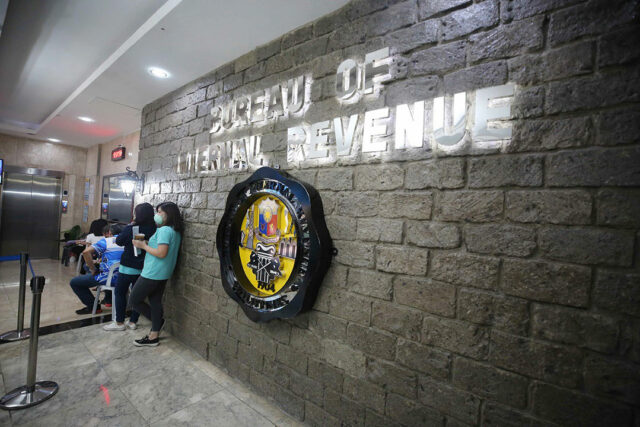
THE Bureau of Internal Revenue (BIR) said the emerging goal for excise tax collections this year is P359.06 billion, lower than the target set under the Budget of Expenditures and Sources of Financing (BESF) for 2026.
In Revenue Memorandum Order No. 9-2026 released last week, the BIR said that the emerging goal is 0.16% lower than the P359.65 billion set in the BESF.
The order was issued to spell out the specific collection goals of the Large Taxpayers Service (LTS) and the Revenue Regions after the BIR’s overall collection target was revised to P3.43 trillion in the 192nd Development Budget Coordination Committee (DBCC) meeting in December.
This emerging goal is 4.15% lower than the P3.58-trillion collection goal set out in the BESF.
The BIR clarified that the BESF-based collection goal will remain the official revenue target of the BIR for the purposes of complying with the Attrition Act of 2005.
“The emerging collection goal will serve as the operational benchmark for agency performance measurement, cash management, budget execution, and mandated reporting to stakeholders, unless instructed otherwise by the DBCC or the Department of Budget and Management,” it said.
Of the total excise tax goal, P357 billion was directly assigned to the LTS, of which P172.49 billion was to come from tobacco products.
Excise taxes from alcohol products are expected to amount to P128.62 billion, while excise taxes from sweetened beverages and mining are expected to total P38.47 billion and P11.27 billion, respectively.
Excise taxes collected from automobiles are expected to amount to P5.75 billion, with taxes from miscellaneous products totaling P354 million.
Meanwhile, collections of excise taxes from cosmetic procedures and tobacco inspection fees are projected to hit P25 million and P8 million, respectively.
The remaining P2.06 billion of the total emerging goal for excise taxes was distributed among the revenue regions and is largely based on their respective actual collections from mining. — Justine Irish D. Tabile
Food, beverage industry seen growing 5% in 2026

THE Philippine food and beverage manufacturing sector is projected to grow by about 5% this year, driven by the strong performance of leading manufacturers, the US Department of Agriculture (USDA) said.
In a report, the USDA’s Foreign Agricultural Service (FAS) in Manila said the industry’s growth will be supported by ongoing expansion in food manufacturing and government measures aimed at easing logistics and fuel costs.
“Local governments are easing logistics costs by suspending port and toll fees, subsidizing public transport drivers, monitoring fuel and consumer prices, and enforcing excise taxes on gasoline companies,” it said.
The FAS said food and beverage manufacturing sales are expected to rise despite higher electricity, logistics, and raw material costs, with leading manufacturers continuing to post solid performance.
However, the report said headwinds include rising production costs, food price inflation, and weaker remittances from overseas Filipino workers, which may constrain household budgets and dampen consumer spending.
The report noted that evolving consumer preferences are also shaping product development across the sector.
“Demand is growing for natural, wholesome ingredients, such as whole grains, nuts and seeds, legumes, and less processed, healthier snacks and beverages,” FAS said.
Products with high-protein claims, including milk and energy drinks, as well as those containing functional ingredients that deliver health benefits, are gaining traction among consumers, it added.
The FAS also said there is increasing interest in ingredients catering to specific dietary preferences, including low-sugar, vegan, plant-based, and non-dairy options.
Meanwhile, it said retailers are expanding private-label or house-brand offerings, including more products in larger, industrial-size formats suited for households and food service operators such as restaurants, hotels, and catering businesses.
To remain competitive in the face of rising costs, manufacturers are also shifting to more cost-effective packaging formats to keep prices affordable and appeal to increasingly price-sensitive consumers, the report said. — Vonn Andrei E. Villamiel
70 more local government units expected to automate permit systems

THE Anti-Red Tape Authority (ARTA) said it hopes to enroll 70 more LGUs (local government units) in its electronic business one-stop shop (eBOSS) system this year.
“Our conservative target is about 70 additional LGUs… it can be more depending on how fast we can be in revising the joint memorandum circular (JMC),” ARTA Director General Ernesto V. Perez told reporters last week.
To date, 127 LGUs have fully automated their registration processes, while about 700 are “partially automated.”
The agency is targeting all 1,642 LGUs to be fully eBoss compliant by 2028.
In the National Capital Region, all LGUs except Pateros City are fully compliant, Mr. Perez said.
ARTA is also looking to resolve issues on integrating the Bureau of Fire Protection’s (BFP) system in eBOSS, Mr. Perez noted.
ARTA signed a JMC with the departments of Interior and Local Government (DILG), Information and Communications Technology (DICT), and Trade and Industry (DTI), which sets guidelines on streamlining LGU systems for business and non-business-related services.
“Hopefully, we can revise the JMC among DILG, DICT, ARTA, and DTI to address, particularly, the issue of the BFP,” he said.
“We have (BFP’s) commitment; it’s just a matter of implementing it,” Mr. Perez said, noting that the agency aims to resolve the issues by June 30.
Republic Act No. 11032 or the Ease of Doing Business and Efficient Government Service Delivery Act requires all LGUs to set up an eBOSS.
An eBOSS is an online portal that enables the end-to-end processing of government services, such as the application and issuance of local business licenses, clearances, and online payments.
JMC No. 1, Series of 2021 considers LGUs “fully compliant” if they adopt the core eBOSS features.
These include the electronic submission of applications; online uploading of documents, digital payment systems; and issuance of electronic tax bill or tax order of payment.
“Once this issue is properly addressed, we’ll have a sharp increase in the number of LGUs that are compliant withe eBOSS,” Mr. Perez said. — Beatriz Marie D. Cruz
Competitive retail electricity market participants save P4.23B in 2025

POWER CONSUMERS in the competitive retail electricity market (CREM) saved about P4.23 billion last year compared to those still captive to their distribution utilities (DUs), according to the Philippine Electricity Market Corp. (PEMC).
In its annual retail market assessment report, PEMC said the savings were primarily driven by industrial consumption and the spike in generation rates charged by DUs in April last year.
Industrial customers accounted for 61.8% or P2.62 billion of the total while commercial customers contributed the remaining P1.62 billion.
“As baseload-oriented users, industrial customers can capture more substantial savings when competitive retail rates are available,” according to the PEMC, the governance arm of the Wholesale Electricity Spot Market.
Through CREM, contestable customers can choose where to source their supply of electricity while captive customers are required to stay within their respective DUs for their power requirements.
In computing the savings, PEMC compared the monthly average CREM retail weighted rates with the average generation rates of the top five DUs by energy consumption for 2025.
The CREM remained relatively stable throughout the year, generally ranging from P5.3-P5.7 per kilowatt-hour (kWh). Meanwhile, the top five DUs showed greater variability during the period, with rates ranging from P5.44 to P6.29 per kWh.
PEMC said the 2025 data showed that CREM provides a relatively stable pricing environment, with rates that are “broadly competitive with traditional DU supply.”
“This stability suggests a more predictable cost profile for participating end-users, along with the flexibility to negotiate contract terms that better suit their operational needs,” it said.
The number of end-users registered for CREM increased from 1,837 in 2021 to 2,530 in 2025.
“The increase in CREM registrations suggests that more customers are exploring opportunities associated with retail competition,” PEMC said. — Sheldeen Joy Talavera
DTI exploring support for battery firm Nascent

THE Department of Trade and Industry (DTI) said it is exploring support for the potential expansion plans of battery technology firm Nascent Technologies Corp., as part of a broader effort to upgrade to higher-value exports.
In a statement, the DTI said it is considering assistance for pilot cell production lines and access to innovation-focused funding programs.
Nascent became the only Philippine-based company recognized in the Volta Foundation’s Annual Battery Report 2025, a global reference on battery technology.
The startup was featured in Volta’s “2025 Sodium-Ion Battery Players by Region” map. The global listing also features leading manufacturers like Contemporary Amperex Technology Co. Ltd (CATL) and BYD Co. Ltd. (BYD).
Nascent is the only company in Southeast Asia pursuing a full-cell sodium-ion (Na-ion) battery system, from materials and cell design to downstream applications.
Na-ion batteries are deemed a safer and cost-effective alternative to lithium-ion technologies.
The technology also promises extended lifetimes and lower carbon footprint compared to lead-acid SLI batteries, which are also less energy efficient.
Nascent was part of the Philippine delegation in The Battery Show Asia & Mobility Tech Asia 2025 last month in Hong Kong — where it reported potential business leads of over $1 million.
“Innovations such as those being pursued by Nascent are especially important given current global pressures on energy systems and supply chains,” Trade Secretary Ma. Cristina A. Roque said. — Beatriz Marie D. Cruz