Prolonged Iran war may push Philippine inflation past 8% — HSBC
By Justine Irish D. Tabile, Senior Reporter
HEADLINE INFLATION could surge past 8% this year if the Middle East conflict remains unresolved, which could push the Monetary Board to hike policy rates to up to 6%, the Hongkong and Shanghai Banking Corp. Ltd. (HSBC) said.
“We forecast full-year inflation to be 6.3%, where the peak will be in the fourth quarter at 8.1%, driven not mostly by energy but by food,” HSBC Senior ASEAN (Association of Southeast Asian Nations) Economist Aris D. Dacanay said at a briefing on Tuesday.
This forecast assumes an adverse scenario where the conflict persists up until the end of June or early July this year.
Next year, HSBC expects inflation to average 4.5% under the same scenario.
The Bangko Sentral ng Pilipinas (BSP) expects the consumer price index (CPI) to average 6.3% this year and 4.3% in 2027, it said last week. Both are above its 2%-4% tolerance band.
In March, inflation quickened to a two-year high of 4.1%, bringing the three-month average to 2.8%. The BSP sees the CPI remaining above 5% for the rest of the year.
With the inflation outlook deteriorating due to the war, the central bank’s policy-setting Monetary Board last week raised the target reverse repurchase rate by 25 basis points (bps) to 4.5%.
BSP Governor Eli M. Remolona, Jr. said more hikes are possible as they want to temper spiraling consumer prices.
“I think if things remain at status quo, and again, the conflict persists up until June or July, I think the BSP, given its mandate of price stability, can raise rates to up to 6%,” Mr. Dacanay said.
This would mean that the tightening cycle could extend to next year as the Monetary Board has only four more policy meetings scheduled for the rest of the year and they only expect the BSP to raise rates by 25 bps at a time, with a jumbo 50-bp cut unlikely unless there is a surprise shock.
“We have to understand that the Strait of Hormuz is not only putting a cap on the global supply of energy; if you have oil, you also have fertilizer… and urea prices have already doubled since then,” Mr. Dacanay said.
A third of seaborne-traded fertilizer in the world goes through the Strait of Hormuz.
“We are talking about a global shortage of fertilizer, which will affect not the food supply now, but the yields of the food supply maybe perhaps in three or six months’ time,” he said.
“It is the second wave of inflation that we need to anticipate. I do have to say though that the Philippines is the most vulnerable here.”
The Philippines is the largest net importer of food as a percent of gross domestic product (GDP), and Filipinos spend a big part of their incomes on food. At the minimum, HSBC projects food inflation will be at 8%, Mr. Dacanay said.
Faster inflation will also threaten domestic consumption, a key economic growth driver.
He cited the BSP’s latest Consumer Expectations Survey, which showed that Filipinos have started tightening their belts, even for essentials.
“They are cutting back spending altogether, and the percent of households who said that they saved during the current quarter rose to around 56-57%, which is higher than pre-pandemic levels,” he said.
“A lot of consumers… are now trying to save up more to be able to insure themselves from the uncertainties ahead. And this, I think, is a leading indicator that consumption will be on a weaker footing this year and the next.”
HSBC forecasts the Philippine economy to grow by less than 3.4% this year under the adverse scenario, well below the government’s 5%-6% target. Next year, it expects growth to rebound to 4.1%, still below the 5.5%-6.5% goal.
INTERVENTIONS
Mr. Dacanay said the government should implement measures to reduce the war’s impact on consumer costs, particularly the main staple, rice.
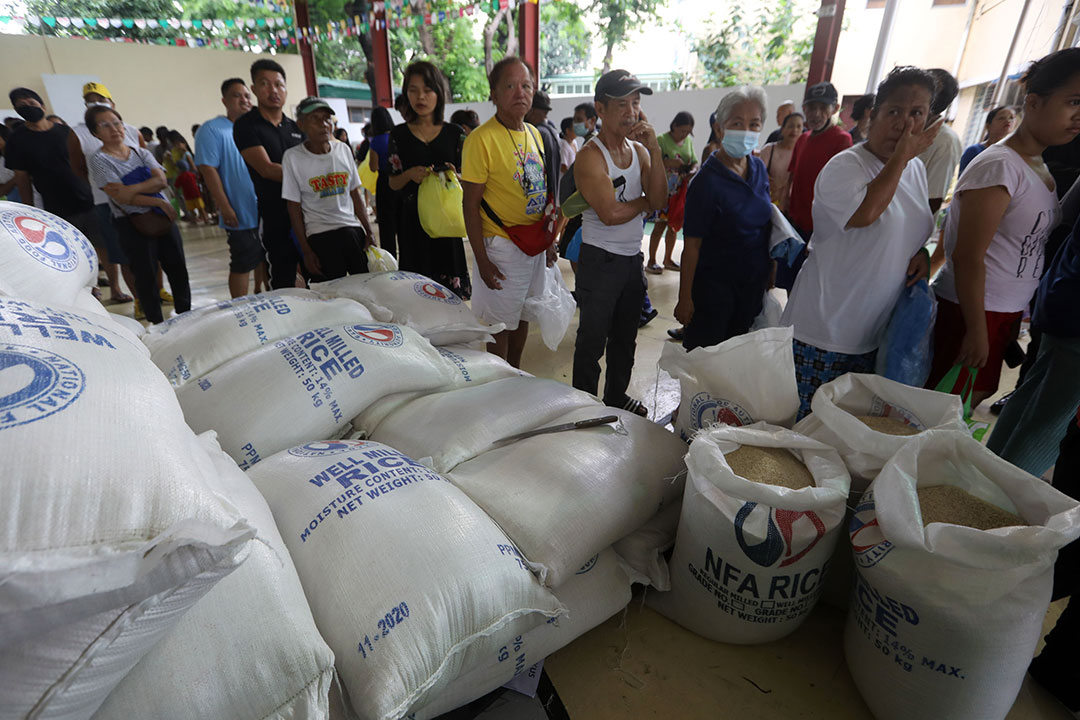
Rice prices continued to jump in March, bringing inflation for the staple grain to 3.6% from -3.4% in February. This was the first time since December 2024 that rice inflation settled in the positive territory or when it stood at 0.8%.
“The fertilizer shock has not hit the Philippines yet, but as we speak, a kilogram of rice is at P47. That is the highest, or it matches the highest in history,” he said.
“I do think certainty in rice policy can help temper prices in the retail rice market. And that would be a huge, huge inflation relief for the 113 million Filipino consumers.”
In particular, he said the government should look at lowering the tariffs on rice, as bringing rice prices back to P40 can shave off 50-75 bps from HSBC’s rate hike forecasts and shave off 1.5 percentage points from inflation.
“I also think that there’s a lot of room that can be managed when it comes to the restaurant industry. Right now, at 4.1%, one of the highest drivers of inflation is the restaurant business,” he said.
Rising fuel prices and dwindling reserves have pushed the government to place the country under a one-year state of energy emergency and suspend levies on kerosene and liquefied petroleum gas.
Mr. Dacanay added that the government can also extend the suspension on excise and value-added taxes (VAT) on diesel and gasoline.
“I think there is room to suspend excise taxes and even VAT if and only if there are clear conditions of the policy returning eventually,” he said.
“I think (the suspension of) excise taxes and VAT can deliver relief and some extent of disinflation, but we need to consider the tradeoffs.”