ABOITIZ InfraCapital, Inc. said the ongoing Middle East conflict is expected to have minimal near-term impact on its airport business.
“We’re actually cautiously optimistic for this year… Despite the war, I think because tickets have been purchased already, the impact [on] the top line will be minimal. But we are hoping that the war will end so that it will continue in the second half,” Aboitiz InfraCapital President and Chief Executive Officer Cosette V. Canilao said during a briefing on Monday.
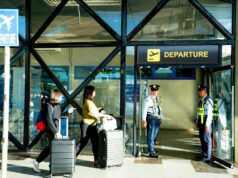
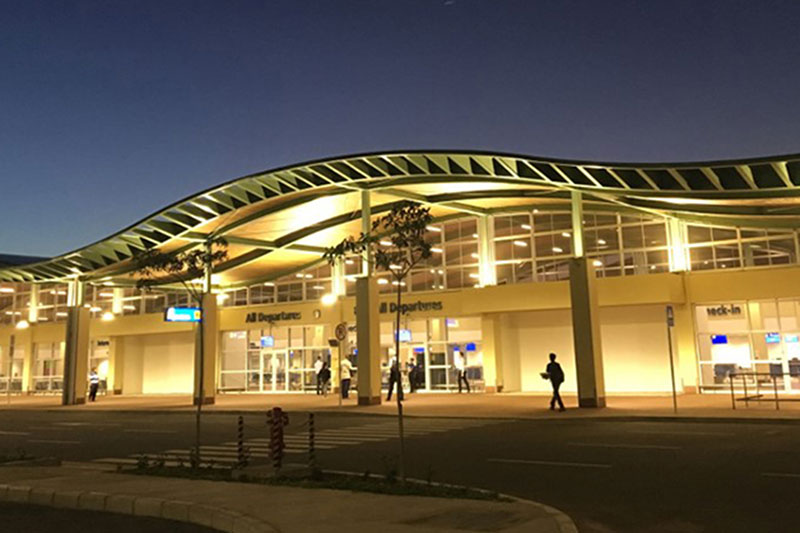
Aboitiz InfraCapital operates three of the country’s seven privatized airports: Mactan-Cebu International Airport, Laguindingan International Airport, and Bohol-Panglao International Airport.
Parent firm Aboitiz Equity Ventures, Inc. (AEV), however, said rising oil prices and softer economic conditions are increasing costs and could weigh on demand across some of its businesses.
AEV Chief Financial Officer Jose Emmanuel Hilado said higher oil prices linked to the Iran conflict have already pushed up logistics and packaging costs, adding that the impact on margins or sales volumes will depend on how consumers respond.
“Despite the challenging landscape, we believe that there are still opportunities for growth, because we look at the long term, and our strategic direction is very clear. So I would say that in the end, we’re still cautiously optimistic for this year,” he said.
The company described its business outlook as uneven across segments.
Aboitiz InfraCapital is the infrastructure arm of Aboitiz Equity Ventures, which also has interests in power, banking, food, infrastructure, and artificial intelligence.
In real estate, residential demand is expected to remain under pressure due to affordability constraints, while industrial and logistics-related projects continue to benefit from underlying demand trends linked to supply chain shifts.
“So, we believe we’ll continue to see pressure in more sentiment-driven sectors, particularly in residential, given cost and affordability constraints,” said Rafael Fernandez de Mesa, president and chief executive officer of Aboitiz Land and Aboitiz Economic Estates.
“At the same time, we’re seeing a flight to quality, with demand shifting towards products that meet broader needs beyond just price, including lifestyle, proximity to employment, and accessibility,” he added.
Infrastructure operations are expected to remain relatively stable in the near term, although longer-term performance will depend on travel demand.
Water and tower businesses are seen as more resilient, given steady demand patterns.
In food and agribusiness, the company expects a more challenging year due to external shocks, even as long-term consumption trends remain intact.
“There’s no doubt that 2026 will be a tricky year, given all of the external shocks to the regional economies that we operate in,” Aboitiz Foods President and Chief Executive Officer Tristan S. Aboitiz said.
“But it’s important to reinforce that when it comes to decision-making, we will continue to work to ensure that Aboitiz Foods is set up to effectively address the needs of our customers over the longer term,” he added.
The banking business may face slower growth as higher interest rates affect borrowing activity and investment decisions, while also requiring closer monitoring of credit conditions.
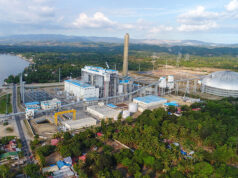
In the power segment, AEV said it is monitoring the impact of inflation on electricity demand while continuing its planned capacity expansion and renewable energy investments.
At the local bourse on Tuesday, AEV shares fell 2.64% to P27.70 apiece. — Alexandria Grace C. Magno