Philippine nickel industry bracing for impact of fuel shock
By Vonn Andrei E. Villamiel, Reporter
THE PHILIPPINE nickel sector is bracing for potential disruptions to production and exports amid rising fuel costs and supply risks due to the war in the Middle East, industry leaders said.
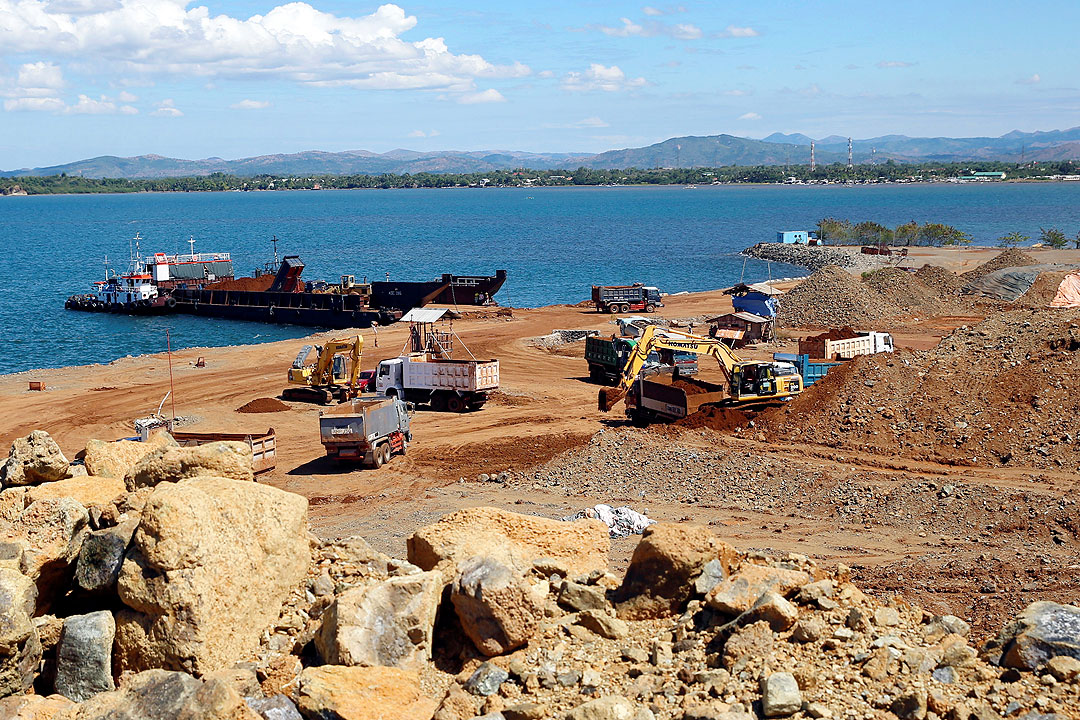
DMCI Mining Corp. President Tulsi Das C. Reyes said the industry ended 2025 with a record export of 60 million metric tons (MT) of nickel ore, but the war in the Persian Gulf has created uncertainty on operations, particularly on fuel supply.
Mr. Reyes said that while higher fuel costs could be partly offset by elevated nickel prices, cost pressures could affect buyers and logistics.
“Our margins are protected by the higher [nickel prices], but there’s the uncertainty on whether my buyer will be able to send a vessel here at their margin,” he said at a briefing hosted by the Philippine Nickel Industry Association (PNIA) on Thursday.
Mr. Reyes added that most mining firms are operating on limited fuel buffers of 15 to 30 days.
“We don’t know where the next 60 to 90 days of operations may come from. It’s a wait-and-see game,” he said. “I think everyone’s just bracing themselves. We’re just anticipating, forecasting, and analyzing what we can control.
Nickel Asia Corp. President Martin Antonio G. Zamora said the increase in fuel cost to about P115 per liter from around P50 per liter has added roughly $3 per wet MT to production costs.
With average nickel ore export prices at $30 to $40 per wet MT, he said producers can still absorb the increase for now.
“But if fuel prices double again, I’m not sure that some of the mines will be profitable at that point,” he said.
Mr. Zamora added that contingency planning across the industry remains limited, with some operators having no fallback arrangements beyond a 30-day fuel buffer.
PNIA President Dante R. Bravo said the industry’s fuel requirements are substantial, requiring about 120 million liters of fuel to ship 60 million MT of nickel ore annually.
Mr. Bravo, who is the president and chairman of Global Ferronickel Holdings, Inc., is urging the government to consider mining a priority sector in the event of fuel rationing, given the industry’s significant economic contribution.
“We hope that in terms of policies moving forward… we will be included as part of a priority industry, because we are an export business,” he said. “We play an important role in stabilizing foreign exchange and generating jobs.”
Meanwhile, despite near-term risks from fuel supply disruptions and rising costs, the industry remains cautiously optimistic about its longer-term prospects.
The PNIA said the Philippines is well-positioned to play a larger role in global critical minerals supply chains as demand for nickel, a key component in electric vehicles, renewable energy systems, and infrastructure, continues to grow.
PNIA Executive Director Charmaine Olea-Capili said its member companies accounted for about 73% of national output, with total production reaching 37.81 million dry MT in 2025.
The PNIA said the Philippines remains a key global supplier, with strong export demand from China and increasing shipments to Indonesia.
“The country [has] a long-term potential as a reliable supplier in the global energy transition. It accounts for roughly 10% of global nickel supply, making the country one of the most important contributors to the international nickel market,” Ms. Olea-Capili said.