Peso sinks to record P60.30 vs $1
By Aaron Michael C. Sy, Reporter
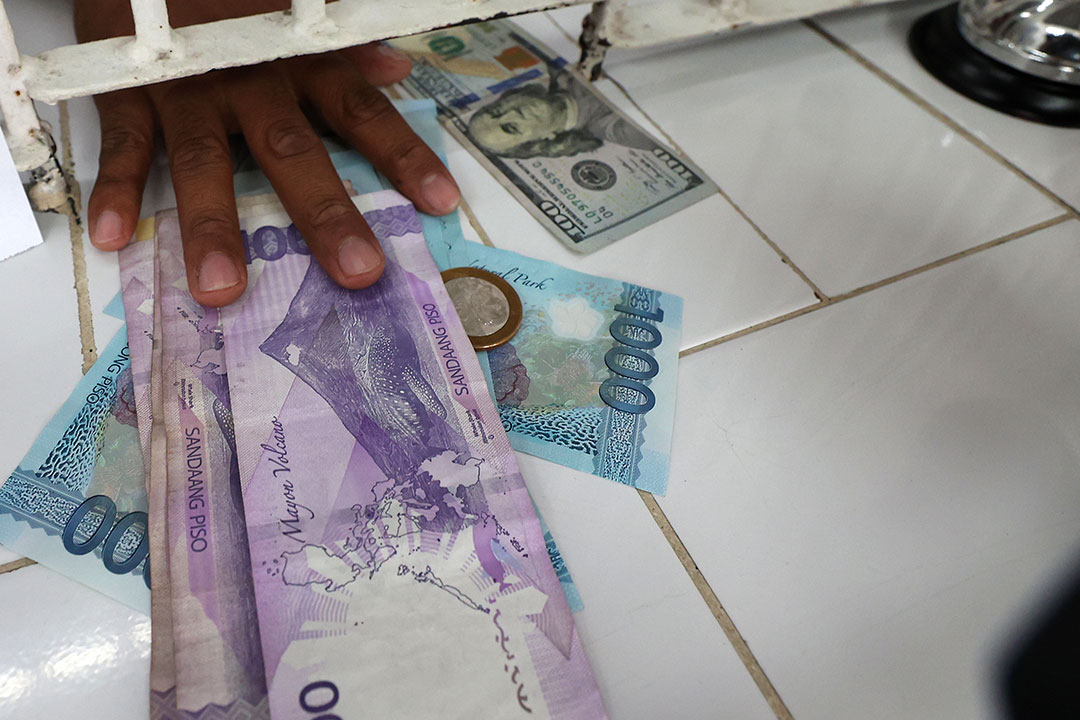
THE PESO fell to a new record low against the US dollar on Monday as global oil prices remained volatile amid escalating threats between the US and Iran.
The local unit weakened by 20 centavos to close at P60.30 against the greenback from its P60.10 finish on Thursday — its previous record low and the first time it breached the P60-per-dollar level, data from the Bankers Association of the Philippines showed.
Year to date, the peso has depreciated by P1.51 or 2.5041% from its P58.790 close on Dec. 29, 2025.
The peso opened Monday’s trading session weaker at P60.15 per dollar, while its intraday best was at P60.146.
Its weakest showing was at P60.37 against the greenback. The lowest level the peso has ever touched was at P60.40 on March 19.
Dollars traded slumped to $1.652 billion from $2.437 billion on Thursday.
“The peso depreciated further after US President Donald J. Trump intensified his threats to Iran over the weekend,” the first trader said in an e-mail.
The dollar-peso closed at a new all-time low on Monday after Mr. Trump’s threats pushed oil prices back above $100 per barrel levels, a second trader said by telephone.
Reuters reported that Iran on Sunday said it would strike the energy and water systems of its Gulf neighbors if Mr. Trump followed through with a threat to hit Iran’s electricity grid within 48 hours, extinguishing any hope of an early end to the war, now in its fourth week.
Mr. Trump warned Iran had two days to fully open the vital Strait of Hormuz, which is effectively closed for most vessels with little prospect of naval protection for shipping, with a deadline culminating at 2344 GMT on Monday.
“The dollar-peso exchange rate closed at a new record high following Trump’s threat of a 48-hour deadline for Iran to reopen the Strait of Hormuz; while Iran threatened to completely close the Strait of Hormuz if attacked,” Rizal Commercial Banking Corp. Chief Economist Michael L. Ricafort said in a Viber message.
Higher global crude oil prices on Monday also reignited fears of faster inflation, higher borrowing costs, and slower economic growth, he added.
Department of Economy, Planning, and Development Secretary Arsenio M. Balisacan earlier said inflation could exceed 7% and economic growth could slow by as much as 0.3 percentage point this year if the oil price shock persists.
Finance Secretary and Monetary Board Member Frederick D. Go said last week that a prolonged surge in oil prices due to the Middle East war could prompt the Monetary Board to raise borrowing costs as early as next month.
BSP Governor Eli M. Remolona, Jr. earlier said they could be forced to hike rates once oil prices hit $100 per barrel as it could bring inflation past 4% or the upper end of their target range.
The Monetary Board will hold its next rate-setting meeting on April 23. If realized, this would be the BSP’s first rate hike in over two years or since October 2023.
For Tuesday, the first trader said the peso may remain under pressure as the Middle East war intensifies.
The first trader sees the peso moving between P60.25 and P60.40 per dollar on Tuesday, while the second trader expects it to range from P60.10 to P60.50.
Mr. Ricafort expects the peso to remain range-bound at P60.10 to P60.40. — with Reuters