Rice farmers in the Philippines face more pressure as imports resume
By Vonn Andrei E. Villamiel
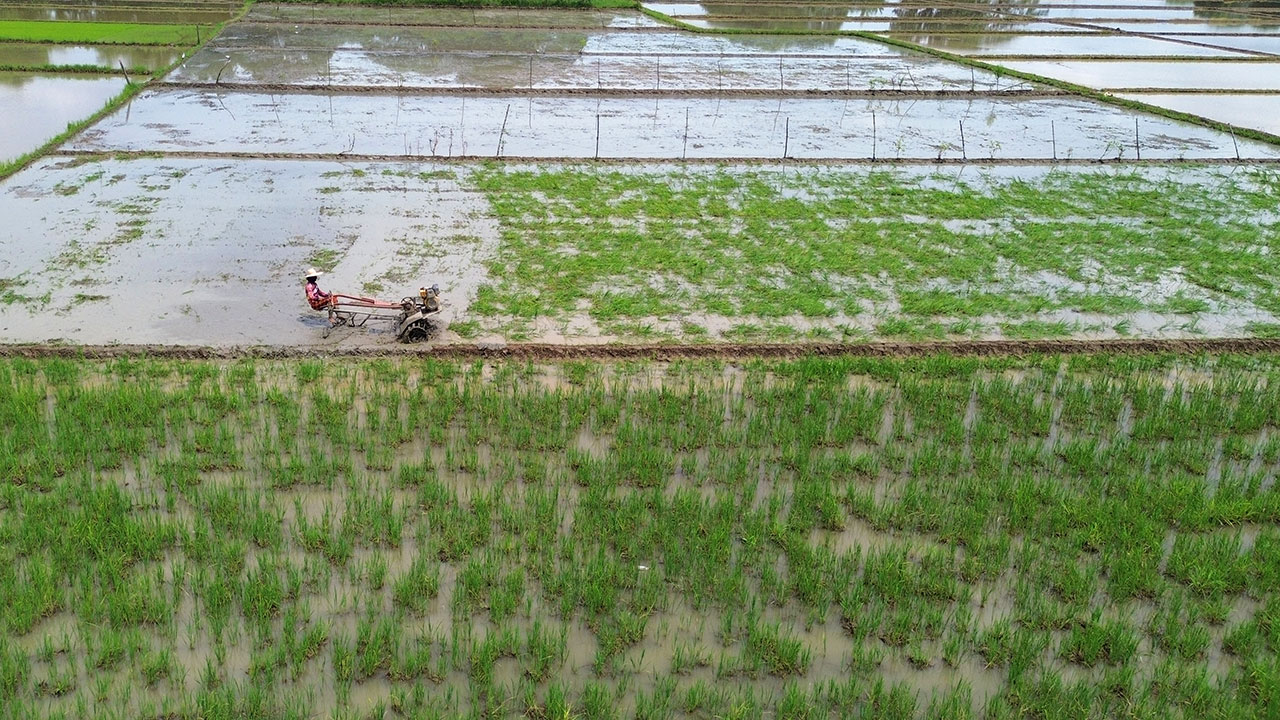
FILIPINO RICE FARMER Elvira C. Fadriquelan knew the numbers would not work long before she sold her wet-season harvest in October.
The 60-year-old farmer, who works almost a hectare of rice land with her son in Lubao, Pampanga in northern Philippines, accepted P13 a kilo for palay, or unmilled rice. Her production costs, which include seeds, fertilizer, labor and land preparation, run closer to P16 to P20 a kilo.
 “With the P13 per kilo selling price of palay, we did not even recover our capital,” Ms. Fadriquelan told BusinessWorld by telephone in Filipino.
In some parts of Central Luzon, she said, farmgate prices fell as low as P8 a kilo, forcing farmers to absorb losses they could not offset elsewhere. Weather risks made the situation worse. Flooding and strong winds can cut her harvest from more than three metric tons per cropping season to about half that amount, while costs stay the same.
“When typhoons hit, the harvest is cut in half,” she said. “We had to sell everything just to recover costs, instead of keeping rice for our own consumption.”
Her experience reflects broader pressure across Central Luzon, the Philippines’ biggest rice-producing region. The average palay price there fell to P15.14 a kilo in October, down 24.4% from P20.02 a year earlier, according to data from the Philippine Statistics Authority.
Nationally, farmgate palay prices averaged P16.92 a kilo in November, a 16.6% drop from P20.28 a year ago.
Farmers say the temporary restrictions on rice imports imposed in the second half of last year offered little relief. Prices stayed weak, they said, and many are bracing for renewed pressure as imports resume under a revised tariff regime.
“The import ban did not significantly raise palay prices,” Ms. Fadriquelan said. “It could become more difficult once the ban is lifted, because traders can stock up on cheaper imported rice.”
Starting this year, rice imports will resume under a “flexible” tariff scheme that lets duties rise or fall in response to global prices. Executive Order (EO) No. 105 allows tariff adjustments in increments of 5 percentage points, with rates capped at 15% and 35%.
The benchmark for those adjustments is the monthly average price of Vietnam 5% broken rice, the grade that accounts for most Philippine imports, as reported by the Food and Agriculture Organization (FAO). When prices move beyond specified thresholds, tariffs can be adjusted at quarterly intervals.
Vietnam 5% broken rice costs about $361 per metric ton, based on FAO data, a level that would translate into a 20% tariff under the formula.
The starting tariff for January is scheduled to be announced by Jan. 15, based on December price data, and will remain in effect until May 15, according to the implementing rules.
The government has framed the flexible tariff scheme as a way to stabilize supply while managing price volatility.
“If the global price of rice falls too low, the tariff should be set at 35%,” Agriculture Secretary Francisco P. Tiu Laurel, Jr. earlier told reporters. “But if the price rises again to $720 per ton, it should be reduced to 15% to maintain stable palay prices for farmers and for the Filipino people.”
Supporters say the approach prioritizes consumers in a country where rice is a political and economic staple. Former Agriculture Undersecretary Fermin D. Adriano said variable tariffs would help keep retail prices affordable for most Filipinos.
“I agree [with the flexible tariff scheme] because I favor the interest of the majority of Filipinos, who are rice consumers… We have more than 115 million consumers,” he said, adding that he has advocated for a variable tariff system since the 1980s.
He added that farmers who are hurt by lower tariffs could be supported through direct cash transfers, which he said would cost less than the savings enjoyed by consumers through cheaper rice.
Agriculture groups counter that the flexible system offers too little protection at a time when global prices have eased. They argue that the tariff should return to a fixed 35%, the rate originally imposed on Southeast Asian rice imports when the Rice Tariffication Law took effect in 2019.
“We should start at least at 35% to prevent the death of the local rice industry,” Danilo V. Fausto, president of the Philippine Chamber of Agriculture and Food, Inc., said in a Viber message. He added that the rate could be reviewed after six months and adjusted only during harvest periods or in response to sharp international price swings.
The tariff was cut to 15% in June 2024 under EO No. 62 to help contain inflation. Since then, global rice prices have fallen sharply.
‘BIASED AGAINST FARMERS’
“When EO 62 was issued, prices were hovering at $600 to $650 per metric ton,” Jayson H. Cainglet, executive director of the Samahang Industriya ng Agrikultura, told BusinessWorld via Viber. “Now it’s only $359 to $363.”
Under the EO 105 formula, a full 35% tariff would apply only if Vietnam 5% broken rice falls to $315 per metric ton. Critics say the scheme systematically favors imports over domestic production.
Raul Q. Montemayor, national manager of the Federation of Free Farmers, said simulations conducted by the group show that imported rice would remain cheaper than locally produced rice, even when tariffs rise.
“The variable tariff formula is biased against farmers,” he said in a Viber message. The landed cost of imported rice, inclusive of tariffs, would always be lower than the wholesale price of local rice, he added.
He also questioned whether the system could respond quickly enough to protect farmers during harvest seasons.
“Changing tariffs requires a lengthy process,” he earlier told BusinessWorld. “I’m skeptical that adjustments can react promptly to price movements, particularly for palay during a short three-month harvest period.”
Tariff rates under EO 105 can only be adjusted once every three months, taking effect in January, April, July and October, and based on the previous month’s global prices.
Mr. Fausto earlier warned that the structure could invite speculation. Traders anticipating tariff changes could hoard imports or engage in technical smuggling to maximize margins, he said.
Lower tariffs also carry fiscal implications. Reduced duties are weighing on collections that fund the Rice Competitiveness Enhancement Fund (RCEF), according to a report by the House of Representatives Congressional Policy and Budget Research Department (CPBRD).
Tariff revenues reached a record P34.18 billion in 2024, up 13.8% from the previous year, but collections in the second half were hit after tariffs were lowered, the think tank said.
Data from the Bureau of Customs show tariff revenues in the latter half of 2024 fell 34.4% to P10.81 billion from P16.48 billion a year earlier. In the first half of 2025, collections dropped 58.6% to P9.67 billion from a year earlier.
The RCEF provides funding for seeds, mechanization, credit and extension services for rice farmers. The law requires P30 billion a year for the program.
Even if first-half 2025 collections were doubled, revenues would reach only about P20 billion, falling short of the annual requirement, the CPBRD said.
The Agriculture department said lower tariff revenues would not disrupt RCEF programs. Mr. Laurel said the P30-billion allocation is already included in the agency’s budget under the General Appropriations Act, regardless of tariff collections.
Under Republic Act No. 12078, which amended the Rice Tariffication Law in 2024, any revenue shortfall must be covered by the department’s budget. The CPBRD cautioned that this could force trade-offs with other agriculture programs.
For farmers like Ms. Fadriquelan, the debate over tariffs feels distant from the realities of production. She said policies should reflect domestic conditions, not just global benchmarks.
“Why are we letting international prices dictate our policies?” she asked. “Tariffs should also consider local production. Don’t we have the power to keep the tariff at 35%?”
With imports to resume under the flexible system this month, uncertainty hangs over the next harvest season.
“Our next harvest is around April,” Ms. Fadriquelan said. “If they reopen rice imports, when will they stop? Farmers will end up suffering even more.”