ASEAN foreign ministers underscore stronger crisis cooperation amid ME war
By Kaela Patricia B. Gabriel and Chloe Mari A. Hufana, Reporter
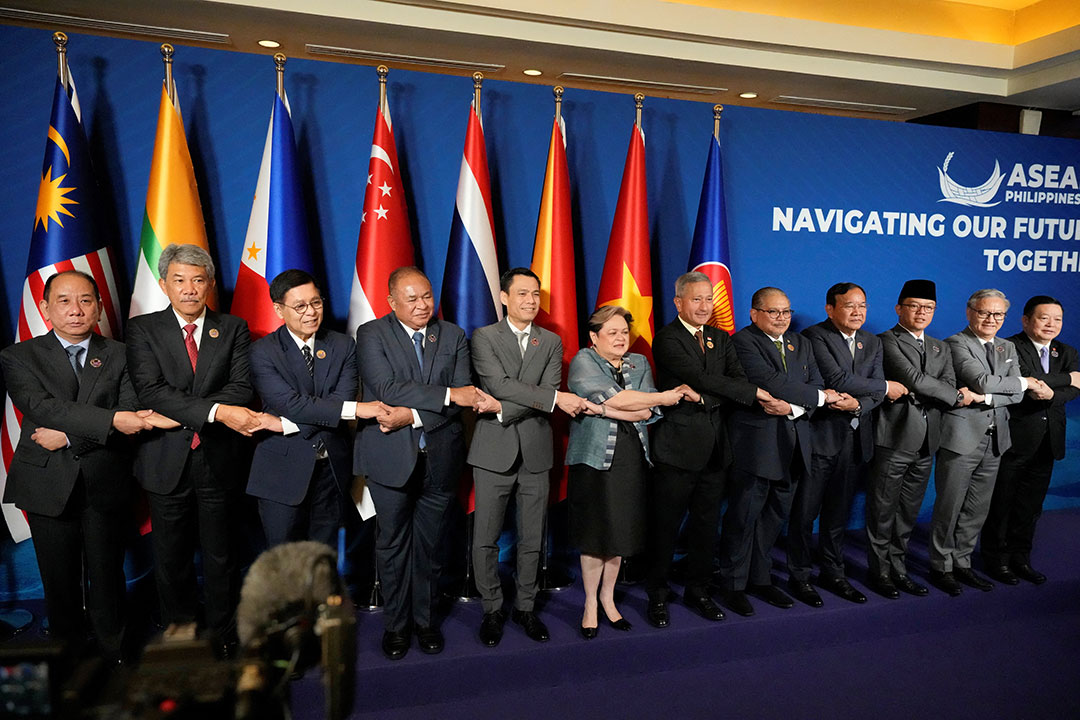
THE Association of Southeast Asian Nations (ASEAN) foreign ministers on Thursday underscored the need to strengthen regional crisis cooperation as the region continues to face the impact of the Middle East (ME) war.
In her opening statement, Foreign Affairs Secretary Ma. Theresa P. Lazaro said the foreign ministers convened two Special Meetings to tackle ASEAN’s collective response to the crisis.
“Our discussions reflected ASEAN’s resolve to act with urgency, coordinate closely, and respond collectively to these emerging challenges,” Ms. Lazaro, who chaired the foreign ministers’ meeting, said.
“Our discussions at the Special Meetings have pointed out that ASEAN needs to strengthen our crisis coordination and institutional readiness in times of crises.”
ASEAN may strengthen its resource-sharing initiatives to ensure regional economic stability, University of the East political science professor Eric Daniel C. de Torres said.
“The chair can propose among others regional oil sharing, green technology transfer and renewable energy as this also magnified the dependency of most member states towards oil importation,” Mr. de Torres said.
He noted that the summit and related meetings may be utilized for setting targets for the transition towards renewable energy. In 2025, the ASEAN endorsed an action plan for energy cooperation wherein a 30% share of renewable energy in primary energy supply and 45% share of renewable energy in installed power capacity have been set as goal by the member states for 2030.
While the crisis has taken center stage, Ms. Lazaro said ASEAN will also consider issues vital to the ASEAN community-building, including the Treaty of Amity and Cooperation in Southeast Asia, Timor-Leste’s post-admission integration, and ASEAN’s external relations.
“Finally, as the special envoy of the ASEAN chair on Myanmar, I will provide a briefing on the updates on the situation in Myanmar and the Implementation of the Five-Point Consensus,” she said.
Ms. Lazaro called on the participating nations to be wary of threats to their multilateralism as the region grappled with the impacts of the war in the Middle East on food, energy, and security.
“This commitment now comes at a profound importance amid recent developments confounding the global geopolitical landscape,” she said. “Our region must remain circumspect amid forces that threaten multilateralism.”
Aside from the political developments in Myanmar, Ms. Lazaro also cited cybersecurity threats brought about by the use of artificial intelligence, transnational crimes, and maritime security cooperation as key aspects to be addressed to maintain regional security.
Ms. Lazaro also reiterated that ASEAN meetings have been scaled down through conducting some of the discussions virtually amid the national energy emergency that has been declared in the Philippines on March 24.
PHL-VIETNAM RICE DEAL
Also on Thursday, the Philippines and Vietnam agreed to work on a long-term rice trade mechanism to secure stable supply arrangements and bolster regional food security, Malacañang said.
The agreement comes as President Ferdinand R. Marcos, Jr. and newly appointed Vietnamese Prime Minister Lê Minh Hưng met on the sidelines of the 48th Association of Southeast Asian Nations (ASEAN) Summit.
Discussions also centered on expanding cooperation against transnational crimes, including online scam operations and human trafficking networks, areas that have become growing concerns across Southeast Asia.
Tourism and broader economic engagement were likewise identified as key areas for future collaboration. The nations are celebrating 50 years of diplomatic ties this year.
Meanwhile, Mr. Marcos also pushed for deeper regional integration during the Special Brunei Darussalam-Indonesia-Malaysia-Philippines East ASEAN Growth Area (BIMP-EAGA) Summit, where he urged member economies to translate long-term development plans into tangible benefits for local communities.
In his opening remarks, Mr. Marcos said the BIMP-EAGA Vision 2035 would serve as a framework for “meaningful” and sustainable development aligned with broader ASEAN goals, citing infrastructure connectivity, livelihoods and economic opportunities as central priorities for the sub-region.
“Regional cooperation delivers its greatest value when it uplifts local communities,” he said, as leaders discussed programs aimed at improving connectivity and resilience across growth areas in Southeast Asia.
The Philippines is hosting the bloc’s annual meeting until May 8 as Southeast Asian leaders seek to reinforce regional economic integration and supply-chain resilience amid rising geopolitical tensions and uncertainty in global trade flows.