PHL pursuing alternative fuel sources
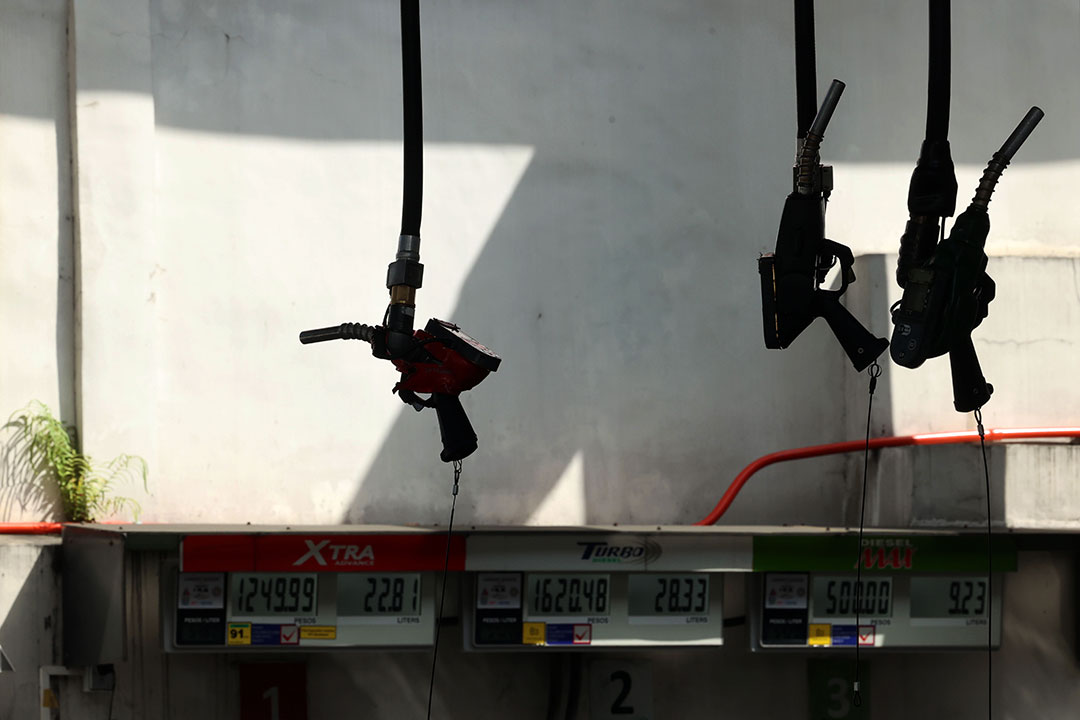
THE Philippines is stepping up efforts to secure alternative fuel sources, President Ferdinand R. Marcos, Jr. said on Thursday, as the escalating war in the Middle East continues to threaten global oil supplies and risk driving prices even higher.
Mr. Marcos said the government is working toward “soften[ing] the blow” of the war, adding it has secured enough supplies of food and oil.
“What we are monitoring now are the prices. For food, we can do more — we are looking for ways to bring food prices down,” he told reporters in Filipino during an inspection in Bataan.
“As for oil, there’s nothing we can do about that, but at least we are making sure supply will be available.”
He added the government is looking for alternative sources of oil to ensure the country has adequate stock, noting that Philippines suppliers have committed to honor their contracts.
“Fertilizer, petroleum products, that won’t be a problem because our suppliers promised to honor their contracts.”
Energy Secretary Sharon S. Garin earlier said the country is looking at other sources of oil, like the US, Canada, Russia or South American countries, as the Middle East continues to be heavily affected by the Iran war, making prices of commodities higher.
In a bid to cushion the impact, the government has earlier ordered discounts on public trains, with a possible move to provide relief on toll roads.
Mr. Marcos also blocked a planned public transportation vehicle fare hike, drawing criticisms from drivers and operators struggling with the rising fuel prices.
“Our real goal here is to preserve people’s livelihoods — so they continue to have a means of earning,” he said. He explained that while he suspended the fare hike, the government plans to provide assistance to offset high costs.
“The fare hike will just be deferred, and instead, we will increase the assistance provided to them.”
He also said the government is finding different methods to provide subsidies.
Finance Secretary Frederick D. Go earlier said he met with private oil firms over the weekend to explore additional steps to diversify fuel sourcing by widening the Philippines’ pool of suppliers.
He noted the country currently imports fuel from just four markets — South Korea, Japan, Singapore and China.
As a precaution, he added that Philippine National Oil Co.-Exploration Corp. will purchase about two million barrels from global markets to build up the country’s oil buffer stock.
CONTINGENCY PLAN
Meanwhile, the Senate on Wednesday adopted a resolution seeking to establish an ad hoc committee in charge of overseeing national contingency plans on addressing the oil shock.
“It is imperative that the country does not stagnate in its efforts to address emerging crisis nor remain confined to a reactive posture, but instead adopt a proactive approach and be a step ahead,” the Senate Resolution No. 350 read.
Senator Sherwin T. Gatchalian, as the chairperson of the Senate Committee on Finance, will lead the ad hoc committee.
“We embrace the challenge posed by this committee at this crucial time, and we are committed to ensuring that all assistance and mitigation measures will be not only sufficient but also sustained,” Mr. Gatchalian said in a statement.
The resolution proposed the creation of the ad hoc committee named Proactive Response and Oversight for Timely and Effective Crisis Strategy tasked to assess the contingency plans of the government, including those from the Executive branch, regarding the impacts of the US-Israel war on Iran.
Iran’s military leadership has warned oil could surge to as much as $200 a barrel, as tensions escalate in the Strait of Hormuz, where disruptions have effectively choked off a key global supply route that carries about a fifth of the world’s oil and liquefied natural gas.
Fuel prices surged on Tuesday, with gasoline rising by P12.90 to P16.60 a liter, diesel by P20.40 to P23.90 and kerosene by P6.90 to P8.90, marking one of the steepest weekly increases this year.
Data from the Department of Energy showed pump prices may climb as high as P91.60 per liter for gasoline, P114.90 for diesel and P143.79 for kerosene.
The government is now ramping up its cash relief assistance to the most vulnerable, including transport workers in the capital region who started receiving P5,000 earlier this week. — Chloe Mari A. Hufana and Kaela Patricia B. Gabriel