Health dep’t to issue new rules for medical assistance program
THE Department of Health (DoH) expects to complete guidelines for the Medical Assistance to Indigent and Financially Incapacitated Patients (MAIFIP) program by late January or February, with the new rules to take effect immedi-ately upon issuance, Health Secretary Teodoro J. Herbosa said on Wednesday.
The Health chief said the agency already has “basic principles and a working draft” for the guidelines, but MAIFIP will continue to operate under the existing 2025 implementing rules and regulations (IRR) until the up-dated framework is finalized.
“As of now, [MAIFIP] will be following the existing 2025 IRR,” Mr. Herbosa said. “That is what we will follow until we finish writing the current rules for 2026.”
MAIFIP provides financial assistance for hospital bills and medical needs of indigent patients and has been under scrutiny amid broader government efforts to tighten rules on the use of public funds and standardize access to health assistance programs.
Mr. Herbosa also detailed how the government finances its zero-balance billing policy. He said zero-balance billing is largely funded through hospital budgets rather than a single line item.
Roughly 30% of hospitalization costs in DoH hospitals are paid by the state health insurer, with reimbursements recycled as a revolving fund to sustain services, Mr. Herbosa said
DoH hospitals are also allowed to retain income under special budget provisions, enabling them to buy medicines and supplies instead of returning excess funds to the Treasury.
The government has allocated an additional P1 billion to support zero-balance billing in local government hospitals and another P1 billion for specialty hospitals, as it pushes to expand the policy beyond DoH facilities.
Mr. Herbosa said a P1-billion MAIFIP allocation for local government units (LGUs) will serve as a pilot to determine how much funding is needed to fully implement zero-balance billing at the local level.
“To fulfill universal health coverage, we really need zero-balance billing in LGU-run hospitals,” he said in mixed English and Filipino, noting that patient admissions in DoH basic accommodation wards have risen by about 20%.
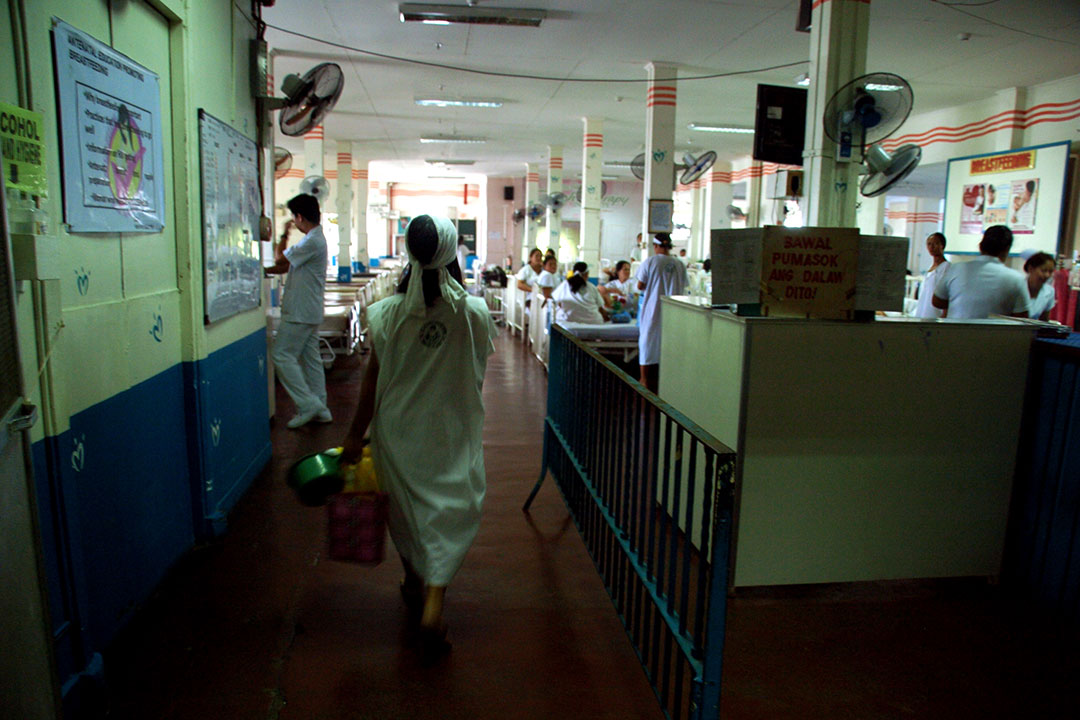
Under the draft IRR, medical assistance will be limited to patients admitted to basic accommodation or semi-private rooms, including in private hospitals that maintain basic accommodation beds, Mr. Herbosa said.
Patients admitted to suites or single rooms would not qualify for taxpayer-funded medical assistance.
He added that DoH hospitals have been instructed to partner with nearby private hospitals when capacity is full, allowing patients to be transferred and supported through zero-balance billing arrangements.
Addressing concerns over political involvement in medical assistance, Mr. Herbosa said the department will strictly follow the law, which already bans certain forms of political promotion. The IRR, he said, cannot go beyond what the law provides.
He also stressed that the expansion of zero-balance billing is intended to eliminate the need for patients to seek help from politicians altogether.
“There are no more guarantee letters because there is zero balance,” Mr. Herbosa said. “As long as we inform people that basic accommodation in DoH hospitals are under zero-balance billing, there is no need to go to an elected official.”
Mr. Herbosa said P1 billion has been set aside to roll out the program in secondary and tertiary LGU hospitals as part of the department’s P448-billion budget for 2026.
The pilot will initially cover about five provinces that have met commitments under the universal health care law, including Sarangani, Laguna and Aklan.
“We have actually selected provinces that have fulfilled their commitments to universal health coverage,” he said.
The pilot will focus on Level 2 and Level 3 LGU hospitals, which handle more complex cases and higher-cost procedures, he added. — Chloe Mari A. Hufana