China intensified SCS coercion last year, says Philippine Navy
By Kenneth Christiane L. Basilio, Reporter
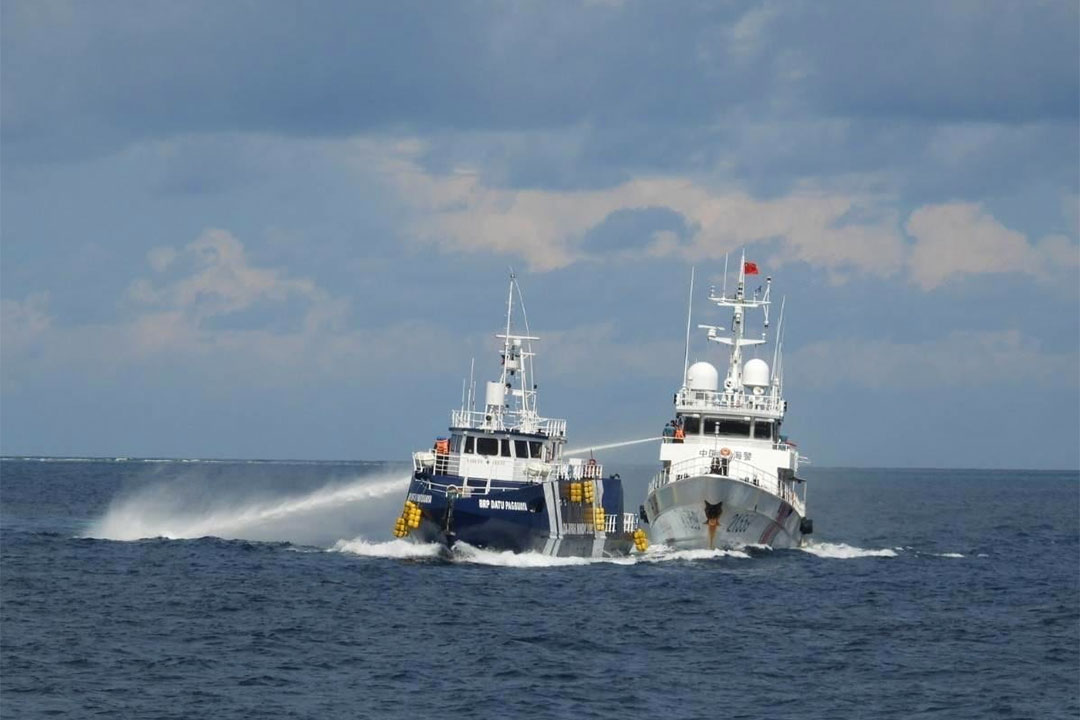
CHINESE maritime forces stepped up coerciveness in the South China Sea (SCS) last year by shifting their deployment patterns, in a move that a Philippine armed forces report said shows Beijing’s willingness to raise tensions in the disputed waterway.
The People’s Liberation Army Navy (PLA-N) and the China Coast Guard have boosted coordination during deployments near maritime features, complementing each other’s presence in a bid to expand control over the contested waters, according to the report shared to reporters by Rear Admiral Roy Vincent T. Trinidad, the Philippine Navy’s spokesman on the South China Sea, on Monday.
“PLA-N presence in 2025 became more consistent, predictable and geographically closer to contested areas,” the six-page report said.
It added that Chinese forces have “shifted from intermittent support to a persistent deterrent posture,” signaling Beijing’s intent to escalate tensions in the South China Sea.
The Chinese Embassy in Manila did not immediately reply to a Viber message seeking comment.
The Philippines is at odds with China over the South China Sea, where Beijing asserts control over almost the entire waterway based on a “nine-dash line” map. A United Nations-backed arbitral tribunal ruled in 2016 that China’s claim is illegal, a decision Beijing has rejected.
Chinese maritime forces have maintained a persistent presence around contested features, with that posture sometimes leading to clashes at sea as the Philippines resists Beijing’s expansive claims in the South China Sea.
It added that the Philippines broadened joint maritime activities with allied nations last year to push back against China’s sweeping sea claims, holding 20 drills with the US, Japan, Australia and others in 2025.
“Following nearly every maritime cooperative activity, however, China has responded through a combination of kinetic and non-kinetic actions, including increased PLA-N, China Coast Guard and Chinese maritime militia vessels presence near Philippine islands and features,” the report said.
“This recurring pattern highlights both the strategic importance of maritime cooperative activities in preserving the rules-based international order and China’s continued reliance on illegal, coercive, aggressive and deceptive actions to counter Philippine-led cooperation without escalating to open conflict,” it added.
PHL-FRANCE VFA
Amid heightened tensions, the Philippines continues to widen its security network as it nears the conclusion of a new defense pact with France.
A separate document, Mr. Trinidad shared on Monday, showed the Philippines and France are expected to seal a visiting forces agreement (VFA) in early this year, paving the way for closer defense cooperation between the two nations.
The Department of National Defense did not immediately respond to a request for comment sent via Viber.
President Ferdinand R. Marcos, Jr. approved negotiations on a VFA with France in March last year. Since then, the two sides have held talks, with the most recent discussions taking place in December.
In a Dec. 11 statement, the Defense department said the negotiations reflect a shared commitment to deepen defense ties, improve interoperability, and strengthen cooperation in support of regional peace and stability.
Once concluded, the agreement would make France the first European country to secure a VFA with the Philippines. Manila has already signed VFAs with Australia, Japan and New Zealand, while similar talks with the United Kingdom are ongoing.
Such a military pact would be advantageous for the Philippines as France is a respected naval power, said Chester B. Cabalza, founding president of Manila-based think tank International Development and Security Cooperation.
“Paris is a powerhouse supporter of the Philippines in the blue ocean economy, military and coast guard modernizations, and environmental concerns and disinformation issues,” he said in a Facebook Messenger chat.