US attack on Venezuela sends ‘troubling’ signal to int’l community — senator
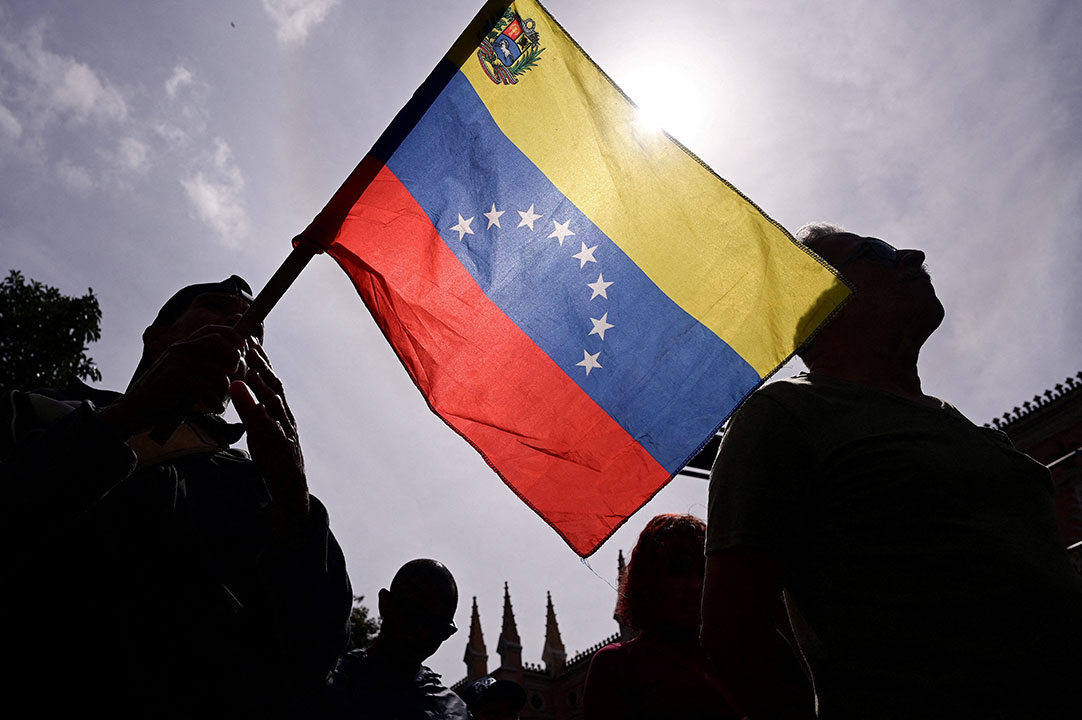
THE United States attack on Venezuela and capture of its President, Nicolas Maduro, sends a “troubling” signal to the international community, a lawmaker said on Sunday.
Senator Maria Imelda R. Marcos, who heads the Senate Foreign Affairs panel, said the situation in Venezuela highlighted long-standing concerns regarding the role of major powers in the internal affairs of states they consider strategically important.
“The United States, in particular, has at various points in history been associated with policies that have supported political transitions or leadership changes in countries such as Iraq, Afghanistan, Libya, Panama, Nicaragua, and the Philippines,” she said in a statement.
Ms. Marcos added that the extraction of a foreign leader from his country could raise questions under international law.
“(It) could send troubling signals to the international community, potentially reinforcing perceptions that power, rather than rules, determines outcomes in global affairs,” she said.
The Department of Foreign Affairs (DFA) assured support for affected the 74 Filipinos currently in Venezuela, noting the Philippine Embassy in Bogotá has issued a travel and safety advisory and prepared to provide assistance.
US forces conducted a large-scale strike against Venezuela, one of the world’s largest oil reserves, through an overnight operation on Jan. 3. This resulted in the capture of Mr. Maduro along with his wife and the destruction of several military installations, Reuters reported.
The DFA added that it is closely monitoring the evolving situation in Venezuela and called on both parties to exercise restraint in resolving their conflict.
“The Philippines urges concerned parties to resolve disputes through peaceful means, and to exercise restraint to prevent escalation of conflict,” it said.
STRATEGIC SCS RESPONSE
In a separate statement, House Minority Leader and Party-list Rep. Leila M. de Lima urged Congress to work with the defense establishment to craft a “strategic response” to the South China Sea (SCS) dispute, warning that the US attack on Venezuela may embolden China to press its claims over the contested waters more aggressively.
Washington’s use of force to capture Venezuelan leader Mr. Maduro and seize control of the South American nation may upend international rules-based order and fuel other superpowers to do the same, Ms. De Lima said.
“It throws the global order back to a barbaric ‘might makes right’ regime,” she said in a statement.
The US Embassy in Manila did not immediately reply to a Viber message seeking comment. BusinessWorld also reached out to the Chinese Embassy in Manila, but did not receive a response, as of press time.
The Philippines is at odds with China over the South China Sea, where Beijing asserts control over almost the entire waterway based on a “nine-dash line” map, a claim voided by a United Nations-backed tribunal in 2016.
American special forces on Saturday moved to capture Mr. Maduro in Caracas, the culmination of Washington’s months-long pressure campaign to curb the flow of narcotics into the US.
Washington’s military operation against Venezuela comes against the backdrop of Russia’s invasion of Ukraine and China’s growing assertiveness in the South China Sea and over self-ruled Taiwan.
Ms. De Lima said the Philippines’ “moral ascendancy” in the South China Sea dispute, through which trillions of dollars in trade pass annually, may have taken a hit as it’s closely allied with the US.
“This leaves the Philippines with a compromised moral ascendancy in protesting, condemning, opposing, and fighting China’s aggression in the West Philippine Sea,” she said, referring to parts of the waterway within Manila’s exclusive economic zone. “This is due to the fact that our major ally against Chinese aggression uses that same aggression against a smaller neighbor like what the Philippines is to China.” — Adrian H. Halili and Kenneth Christiane L. Basilio