High input costs keep rice prices up
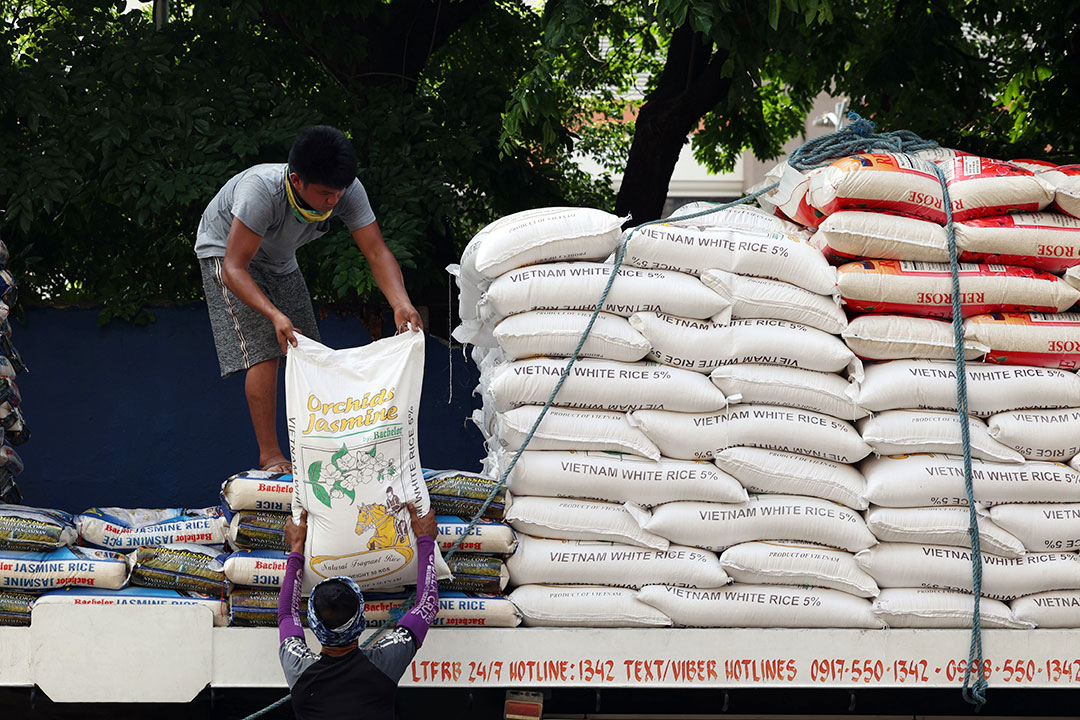
THE PHILIPPINES signaled on Tuesday that the domestic price of rice would remain high amid the soaring cost of inputs in the global market.
“We cannot bring down the price because the input price especially for fertilizers and seeds in the international market is also going up to the ceiling,” Agriculture Undersecretary Roger V. Navarro said at a Palace briefing.
“Unless we are going to buy P1 per bag of urea (fertilizer) and then we can sell P10 per kilo of rice.”
The Philippines’ rice inflation had hit a 14-year high after it rose to 22.6% last month from 19.6% in December last year. It was the highest since March 2009, when rice inflation was at 22.9%.
“The challenge now is not more on prices. As we feel in the industry, it is more on stabilizing the supply,” Mr. Navarro said.
He said the country has a stable supply of rice and other commodities like corn.
The Philippines has already imported 590,000 metric tons of rice since January, “which is more than what we need for this month,” he said.
“We need an importation volume of something like 330,000 metric tons per month with an average daily consumption of about 37 metric tons per day,” he explained. “And we have a production of rice form which is already about 13,000.”
RICE CONSIDERED UNDER CCT
Mr. Navarro, meanwhile, said President Ferdinand R. Marcos, Jr. was considering the proposal to make rice a form of assistance being given under the conditional cash transfer (CCT) program (Pantawid Pamilyang Pilipino Program or 4Ps), instead of money.
This would reduce price pressures in the market because if the proposal becomes a policy, about 20% of Filipinos would no longer have to compete with people with higher purchasing power.
“We will take them out in the price pressures of the market in terms of buying high-price rice,” he said.
“We’re giving them money, and unfortunately because that is not rice, they’re going to buy rice in the market, and that puts inflationary pressure because they’re going to compete with the people who have money,” he explained.
The Philippine agriculture sector has been affected by the El Niño weather pattern, which is expected to have huge impacts at least through March.
Citing the Philippine weather bureau, the government’s El Niño task force said a total of 41 provinces have been affected by the phenomenon.
“Provinces under dry condition are Batangas, Laguna, Masbate, Oriental Mindoro, Antique, Biliran, Capiz, Cebu, Eastern Samar, Guimaras, Iloilo, Leyte, Negros Oriental, Samar Lanao del Norte, Sulu, Tawi-Tawi,” it said in a statement.
Areas under a dry spell Metro Manila, are Abra, Aurora, Bataan, Isabela, Occidental Mindoro, Quirino, Rizal, Zambales, and Negros Occidental while under drought condition are Apayao, Benguet, Cagayan, Cavite, Ifugao, Ilocos Norte, Ilocos Sur, Kalinga, La Union, Mountain Province, Nueva Ecija, Nueva Vizcaya, Palawan, and Pangasinan.
The Philippine government would focus on El Niño’s effects on the agriculture sector, task force spokesperson and Presidential Communications Office (PCO) Assistant Secretary Joey Villarama said in the same briefing.
State efforts include repairs of irrigation systems and distribution of farm inputs, he said.
The government would provide alternative livelihood for farmers who will be greatly affected, he added. — Kyle Aristophere T. Atienza