Gov’t defends Cayetano’s remarks on China’s island-buildup amid US report to the contrary
By Ian Nicolas P. Cigaral, Reporter
THE Philippine government on Friday sought to explain recent remarks by the country’s top diplomat that China has stopped its land reclamation work in the disputed South China Sea, which was debunked by a US think tank.
At the end of the Association of Southeast Asian Nations (ASEAN) Ministerial Meetings in Manila, Philippine Foreign Affairs Secretary Alan Peter S. Cayetano said that using tough language to pressure China is not reflective of the current situation because it is “not reclaiming land anymore.”
In a statement, Foreign affairs spokesperson Robespierre L. Bolivar said the Philippines’ “position” on the maritime row is based on “latest intelligence” on the ground, adding that there are “no further reports” of Beijing’s island-building activities in waters that Manila disputed.
Mr. Bolivar was responding to a new report by the Asia Maritime Transparency Initiative (AMTI) of Washington’s Center for Strategic and International Studies, which qualified Mr. Cayetano’s statement as “false” by showing satellite images of China’s expansion in the sea “in recent months.”
To recall, Mr. Cayetano made the statement after admitting that the Philippines is one of the ASEAN countries that opposed making references to “land-reclamation” and “militarization” in the South China Sea in the bloc’s joint communique.
But the customary statement, which was belatedly released over reported disagreements by ASEAN foreign ministers, nevertheless called for “non-militarisation and self-restraint.”
According to Mr. Bolivar, Mr. Cayetano’s remarks “must be taken in its full context.”
He explained that Manila, as this year’s ASEAN chair, agreed with other regional foreign ministers to include international concerns over land reclamation in the communique despite the Philippines not getting reports about island buildups in features it claimed.
He said this is “in consideration of the probability that land reclamation may still be occurring or may yet occur in features in the South China Sea outside of the Philippine claim.”
“We would like to assure the public that if ever there are reports to the contrary, these will be carefully studied, verified and handled accordingly,” Mr. Bolivar said.
“As Chair of the ASEAN Ministerial Meeting, the Philippines’ primary goal was to ensure that the Joint Communique reflected the interests of the region and the ASEAN consensus,” he added.
“The foreign policy direction of the Philippines…is not to surrender a single inch of Philippine territory while at the same time working towards good neighborly relations with other claimants.”
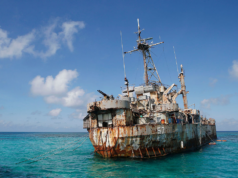
China claims most parts strategic waterway, where trillion dollars’ worth of ship-borne goods pass through annually. But the Asian power’s maritime ambitions were challenged by the Philippines, another claimant nation, in the Permanent Court of Arbitration in the Hague that ruled in Manila’s favor.
For his part, Presidential Spokesperson Ernesto C. Abella told reporters yesterday that AMTI’s report should be “vetted for accuracy” and, if proven, should be taken up in future ASEAN discussions.
“[This is] to preserve the trust and confidence that all disputants over the territory in South China Sea,” he said.