PSEi slides as peso hits record low
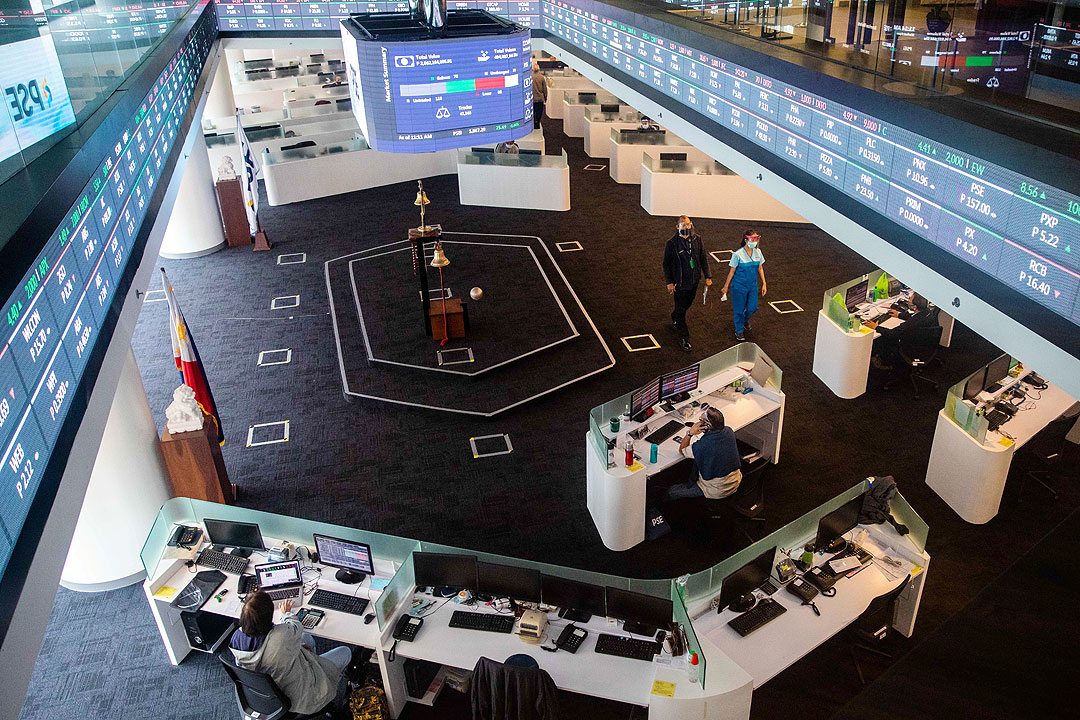
PHILIPPINE SHARES fell on Thursday as geopolitical tensions in the Middle East and the peso’s slide to an all-time low weighed on investor sentiment.
The benchmark Philippine Stock Exchange index (PSEi) dropped 0.6% or 36.83 points to close at 6,018.62, while the broader all-share index declined 0.55% or 18.69 points to 3,344.87.
“The market ended the week in the red as the Middle East tensions continue to wreak havoc on the global economy, keeping pump prices at elevated levels,” AP Securities, Inc. said in a note.
Financial markets are closed on Friday in observance of Eid’l Fitr or the Feast of Ramadan.
Wendy B. Estacio-Cruz, research head at Unicapital Securities, attributed the decline to escalating geopolitical risks, which pressured the peso and dampened hopes for near-term monetary easing.
“This came after the US Fed kept rates steady and raised its inflation forecast amid potential oil price shocks from the Iran conflict, dampening hopes for near-term easing,” she said in a Viber message.
The peso closed at a record P60.10 a dollar, down 58 centavos from Wednesday’s P59.52 finish, according to Bankers Association of the Philippines data posted on its website. This marks the peso’s weakest finish ever, surpassing the previous low of P59.87 logged earlier this week.
Sectoral performance reflected broad weakness. Mining and oil plummeted 6.7% to 15,984.83, property slid 1.41% to 1,987.35, holding firms fell 1.07% to 4,635.31, financials dropped 0.39% to 1,906.4, and services shed 0.16% to 2,752.37. Industrials were the lone gainer, up 0.14% to 8,792.53.
Losers beat gainers 133 to 61, while 55 stocks were unchanged. Value turnover rose to P10.11 billion on 1.88 billion shares traded, compared with P6.06 billion and 930.22 million shares a day earlier.
Net foreign selling fell to P460.37 million from P664.05 million.
Ms. Estacio-Cruz said the peso’s weakness, persistent inflation and global uncertainties are likely to keep financial conditions tight, limiting upside for equities in the near term.
With oil prices elevated and the Iran conflict showing no signs of easing, analysts expect continued volatility in both the peso and local markets, highlighting the risk of imported inflation on the Philippine economy. — Alexandria Grace C. Magno