Home Blog Page 999

Magalong won’t quit as Baguio mayor

BAGUIO CITY — Baguio City Mayor Benjamin B. Magalong denied circulating rumors claiming he has stepped down from his post, following his appointment as special adviser and investigator for the Independent Commission for Infrastructure (ICI).

Calling the allegations false and misleading, the Baguio City mayor in an official statement on Monday, clarified that he remains in office and continues to fulfill his responsibilities to the people of Baguio.

“There is no truth to the claims that I have resigned,” Mr. Magalong said. “I remain your duly elected Mayor, fully committed to serving our city.”

The statement comes amid a wave of social media posts and online discussions speculating on his alleged resignation.

A workers’ group had also called for the Baguio City mayor to resign so that he can focus on his work as special adviser to the commission created by President Ferdinand R. Marcos, Jr. to investigate anomalous flood control projects around the country.

Mr. Magalong emphasized that while he has recently accepted the appointment by Mr. Marcos, it does not conflict with or compromise his current role as mayor.

“This new responsibility is a national call to help ensure transparency and accountability in government infrastructure projects,” the Mayor explained. “However, my foremost duty and priority remain with the people of Baguio.”

He also assured the Baguio people, some expressing fears the city would suffer because he might miss his duties and functions as the city chief executive, “his involvement in the commission would not interfere with his day-to-day duties (as mayor).”

Mr. Magalong further underscored his administration’s continued commitment to good governance, transparency, and public service. — Artemio A. Dumlao

NGA 911 eyes nationwide expansion in next three years

The Unified 911 is a joint initiative of the Department of the Interior and Local Government (DILG), the Bureau of Fire Protection (BFP), PLDT Inc. (PLDT), through its corporate business arm PLDT Enterprise and ICT subsidiary ePLDT, NGCS Inc., and NGA 911 Philippines, the local arm of US-based NGA 911 LLC.— NGA 911 PHILIPPINES

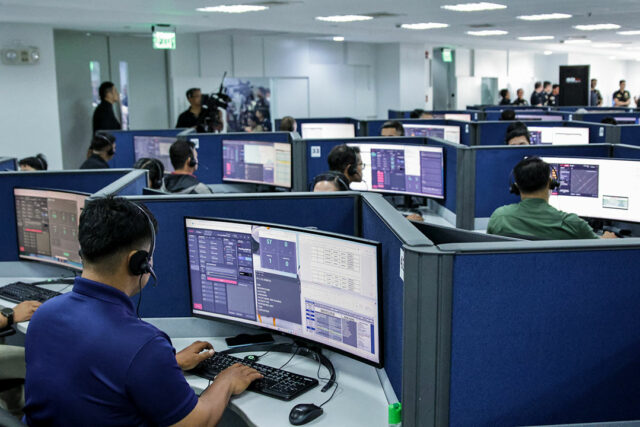
THE NEXT-GENERATION Advanced 911 (NGA 911), which uses advanced emergency response technologies to enable faster and more unified responses, is being considered for expansion across the Philippines within the next three years, it said on Monday.

“It’s a process, and it’s not going to happen overnight. For us to actually finish this in the country, it’s going to take a couple of years, maybe three,” Mike Amos, co-founder of and International Sales Director of NGA told BusinessWorld during a media forum on Monday.

Mr. Amos noted that NGA 911 Philippines aims to install the technology across all 1,491 local government units (LGUs) and around 40,000 barangays in the country.

NGA 911 is equipped with cutting-edge technologies, including the ability to send text messages, photos, and videos for emergency reporting through the NEXiS Message platform.

“If there’s a fire, I want you to point your camera at it. I’m going to send you a link — click on it; I just activated your camera. Now I can see the fire, and as the fireman, I can say we’re going to need four more companies instead of waiting seven minutes after I arrive,” Mr. Amos said, describing the potential experience of the caller when using the NGA 911.

The LGUs of Morong, Rizal, and Mambajao, Camiguin are among the first to adopt this technology, with more areas expected to come online soon. Other equipped LGUs include Cebu City, Cagayan de Oro City, Alaminos City in Pangasinan, and Bustos, Bulacan, while Navotas City is still in progress.

The Department of the Interior and Local Government rolled out the unified 911 emergency hotline last week, aiming to replace more than 30 local emergency numbers with a single nationwide hotline.

The system is also powered by NGA 911 technology. — Edg Adrian A. Eva

BIR misses collection target for VAT in first seven months

BW FILE PHOTO

THE Bureau of Internal Revenue (BIR) said value-added tax (VAT) generated P467 billion in the first seven months, just under its collection target of P473.41 billion.

The BIR, according to a document released to reporters, collected P467.04 billion, up 9.17% from a year earlier.

VAT is a 12% levy on the sale, barter, exchange or lease of goods or property and services and on goods imported into the Philippines.

For the full year, the government is set to collect P328.9 billion in excise taxes on selected goods, according to the 2026 Budget of Expenditures and Sources of Financing.

Analysts said proposals to cut the value-added tax could ease pressure on households but cautioned the move may undermine government revenue and complicate fiscal consolidation efforts.

“This can boost household purchasing power and help reduce the regressive burden of consumption taxes, particularly for low-income groups,” John Paolo R. Rivera, a senior research fellow at the Philippine Institute for Development Studies, said via Viber.

However, Mr. Rivera said the tradeoff could result in delays in reducing public debt.

Batangas Rep. Leandro Antonio L. Leviste earlier filed a measure seeking to return the VAT rate to 10%, arguing the current tax system is “regressive.”

Finance Secretary Ralph G. Recto, while serving as Senator, wrote legislation that raised the VAT rate to 12% in 2006.

“The key is timing. This may be more viable once fiscal conditions improve such as when debt-to-GDP (gross domestic product) approaches 40%, (with the) deficit at 3% (of GDP), as Secretary Recto has noted,” Mr. Rivera said.

At the end of July, sovereign debt hit P17.56 trillion, breaching the government’s full-year projection for 2025, the Bureau of the Treasury reported.

This brought the debt-to-GDP ratio to 63.1% at the end of June, its highest level since 2005, exceeding the 60% debt-to-GDP threshold considered by multilateral lenders to be manageable for developing economies.

The government sees the deficit-to-GDP ratio at 4.3% by 2028 and 3.1% by 2030.

“Expanding VAT exemptions, given that essential goods and services especially benefiting the poor are now VAT-exempt, is imprudent. They result in inefficiency, leakage, lost revenues,” Filomeno S. Sta. Ana III, coordinator of Action for Economic Reforms said via Viber. — Aubrey Rose A. Inosante

PHL shipbuilding hindered by lack of local suppliers — OECD

HANJIN FACEBOOK PAGE

THE Philippine shipbuilding industry is being held back by the dearth of local suppliers of key marine equipment, driving up costs and downtime for shipyards, the Organisation for Economic Co-operation and Development (OECD) said in a report.

In its “Peer Review of the Philippines’ Shipbuilding Industry” report, the OECD said the absence of local manufacturers of engines, turbines and energy systems is limiting the industry’s ability to become self-sufficient and competitive.

“Reliance on imported components further exposes the industry to supply chain vulnerabilities,” it said.

“Developing local manufacturing capabilities for selected technologies and products or incentivizing international manufacturers to establish operations in the Philippines could strengthen the shipbuilding and repair industries.”

The Philippines was the fourth-largest shipbuilding country in 2022, on the back of major shipyards like Tsuneishi and Seatrium.

The OECD said foreign investment from Japan, South Korea, and Singapore have driven this growth in the industry, but production has declined since peaking in 2014-2015. Meanwhile, vessel imports surged post-2021.

The production of ships at Philippine shipyards rose sharply in the 2010s and then dropped significantly, particularly after the failure of South Korea’s Hanjin Heavy Industries, which operated a yard in Subic.

Despite this, the OECD said the ship repair industry is “strategically positioned” to corner the growing demand in Southeast Asia, with East Asia and Europe as its largest foreign markets.

Post-pandemic recovery has seen substantial growth, with a peak of 60 repair activities in the third quarter of 2023, it added.

Some 66% of the country’s 186 shipyard facilities require rehabilitation, it said.

Despite this, the OECD also noted that the maritime sector continues to be a major employer, with 1.8 million workers in 2021.

In an effort to revitalize the shipbuilding industry, the government is pushing policy reforms through the Maritime Industry Development Plan 2019-2028.

Legislators also filed two measures in the House of Representative, including House Bill (HB) No. 2597 which aims to provide government support, including industry aid and research and development assistance, to help scale operations and reduce business costs.

Meanwhile, HB No. 2598 seeks to provide fiscal incentives to shipbuilding companies, including exemptions from value-added taxes and removing duties on imports of capital equipment, which could help unlock investment in the industry. — Aubrey Rose A. Inosante

Boracay power restored following Saturday outage

Tourists are seen at the beach of Boracay island, Aklan province. — PHILIPPINE STAR/KRIZ JOHN ROSALES

ELECTRICITY has been restored to Boracay Island and nearby towns after losing access to the grid over the weekend, the Department of Energy (DoE) said on Monday.

In a statement, the DoE said power returned at 2 p.m. on Monday following a brief suspension of restoration work during high tide.

“Power is restored, and our teams remain on site to stabilize the system and complete permanent repairs,” Energy Secretary Sharon S. Garin said.

The DoE said the outage started on Sept. 13, when the Nabas-Unidos 69-kV line tripped, resulting in a loss of power to the Unidos-Caticlan-Malay and Unidos-Boracay lines, effectively disconnecting Boracay, Malay, and Buruanga from the grid.

National Grid Corp. of the Philippines (NGCP) and Aklan Electric Cooperative repair teams traced the fault to damaged underground cables near the Caticlan Airport arrival area.

With the approval of the Civil Aviation Authority of the Philippines, crews built an 800-meter temporary overhead line along the Caticlan Airport runway perimeter.

Due to high tide, crews had to pause work overnight and resumed operations the next day.

Permanent repairs on the underground cables are underway to harden the system and ensure reliability.

NGCP is undertaking the Nabas-Caticlan-Boracay Transmission Line Project to strengthen Boracay’s power infrastructure and support the island’s growing demand as a tourism and economic hub. — Sheldeen Joy Talavera

PHL obtains three project pledges from Japan valued at P51 billion

KARAOKEMANEKINEKO.MY

THE Department of Trade and Industry (DTI) said on Monday that three investment commitments have been made by Japanese conglomerates worth a combined P51 billion.

“The investment commitments were finalized through a series of high-level meetings in Tokyo,” Trade Secretary Ma. Cristina A. Roque said in a statement.

Karaoke chain operator Koshidaka Holdings Co., Ltd. pledged to invest P34 billion to open 300 outlets over the next decade.

These outlets are expected to create 1,500 direct jobs and thousands more through construction and supply chain activities, the DTI said.

Meanwhile, Marubeni Corp. committed to make a P15-billion investment in real estate, fintech, healthcare, and afforestation ventures.

Sojitz Corp. confirmed an up to P3-billion investment in artificial intelligence, semiconductor design, software, and healthcare firms.

“Mitsui & Co. also reaffirmed its partnership with Metro Pacific Investments Corp. and Steel Asia on a steel recycling initiative that supports circular economy and decarbonization goals,” the DTI said, without providing details.

Ms. Roque said that the projects were reviewed by economic managers “to align government support and ensure an enabling environment for smooth rollout and expansion.”

“The DTI and the Economic Team will work together to ensure these projects generate quality jobs, strengthen supply chains, and advance the shift to a green, digital, and broad-based economy,” she added.

The Tokyo meetings were organized by the DTI’s team in Japan under Special Trade Representative Dita Angara-Mathay.

“The presence of the full Philippine delegation sent a powerful signal to investors,” Ms. Angara-Mathay said.

“Their collective participation assured investors of high-level government commitment and seamless coordination — giving confidence that these projects will be fast-tracked from commitment to execution,” she added. — Justine Irish D. Tabile

Exporters say foreign buyers are raising concerns about corruption

PHILIPPINE STAR/MICHAEL VARCAS

By Justine Irish D. Tabile, Reporter

FOREIGN BUYERS of Philippine products are beginning to raise concerns about corruption in Philippine government projects, the Foreign Buyers Association of the Philippines (FOBAP) said.

“Everybody is now seeing these headlines. It has reached our foreign buyers. And because they are dealing with us, they are very worried about these kinds of things,” according to FOBAP President Robert M. Young, speaking to BusinessWorld via phone on Monday.

“We are in a situation right now where there are two setbacks happening at the same time — the Trump tariffs and the political noise,” he added.

“The political noise is compounding the impact of the reciprocal tariffs, so it’s like a double whammy for the exporters, a very powerful blow to the industry,” he added.

He said that some buyers are even asking whether it is still safe to order from the Philippines.

“So these are not sending a good signal to foreign buyers, more so to the would-be investors,” he added.

He said exporters are hoping the government takes decisive action against corruption in public works.

“Our plea to the government is to have an outright solution, a concrete remedy to say that we are on top of things,” he said.

“Orders are being postponed due to this disturbance … So I hope they understand that the situation is harming the industry, all the industries that are exporting or that deal with the international market,” he added.

He said that exporters see the creation of the Independent Commission for Infrastructure to investigate deficient or non-existent flood control projects as a step in the right direction.

“But it is not enough. They should enumerate the steps right now … there should be an order that these people be punished,” he said.

BCCP sees two-way trade with PHL accelerating due to CPTPP

TRADE between the Philippines and the UK is expected to pick up this year, aided by the Philippines’ plan to join the Comprehensive and Progressive Agreement for Trans-Pacific Partnership (CPTPP), the British Chamber of Commerce of the Philippines (BCCP) said.

Executive Vice Chair Chris Nelson told BusinessWorld via Viber: “Of course, we would like to see it higher, and this could be driven by recent developments such as the Joint Economic and Trade Committee meeting, the Philippines’ plan to join CPTPP, and other macroeconomic factors such as low inflation and the recent policy rate cut by Bangko Sentral,” he said.

Trade between the UK and the Philippines in the 12 months to March amounted to 3 billion pounds.

A year earlier, bilateral trade had been 2.9 billion pounds.

Mr. Nelson said that a trade and investment mission in June indicated UK interest in pharmaceutical, renewable energy, and semiconductor projects. 

“Another area of interest is in agriculture, where our partner UK Agriculture and Horticulture Development Board is keen to do another trade mission in November to further assist on inflation and food security,” he added. — Justine Irish D. Tabile

Laurel pitches House on farmer prosperity, modernization in Agri dep’t budget hearing

PHILSTAR FILE PHOTO

AGRICULTURE SECRETARY Francisco P. Tiu Laurel, Jr. asked the House of Representatives to approve the Department of Agriculture’s proposed P176.7-billion budget, outlining a 2026 program centered on boosting farmer prosperity and modernization.

Mr. Laurel said agriculture is constantly underfunded despite its importance to the economy, and framed the proposed budget as a critical investment in supporting food producers.

“The truth is plain to see: our farmers and fisherfolk remain among the most vulnerable,” Mr. Laurel said in remarks to the House committee on agriculture and food.

He said other elements of the program focus on providing irrigation, quality seed, fertilizer, and farming know-how; strengthening value chains through logistics, cold storage, and farm-to-market road investment; expanding market access via the Kadiwa ng Pangulo and Rice for All programs offering subsidized produce; and crop insurance, disaster preparedness, and accessible credit.

Around 10 million agriculture workers live in poverty, and enjoy limited access to technology, markets, and financing, he said. 

“We will invest in our farmers and fisherfolk because they have invested their lives in us. Let’s build a future where the child of a farmer no longer dreams of leaving the farm — but of improving it. Where the next generation sees hope, not hardship, in the soil and the sea,” Mr. Laurel said. — Andre Christopher H. Alampay

OceanaGold to apply land rehab savings to environmental projects

OCEANAGOLD.COM

OCEANAGOLD PHILIPPINES, Inc. said its Harmony in Diversity (HiD) Effect mine rehabilitation method is expected to produce up to P2.2-million per hectare in savings, which it plans to apply to its community-support projects.

As of June 2025, OceanaGold said it has successfully regenerated 55 hectares (ha) of the mine’s 355 ha concession area.

The HiD Effect recreates the original ecosystem of a mining concession area using species endemic to the area before mining commenced. It said the method allows forest layers to develop simultaneously, speeding up biodiversity recovery, and enriching soil nutrients.

“Through the HiD Effect, we can transform a disturbed mining area into a self-sustaining forest in just three to five years which used to take at least 15 years under conventional methods,”  OceanaGold Acting Superintendent for Environment Donna Del Moro said in a statement.

Traditional methods are also labor-intensive, rely on imported mulch and grass seed, and rely on costly maintenance.

Progressive Rehabilitation, as defined by the Mines and Geosciences Bureau, promotes ecosystem recovery and biodiversity regeneration through cost-effective  methods, aligns with the approved post-mining land use plan, and is ideally implemented throughout all stages of mining. — Andre Christopher H. Alampay

BFAR sets rules to support crayfish cultivation plan

NAS.ER.USGS.GOV

THE Bureau of Fisheries and Aquatic Resources (BFAR) is drafting guidelines for the cultivation of Australian Redclaw Crayfish (ARC), the Department of Agriculture (DA) said.

The plan to develop ARC aquaculture is focused on small-scale fish farmers to offer them an alternative source of livelihood, the DA said.

The guidelines cover biosecurity, containment systems, and monitoring, ensuring that ARC farms are managed to prevent escapes and minimize harm to native aquatic life.

BFAR Assistant Director for Technical Services Isidro Velayo, Jr. was quoted as saying: “This initiative is not just about farming a new species — it’s about doing so without harming the natural balance of our inland and coastal ecosystems.”

BFAR National Director Elizer Salilig said ARC farming holds potential to be a “productive and responsible” means of expanding livelihood opportunities.

“This is about expanding livelihood options while protecting what we already have. If done right, crayfish farming can be both productive and responsible,” Mr. Salilig said.

The BFAR held public consultations nationwide to discuss transitional support, biosecurity, and certification rules. — Andre Christopher H. Alampay

Waiving the statute of limitations on tax prescription

Time heals all wounds. In the realm of taxation, however, time does something more powerful: it heals liabilities. The statute of limitations on tax cases is designed to draw the line between the government’s right to assess tax and the taxpayer’s right to finality. While taxes are the lifeblood of the government, its citizens must not be drained by perpetual uncertainty. The state’s remedy expires once that prescriptive period lapses, allowing the taxpayer to finally rest easy. But what happens when time is no longer the shield it is meant to be?

Tax laws provide not only the rules on how taxes are assessed and collected, but also the limits within which the government may enforce its right to collect. One of these limits is the statute of limitations, which sets a definite period for the Bureau of Internal Revenue (BIR) to assess and collect taxes. This principle exists to protect taxpayers from indefinite extensions and to ensure fairness in tax enforcement. However, the law allows exceptions to this protection. Among these is the voluntary waiver of the statute of limitations, executed by the taxpayer in favor of the government. This waiver essentially extends the period within which the BIR may issue an assessment or enforce collection. Because this waiver involves the relinquishment of a legal right, strict compliance with statutory and regulatory requirements is essential for its validity. In Philippine Journalists, Inc. v. Commissioner of Internal Revenue (CIR), G.R. No. 162852, the Supreme Court underscored that such waivers must be carefully and strictly construed, as they derogate the taxpayer’s right to protection against prolonged and potentially abusive investigations.

The statutory basis for the concept of a waiver is found in Section 222(b) of the 1997 National Internal Revenue Code (NIRC), which permits the government to extend the period for assessment, provided that both the CIR and the taxpayer have agreed in writing to such an extension. This provision highlights that a waiver primarily serves the interests of the government, as it grants the BIR additional time to issue an assessment beyond the standard three-year prescriptive period. Since this extension is a concession granted to the government rather than a right of the taxpayer, it logically follows that the BIR bears the responsibility of ensuring that waivers fully comply with all formal requirements before they are accepted as valid.

To operationalize this provision, the BIR has issued administrative guidelines. Revenue Memorandum Order (RMO) No. 20-90 and Revenue Delegation of Authority Order (RDAO) No. 05-01 set the guidelines for executing a valid waiver. In Republic v. First Gas Power Corp., G.R. No. 214933, the Court emphasized that the provisions of the RMO No. 20-90 and RDAO No. 05-01 are mandatory and require strict compliance; hence, failure to comply with any of the requisites renders a waiver defective and ineffectual, and as a consequence, the three-year prescriptive period to assess may not be extended.

Despite clear rules, several issues arise in practice. Many waivers are defective, lacking essential elements such as the BIR’s signature or clear dates. The BIR sometimes proceeds with assessments relying on such defective waivers, which courts later strike down. Others sign waivers without full awareness of their legal consequences, effectively giving up statutory protection without informed consent. In CIR v. The Stanley Works Sales (Phils.), Inc., G.R. No. 187589, the Court emphasized that the BIR has the burden of ensuring compliance with the requirements of RMO No. 20-90, as it bears the responsibility of securing the government’s right to assess and collect tax deficiencies. This right would be prescribed in the absence of a valid extension of the period set by law.

The Supreme Court, in several decisions, invalidated waivers for failure to conform with RMO No. 20-90 and RDAO No. 15-01. In CIR v. Kudos Metal Corp., G.R. No. 178087, the Court invalidated the waivers due to the lack of a date of acceptance by the BIR. In CIR v. Systems Technology Institute, Inc., G.R. No. 220835, the waivers were invalidated because the taxpayer’s signatory had no notarized written authority. Further, in CIR v. Standard Chartered Bank, G.R. No. 192173, the Court held that the waiver was a clear violation of RMO No. 20-90, as it did not specify the kind and amount of the tax due.

These rulings collectively affirm that the burden of ensuring strict compliance with the procedural and substantive requirements for a valid waiver lies with the BIR. Any deviation from these standards, whether in form or in substance, renders the waiver invalid and ineffective for purposes of extending the prescriptive period for tax assessment or collection.

In response to these challenges, the BIR issued RMO No. 14-2016, as later reiterated and clarified by Revenue Memorandum Circular (RMC) No. 141-2019, which effectively repealed the previous rules governing the execution of waivers of the statute of limitations. These issuances were prompted by the widespread practice among taxpayers of subsequently challenging the validity of their waivers after benefiting from them.

The BIR significantly relaxed the formal requirements for a waiver’s validity under the revised guidelines. Specifically, the waiver need not strictly follow the format prescribed under RMO No. 20-90 or RDAO No. 05-01. A taxpayer’s failure to adhere to these formats does not render the waiver invalid, provided the following essential conditions are met:

a) The waiver of the statute of limitations must be executed before the original period to assess or collect taxes expires, and the exact date of execution must be clearly stated in the waiver.

b) The waiver must be signed either by the taxpayer personally or by a duly authorized representative, and in the case of a corporation, it should be signed by any of its responsible officials.

c) The waiver must indicate the specific expiry date of the extended period agreed upon for the assessment or collection of taxes beyond the standard three-year prescriptive period.

Correspondingly, taxpayers are no longer required to indicate the type or amount of taxes involved, nor is the date of acceptance by the BIR essential for the waiver’s validity. Moreover, the authority of the taxpayer’s representative does not need to be notarized and cannot be challenged later to invalidate the waiver. The revised guidelines also underscore that, as the execution of a waiver is a voluntary act by the taxpayer, it will be legally binding upon execution.

It must be emphasized, however, that as provided under Section 222 of the NIRC, a waiver is intended to operate as a bilateral agreement requiring the mutual consent of both the taxpayer and the BIR. Under the revised guidelines, the execution of a waiver has been framed more as a unilateral act of the taxpayer, which becomes legally binding upon execution, departing from the very essence of a consensual undertaking. This revision ought to be carefully revisited in light of the well-settled principle that a waiver of the statute of limitations under the NIRC constitutes a derogation of the taxpayer’s right to security against prolonged and potentially abusive investigations and must therefore be strictly construed in accordance with established legal principles.

In this regard, taxpayers must be reminded that the execution of the waiver now heavily rests on their shoulders. With the relaxation of formal requirements, the burden of ensuring the waiver is validly and properly executed is no longer equally shared with the BIR but has shifted significantly to the taxpayer. More importantly, taxpayers must also recognize the consequence of their action; by signing the waiver, they are voluntarily giving up the statutory safeguard of prescription, thereby extending the government’s right to assess and collect taxes beyond the period originally set by law. This is not a mere procedural formality but a substantial concession that can expose them to prolonged investigation and assessment. Thus, taxpayers should exercise prudence, seek proper advice, and carefully weigh whether the waiver serves their best interest.

In the end, the statute of limitations exists to strike a balance between the government’s right to collect what is due and the taxpayer’s right to certainty and peace of mind. To waive it is to tip that balance, often at the expense of the taxpayer. Thus, the option to waive must never be taken lightly, for in choosing to extend time, the taxpayer may also be choosing to extend uncertainty.

Let’s Talk Tax is a weekly newspaper column of P&A Grant Thornton that aims to keep the public informed of various developments in taxation. This article is not intended to be a substitute for competent professional advice.


Stephanie Joy D. Carrion is an associate from the Tax Advisory & Compliance practice area of P&A Grant Thornton, the Philippine member firm of Grant Thornton International Ltd.

pagrantthornton@ph.gt.com