Home Blog Page 994

BoC to livestream condemnation process

PHILIPPINE STAR/EDD GUMBAN

CUSTOMS Commissioner Ariel F. Nepomuceno said on Monday that he will order the livestreaming of the condemnation and destruction of seized goods to make these processes more transparent.

In a statement, he said the Bureau of Customs (BoC) is taking direction from President Ferdinand R. Marcos, Jr., who spelled out a “vision to institutionalize reforms anchored on transparency and accountability.”

Mr. Nepomuceno said all BoC condemnation and destruction activities will be livestreamed and recorded “in their entirety.”

According to a memorandum issued last week, representatives from the bureau’s intelligence and enforcement groups must be present during all such proceedings.

They will certify that the activity took place and validate the volume of goods destroyed and other details.

“Through mandatory documentation and certification by authorized representatives, the initiative reinforces integrity at every stage of condemnation, promotes operational discipline within the BoC, and provides the public with verifiable assurance of a transparent and accountable process,” BoC said. — Katherine K. Chan

MBC: DPWH budget growth ‘disproportionate’

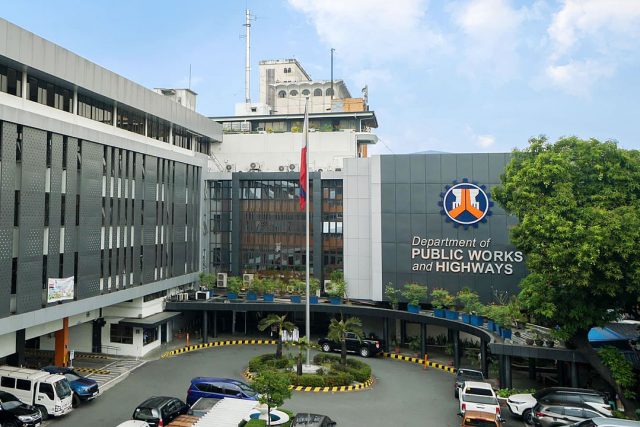
DPWH

THE Makati Business Club (MBC) said the growth of the Department of Public Works and Highways (DPWH) budget has far outstripped spending growth in the rest of the government for more than two decades.

In a statement on Monday, the MBC said the DPWH budget, including the proposed 2026 allocation, was “disproportionate compared to most other agencies even with adjustments to inflation considered.”

“Within DPWH, flood control has one of the largest fund allotments, now accounting for about one-third of all infrastructure outlays,” the MBC said.

It said flood control projects received over P1.2 trillion from 2023 to 2026, with P250 billion programmed for 2026, excluding local and convergence allocations.

“Despite years of record-high allocations, there has yet to be an explanation why there is a persistence of devastating floods every time the rains come,” it added.

Meanwhile, the MBC called for more scrutiny of Convergence and Special Support Programs (CSSP) items. The CSSP finances multipurpose buildings, local roads, streetlights, basketball courts, waiting sheds, and other discretionary projects.

“Its broad and undefined scope makes it highly vulnerable to political discretion and pork-barrel-type insertions,” the MBC said.

“CSSP projects are subject to weak transparency and audit mechanisms, posing significant risks for waste and misuse of taxpayer money,” it added. — Justine Irish D. Tabile

BIR clarifies which business expenses are tax-deductible

Can a taxpayer deduct business expenses related to passive income? Under the BIR’s latest issuance, taxpayers need to identify and segregate their expenses more carefully.

Business expenses inevitably arise, regardless of the nature of operations. Few truths in business are as enduring as the adage: it takes money to make money. With this in mind, the Bureau of Internal Revenue (BIR) issued Revenue Memorandum Circular (RMC) No. 81-2025, providing a clearer compliance framework for taxpayers to determine which business expenses qualify for tax deduction.

While RMC No. 81-2025 focuses on expounding on the deductibility of both ordinary and necessary expenses in relation to Section 34(A)(1)(a) of the Tax Code, this update is crucial to taxpayers as it draws a sharper line between expenses tied to active income and those related to passive income.

Through the RMC, the BIR has made it explicitly clear that only expenses directly tied to the generation of active income — that is, income derived from the conduct of trade, business, or profession — may be considered deductible.

The RMC provides a comprehensive framework for how taxpayers must approach expense deductibility. It provided a detailed description of when an expense can be considered ordinary and necessary.

ACTIVE INCOME VS PASSIVE INCOME
In addition, the RMC also emphasized that expenses must not only be customary and helpful in the taxpayer’s line of business, but they must also be intrinsically linked to income-generating activities that require active participation.

Thus, when a taxpayer derives both active and passive income, the RMC requires the taxpayer to segregate the expenses that are directly attributable to active business operations from those related to passive income generation. Moreover, each income stream, whether subject to regular tax, preferential rates, tax-exempt, or final tax, should have its expenses correctly identified. The RMC describes active income as earnings derived from activities that involve substantial effort or participation, such as selling goods, providing services, or engaging in professional practice. These are the core operations of a business, and expenses incurred in these areas — like salaries, rent, utilities, and marketing — are considered both ordinary and necessary for generating revenue. Active income typically arises from direct involvement (active pursuit) in trade, business, or professional activities; active income results from the taxpayer’s active pursuit of its primary business or trade.

In contrast, passive income includes interest, dividends, royalties, and certain rental income, earned with minimal or no active involvement. These income streams are typically subject to final withholding tax, meaning they are taxed at source and are not subject to further deductions. Hence, expenses related to managing investments that generate passive income — such as fees for financial advice, interest from loans to finance investments, or brokerage services — do not qualify as deductible under the ordinary and necessary rule.

Last, the RMC also provides that passive income can become active income if the taxpayer repeatedly and systematically engages in activities that produce such income, transforming it into a business venture. Likewise, income typically considered active may be treated as passive if it is earned occasionally or without any substantial or recurring effort. Ultimately, classification hinges on whether the income results from habitual, business-driven actions or from merely holding assets and earning returns without substantial participation. Thus, the degree, frequency, and intent of participation in the income-producing activity are the main considerations in classifying income as passive or active.

The requirement of expenses needing to be related to active income poses various challenges for taxpayers as discussed herein.

MIXED SOURCES OF INCOME
Taxpayers who earn both active and passive income must now distinguish expenses more rigorously, ensuring that only those tied to the defined active operations are claimed, which may lead to more disallowed deductions during audits.

Many businesses engage in both operational and investment activities. Under the new interpretation, expenses related to managing passive income streams — even if part of a broader business strategy — are excluded, potentially increasing their effective tax burden.

For example, a company earns most of its money from making and selling a particular item. But the company also invests its excess cash in investment products and earns interest. It also owns shares in various companies and regularly receives dividends. Under the new RMC, the company can only subtract costs directly related to making and selling the particular item and not the costs related to making the investments.

Hence, the company is now tasked with identifying and segregating expenses from various income streams. This task can be a challenge, particularly if the expenses are not specifically identifiable. Some allocation may be needed, and any allocation method may face challenges from the BIR.

Businesses that rely both on active and passive income to support operations must now carefully manage their finances, as they can’t reduce their tax bill using related expenses from passive income. For many, this means rethinking investment strategies and preparing for a potentially higher tax burden. Given the definition and classification of income as passive or active, the definition and application to taxpayers may not always be clear-cut, leading to interpretation issues and potential conflicts with the tax authorities.

By disallowing deductions for costs related to generating passive income, the policy could disincentivize investment behavior, especially among small and medium enterprises that desire to earn interest or dividend income to supplement active operations and manage cash flows.

INCOME SUBJECT TO FINAL WITHHOLDING TAX
Final withholding tax (FWT) is considered a final tax on certain passive income. When a tax is final, it means the tax withheld at source is deemed the full and complete payment of tax on that income, leaving no room for further deductions or adjustments. In essence, the Tax Code has simplified the process by applying a low, final tax on the gross amount to tax the gross amount in a final, simplified manner.

The BIR stressed that allowing deductions on income already subject to final withholding tax could result in a double benefit for taxpayers — paying a lower, final tax rate while also reducing taxable income through expense deductions. To prevent this, RMC 081-2025 links the non-deductibility of expenses to the final tax treatment of passive income. This ensures that passive income, such as interest or dividends, is taxed on a gross basis —without subtracting related costs — maintaining the simplicity and finality of the withholding system. It also reinforces the principle that only active income, which is taxed under regular income tax rates, may be reduced by ordinary and necessary business expenses.

SUBSTANTIATION REQUIREMENTS
The RMC points out that taxpayers must substantially prove by evidence or records the deductions claimed under the law; otherwise, the same will be disallowed. The mere allegation of the taxpayer that an item of expense is ordinary and necessary does not justify its deduction. Pieces of evidence, such as official invoices and vouchers, must be presented to substantiate the business expenses.

INORDINATELY LARGE EXPENSES
The expense must meet the test of reasonableness in terms of amount. The RMC reiterated that an inordinately large expense cannot be considered an ordinary expense even if it is necessary. For example, an expense which nearly equaled half of the total expenses claimed may be considered as inordinately large. Hence, it could not be considered “ordinary,” even if it might be “necessary.”

The RMC added that extraordinary and unusual amounts paid to individuals (natural or juridical) as compensation for their supposed services, but without any relation to the measure of their actual services, cannot be regarded as ordinary and necessary expenses.

WHAT BUSINESS OWNERS SHOULD DO
Given the mandate of the RMC, taxpayers are encouraged to

• Review income sources; identify which are active and which are passive.

• Segregate expenses; ensure only those tied to active income are claimed.

• Prepare documentation; keep clear records to support deductions.

• Reassess investment strategies; consider the tax implications of passive income.

CONCLUSION
In summary, the BIR’s goal is to simplify tax compliance, prevent abuse, and uphold the integrity of the final tax system through RMC 81-2025.

RMC No. 81-2025 clarified how taxpayers interpret and apply the “ordinary and necessary” rule for expense deductibility. By drawing a sharper line between active and passive income, the BIR emphasized a framework that demands greater diligence in expense classification and tax planning.

While the intent is to simplify compliance and preserve the integrity of the final withholding tax system, the impact may be more complex — especially for businesses with diversified income streams. Hence, taxpayers need to be more attentive in their classification and substantiation of their business expenses.

Let’s Talk Tax is a weekly newspaper column of P&A Grant Thornton that aims to keep the public informed of various developments in taxation. This article is not intended to be a substitute for competent professional advice.


Guillermo Benito G. Soliven is an associate from the Tax Advisory & Compliance practice area of P&A Grant Thornton, the Philippine member firm of Grant Thornton International Ltd.

pagrantthornton@ph.gt.com

Stocks close lower as investors pocket profits

BW FILE PHOTO

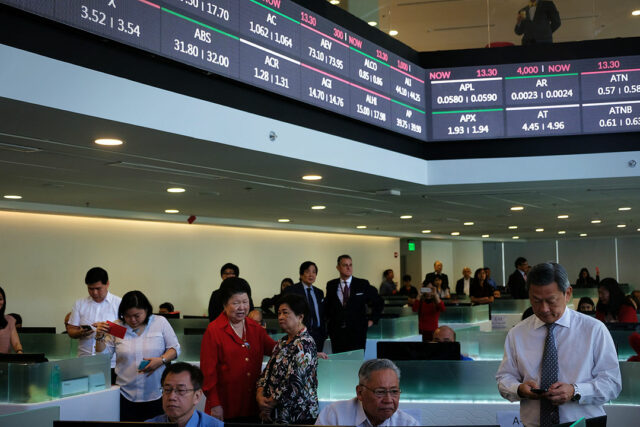
PHILIPPINE SHARES closed in the red again on Monday due to selling pressure amid corruption concerns and as investors pocketed their profits.

The Philippine Stock Exchange index (PSEi) declined by 0.76% or 47.27 points to end at 6,101.86, while the broader all shares index decreased by 0.26% or 9.93 points to 3,682.78.

“The local market dropped on the first trading day of the week as investors took profits following a two-day rally,” Philstocks Financial Inc. Research Manager Japhet Louis O. Tantiangco said in a report. “Investors also digested the latest developments in the corruption issues of the Philippines’ flood control projects.”

“The index started the week in the red as sellers dominated today’s market… Concerns over the current flood control issues may also be weighing on market sentiment,” Regina Capital Development Corp. Head of Sales Luis A. Limlingan said in a Viber message.

The Philippine Senate on Monday continued its inquiry into alleged corruption in government flood control projects, with the contractors said to be involved in these initiatives naming some lawmakers, local government and Public Works department officials who they claimed received kickbacks.

Mr. Limlingan added that investors chose to stay on the sidelines before the release of August US consumer and producer inflation data this week, as these could affect the US Federal Reserve’s decision in its Sept. 16-17 meeting, especially after US labor reports released last week bolstered the case for a cut at the review.

“US equities eased last Friday after a record-setting run as investors paused to reassess momentum following softer labor data. Despite the mild pullback, sentiment remains constructive with optimism still present heading into the new week,” he said.

The majority of sectoral indices closed lower on Monday. Financials fell by 1.27% or 26.22 points to 2,023.79; holding firms decreased by 1.25% or 64.37 points to 5,049.51; services went down by 1% or 22.06 points to 2,182.23; and property retreated by 0.07% or 1.85 points to 2,459.66.

Meanwhile, industrials increased by 0.94% or 85.12 points to 9,082.22, and mining and oil climbed by 0.78% or 86.55 points to 11,149.39.

Value turnover declined to P5.72 billion on Monday with 2.7 billion shares traded from the P5.97 billion with 2.27 billion shares that changed hands on Friday.

“Semirara Mining and Power Corp. was the day’s index leader, climbing 5.29% to P34.85. DigiPlus Interactive Corp. was the main index laggard, falling 7.78% to P19.92,” Mr. Tantiangco said.

Market breadth was negative as decliners outnumbered advancers, 107 to 87, while 52 names closed unchanged.

Net foreign selling was at P340.8 million on Monday versus the P100.42 million in net buying recorded on Friday. — Alexandria Grace C. Magno

Sotto replaces Escudero in Senate coup

SENATOR Vicente “Tito” C. Sotto III returns as Senate President after 15 senators moved to oust Senator Francis G. Escudero on Sept. 8. — SENATE SOCIAL MEDIA UNIT

By Adrian H. Halili, Reporter

THE SENATE voted Senator Vicente “Tito” C. Sotto III as Senate President after 15 senators agreed to oust Senator Francis “Chiz” G. Escudero in a surprise move on Monday, as the chamber’s leadership faced scrutiny.

Fifteen senators voted to elect Mr. Sotto during the plenary session, upon Senator Juan Miguel F. Zubiri’s nomination following his motion to declare the Senate President post vacant.

Earlier in the day, Mr. Sotto confirmed that about 15 senators signed a resolution in support of his bid to lead the chamber.

“The leadership has faced a lot of (criticism), It’s probably a good thing that we try to calm things down in the Senate,” Mr. Sotto told reporters on Monday.

Mr. Sotto, who led the minority bloc, said he had met with Mr. Escudero who agreed to step down, just a little over a month since he was re-elected as Senate President.

“I will do everything in my capacity to ensure that this Senate will remain cooperative but independent, balanced, transparent, and sincere,” Mr. Sotto told the Senate plenary.

“Corruption is now perceived by our people to be in the whole of government,” he added. “But with the political will of those in position and together with the vigilance and clamor from the public, we can fight this and bring transparency and true accountability that our nation deserves.”

Mr. Sotto sat as Senate President in the 17th and 18th Congress from 2018 to 2022.

The newly appointed Senate chief had previously challenged Mr. Escudero for the Senate Presidency during the start of the 20th Congress last July.

The ex-Senate chief has been under scrutiny over delays in the impeachment trial of Vice-President Sara Duterte-Carpio. His campaign donor was also among the President’s list of top 15 firms that cornered the largest chunk of the country’s flood control projects.

The Senate is currently conducting a probe on alleged anomalies stemming from the country’s flood control projects.

“During my tenure the Senate did not shy away from confronting the difficult questions facing our nation. We passed a record number of laws that helped uplift the lives of our countrymen. We conducted hearings that unearthed corruption on a scale rarely seen before,” Mr. Escudero said in a speech.

“In doing so we remind the public that accountability is not a mere empty rhetoric but a duty that we must all uphold,” he added.

Senate President Pro-Tempore Jose “Jinggoy” P. Ejercito Estrada and Senate Majority Leader Emmanuel Joel J. Villanueva also resigned from their leadership roles to give way for the new Senate leadership.

Senator Panfilo M. Lacson was elected as Senate President pro-tempore, while Senator Zubiri was appointed majority floor leader.

Arjan P. Aguirre, who teaches political science at the Ateneo De Manila University, said that the newly appointed Senate chief is expected to change the decisions and directions taken by Mr. Escudero.

“Now that (Mr. Sotto) has the Senate leadership and no longer competing with Mr. Escudero in getting support of their colleagues, he has to lead the Senate institution in handling the sensitive issue of the impeachment and corruption involving lawmakers-especially his colleagues,” he said in a Facebook Messenger chat.

Mr. Aguirre said that the new Senate chief may revive the impeachment trial of the Vice-President, along with taking a more aggressive stand on the upper chamber’s probe on flood control.

“(Mr.) Sotto is expected to pursue the impeachment and yes, might be aggressive too in heading the senate institution in facing the issue of the flood control mess,” he added.

Gary Ador Dionisio, dean of the Benilde School of Diplomacy and Governance, said that the new Senate leadership should be more independent and promote transparency and people’s participation in the crafting of the 2026 budget.

“With their leadership, there is an opportunity that budget not only of (Department of Public Works and Highways) will be further scrutinized and addressed all possible insertions from various lawmakers,” he said in a Messenger chat. “At the minimum, we will have at least a modicum decency in our national budget.”

Mr. Dionisio added that the Senate Blue Ribbon Committee could also initiate some investigations related to the confidential and intelligence fund of Ms. Duterte.

Hansley A. Juliano, a political science lecturer at the Ateneo de Manila University, said that the leadership change “may have been an opportunity to engineer a comeback more than a policy shift.”

“If the emerging coalition is once again veering towards the Marcoses it is a better position to be in for at least the short-term budget cycle,” he said via Messenger chat.

DPWH, CoA ask Ombudsman to file charges vs officials, contractors in ‘ghost’ flood control projects

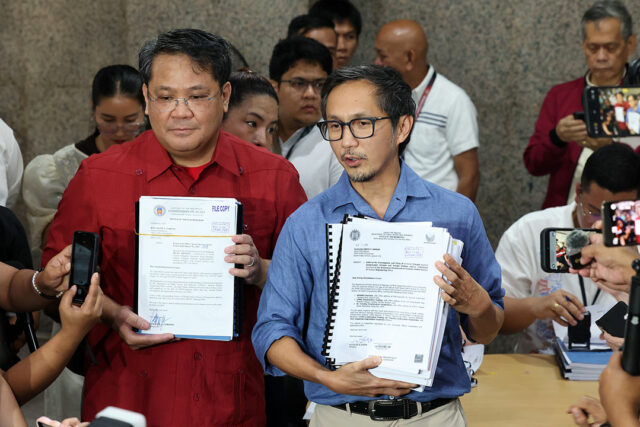
THE Department of Public Works and Highways and the Commission on Audit have recommended cases against contractors and officials linked to ghost flood control projects in Bulacan before the Office of the Ombudsman, Sept. 8. — PHILIPPINE STAR/MIGUEL DE GUZMAN

THE DEPARTMENT of Public Works and Highways (DPWH) and the Commission on Audit (CoA) have turned over fraud audit reports to the Office of the Ombudsman, recommending criminal charges against officials and contractors linked to anomalous flood control projects in Bulacan.

The audit reports flagged “ghost” or substandard projects worth hundreds of millions of pesos, many of which were declared complete but were either defective, incomplete, or not built at all.

“We are expediting the filing of cases against contractors and officials of the DPWH. The President has inspected the projects in Bulacan and found the projects are duplicated and super substandard,” Public Works Secretary Vivencio “Vince” B. Dizon told reporters.

“I have received more than a hundred projects that are either ‘ghost’ or substandard and these reports are piling up almost every day… We have recommended the filing of criminal cases against contractors.”

CoA sought charges against three contractors and four DPWH officials after auditors flagged multimillion projects, declared “100% complete,” but presented “shoddy workmanship issues” or were non-existent.

CoA said the fraud audit stemmed from Chairperson Gamaliel A. Cordoba’s directive last August to immediately scrutinize DPWH flood control projects in Bulacan covering July 2022 to May 2025.

“The findings shall form part of the evidentiary record and may be used as basis for administrative and/or criminal liability,” CoA said in a statement.

Meanwhile, the Discayas, who own a construction firm allegedly involved in anomalous flood control projects, said they are willing to be state witnesses after tagging several congressmen, their staff, and officials of the Public Works department.

“We are ready to testify without coercion and volunteer as state witnesses and tell all the corruption that is happening in the House, DPWH, and other government employees to do what is right,” Pacifico Discaya owner of the St. Gerrard Construction General Contractor and Development Corp. told a Senate hearing on Monday.

The Senate is currently investigating flood control projects after Mr. Marcos revealed in August that more than 6,000 flood control projects launched since 2022 lacked key details.

Mr. Discaya alleged that some congressmen and officials of the DPWH forced them to hand over money in exchange for securing government projects.

“We can do nothing because if we do not cooperate, they will create problems for the project that was awarded to us between mutual termination or having a right of way problem which both cause the implementation of the projects to not continue,” he added.

He also revealed that DPWH officials had approached them to ask for a cut of the projects given to their company.

He said that the staff of some congressmen had also met the Discayas to ask for a percentage of the government contracts.

“After we won the bidding, some officials from the DPWH approached us to ask for and take their share of the project cost,” Mr. Discaya said.

“The percentage they are demanding is not less than 10% and even up to 25%, which has become a condition so that the implementation of the program is not hampered,” he added.

Cezarah Discaya, co-owner of St. Gerrard Construction claimed that district engineers, regional directors of DPWH, and chiefs-of-staff of congress members had offered their company projects said to be funded by lawmakers.

“They said we should accept the reality that we have to pay the legislators if we want to continue to have projects in the government. Otherwise, they warned that our company would be removed from the list and would not get any projects, she said.

The Discaya’s company St. Gerrard Construction, among others, were named in the President Ferdinand R. Marcos, Jr.’s list of top 15 contractors that cornered the government flood control contracts.

Since 2022, about P544 billion in public funds have been allocated for flood control nationwide, with about P100 billion cornered by contractors. — Erika Mae P. Sinaking and Adrian H. Halili

PHL, Cambodia deepen ties in police cooperation, education and connectivity

PRESIDENT Ferdinand R. Marcos, Jr. speaks with Cambodian Prime Minister Hun Manet during a bilateral meeting at the Peace Palace in Phnom Penh on Sept. 8. — REVOLI CORTEZ/PPA POOL

By Erika Mae P. Sinaking

PHILIPPINE President Ferdinand R. Marcos, Jr. and Cambodian Prime Minister Hun Manet witnessed the signing of three key agreements, deepening the countries’ ties in police cooperation, higher education, and air connectivity.

“Our discussions today signal a new phase in the partnership between the Philippines and Cambodia,” Mr. Marcos said during a joint press conference with Mr. Hun Manet at the Peace Palace in Cambodia, according to a transcript from his office.

“One that embraces greater economic opportunities, deeper cooperation on matters of security, and the common resolve to uphold peace and stability in our region.”

Among the agreements signed was an amendment to a police cooperation memorandum of understanding (MoU) between the Philippine National Police and the Cambodian National Police. The amendment specifies additional areas of cooperation, such as human trafficking, arms trafficking, and cybercrime. It also includes an automatic renewal clause of the agreement.

Mr. Marcos said the agreements demonstrate a shared commitment to tackle “pressing challenges across borders: human trafficking, cybercrime, illicit drugs, and other transnational threats.”

He stressed that both governments aim for a swift, coordinated, and effective response to these issues.

The Philippine government repatriated three trafficking victims in March and four more in April from Phnom Penh after they were recruited through Facebook advertisements, which promised lucrative jobs as encoders and customer service representatives.

Moreover, the two leaders witnessed the signing of an MoU between the Philippines’ Commission on Higher Education and Cambodia’s Ministry of Education, Youth, and Sport for exchanges of officials between higher education institutions and training programs. The MoU will also facilitate cooperation in science, technology, and innovation.

“By broadening these linkages, we give our peoples more opportunities,” Mr. Marcos said, emphasizing the role of innovation in regional competitiveness.

The air services agreement, meanwhile, allows designated carriers to enter code-sharing alliances, operate charter flights, and exercise fifth freedom rights, enabling airlines to carry passengers or cargo between the Philippines and Cambodia with an intermediate stop in a third destination.

Mr. Marcos said that improved connectivity would translate to stronger cultural and economic ties.

More than 7,000 Filipinos currently live and work in Cambodia, mainly in the health, education, and development sectors.

The President called them “a wonderful bridge between our two countries and cultures,” adding that the agreements would support their role as “everyday ambassadors.”

Mr. Marcos also acknowledged Cambodia’s support for Manila’s upcoming chairship of the Association of Southeast Asian Nations (ASEAN) in 2026 and its push to secure a non-permanent seat at the United Nations Security Council.

“As fellow ASEAN Member States, we share the duty of safeguarding ASEAN centrality and unity amid regional and global challenges,” Mr. Marcos said.

Mr. Hun Manet said the talks reaffirmed Cambodia’s commitment to strengthen ties with the Philippines, calling the agreements “critical to national security, education development, and regional connectivity.”

The state visit, they added, highlights Manila’s push to expand partnerships within Southeast Asia at a time of heightened geopolitical competition in the region.

The Palace said the agreements take effect immediately after the exchange of documents, with implementing rules to be finalized by the agencies concerned.

Ex-police colonel Garma eyed as ICC witness vs Duterte, DoJ says

PHILIPPINE STAR/JOHN FELIX M. UNSON

RETIRED POLICE colonel Royina M. Garma, who linked former President Rodrigo R. Duterte to the systematic murder of thousands of drug suspects, flew to Malaysia to meet with officials of the International Criminal Court (ICC), the Department of Justice (DoJ) confirmed on Monday.

This comes just a day after Ms. Garma, also former Philippine Charity Sweepstakes Office (PCSO) general manager, arrived in the Philippines after the United States denied her asylum request.

The Bureau of Immigration (BI) on Monday reported the departure of Ms. Garma on Sunday evening, aboard a flight heading to Kuala Lumpur.

According to the bureau, Ms. Garma boarded a flight at Ninoy Aquino International Airport (NAIA) Terminal 3 that departed for Kuala Lumpur at 10:43 p.m. on Sunday and left as a tourist.

Justice Secretary Jesus Crispin C. Remulla confirmed on Monday that Ms. Garma is now in Malaysia to meet with ICC officials regarding her possible role as a witness in the case against Mr. Duterte.

“A few months ago, she appeared in our conversations, or she was a subject of our conversations with Senator Trillanes because of her possible testimony in the ICC,” Mr. Remulla told reporters.

“The ICC had been asking Sonny Trillanes about making her available to be a witness in the case against Duterte in the ICC, in the Hague.”

The BI said that Ms. Garma is the subject of an immigration lookout bulletin order (ILBO) issued on Nov. 15, 2024, in connection with cases in 2016 and 2020.

The government allowed Ms. Garma’s departure despite the ILBO, citing concerns over her safety. “Given that and the fact that she’s going to Malaysia to meet with the ICC, it gave us reason to say ‘okay,’” he said, noting this is the best way to protect her.

“We have said that our working relationship with the ICC involves witness protection. And the best way to protect her is really for the ICC to meet her abroad because her life can be in danger in our country. Let’s face it, uniformed personnel are the enemy.”

The bureau said it followed the procedure set in the ILBO and reported the matter to the DoJ. Upon verification, it confirmed that there was no hold departure order or warrant of arrest issued against her.

Ms. Garma returned to the Philippines on Sept. 6 via NAIA Terminal 1 from Los Angeles, California, after nearly 10 months in the US. She was deported after US authorities denied her asylum request, following the cancellation of her visa in November 2024.

She left for the US while a House committee investigated the Duterte administration’s anti-illegal drugs campaign.

At the time, Ms. Garma testified that Mr. Duterte had directed her to implement the “Davao model” of the drug war across the country. The same committee later cited her in contempt for allegedly evading questions about her role in the campaign.

Ms. Garma is also facing murder and frustrated murder complaints over the 2020 killing of former PCSO board secretary Wesley Barayuga. She has denied the allegation.

Meanwhile, the ICC on Monday announced it postponed the start of the confirmation hearing against Mr. Duterte, initially scheduled on Sept. 23.

“Following a request from the Defense of Mr. Duterte for an indefinite adjournment of the proceedings alleging that Mr. Duterte is not fit to stand trial, the majority of the Chamber considered that a limited postponement of the hearing on the confirmation of charges was warranted to allow sufficient time to adjudicate the request and related matters,” it said in a statement.

“The Chamber will, if applicable, set a specific date once it has addressed such outstanding matters.”

It noted that Judge María del Socorro Flores Liera issued a dissenting opinion, saying the request should be rejected. She also asserted that the pre-trial proceedings, including the hearing, intended to determine whether there is sufficient evidence to establish substantial grounds, should continue. — Erika Mae P. Sinaking

OP budget hurdles House panel

PRESIDENT FERDINAND R. MARCOS, JR. — PHILIPPINE STAR/KJ ROSALES

CONGRESSMEN swiftly ended deliberations on the Office of the President’s (OP) P27.36-billion budget on Monday, sidestepping scrutiny over secret funds and the Executive’s plan to resolve alleged irregularities in flood control projects.

House of Representatives Minority Leader and Party-list Rep. Marcelino C. Libanan moved for the termination of the budget hearing as part of “institutional and parliamentary courtesy” to the Executive.

The motion was adopted by the majority of the House appropriations committee even as some members of the panel objected to the budget’s quick approval and argued that no agency should be exempt from congressional scrutiny.

“Now, of all times, is not the moment for parliamentary courtesy but for full transparency in the budget process,” Deputy Minority Leader and Party-list Rep. Antonio L. Tinio told lawmakers during a House hearing.

Lawmakers have traditionally refrained from scrutinizing the OP’s budget, invoking long-standing parliamentary courtesy extended to the sitting president.

“No other than the President himself has said that there must be transparency and accountability, especially with regard to the discussion of the national budget… so we must scrutinize the OP budget in that spirit,” Party-list Rep. Elijah R. San Fernando told lawmakers in the same hearing.

Mr. Tinio said the OP should explain its P4.5-billion allocation to confidential and intelligence funds (CIF), amid concerns involving Vice-President Sara Duterte-Carpio’s alleged misuse of secret funds.

CIFs are meant to finance surveillance and intelligence information gathering activities, according to a 2015 joint circular between the Commission on Audit, Defense, Budget and Interior and Local Government departments.

“There are so many issues that need to be raised and answered,” he said.

He added that President Ferdinand R. Marcos, Jr. bears a responsibility to confront and resolve the alleged large-scale corruption tied to flood control projects. 

“President Marcos certified as urgent the three national budgets under his term — 2023, 2024 and 2025 — and signed the corresponding General Appropriations Acts,” he said in Filipino. “Across these budgets, nearly P1 trillion was allocated to flood control projects.”

About P545 billion was channeled towards flood control projects since 2022, Mr. Marcos said in early August, noting that 15 contractors bagged about P100 billion or 20% of the total funds.

Reports of substandard flood control projects worth billions of pesos have fueled public outrage in a country increasingly vulnerable to severe flooding, with critics citing incomplete, poorly built or non-existent infrastructure.

Executive Secretary Lucas P. Bersamin said on Sunday an executive order (EO) creating an independent body to look into spurious flood control projects has been submitted to Mr. Marcos.

“Once he returns, maybe there will be some developments as far as that goes,” he told lawmakers at the House hearing, adding the proposed EO has a sunset provision automatically terminating its authority.

“The initial discussion in the Executive is that whatever commission is created by Presidential Fiat would have a timeline,” he said. “It becomes your privilege to look at it in the same way and maybe pass a law or laws regarding the investigation of these anomalies.”

House Deputy Minority Leader and Caloocan Rep. Edgar R. Erice said the Liberal Party would file a bill that would provide the proposed commission “coercive and subpoena powers” to help its investigation into questionable flood control deals.

“This commission will be extremely weak if it doesn’t summon private individuals to testify,” he told reporters on the sidelines of the hearing.

Also on Monday, House Speaker Ferdinand Martin G. Romualdez said that lawmakers did not intend to provoke an institutional clash with the Presidential Palace after the chamber sought to return the proposed P6.793-trillion national budget for next year back to the Budget department.

“If our deliberations have caused any discomfort, we ask for understanding,” he said in a statement. “The House’s duty is not to cast blame but to ensure that every peso in the budget is transparent, accountable and truly for the people.”

The Cabinet last week criticized lawmakers for what it described as an attempt to shift blame to the Executive amid issues hounding questionable flood control deals.

“We recognize that there are issues that must be addressed, and we begin by putting our own House in order,” said Mr. Romualdez, alluding to the Cabinet’s remarks for lawmakers to “clean your house first.”

Mr. Bersamin said they issued the statement to “raise the confidence” of the Executive and to elicit support from the House amid efforts to resolve the allegations of corruption in flood control projects.

“It was more to emphasize our constitutional position and separation, and to elicit cooperation and support from the House of Representatives more than any other,” he said.

“This is not a clash of institutions,” Mr. Romualdez said. “It is a partnership in accountability and service.” — Kenneth Christiane L. Basilio

SSS rolls out first tranche of pension hike

SSS FACEBOOK PAGE

THE SOCIAL SECURITY System (SSS) implemented the first tranche of its three-year pension hike program and launched new benefit cards to expedite the rollout of increased pensions to members.

“These programs are proof of true public service: Not adding hassle, but increasing convenience. Not an old system, but a modern solution. Not a slow process, but quick action,” Finance Secretary and Social Security Commission (SSC) ex-officio Chair Ralph G. Recto said in Filipino in a statement on Monday.

Under the program, the pension for retirement and disability pensioners will be raised by 10% every September until 2027, while the pension for death or survivor pensioners will be increased by 5%.

When the reform program ends, pensions will have increased by approximately 33% for retirement/disability pensioners and 16% for death/survivor pensioners.

SSS previously said around 3.8 million pensioners will benefit from the pension reform, including 2.6 million retirement/disability pensioners and 1.2 million survivor pensioners.

To complement the hike reform program, the SSS launched the MySSS Card to help members receive their newly increased pension benefits faster and easier.

“With just one swipe, you will have many benefits. Using this, SSS members can get their benefits, loans, and pensions directly and quickly. You can also use it for shopping, paying for transportation, and for everyday expenses,” Mr. Recto said.

The MySSS Card replaces the Unified Multi-Purpose Identification (UMID) card as the official ID of the state pension fund, the SSS said.

The card has security features such as the EMV (Europay, Mastercard, and Visa) chip and uses the Philippine Identification System (PhilSys) eVerify and biometrics authentication to check members’ identities.

The MySSS Card will be issued through partner banks as it can serve as an account for benefits and loan disbursements. It can also be used to make in-store or online payments.

To apply, SSS members, pensioners, beneficiaries, claimants, and representative payees should carry an active social security number, a My.SSS Portal account with updated contact information, and are Philippine Statistics Authority (PSA) or PhilSys registered.

Mr. Recto added the President will later launch the Alagang SSS Discount Card in partnership with Unilab, Inc. for SSS members aged 60 years old and above.

The card will provide special discounts on Unilab products available in all Watsons, Southstar, and Mercury Drugstores nationwide.

“We are doing all this to ensure that every Filipino worker has more joy and more comfort. Because as our President said, you deserve nothing but our love, our care, and our protection,” Mr. Recto said. — Aaron Michael C. Sy

House body OKs school subsidy bill

PHILSTAR FILE PHOTO

A HOUSE of Representatives committee approved on Monday a proposal seeking to revamp the government’s private education voucher program to help ease classroom congestion in government schools.

The House Basic Education committee consolidated over 15 bills aimed at strengthening the private school voucher program by introducing a criteria-based system for underprivileged students and establishing a private education bureau to oversee its implementation. A copy of the substitute bill was not made immediately available.

“By institutionalizing the voucher program, we give poor and deserving families the freedom to choose private schools when public schools cannot take them in,” Party-list Rep. Jude A. Acidre told the panel.

The Government Assistance to Students and Teachers in Private Education (GASTPE) is a state-run subsidy program that covers tuition for high school students enrolled in private schools, designed to ease overcrowding in public institutions and support the viability of private education.

The Philippines has a backlog of about 165,000 public school classrooms, mainly caused by limited funding, slow procurement processes and a surging student population, according to the Education department.

The proposal is among House Speaker Ferdinand Martin G. Romualdez’s priorities for the lower chamber.

Sixteen of the proposed bills aimed at strengthening the government’s school subsidy program seek to establish clear eligibility criteria for student beneficiaries, in a bid to streamline implementation and ensure that assistance reaches underprivileged learners.

The education voucher program would support students in private kindergarten, elementary and high schools, and the Philippine Statistics Authority would be tasked to help identify students from middle-income families enrolled in overcrowded public schools who may qualify for government education subsidies, a matrix of the bills obtained by BusinessWorld showed.

“Students who are most vulnerable and underprivileged shall receive a higher voucher amount as determined by the Basic Education Assistance Council,” it added.

The proposals also seek the creation of a Bureau of Private Education that would serve as the “focal office” for the administration, supervision and regulation of private schools and the voucher program, the matrix stated.

The proposed body would be responsible for monitoring how private schools implement Education department policies and would have the authority to enforce minimum standards for academic programs, it added.

Meanwhile, a Senator on Monday pushed for the passage of a bill that seeks to accelerate the construction of local classrooms and allow local government units (LGU) and non-governmental organization (NGO) plug the gaps in learning facilities.

“Let’s bypass the DPWH (Department of Public Works and Highways). Let’s give the funds to the LGU and the NGO that has a track record in doing school building. We think it will be faster and cheaper, at the right cost,” Senator Paolo Benigno “Bam” Aquino IV said in a statement.

Senate Bill No. 121, the Classroom-Building Acceleration Program (CAP) bill, will allow LGUs and NGOs to build classrooms in compliance with national standards and guidelines within their jurisdictions, with funding support from the national government.

Mr. Aquino added that the proposed measure will allow the simultaneous building of classrooms to plug the country’s lack of learning facilities.

The bill stated that funding sources for the construction of classrooms will be drawn from the education department’s budget, contributions from private sector through corporate donations, foundations, or public-private partnerships, and other government agencies.

“We want to see these classrooms built, in the next 3 to 5 years, (so) we can close our classroom gap,” he said.

He added that he is also pushing for the reallocation of the flood control budget to education.

“We want to see a more streamlined flood control fund. As far as we can tell, the P275 billion will be reduced, it will be focused on flood-prone areas. The amount that will be eliminated, we think it will be up to P100 billion, we want to put it into education,” Mr. Aquino said. — Kenneth Christiane L. Basilio and Adrian H. Halili

PAGCOR bats for e-gambling regulation

BW FILE PHOTO

THE Philippine Amusement and Gaming Corporation (PAGCOR) on Monday urged for stricter regulations on online gambling over a total ban, as the latter would only fuel illicit activities and reduce government earnings.

In a speech, PAGCOR Chairman and Chief Executive Officer Alejandro H. Tengco said the agency’s reforms, such as lowering license fee rates, have bolstered the local electronic gaming industry.

“The iGaming story in the Philippines is no longer just about growth; it’s about how we grow — safely, fairly, and sustainably,” Mr. Tengco said. “We support stricter regulations to protect our people, but we are against a total ban which will only drive players to illegal operators and result in loss of revenues and jobs.”

According to the gaming regulator, the e-gaming sector injected P114.83 billion into the country’s gross gaming revenues (GGR) in the first half of the year. This exceeded earnings from land-based operations, it added.

GGR from online games last year also grew to P154.51 billion from P58.16 billion in 2023, making up about half of the P372.33-billion total GGR.

Mr. Tengco said PAGCOR has ongoing reforms to promote responsible gaming, such as separating its regulatory and operational roles, enhancing responsible gaming measures, tightening advertising rules, developing a 24/7 helpline and introducing digital solutions such as the PAGCOR Guarantee portal and artificial intelligence-powered monitoring platforms.

He also urged industry stakeholders to adopt “compliance by design” in their operations, strictly observe anti-money laundering policies, reinforce their KYC (Know Your Customer) system and back PAGCOR’s responsible gaming programs.

“With responsible growth, compliance, and transparency, the Philippines can develop a safer, stronger, and globally competitive iGaming industry,” he added.

President Ferdinand R. Marcos, Jr. earlier ordered tighter regulations for online gambling platforms, citing its negative impact on consumers and the country’s financial system.

Last month, the Bangko Sentral ng Pilipinas mandated e-wallet providers, banks and other financial institutions to delink from gambling apps and websites. — Katherine K. Chan