Home Blog Page 9863

IC expediting insurance industry compliance with capital standards

THE Insurance Commission (IC) will use third quarter 2019 financial statements as an initial gauge of the industry’s compliance with the P900-million net worth requirement, and hurry the process along ahead of the formal deadline of Feb. 28.

In an advisory dated Feb. 11, Insurance Commissioner Dennis B. Funa said the IC will use as its basis third-quarter financials, including any later transactions such as cash infusions and other adjustments, to evaluate compliance with the requirement that insurance firms have net worth of P900 million by the end of 2019.

Mr. Funa told BusinessWorld that taking a financial condition reading in third quarter is the IC’s way to “pressure” insurance firms to build up their cash for the higher solvency requirement after learning that some firms are “struggling” to comply.

“The Insurance Commission is aware that some companies are struggling with their capital build-up,” he said via mobile phone on Tuesday. “Our concern is to pressure them to expedite this cash build-up and at the same time, make sure that policyholders are not placed at a disadvantage while they are still in the process of complying.”

Republic Act No. 10607 required insurance companies to bring their net worth to P550 million in 2016, P900 million in 2019 and P1.3 billion in 2022.

The IC plans to issue show-cause orders for companies failing to comply, ordering them to “make good any such deficiency by cash,” from shareholders within 15 days upon receiving the order letter.

The regulator said the order will ensure that the company will not “take any new risk of any kind or character unless and until it make good any such deficiency pursuant to Section 200 of the Amended Insurance Code.”

A cease-and-desist order will then be issued to companies that still fail to comply with the P900-million minimum within the given period.

“We do not want to close companies that are in the process of building up their capital. That will also not be fair,” Mr. Funa said further.

Initially, the IC’s compliance gauge was 2019 financial statements and a compliance deadline of April.

Asked to comment, the Philippine Life Insurance Association and Philippine Insurers and Reinsurers Association, Inc. said they have not yet drafted a formal response to the order pending consultation with members.

The IC has also required the industry to submit capital build-up plans and five-year financial projections.

An advisory in December was issued to remind companies to comply and a follow-up letter was sent last month for those companies with net worths of below P900 million.

The IC said Monday that SGI Philippines General Insurance Co., Inc. reported a P1.35 billion net worth ahead of the 2022 deadline.

SGI Philippines’ majority shareholder, Shriram General Insurance Co. Ltd., injected P624 million in fresh capital.

According to preliminary IC data, the industry’s premium income rose 2.76% year-on-year in the nine months to September.

In the first half of 2019, premium income declined 2.62% year-on-year. — Beatrice M. Laforga

LANDBANK meets 2019 agricultural lending target

THE Land Bank of the Philippines (LANDBANK) surpassed its 2019 target for lending to the agricultural sector with disbursements of P236.31 billion, the Department of Finance (DoF) said.

LANDBANK’s loans to the farm and fisheries sector exceeded the P231.25-billion target set for the year, the DoF said in a statement Tuesday.

LANDBANK’s agricultural loans accounted for 26.50% of its P891.77-billion loan portfolio for 2019.

The bank lent P1.25 billion to farmers and P43.57 billion to cooperatives and farmers’ associations via rural financial institutions and other conduits.

Meanwhile, it lent P137.88 billion to small, medium, and large agribusiness enterprises and P53.61 billion to agri-aqua related projects of local government units and government-owned and -controlled corporations.

LANDBANK lent a total of P18.73 billion to the crops subsector for 2019. Livestock accounted for P34.14 billion, while fisheries sector cornered P1.92 billion of the loans to the agriculture sector.

Agri-processing and trading received P75.08 billion while P106.44 billion went to related projects like farm-to-market roads, public markets, warehouses, irrigation systems, cold storage facilities, and slaughterhouses.

LANDBANK also met its target of providing credit to one million farmers, the DoF said.

Republic Act (RA) No. 10000 or the Agri-Agra Reform Credit Act, requires banks to issue at 15% percent of their total loans to farmers and fisherfolk, plus an additional 10% for agrarian reform beneficiaries.

Finance Secretary Carlos G. Dominguez III said that LANDBANK is the only bank which complied with the Agri-Agra Law.

LANDBANK is the government’s channel for distributing cash transfers under the Pantawid Pamilyang Pilipino Program, which supports poor families, and the Pantawid Pasada program, which provides fuel subsidies for jeepney operators. — Revin Mikhael D. Ochave

Coconut fund bill seen approved by March 13

THE unnumbered substitute bill seeking to establish the Coconut Farmers and Industry Development Trust Fund may be approved at committee level before Congress adjourns for its Easter recess on March 13.

“There are still many issues… because this is the first day that it was presented to the committee and I think the chairman (Rep. Wilfrido Mark M. Enverga) would like to have greater consultations. But yes we are aware (that it needs to be passed) but you know, this is a collegial body. We want to make sure that the members are also aware of the specific provisions. It’s a complicated issue and I think one hearing is not enough,” AAMBIS-OWA Rep. Sharon S. Garin told reporters on the sidelines of the House committee on agriculture and food hearing Tuesday.

Ms. Garin said one sticking point is the definition of a “marginalized farmer” and the allocation of the trust fund.

“Right now (the discussion are about) who are the beneficiaries, the definition of the farmer. What is a marginalized farmer?” she aid, adding that the committee has not yet discussed annual funding levels.

Ang proposal dyan is five billion per year (The proposal is for P5 billion a year) over two of three years and then later 5% (of the trust fund) per year. So those are the points where things have deviated from the version of the Speaker. So we have to discuss it,” she said.

She said the panel plans to add social benefits for farmers, which were not included in the reference bill filed by Speaker Alan Peter S. Cayetano.

Dapat may scholarships. (There needs to be scholarships) We cannot give them the money but at least they can benefit directly,” Ms. Garin said.

The bill calls for a Coconut Farmers and Industry Development Plan to “increase incomes of coconut farmers, improve farm productivity, alleviate poverty, promote social equity and rehabilitate and modernize the coconut industry towards farm productivity.”

The bill also seeks to “reconstitute and strengthen” the Philippine Coconut Authority to “ensure the participation of coconut farmers in the crafting and implementation of the Coconut Farmers and Industry Development Plan.”

The measure also seeks to create the Coconut Farmers and Industry Trust Fund “for the ultimate benefit of the coconut farmers and for the development of the coconut industry.”

The coconut levy was imposed by the late President Ferdinand E. Marcos to develop the industry. Its funds were tied up in court for years because they were diverted.

President Rodrigo R. Duterte vetoed an earlier version of the bill in February 2019. According to the President’s veto message, the bill does not reflect “our ultimate goal of accelerating the further utilization of coco levy assets and funds for the benefit of our marginalized coconut farmers and the coconut industry.”

At the hearing, Mr. Enverga said that he hopes that the panel will come up with a measure that is acceptable to all stakeholders and to the Executive. He said the goal is to avoid another veto. — Genshen L. Espedido

Senate panel prefers regulating single-use plastics

THE Senate committee on environment, natural resources and climate change is inclined to regulate rather than issue an outright ban on single-use plastics.

Baka impossible na i-ban kasi wala naman akong naririnig na replacement for single-use plastic (A ban might be impossible because alternatives are not available),” Senator Cynthia A. Villar, who chairs the committee, said in a briefing Tuesday.

“What we want is for them to recycle.”

Ms. Villar said the Committee will be drafting a consolidated bill and hold one more hearing before it passes the measure out to the plenary.

The panel tackled measures regulating single-use plastic or prohibiting the use of certain plastic products.

Ms. Villar said at this point the bill will provide for the inclusion of waste management as part of the criteria being considered for recognizing local government units with the Seal of Good Local Governance.

The measure will also contain a chapter that will focus on hospital waste, which she noted should be handled differently than other waste products.

The provisions include incentives to plastic producers that exert effort to collecting waste plastic in the environment and establish information and education campaigns.

“It’s just fair that if there are entities who are doing their fair share in trying to recover their plastic from the environment, there must be some proper incentives,” Kristoffer Rada of the European Chamber of Commerce of the Philippines (ECCP) said at the hearing. He chairs ECCP’s environment and water committee.

The ECCP also supported a provision to hold an information drive to educate the public on recycling.

“We realized even if all member companies try to make their packaging recyclable, if as individuals, we do not do our share, then all of this will go to waste.” — Charmaine A. Tadalan

Banana industry says coronavirus dampens exports

WORK stoppages and market closures in China stemming from a coronavirus epidemic are hurting small- and medium-sized banana growers in the Philippines, the world’s second largest exporter of the fruit, an industry group said on Monday.

Mainland China is one of the Southeast Asian nation’s biggest buyers of bananas, its top agricultural export. Together with Japan, it bought more than half the Philippines’ exports of the fruit last year.

The Philippines’ banana shipments last year were valued at $1.93 billion, up roughly 40% from the previous year, and accounting for 3% of overall exports.

Representatives of the Pilipino Banana Growers & Exporters Association met farm ministry officials on Monday to tackle the industry challenges, including the virus outbreak.

“The China problem is not as serious for the big exporters because of their existing contracts with the importers,” said Stephen Antig, the group’s executive director.

The hardest hit are the small- and medium-sized growers who deal with spot buyers, he added.

“Their shipments cannot be readily delivered, because of the work shutdown and closure of markets,” Antig told Reuters in an e-mail. “Chances are, some of the fruit will get rotten on the piers sooner or later.”

The initial impact of the shipment woes on banana exports is likely to show up in January trade data to be released next month, he said.

“For now, it is very difficult to come up with figures, even rough estimates.”

Talks with logistics providers and efforts to identify other potential markets were among the key steps the ministry plans to help resolve the problem, Antig said. — Reuters

Travel in the Time of 2019-nCoV

Following the World Health Organization’s declaration of the 2019 novel coronavirus (renamed COVID-19) outbreak as a public health emergency, the Philippine government on Feb. 2 deemed it prudent to implement a temporary travel ban against all foreign nationals coming from China, Hong Kong and Macau; all foreign nationals who have been to China, Hong Kong, and Macau in the last 14 days prior to the arrival to the Philippines; and transiting passengers from China, Hong Kong, and Macau. Recently, the ban was clarified to include Taiwan, which, according to the WHO, is considered a special administrative region of the People’s Republic of China. (This was subsequently dropped after Taiwan complained. — Ed.)

The ban however does not cover Filipino citizens and holders of permanent resident visas issued by the Philippine government. Filipino citizens and permanent resident visa-holders coming from China or any of its special administrative regions are merely required to undergo a 14-day quarantine upon entry to the Philippines.

The right to travel is enshrined in the 1987 Constitution, under Section 6 of Article III of the Bill of Rights, which states that “(t)he liberty of abode and of changing the same within the limits prescribed by law shall not be impaired except upon lawful order of the court. Neither shall the right to travel be impaired except in the interest of national security, public safety, or public health, as may be provided by law.”

From the wording of the law alone, it is clear that the right to travel, like most rights, is not absolute and may be restricted in the interest of national security, public safety, or public health.

Notably, this would not be the first instance under the 1987 Constitution that the government has issued a travel ban. One of the most distinctive instances where a travel ban was issued was during the time of former President Cory Aquino, when the government prevented former President Ferdinand Marcos and his family from returning to the country. By affirming President Aquino’s decision to ban President Marcos from returning, the Supreme Court made a distinction by saying that the right to travel guaranteed in the Constitution involves the right to travel within the country, the right to leave the country, but not the right to return to the country.

In 1988, the Supreme Court likewise upheld the deployment ban issued by the Department of Labor and Employment against domestic workers and females with similar skills, despite its limiting impact on a class of workers’ right to travel. The Supreme Court stated that the deployment ban was a valid limitation on the right to travel, on the ground of “public safety.”

In comparison however, it appears that the travel ban issued in relation to the COVID-19 outbreak has affected a bigger class of people, particularly travelers who intended to fly to and from China and its special administrative regions. Due to the blanket ban, most, if not all airlines, have cancelled their routes which fly from the Philippines to China and any of its special administrative regions, and vice-versa, some tentatively until the end of March, and some indefinitely. While the travelers are entitled to either rebook their flights or obtain a refund, the mass cancellation of flights has left a certain group of individuals perplexed: what about the Filipino citizens or permanent resident visa-holders who have been allowed to travel to China and its special administrative regions, but can no longer return to the Philippines because of the travel ban and the consequent decision of airlines to cancel all fights covered by the travel ban? Should they be expected to wait abroad where they are, until the travel ban is lifted? And, whose responsibility would they be: the airlines’ or the government’s?

The restriction on the right to travel in the case of the COVID-19 outbreak is hardly arguable considering that it falls squarely within the government’s mandate to protect “public health.” Its real-time consequences however, require a quick demarcation of rights and responsibilities, especially for the group of people who are constrained to remain in China and its special administrative regions due to the travel ban.

This article is for informational and educational purposes only. It is not offered as and does not constitute legal advice or legal opinion.


Emiko Antonette T. Escovilla is an Associate of the Davao Branch of the Angara Abello Concepcion Regala & Cruz Law Offices (ACCRALAW).

etescovilla@accralaw.com

Apple jars investors into coronavirus realities

By Pete Sweeney and Robert Cyran

HONG KONG/NEW YORK — Apple could finally make investors as concerned as the wider population about the latest novel coronavirus. The iPhone maker warned on Monday that quarterly revenue would fall short of the $63 billion to $67 billion guidance it provided a few weeks ago because of supply and demand problems in China. The ripple effects from the outbreak may now become more apparent.

Apple’s brick-and-mortar stores in China remain closed. Third-party vendors and online sales haven’t provided a sufficient cushion. The tech titan said while its manufacturing partners have no factories in Hubei province, the epicenter of the virus, operations elsewhere in the country were “ramping up more slowly than we had anticipated.”

This sort of double whammy may affect Apple more than many companies. Chinese customers account for nearly a fifth of revenue and essentially all iPhones are assembled there by partner Foxconn, which has slowly started reopening plants. With many workers trapped at home, however, staffing them is proving difficult. Interdependencies between component makers mean one small missing piece or stalled factory can grind the whole production system to a halt.

Everything from vitamins to cars depends on materials and parts from China, which remains a dominant producer of intermediate components. This widget economy may not be sexy, but it is essential. Nintendo, which already moved its Switch console manufacturing out of China, recently said it couldn’t produce as many of them as it wants because of Chinese factory shutdowns.

More worrisome than video games are pharmaceuticals. China is the biggest producer of many drugs, and the sole provider of chemicals needed to make them. Four out of five US antibiotics come from the People’s Republic, US Food and Drug Administration Chief Scott Gottlieb recently told Congress. And many of the biggest Chinese chemical companies that supply drugmakers are headquartered in Wuhan, where COVID-19 first struck.

Despite a litany of corporate cautionary notes, the S&P 500 has traded nearly 5% higher this year. Chinese benchmark indices also have bounced back since the initial shock of the virus news. Following Apple’s announcement, which came amidst a US holiday market closure, Australia’s technology index dipped 3%. That’s the first sign that maybe a $1.4 trillion company will sound the necessary alarm.


REUTERS BREAKINGVIEWS

Rewriting EDSA

I’m almost done with my third book, The Republic of Santa Banana and other Ad Libs. It’s a compilation of my most irreverent satires in almost 32 years of writing “Ad Lib” for BusinessWorld.

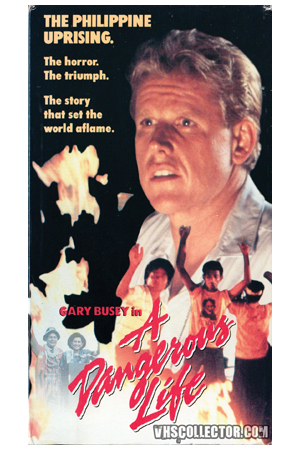
While going over the manuscripts, I came upon this piece which I wrote in 1988. “Rewriting EDSA” is a satire on A Dangerous Life, a movie version of the revolution, produced by Australian Broadcasting Corporation and starring Gary Busey.

Expectedly, the film treatment was Hollywood-ish, which, I noted, was “as close to the truth as anything Joe Isuzu himself could have written.” Joe Isuzu was a character in a series of TV commercials for Isuzu who was known for his exaggerations.

Considering the ongoing efforts of historical revisionists to confuse folks over what really happened at EDSA, I thought this piece was timely for the 34th anniversary of the 1986 People Power Revolt this February.

The original column follows:

I have just gone through the uncanny experience of seeing history rewritten before my eyes. I have just suffered through three hours of the film account of the People Power Revolution, A Dangerous Life.

It’s particularly appalling for someone like me who knows how movies are made and, most of all, who knows what happened at EDSA. Although, after watching it, I’m no longer sure whether I should believe myself or the film. So, like a good film man, I’ve tried to reconstruct what really happened during the making of this magnum awful. Naturally, I employed a research consultant, just like Prof. Alfred McCoy, whom the Australian Broadcasting Corporation used. Except that my consultant, understandably, is not the real McCoy.

This account is as accurate and factual as ABC’s version of EDSA and as close to the truth as anything Joe Isuzu himself could have written:

FADE IN on producer Hal McElroy, director Robert Markowitz and writer David Williamson seated at a table, going over the sequence treatment of the movie. All three are wearing bullet-proof vests. Outside the room, bodyguards watch out for Indonesian assassins who haven’t forgiven ABC for The Year of Living Dangerously. But the three are used to danger, having survived both the Australian Outback and the Los Angeles freeway.

“Look, this is one of those dictator movies, see. I mean, like The Last Plane Out, but not as bloody as Killing Fields,” says McElroy.

Williamson is apologetic. “Sorry, boss. I didn’t think you wanted a Central American treatment. Not with Richard Dreyfuss doing Moon Over Parador. It’s also about a Central American dictator. And the heroine ends up being the benevolent president of the country.”

“The Dreyfuss movie is a comedy. Ours is serious stuff,” Markowitz cuts in.

“You mean, like people being beaten up in the streets and soldiers shooting them in cold blood?” asks Williamson, quickly scanning his brain for a likely formula. Scriptwriters usually have standby formulas in the back of their heads. Just twist the plot a bit here and a bit there and you can sell it as an original.

“Just enough to motivate the citizenry to stage a revolution,” says Markowitz. “You’ve got to have a logical motivation. Otherwise the thing won’t peak to a good climax. On the other hand, a Killing Fields treatment won’t lead to a believable revolution, what with all the people dead.”

“What about Marcos and Imelda,” Williamson asks, realizing by now that Markowitz has a better grasp of the human psyche than he has. “How do we handle their characterization?”

“Professor McCoy says they’re pretty complex personalities,” says the producer. “McCoy’s our historical consultant, you know.”

“Look Hal, we can’t have any complex characters in this film,” says the director, getting impatient. “I’ll have enough trouble handling the love angles of Busey and the Filipina girl and Busey’s wife who goes to bed with the Filipino colonel and then they all live happily ever after, except the Filipina who dies. Why, that’s as complicated as Kramer vs. Kramer. We’ve got to keep the rest of the story simple.”

“I’d go for a Fu Man Chu treatment for Marcos,” Williamson says tentatively. “We could then do a Dragon Lady with Imelda.”

“The Fu Man Chu treatment? You mean, like the Evil Empire stuff?” asks McElroy excitedly. “I’ll buy that. People might even think George Lucas made the movie and they’ll rush to see it.”

Markowitz doesn’t miss the insult, but he’s too engrossed with the movie to worry about trifles. “The Ponce Enrile and Ramos characters are the big problem, he muses.

“The guy wants to be the hero of the story,” says McElroy, dripping with sarcasm. “Can you beat that? And he’s threatening to sue us if we have it some other way.”

“Ponce Enrile doesn’t make a logical hero,” says Markowitz sagely. “The audience won’t buy it. Here he is being accused of masterminding a coup plot against Cory and then we portray him as a hero?”

“I see what you mean,” says the scriptwriter. “It’s like portraying Donald Duck as a hero after he rapes Daisy Duck. It’s just not logical.”

“Well, what about Ramos?” asks the producer, getting desperate that the historical consultant’s retainer is fast being wasted. “He’s one of the heroes of EDSA, isn’t he? And he’s got no beef with Daisy, I mean, Cory.”

“Well, okay,” says Markowitz tiredly. “Maybe we can give him a few heroic lines. Like, when Enrile calls him if he’s joining the breakaway, he readily agrees without having to talk it over with his wife.”

“That’s heroic,” Williamson remarks. “I’d never try that on my wife. Especially on a Saturday night.”

“But this Enrile fellow,” Markowitz instructs the scriptwriter. “You’ve got to treat it like he’s really desperate for help. I mean, like real scared, man. Like he would have backed out of it he hadn’t sent the driver to the supermarket.”

“Well, we’ve got that down pat,” says producer McElroy. “Now comes the hard part. Cory.”

“That’s the easy part,” Markowitz shoots back. “She’s the heroine. I’ve never had any problem portraying heroes and heroines. Like, you know, tall, handsome, well-modulated voice, trustworthy, loyal, brave, clean, reverent.”

“Sounds like the Boy Scouts,” says McElroy, uncomfortably.

“You can never go wrong with the Boy Scouts,” beams Markowitz.

This time, McElroy decides to assert himself. “It’s easy for you to say that,” he snaps. “You don’t have to face the moneybags. How do I tell them they’re getting an Alice In Wonderland movie?”

“Aren’t they all?” Markowitz snaps back. “Good wins over evil. Crime does not pay. Heroines vanquish villains. What’s wrong with that?”

“Yeah, but the trend now is towards more complex characterizations,” McElroy presses. “And don’t give me that crap about the plot being complicated enough as it is, unless you want to go back to doing animated cartoons.”

There’s a pained look on Markowitz’s face. Deep within he wants to do something heroic, like walking out on McElroy. But he needs the job.

“I think I’ve got the Enrile character down pat,” says writer Williamson, his eyes glued on Markowitz.

“Well, about the Cory characterization,” says McElroy.

“Yes, sir, anything you say, sir,” says Williamson.

“I don’t want Cory to be all virginal and saintly, know what I mean?” he says. “You’ve got to give the audience a feeling that she’s also capable of pulling a double-cross. Like, she’s motivated by ambition. But, like she knows how to carry herself while the other guys are too obvious. Know what I mean?”

“What about if she insists on coming home from Cebu to lead the people at EDSA, before they get any ideas that it’s Enrile and Ramos who are the heroes of the story?” the writer suggests, feeling inspired.

“Sounds good,” beams McElroy while an emasculated Markowitz nods blankly. “And speaking of the EDSA scenes. I’ve made arrangements to shoot them in Sri Lanka.”

“You don’t think people will know the difference?” Williamson asks, careful not to offend.

“Naaah,” replies McElroy, cocksure as producers ought to be. “It’s just us movie people who can spot these details. The audience? All they want is a good laugh.”

FADE TO BLACK.


Greg B. Macabenta is an advertising and communications man shuttling between San Francisco and Manila and providing unique insights on issues from both perspectives.

gregmacabenta@hotmail.com

We must all fight corruption in government

Corruption is a universal evil. It spans countless countries, regardless of the level of economic development and political orientation. As the pervasiveness of corruption simply undermines all efforts attempted by a government in trying to make things better for a country, the responsibility is primarily local.

In dissecting corruption, a good starting point is to ascertain the conditions of its existence and the consequences of its perpetration. Kimberly Ann Elliot of the Peterson Institute for International Economics, in her section of the book, Corruption and the Global Economy (1997), “Corruption as an International Policy Problem,” appropriately delineated the conditions for and the consequences of corruption.

Elliot stated that, “vying for government benefits,” corrupt practices transpire in “government procurement contracts, ranging from routine purchases of supplies to large infrastructure projects; purchase from or sales to state-owned enterprises; sales of state-owned enterprises (privatization); access to government-controlled or regulated supplies of goods (raw materials, luxury goods, etc.), credit, foreign exchange, import and export licenses, other licenses or permits; and access to government services for subsidies, such as scholarships, health care, or subsidized housing.”

The practice is also widespread of “paying to avoid costs” to circumvent regulations, taxes, prosecution (for illegal activities such as prostitution or gambling), delays, red tape and in “paying for official positions.”

As to the consequences, corruption breeds “inefficiencies” and ineffectiveness owing to “misallocation of government resources due to award of contracts to less efficient bidders; distortions in allocation of government expenditure; distortions in allocation of privatized enterprises; inappropriate or poor quality of infrastructure; undersupply of public goods such as clean air or water; incentives to create additional regulations or delays in order to collect bribes; lost national savings and lowered investment due to flight abroad of bribe capital.”

Further, “inequities” and inequalities are also created and become more pronounced as a result of “redistribution of assets from public sector to corrupt individuals” and the “redistribution from relatively poorer to relatively wealthier individuals who are more likely to have access to government officials.” More so, corruption “undermines political legitimacy” as it destroys the credibility and integrity of the leaders we have elected.

After two decades, the aforesaid conditions engendering corruption are still very relevant and, so to speak, very prevalent not only in the Philippine context but in so many other countries as well. As for the consequences, the sectors involved may indeed speak of its veracity.

Among other actors, the cudgels to whack corruption are in the clutches of the country’s leaders and its citizens.

The prime responsibility of the country’s leaders is to provide strategic leadership and promote a transparent and accountable governance. In relation to the establishment of a strong rule of law and a stable policy environment, studies also show that instability and the emergence of conflicts is attributable to corruption. According to the Transparency International’s Corruption Perceptions Index 2012, “despite the lack of significant empirical evidence, there is a general consensus in literature to say that corruption and conflict are linked, but the direction of the causality is debated.”

Even in post-conflict and post-disaster areas, rehabilitation and reconstruction are deprived of sufficient resources which are diverted to the pockets of corrupt parties.

At the national context, security is also put at risk once stability and peace are put on the line. In this regard, institutional legitimacy plays a vital role because “corruption [h]as doubly pernicious impacts on the risk of violence, by fueling grievances and by undermining the effectiveness of national institutions and social norms” (World Bank, 2011).

The abuse of power characterized by arrogance and strongman moves are typical characteristics of authoritarian regimes wrought with patronage politics, incompetence and system-wide corruption that systematically victimizes the poorest sectors of society and even has strategic impacts to national security.

The government’s blocking maneuvers to stop the renewal of the ABS-CBN’s franchise, the allegations threatening the concession agreements of Manila Water and Maynilad, and the President’s abrogation of the Visiting Forces Agreement citing irrelevant and illogical reasons, and snubbing the intelligent advice of legislators and foreign policy experts alternated with the relentless verbal invectives and threats demonstrate a caricature model of abusive power. It also begs the question, “Who will benefit from all of this?”

And aside from rechanneling responsive public services, every time any anti-poverty program, e.g. rice subsidy, or any post-disaster response and rehabilitation or any post-conflict reconstruction becomes tainted with corruption, the spirit of government helping the people dissipates and suspicion and mistrust set in.

As for us citizens, we must hold government leaders accountable! As the country’s thought leaders from the academe, civil society, and the media, we should be at forefront of exposing corruption and demand transparency and accountability from all of government.


Jaime Jimenez, Ph.D is the Deputy Executive Director for Research, Stratbase ADR Institute.

The EU can’t widen and deepen at the same time

By Andreas Kluth

MANY THINGS divide the 27 member states of the European Union these days, but one controversy in particular sums up the bloc’s fundamental dilemma. It’s over “enlargement,” and specifically whether to formally start accession talks with North Macedonia and Albania. Seething below the surface is the question of whether the EU can, in Eurocrat jargon, keep “widening” and “deepening” at the same time.

Put differently, if the EU keeps admitting new members, whether they’re ready or not, won’t it just become ungovernable and drift apart?

As usual, it fell to French President Emmanuel Macron, who’s earned himself quite a reputation for being undiplomatically honest, to point out this tension. He shocked other EU leaders by blocking formal talks with North Macedonia and also, supported only by Denmark and the Netherlands, Albania. German Chancellor Angela Merkel, among others, was irate; the Balkans were livid. The EU is now scrambling to get him to drop his veto before the European Summit in March.

Two main arguments were hurled at Macron. First, that he was being unfair in failing to recognize how much the two countries have already done to become good candidates. Albania has cleaned up its judiciary and cracked down on organized crime. The other country even changed its name (adding “North”), just to appease EU member Greece, which has a region that argued it had dibs on “Macedonia.” The EU had promised that this would be enough to start negotiating.

Second, Macron was accused of being strategically myopic, just when the EU needs to start thinking “geopolitically.” Russia and China are already extending their tentacles into south-eastern Europe, the latter by financing ports, bridges, and rail lines as part of opaque political deals. If the Balkans feel spurned by the EU, they’ll run, rather than walk, into the arms of non-Western autocrats.

All true. But there’s also a good reason for objecting to enlargement: It inevitably gums up integration between the EU’s existing members. Working together was hard enough among the six founding countries back in the 1950s. With each new entrant, it kept getting harder yet, as new languages, political cultures, historical grievances, and national interests had to be accommodated. This was true after the UK joined in 1973 (and look where that led) and after the Mediterranean and Nordic expansions later.

THE BALKANIZATION OF THE EU
The dilemma became especially clear after the two eastward expansions in 2004 and 2007. The same arguments were being used then as now: Not admitting the post-communist nations would have been geopolitical folly, stranding them in the sphere of influence of their former Russian oppressors. And it would have been unfair to people who had long and valiantly struggled for their freedom and yearned to join “the West.”

More than a decade on, however, and some of those eastern members have turned into spoilers of the European project, or worse. Hungary is a quasi-autocracy that proudly calls itself “illiberal.” Poland is actively undermining the independence of its judges and the rule of law, in open confrontation with the European Court in Luxembourg. Both are obstructing any progress in formulating a common European policy for dealing with migrants. In effect, they have rejected the EU’s founding idea of European solidarity in favor of an atavistic nationalism.

Each previous round of enlargement thus introduced new fractures into the EU, some between north and south, others between east and west. Macron is hardly alone in observing that European integration stalled long ago, and that “widening” had something to do with that. In foreign and defense policy, any member state can veto any decision, thus assuring European irrelevance and impotence on the world stage. Bigger ideas like a European army are nothing more than pipe dreams. In the euro area, neither banking nor fiscal union has been completed, thus leaving the currency union prone to another crisis.

All of this is part of thinking geopolitically. Without a euro to rival the dollar, without diplomats or soldiers that Turkey, Russia, China and others take seriously, what good will the EU be in the long run?

On balance, it’s still better to open talks with Tirana and Skopje than to reject them. But the EU must simultaneously confront the bigger dilemma of stalled integration. For that, it has to broach a taboo and talk about a multi-speed Europe.

The idea has been around for decades: Letting some groups of countries integrate faster than others in policy areas they choose. To a large extent that’s already a reality. Only 19 out of 27 EU countries share the euro; 26 members of the so-called Schengen area have completely open borders with one another, of which four (Norway, Iceland, Switzerland, and Liechtenstein) aren’t even in the EU. And so on.

Why shouldn’t some members (Germany, Luxembourg, and the Netherlands, say) now advance to fiscal union, allowing others to join later? Ditto in foreign, defense and migration policy. If the EU as a whole can’t deepen, let parts of it do so.

Some member states, like Poland, have always opposed such a tiered EU, afraid of becoming peripheral and second-class. And yet they claim to be equally worried about ceding more sovereignty to Brussels. But that is the choice inherent in belonging to the EU.

So let’s make the club flexible, with different kinds of membership. Let’s not call them gold, sliver, and bronze, but something like deep, medium and shallow. With different tiers come different degrees of integration, obligations and rights. You don’t want to take your share of refugees? Then you get less from the EU budget. You don’t believe in rule of law? Then you lose your votes in Brussels.

In such a flexible EU, parts of Europe could coalesce into powers with geopolitical heft, while other parts retain more independence. This is the only way Europe can deepen and widen at the same time. Who knows? Maybe that’s the kind of EU even the Brits might want to join one day.


BLOOMBERG OPINION

Egypt’s population boom is no boon

By Timothy Kaldas

EGYPT’S 100 millionth citizen was born last week, undoubtedly a happy occasion for one family, but a moment filled with foreboding for a country struggling to contain a population explosion. President Abdel Fattah El Sisi has compared the elevated birth rate to terrorism as one of Egypt’s top national-security threats.

In the past year the government has scrambled to stem the birth rate with a new program called “Two is Enough.” It is establishing family planning clinics throughout the country, where Egyptians can purchase heavily subsidized contraceptives. It is also sending volunteers on home visits to discourage couples from having large families. But many doctors and activists fear that this is too little, and comes too late to reverse the uptick in population growth that is exacerbating challenges in a country where one in three people live below the poverty line.

Central to the uptick in the birth rate is a failure of governance. When the US Agency for International Development ceased funding Egyptian family planning programs in 2008, the birth rate per woman had dropped to three babies from 5.6 in 1976. Contraception use had risen 18.8% to 60.3% during that time. The US had spent $376 million on family planning initiatives over that period.

But since then governments in Cairo have largely ignored the issue, and birth rates have surged back to approximately 3.5 per woman, well above the Middle East and North Africa average of 2.8.

Doctors complain that the new “Two is Enough” program is disorganized, lacking in a clear strategy to bring down birthrates. The financial resources deployed thus far have been a fraction of previous efforts; some family-planning clinics have reportedly run out of contraceptives. While clinics funded by the campaign provide some reproductive health education, sexual education remains taboo in Egyptian schools. This means many people have little practical knowledge of their contraception options.

Another failure is the lack of adequate services for Egypt’s most vulnerable — the poor and pensioners. Many Egyptians opt to have more children in the hope they will look after them as they age, a phenomenon common in countries with high levels of poverty and inadequate safety nets. While over 30 million Egyptians live in poverty, only 9.4 million receive means-tested cash transfers from the government’s welfare programs. Economic reforms undertaken as part of a recently completed International Monetary Fund program have cut subsidies in a number of areas, contributing a spike in inflation that at one point exceeded 30%.

For newborns like the 100-millionth Egyptian, the outlook is grim. Inadequate assistance to the poor contributes to significant malnourishment among children. Half of those aged under five years suffer from anemia, 29% have stunted growth. This in turn contributes to reduced productivity as adults, adding to Egypt’s long-term economic challenges.

The poor quality of public education in Egypt also undercuts the potential benefits that could come with a large new workforce. In the 2019 World Economic Forum Global Competitiveness report, Egyptian graduates ranked 133rd out of 141 countries in skills. The quality of vocational training was 129th out of 141. Although the constitution requires Egypt to spend at least 4% of GDP on education, governments have consistently misses this target by a substantial margin.

A burgeoning population exacerbates other problems. Take water scarcity. Despite Egypt’s limited supply — it depends almost exclusively on the Nile — there has been a systemic failure to adequately address water waste. From wasteful megaprojects draining the Nile to literally dumping waste in the river, Egyptian officials have consistently failed to prudently protect what is perhaps the country’s most vital natural resource.

In 2018, Egypt temporarily reduced the farming of rice, a water intensive crop — only to expand cultivation the following year. The New Administrative Capital that Sisi has set out to erect is projected to need 650,000 cubic meters of water per day when finished. Failure to quickly and dramatically improve water management practices in Egypt could be disastrous, and the risk is the greater for the country’s rapid population growth.

In order to prevent a deterioration in living standards, some economists estimate Egypt’s GDP must grow at three times its rate of population growth. President Sisi himself acknowledged this, saying the economy needs to grow at least 7.5% a year. But growth is currently under 6%, and the non-oil and gas private sector is contracting. From convoluted regulations to unreliable contract enforcement, to anti-competitive practices by military-owned businesses, Egypt’s investors face an array of challenges that have stifled private sector activity.

In his latest book, The Political Economy of Reform in Egypt, Khalid Ikram, a former World Bank country director for Egypt, writes: “Many of the fundamental economic problems of Egypt have resulted not so much from a shortage of financial resources as from failures of governance.” As the country’s population continues to grow fast, the room for error is shrinking.


BLOOMBERG OPINION

SBP names roster competing at FIBA 3×3 Olympic qualifier

By Michael Angelo S. Murillo
Senior Reporter

THE Philippine squad that will be carrying the country’s flag in the FIBA 3×3 Olympic Qualifying Tournament next month in India is all set after the Samahang Basketbol ng Pilipinas on Tuesday named the final roster.

In a statement shared with members of the media, SBP President Al Panlilio announced the final four players who will be making up the Philippine team competing in the qualifiers set for March 18 to 22, with the end goal of earning a ticket for the Tokyo Olympic Games later this year.

The players are Joshua Munzon, Alvin Pasaol, Moala Tautuaa and CJ Perez.

Messrs. Munzon and Pasaol are the country’s top two 3×3 players and a staple in the local 3×3 scene while Messrs. Tautuaa and Perez are stars in the Philippine Basketball Association who helped the Philippines win the gold medal in 3×3 in the 30th Southeast Asian Games.

Serving as reserves are Santi Santillan and Karl Dehesa.

The final roster was arrived at upon the recommendation of the SBP Selection Committee, chaired by Executive Director Sonny Barrios, with coaches Jong Uichico, Pat Aquino, Ronnie Magsanoc and Eric Altamirano serving as members.

The FIBA 3×3 Olympic Qualifying Tournament is to take place in Bengaluru, which is referred to as the “Silicon Valley of India.”

The event will feature 40 teams (20 in each gender) — four pools of five teams each — and will be organized by FIBA and the Basketball Federation of India (BFI).

The top two teams from each pool will advance to the playoffs and the top three teams will qualify to the 2020 Tokyo Olympics, where 3×3 basketball will make its debut.

“It is an honor for the Philippines to be with the top 20 countries vying for seats at the 2020 Tokyo Olympics. We ask our countrymen to rally behind our Team in its quest to be part of the Olympiad,” said Mr. Panlilio.

The Philippines will open its OQT bid in Group C along with Slovenia, France, Qatar and the Dominican Republic.

In the Olympics, a total of 16 teams (eight in each gender) will be competing.

Eight of them (four in each gender) have already qualified on Nov. 1, 2019 based on the FIBA 3×3 Federation Ranking. Six additional tickets (three in each gender) will be delivered at the FIBA 3×3 OQT in Bengaluru, with the last two tickets (one in each gender) earned at the FIBA 3×3 Universality Olympic Qualifying Tournament in Budapest, Hungary, on April 24–26 this year.
