Home Blog Page 986

BSP issues implementing rules for anti-financial account scamming law
BW FILE PHOTO

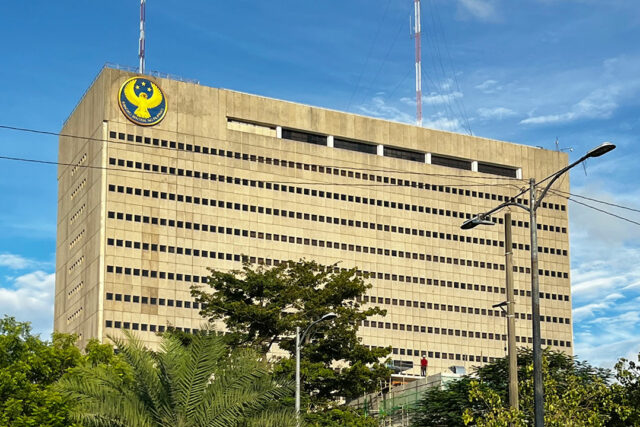
THE BANGKO SENTRAL ng Pilipinas (BSP) has released circulars implementing the Anti-Financial Account Scamming Act (AFASA), which allows the regulator to probe financial accounts suspected to be involved in prohibited acts identified under the law.

The BSP released three circulars that contain guidelines to implement the AFASA, which was signed into law by President Ferdinand R. Marcos, Jr. in July 2024. The law seeks to help prevent and penalize financial cybercrime.

The central bank is authorized investigate and inquire into financial accounts involved in prohibited acts or offenses under the AFASA. These include money mule activities and social engineering schemes, which could be considered economic sabotage if it involves three or more people as perpetrators or victims, mass mailers, or human trafficking, as well as other offenses such as opening a financial account under a fictitious name or using the identity or identification documents of another person.

Circular No. 1214 details the rules of procedure on the conduct of inquiry into financial accounts and sharing of financial account information by the BSP. Bank secrecy laws will not apply to the financial accounts under inquiry or investigation by the BSP.

Under the guidelines, requests to inquire into a financial account must be filed by competent authorities — which include the Philippine National Police, National Bureau of Investigation, Department of Justice, Anti-Money Laundering Council, Cybercrime Investigation and Coordinating Center, or any government agency authorized to investigate or prosecute prohibited acts under the AFASA, as well as financial regulators authorized to investigate crimes or offenses related to their respective regulatory functions and adjudicate financial consumer complaints — with the BSP’s Consumer Account Protection Office.

Requests must be supported by the purpose and justification for an inquiry into a financial account, the description of the account suspected to be involved, details of the prohibited act, and other relevant information.

Competent authorities must also enter into an agreement with the BSP for the sharing of financial account information, which include the account number, the account owner’s personal information, transaction records, and the documents submitted for opening or maintaining accounts, among others.

Meanwhile, Circular No. 1215 covers the regulations on the temporary holding of funds subject of disputed transactions and coordinated verification process.

The circular applies to all BSP-supervised institutions (BSIs) that shall pursue the coordinated verification of disputed transactions, regardless whether the funds remain in the financial system or not.

Under the circular, BSIs are mandated to collaborate and establish an integrated and holistic industry protocol for the temporary holding of disputed funds and coordinated verification of disputed transactions in accordance with law and the rules and regulations issued by the BSP.

Account owners are also encouraged to engage with BSIs to take reasonable steps to protect their information, report any disputed transactions, cooperate during investigations, and comply with security practices, among others.

BSIs have the authority to temporarily hold disputed funds for a period of not more than 30 calendar days, consisting of the initial and extended holding periods. The period to hold disputed funds may be further extended by a court of competent jurisdiction.

The initial holding can be extended by not more than 25 calendar days from the lapse of the initial holding period if there are “reasonable grounds to believe that the funds held are likely to be disputed funds, and additional time is needed to complete the coordinated verification process.”

The central bank is also tasking BSIs to “institutionalize a secure, real-time or near-real-time, automated system for tracing disputed transactions, with capability to generate and record a visible disputed transaction chain, trigger the temporary holding of disputed funds, and induce timely alerts for involved BSIs.”

Lastly, Circular No. 1213 includes amendments to regulations on information technology risk management for BSP-supervised financial institutions (BSFIs) to implement the AFASA’s provisions.

“BSFIs should protect customers from fraudulent schemes done electronically. Otherwise, Failing to do so may erode consumer confidence to use in electronic channels as safe, secure, and reliable methods of making for financial transactions will be eroded,” the BSP said. “To mitigate the impact of cyber fraud, BSFIs should adopt an aggressive security posture.”

These measures include implementing automated and real-time fraud monitoring and detection systems to identify and block disputed, suspicious and fraudulent online transactions. These range from transaction velocity checks or thresholds, geolocation monitoring, and blacklist screening, among others.

“To strengthen fraud detection and prevention, BSFIs shall leverage a combination of rule-based approaches, machine learning algorithms, and other technologies to adapt to evolving fraud tactics,” the BSP said.

“Likewise, constant calibration of the FMS (fraud management systems) shall be enforced through continuous data analysis, risk assessments, adaptive rule adjustments, machine learning refinements, regular stress testing, independent review and audits, and proactive monitoring of fraud patterns, among others.”

Safeguards to be implemented also include an implementation of a 24-hour transaction pause period after applying key account changes; adoption of strong device fingerprinting; and limitation on the use of interceptable authentication mechanisms such as one-time passwords (OTPs).

“With the increasing prevalence of social engineering attacks aimed at obtaining login credentials, BSFIs should limit the use of authentication mechanisms that can be shared to, or intercepted by, third parties unrelated to the transaction,” the central bank said.

“Moreover, BSFIs engaged in complex electronic products and services and handling high aggregate values of online transactions must adopt strong authentication mechanisms to ensure the integrity of customer-initiated transactions.”

Instead of OTPs, institutions can utilize biometric authentication, behavioral biometrics, password-less authentication and adaptive authentication.

“Descriptive customer notification for account activities and financial transactions should enable customers to verify the legitimacy of activities on their accounts. Real-time notification should be sent through secure channels such as mobile apps, messaging apps, e-mail, or SMS.” — Luisa Maria Jacinta C. Jocson

Mattel is combining film and television units to create Mattel Studios

A scene from the movie Barbie. — IMDB

LOS ANGELES — Toy maker Mattel is combining its film and television units to form Mattel Studios, it said on Monday, as the company seeks to produce entertainment driven by its brands and potentially repeat the commercial success of the Barbie movie.

Mattel Films President Robbie Brenner, who joined the company in 2018, was named president and chief content officer of the combined unit. She will report to the company’s chairman and chief executive officer, Ynon Kreiz.

“Our vision for Mattel Studios is to collaborate with leading creators to make standout quality content based on Mattel’s iconic brands that will resonate in culture and appeal to global audiences,” Mr. Kreiz said in a statement.

Mattel’s biggest brand is Barbie and its portfolio also includes Hot Wheels, Fisher-Price, American Girl, Matchbox, Masters of the Universe, Polly Pocket, and Uno.

Barbie, the 2023 film starring Margot Robbie and Ryan Gosling, grossed more than $1.4 billion worldwide box office and received nine Oscar nominations.

Mattel plans to release Masters of the Universe, a live-action film inspired by the He-Man action figures, in June 2026, and Matchbox, based on its miniature cars, is slated for a fall 2026 theatrical release.

The company has also developed television content like the animated series Hot Wheels Let’s Race and Masters of the Universe: Revolution.

Jennifer Breslow, who previously was president of television and digital media at Legendary Entertainment, was named head of television at Mattel Studios.

Other upcoming projects include Bob the Builder, the brand’s first animated theatrical movie featuring actor and singer Anthony Ramos voicing the lead character.

Mattel also has a live-action Polly Pocket film in its pipeline, based on the tiny 1980s dolls. — Reuters

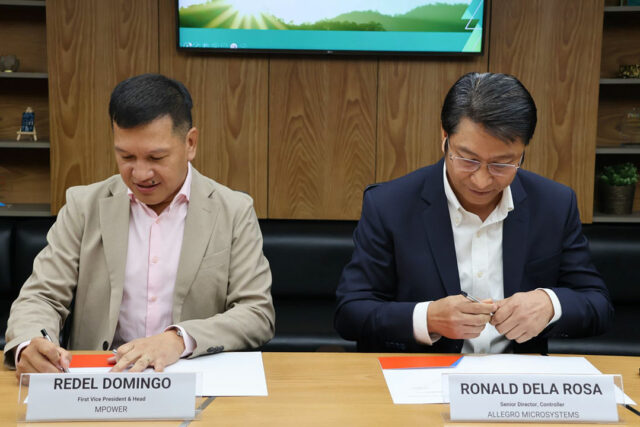
Allegro renews supply deal with MPower for 100% renewable energy

MPOWER FIRST VICE-PRESIDENT Redel M. Domingo (left) and Allegro Microsystems Philippines, Inc. Senior Director-Controller Ronald Dela Rosa sign a contract for a fully renewable electricity supply. — MANILA ELECTRIC CO.

SEMICONDUCTOR manufacturer Allegro Microsystems Philippines, Inc. has renewed its power supply agreement with MPower, the retail electricity supply unit of Manila Electric Co. (Meralco), to support its shift to 100% renewable energy.

Under the new agreement, Allegro will source its entire electricity requirement from renewable energy through MPower.

“MPower has enabled us to achieve our five-year sustainability target early, accelerating our timeline. This marks a major milestone in our advocacy and stand to lead a more responsible semiconductor manufacturing,” Allegro Senior Director-Controller Ronald Dela Rosa said in a statement on Tuesday.

The partnership, which began over a decade ago, is expected to help Allegro significantly reduce its carbon emissions, MPower said.

“MPower’s provision of 100% renewable energy has enabled Allegro to realize its 2030 sustainability target at its manufacturing sites ahead of schedule. This success highlights the strength of our partnership and our shared commitment to clean energy transformation,” First Vice-President and Head of MPower Redel M. Domingo said.

Under the Competitive Retail Electricity Market (CREM), qualified end-users with an average monthly demand of at least 500 kilowatts are allowed to select their electricity supplier based on specific operational needs.

MPower supplies contestable customers, including large corporations operating within Meralco’s franchise area.

The company holds more than a 25% share of the CREM market within the Meralco franchise.

Meralco’s controlling shareholder, Beacon Electric Asset Holdings, Inc., is partly owned by PLDT Inc.

Hastings Holdings, Inc., a unit of PLDT Beneficial Trust Fund subsidiary MediaQuest Holdings, Inc., has an interest in BusinessWorld through the Philippine Star Group, which it controls. — Sheldeen Joy Talavera

GInsure eyes more MSME financial products

BW FILE PHOTO

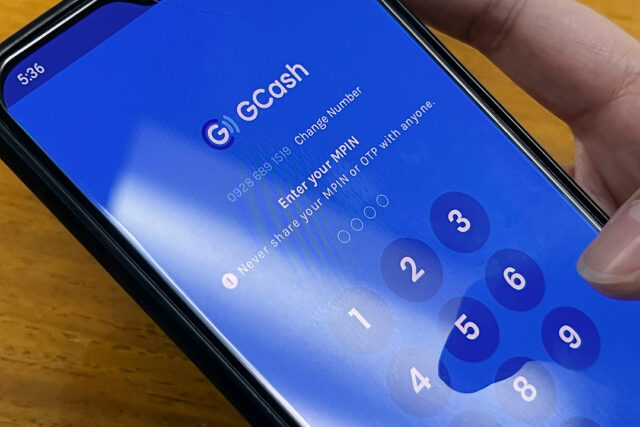
E-WALLET provider GCash seeks to better support local enterprises by offering more curated property and health insurance products to small firms.

“In the future, we are looking at offering more comprehensive products to our business owners, such as a comprehensive property insurance product for businesses,” Jay Young, GCash senior manager and partnerships and business development head for GInsure, said on the sidelines of BusinessWorld Economic Forum 2025 last month.

“We will cover the structure and machinery that they have,” he added.

The company also plans to launch an insurance product that allows micro, small and medium enterprises (MSME) to buy health cards for their employees.

“Right now, a lot of big corporations already make the health card as part of the compensation package that they give to their employees,” he said, noting that many MSMEs are unable to provide health cards to their workers.

“These businesses, from the middle, small, up to the micro, will now have a chance to actually buy and customize a health card benefit for their employees,” Mr. Young said. They seek to launch the product by year-end.

These target launches form part of GCash’s push to democratize financial services for people and businesses, he said.

“A big part of a business depends on its people, and if an employee is having a hard time in life or is sick… I’m pretty sure that won’t be a productive employee,” he said in mixed English and Filipino.

“If, as business owners, we can provide our employees with a risk-mitigation tool such as medical insurance, then that would make them more confident to do their job,” he added.

GInsure is a one-stop shop for low-premium insurance products accessible via the GCash app. Its products include life, health, car, pet and travel insurance.

Of GCash’s 90 million users, about 60 million are eligible to buy insurance, Mr. Young said.

Insurance penetration slightly improved in the first quarter to 1.89% from 1.78% a year earlier, according to the Insurance Commission. — Beatriz Marie D. Cruz

Why the Philippines can — and should — be the Blockchain Capital of Asia

STOCK PHOTO | Image by liuzishan from Freepik

The Philippines has always been an early and enthusiastic adopter of technology. From topping global social media usage charts to becoming a global hotspot for mobile finance and ride-hailing platforms, Filipinos have consistently demonstrated openness and agility when it comes to embracing the digital future.

Now, as the world enters the next major wave of digital transformation — driven by blockchain technology — the Philippines finds itself once again on the cusp of opportunity.

We have the talent. We have the digital savviness. We even have some of the building blocks already in place. But unless we act boldly and collectively, that opportunity may pass us by. The time is now for the Philippines to claim its rightful place as the Blockchain Capital of Asia.

When Axie Infinity exploded into the mainstream during the pandemic, the Philippines made global headlines for being home to the most active player base in the world. For many Filipinos, this was their first foray into crypto and blockchain technology — not through investing, but through participation in a new type of economy powered by Web3. That experience planted a seed in the collective national consciousness that blockchain can unlock real economic value.

From there, other important milestones followed. The Authority of the Freeport Area of Bataan passed the first blockchain-focused legislation in the country, providing a sandbox for innovation. The Bangko Sentral ng Pilipinas, as well as the Securities and Exchange Commission, developed regulatory frameworks around Virtual Asset Service Providers and Crypto Asset Service Providers — an essential step to giving businesses clarity and consumers protection.

More recently, the Blockchain Council of the Philippines has taken on the role of convening public and private stakeholders to align efforts, create thought leadership, and provide education and strategic guidance on blockchain development. In fact, the upcoming Philippine Blockchain Week — happening on June 10-11 at the SMX Convention Center — will be the region’s most significant blockchain event this year. With global experts, developers, regulators, entrepreneurs, and investors in attendance, PBW will serve as the catalyst for launching the Philippines into global blockchain relevance.

While these developments are promising, we must be honest: they are not enough. The real race is just beginning, and other countries in Asia are not standing still. Hong Kong, Singapore, and the UAE have already invested in blockchain-based government services, tokenized asset markets, and central bank digital currencies. Japan and South Korea are pouring millions into metaverse and Web3 infrastructure. India has become a hotbed of blockchain developer talent.

To compete at this level, the Philippines needs to do more than play catch-up. We need to lead. And that starts with building a robust blockchain ecosystem, one that is collaborative, inclusive, and designed for long-term value — not short-term hype.

For global investors looking to tap into the future of Web3 and decentralized economies, the Philippines offers one of the most compelling stories in Asia. With a young, English-speaking, tech-savvy population, we have a natural advantage in onboarding the next billion users into the blockchain economy. The country has already become a global hub for IT, creative industries, and digital services. With targeted upskilling in blockchain, smart contract development, and decentralized app creation, this workforce could pivot quickly to meet new global demands. Blockchain can solve real problems in remittance speed and cost — a $36 billion industry for the Philippines — and enable financial services for the unbanked and underbanked. We are one of the most active countries on social media and mobile gaming, two sectors that are leading the adoption of NFTs, tokens, and decentralized platforms.

The foundation is here. What we need now is capital investment and strategic partnerships that match our potential. To all venture capitalists, crypto funds, and tech investors reading this: the Philippines is your launchpad for Southeast Asia.

To realize this vision, we also need to move from theory to practice. To the country’s top conglomerates and family owned businesses: now is the time to start exploring blockchain. Whether it’s tokenizing your assets, piloting smart contracts, experimenting with blockchain-based supply chain transparency, or using NFTs for loyalty rewards — real use cases already exist and are creating value elsewhere.

To financial institutions and banks: start building wallets, digital asset platforms, and custody services. Centralized finance and decentralized finance can coexist — and the opportunity to bridge both worlds is wide open.

To universities and training institutions: it’s time to integrate blockchain into your curriculums. The future of work in tech will be decentralized. Let’s prepare our youth to become not just users of the technology, but builders, innovators, and creators of it.

To government agencies: be brave. Let’s explore blockchain-based voting systems, land registration, and digital IDs. Other countries — like Estonia, South Korea, and Switzerland — are doing it already. There’s no reason we can’t leapfrog legacy systems here in the Philippines.

To startups and developers: keep building. The Blockchain Council is working on ecosystems that can support you through funding, incubation, and global mentorship. Let’s shape the future from here.

All of this begins with a commitment to learn and work together. And there’s no better place to start than Philippine Blockchain Week. This is more than just an event. It’s a platform for discovery, discussion, and deployment. You’ll hear from global leaders in Web3, learn from other countries’ best practices, and, most importantly, build relationships with people equally committed to positioning the Philippines as a regional leader in blockchain innovation.

We have the people. We have the tools. We have the use cases. What we need is coordinated effort and belief. The Philippines can be the Blockchain Capital of Asia — but only if we choose to be. Let’s not miss this opportunity.

For registration and event details, please visit www.pbw.ph.


Dr. Donald Lim is the founding president of the Global AI Council Philippines and the Blockchain Council of the Philippines, and the founding chair of the Cybersecurity Council, whose mission is to advocate the right use of emerging technologies to propel business organizations forward. He is currently the president and COO of DITO CME Holdings Corp.

FWD Life Philippines’ NBAPE jumps 57% in Q1 

FWD LIFE Insurance Corp. (FWD Life Philippines) saw its new business annual premium equivalent (NBAPE) surge by 57% year on year to P2.5 billion in the first three months of the year.

“This achievement is more than just a number — it is a powerful reflection of our collective commitment to changing the way people feel about insurance. As the insurer of the next generation, we put our customers at the heart of everything we do and commit to support nation-building by offering innovative and accessible insurance products, promoting financial inclusion, and enabling every Filipino to build their best future and truly celebrate living,” former FWD Philippines President and Chief Executive Officer Antonio Manuel G. De Rosas said in a statement.

The life insurer has appointed Lau Soon Liang as its new president and chief executive officer starting June, subject to regulatory approvals, it announced last week. Mr. Lau succeeded Mr. De Rosas who has held the post since March 2023 and has now transitioned to an advisory role.

The company’s first-quarter NBAPE growth was among the fastest in the industry, FWD Philippines said.

“In addition to securing the number one ranking among life insurers in the Philippines, FWD Philippines also captures the top two spot on a combined basis,” it added,

The life insurance industry’s premium income rose by 13.96% to P99.9 billion in the first quarter.

Life insurers’ NBAPE increased by 12.92% to P18.86 billion, while the sector’s net income rose by 12.22% to P10.83 billion. — A.M.C. Sy

Disney laying off several hundred in film, TV, finance

MEDIA COMPANY Walt Disney is laying off several hundred employees in film, television, and corporate finance, a source familiar with the matter said on Monday.

The layoffs affect multiple teams around the world, including film and TV marketing, TV publicity and casting and development, the source said.

Disney and other companies are reshaping their business strategies in response to the migration of cable TV audiences to streaming platforms. In 2023, Disney cut 7,000 jobs as part of an effort to save $5.5 billion in costs.

Disney also laid off nearly 6%, or fewer than 200 people, in the ABC News Group and Disney Entertainment Networks in March.

The company’s most recent earnings report in May exceeded Wall Street expectations with an unexpected boost from the Disney+ streaming service and strong results from theme parks. — Reuters

Premium-Dragonhart JV sole bidder for EDSA Busway station rehab

Commuters line up at the Main Avenue station of the EDSA bus carousel in Quezon City, July 18, 2022. — PHILIPPINE STAR/MIGUEL DE GUZMAN

THE P252-MILLION rehabilitation of Epifanio de los Santos Avenue (EDSA) Busway Stations Phase 1 project has attracted a sole bidder, the Department of Transportation (DoTr) said.

During the bid opening for the design-and-build contract of the EDSA Busway Stations Rehabilitation Phase 1, the DoTr identified the bidder as a joint venture between Premium Megastructures, Inc. and Dragonhart Construction Enterprise, Inc.

The DoTr said the joint venture (JV) was the only qualified bidder, submitting a bid amounting to P247.59 million, below the approved project ceiling of P252 million.

In April, the DoTr issued the invitation to bid for the design-and-build contract for the first phase of the EDSA Busway Stations rehabilitation, with an approved budget for the contract (ABC) of P252.80 million.

Dragonhart Construction Enterprise, established in 2004, specializes in infrastructure projects including water and wastewater systems, flood control, waste management, and renewable energy, according to its corporate profile.

Premium Megastructures, founded in 2012 and based in Ormoc, offers project management, engineering, procurement, and general construction services.

In March, Premium Megastructures was awarded a P704.55-million contract for the construction of a new cruise terminal in Puerto Galera.

The EDSA Busway Project encompasses financing, design, construction, procurement of low-emission buses, route planning, and operations and maintenance of the busway, according to the Public-Private Partnership Center.

The winning bidder is expected to complete the project within one year, the DoTr said.

The DoTr confirmed that the planned privatization of the EDSA Busway Project is currently deferred, as the agency prioritizes system improvements before engaging the private sector for operations. — Ashley Erika O. Jose

Global Rights Index: Philippines on a 9-year streak in 10 worst countries for workers

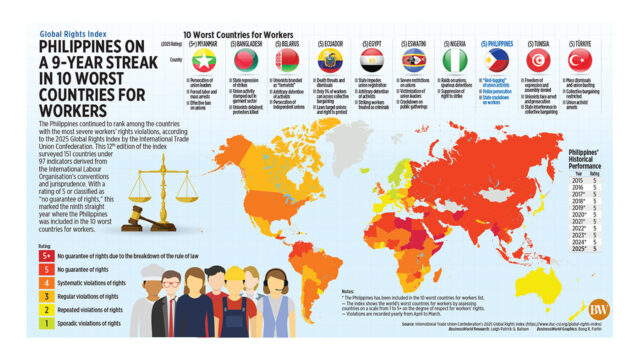
The Philippines continued to rank among the countries with the most severe workers’ rights violations, according to the 2025 Global Rights Index by the International Trade Union Confederation. This 12th edition of the index surveyed 151 countries under 97 indicators derived from the International Labour Organisation’s conventions and jurisprudence. With a rating of 5 or classified as “no guarantee of rights,” this marked the ninth straight year where the Philippines was included in the 10 worst countries for workers.

Global Rights Index: Philippines on a 9-year streak in 10 worst countries for workers

Sierra Madre women turn cassava into handmade chips

EDG ADRIAN A. EVA
EDG ADRIAN A. EVA

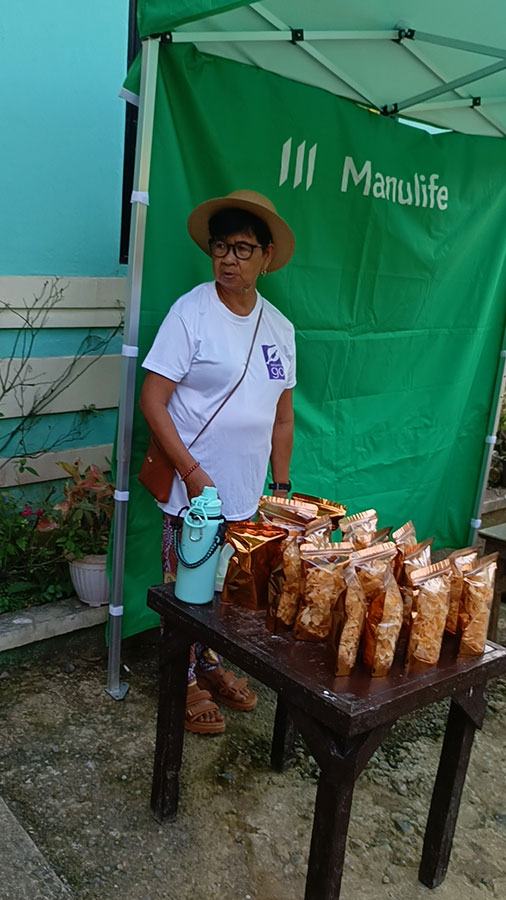
KALIPI MAGSAYSAY (Kalipunan ng Liping Pilipina Federation of Magsaysay), a women-led group of rural workers in Quezon province, is turning cassava into handmade chips.

The group is located in a protected area in the province near the Sierra Madre mountain range, where cassava, locally known as kamoteng kahoy, is one of the main crops.

It started operating in 2023 with the help of the environmental group Haribon Foundation, along with other government and nongovernment organizations.

During a site visit last week, Amelita D. Talotalo, site conservation officer at Haribon, said the project gave members of Kalipi a sustainable income source.

They saw cassava as an opportunity to empower the women of the community by turning the crop it into a valuable product — cassava chips.

“Cassava is heavy, and the farmers are far from the market,” Ms. Talotalo said in Filipino. “Sometimes, the cassava just ends up rotting.”

“We support them so they no longer have to sell raw materials outside, and the value increases when they process them,” she added.

Cassava, one of the country’s most popular crops, has significant potential due to its wide range of uses and notable resilience to climate change, according to the National Academy of Science and Technology.

Philippine cassava production rose 25% last year to P11.65 billion from a year earlier, according to data from the Philippine Statistics Authority (PSA).

Ms. Talotalo said buyers have responded positively to Kalipi Magsaysay’s cassava chips. The group sold more than 600 bags of cassava chips last year despite producing everything by hand and operating on an order-based system.

She added that a portion of the organization’s profits goes to their environmental initiatives in the nearby Sierra Madre mountains.

While Kalipi Magsaysay is new and small, it has big aspirations to expand its products and reach a bigger market, Ms. Talotalo said. — Edg Adrian A. Eva

ADVANCE.CBP partners with Korea Credit Bureau for information sharing

ADVANCE.CBP has partnered with the Korea Credit Bureau (KCB) for cross-border credit information sharing.

Under the memorandum of understanding (MoU), the two parties will establish an application programming interface (API)-based credit information linkage system between South Korea and the Philippines.

ADVANCE.CBP is an accredited special accessing entity (SAE) regulated by the Credit Information Corp. (CIC). Meanwhile, KCB is a South Korean private credit bureau.

“The CIC welcomes this groundbreaking initiative which reflects our shared vision of financial empowerment through data. Facilitating trusted credit information exchange between Korea and the Philippines opens new opportunities for our overseas workers and supports economic resilience in both countries,” CIC President and Chief Executive Officer Ben Joshua A. Baltazar said in a statement on Tuesday.

The credit information linkage system will allow over 70,000 overseas Filipino workers (OFWs) residing in South Korea to use their credit information from the Philippines, sourced from CIC data, to open bank accounts and access financial services there.

Likewise, Koreans who want to avail of financial services in the Philippines can also use their credit histories from their home countries, “fostering a seamless financial environment where citizens of both countries can conduct transactions more smoothly and securely,” ADVANCE.CBP said.

“We are proud to collaborate with KCB to establish one of the first cross-border credit linkage systems between Korea and the Philippines. This partnership directly supports our mission to unlock greater financial inclusion for Filipinos abroad and Koreans in the Philippines, empowering them with trusted data to access the financial services they deserve,” ADVANCE.CBP and ADVANCE.AI Philippines Country Manager Michelle Anne Chan said.

“Through this strategic partnership with ADVANCE.CBP, we are taking an important step towards a future where individuals can prove their creditworthiness across borders. We are excited to support greater financial access for both Korean and Filipino citizens, while setting new standards for regional cooperation in credit innovation,” KCB CEO and Chairman Jong Sup Hwang said. — A.M.C. Sy

Dior appoints Jonathan Anderson as design chief for women’s wear and haute couture

PARIS — Dior is appointing its menswear designer Jonathan Anderson to also head womenswear designs and haute couture, replacing Maria Grazia Chiuri and widening his role as it seeks to reignite sales, the LVMH-owned label said on Monday.

“Jonathan Anderson is one of the greatest creative talents of his generation. Its unique artistic signature will be a key asset for writing the next chapter of the Dior house’s history,” LVMH CEO Bernard Arnault said in a statement.

The French fashion house named Anderson, 40, in April as head of menswear designs, recruiting him from smaller LVMH label Loewe.

The award-winning Irish designer generated buzz around Loewe over the decade he spent at the Spanish label, thanks to quirky designs that caught the attention — and praise — of fashion critics.

Signature styles under his tenure include baggy, barrel-legged jeans priced at €800 ($909.92) and the compact Puzzle handbag, which sells for around €3,000.

Mr. Anderson, whose departure from Loewe was announced in March, is one of several new high profile designers taking over some of the world’s biggest fashion labels amid a wide-sweeping industry overhaul, including Chanel and Gucci.

The sector is struggling to pull out of a prolonged slump, weighed down by China’s property crisis and economic uncertainty in the United States.

Top luxury houses are betting on new design direction to help rekindle interest from shoppers, who have pulled back on fashion as prices rise.

In his new role, Mr. Anderson succeeds Ms. Chiuri, 61, who was recruited in 2016. The first female creative director at the label, Ms. Chiuri relayed feminist messages and showcased artwork at her runway shows, which featured modern renditions of house classics, including Dior’s famous, nipped-waist bar jackets, adding fluidity and sometimes a sporty flair to feminine gowns. — Reuters