

Home Blog Page 9783

POGOs have insufficient AML, CTF awareness, regulation — study

PHILIPPINE OFFSHORE Gaming Operators (POGOs) have low defenses against dirty money transactions, according to a risk assessment done by the Anti-Money Laundering Council (AMLC).

In its attempt to conduct on-site compliance checking on POGOs, the dirty money watchdog found POGOs have yet to create anti-money laundering/counter-terrorism financing (AML/CTF) compliance units.

“The POGOs have no AML/CTF compliance units…there is a low level of AML/CTF awareness and regulation,” AMLC said in a study released on Tuesday.

The AMLC said compliance officers of POGOs could not be found and contacted in their provided addresses.

The study also found non-compliance of some POGOs with existing AML regulations, including the appointment of a local gaming agent.

“A foreign-based operator is required to appoint a local gaming agent, who will represent the said foreign-based operator in the Philippines,” AMLC said, noting these local agents are in charge of completing the documentary requirements during the application for gaming operations.

The AMLC also found that the offices of some POGOs, local gaming agents, and authorized representatives are not located in addresses they registered with the Philippine Amusement and Gaming Corp. (PAGCOR). Instead, their service providers (SPs) are the ones maintaining an office in the said addresses.

PAGCOR has clarified that SPs should be distinguished from POGOs, as SPs only offer services needed by POGOs including gaming software, and content streaming, among others.

With these findings, AMLC concluded there is a low level of AML/CTF awareness in the POGO sector.

“Generally, POGOs and IGLs (interactive gaming licensees) are a lesser threat compared to their SPs,” AMLC said.

The agency said insufficient AML/CTF regulations in POGO service providers is a “jurisdictional issue” as SPs are only merely accredited and not licensed by PAGCOR.

Meanwhile, POGOs are jointly supervised by the PAGCOR and AMLC in terms of their AML/CTF measures as they are considered casinos, which are covered by the 2017 amended version of the Anti-Money Laundering Act of 2001.

The AMLC also concluded there has been an increasing level of dirty money threats and fraudulent activities from the POGO industry.

“The number of investigations involving domestic Internet-based casino operators and SPs is growing. From 2017 to 2019, the recorded casino-kidnapping-related incidents totalled 63 cases,” the AMLC said.

The agency’s sectoral risk assessment, which was based on suspicious transaction reports from 2013 to 2019, found that the estimated value of suspicious transactions in this period amounted to P14.01 billion.

“Considering the high level of vulnerability risk to money laundering of Internet-based casinos, a collective mitigation strategy with concrete actions must be applied to SPs and Internet-based casino operators,” the AMLC said.

The sectoral risk assessment, which forms part of the study, covered the 59 POGOs under PAGCOR’s watch, 218 SPs, and three gaming laboratories as well as the Cagayan Special Economic Zone’s 24 interactive gaming licensees and 18 interactive gaming support service providers. — L.W.T. Noble
San Miguel food unit stays positive amid virus

SAN MIGUEL Food and Beverage, Inc. (SMFB) remains optimistic about its prospects for 2020, as it maintains smooth operations amid the coronavirus disease 2019 (COVID-19) outbreak.

SMFB Chief Finance Officer Ildefonso B. Alindogan told reporters yesterday the food and beverage arm of listed San Miguel Corp. (SMC) sees a healthy consumer demand despite worries of the virus.

“I think we’re still very positive about our prospects. The Filipino consumer is still very healthy. We have some noise lang in terms of the virus, some noise in terms of the markets. But I think from the medium-term to the long-term, the prospects of the business within SMFB is still very good,” he said.

He added the company is currently “okay” in terms of operations, but it is carefully studying the situation in case it worsens.

“I think things are proceeding smoothly from an operational standpoint,” Mr. Alindogan said. “(But) we’ll take any other procedures and steps that’s required for us to not have any disruption in our operations,” Mr. Alindogan said.

SMFB is a manufacturer of beer and non-alcoholic beverages, spirits, and food, through brands such as San Miguel Beer, Ginebra San Miguel, Magnolia and Purefoods.

It posted flat earnings of P22.92 billion as of September 2019, amid a 10% rise in revenues to P226.36 billion.

SMFB listed yesterday its P15-billion bonds at the Philippine Dealing and Exchange Corp. (PDEx), marking its maiden bond listing as a separate entity from SMC.

Mr. Alindogan said the offer gained strong support from investors, but this will be its last planned borrowing for the year.

“(Demand) was actually very good. We had very good demand from retail investors as well as quality institution investors. So we were able to price it very tight,” he said. “But in terms of SMFB, we’re done for the year from the capital markets perspective.”

Proceeds from the issuance will be used to repay the company’s preferred shares that are maturing on Mar. 12. SMFB is expecting to net around P14.81 billion from the offer.

The company’s bond listing is the 10th in PDEx for 2020, bringing the total value of new listings this year to P93.54 billion.

Shares in SMFB at the stock exchange fell P1.50 or 2.19% to P67 each on Tuesday. — Denise A. Valdez

A musical of possibilities

WHAT happens when an Egyptian police band ends up in the wrong town in Israel and has no way to leave before morning? Strangers change each other’s lives with a whole lot of singing.

Atlantis Theatrical Entertainment Group opens its 2020 performance season with The Band’s Visit on March 13 at the Carlos P. Romulo Auditorium in RCBC Plaza, Makati City.

Based on the 2007 Israeli film of the same title, the musical premiered on Broadway in 2017 to great critical acclaim. Set in 1996, the story follows the Alexandria Ceremonial Police Orchestra that arrives in Israel to play a concert. However, there is a mix-up at the border when they are sold bus tickets to the isolated dessert town called Bet Hatikva instead of Petah Tikva City where they are scheduled to perform at the local Arab cultural organization. With no bus available until morning, the travelers are welcomed by the locals into their homes.

“I have to always remember the acceptance speech of Bong Joon-Ho for Parasite: ‘Once you overcome the one-inch-tall barrier of subtitles, you will be introduced to so many more amazing films’,” playwright, actor, and singer Rody Vera said, referring to the award-winning director’s acceptance speech for Best Foreign Language Film at the 77th Golden Globes.

’Yun yung nangyari sa akin (That’s what happened to me) when I first watched this film,” he said, since the movie and the musical based on is in Arabic and Yiddish. “It [will take] a while for you to find out what’s going on but then once you get into it, ang ganga-ganda ng kwento (the story is so nice).”

Mr. Vera is making his debut in an Atlantis production playing the role of Tewfiq Zakaria, the quiet leader of the band.

With music and lyrics by David Yazbek and a book by Itamar Moses, the musical won 10 of its 11 nominations at the 72nd Tony Awards including Best Musical, Best Book, Best Score, and Best Direction of a Musical.

FOREIGN ACCENTS
At a press launch on March 4 in Tomas Morato, Quezon City, the actors explained that they had to take Arabic and Yiddish language classes in preparation for their roles.

“It has to be distinct,” Niño Alejandro, who plays the widower Avrum, told the press. “There is a difference between the Jewish and the Arabic [accent].”

Menchu Lauchengco-Yulo, who takes the role of café owner Dina, explained that the songs in the musical require “not so much beautiful singing” which meant no vibratos.

“We were not allowed to sing with vibratos because we had to take on the way the Arabs and Isrealis sing,” she said, describing that the style was “not very Western, everything [is] forward, and almost spoken.”

“A lot of what happens to the show is unsaid. It’s in the silences. It’s the possibilities of what could have happened if they didn’t leave or what changed in their lives after they left,” she said.

“It is so profound. It wasn’t earthshaking, but it changed them,” she said.

The musical is directed by Atlantis’ founder, Bobby Garcia. Also in the cast are Mark Bautista, Reb Atadero, Steven Conde, Maronne Cruz, Rhenwyn Gabalonzo, Jep Go, Leanne Mamonong, Jill Peña, Bibo Reyes, Dean Rosen, and Floyd Tena.

The story, said Ms. Lauchengco-Yulo, is about possibilities and how encounters can affect one’s life.

The Band’s Visit runs from March 13 to 29 at the Carlos P. Romulo Auditorium in RCBC Plaza, Makati City. Tickets are available through TicketWorld (www.ticketworld.com.ph, 8891 9999). — Michelle Anne P. Soliman

Rediscount facility untapped

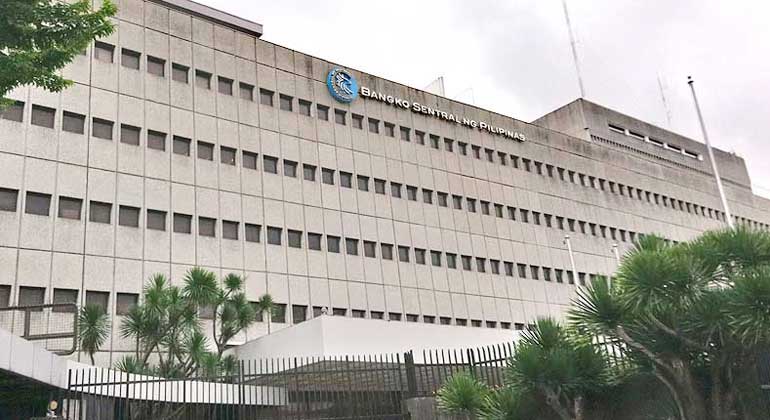
NO BANKS took out loans from the Bangko Sentral ng Pilipinas’ facility. — BW FILE PHOTO

LENDERS DID NOT avail of the central bank’s rediscount facility for the fourth straight month in February, as banks had enough liquidity following the reserve requirement ratio (RRR) cuts implemented last year.

“There were no availments under the Peso Rediscount Facility and the EDYRF (Exporters Dollar and Yen Rediscount Facility) for the period covering Jan. 1 to Feb. 29,” the Bangko Sentral ng Pilipinas said in a statement on Monday.

The rediscount facility of the BSP lets banks get hold of additional money supply by posting their collectibles from clients as collateral.

In turn, the banks may use the fresh cash — in peso, dollar or yen — to grant more loans for corporate or retail clients and service unexpected withdrawals.

Peso rediscount loans are based on the overnight lending rate which is currently at 4.25% to be added to a spread depending on the term of the loan.

Peso loans totaled P122.167 billion from January to October 2019. After which, banks did not tap the facility.

Rizal Commercial Banking Corp. Chief Economist Michael L. Ricafort said lenders may have opted to not avail rediscount loans due to the excess liquidity from the series of RRR cuts in 2019.

“Banks may not have availed yet the Peso Rediscounting Facility at the BSP brought about by the cut in banks’ RRR that effectively infused additional funds into the banking system by a total of more than P450 billion,” he said in an e-mailed response.

He added that prospects of a global economic slowdown due to US-China trade war and concerns on the spread of the coronavirus disease 2019 may have also affected demand for financing.

“Some banks could possibly tap again the Peso Rediscounting Facility in the next few months, as early as Q2 2020, in view of planned borrowings by the biggest businesses and by the government as borrowing costs recently eased that made it more attractive for borrowers,” Mr. Ricafort said.

The BSP trimmed banks’ RRR by a total of 400 basis points last year, reducing the reserve requirement ratios of big banks, thrift and rural lenders to 14%, four percent, and three percent, respectively.

Bangko Sentral ng Pilipinas Governor Benjamin E. Diokno has said he wants to reduce big banks’ RRR to the single-digit level by the end of his term in mid-2023.

RATES
For this month, rediscount rates for peso loans with a maturity of 90 days or less are priced at 5.19% while those with a 91- to 180-day term have a rate of 6.143%.

On the other hand, the EDYRF for the dollar credit lines will have rates of 4.40925% for loans maturing from one to 90 days; 5.35575% for those with a tenor within a 91- to 180-day time frame; and 7.24875% for those with a term of 181 to 360 days.

For yen-denominated credits, rates are at 2.86% for terms of three months or less; 3.817% for those maturing within a 91-180 day time frame; and 5.71% for loans maturing from 181 to 360 days.

Computations for the EDYRF rates are depending on the 90-day London Inter-Bank Offered Rate plus the spread depending on the tenor of the credits, the BSP said. — Luz Wendy T. Noble

AEV income slips as power business segment falters

ABOITIZ Equity Ventures, Inc. (AEV) reported on Tuesday a 1% dip in net income to P22 billion for 2019, as its top contributing power business recorded a double-digit profit decline after last year’s power outages.

In a disclosure to the stock exchange, the holding firm said power accounted for 57% of the total income contributions from its strategic business units, followed by banking and financial services (30%), food (7%), land (4%), and infrastructure (2%).

“Despite challenges in our power business last year, our portfolio was largely able to sustain its operational and bottom line performance, as better-performing businesses continued their positive trajectory,” said Sabin M. Aboitiz, AEV president and chief executive officer.

Without one-time gains, the firm’s core net income for 2019 was P21.5 billion, 7% lower year-on-year from P23.1 billion. It registered consolidated earnings before interest, taxes, depreciation, and amortization (EBITDA) of P60.2 billion, 1% lower than the figure in the previous year.

“As we commemorate the 100th year of our majority owner, Aboitiz & Co., we will continue to build a well-diversified and resilient investment portfolio into the next decade by advancing business and communities,” Mr. Aboitiz said.

Aboitiz Power Corp.’s net income contribution to AEV decreased by 20% to P13.3 billion, which was attributed to the outages experienced by the company’s coal-fired facilities and worsened by the need to buy replacement power at higher spot market prices.

EBITDA for the generation and retail electricity supply businesses was down 16% to P36.2 billion. Replacement power was also bought from the spot market as AboitizPower had contracted ahead in anticipation of Therma Visayas, Inc.’s incoming capacity. Decreased spot market sales further eroded earnings, the company said.

AboitizPower posted a net income of P17.3 billion last year, lower by 20% compared with P21.7 billion in 2018.

It recognized non-recurring gains of P702 million, reversing 2018’s losses of P2.1 billion after net foreign exchange gains from the revaluation of dollar-denominated debts and derivatives, and the value-added tax recoveries and gains on the land appraisal of former business unit Aseagas Corp.

Without the one-off gains, AboitizPower’s core net income was P16.6 billion, 30% lower than the P23.8 billion in 2018. The decrease was largely because of the outages experienced last year, higher replacement power costs, lower spot market sales, increased interest expense, and increased depreciation expense.

“While market conditions had an effect on our 2019 financial result, we acknowledge that it was primarily driven by operational issues. Having done all the necessary measures to address these technical realities, we are positive about a much stronger operational performance and attaining our targets this year,” said Emmanuel V. Rubio, AboitizPower president and chief executive officer.

On Tuesday, shares in AEV fell by 3.35% to P40.45 each, while those of AboitizPower dipped by 0.77% to P26.30 apiece. — VVS

Threat of coronavirus hangs heavy over Rome’s Raphael retrospective

ROME — An exhibition commemorating the 500th anniversary of the death of Renaissance artist Raphael opened in Rome last week but the show risks being overshadowed by the coronavirus outbreak sweeping Italy.

The Scuderie del Quirinale gallery has sold almost 70,000 tickets in online sales even before the doors open to the public, a record for such an exhibition here, but the government battle to halt the infection could yet wreck the event.

Amongst the measures that ministers are considering are banning public gatherings and ordering people to maintain a distance of at least one meter from one another — impossible to imagine in the confined space of a major art show.

“We are just keeping our fingers crossed and praying it can go ahead as planned,” said a senior official at the Scuderie as workers put the finishing touches to the exhibition, which was to open on March 5 and run until June 2.

More than 2,500 people in Italy have come down with coronavirus in less than two weeks and at least 79 people have died.

Raffaello Sanzio da Urbino, known in the English-speaking world as Raphael, was born in 1483 and died just 37 years later after a sudden illness in Rome. He was one of the most celebrated artists of his age.

The exhibition covers not just his famed paintings, but also his involvement in archaeology, architecture and poetry, as well as prints, sculpture and tapestry.

The curators have managed to bring together 204 works of art, including 120 by Raphael himself and other pieces that give an insight into the times he lived — a period now known as the High Renaissance, an enlightened age marked by a renewed interest in classical antiquity.

Raphael’s masterpieces are found today in museums around the world, and many of them, including Madrid’s Prado, London’s National Gallery and the Washington National Gallery of Art, have sent their priceless art work to Rome.

“I am sure we will never see again such a concentration of works by Raphael together in one venue as we do here,” said Eike Schmidt, the director of Florence’s Uffizi museum which itself offered up nine paintings and 40 drawings.

Showing the passions that Raphael’s work engenders, the entire scientific committee at the Uffizi resigned last month to protest Schmidt’s decision to loan one of its paintings to the Scuderie in defiance of their recommendation.

The committee said the portrait of Pope Leo X was core to the identity of their collection and should never be let out of Florence. Schmidt overruled them, deciding that such an iconic painting deserved to return to the city it was created in.

Marzia Faietti, who curated the show, spent three years trying to persuade other museums to give up their treasures.

“We got more than we thought we would get. I am so grateful. It just shows the friendships in place between Italy and all these other galleries,” Faietti told Reuters. “This is the only time and the only place where you can get to see them all.” — Reuters

Abe pressures BoJ to ramp up stimulus ahead of rate review

JAPAN PRIME MINISTER Shinzo Abe attends a news conference on coronavirus at his official residence in Tokyo on Feb. 29. — REUTERS

TOKYO — Japanese Prime Minister Shinzo Abe said the government will work closely with the Bank of Japan (BoJ) to stabilize markets, piling pressure on the central bank to ramp up stimulus next week to fend off risks to the economy from the coronavirus outbreak.

The remarks came hours after BoJ Governor Haruhiko Kuroda reiterated the central bank’s readiness to act against “very unstable” markets, suggesting a heightening chance of additional monetary easing at next week’s rate review.

“Markets are making nervous movements amid uncertainty over the global economic outlook. Based on agreements made among G7 and G20 nations, the government will work closely with the BoJ and authorities of other countries to respond appropriately,” Mr. Abe said in a meeting with ruling party executives on Tuesday.

Asian shares bounced and bond yields rose from historic lows on Tuesday as speculation of coordinated stimulus from global central banks and governments calmed panic selling.

The market volatility and the widening hit to the economy from the coronavirus epidemic are adding pressure on the BoJ to ramp up stimulus at its March 18-19 policy meeting.

“There’s uncertainty on when the coronavirus will be contained, and markets are making very unstable moves,” Mr. Kuroda told parliament on Tuesday.

“We’ll continue to keep an eye out on how the spread of the virus could affect Japan’s economy and prices, particularly via domestic and overseas market developments, and act appropriately as needed without hesitation,” he said.

As the health crisis stoke fears of a global recession, G20 finance ministers and central bank governors pledged on Friday to take “appropriate” fiscal and monetary steps to protect the economy from shocks.

BOJ EYES MORE ETF BUYING
Under a policy dubbed yield curve control, the BoJ guides short-term interest rates at -0.1% and the 10-year government bond yield at around zero. It also buys risky assets such as exchange-traded funds (ETF) to funnel money to the economy.

Markets are rife with speculation the BoJ could pledge next week to buy ETFs at a faster pace than the current commitment to do so by roughly 6 trillion yen ($58.12 billion) per year.

Sources familiar with the BoJ’s thinking say such a step is among options the central bank may consider if it approaches the ceiling as a result of aggressive purchases.

Mr. Kuroda told parliament the BoJ had bought a cumulative 2.04 trillion yen worth of ETFs since October last year.

He also revealed the BoJ’s own estimate showed its holdings of ETFs may incur paper losses once Tokyo’s Nikkei stock average falls below 19,500. The Nikkei stood around 19,665 on Tuesday after briefly slipping below 19,000 in morning trade.

The remarks underscore the cost the BoJ incurs by loading up on ETFs, which does not have maturity and thus won’t fall off the central bank’s balance sheet unless it sells them.

In a bid to soothe market jitters, the BoJ issued an emergency statement on March 2 pledging to offer ample liquidity via market operations and asset buying.

Since then, the BoJ has been accelerating the pace of ETF buying. It bought 100.2 billion yen ($979 million) on Monday, matching a record pace of purchases made twice last week.

Before the emergency statement was issued, the BoJ would typically buy about 70 billion yen per day whenever it stepped into the market.

Eiji Maeda, the BoJ’s executive director, said the central bank was scrutinizing daily price moves and taking appropriate action to stabilize markets.

“We of course won’t hesitate to take additional measures if needed, depending on future market developments,” he said. — Reuters

NTC says ABS-CBN can operate beyond May

ABS-CBN Corp. can continue to operate even after its franchise expires on May 4, 2020, the National Telecommunication Commission (NTC) assured the lower chamber on Tuesday.

“The NTC will follow the latest advice of the DoJ (Department of Justice) and let ABS-CBN continue operation based on equity,” NTC Commissioner Gamaliel A. Cordoba said during the hearing of the House committee on legislative franchises.

Asked if the NTC will issue a provisional authority to ABS-CBN, Mr. Cordoba replied: “Most likely, your honor. We will follow the latest opinion of the Secretary of Justice.”

The House committee on legislative franchises adopted the letter written by Palawan Rep. and chair of the committee Franz E. Alvarez and House Speaker Alan Peter S. Cayetano to allow the ABS-CBN Corp. and its affiliate corporations to continue its operations.

“I move that the said letter of our chairman as concurred by the Honorable Speaker, be adopted by this committee as the official position of this committee, and ultimately the position of the House of Representatives. And I further resolve to allow the ABS-CBN Corp. and its affiliate corporations… to continue its operations unhampered beyond May 4, 2020 and/or until the final resolution by the House of Representatives of the bill for the renewal of its franchise,” Occidental Mindoro Rep. Josephine Ramirez-Sato said.

The NTC, upon the advice of the Department of Justice, earlier asked Congress to pass the concurrent resolution mandating it to provide a provisional authority to ABS-CBN.

The NTC argued it was necessary considering the objection the network was facing, which include a quo warranto petition filed by the Office of the Solicitor General.

Meanwhile, the Supreme Court has not yet decided on the case of the solicitor general against broadcast network ABS-CBN and its unit ABS-CBN Convergence, Inc., and set discussion anew next month.

“I confirm that the deliberations by the court on the ABS CBN Quo Warranto petition is still on going. The case will again be included in the agenda of the court on April 14, 2020,” SC Public Information Chief Brian Keith F. Hosaka told reporters in a mobile-phone message.

“The Justices need more time to further study the case,” he added. — Genshen L.Espedido and Vann Marlo M. Villegas

Nuyda, Ocampo, and Kiukok among highlights at Salcedo auction

ANG KIUKOK’s The Man

SALCEDO AUCTIONS will hold its first major sale of the year with pieces by Justin Nuyda, Ang Kiukok, and H.R. Ocampo up for bid. Carrying the theme “Legacy Refined, the Important Philippine Art,” the sale will be held on March 14 at the NEX Tower, 6786 Ayala Ave., Makati City.

“Legacy are values [and] objects that we pass to our succeeding generations. It is the reason why people collect these pieces. It is something they enjoy. And these are also objects that tell stories,” Salcedo Auctions director Richie Lerma told BusinessWorld at the media preview on March 4. “We like to think that the stories regarding these pieces that you find in Salcedo auctions will continue to be told,” he added.

Among the highlights in sale are artworks from the collection of jewelry artist Celia Molano. HR Ocampo and Ang Kiukok were among her closest friends.

Mr. Lerma explained that in the 1970s, when Ang Kiukok was less well known, the artist had papers seized and kept in the Bureau of Immigration.

“A collector by the name of Priscilla Chongbian contacts her friend, Celia Molano, to help this artist get his papers out of the Bureau of Immigration, otherwise he was going to get deported,” Mr. Lerma said, adding that Mrs. Molano did not know who the artist was.

“Little did she know that by that act she had changed the course of Philippine art history. That gesture grew into a friendship wherein not only did Ang Kiukok paint works that had dedications to Mrs. Molano, but the Molanos as art patrons also collected his works, among others,” he added.

The first of the highlight pieces is Ang Kiukok’s Man (1978), an oil painting of a distorted human body which, Mr. Lerma explained, was inspired by a conversation the artist had with Mrs. Molano’s husband who was a UN official while he was waiting for news on his next post.

Another piece from the Molano collection is Gemini (1967), an oil on canvas by National Artist H.R. Ocampo. The red, orange, and yellow abstract was inspired by the twin waterfalls of Maria Cristina in the Agus River of Mindanao.

NUYDA COLLECTION
The second collection in the auction is a set of paintings by abstractionist Justin Nuyda in which he pays tribute to the doctors who have attended to him since being diagnosed with renal cancer in 2019.

The collection consists of four abstracts titled Search Landscapes: Michelli, Dennis, Charity, and Brian. Each painting is named after one of his doctors.

Proceeds from the sale of these works will go to the Kythe Foundation, an organization that helps improve the quality of life of hospitalized children with cancer and other chronic illnesses.

The third collection features rare early untitled works by the “Father of Philippine Conceptual Art” Roberto Chabet, which he left with long-time friend and fellow artist Luis Romero.

Aside from these collections, there will be works by National Artists Fernando Amorsolo, Cesar Legaspi, Vicente Manansala, Napoleon Abueva, José Joya, and Benedictos “BenCab” Cabrera in the auction. Contemporary works include pieces by Ronald Ventura, Lao Lianben, and Ramon Orlina.

Also on sale are furniture, jewelry, and watches including a 10-seat kamagong and balayong wood dining table by Maximo Viola, an 18k white gold emerald fringe necklace composed of five Zambian emeralds, and a Patek Philippe Nautilus Flyback Chronograph ref. no. 5980R-001.

The auction will be held on March 14, 2 p.m., at NEX Tower, 6786 Ayala Avenue, Makati City. The public preview runs daily until March 13. Salcedo Auctions’ Important Philippine Art online catalogue is available at salcedoauctions.com. For inquiries, e-mail info@salcedoauctions.com or call 8659-4094, 8823-0956, or 0917-107-5581. — Michelle Anne P. Soliman

Add oil to list of central bank concerns as prices drop

WASHINGTON/TOKYO/FRANKFURT — An oil price war between Russia and Saudi Arabia is further confounding the world’s central bankers, adding worry over rising currency values in Japan and Europe and a potential blow to investment in the United States to an economic outlook already soured by the fast-moving coronavirus outbreak.

The decision by Saudi Arabia to raise oil production pushed prices down as much as a third overnight, a potential boon to consumers and companies with big energy bills, but a problem for central bankers worried inflation may fall even further below their targeted levels and add new stress in global financial markets.

While oil price swings are often dismissed among monetary policy officials as too transitory to influence their decisions, Saudi’s actions promised a more persistent drag on prices, with a sudden new round of volatility for officials to study in a key commodity market.

For the US Federal Reserve, the oil price collapse means its efforts to support the economy with interest rate cuts may be blunted before they even take hold, and possibly prompt even more action.

“The drop in energy prices should prompt the Fed to be even more aggressive,” said Ryan Sweet, head of monetary policy research at Moody’s Analytics.

Fed officials said they hoped last week’s emergency rate reduction of half a percentage point, as well as subsequent cuts investors expect in coming weeks, would encourage business investment.

But a good share of US capital spending is associated with the energy industry, and at the current level of prices investment in drilling and exploration has tended to ebb. While cheap oil also puts money in consumers’ pockets through lower fuel bills, and can encourage spending on other consumption, that may be less likely at a time of fear about the virus, and the potential expanded use of quarantines to combat it.

The plunge in prices, with West Texas Intermediate nearing $30 a barrel at one point, “will have a net negative effect on the US economy as consumers save the windfall,” Oxford Economics senior US economist Lydia Boussour wrote.

CURRENCY AND INFLATION TROUBLES
Central bank officials had already said they were prepared to act if the economic fallout of the coronavirus worsens, as it is expected to do if more widespread testing reveals a larger number of infections than currently estimated.

The unexpected turn in oil markets could reshape the speed or scale of some of those actions. IT also raise concerns about stress among smaller oil exporting nations, or in corners of the corporate bond market with heavily leveraged bets on energy producers.

In Japan, investors rushed to buy yen, triggering a spike in the Japanese currency and adding to concern about the near-term outlook for their export-reliant economy.

Japanese Finance Minister Taro Aso cautioned investors against pushing up the yen too much, and Bank of Japan Governor Haruhiko Kuroda signaled his readiness to ramp up monetary stimulus as early as next week to fend off risks from market volatility.

European officials may see the immediate impact of lower oil prices as helpful to growth. But if it leads to a steady rise in the euro or pushes down inflation it could also complicate choices for the European Central Bank beyond problems posed by the virus outbreak.

If oil prices remain depressed “inflation in the euro zone could fall to the psychologically important 0% mark in May,” Commerzbank analysts estimated.

US inflation expectations are already creating, another possible concern for the Fed. Following the oil price and equity market drops on Monday, bond market-based measures of estimated inflation in five years time had fallen below 0.75%, their lowest level since 2009. — Reuters

SMC’s Ang offers full payment for Ilijan plant to support PSALM

THE president of diversified conglomerate San Miguel Corp. (SMC) has offered to pay in full the capacity charges for its 1,200-megawatt (MW) Ilijan power plant amounting to P22.68 billion, more than two years ahead of schedule.

In a statement, SMC President Ramon S. Ang said his offer was meant to help “cash-strapped” Power Sector Assets and Liabilities Management Corp. (PSALM) manage its liabilities.

“While we have an ongoing court case with PSALM regarding the computation of generation fees for the Ilijan plant, as a stakeholder in the power industry, and more importantly, a proactive partner of government in nation-building, we sincerely want to help PSALM raise funds for government,” he said.

Capacity charges represent capital payment to PSALM coming from SMC as administrator of Ilijan. They will be spread over the term of its contract.

SMC said Mr. Ang’s letter sent to PSALM clarified that his offer is separate from the alleged “overdue receivables” of its power arm South Premiere Power Corp. (SPPC), amounting to P23.9 billion. The amount is the subject of a court case pending since 2015 that stemmed from differences in computing power generation charges.

“While we have an ongoing court case with PSALM regarding the computation of generation fees for the Ilijan plant, as a stakeholder in the power industry, and more importantly, a proactive partner of government in nation-building, we sincerely want to help PSALM raise funds for government,” he said.

PSALM calculated generation charges based on the wholesome electricity spot market prices to maximize its earnings from the independent power producer agreement, while SPPC uses a fixed rate approved by the Energy Regulatory Commission. — VVS

Cultural events canceled, postponed, adjusted thanks to the coronavirus

AN popular art fair, a theater congress, and a colorful Hindu festival have been postponed or canceled in response to the spread of the coronavirus which causes COVID-19.

President Rodrigo Duterte on Monday announced a state of public health emergency in the country as the number of confirmed virus cases in the country increased.

The Philippine Philharmonic Orchestra has also had to substitute renowed Filipino pianist Raul Sunico for its next performance after the featured guest soloist, violinist Ryu Goto, opted to cancel his performances around Asia.

ART IN THE PARK
The 14th edition of Art in the Park, which was to have been held on March 15 at the Jaime Velasquez Park, Salcedo Village, Makati City, has been postponed in response to the outbreak of COVID-19.

“We were looking forward with anticipation to another successful edition of Art in the Park. However, in consideration of the recent advisories by both the WHO (World Health Organization) and the DoH (Department of Health), we feel that pushing through with the event would be irresponsible,” the organizer, Philippine Art Events, Inc., said in a statement.

“We hope to reschedule Art in the Park to later this year,” it said.

Art in the Park has been held annually at the Jaime Velasquez Park in Salcedo Village, Makati since 2006, for the benefit of the Museum Foundation of the Philippines. The fair offers visitors a range of paintings, prints, photographs, sculpture, and new media at prices P50,000 and below.

In 2019, Art in the Park welcomed about 15,000 guests.

For updates, visit http://artinthepark.ph/.

THEATER CONGRESS
Meanwhile, the 13th World Congress of the International University Theater Association (IUTA) has been canceled. The seven-day festival, which includes forums, workshops, and theatrical performances by local and international participants, was scheduled to be held on Aug. 25 to 31 at various venues in the Cultural Center of the Philippines (CCP).

“We received word from the international organizers that they needed to cancel the Congress,” CCP Vice-President and Artistic Director Chris B. Millado told BusinessWold.

“It’s because of the COVID-19 outbreak outside of China. Hence, affecting the different countries. Unfortunately, a lot of the countries in Europe are where the participants are coming from,” he added.

Established at the Université de Liège in Belgium in 1994, the IUTA aims to promote recognized post-secondary activity in theater training, creation, research, and theoretical and practical research at the university level or higher studies worldwide. The organization currently has members in over 50 countries.

CONCERT SUBSTITUTION
Travel restrictions, meanwhile, have led to a major change in the performance of one of the CCP’s resident companies.

Japanese violinist Ryu Goto, who was scheduled to perform with the Philippine Philharmonic Orchestra (PPO) on March 13 at the CCP Main Theater, opted to cancel or postpone all his performances in Asia because of travel restrictions. He will be replaced by pianist Raul Sunico as soloist in the concert.

The PPO Concert Series VII will be held on March 13, 8 p.m., at the Tanghalang Nicanor Abelardo.

Dr. Sunico will be performing Gershwin’s Piano Concerto in F Major with the PPO, under the baton of Yoshikazu Fukumura.

“As far as we’re concerned, programming-wise, regular programs (in the CCP will) push through as long as it’s not considered [a] large-scale event,” Mr. Millado said.

For more information and updates, visit https://www.culturalcenter.gov.ph/ or the CCP’s official Facebook page.

NO MORE HOLI
The Asia Society announced that Holi Festival 2020 has been canceled due to the government’s declaration of a public health emergency over COVID-19.

“It is with a heavy heart that we announce the cancellation of Holi Festival 2020. This is in consideration of the risks and concerns surrounding COVID-19, and the public health emergency declared by the Philippine government,” the Asia Society Philippines said in a statement.

Holi, also known as The Festival of Colors, is a traditional and colorful Hindu festival best known for the vivid rainbow of powder clouds thrown into the air and at festival-goers.

The festival was to have been held on March 29 at SM by the Bay.

Asia Society Philippines has celebrated Holi in Manila for the last seven years alongside its partners — the Embassy of India, the Indian Cultural Association of the Philippines, and members of the Indian community.

“Notwithstanding the cancellation of Holi Festival 2020, Holi remains a season of hope and renewal. Let us continue to celebrate it with our loved ones and with our larger community, in good health and hopeful spirit,” the statement said.

Details on ticket refunds will be announced shortly.