Home Blog Page 969

Buccaneers best Texans with last-minute TD drive

RACHAAD WHITE scored on a 2-yard run with six seconds left as the visiting Tampa Bay Buccaneers earned a dramatic 20-19 victory over the Houston Texans on Monday night.

The Buccaneers (2-0) covered 80 yards in 11 plays to stun the Texans (0-2), who turned a blocked punt and a 53-yard punt return from rookie Jaylin Noel into a 19-14 lead with 2:10 remaining.

On the winning drive, Buccaneers quarterback Baker Mayfield scrambled 15 yards on fourth-and-10 before completing a 22-yard pass to Bucky Irving to the Houston 23. White then capped a strong performance for the Buccaneers’ rushing attack, as he combined with Irving to rush for 136 yards on 27 carries.

Mayfield finished a resilient effort by completing 25 of 38 passes for 215 yards and two touchdowns, overcoming four sacks. He rushed for 33 yards on three carries.

Nick Chubb gave the Texans the late lead with a 25-yard scoring run, a surprising jolt after Houston running backs had totaled 32 yards on 14 carries before that play. Texans quarterback CJ Stroud produced 207 yards and a touchdown on 13-of-24 passing and was sacked three times.

Both teams failed on two-point conversion attempts after their late touchdowns.

Tampa Bay led 14-10 at halftime, and Mayfield and Stroud were under duress throughout the third quarter. Sheldon Rankins dropped Mayfield on third down to force a Buccaneers punt before Tykee Smith sacked Stroud on third down on the ensuing Texans drive. Following another Tampa Bay punt, Stroud endured another third-down sack, with Lavonte David and Elijah Roberts combining to force the punt.

However, after amassing only 28 yards on 11 plays in the second half, the Buccaneers got a 22-yard reception from Mike Evans and runs of 12, 9, and 16 yards to move to the Houston 20. The Texans held the line in the red zone, and Chase McLaughlin clanked a 38-yard field-goal attempt off the right upright with 1:01 left in the third.

The Texans responded to the opportunity as Stroud produced passes of 28 yards to Jayden Higgins and 16 yards to Dalton Schultz. A 7-yard pass from Stroud to Nico Collins set the Texans up at the Tampa Bay 1, but the Buccaneers stuffed Houston three times to reclaim possession.

At the start of the game, Stroud capped a six-play, 64-yard drive with a dazzling 29-yard scoring strike to Collins that gave the Texans a 7-0 lead.

The Buccaneers put together consecutive touchdown drives, converting all four third downs they faced. Mayfield finished the drives with scoring passes to Ryan Miller for 20 yards and Emeka Egbuka for 15 yards.

Danielle Hunter had two sacks for the Texans, including the 100th of his career. — Reuters

Wild-card contending Giants, D-backs open crucial set

THE reeling New York Mets’ struggles have breathed life into the National League wild-card race, and contenders San Francisco and Arizona will try to take advantage when they meet in a three-game series beginning Monday in Phoenix.

The Giants (75-74) sit 1 1/2 games behind the Mets (77-73) for the third wild-card position entering the penultimate week of the regular season. The Diamondbacks (75-75) are another half-game back, just ahead of Cincinnati (74-75).

“We just keep chugging along,” Arizona manager Torey Lovullo said after the D-backs beat Minnesota 6-4 on Sunday to win the rubber game of a three-game series.

“The mentality is every single day brings a new adventure to us, and we’re just going to ride it the best way we know how. And that’s play hard, have great expectations to do it right, win a baseball game and move on to the next day.”

Arizona right-hander Zac Gallen (11-14, 4.84 ERA) will make his second start in six days against San Francisco.

The Giants, who took two out of three against Arizona at home a week ago, will give rookie right-hander Kai-Wei Teng (2-4, 7.54) his sixth start of 2025.

“To be where we are today is kind of disappointing,” San Francisco manager Bob Melvin said after the Giants beat the Los Angeles Dodgers on Friday but lost the final two games of a three-game home series.

“They (D-backs) are a good team. We are going to have to play well to beat them. There are several teams in this thing. We are trying to focus on ourselves. Not look behind and not look too far forward.”

The Giants will be without starting first baseman Dominic Smith, who suffered a strained right hamstring while stretching to take a throw on Friday. He was replaced on the roster by Jerar Encarnacion.

The D-backs could be without infielder/outfielder Blaze Alexander, who was removed from Sunday’s victory after being hit by a pitch in the left elbow in the fourth inning. He is considered day-to-day with an elbow contusion.

Diamondbacks catcher James McCann had a season-high four RBIs on Sunday, including a three-run homer in the fourth that put the D-backs ahead to stay at 4-2 lead.

“This is the best part of the year,” McCann said. “When you start in spring training, you talk about this time of the year. You want to have an opportunity in the middle of September to make a push for the playoffs. That’s what we’re in right now.

“This is what you grind six months of the season for.”

Gallen had a hiccup in the Giants’ 5-3 victory last Tuesday at Oracle Park, when he gave up five runs on five hits in 6 2/3 innings. He walked the first two batters he faced before Willy Adames hit a three-run homer for a 3-0 lead that San Francisco never relinquished.

Patrick Bailey also homered off Gallen, who has given up a career-high 28 homers (second in the NL).

That outing ended Gallen’s seven-game stretch since the July 31 trade deadline in which he was 4-1 with six quality starts. He had not allowed more than three runs in any of those seven outings. He is 7-6 with a 3.94 ERA in 18 starts against the Giants.

Teng, 6-foot-4 and 241 pounds, went a season-long 5 1/3 innings in an 8-2 victory over host Colorado on Sept. 1. He gave up four runs on three hits and five walks in a 4-3 loss at St. Louis his last time out. — Reuters

Filipina5 draws tough Group A rivals at FIFA Futsal Women’s World Cup

HOST Philippines is locked in for its tough task ahead in the inaugural FIFA Futsal Women’s World Cup in November in Pasig.

The 63rd-ranked Filipina5 drew world No. 6 Argentina, No. 14 Poland and No. 31 Morocco as Group A rivals in the global meet slated Nov. 21 to Dec. 7 at the PhilSports Arena and vowed to be battle-ready and driven to spring surprises.

“It’s a unique opportunity for everyone because it’s the first time that a (futsal) Women’s World Cup organized by FIFA is being held so we’re very happy, very motivated and very excited,” Philippine coach Rafa Merino said through an interpreter.

To get the Filipina5 equipped, the Philippine Football Federation (PFF) has set up a training camp in Japan highlighted by a pair of friendlies against their Japanese counterparts. PFF President John Gutierrez said a follow-up buildup session either in Vietnam or Indonesia is being arranged prior to the futsal showpiece featuring 16 teams.

The Filipina5 will open their campaign right on opening night against the Polish, before facing the Moroccans Nov. 24 and wrapping up the eliminations against the Argentines three nights later. The initial objective is to finish in the Top 2 of the group to advance to the knockout rounds.

“It’s a very strong group with lots of experience, they’re also physically very strong so it’s going to be very difficult. But we have to focus on ourselves and what we need to do,” said Mr. Merino.

“If we want to compete with them, above all we have to believe in ourselves and work on ourselves,” he added.

The futsal worlds will be the second global joust the country is hosting this year after the FIVB Men’s Volleyball World Championship.

“What I can promise you is that it will be a world event to remember,” said Mr. Gutierrez. “This is the first edition and this is one of the ways for us to showcase true Filipino hospitality.” — Olmin Leyba

Playoff mode when division leaders Phillies, Dodgers meet

A PAIR of division leaders will be in playoff mode this week as the Philadelphia Phillies visit the Los Angeles (LA) Dodgers for a three-game series that starts Monday.

The Milwaukee Brewers lead the National League (NL) with a 91-59 record, while the Phillies are the next-best division leader at 89-61. The Dodgers have the third-best record among division leaders at 84-65, 4 1/2 games behind Philadelphia.

The top two teams in each league get a bye through the wild-card round, with the third team from that list forced to play an extra round in the playoffs.

Adding to the atmosphere this week is that the Phillies will clinch the NL East title with their next victory.

The Dodgers gained a game on the Phillies on Sunday with a 10-2 victory over the San Francisco Giants. Philadelphia saw a six-game winning streak come to an end Sunday with a 10-3 home loss to the Kansas City Royals but clinched its fourth consecutive playoff berth when the Dodgers defeated the Giants.

On Aug. 27, the Dodgers were a half-game better than the Phillies for second-best record among division leaders, but Philadelphia went on a 13-3 run to take a solid hold of that second spot.

“They’re big,” Phillies manager Rob Thomson said of this week’s games at Los Angeles. “You have the bye that’s involved and they’re a good club. We’re going to their place, which is going to be raucous, so it’s going to be a big series.”

While the Phillies will send left-hander Ranger Suarez (12-6, 2.77 ERA) to the mound Monday, the Dodgers will counter with right-hander Emmet Sheehan (6-3, 3.32).

Suarez has been in elite form over his last four starts, going 3-0 with a 0.38 ERA over 24 innings. He gave up just one hit over six scoreless innings and had a season-best 12 strikeouts in a win last Tuesday over the New York Mets.

He is 3-2 with a 3.42 ERA in 23 2/3 innings over seven lifetime appearances (four starts) against LA.

While the Dodgers’ pitching took center stage with a pair of near no-hitters over the past week, the offense came to life over the weekend. The Dodgers had at least 17 hits in victories on Saturday and Sunday at San Francisco, the first time with that many in back-to-back games since late April.

“I think it was intent, quality of at-bat, winning pitches, using the whole field, not (striking out),” Dodgers manager Dave Roberts said of the offense. “I think that all of these things, you know it’s in there. We’ve seen it (but) maybe not with the consistency we’ve liked… To see us do what we did is certainly encouraging.”

Los Angeles third baseman Max Muncy did not play Sunday after he was hit in the back of the helmet by a pitch on Saturday. Roberts said his left-handed hitter will take off one of the games against the Phillies, who plan to start three lefties.

The Dodgers have won six of their last seven games while outscoring their opponents 48-19, including Sunday’s 10-2 victory.

Sheehan was not expected to be a part of a postseason rotation, but the 25-year-old is making a case for himself by delivering a 1.45 ERA over his last three starts. He opened his most recent start last Tuesday against the Colorado Rockies with five perfect innings.

Sheehan, who missed the entire 2024 season after Tommy John surgery, has never faced the Phillies. — Reuters

GS Kuminga stalemate

Jonathan Kuminga is chasing the right to steer his own future. The Warriors have placed increasingly generous offers on the table, and his continued holdout underscores just how much he wants the next chapter of his career to unfold on his terms. From his vantage point, control is the only currency with value.

The outlines of the dispute are clear enough. The Warriors first dangled a two-year package worth $45 million, with a team option that would enable them to pivot should they so desire. The latter appears to be non-negotiable; the same option remained when they later sweetened the pot to three years at $75.2 million. Kuminga and his camp have balked at both, clearly angling to pair higher pay with structural changes to the deal: a player option and the preservation of his no-trade clause, even if attached to a shorter duration. His stubbornness does not come without risk, but it bears noting that each time he has gone to the negotiating table, the balance of power has tilted in his favor.

Certainly, Kuminga is seeking affirmation above all else. He’s no longer keen on accepting scrap minutes parceled out behind veterans he believes are no better than him. He wants to know whether the Warriors truly envision him as central to their future, or merely as a flexible asset that can be moved when convenient. Other interested suitors — the Kings and Suns included — have reportedly offered starting roles. The developments put to the fore the questions each side has asked the other in the back and forth. Do you want me here? Do you want to be here? And therein lies the rub.

For the Warriors, granting what Kuminga asks would mean ceding leverage they have long protected. Team options and trade flexibility are safeguards of the blue and yellow, who are trying to contend while preparing for what comes after the departure of their dynasty core. Giving up those shields effectively narrows the paths they can take when Stephen Curry, Draymond Green, and the remnants of their championship era inevitably decline past serviceability. On the flipside, holding firm sends the wrong message to a notable talent who has already drawn outside interest, and who seems to be willing to play out the year on a qualifying offer rather than settle for terms he finds suffocating.

The stalemate reflects a larger trend. In greater numbers, emerging stars in the National Basketball Association are no longer satisfied with financial security alone. They want agency: the ability to dictate their usage, their movement, their career. Kuminga’s posture is consistent with that seismic shift. Whether he affixes his Hancock on a contract or forces a trade, the fuel to his fire remains unchanged. He wants to be the master of his fate. No longer is he the wide-eyed prospect awaiting his turn. Instead, he is intent on defining his place in the league. And in choosing to hold firm, he is telling all and sundry that security without sway is no steal for him at all.


Anthony L. Cuaycong has been writing Courtside since BusinessWorld introduced a Sports section in 1994. He is a consultant on strategic planning, operations and human resources management, corporate communications, and business development.

Trump sues NYT for defamation and libel, seeks $15 billion

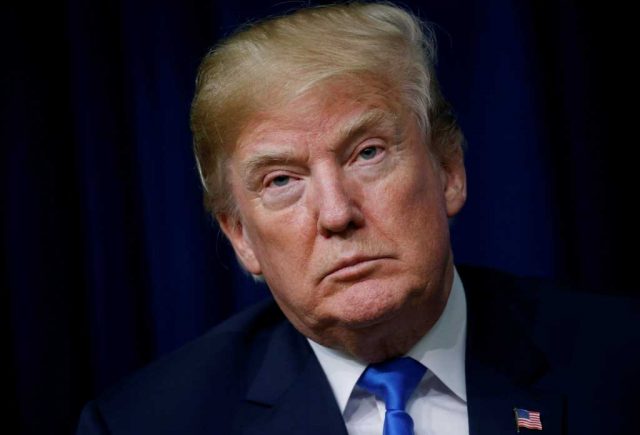
U.S. President Donald Trump — REUTERS/LEAH MILLIS/FILE PHOTO

US PRESIDENT Donald J. Trump sued the New York Times (NYT), four of its reporters, and publisher Penguin Random House for at least $15 billion on Monday, claiming defamation and libel, and citing reputational damage, a Florida court filing showed.

Mr. Trump’s suit cites a series of New York Times articles, one an editorial prior to the 2024 presidential election, which said he was unfit for office, and a 2024 book published by Penguin titled Lucky Loser: How Donald Trump Squandered His Father’s Fortune and Created the Illusion of Success.

“Defendants maliciously published the Book and the Articles knowing that these publications were filled with repugnant distortions and fabrications about President Trump,” according to the filing lodged on Monday in the US District Court, Middle District Florida.

The New York Times and Penguin did not immediately respond to a request for comment outside regular business hours.

The publications have harmed Mr. Trump’s business and personal reputation, thereby causing massive economic damage to his brand value and significant damage to his future financial prospects, Mr. Trump’s lawyers said in the filing.

“The harm to the value of TMTG (Trump Media and Technology Group) stock is one example of how the Defendants’ defamation has injured President Trump,” said his lawyers, citing “a precipitous decline in the stock price.”

TMTG stock has been under pressure in recent months fueled by worries about the end of a so-called lock-up period related to its stock market debut in March.

The filing comes after Mr. Trump threatened last week to sue the New York Times for its reporting on an allegedly sexually suggestive note and drawing given to Jeffrey Epstein.

Mr. Epstein, the disgraced financier and sex offender, died by suicide in a New York jail cell in 2019.

Mr. Trump has said he parted ways with Mr. Epstein before the financier’s legal troubles became public in 2006.

“Today, I have the Great Honor of bringing a $15 Billion Dollar Defamation and Libel Lawsuit against The New York Times,” Mr. Trump said earlier on Monday in a post on his social media platform Truth Social.

In his post, Mr. Trump accused the paper of lying about him, his family and businesses, as well as Republican-led movements and ideologies such as the America First Movement, and Make America Great Again, or MAGA.

In his second term, Mr. Trump has intensified his crackdown against media companies. Earlier this year he sued the Wall Street Journal and its owners, including Rupert Murdoch, for at least $10 billion over the newspaper’s report that his name was on a 2003 birthday greeting for Mr. Epstein.

In July, CBS parent company Paramount agreed to settle a lawsuit filed by Mr. Trump alleging that the CBS news program 60 Minutes deceptively edited an interview with former Vice-President Kamala Harris that the network broadcast in October.Reuters

Japan’s Koizumi, Hayashi run for leadership of ruling party

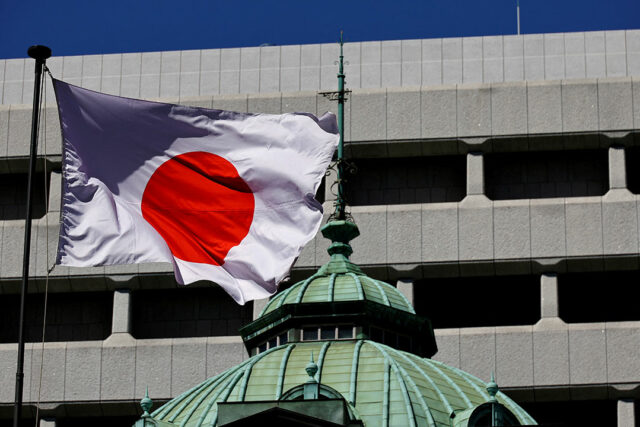
THE Japanese national flag waves at the Bank of Japan building in Tokyo, Japan on March 18, 2024. — REUTERS/KIM KYUNG-HOON/FILE PHOTO

TOKYO — Japan’s farm minister and the chief government spokesperson entered the race on Tuesday to lead the ruling party, pledging their candidacies in a vote set for early next month to replace outgoing Prime Minister Shigeru Ishiba.

Mr. Ishiba announced his resignation this month to take responsibility for a series of bruising election losses that have made harder the task of choosing a leader for his ruling Liberal Democratic Party (LDP).

Farm Minister Shinjiro Koizumi told a press conference he had informed supporters over the weekend of his intention to run for the role of LDP leader, with Finance Minister Katsunobu Kato set to spearhead his campaign operation.

The son of former Premier Junichiro Koizumi had some success this year in his task of curbing soaring prices of rice.

Mr. Kato, who secured the fewest votes in the LDP’s previous leadership contest in September last year, told a separate press conference he would back Mr. Koizumi this time, in the spirit of “unifying the party.”

Chief Cabinet Secretary Yoshimasa Hayashi, who has served as the Ishiba government’s top spokesperson, declared his candidacy on X, with a formal press conference set for 12:30 p.m. (0330 GMT).

“I aim to lead a new administration that balances stability and growth,” Mr. Hayashi posted.

Former Foreign Minister Toshimitsu Motegi was the first to throw his hat in the ring last week, followed by Former Economic Security Minister Takayuki Kobayashi.

Also expected to announce her candidacy this week is former Internal Affairs Minister Sanae Takaichi, a proponent of government stimulus and monetary easing who could become Japan’s first female leader.

The choice of Japan’s next leader is more complicated than before as the LDP, which has ruled for most of the post-war period, and its coalition partner Komeito, lost their majorities in both houses of parliament during Mr. Ishiba’s tenure. — Reuters

Nepal’s deadly protests hammer tourism sector as arrivals fall 30%

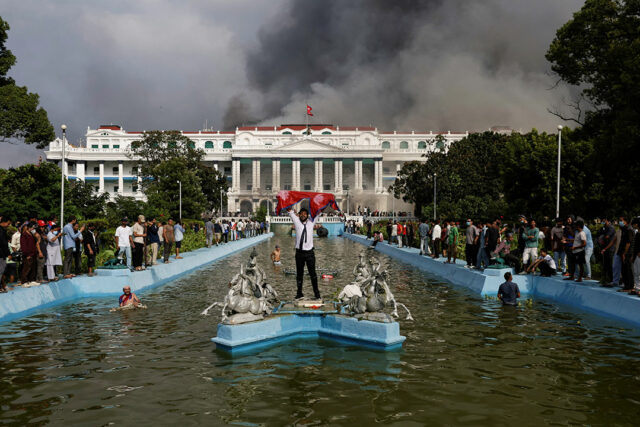
A demonstrator holding Nepal’s flag celebrates at the Singha Durbar office complex that houses the Prime Minister’s office and other ministries after storming it during a protest against Monday’s killing of 19 people after anti-corruption protests that were triggered by a social media ban, which was later lifted, during a curfew in Kathmandu, Nepal, Sept. 9, 2025. — REUTERS/NAVESH CHITRAKAR

KATHMANDU — Nepal’s deadliest protests in decades erupted just as the country entered its peak tourist season, dealing a blow to businesses that had been preparing to welcome trekkers from around the globe to experience its world-famous trails.

Shops, pubs and restaurants lining the neatly organized alleys of places like Thamel — Kathmandu’s bustling tourist hub — remained largely deserted, even after reopening in the aftermath of a violent anti-corruption protest that left 72 dead over 2,000 injured and forced former Prime Minister KP Sharma Oli to resign.

Nepal’s tourism authority, hotel owners and trek organizers said arrivals had fallen by 30% from this time last year, leading to bookings being cancelled.

“I am sitting outside idle because there are no tourists… Many groups have cancelled in September,” said 49-year-old Ram Chandra Giri, who arranges trekking expeditions and owns a Japanese restaurant.

He said 35% of his guests had cancelled their bookings.

Renu Baniya, a hotel owner, said all bookings had been completely cancelled for the next month.

COUNTRIES ADVISED AGAINST NON-ESSENTIAL TRAVEL
Foreign tourists usually start treks from the capital, but Tuesday’s dramatic images of a burning parliament and Hilton Hotel led many countries to issue advisories to avoid non-essential travel to Nepal.

The country receives 1.2 million annual tourist visits, and the sector contributes almost 8% of gross domestic product. September to December is considered the peak tourist season.

Nepal’s trekking trails include the base camp of the world’s highest mountain Mount Everest, drawing adventurers to the heart of the Himalayas.

Damage to government buildings and a few hotels “might give a negative message not only to visitors but to investors as well,” Deepak Raj Joshi, the chief executive officer of Nepal’s Tourism Board told Reuters.

He said tourist arrivals are down 30% from usual and in the last few days, the cancellation rate stood at 8%-10%.

HOPES FOR RETURN OF TOURISTS
As calm returned in Nepal under the newly appointed interim government led by Sushila Karki, parts of Kathmandu still carry the lingering smell of smoke, with authorities continuing to clear debris from charred buildings and torched vehicles.

Nepalese authorities and business owners remain hopeful of tourists returning, even as the stability of the government remains in question with elections set for March 5, 2026.

“We have to be very honest while communicating… if the situation is not good, the industry will never say visit us,” Tourism Board’s Joshi said.

Some foreign tourists, who continued to stay in Nepal, said they felt safe.

“Our family and friends asked us to come back. But we never had any insecurity,” 55-year-old Franz from Germany, who was in Nepal during the protest, told Reuters. — Reuters

US reinterprets arms control pact to ease military drone exports

MARCO RUBIO — REUTERS FILE PHOTO

THE United States can export “Reaper”-style and other advanced military drones more easily following a reinterpretation of its export control policies approved by Secretary of State Marco Rubio, the State department announced on Monday.

Drones will now be treated like fighter jets, such as the F-16, rather than missile systems, allowing the US to sidestep the 35-nation Missile Technology Control Regime (MTCR) agreement it signed in 1987 and enabling drone sales to countries like the United Arab Emirates and Eastern European nations that have struggled to acquire America’s best unmanned aerial vehicles.

More immediately, the change unlocks the sale of more than 100 MQ-9 drones to Saudi Arabia, which the kingdom requested in the spring of this year and could be part of a $142-billion arms deal announced in May. US allies in the Pacific and Europe have also expressed interest.

The new policy lets large drone manufacturers General Atomics, Kratos, and Anduril have their products treated as “foreign military sales” by the State department, allowing them to be easily sold internationally.

The MTCR agreement was signed to curb long-range missile sales, and military drones that proliferated years later were considered to be covered by the agreement because they can fly far and carry weapons.

US drone manufacturers are facing stiff competition overseas, especially from Israeli, Chinese and Turkish rivals who often sell under lighter or no restrictions. — Reuters

EXPLAINER: What is the Scarborough Shoal and what is China planning there?

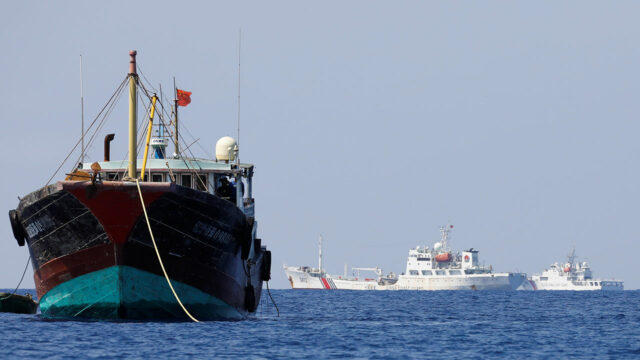
China Coast Guard vessels patrol past a Chinese fishing vessel at the disputed Scarborough Shoal, April 5, 2017. — REUTERS

China’s coast guard said it had taken “control measures” in intercepting Philippine vessels at the disputed Scarborough Shoal in the South China Sea, site of years of standoffs between the two countries.

WHAT’S THE SHOAL’S SIGNIFICANCE?
Named after a British ship grounded on the atoll nearly three centuries ago, the Scarborough Shoal is one of Asia’s most contested maritime features and a flashpoint for diplomatic flare-ups over sovereignty and fishing rights.

Located 200 kilometers (124 miles) off the Philippines and inside its exclusive economic zone, the shoal is coveted for its bountiful fish stocks and a stunning turquoise lagoon that provides safe haven for vessels during storms. It is named Huangyan Island by Beijing, while Manila calls it the Panatag Shoal, or Bajo de Masinloc.

Its position is strategic for Beijing, sitting in the middle of the South China Sea and near shipping lanes carrying more than $3 trillion of annual commerce. Activities there are closely watched by the United States and other major powers.

WHAT IS CHINA PLANNING?
China has approved creation of a nature reserve at Scarborough Shoal that it says is to preserve a 3,524-hectare (8,708-acre) coral reef ecosystem. It would cover the entire northeastern side of the triangle-shaped atoll, with close proximity to the sole entrance for larger vessels.

The announcement drew a strong reaction from the Philippines, which for years has accused China of activities that damage coral and marine life, including clam harvesting. The Philippines is exploring the possibility of further international arbitration over environmental issues. Beijing has made similar accusations against Manila.

China may face scepticism and international concern about its underlying motives. There have long been expectations China might one day build a manmade island on Scarborough Shoal, as it has on seven submerged reefs in the Spratly Islands, some equipped with radar, runways and missile systems.

US Secretary of State Marco Rubio called the plan “destabilising” and “coercive” and said the United States stood with the Philippines.

WHO DOES IT BELONG TO?
The Philippines and China lay claim to the Scarborough Shoal but sovereignty has never been established and it is effectively under Beijing’s control. Filipino boats operate there but, are dwarfed by China’s presence.

China seized the shoal in 2012 after a standoff with the Philippines and has since maintained a deployment there of coast guard and fishing trawlers. Manila has said some of the trawlers at the shoal and other disputed areas of the South China Sea are operated by Chinese maritime militia, which Beijing has never acknowledged.

A landmark ruling on various South China Sea issues by the Permanent Court of Arbitration in 2016 favoured Manila but establishing sovereignty over Scarborough Shoal was not within its scope. The ruling said Beijing’s blockade there violated international law as it was a traditional fishing ground for several countries, including China, the Philippines and Vietnam.

WHAT’S THE RISK OF CONFLICT?
Tensions have simmered for a while at the shoal and multiple incidents in recent years have caused diplomatic rows, but none escalated into armed conflict.

The incidents have included the use of water cannon, boat-ramming and what the Philippines considers dangerously-close manoeuvres by China’s coast guard, and jets shadowing Philippine aircraft over the shoal. Both sides accuse each other of provocations and trespassing.

Standing up to Beijing might score points for Philippine President Ferdinand Marcos Jr. at home and abroad, but his coast guard is under-equipped and no match for China’s armada. Deployment of combat vessels could be a red line neither side wants to cross.

A deterrent might be the United States, which has taken its defence alliance with the Philippines to a new level under Marcos. Any kind of military response by China would increase the stakes considerably.

The Philippines and United States have a 1951 Mutual Defence Treaty under which Washington would defend its ally in the event of attack, a commitment U.S. defence chiefs reinforce often. Marcos successfully lobbied for more specificity in the treaty, which now covers attacks “anywhere in the South China Sea”.

WHAT HAVE EXPERTS SAID OF THE NATURE RESERVE?
Yang Xiao, a maritime expert at the China Institutes of Contemporary International Relations, said in a video on a social media account linked to China’s state broadcaster that the nature reserve plan and demarcation was sound and the shoal worthy of ecological protection.

There are clear regulations that would enable protection and allow the coast guard to enforce those, Yang said, which “reflects the gradual improvement of our jurisdiction and governance over this sea area”. He also accused Filipino fishermen of catching endangered species and polluting waters.

Maritime analyst Jay Batongbacal of the University of the Philippines said China’s move was a ploy to justify what he called aggressive and coercive actions, which could result in fishermen arrested and used as bargaining chips. — Reuters

China’s $19 trillion stock market, once called uninvestable, lures foreigners again

An investor looks at an electronic board showing stock information at a brokerage house. — REUTERS

HONG KONG — Foreign investors are plotting a return to China’s stock markets in a big way three years after pulling back and terming them uninvestable, encouraged by the tech opportunities on offer, and a growing demand for diversification beyond U.S. assets.

Progress in China’s adoption of artificial intelligence and its development of semiconductors and innovative drugs this year has given comfort to global investors that the Sino-U.S. trade war and Washington’s tech export bans have not deterred innovation in the world’s second-biggest economy.

The U.S.-China tariff truce and a domestic monetary easing environment have further boosted sentiment. As a consequence, the Shanghai Composite index touched a decade high last week while Hong Kong stocks hit a four-year high.

The changing sentiment of foreign investors could potentially add fuel to the market rally, which has so far been mainly driven by domestic players.

Foreign early birds are already back in China, lured by this year’s bull run and as they seek diversification from crowded U.S. assets, said Brett Barna, a former hedge fund manager who now manages two New York-based single-family offices.

“China is interesting because it’s very uncorrelated to the rest of the world, at least the onshore A-share market,” Barna said, adding he plans to set up an investment platform that would allow U.S. and European capital to access China’s capital markets.

Data on fund launches and flows illustrates the growing enthusiasm for a $19 trillion Chinese stock market, including Hong Kong.

August marked the biggest monthly buying of China stocks by global hedge funds in six months, according to a report by Morgan Stanley, which did not detail numbers.

Morningstar data showed the number of emerging market ex-China equity fund new launches slid to eight in 2025 versus 21 in 2024 and 16 in 2023. That meant demand for emerging market investments that did not include China had cooled substantially this year.

“A year ago, people wanted to exclude China from indices. Now, China is seen as a standalone asset class (they cannot ignore),” said Zheng Yucheng, chief investment officer of the China fund unit of Allianz Global Investors.

MORE EVIDENCE
The anecdotal evidence is also piling up.

Polar Capital, a London-based $20 billion asset manager, pivoted to a positive stance on China in late 2024 from underweight and has further increased the China allocation to over 30% from the low 20% range within its emerging market portfolio this year, said its fund manager Jerry Wu.

The firm’s annual conference in February this year attracted a full house of 55 clients to the China session, more than double the attendance in 2023, he said.

There is “a revaluation of Chinese innovative assets” triggered by DeepSeek’s breakthrough, said Wu, referring to the creator of the highly cost-efficient AI model that rivals ChatGPT. He said momentum has picked up across the board, from AI to biotech and robotics.

Benjamin Low, senior investment director at investment firm Cambridge Associates, said his team has received some 30 client inquiries about searching for China funds this year, in a sharp contrast to the trough in 2023 when there were very limited queries about China-focused mandates.

Many non-Asia-based allocators are planning trips to China and Hong Kong later this year to explore investment opportunities, with some for the first time since COVID, he said.

To be sure, some of China’s long-standing problems are persisting. Its broad economy remains mired in weakness, as indicated by August factory output, retail sales data and some other indicators.

Foreign direct investment in the first five months of 2025 slumped 13.2% from the year-earlier period, forcing China to unveil new measures in July to reverse the decline.

The fragile economy is one of the main reasons that, while early movers are coming in, it has not yet translated into meaningful long-term capital inflows.

CLSA chief equity strategist Alexander Redman said the deflationary pressure in the economy is preventing him from overweighting the entire market.

And Wu of Polar Capital said the AI boom has to benefit the broader economy to sustain the rally beyond 2025.

Foreign investors are now in a “rerating” phase, focusing on China’s long-term competitiveness, said Cheng Yu, a portfolio manager at the Allianz China fund unit.

“Foreign capital is standing at the door and watching. They haven’t stepped in yet — but are at least thinking about coming back.” — Reuters

Indonesia unveils economic stimulus package worth almost $1 billion

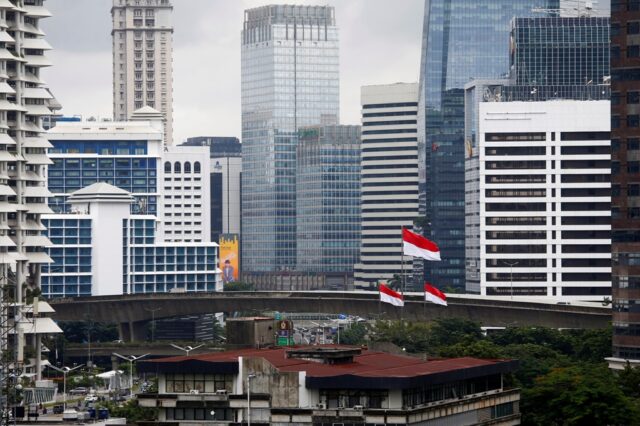
INDONESIAN national flags fly at a business district in Jakarta, Indonesia, Feb. 5, 2021. — REUTERS

JAKARTA — Indonesia on Monday announced a new economic stimulus package worth 16.23 trillion rupiah ($989 million), including food assistance and an infrastructure building programme that could provide temporary work for more than 600,000 people.

The stimulus measures will be implemented in the fourth quarter of 2025, the country’s chief economic minister Airlangga Hartarto told reporters, adding that some measures would be extended to 2026.

Southeast Asia’s largest economy grew 5.12% annually in the second quarter, its best growth rate in two years, but some policymakers said there were signs it was slowing in the subsequent quarter.

“With this stimulus package, we hope we could still reach the 5.2% economic growth target this year,” Airlangga told reporters after holding a meeting with the president.

The government will give 18.3 million households 10 kilograms of rice in the fourth quarter, remove personal income tax for workers in the tourism sector and allocate 5.3 trillion rupiah for a “cash for work” scheme for more than 600,000 people in the September to December period, Airlangga said.

“Cash for work” schemes usually involve providing daily wages to employ people, mostly from rural communities, to work on infrastructure projects like roads and bridges.

The stimulus package also included a paid internship programme for 20,000 university graduates and a 50% discount to policy payments for state-provided work injury insurance for ride-hailing motorcycle taxi drivers and truck drivers, Airlangga said.

The removal of personal income tax for certain sectors and the insurance scheme will be extended to 2026, Airlangga said.

Income tax on small businesses was supposed to rise to 1% of turnover next year, from 0.5% now, but Airlangga said the government has decided to maintain the current rate until 2029.

The government will also launch a replanting programme on 870,000 hectares (2.15 million acres) of plantations for commodities such as sugar cane, cocoa, coffee, cashew, nutmeg and coconut in 2026, a programme that could create 1.6 million new jobs, Airlangga said.

Jakarta will also introduce discounts on airfares for year-end holiday trips, Airlangga added, without providing more details.

Finance Minister Purbaya Yudhi Sadewa expected no impact on the forecast for the 2025 budget deficit from the new measures. The latest deficit forecast was 2.78% of GDP.

Housing Minister Maruarar Sirait also said the government through state banks will disburse 130 trillion rupiah worth of construction loans for certain property developers and small businesses to scale up their stores.

Maruarar added the government will cover 5% of the annual interest cost of the loans, which are part of efforts by the Prabowo administration to provide 3 million affordable homes annually and create more jobs. — Reuters