Home Blog Page 96

PHL gymnastics sees Yulo brothers in 2028 LA Olympics

CARLOS AND KARL ELDREW YULO — PHILIPPINE STAR/JUN MENDOZA

PHILIPPINE gymnastics’ dream of sending brothers Carlos and Karl Eldrew Yulo together to the 2028 Los Angeles (LA) Olympics is no longer implausible.

It was reinforced by the younger Mr. Yulo’s solid performance in the FIG Artistic Gymnastics World Cup Series in Cairo, Egypt where he pocketed a pair of bronze medals.

It included one in last Monday’s horizontal bar finals where the 18-year-old native from Leveriza in Manila scored 13.733.

Chinese Li Hongyan topped the apparatus with a 14.000 while Cypriot Marios Georgiou took the silver with a 13.900.

It came a day after bagging a bronze in floor exercise and less than a month after striking gold also in floor exercise in the Antalya, Turkey leg.

He will see action in the next leg in Osijek, Croatia this weekend for more shots at glory.

While it may be too early to tell if he could catch up on his more illustrious elder sibling — a world and Olympic champion — there were signs that Eldrew is going on the right path.

And that road could end up leading to LA. — Joey Villar

TP and SBMA jointly host 33rd Subic Bay International Triathlon

FACEBOOK.COM/TRIPHIL

TRIATHLON PHILIPPINES (TP) and the Subic Bay Metropolitan Authority (SBMA) team up to host the 33rd edition of the Subic Bay International Triathlon set on May 2 and 3 at SBMA grounds in Zambales.

This year’s staging will have added importance as it was being billed as 2026 NTT Asian Triathlon Cup while holding for the first time a coinciding Asia Triathlon Junior Cup.

TP President Tom Carrasco and SBMA Chairman and Administrator Eduardo Jose Alino are making sure the two-day race, which is considered one of the top 10 best races in Asia, will be nothing less but a success.

Mr. Carrasco said the event, which is also being backed by the Philippine Sports Commission, NTT, Gatorade, Western Guaranty Corp., C-Vitt and Subic Bay Travellers Hotel, is expected to draw more than 100 elite athletes from 20 countries expected to battle not just for the title and podium finish but also precious World and Asia Triathlon ranking points.

Malaysian Darnis Mahmud will return as technical delegate for the second straight year.

The race will have elite, junior elite, super tri kids, youth super sprint, sprint and standard divisions. — Joey Villar

Rockets, Suns fight for playoff position as Kevin Durant returns

KEVIN DURANT will make his belated return to Phoenix when the Houston Rockets play the host Suns on Tuesday.

Durant missed the first game between the two in Phoenix in November while attending to a family matter, but about the only thing that matters now is playoff positioning.

The Rockets (49-29) have won six in a row and eight of 10, and they have a not-far-fetched chance to move up to the No. 3 seed in the Western Conference with four games left.

The Suns (43-35) still have a mathematical chance at the West’s No. 6 seed, the final team to escape the play-in tournament. However, their objective now is to redefine their rotation as starters return to health.

Durant flirted with a triple-double in the Rockets’ last game, a 117-116 victory at Golden State — another return trip he missed in November — when his pass to Alperen Sengun set up the winning basket with 11 seconds left.

Durant had 31 points, eight rebounds and eight assists on a night Stephen Curry scored 29 points in his return after a 27-game absence because of a right knee injury. Curry missed a long 3-pointer in the final seconds.

The Rockets lost all of a 10-point lead in the fourth quarter before recovering. Jabari Smith, Jr. had 23 points and nine rebounds, Sengun had 24 points and Amen Thompson had 18 points and seven assists against the Warriors.

Durant spent the previous two-plus seasons with the Suns after being acquired in new owner Mat Ishbia’s first trade in February 2023. Internal issues forced a trade last summer, and the Suns acquired Dillon Books, Jalen Green and a 2026 first-round draft pick.

The Suns beat Chicago, 120-110, on Sunday. They have won four of seven since a five-game losing streak that coincided with the loss of Brooks and starting center Mark Williams.

If the Suns remain the No. 7 seed, they will meet the Los Angeles Clippers or Portland in the first play-in game. They would play again if they lost.

Brooks, averaging a career-high 20.4 points, has started the last three games after missing 18 with a fractured left hand. He had 15 points against the Bulls. Williams missed 15 games with a foot injury before returning for the last two.

Brooks made a jumper, a 3-pointer and had a blocked shot when the Suns closed the victory over the Bulls on a 11-2 run after losing all but one point of a 13-point lead. — Reuters

Bruins top NCAAW

There are championships that arrive as culmination, and there are those that unfold as correction. The Bruins’ long-awaited breakthrough falls squarely in the latter category: more a deliberate reclaiming of identity than a sudden ascent, executed on its own terms and at precisely the right time.

The 79-51 dismantling of the Gamecocks in the national title game was most definitely emphatic. The Bruins never trailed, dictated tempo from the outset, and imposed a style that left their supposedly superior competition staring at their backsides. With Gabriela Jaquez delivering 21 and 10 and Lauren Betts anchoring the middle while also providing a double-double, they wound up controlling the contest in every measurable facet. And, needless to say, the composed and purposeful manner in which they stamped their class served to further underscore their dominance.

Per conventional wisdom, the Bruins’ run was not supposed to carry an air of inevitability. A year ago, they absorbed a humbling Final Four defeat that exposed systemic infirmities. To be fair, however, they came up with a determined and, just as importantly, structural response. Even as they leaned further into balance, they emphasized defensive accountability. And by the time they reached the final, they were so locked in that they were no longer chasing validation. As far as they were concerned, they already had it.

Meanwhile, the Gamecocks embodied dissonance. They went into the NCAAW tournament with pedigree and an established blueprint, and yet found themselves unmoored when the match demanded precision. They never led, shot just 29% from the field, and, more tellingly, lost in the very margins they were touted to claim: the loose balls, the second efforts, the possessions that translate to control. It was, by their own admission, a failure in the “little things,” although there was nothing little about the consequences. For all their reputation as a disciplined and physical juggernaut, they fell prey to an unraveling that was as shocking as it was complete.

Still, there is a certain symmetry in how the final unfolded. The Gamecocks’ rise under head coach Dawn Staley has been defined by system, culture, and continuity, the very pillars the Bruins now seem to have absorbed and reshaped to their advantage. They did not merely win against the favorites; they mirrored and, for one night, perfected the template. Defense first. Rebounding next. Offense as a function of trust rather than force. And, in this sense, the result was not so much an upset as an offshoot.

What ultimately distinguishes the 2026 championship is not its finality, but its authorship. Bruins chief bench tactician Cori Close did not chase trends or recalibrate her philosophy to meet expectations. She doubled down on her own. Fifteen years into her tenure, she finally gets to wrap her arms around the hardware. If nothing else, the title arrives not as an outlier, but as affirmation: of patience, of coherence, of a program built with intention rather than urgency.

In the final analysis, the Bruins’ remarkable climb to the top resists easy framing. It was commanding, certainly, and historic in its own right. And, yes, it was also instructive. Championships are often reduced to moments; it was defined by method. And in a landscape increasingly shaped by immediacy, that may yet be its most enduring legacy.


Anthony L. Cuaycong has been writing Courtside since BusinessWorld introduced a Sports section in 1994. He is a consultant on strategic planning, operations and human resources management, corporate communications, and business development.

Iran defiant on eve of Trump’s ceasefire deadline

Smoke rises following an explosion, amid the US-Israeli conflict with Iran, in Tehran, Iran, March 7, 2026. — REUTERS/WANA/NASER SAFARZADEH

DUBAI/WASHINGTON — Iran and Israel traded attacks on Tuesday as Tehran defiantly refused to reopen the Strait of Hormuz and accept a ceasefire deal on the eve of a deadline set by US President Donald J. Trump to agree to his demands or get “taken out.”

Iran has rejected a US proposal brokered by Pakistan for an immediate ceasefire and the lifting of its effective blockade of the Strait, followed by talks on a broader peace settlement within 15 to 20 days, according to a source aware of the plan.

The Iranian response consisted of 10 clauses, including an end to conflicts in the region, a protocol for safe passage through the Strait of Hormuz, lifting of sanctions, and reconstruction, official IRNA news agency reported.

On Monday, Mr. Trump said “the entire country can be taken out in one night, and that night might be tomorrow night.” He vowed to destroy Iranian power plants and infrastructure if Tehran refused to agree before the deadline.

Without a deal, Mr. Trump said “every bridge in Iran will be decimated” by midnight EDT (0400 GMT) on Wednesday and “every power plant in Iran will be out of business, burning, exploding, and never to be used again.”

FIGHTING UNABATED
Early on Tuesday, the Israeli military said it had completed a wave of airstrikes targeting Iranian government infrastructure in Tehran and other areas. It was operating air defense systems to intercept missiles launched from Iran.

Saudi Arabia intercepted ballistic missiles towards its eastern region with debris falling near energy facilities, its defense ministry said without specifying who launched the projectiles.

Saudi Arabia has come under attack from hundreds of Iranian missiles and drones since the US and Israel launched the war on Iran on Feb. 28, most of which were intercepted, authorities have said.

Saudi Arabia, the United Arab Emirates and Bahrain issued simultaneous public safety alerts on Tuesday.

Mr. Trump has brushed off questions that his vow to wipe out Iranian power plants would constitute war crimes, saying he was “not at all” concerned about the prospect.

“I hope I don’t have to do it,” he said.

Iran’s envoy to the United Nations said on Monday that Mr. Trump’s threat to strike was “direct incitement to terrorism and provide clear evidence of intent to commit war crimes under international law.”

Iran’s deputy sports minister, Alireza Rahimi, called on artists and athletes to form human chains at power plants across the country on Tuesday, and its top military command said Mr. Trump was “delusional.”

A synagogue in the center of Iran’s capital was heavily damaged by a US-Israeli projectile on Tuesday, according to the semi-official news agency Mehr.

CHOKEHOLD
Oil prices hovered around $110 per barrel on Tuesday as Mr. Trump’s deadline loomed and little visible prospect of the reopening of the Strait of Hormuz, a key global oil transit chokepoint that has spurred inflation worries around the world.

Iran effectively closed Hormuz, a conduit for about a fifth of the world’s oil and natural gas supply that has proved a powerful bargaining chip for Tehran which it is reluctant to relinquish.

Brent crude futures LCOc1 rose 0.4% to $110.19 a barrel while US West Texas Intermediate crude CLc1 futures climbed 0.8% to $113.31.

Mr. Trump was on the verge of a political crisis as Iran proved a tougher adversary than he predicted at the start of the conflict, which he said was aimed at stopping the country from building nuclear weapons and developing missiles to deliver them.

With 13 US service members killed since the conflict began, he found himself on an even more perilous ground when a US F-15E fighter jet was downed on Friday and one of the two airmen was left stranded deep inside Iranian territory.

A rescue mission by US commandos to extract the stranded weapons specialist officer to safety helped avert a disastrous escalation of a political crisis for Mr. Trump.

Thousands of people have been killed across the Middle East in the war, including 3,546 in Iran, US-based rights group HRANA said, and nearly 1,500 in Lebanon where Israel has targeted the Iran-backed Hezbollah militia. Reuters

China targets Taiwan’s chip prowess to evade global ‘containment,’ Taipei government says

REUTERS

TAIPEI — China is targeting Taiwan to obtain its advanced chip manufacturing technology and talent as a way of breaking through international “containment” of the country, according to a report from the island’s top security agency.

China’s scramble for chip talent and expertise has intensified as Beijing pushes for self-reliance in advanced semiconductors, amid a deepening tech rivalry with the US.

Taiwan, which China claims as its own territory, frequently reports busting networks of Chinese firms illegally trying to poach semiconductor and high-tech talent, and has strict laws to prevent the most advanced technologies going to China.

In a report to lawmakers, Taiwan’s National Security Bureau said that China is attempting to “lure” Taiwan’s high-tech industries, including artificial intelligence and semiconductors, to establish or retain operations in China.

“It also continues to use indirect channels to poach Taiwanese talent, steal technology, and procure controlled goods, with the aim of obtaining key core technologies and products such as Taiwan’s advanced-process chips, thereby breaking through international technological containment.”

China’s Taiwan Affairs Office did not immediately respond to a request for comment. China says Taiwan is one of its provinces and will eventually come under Beijing’s control.

Taiwan is home to TSMC, the world’s largest contract chipmaker and major supplier to companies including Nvidia and Apple.

China is also expected to use a range of hybrid methods, including deepfakes and fake opinion polls, to interfere in Taiwan’s year-end local elections, according to the report, a copy of which was reviewed by Reuters.

Taiwan’s Government Service Network was targeted by more than 170 million intrusion attempts in the first quarter of this year, added the report, delivered ahead of bureau Director-General Tsai Ming-yen taking lawmaker questions on Wednesday.

“It cannot be ruled out that the Chinese Communist Party is laying the groundwork to interfere in Taiwan’s year-end elections, with the intent of expanding intelligence collection, surveillance, and data theft,” the report said.

Taiwan also faces ongoing Chinese military pressure.

In the first quarter, more than 420 Chinese military aircraft were detected operating around Taiwan, and Chinese naval vessels coordinated with them in carrying out 10 “joint combat readiness patrols,” the report added.

China’s Communist Party faces mounting risks due to domestic and external pressures such as economic weakness and geopolitical competition, it said.

“Nevertheless, it continues to employ a range of hybrid threats against Taiwan, including military intimidation,” the report added.

Taiwan’s government rejects Beijing’s sovereignty claims, saying only the island’s people can decide their future.Reuters

Oil prices climb as Hormuz stays shut ahead of Trump deadline

A 3D-printed oil pump jack and a map showing the Strait of Hormuz and Iran appear in this illustration taken March 2, 2026. — REUTERS

SINGAPORE — Oil prices extended gains on Tuesday as a US-imposed deadline loomed for Iran to open the Strait of Hormuz or be “taken out”, with US President Donald Trump threatening to order attacks on Iranian bridges and power plants.

Brent crude futures rose $1.44, or 1.3%, to $111.21 a barrel by 0700 GMT, while US West Texas Intermediate crude futures were up $2.32, or 2.1%, at $114.73.

Mr. Trump has threatened to rain “hell” on Tehran if it fails to comply with his deadline of 8 p.m. EDT on Tuesday (0000 GMT Wednesday) to reopen the strait, through which about a fifth of global oil supply is normally shipped, if a deal is not reached.

Responding to a US proposal through mediator Pakistan, Tehran rejected a ceasefire and said a permanent end to the war was necessary, and pushed back against pressure to reopen the strait.

Iran’s rejection of the US ceasefire proposal has kept tensions elevated and left diplomacy hanging by a thread, said Priyanka Sachdeva, senior market analyst at Phillip Nova.

“Oil is holding its gains because the battlefield risk is no longer theoretical. Attacks on energy and shipping assets continue, and traders fear that even if the war ends, damage to infrastructure could sideline barrels for months, not days,” she said.

Exports from several Gulf producers have already collapsed due to restricted flows through the Strait of Hormuz.

Iranian forces effectively shut the strait after US and Israeli attacks began on February 28.

“Clock-watching is now playing almost as big a role in oil markets as the fundamentals themselves in the run-up to Trump’s ultimatum deadline,” said Tim Waterer, chief market analyst at KCM Trade.

“The potential for a ceasefire deal offers some counterweight and could spark a relief move lower if it gains traction, but persistent supply worries from the Hormuz chokepoint and damaged energy facilities are keeping the floor under prices.”

The UN Security Council is expected to vote on Tuesday on a resolution to protect commercial shipping in the Strait of Hormuz, but in significantly watered-down form after veto-wielding China opposed authorizing force, diplomats said.

Attacks in the region continued with explosions heard in the Syrian capital, Damascus, and surrounding countryside on Tuesday that were caused by the Israeli interception of Iranian missiles, Syrian state TV reported.

Saudi Arabia said on Tuesday it intercepted and destroyed seven ballistic missiles launched towards its Eastern Region, with debris falling near energy facilities.

The conflict has squeezed global crude supply, sending spot premiums for US WTI crude surging to record highs as Asian and European refiners scramble to secure replacement supplies amid disrupted Middle Eastern flows.

Saudi Arabia’s state oil company Aramco raised the official selling price of its Arab Light crude to Asia for May delivery, setting a record premium of $19.50 a barrel above the Oman/Dubai average.

Adding to supply concerns, Russia on Monday said Ukrainian drones attacked the Caspian Pipeline Consortium’s terminal on the Black Sea, which handles 1.5% of global oil supply. Russia reported damage to loading infrastructure and storage tanks.

OPEC+ agreed on Sunday to lift oil output quotas by 206,000 barrels per day in May, though the increase will be largely notional as key members cannot boost production because strait closures are curbing exports. — Reuters

Taiwan opposition chief arrives for China ‘peace’ mission, president calls for talks

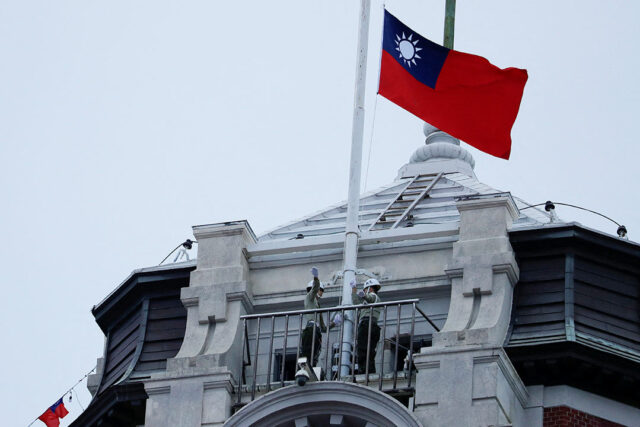
Honor guards raise a Taiwanese flag at the Presidential Palace in Taipei, Taiwan Oct. 10, 2023. — REUTERS

SHANGHAI/TAIPEI — Taiwan’s opposition leader arrived in China on Tuesday for a “peace” mission and potential meeting with President Xi Jinping, as Taiwanese President Lai Ching-te reiterated he was open for talks but the island had the right to chart its own course.

Cheng Li-wun, chairwoman of the Kuomintang (KMT), Taiwan’s largest opposition party, is travelling at a time of increased Chinese military pressure on Taiwan, which Beijing views as its own territory, and as the opposition-dominated parliament stalls a government plan for $40 billion in extra defense spending.

Speaking to reporters at her party’s headquarters in Taipei before going to the airport, Ms. Cheng said she was going on a “historic journey for peace” but admitted some people felt uneasy about her trip.

“If you truly love Taiwan, you will seize even the slightest chance, every possible opportunity, to keep Taiwan from being ravaged by war,” she said.

“So I would rather believe that all Taiwanese people hope this trip will succeed, because we can transform the most dangerous place in the world into the safest place in the world.”

Ms. Cheng arrived at Shanghai’s downtown Hongqiao airport under tightened security and was met by Song Tao, head of China’s Taiwan Affairs Office.

Accompanied by Mr. Song, she then took a train to Nanjing, home to the mausoleum of party founder Sun Yat-sen who overthrew the last imperial government and founded the Republic of China in 1912.

The two “chatted cordially like friends” on the train, with Ms. Cheng saying her trip was “especially rare and precious”, the KMT said in a statement.

China, which has never renounced the use of force to bring Taiwan under its control, refuses to speak to President Lai, saying he is a “separatist”.

Speaking in Taipei on Tuesday at a memorial ceremony for late democracy advocate Nylon Cheng, Mr. Lai reiterated his desire for equal talks with China.

“Equality and dignity are extremely important: Taiwan is not a part of the People’s Republic of China and has the right to pursue a way of life that values democracy, freedom, and human rights,” he said.

CHINESE WARSHIPS
Late on Monday, Kuan Bi-ling, head of Taiwan’s Ocean Affairs Council, which runs the coast guard, posted a picture on her Facebook account of current Chinese warship deployments around the island – two off the east coast, and one each to the north, northwest and southwest.

“When you depart, you are doing so from within what they see as the ‘Taiwan cage’,” Ms. Kuan told reporters at parliament on Tuesday, referring to how China’s military has termed Taiwan’s planned T-Dome air defense system and talking about Ms. Cheng’s trip.

Speaking separately at parliament, Taiwan’s top official in charge of China policy, Mainland Affairs Council minister Chiu Chui-cheng, said Beijing should engage with Taiwan’s democratically elected and legitimate government.

“We call on Chairwoman Cheng Li-wun, when facing the Communist Party authorities in person, to demand that they immediately stop their compounded pressure against Taiwan, including military aircraft and naval harassment,” he added.

Ms. Cheng is going to China a month before US President Donald Trump’s scheduled summit with Mr. Xi in Beijing.

While Mr. Trump and Mr. Xi could strike goodwill agreements in Beijing on trade in agriculture and aircraft parts, they are also expected to discuss areas of deep tension such as Taiwan, where little progress is expected.

In a February call, Mr. Xi told Mr. Trump that the US “must carefully handle arms sales to Taiwan”.

This is the first trip by a KMT leader to China in a decade, though China has yet to confirm whether Mr. Xi will definitely meet Ms. Cheng, who will be in Beijing from Thursday.

The KMT-led republican government fled to Taiwan in 1949 after losing a civil war with Mao Zedong’s communists. — Reuters

Vietnam’s top leader To Lam expands power, new PM elected

STOCK PHOTO | Image by Toomas Tartes from Unsplash

HANOI — Vietnam’s lawmakers on Tuesday unanimously elected Communist Party Secretary General To Lam as the country’s state president for the next five years, making him the most powerful Vietnamese leader in decades.

The widely anticipated move marks a break from Vietnam’s traditional collective leadership system, consolidating authority in one figure in ways analysts say could tilt the one‑party state toward greater authoritarianism, while also enabling faster decision making, similar to its neighbor China.

The parliament said on its website that all 495 deputies present at Tuesday’s National Assembly session endorsed the Communist Party’s nomination, while five lawmakers were absent. Officials have said the nominations for top state leadership posts were finalized in a meeting in late March.

The former head of public security now has a double mandate to rule the country for the next five years, after he secured a second term as general secretary in January.

In another largely expected move later on Tuesday, the parliament also unanimously elected Le Minh Hung as the country’s new prime minister.

LAM PLEDGES NEW GROWTH MODEL
After the vote, Mr. Lam told deputies in a televised address that it was an honor to hold both posts and pledged “a new growth model with science, technology, innovation, and digital transformation as the primary driving forces”.

He said his top priorities were to maintain stability, promote rapid and sustainable national development and improve “all aspects of people’s lives”.

“Concentrating greater power in To Lam’s hands could pose risks to Vietnam’s political system, such as increased authoritarianism,” said Le Hong Hiep, senior fellow at the ISEAS Yusof Ishak Institute in Singapore.

However, such consolidation “could enable Vietnam to formulate and implement policies more quickly and effectively,” supporting growth, he said.

The combination of the two roles “will shift Vietnam’s domestic politics to a new normal where most of the old assumptions about Vietnam’s politics, including those about collective leadership, are no longer valid,” said Alexander Vuving of the Asia-Pacific Center for Security Studies in the United States.

Mr. Lam held both posts for a period of a few months following the death in 2024 of the late party General Secretary Nguyen Phu Trong.

Even after relinquishing the state presidency in favor of army general Luong Cuong, Mr. Lam often acted as if he had retained the role, traveling extensively and representing the country in meetings with foreign leaders.

REFORMIST, BACKS NATIONAL CHAMPIONSFl
In his first stint as party chief, 68-year-old Mr. Lam launched sweeping economic reforms designed to make Vietnam more competitive, which drew both praise and criticism.

Mr. Lam wants to pursue double-digit growth through a new development model that is less reliant on low-cost manufacturing, long the backbone of Vietnam’s export-driven boom led by foreign multinationals.

His moves have at times unsettled the administration and businesses, but he has shown a pragmatic flexibility in executing them.

He has supported the expansion of private conglomerates, but before his reappointment, also issued a directive emphasizing the leading role of state-owned enterprises in a bid to reassure party traditionalists.

Foreign investors have often praised political stability and see Mr. Lam as a pro‑business leader. However, his backing of national champions and push for breakneck growth have raised concerns among some about favoritism, corruption risks, asset bubbles and waste.

In foreign policy, Mf. Lam has maintained Vietnam’s “Bamboo Diplomacy” and sought to balance relations with major powers while expanding international partnerships.

“Lam’s double-hat would not signal any changes in Vietnam’s foreign policy, even if there are concerns that Vietnam is concentrating more power in a single individual,” said Khang Vu, a visiting scholar at Boston College.

FORMER CENTRAL BANK HEAD BECOMES PM
Newly-elected prime minister Mr. Hung, 55, served as central bank governor from 2016 to 2020, becoming the youngest person to hold the post.

He replaces Pham Minh Chinh, 67, who presided over a fast-expanding economy during his five-year term, and was one of Vietnam’s most visible leaders, both at home and abroad, thanks to frequent overseas trips and participation in international summits.

Mr. Hung has kept a low profile in his roles at the party and the central bank.

Though not formally trained as an economist, Mr. Hung’s nomination is seen by some officials as an attempt to inject economic expertise into the top layers of the administration, which has been dominated by politicians with security backgrounds.

In his post-election address to lawmakers, Mr. Hung pledged to pursue sustainable growth and do his best to meet the party’s ambitious annual economic growth goal of at least 10% through to 2030.

He has no personal background in security, but his family is closely linked to the ministry Mr. Lam once led: Mr. Hung’s father was public security minister, and two brothers are generals of security forces. — Reuters


High fuel costs forcing Philippine farmers to abandon harvests

BW FILE PHOTO

BENGUET — Filipino farmers like Romeo Wagayan have been left with little choice but to let their vegetables rot in the field rather than sell them a loss, as rising oil prices linked to the conflict in the Middle East drive up the cost of harvesting, labor, and transport.

“There’s nothing we can do,” said Mr. Wagayan, a 57-year old vegetable farmer in the northern Philippine province of Benguet.

“If we harvest it, our losses only increase because of labor, transportation, and packing costs. We don’t earn anything from it. That’s why we decided not to harvest at all.”

Soaring costs caused by the Middle East war are piling pressure on Filipino farmers, with the Southeast Asian archipelago particularly vulnerable to oil shocks because of its heavy reliance on imported fuel.

Mr. Wagayan’s experience mirrors the challenges faced by many highland farmers, according to Agot Balanoy, an adviser at La Trinidad’s vegetable trading hub, who said that a number of growers are halting harvests as buyers pull out as a result of weak demand and surging costs.

Mr. Balanoy said some buyers are canceling or limiting purchases, reflecting a shift in consumer behavior as households grappling with soaring inflation cut back on vegetables and opt instead for cheaper, filling alternatives such as instant noodles.

It costs farmers 18 to 20 pesos ($0.2990 to $0.3323) to produce a kilo of cabbage, Mr. Balanoy said, covering basic farm inputs such as seeds and fertilizers, but farmgate prices have collapsed to as low as three pesos, and in recent days have hovered at just five to eight pesos per kilo.

The downturn has been exacerbated by the sharp increases in fuel prices, which have pushed up the costs of transporting produce from mountainous farms to trading posts and urban markets, while also driving up the price of farm inputs such as fertiliser.

“The increase in diesel prices has a really big impact on us, both during planting and harvesting,” said 27-year-old vegetable farmer Arnold Capin.

He said long delivery trips often mean farmers are left with little or nothing once the produce is sold.

The latest government data showed that annual inflation in the Philippines surged past 4% in March, up from 2.4% in February, driven largely by hefty increases in fuel prices.

Diesel prices soared 59.5% in March from a year earlier, while gasoline jumped 27.3%, the fastest gains since September 2022, when global energy markets were disrupted by Russia’s invasion of Ukraine. These compare with February declines of 1.3% for diesel and 5.7% for gasoline.

“It’s frightening because you don’t know where you’ll get the money to buy food,” Mr. Capin said. ($1 = 60.1910 Philippine pesos) — Reuters

ADB launches $25 million fund for ASEAN power grid

PHILSTAR FILE PHOTO

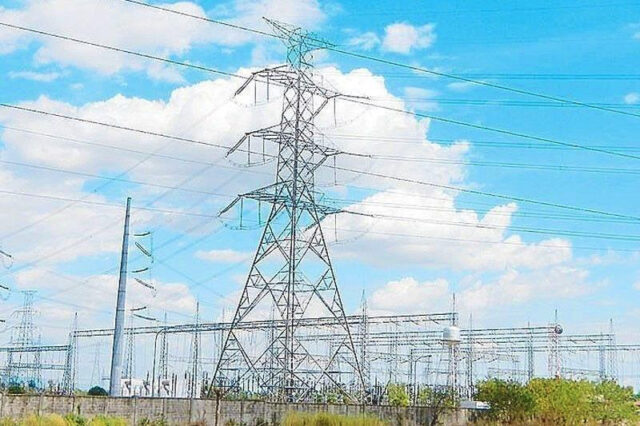
MANILA — The Asian Development Bank said on Tuesday that it has launched Southeast Asia’s first multi-partner fund to accelerate the development of an ASEAN-wide cross-border power grid and strengthen regional energy security.

The initial funding of $25 million for the Regional Connectivity Fund (RFC) comes from Australia, Canada, the European Union, Germany and Britain, and will finance early-stage cross-border energy projects.

ADB President Masato Kanda said the fund will accelerate investments to achieve fully integrated electricity grid operations by 2045, benefitting Southeast Asia, whose energy demand is expected to triple by 2050.

The RCF is a key initiative under the ASEAN Infrastructure Fund, Southeast Asia’s largest infrastructure financing platform that was established in 2011.

The fund will provide technical assistance and grants for feasibility studies, engineering design, financial structuring, and safeguards assessments.

ADB has pledged up to $10 billion over the next 10 years to support the grid and related investments to expedite cross-border power connections, national grid projects, and renewable energy initiatives. — Reuters

Globe secures back-to-back wins as Most Sustainable and Most Active Mobile Network for Environment at 2026 Consumer Choice Awards

For the second consecutive year, Globe was named Most Sustainable Mobile Network and Most Active Mobile Network for the Environment at the 2026 Consumer Choice Awards by Standard Insights, reinforcing its leadership in responsible technology and sustainable business practices. The recognition, along with Excellence in Digital Literacy and Safety, also marks the fourth time Globe has been honored for sustainability by Standard Insights.

The Standard Insights Consumer Choice Awards is a research-driven recognition program based in New York, USA that honors brands across industries based on consumer sentiment and data.

These wins signal that environmental, social, and governance (ESG) performance has become a decisive factor in the Philippine telco landscape. As the Philippines remain at risk to climate change, consumers are recognizing providers that demonstrate environmental action, such as the use of renewable energy.

The nationwide survey, which gathered insights from over a thousand Filipino mobile subscribers, highlighted the critical role of trust: 70.5 percent of respondents rely on a single mobile plan for all their connectivity needs. When one provider carries nearly every aspect of a person’s digital life, trust, reliability, and responsible business practices become non-negotiable factors in consumer choice.

“We endeavor to give more for our customers when they use the Globe network,” said Yoly Crisanto, Chief Sustainability and Corporate Communications Officer at Globe. “Globe considers its impact on the environment, how it protects people online, and how it contributes to national progress. We use the latest advanced technology to provide more convenience and better value for money for our customers.”

Globe’s commitment to sustainability practices is anchored on science-based targets, as the first publicly listed Philippine company to secure validation and approval from the Science Based Targets initiative (SBTi) for its near-term and net-zero greenhouse gas reduction targets. This ambition also makes Globe a Climate Action Faster Forward participant in the UN Global Compact. The company’s broader ESG agenda also covers circularity through its Trade-In Program and various social impact initiatives such as GoGIVE and social impact initiatives under Globe of Good.

Beyond ESG-related recognitions, Globe also secured the following awards in the Standard Insights’ survey:

– Best Mobile Network in the Philippines

– Best Network Coverage

– Best Internet Speed

– Most Competitive and Affordable Prices and Fees

– Most Reliable Network Signal

– Best Ads, Marketing Campaigns, and Brand Identity

As the industry evolves, Globe’s continued recognition signals that responsible connectivity has become central to how Filipinos define value and leadership in the digital age.


Spotlight is BusinessWorld’s sponsored section that allows advertisers to amplify their brand and connect with BusinessWorld’s audience by publishing their stories on the BusinessWorld Web site. For more information, send an email to online@bworldonline.com.

Join us on Viber at https://bit.ly/3hv6bLA to get more updates and subscribe to BusinessWorld’s titles and get exclusive content through www.bworld-x.com.

ADVERTISEMENT
ADVERTISEMENT