Home Blog Page 953

Right-of-way law seen boosting PHL bid for upper middle-class status

Workers are seen mixing cement at a construction site in Quezon City, May 19, 2020. — PHILIPPINE STAR/ MICHAEL VARCAS

By Chloe Mari A. Hufana, Reporter

THE newly signed Republic Act No. 12289, or the Accelerated and Reformed Right-of-Way (ARROW) Act, can help the Philippines achieve its goal of becoming an upper middle-income country, analysts said.

“This supports the country’s push toward UMIC (upper middle-income country) status by improving connectivity, efficiency, and investor confidence,” Philippine Institute for Development Studies Senior Research Fellow John Paolo R. Rivera said via Viber.

“However, strong implementation, fair compensation, and coordination with LGUs remain essential for its success,” he noted.

He noted that the new measure is long overdue and will significantly improve the rollout of infrastructure projects.

“By streamlining land acquisition, it minimizes costly delays and accelerates project completion that is critical for boosting productivity and attracting investment,” he added.

President Ferdinand R. Marcos, Jr. signed the ARROW Act on Sept. 12, Palace Press Officer Clarissa A. Castro told BusinessWorld via Viber.

Public Works Secretary Vivencio B. Dizon also confirmed the signing in a separate Viber message late Wednesday.

Malacañang has yet to release a full copy of the law, which amends Republic Act No. 10752, or the Right-of-Way Act, extending its coverage to all infrastructure projects carried out under public-private partnerships.

Nigel Paul C. Villarete, senior adviser on public-private partnerships at technical advisory group Libra Konsult, Inc., said that while private property rights are protected in a democracy, they must sometimes yield to the greater good.

He said via Viber that individual ownership cannot extend indefinitely, especially when it impedes community or national interests.

He said the law makes it easier for the government to pursue its infrastructure program.

The measure extends to private companies providing public services the power of eminent domain — including companies in electricity, petroleum, water pipelines, ports, telecommunications, and irrigation.

It also updates the law governing government access or expropriation of land for infrastructure by clarifying the rules on underground right-of-way.

The scope of the new law covers roads, bridges, power and water pipelines, telecommunications facilities, airports, seaports, and irrigation projects, among others.

Agencies will be required to prepare a Right-of-Way Action Plan before acquiring property, which must include a census of affected persons, an inventory of assets, compensation estimates, an implementation timeline, and records of consultations.

Property valuation will follow the market schedules set under the Real Property Valuation and Assessment Reform Act, ensuring fair compensation for land, structures, crops, and other affected assets.


Reforms, prospect of FTA keeping EU firms upbeat about entering PHL market

REUTERS

By Justine Irish D. Tabile, Reporter

EUROPEAN BUSINESSES remain confident about setting up operations in the Philippines due to recent reforms and negotiations for a free trade agreement (FTA), the European Union-Association of Southeast Asian Nations Business Council (EU-ABC) said.

“European businesses remain confident… in the direction of travel under the Marcos administration,” EU-ABC Executive Director Chris Humphrey told BusinessWorld.

“And they remain confident because we do have those ongoing FTA negotiations with the European Union,” he added.

He said that the reform agenda of the Marcos administration will help improve the ease of doing business, an ongoing concern for European businesses with operations in Southeast Asia.

“I think there’s always room to improve the ease of doing business in any economy in Southeast Asia. That is true in the Philippines as well,” he said.

“But the reform agenda that the Marcos administration has been undertaking makes life easier for European businesses,” he added.

He said the amended Investor’s Lease Act and reforms pushing the green economy and green energy are making the country a more attractive destination.

He also said the FTA, which both sides hope to complete by the end of next year, is expected to address some of the barriers to entry for European businesses as well.

“If you take a broader look between Europe and Vietnam with their FTA, we saw trade accelerate, and we saw investments from Europe into Vietnam accelerate as well,” he added.

With FTA negotiations ongoing, he said there is plenty of room for expansion in Philippine-EU trade.

“The Philippines already enjoys the Generalised Scheme of Preferences Plus (GSP+), and you will lose that at some point by virtue of your own economic development. So you need the FTA in place to help boost trade going forward,” he said.

“I actually do think trade and investment between Europe and the Philippines is below where it should be. And putting a comprehensive FTA in place will mean that trade will go up in the future,” he added.

Asked what sectors European businesses are interested in with regard to Philippine operations, he said they will skew towards high-end sectors.

“It’s a broad range of sectors like semiconductors, maybe the automotive sector as well, and high-end electronics, but also agriculture as well. I think there’s plenty of scope for the EU to source more agricultural products from the Philippines,” he said. 

He also said that the Philippines can look at the EU as an alternative market amid the plans of the US to impose tariffs on chips.

“If the US starts pricing itself out of markets because its tariffs are too high, businesses and countries will look to other export markets for their products. And I think that’s true for the Philippines. It’s true for anywhere in Southeast Asia,” he said.

“If you’re looking at things like semiconductors, well, Europe has a huge need for them. There is naturally another market there for any Philippine production to look at,” he added.

Cebu BRT targeted for full completion by 2030 — Recto

PHILSTAR FILE PHOTO

THE Cebu Bus Rapid Transit (BRT) project is expected to be fully complete by 2030, two years later than initially planned, Finance Secretary Ralph G. Recto said on Thursday.

Speaking at the Philippine Economic Briefing in Cebu, he said the transit system’s new deadline pushes back completion from the earlier-targeted date of 2028.

The 35-kilometer BRT “will transform mobility in Cebu, providing efficient, reliable, and sustainable public transport for our people,” Mr. Recto said.

He did not provide further details on the new delay.

The government broke ground on the first package of the project in 2023. It is expected to serve up to 169,000 passengers per day once completed.

“After over a decade of planning, its first package is targeted to be open to the public by this quarter,” Mr. Recto said.

According to a July World Bank report, construction on the Cebu BRT has slowed, with major civil works packages yet to be launched. It recommended restructuring to ensure completion before the loan agreement expires.

On July 23, then-Transportation Secretary Vivencio B. Dizon said at least three stations of the transit system are expected to commence partial operations this month.

Meanwhile, Mr. Recto said the government will continue to ramp up efforts to boost regional tourism in the region, with the privatization of international airports like Laguindingan in northern Mindanao and Bohol-Panglao.

“In the next three years, we aim to award 12 more regional airports, including the Puerto Princesa International Airport,” he said.

Mr. Recto added that 40 patrol vessels to be acquired by the Philippine Coast Guard from the French shipbuilder OCEA will be assembled in Cebu.

He noted that growth in the Central Visayas averaged 7.3% over the past two years, outpacing the national average of 5.9% since President Marcos Jr. took office in 2022. — Aubrey Rose A. Inosante

Agri dep’t orders audit of farm-to-market roads

DA.GOV.PH

AGRICULTURE Secretary Francisco P. Tiu Laurel, Jr. ordered an audit of all farm‑to‑market road (FMR) projects since 2021, the Department of Agriculture (DA) said in a statement.

The DA said that it validates FMR projects, though they are commissioned, bid out, and constructed by the Department of Public Works and Highways, which is currently embroiled in scandal over substandard or even non-existent flood control projects.

“These roads are meant to connect production areas to markets,” he said. “With what is happening now in flood control projects, I ordered an audit of all FMR projects from 2021 to 2025. If there are any issues in these agricultural road projects, I will have to report that to President (Ferdinand R.) Marcos, (Jr.),” Mr. Laurel was quoted as saying.

The FMR audit, he said, should be completed by the end of this year.

According to the government’s roadmap, the target is to build 131,000 kilometers of FMRs to link farms with markets, the DA said. As of July, 70,000 kilometers have been completed — and about 61,000 kilometers awaiting validation.

For 2026, the DA said it allocated P16 billion for FMRs, well below the P56 billion requested during the budget preparation process.

Fisheries science conference convening in Clark this month

A FAMILY of siganids fishers in Eastern Samar. — MARCIAL VILLANIA BOLEN

FISHERIES RESEARCHERS are convening later this month in Clark to present findings that will make fishing more sustainable and financially more rewarding to industry participants, conference organizers said.

The 11th Fisheries Scientific Conference (Fish SciCon) will take place at the Royce Hotel in Clark on Sept. 24-25, featuring presentations by the host organization, the National Fisheries Research and Development Institute (NFRDI) and other researchers.

The NFRDI program includes presentations on oyster, mangrove crab, milkfish, tilapia in brackish water, and tilapia in fresh water, as well as programs like the Knowledge Products Repository and the National Stock Assessment Program.

Resource persons will also discuss capture fisheries, aquaculture, postharvest operations, and biotechnology, organizers said.

Scholars of the Bureau of Fisheries and Aquatic Resources will also present their research at a competition during the conference. — Andre Christopher H. Alampay

Business chamber calls for digitalization push to be made more inclusive

DICT

THE Philippine Chamber of Commerce and Industry (PCCI) said the digitalization process needs to be made more inclusive if the Philippines is to catch up with the rest of the region.

“Even as the Philippines has made strides in digital transformation with rapid growth in digital payments, e-commerce platforms, and online public services, the country remains behind its Southeast Asian neighbors,” the PCCI said in a statement on Thursday.

“As the Association of Southeast Asian Nations (ASEAN) region accelerates toward a digital economy, the Philippines must take decisive action to close the digital gap or risk being left further behind,” it added.

PCCI President Enunina V. Mangio said robust and inclusive digital infrastructure is needed for digitalization to take off, with a special focus on broadband access in rural and underserved areas.

“If we are to achieve inclusive and sustained growth, local governments, schools, and enterprises operating in rural areas must have the same level of access and reliability as their urban counterparts,” she said.

“To be competitive, cost and speed must be equivalent to or even better than those of our neighbors in ASEAN who are already years ahead of us in small-business digitization, e-commerce adoption, and digital government services,” PCCI President Consul Enunina Mangio said.

She said more must be done beyond recent reforms like the amendments to the Public Service Act, the SIM Card Registration Law, the Digital Transformation Roadmap, and the National Fiber Backbone project.

“Connectivity must be treated as critical infrastructure, on par with roads, energy, and ports,” according to Dennis Anthony H. Uy, PCCI director for Information and Communication Technology.

“There should be more strategic investment in both fixed and mobile broadband networks, especially in underserved regions, to enable more participation in the digital economy,” he added.

The group also sought streamlined permit processes for telecom infrastructure and enforcement of infrastructure sharing policies. — Justine Irish D. Tabile

Maya Bank, Atome in $48-M ‘loan channeling’ partnership

PHILSTAR FILE PHOTO

MAYA BANK said it sealed a $48-million “loan channeling” partnership with Atome, which will expand credit access to clients vetted by Maya.

“This collaboration leverages digital technology to bring fast, secure, and responsible financing into the hands of underserved customers, helping them build financial confidence and long-term resilience,” Maya Bank President Angelo S. Madrid said in a statement on Thursday.

“We are deeply honored to partner with Maya Bank, a true trailblazer in digital banking. Together, we are expanding access to responsible, risk-managed, and transparent flexible payment options that make more products and services truly ‘Available-To-Me’ for millions of Filipinos. Since Day One, Atome’s mission has been to improve lives through greater financial access and technology, and this partnership with Maya Bank is a significant step forward in that journey in the Philippines,” Atome Philippines President & Country General Manager Christian Quiros said.

Launched in 2019, Atome is a digital finance platform active in Southeast Asia offering cards, lending, insurance and savings products. It currently serves over 4 million clients in the Philippines via Buy Now, Pay Later schemes.

Maya Bank launched in 2022, offering savings, deposits, and credit to consumers and micro, small and medium enterprises. — Aaron Michael C. Sy

DPWH goes after properties, vehicles of personnel, contractors in flood scam

PUBLIC WORKS Secretary Vivencio “Vince” B. Dizon responded to senators’ queries during the Senate Blue Ribbon inquiry into the agency’s alleged anomalous flood control projects on Thursday, Sept. 18. — SENATE PRIB

By Adrian H. Halili, Reporter

THE DEPARTMENT of Public Works and Highways (DPWH) said it is coordinating with other agencies to probe real estate properties and high-value vehicles of contractors and DPWH personnel involved in anomalous flood control projects for a potential freeze order.

Public Works and Highways Secretary Vivencio “Vince” B. Dizon said that the agency had written to the Land Registration Authority (LRA), Land Transportation Office (LTO), Maritime Industry Authority (MARINA), and Civil Aviation Authority of the Philippines (CAAP) to provide registered land properties, vehicles, water vessels, and aircraft of the 26 contractors and DPWH personnel involved in the flood control scam.

“We also need to know this and eventually freeze these assets because we need to be sure that we can recover all that we can recover from those who stole the country’s funds,” he told reporters on the sidelines of a Senate Blue Ribbon hearing on Thursday.

Last week, the Public Works department filed complaints against 20 DPWH officials and six contractors connected with anomalous flood control projects.

The Court of Appeals had also approved a freeze order on the bank accounts and insurance policies of those involved.

Mr. Dizon added that the list of all assets of the individuals involved will be released “in the next few days.”

“We will also submit this to the authorities, including the AMLC (Anti-Money Laundering Council of the Philippines) and other law enforcement agencies such as the Department of Justice and the Office of the Ombudsman,” the Public Works chief said.

He added that the report will also be submitted to the newly formed Independent Commission for Infrastructure (ICI). Created under Executive Order No. 94, President Ferdinand R. Marcos, Jr. granted the independent body authority to recommend civil, criminal, and administrative charges in infrastructure-related anomalies.

In the same hearing, Mr. Dizon said that that agency is looking to claim the warranties of ghost or substandard flood projects.

“The government cannot shell out money again, it needs to recover those warranties,” he told senators. “The money needs to be returned as these projects need to be fixed.”

MORE THAN 100 GHOST PROJECTS
Mr. Dizon added that the agency is set to publish the initial list of ghost and substandard flood control projects in the next two weeks.

“Maybe just give us a few weeks, even a week or two. We want to create a transparency portal similar to what our President did,” Mr. Dizon told senators during a Blue Ribbon Committee hearing.

He added that the agency’s initial list will also include the DPWH personnel involved in ghost and substandard flood control projects.

He said that based on their initial probe, there were more than 100 ghost and substandard projects found across the country.

Asked by Senator Paolo Benigno “Bam” A. Aquino IV if losses from anomalous flood control projects could reach “tens of billions or possibly hundreds of billions,” Mr. Dizon answered in the affirmative.

“There is a possibility,” the Public Works chief said.

Also on Thursday, the Commission on Audit (CoA) filed additional audit reports to the Ombudsman over alleged anomalous projects in Bulacan.

The CoA report found four alleged ghost flood control projects amounting to about P381.9 million.

Since 2022, about P544 billion in public funds have been allocated for flood control nationwide, with about P100 billion cornered by the top 15 contractors named by Mr. Marcos.

CONTEMPT ORDER
The Blue Ribbon Committee had cited in contempt contractor Pacifico “Curlee” F. Discaya II for allegedly lying to senators about the reason for his wife’s absence.

Senator Panfilo “Ping” M. Lacson, the new head of the Blue Ribbon Committee, approved a motion raised by Senator Rafael T. Tulfo to cite Mr. Discaya in contempt after he told the committee that his wife and business partner Cezarah Rowena “Sarah” Discaya skipped the hearing due to a “heart condition.”

However, Ms. Discaya said that there was a pre-scheduled meeting with her employees, according to a letter sent to the senator.

The committee had also issued a show cause order to Ms. Discaya to explain her absence.

Ex-DPWH engineer Henry C. Alcantara was also cited in contempt for denying that he had any knowledge of ghost projects in Bulacan.

Senator Erwin T. Tulfo said that his explanation was “unacceptable” and raised a motion to cite in contempt, it was approved by Mr. Lacson after no further objections.

Mr. Discaya and Mr. Alcantara will be held on the Senate premises.

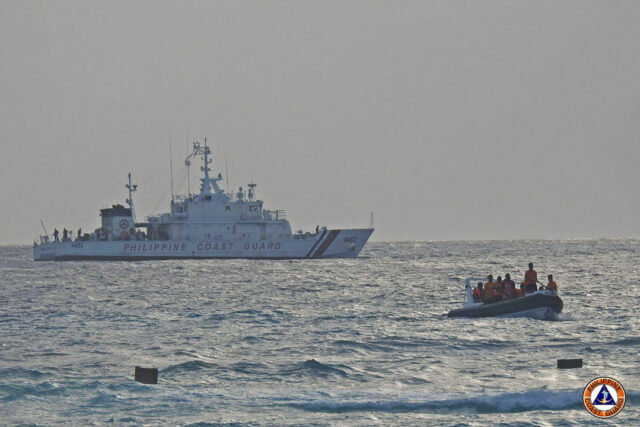
Deeper strategic ties with Europe needed amid tensions — Año

ORIGINAL PHOTO FROM THE PHILIPPINE COASTGUARD FACEBOOK ACCOUNT

By Kenneth Christiane L. Basilio, Reporter

A TOP Philippine security official on Thursday underscored the need to expand regional partnerships to address tensions in the Indo-Pacific, calling for deeper strategic interdependence with Europe to address shared security anxieties.

National Security Adviser Eduardo M. Año said the Indo-Pacific and Europe should work together to help bolster deterrence and approach regional security concerns, noting developments in one region create ripple effects felt across the other.

“The challenges we face are interconnected, we must use the same interconnectedness to confront them,” he said in a keynote at a security forum in Manila. “Our interconnected security also presents to us that instability in one theater ripples across the other.”

He said the Indo-Pacific has emerged as the epicenter of geopolitical and strategic shifts.

The South China Sea, where trillions of dollars of trade passes annually, has emerged as a regional flashpoint, with China claiming almost the entirety of the waterway.

A United Nations-backed tribunal in 2016 voided China’s sweeping claims for being illegal, a ruling that Beijing does not recognize.

“In yet another coercive attempt to advance its interests, a neighbor has bared its plan to build a national nature reserve in the Scarborough Shoal or Bajo de Masinloc in the West Philippine Sea,” Mr. Año said, alluding to China, while using the Filipino name for parts of the South China Sea within Manila’s exclusive waters.

“Such attempts tell the world that respect for international law and rule-based order is now being put to the side to give way to self-serving and coercive domestic laws,” he added.

Beijing last week approved a plan to establish a national nature reserve in Scarborough Shoal, which lies just 222 kilometers off the coast of Luzon but almost 900 kilometers from China’s Hainan Island.

China’s State Council said the nature reserve is an important measure to maintain the “diversity, stability and sustainability of the natural ecosystem” of the maritime feature.

The reserve will cover more than 3,500 hectares at Huangyan Island, the Chinese name for Scarborough Shoal, with its coral reef ecosystem as the main protection target, according to China’s National Forestry and Grassland Administration.

Mr. Año said that coercive acts to gain strategic advantages in the Indo-Pacific have begun to emerge in other regions, like Europe.

“As the global fulcrum of power constantly shifts, similar challenges have emerged in evolving dimensions,” he said. “Some of these threats move beyond conventional warfare. They are now being waged asymmetrically, tending to be irregular but systematic.”

The Philippines has repeatedly accused China of conducting what is described as “illegal, coercive, aggressive and deceptive” activities in the South China Sea, while Beijing maintains its actions are legitimate measures to defend its sovereignty.

“Asymmetric threats demand symmetric unity and systematic actions,” Mr. Año said. “Solidarity, burden-sharing and innovation are indeed crucial to maintaining deterrence and stability.”

“There are critical areas of cooperation in which we can frame and fortify our partnerships,” he added, referring to expanded defense funding schemes from Europe and diversifying supply chain ties to reduce trade coercion.

The Philippines, already bound by military agreements with the United States, Japan and Australia, is pursuing closer security ties with allies amid tensions with China over disputed features in the South China Sea.

Defense Secretary Gilberto C. Teodoro, Jr. earlier said the United Kingdom has expressed its interest to enter into a defense pact with the Philippines. If talks proceed, the UK would be the second European country after France to pursue such a deal with Manila.

Security cooperation with allies soared under President Ferdinand R. Marcos, Jr., who has taken a firmer stance against Beijing’s sweeping maritime claims compared with his predecessor.

He also said that European naval deployments to the South China Sea contribute to improving the security landscape in the disputed waterway, demonstrating the effectiveness of expanded defense cooperation.

Meanwhile, the US and Australian navies held maritime drills in the disputed waterway on Sept.15 to 16, in an exercise the US Indo-Pacific Command described as in support of a “free and open” Indo-Pacific.

The exercise involved the US guided-missile destroyer USS Dewey and Australian Navy frigate HMAS Ballarat, which conducted communication drills and simulated fire rehearsals while sailing in the South China Sea.

“The US Navy regularly trains alongside our allies and partners in the Indo-Pacific region as a demonstration of our shared commitment to international law and a free and open Indo-Pacific,” the US Indo-Pacific Command said in a statement.

The joint naval drills came on the heels of a trilateral exercise with the Philippines, Japan ,and the US in the contested waterway last week in response to heightened tensions.

Manila has increasingly leaned on multinational cooperation to shore up its maritime defenses and improve interoperability with allies amid increasing Chinese assertiveness in the South China Sea.

Mirasol exits PHL; Nando may intensify into typhoon

FACEBOOK.COM/PAGASA.DOST.GOV.PH.JPG

TROPICAL Depression Mirasol (International name: Mitag), which exited the Philippine area of responsibility (PAR) on Thursday morning, intensified into a tropical storm bringing heavy rains to Luzon, while Tropical Depression Nando is expected to develop into a typhoon, which could trigger wind signals in the coming days, the state weather bureau said on Thursday.

“The trough of the tropical storm is still affecting extreme Northern Luzon as well as the Ilocos Region,” Leanne Marie Loreto, weather specialist of the Philippine Atmospheric, Geophysical, and Astronomical Services Administration (PAGASA), said in Filipino during a 5 p.m. press briefing. Mirasol left PAR at 6 a.m.

Mirasol, with sustained winds of 65 kilometers per hour (kph) and gusts of up to 80 kph, was last located 465 km West of Calayan, Cagayan, moving westward at 15 kph, Ms. Loreto said.

She added that it is also slightly enhancing the southwest monsoon, bringing overcast skies and scattered rain showers in the evening over Zambales, Bataan, Pampanga, Bulacan, and Metro Manila.

The weather system is likewise affecting Calabarzon, MIMAROPA region, western Visayas, Negros Island Region, and Zamboanga Peninsula, which may trigger flashfloods and landslides.

PAGASA has already lifted all tropical cyclone wind signals (TCWS) for Tropical Depression Mirasol, as of the latest forecast period.

Over 1,000 individuals, or 233 families, were affected by Tropical Depression Mirasol, primarily in Cagayan Valley, central Luzon, and Bicol region, according to the National Disaster Risk Reduction and Management Council’s (NDRRMC) 8 a.m. situational report on Thursday.

There were no casualties or injuries reported.

Meanwhile, Tropical Depression Nando maintained its strength, with sustained winds of 55 kph and gusts of up to 70 kph, according to PAGASA’s 5 p.m. bulletin.

“As it moves, it may further intensify into a typhoon as early as Saturday… We are also not ruling out the possibility that it could reach the super typhoon category,” Ms. Loreta said.

Nando was located 1,260 km East of Central Luzon and moving northwestward at a speed of 15 kph.

As of the forecast period, Nando is less likely to directly affect the country within the next 48 hours. However, PAGASA said TCWS No. 1 may be raised on Saturday in affected areas, with the possibility of TCWS No. 5 if Nando intensifies into a super typhoon.

PAGASA advised residents in high-risk areas to follow evacuation orders and other instructions from local officials. — Edg Adrian A. Eva

Transport strike cut short after government, commuter appeals

COMMUTERS crowd a portion of Commonwealth Avenue in Quezon City as they wait for available passenger jeepneys and buses on the first day of the planned three-day transport strike of Manibela, Sept. 17. — PHILIPPINE STAR/MIGUEL DE GUZMAN

TRANSPORT group Manibela ended its strike one day earlier, calling off protests by Thursday afternoon following appeals from transport officials and commuters as the Philippines braces for a wider movement against alleged government corruption on Sept. 21.

In several Facebook posts, the group said the Department of Transportation, the Land Transportation Franchising and Regulatory Board, the Land Transportation Office, and civil society groups had urged the organization to call off its planned three-day strike, which kicked off on Wednesday.

Public utility jeepneys remain the backbone of mass transport in the Philippines, carrying millions of commuters daily and serving as the primary mode of travel in both urban centers and rural towns.

Other transport groups on the same day warned that entrenched corruption in state agencies is driving up costs and eroding livelihoods, urging the government to act against alleged payoffs and extortion schemes in the sector.

The coalition said that corruption has exacerbated the burden of rising fuel prices, inadequate subsidies for public transportation, poor infrastructure and policies that they consider anti-poor, such as the oil deregulation law and the planned phaseout of traditional jeepneys.

The statement was signed by major transport groups, including the Pagkakaisa ng mga Samahan ng Tsuper at Operators Nationwide (PISTON), Kapatiran ng Riders para sa Karapatan (KaRiders) and Manila Taxi Regional Association (MANTRA), among others.

“While Filipinos tighten their belts to survive, officials and their local and foreign business cohorts continue to feast on public funds,” the groups said in Filipino in their unity statement. 

The alliance demanded accountability from government officials and called for the dismantling of what it called a “rotten system” of governance in favor of a progressive, pro-people framework.

“Transport workers are ready to fight corruption and hold all those involved accountable,” the groups said.

This comes as the Philippines continues its probe into alleged corruption, zeroing in on multibillion-peso infrastructure projects.

Manibela launched its strike on Sept. 17 to protest alleged corruption and misuse of public funds. It noted, however, that it would join the mass protests scheduled on Sept. 21, Sunday, to decry anomalies in the Philippine government.

The mass protest also falls on the anniversary of the declaration of martial law in 1972, when the father and namesake of current Philippine President Ferdinand R. Marcos, Jr. ordered military rule that ushered in years of authoritarian governance, rights abuses and economic decline.

The late President Ferdinand E. Marcos, Sr. held power for 21 years, during which his family accumulated millions in ill-gotten wealth.

The incumbent chief executive, however, has made bold pronouncements against corruption as Filipinos suffered the devastating effects of climate change and an outdated flood mitigation system.

He had also backed the Filipinos’ plan to protest on Sept. 21, noting that if he were not the president, he would also take to the streets. — Chloe Mari A. Hufana

DoJ hears cockfighters’ case

BW FILE PHOTO

THE Department of Justice (DoJ) on Thursday opened the first hearing of its preliminary investigation into the disappearance of cockfighting enthusiasts, a case that has drawn national attention and allegations against high-profile figures.

Senior Assistant State Prosecutor Charlie Guhit said the first day focused on the complainants subscribing to their affidavits. “The panel completed the subscription of the affidavits filed by the complainants,” he said.

Among the respondents, only a few appeared, including former National Capital Region Police Office Chief Gen. Jonnel Estomo and actress Gretchen C. Barretto.

Businessman Charlie “Atong” Ang, through his lawyer Gabriel Villareal, said they could not yet file a counter-affidavit, noting that parts of the subpoena, including a USB drive, were “missing.”

Ms. Barretto was the only respondent to submit a counter-affidavit during the session. Other submissions were deferred pending additional documents from law enforcement.

Julie “Dondon” Patidongan, a suspect-turned-witness, earlier alleged that Mr. Ang and Mr. Barretto, as “alpha members” of the Pitmaster group, operators of online cockfighting games, were directly involved in the disappearances.

Ms. Barretto told reporters she “trusts the process” and denied the allegations, reiterating her earlier statements. She declined to further comment, allowing her lawyer to speak on her behalf. 

“The reason we’re filing a counter-affidavit right now… based on what we have been saying from the very beginning that we feel that the accusations against her are unsubstantiated, incredible, and there’s every basis for the complaint to be dismissed,” said her counsel, Alma D. Fernandez-Mallonga.

Mr. Patidongan, through his lawyer, Manuel Ventura, replied that it is up to the DoJ to determine credibility and “not for the respondents to say that.”

Meanwhile, Jaja Pilarta, partner of one missing sabungero, rejected alleged offers to drop the case.

“No matter what they offer, no matter what they give us, we will not withdraw the case,” she said in Filipino.

The DoJ set the next hearings for Sept. 29 and Oct. 13, when it expects all remaining documents and counter-affidavits to be filed.

“The DoJ will evaluate whether there is sufficient evidence to proceed to court after receiving all submissions. If evidence is found lacking, the case may be dismissed,” Mr. Guhit said. — Erika Mae P. Sinaking