Home Blog Page 95

Three Abra villages reject exploration bid

SALLAPADAN, Abra — Three barangays in Sallapadan town in Abra have rejected a proposed mining exploration project, marking an early assertion of Indigenous Peoples’ rights during the Free, Prior and Informed Consent (FPIC) process.

Barangays Bilabila, Saccaang, and Naguilian voted against the application of a mining firm, becoming the first communities in Sallapadan town to formally register their rejection of the project.

The FPIC process requires the consent of Indigenous communities before any activity can proceed in their ancestral domains, giving them the authority to decide on projects that may affect their land, livelihood, and environment.

Consultations in six other barangays are set for April 7 and 8, which will determine the overall position of the town on the mining proposal.

The early rejection came amid claims that individuals allegedly linked to the company tried to persuade residents, while community members expressed hope that other villages will also stand firm in protecting their ancestral lands. — Artemio A. Dumlao

PSEi up in cautious trade before Trump deadline

BW FILE PHOTO

PHILIPPINE STOCKS inched up on Tuesday as the market maintained a cautious stance while awaiting developments in the Middle East conflict.

The benchmark Philippine Stock Exchange index (PSEi) climbed by 0.16% or 9.54 points to close at 5,957.87, while the broader all shares index went up by 0.39% or 13.17 points to end at 3,350.16.

“The local market traded sideways as investors digested the Philippines’ March inflation rate which came in at 4.1%, exceeding the government’s 2%-4% target. In the end, however, bargain hunting prevailed, causing the local bourse to have a positive close,” Philstocks Financial, Inc. Research Manager Japhet Louis O. Tantiangco said in a market note.

Oil price shocks due to the Middle East war caused Philippine headline inflation to quicken to its fastest pace in 20 months in March, settling at 4.1% from 2.4% in February and 1.8% in the same month last year.

This was above the 3.8% median estimate in a BusinessWorld poll of 18 analysts and the central bank’s 3.1%-3.9% forecast for the month.

“The second half of trading buoyed the market barely in positive territory following mixed signals from Trump, which put investors on their toes as they await definitive actions that could push the global markets in either direction,” AP Securities, Inc. said in a market note.

Global stocks wavered on Tuesday, while oil prices edged above $110 per barrel as the looming deadline imposed by US President Donald J. Trump for a deal with Iran threatened escalation in the Middle East and spooked investors, Reuters reported.

Markets have been rattled since the US-Israeli war on Iran broke out at the end of February, with Tehran effectively closing the Strait of Hormuz, a key global oil transit chokepoint, that has spurred inflation worries.

While investors have pinned their hopes on a resolution to the war, the talks so far have yielded no progress, with Mr. Trump imposing a Tuesday night deadline for a deal to be reached.

Most sectoral indices closed higher on Tuesday. Mining and oil jumped by 1.85% or 301.34 points to 16,572.80; financials rose by 0.58% or 10.91 points to 1,885.43; holding firms advanced by 0.57% or 26.84 points to 4,658.96; and services climbed by 0.32% or 8.72 points to 2,699.96.

Meanwhile, property went down by 0.33% or 6.63 points to 1,981.44, and industrials retreated by 0.13% or 11.39 points to 8,773.43.

“DigiPlus Interactive Corp. was the day’s index leader, jumping 5.44% to P15.88. Century Pacific Food, Inc. was the worst index performer, dropping 3.45% to P32.20,” Mr. Tantiangco said.

Advancers outnumbered decliners, 120 to 76, while 65 names closed unchanged.

Value turnover climbed to P5.82 billion on Tuesday with 1.27 billion shares traded from the P5.55 billion with 816.79 million issues that changed hands on Monday.

Net foreign selling decreased to P992.33 million from P1.05 billion in the previous session. — Alexandria Grace C. Magno with Reuters

Investment pledges expected to be ‘sluggish’ due to Iran war

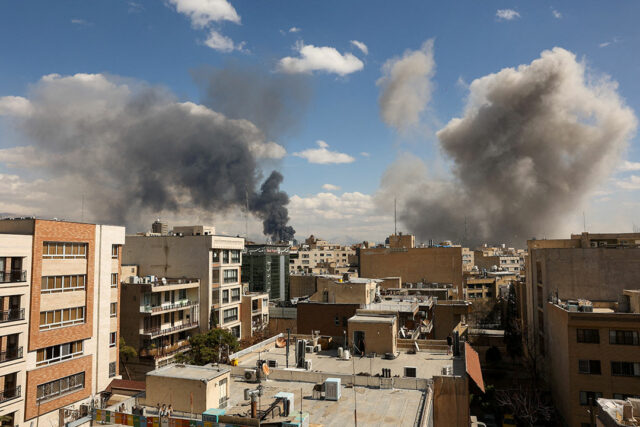
Smoke rises following an explosion, after Israel and the U.S. launched strikes on Iran, in Tehran, Iran, March 1, 2026. — MAJID ASGARIPOUR/WANA VIA REUTERS

SLUGGISH investment activity is expected to be one of the consequences of the fighting in the Middle East, Trade Secretary Ma. Cristina A. Roque said.

Speaking to reporters late Monday, Ms. Roque said investment will “definitely… be affected” because of the crisis. “Everything will be at a stand still.”

“If this continues, we expect sluggish (investment pledges,)” Ms. Roque added.

When asked if the government is ready to amend its export and investment approvals targets, she said: “Definitely, we will have to meet regarding that… But for now, our main priority is to maintain food prices… to at least keep them stable.”

The DTI (Department of Trade and Industry) was projecting BoI (Board of Investments) investment approvals of P1 trillion this year, which falls below the P1.75-trillion target in 2025.

BoI-approved investments hit P1.56 trillion last year, falling short of the 2025 target and 4% lower than the record P1.62-trillion 2024 approvals.

One possible offsetting factor could be renewable energy (RE) investments, which could receive a boost from high oil prices, Ms. Roque said.

“(We expect a) jumpstart from RE pledges (and) electric vehicles,” she noted.

According to the BoI data, the energy industry, which includes RE, accounted for the largest share of approved investments at P22.4 billion, or 47.7% of the total, in the first two months of 2026.

In the first two months, the BoI approved P47 billion worth of investments for 35 projects, up 338% from a year earlier.

The DTI is assigning a lower priority to foreign travels to attract investment, Ms. Roque said, adding that “making sure everything is stable here” is the top agenda item.

On the export side, the target was set at between $110.8 billion and $113.4 billion this year, according to government estimates, downgraded from the previous target of $163.6 billion.

Last year, exports rose 15.2% to $84.41 billion in 2025 from $73.27 billion in 2024.

John Paolo R. Rivera, senior research fellow at the Philippine Institute for Development Studies, said the ongoing war in the Middle East may dampen investor sentiment in the coming months. 

“We may see some moderation or normalization in approvals in the coming months, rather than a sharp slowdown,” he said via Viber.

Despite external uncertainties, investments in strategic sectors like RE are likely to stay resilient, Mr. Rivera added.

Rizal Commercial Banking Corp. Chief Economist Michael L. Ricafort said global trade disruptions could weigh on the growth of exports and investment approvals.

“Since some FDIs (foreign direct investments) are export-oriented; foreign investment approvals could slow down as well to adjust to the weaker demand in the Middle East and other parts of the world,” he said via Viber. — Beatriz Marie D. Cruz

No disruptions to P20 rice logistics despite higher fuel prices — DA

PHILIPPINE STAR/MIGUEL DE GUZMAN

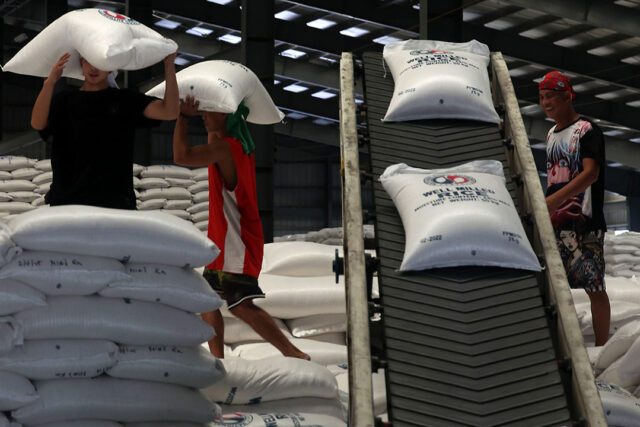
THE Department of Agriculture (DA) said it does not expect any disruption to deliveries of rice for its P20-per-kilo rice program despite rising fuel prices that have increased logistics and transportation costs.

Genevieve E. Velicaria-Guevarra, assistant secretary for agribusiness, marketing, and consumer affairs, said the program had sufficient logistical funding to absorb such cost increases.

“While we acknowledge that the recent rise in fuel prices has increased transportation and logistics costs, the P20 rice program was designed with adequate logistical allotments to address these operational requirements,” she told BusinessWorld via Viber.

The DA has said the program was allocated P23 billion in 2026, with the aim of serving 15 million qualified beneficiaries by the end of the year.

Ms. Guevarra said that while higher fuel costs “may have affected the timeframe” for utilizing the program’s budget, the DA does not expect an impact on the continuity of operations.

The DA added that rice deliveries to Kadiwa centers and other accredited distribution outlets nationwide are proceeding as scheduled. — Vonn Andrei E. Villamiel

Negros legislator bats for 15% ethanol in gasoline

REUTERS

A NEGROS OCCIDENTAL legislator urged the government to increase the ethanol blend in gasoline to 15% (E15) from the current 10% (E10), citing supply security and the benefits to the domestic sugar industry.

In a statement on Tuesday, the province’s 5th District Rep. Emilio Bernardino L. Yulo said raising the blend from 10% to 15% could help cushion the impact of rising fuel prices and support demand for domestically produced bioethanol.

The Biofuels Act of 2006 requires that all liquid fuels for use in motors and engines be blended with biofuels. Since 2012, gasoline has been sold as a 10% bioethanol blend, known as E10.

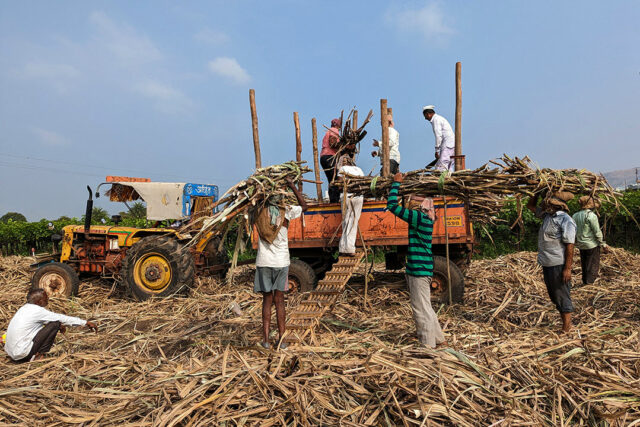
Mr. Yulo said increasing the blend to E15 would raise the ethanol component and expand the demand for bioethanol, primarily derived from molasses.

“Increasing the ethanol blend from E10 to E15 can create stronger domestic demand for sugarcane-based ethanol and provide a needed market for sugar byproducts at a time when our farmers are under tremendous pressure and the general public is reeling from rising prices,” Mr. Yulo said.

The House Committee on Agriculture had been looking into sugar millgate prices, which recently fell to about P2,000 to P2,100 per 50-kilogram bag, below estimated production costs of roughly P2,500.

In the statement, Mr. Yulo said the Philippines has 14 accredited bioethanol plants with a combined installed capacity of 508 million liters per year, although effective output is estimated at 396 million liters annually.

Around 80% of the country’s molasses supply is also used for ethanol production, according to US Department of Agriculture estimates.

Mr. Yulo said government support will be needed to expand production capacity, including incentives for fuel-grade ethanol. He also said ethanol imports could be considered to supplement supply, provided they do not displace domestic production.

He called on the departments of Energy and Agriculture, along with the Sugar Regulatory Administration, to study the feasibility of increasing the blend and to ensure that any policy shift would benefit domestic producers and consumers. — Vonn Andrei E. Villamiel

Round 5 of RE auctions attracts nine bids

WORLDBANK.ORG

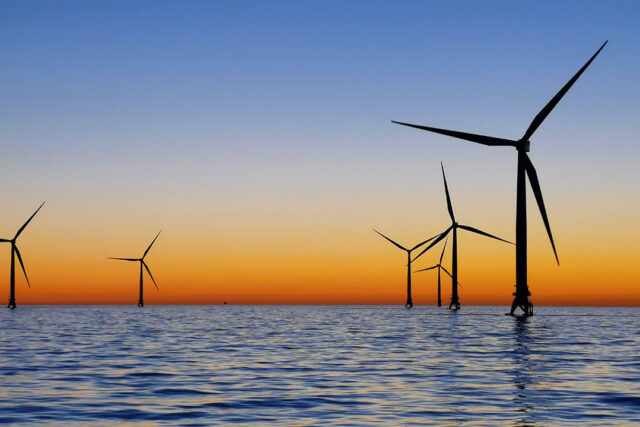
NINE valid bids for development projects that could generate at least 42 megawatts were received in the fifth auction round for pre-determined renewable energy (RE) resource areas, the Department of Energy (DoE) said.

In a statement on Tuesday, the DoE said the open and competitive selection process (OCSP) round attracted bids for six sites.

The OCSP is a mode for the selection and award of RE contracts particularly for pre-determined areas (PDAs) offered by the DoE through a bidding process. PDAs refer to locations with potential RE resources that are suitable for further development.

Following the opening of bids, the OCSP Review and Evaluation Committee has moved to endorse these to the legal, technical, and financial evaluation  stage.

The DoE said all nine bid submissions were found complete with the documentary requirements and shall proceed to detailed evaluation upon payment of the prescribed fees.

The bids cover the 6.70-megawatt (MW) Guinoba-an No. 1 and 2.90-MW Guinoba-an No. 2 projects in Albay, the 8.3-MW Pacu-an Hydroelectric Power Projects in Negros Oriental, the 25-MW Southern Leyte Geothermal power project, the Cabusao wind project in Camarines Sur and the San Isidro wind project in Samar. The last two projects have capacities that are yet to be determined.

The potential power projects are expected to contribute to the Philippines’ goal to increase RE share to 35% by 2030 and 50% by 2040.

The government expects RE investments to strengthen long-term energy security in the face of periodic disruptions due to conflicts in the Middle East.

“Expanding renewable energy capacity is one of our key strategies to strengthen the Philippines’ energy independence as tensions in the Middle East continue to affect global markets,” Energy Secretary Sharon S. Garin said.

In the first two months, the Board of Investments approved 35 projects worth P47 billion. Of the total, the energy industry, which includes RE, accounted for the largest share at P22.4 billion or 47.7%.

The DoE said the energy investment approvals signal sustained investor confidence in the energy transition.

“Our response is two-pronged: we are managing immediate risks while accelerating long-term structural reforms,” Ms. Garin said.

Around 1,471 MW of committed renewable and energy storage projects are expected to be injected onto the grid within the month.

“Every additional megawatt of renewable energy we bring online strengthens our ability to withstand global volatility,” Ms. Garin said. “This is how we convert investment momentum into real energy security: more stable supply and greater resilience.” — Sheldeen Joy Talavera

Investments granted ‘green lane’ treatment hit P6.4T at end-March

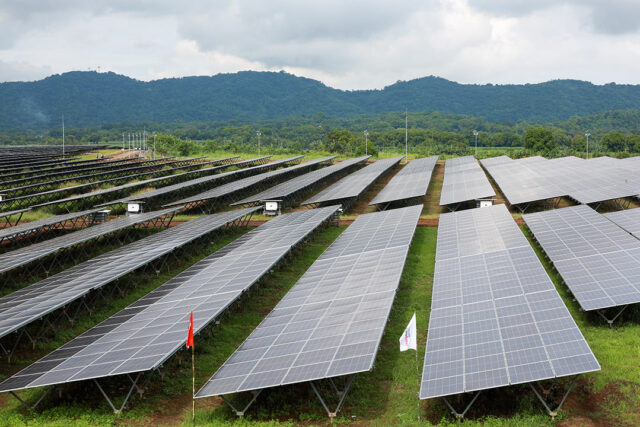
Solar panels are seen in Batangas in this file photo. — PHILIPPINE STAR/NOEL B. PABALATE

ABOUT P6.43 trillion worth of projects have been approved for expedited processing via the “green lane” certification system as of March, the Board of Investments (BoI) said on Tuesday.

The BoI reported that 244 projects worth P6.43 trillion have been granted a green lane certification as authorized by Executive Order No. 18.

Many of these projects are focused on renewable energy (RE) and related infrastructure, Trade Secretary and BoI Chairman Ma. Cristina A. Roque said in a statement.

About 171 projects involving investment of P5.79 trillion are in the pre-development stage; 46 projects worth P359.64 billion are under construction; and eight projects valued at P6.99 billion are in the pre-operation stage.

The BoI noted that 19 projects worth P266.85 billion are operational, covering industries like RE, digital infrastructure, and energy.

“Accelerating their implementation is important to help address energy supply requirements, stabilize costs, and support continued economic activity,” Ms. Roque said.

“This is why streamlining permitting and improving coordination across agencies remains a priority,” she added.

Executive Order No. 18, which created the Green Lane program, streamlined the processing of permits and clearances for investments deemed strategic. 

Beneficiaries of the initiative include Nanchao Renewable Energy Corp.’s 100-megawatt Pasuquin Solar Power Project in Ilocos Norte, which received a decision from the Energy Regulatory Commission in four months, compared to the usual nine-month processing time.

“The DTI and BoI expect the Green Lane Initiative to support the timely implementation of investments in key sectors, contributing to job creation, improved infrastructure, more reliable energy supply, and enhanced access to essential services,” it said. — Beatriz Marie D. Cruz

Clark Dev’t Corp. on track to hit P12.35-B investment goal

CLARK Development Corp. (CDC) said it is on track to meet its target of P12.35 billion in investment pledges this year, even in the face of the disruptions caused by the Middle East crisis.

“For 2026, our commitment to the GCG (Governance Commission for GOCCs) is P12.35 billion worth of investments,” Noelle Mina D. Meneses, CDC vice-president for the business development and business enhancement group, said at a briefing late Monday.

“We’re very happy that just after the first quarter, the CDC signed P9 billion to P10 billion worth of investment (pledges),” she said.

Ms. Meneses said this head start could allow CDC to “exceed our targets this year.”

The CDC suspended its P1 per liter fuel royalty for two months starting April 1 to ease the impact on Clark Freeport locators of rising fuel costs.

CDC President and Chief Executive Officer Agnes VST Devanadera said it “does not waive government revenues and retains regulatory oversight within the zone, but (the freeze on royalties is) intended to help ease operating costs and support business continuity.”

She also noted that Petron Corp. has agreed to ensure fuel supplies for Clark locators based on a prioritization system, with talks ongoing with other suppliers.

Petron’s allocation system classifies locators into essentials, support services, and others, CDC said.

Locators have been encouraged to adopt work-from-home arrangements; install solar panels on their rooftops; adopt net‑metering and distributed energy programs; and consider electric vehicle options, CDC said.

Last month, CDC signed a P4.4-billion deal with Korean developer Luxia Corp. to develop a mixed-use property within Clark Freeport.

This high-end development will include hotel and serviced apartments for the growing meetings, incentives, conferences, and exhibitions market. — Beatriz Marie D. Cruz

Feb. manufacturing output rises to 8-month high

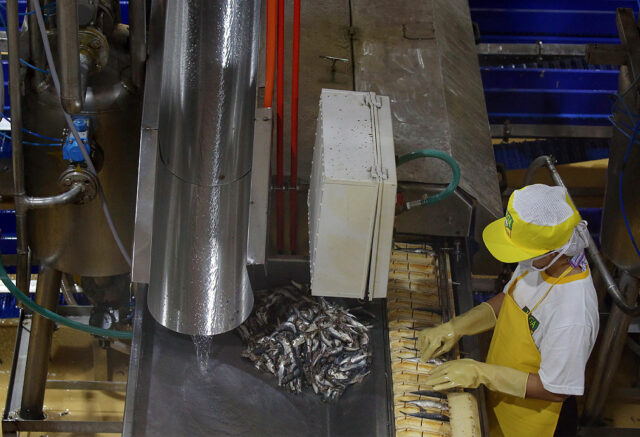
A worker is seen inside a manufacturing plant in Sto. Tomas, Batangas, March 1, 2023. — PHILIPPINE STAR/KRIZ JOHN ROSALES

MANUFACTURING output growth expanded to an eight-month high in February, driven by sustained local demand, with a boost provided by the US Supreme Court’s cancellation of impending tariffs that month, analysts said.

However, the analysts warned that demand for domestically manufactured products may dim in the medium term as volatile economic conditions dampen the growth outlook.

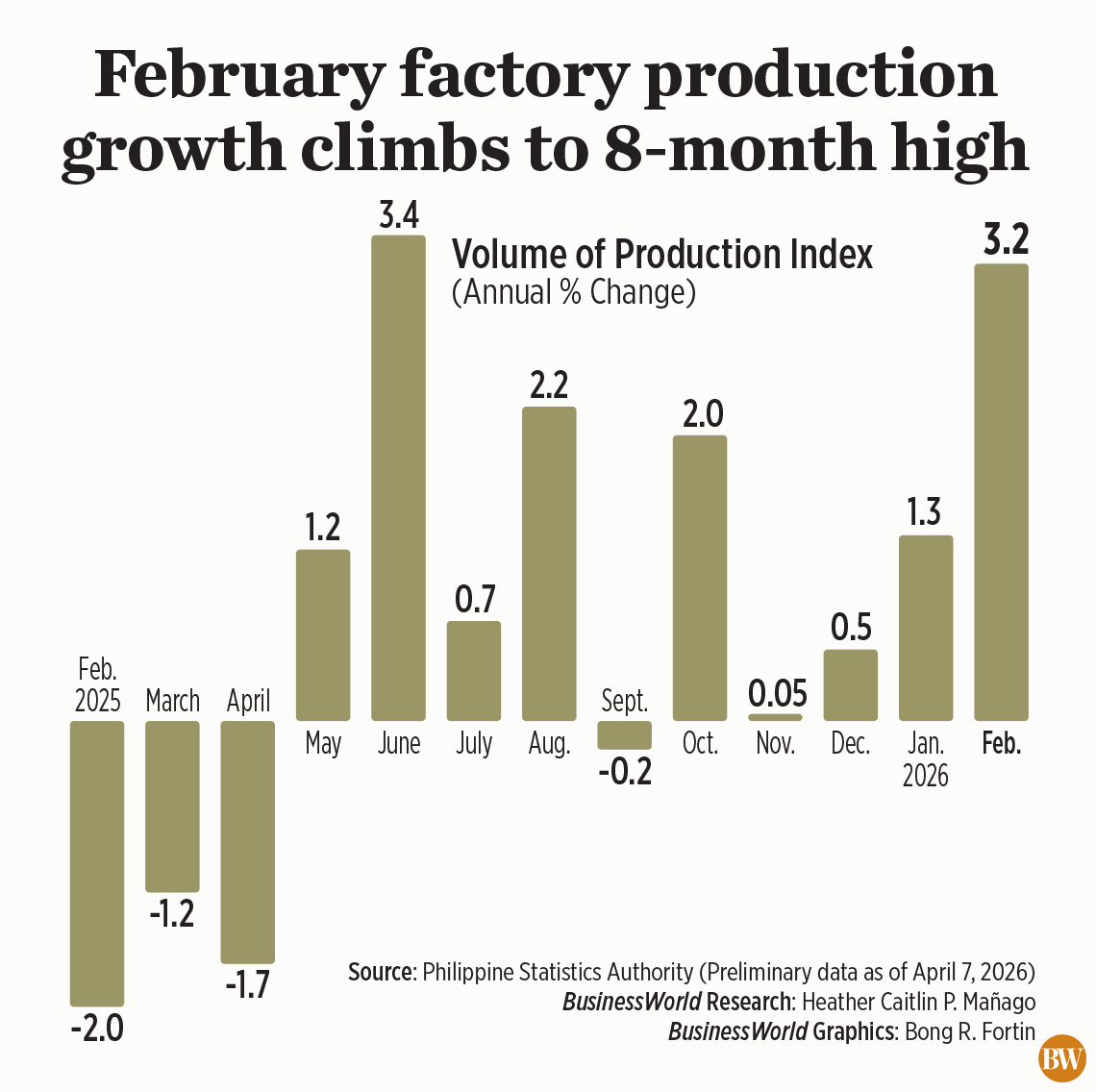
Citing preliminary data, the Philippine Statistics Authority (PSA) said its Monthly Integrated Survey of Selected Industries indicated that manufacturing output by volume of production index (VoPI) grew 3.2% year on year in February.

This reversed the downwardly revised 2% decline in February 2025 and exceeded the upwardly revised 1.3% expansion in January.

The 3.2% reading was also the strongest since the 3.4% logged in June 2025.

The February indicator marked the 10th straight month the VoPI was in positive territory.

The performance of manufacturing was also reflected in the S&P’s Purchasing Manager’s Index, which returned a reading of 54.6, an eight-year high for the month.

PMIs reflect companies’ raw material orders and are a leading indicator for future manufacturing activity. A reading above 50 on a PMI signals heightened manufacturing activity going forward, while a reading under 50 indicates deterioration.

 Meanwhile, capacity utilization in February dipped to 77.5% compared with the 77.8% posted in the previous month. However, it was higher than the 76% logged a year earlier.

Marco Antonio C. Agonia, an economist at the University of Asia and the Pacific, said in an e-mail that VoPI growth in February was reflective of “base effects and broadly improved demand conditions.”

The PSA attributed the VoPI reading that month to upticks in subindices for basic metals (18.7% in February from a 6.1% decline in January), food (3.4% from 1.5%), and computer electronic and electrical parts (16.5% from 19.4%).

Philippine Chamber of Commerce and Industry Honorary Chairman Sergio R. Ortiz-Luis, Jr., said by telephone that the continued growth in manufacturing activity up to February may have been due to spillovers of orders from the December holidays.

Mr. Agonia, added that the manufacturing of metals may have jumped as gold miners took advantage of elevated prices of precious metals in that month.

He said food and beverage production were boosted by domestic and export demand.

“We saw evidence from the same month’s capital goods imports that businesses may have been riding a wave of optimism in February, leading to more orders for the manufacturing sector,” Mr. Agonia added.

Among the remaining 19 subindices, 10 more posted growth in that month while nine declined year on year.

Mr. Agonia said foreign demand for Philippine-made goods may have been driven by the US Supreme Court’s move to block President Donald J. Trump’s tariffs.

Mr. Trump initially declared his intent to impose tariffs not less than 10% on all imports from US trading partners on Feb. 1.

In a later threat, he proposed a blanket rate of 15%, which would have been lower than the 19% rate imposed on Philippine-made goods in August 2025.

However, on Feb. 23, the US Supreme Court ruled that Mr. Trump exceeded his authority to “regulate” the tariffs on exports to the US.

“Global supply chains took advantage of lower tariffs and thus securing supplies ahead of potential tariff policy uncertainty,” Mr. Agonia added.

Both analysts said that the rising tensions between US and Iran did not affect Philippine manufacturing that month.

However, both acknowledged the now-active war as a negative catalyst to production in the following months.

The first attacks on Iran were launched by the US and Israel on Feb. 28.

Since then, fuel prices have gone through multiple rounds of increases amounting to P100.05 per liter for diesel, P52.30 for gasoline, and P82.40 for kerosene.

“Without the Iran war, I would have said that [growth in manufacturing] would have continued on its trend,” Mr. Ortiz-Luis said.

Mr. Agonia added that the current conditions may “dim” the demand for Philippine goods as companies rein in their spending plans until the conflict subsides and oil price pressures ease.

“We see softer manufacturing output performance on the horizon, as the macroeconomic shocks of the Middle East war ripple through the global economy,” Mr. Agonia said. — Matthew Miguel L. Castillo

PHL rated ‘ready’ in Digital-Society assessment

PHILSTAR FILE PHOTO

THE Philippines was rated “ready” to become a digital society but continues to lag in the areas of quality access and digital skills, Tech For Good Institute (TFGI) reported.

In its Realizing a Confident Digital Society: Spotlight on Southeast Asia report, TFGI said the rating indicates that the Philippines has strong foundations but lags in terms of future readiness.

“Digital societies here have adequate quality access and established meaningful participation frameworks, but may need to increase readiness for future challenges, such as the risks of emerging technologies or sustainability considerations,” the report found.

“Nations that fall into this category may not be primary producers or participants in the supply chain of digital goods and technologies but are ready to act on leapfrog opportunities given solid fundamentals,” it added.

The Philippines had a score of 66.6 in foundations and 47.5 in future-readiness, leading to an overall score of 57.1 out of 100.

The report looked into four pillars—quality access, meaningful participation, productive potential, and digital resilience—in which the Philippines scored 66.8, 70.4, 39.4, and 55.6, respectively.

Quality access looks into who benefits from digitalization, which is measured through three sub-pillars: access, affordability, and reliability.

The Philippines had a score of 68.9 out of 100 in terms of access, ahead of Cambodia (57.6), Laos (64.5), and Indonesia (67.1).

However, it lagged Singapore (85), Malaysia (79.9), Thailand (75.9), Vietnam (74), and Brunei (71.6).

“The Philippines has notably doubled internet coverage since 2019, despite its initial lag compared to peers,” it said.

“This is attributable to a budget of P5.1 billion (or approximately $86.5 million) earmarked by the Department of Information and Communications Technology in 2019, of which P1.5 billion (or $25.4 million) was allocated for free WiFi in public places and state universities and colleges (SUCs),” it added.

The Philippines also scored below the regional average in affordability at 67.9, ahead only of Laos (65.8) and Cambodia (67.2).

Singapore was rated 99.2, followed by Indonesia (87.9), Brunei (87.6), Vietnam (82.5), Malaysia (81.5), and Thailand (77.3).

In terms of reliability, the Philippines scored 51.8, still below the regional average and beating out Laos (34.4), Cambodia (44.2), and Indonesia (48.7). It lagged Singapore (75.7), Vietnam (67.5), Thailand (66), Brunei (62.8), and Malaysia (62.4).

The report also looked into meaningful participation, which addresses the non-commercial public applications of digital technologies. Its components were e-government, digital literacy and open data access.

The Philippines scored 68.9 in e-government, ahead of Laos (47), Vietnam (61.9), and Brunei (66.4). It lagged Malaysia (79.2), Indonesia (77.7), Singapore (74.7), Thailand (73.4), and Cambodia (71.4).

The Philippines was among the top scorers in digital literacy at 62.7, next to Singapore (67.8) and Malaysia (66.7).

It outperformed Indonesia (60.7), Thailand (59.8), Vietnam (55), Cambodia (44.3), and Laos (33.7).

The Philippines was the top scorer in open data access at 79. 6, beating Thailand (70.3) and Singapore (68.8), Indonesia (59.8), Malaysia (56.9), and Vietnam (54.9).

Meanwhile, productive potential refers to inclusive and long-term benefits from the digital economy. It has digital competencies, future-of-work readiness, and digital innovation and competitiveness as sub-pillars.

The Philippines was among the low scorers at 27.6, ahead only of Cambodia, which scored 14.7.

The leaders were Singapore (72.4), Brunei (58.1), Malaysia (52.7), Indonesia (41.8), Vietnam (37.6), and Thailand (35.1).

In terms of future-of-work readiness, the Philippines scored 53.6, above the regional average and ahead of Laos (34.7), Cambodia (34.7), and Brunei (34.4).

The leaders were Singapore (68.2), Thailand (63.2), Malaysia (55.7), Indonesia (54), and Vietnam (53.9).

It scored lowest in digital innovation and competitiveness at 36.9, lagging Singapore (83.9), Brunei (58.6), Laos (50.2), Malaysia (48.1), Vietnam (40.8), Cambodia (39), Indonesia (38.2), and Thailand (38.1).

Meanwhile, digital resilience, which measures the long-term sustainability of digitalization in each country, looks into cyber resilience, environmental sustainability, and policy.

The Philippines was among the highest scorers in cyber resilience at 61.7, behind only Singapore, which scored 64.9, and beating out Thailand (54.3), Indonesia (50.8), Malaysia (47.5), Brunei (43.6), Vietnam (40.1), Cambodia (26), and Laos (20.6).

Its environmental sustainability score was below the regional average at 33.2 and ahead of Malaysia (29.9) and Laos (31.4).

It lagged Indonesia (41.6), Singapore (41), Cambodia (40.4), Vietnam (38.3), and Thailand (37.2).

On policy innovation, the Philippines scored 71.8, coming in second to Singapore, which scored 88.1 and outperforming Malaysia (69), Thailand (64), Brunei (62), Indonesia (61.9), Vietnam (52.6), Cambodia (49.6), and Laos (37.5).

“The Philippines has shown progress in its approach to open government, data protection, cybersecurity and policy innovation,” the report concluded.

“To further unlock the full potential of its digital society, which is touted to have among the highest penetration rates for social media, investing in broader national coverage through high-capacity infrastructure will be key,” it added.

TFGI said that the Philippines could also benefit from programs for workforce and business development in response to disruptions due to digital technologies via its robust business process outsourcing (BPO) industry.

“As a climate-vulnerable country, adaptation strategies coupled with conscious integration of environmental sustainability and digitalization roadmaps will be critical as technology’s impact on the environment increases,” it added. — Justine Irish D. Tabile


Unbeaten DLSU eyes top 2 slot vs FEU in UAAP women’s volleyball

DE LA SALLE UNIVERSITY LADY SPIKERS — UAAP/JOAQUI FLORES

Games on Wednesday
(Mall of Asia Arena)
9 a.m. – Ateneo vs UP (Men)
11 a.m. – FEU vs DLSU (Men)
1 p.m. – Ateneo vs UP (Women)
3 p.m. – FEU vs DLSU (Women)

UNBLEMISHED De La Salle University (DLSU) spikes for an outright top two finish and a twice-to-beat incentive apart from a bid of staying on course to an automatic finals berth against the dangerous Far Eastern University (FEU) in the UAAP Season 88 women’s volleyball on Wednesday at the Mall of Asia Arena.

Still perfect in 10 matches, the mighty DLSU Lady Spikers want no complication from their pursuers including the FEU Lady Tamaraws (6-4) at 3 p.m. following the duel between lowly University of the Philippines (UP) (5-5) and Ateneo de Manila University (1-9) at 1 p.m.

La Salle is the first team to clinch a Final Four spot for its 16th straight appearance as early as before the Holy Week break but that’s only one of the lofty goals for the wards of coach Ramil de Jesus in its serious redemption tour following a runner-up finish to National University (NU) last season.

Another win on Wednesday for La Salle to jack up its wins to 11 would push it to either No. 1 or No. 2 seed, regardless of the result of its last three games with University of Santo Tomas (UST) (7-4) and Far Eastern University (6-4) already having four losses each.

Those two teams sport a chance to challenge NU (7-3), which albeit has an opportunity to bump off La Salle for No. 1 by winning its last four games and the former losing the rest of the way, for the other win-once bonus.

Adamson University, at 5-5 after a costly loss to NU, is still in hunt for that incentive although it would need a bevy of scenarios to make it happen.

But despite La Salle having a full grip of its fate including a target of clinching an outright finals berth given a two-round sweep, Mr. de Jesus is not keen on getting ahead.

La Salle swept FEU, 25-19, 25-14, 27-25, in the season opener last February as part of its dominant start marked by only four set defeats in Round 1.

So far in Round 2, the Lady Spikers have lost two and they have no plans of slowing down even against the hungry Lady Tamaraws, who absorbed a costly 17-25, 17-25, 25-18, 17-25 loss to the streaking UST Golden Tigresses.

More than La Salle, FEU is in dire need of a win to tie Santo Tomas at No. 3 and stay in the coattails of NU for a coveted semis prize.

Meanwhile in the men’s division, league-leader FEU (9-1) also eyes an outright Final Four bonus against La Salle at 11 a.m. The Green Spikers (5-5), on the other hand, seek to gain solo fourth from a tie with Ateneo (5-5), which takes on UP (3-7) for a similar goal at 9 a.m. — John Bryan Ulanday

Biado advances to Last 16 in WPA Men’s 8-Ball World Championship; Amit and Centeno in Women’s Open

CARLO BIADO — FACEBOOK.COM/PROBILLIARDSERIES

CARLO BIADO, Chezka Centeno and Rubilen Amit are showing the world why the Philippines is the epicenter of the billiards universe.

Mr. Biado marched on to the round of 16 in the WPA Men’s 8-Ball World Championship while Mses. Centeno and Amit zoomed to the last 16 of the Seybert Women’s Open both in St. Louis, Missouri on Monday.

Mr. Biado smashed Ukrainian Vitaliy Patsura, 8-0, in the loser’s qualification to advance to the round of 32 where he dumped Peruvian Gerson Martinez Boza, 10-5, to surge through the next phase and close in on the title that has eluded him — the 8-ball crown.

Mr. Biado, a world 10-ball and nine-ball king and World Games gold winner, was battling Dutch Marco Teutscher as of this writing.

Mses. Centeno and Amit, for their part, remained unscathed after trouncing Taiwanese Chiang Shui Ching, 4-0, 4-3, and German Pia Filler, 3-4, 4-1, 3-3 (2-1) in keeping their title hopes alive.

Ms. Centeno also remained in the title race in the St. Louis Mixed Doubles after she and partner, Scottish Jayson Shaw, downed American Justin Bergman and Chinese Fu Xiaofang, 4-2, 4-2, to barge into the semis.

There were some shares of setbacks though as Jeffrey de Luna, Lee Van Corteza and Sean Mark Malayan were all shown the door in the 8-ball title, and Mr. Biado and Ms. Amit exited in the mixed doubles.

But in all, the Filipinos, who have produced world champions in the past including the legendary Efren “Bata” Reyes, have made sure they’re out there in serious fight for more trophies and accolades. — Joey Villar

ADVERTISEMENT
ADVERTISEMENT