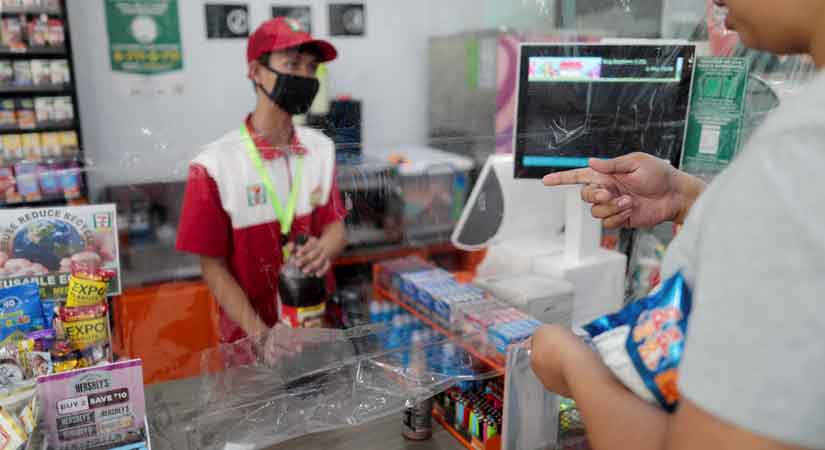
Travelers are hitting the road again and taking vacations even as the coronavirus pandemic shows no signs of abating in many countries, a survey on Tuesday showed.
About 51% of people in North America and Latin America plan to book trips in the next six months, compared with 38% in Asia and Europe, according to the survey by software maker Oracle Corp.
However, travelers want to stay close to home, preferring to drive and to avoid international trips.
Due to travel restrictions and lengthy lockdowns in many countries to control the spread of the novel coronavirus, tens of thousands of hotels have closed and occupancy levels have fallen below 20% for weeks, said Alex Alt, general manager of Oracle Hospitality.
“One thing that’s refreshing is that consumers want to travel,” he told Reuters. “There is a resilience and an appetite to be on the road, to explore, to experience.”
With US coastal towns a favorite destination, occupancy among 600 US hotels that Oracle tracks has risen for five straight weeks and recently hit its highest levels since mid-March.
“I’d say the industry largely expects it to continue through the summer months,” Mr. Alt said. “The key will be for the business travel to come back to complement that leisure travel.”
COVID-19 cases have surged around the United States and the death toll has topped 130,000, prompting the European Union last week to exclude Americans travelers for its “safe” travel list.
To assuage concerns about infections, 90% of hotels have increased or planned to increase cleaning and disinfecting. In addition, 70% of hotels already are or are planning to adopt contactless technology for check-in, food ordering, and concierge services, according to the survey.
Oracle surveyed 4,600 consumers and 1,800 hotel executives in the United States, Mexico, United Kingdom, Germany, Singapore and Australia in mid-April through early May. — Reuters
The Goodway Technologies BioSpray Sanitation System & BioSpray D2 Sanitizer that Marcel Interiors uses to prevent the spread of coronavirus disease (COVID-19) in Apopka, Florida. Marcel Interiors also sprays before and after jobs due to COVID-19 to keep their employees safe during construction and interior work. Image via Reuters.
STAMFORD, Connecticut — Timothy Kane, CEO of Goodway Technologies Corp, has never been so popular. Making machines that spray disinfectant, once a niche business, is now an essential service — and the phone is ringing off the hook.
“Our orders jumped 50-fold in April, it was like a switch got flipped,” said Mr. Kane.
Goodway, which has a factory in Stamford, Connecticut, builds machines that spray an alcohol-infused mist to sanitize surfaces. Until a few months ago, those devices were just a tiny part of its business, catering mostly to places like industrial bakeries that had to constantly clean surfaces.
Now, as the COVID-19 pandemic grips the United States, everyone wants one.
Mr. Kane, who employs 110 workers in the family-owned company, has fielded calls from hotels, gyms and casinos, as well as factories and warehouses. Many would previously never have thought they needed such machines, which often look much like souped-up vacuum cleaners.
The rise of this industry is one example of a sector that is booming during a pandemic that has laid waste to so many parts of the economy.
America’s battle against the novel coronavirus is driving demand for everything from hand sanitizer and masks to thermometer guns and plexiglass. But one enduring image of this crisis may be the foggers and spraying machines that are now being set loose in airports, sports arenas and subways.
Yvon Brunache bought a Goodway sprayer to help his Florida construction business because clients fearing COVID-19 were reluctant to have his team in their buildings. “My customers are asking more and more for the space to be sanitized,” he said.
The surge of business is, however, putting strain on producers that never envisaged such a situation and their supply chains.
Victory Innovations, another maker of hi-tech spray machines, is sold out through September. Its shipments have surged 10-fold since the start of the pandemic, to about 100,000 units a month, according to the company, based in Eden Prairie, Minnesota.
ROBOT FLEET
Servpro Industries LLC has completed 10,000 coronavirus-related deep cleaning operations in the last 90 days, according to Chief Operating Officer John Sooker.
“We’ve always done biohazard cleaning, but never at this scale.”
Servpro, based in Gallatin, Tennessee, is majority owned by the Blackstone Group and runs franchised cleaning businesses across the United States and Canada.
The company, which had sales of about $3 billion last year, figures biohazard cleaning — such as sanitizing a cruise ship after an outbreak of illness—constituted only about 5% of its business then, or $150 million.
Mr. Sooker said he expects COVID-19-related cleaning alone to bring in at least $250 million to $300 million this year.
The crisis is sparking innovation.
Albuquerque’s airport has just introduced a fleet of four robots, each about the size of a small trash can on wheels, which trundle around the terminals every night spraying a disinfectant mist.
“It costs a fraction of what it would cost to have a team of people doing it,” said Kimberly Corbitt, chief commercial officer of Build With Robots, one of the machines’ developers, although she declined to reveal the cost.
The airport emphasized that none of its janitors would get laid off as a result, since the fogging is an added layer of overnight cleaning.
FLAMETHROWER
Sophisticated spraying machines don’t come cheap, though, even the less automated ones; a small human-operated sprayer mounted in a backpack can set you back about $5,000.
Biomist Inc., a manufacturer in Wheeling, Ill., has installed spraying systems custom-designed for a facility that cost over $50,000, said Robert Cook, a vice president.
Goodway, meanwhile, has doubled the number of models it is selling to six, creating designs tailored to specific uses such as restaurants and health clubs.
Workers at its factory can be seen hunched over a row of curved stainless-steel machines mounted on wheels being built on the production floor.
Mr. Kane said there were many ways to spray disinfectants, and that the process could be surprisingly complex, and even potentially dangerous.
Some machines use water-based cleansers, which take time to dry or must be followed by people wiping the surfaces. Other devices, like those made by Goodway, mix alcohol—which dries almost instantly—with the same chemicals used in fire extinguishers, Mr. Kane said.
“If you don’t do it right, you can end up with a flamethrower.” — Reuters
Cars aren’t going away any time soon. So the ultimate green move will be combining two emerging technologies: autonomous driving and fully electric cars. Autonomy brings efficiency in driving and battery use, while electric cars drastically cut emissions, fuel costs, and maintenance.
Even so, a rift has developed within the automobile industry about the best way to move forward. Skeptics believe self-driving technology will have a serious impact on an electric car’s range and degrade batteries; optimists think improvements in technology will likely mitigate much of that trade-off.
The split has manifested in established automakers choosing different paths to pursue. Ford Motor Co. is planning to launch self-driving tech in 2022 but in hybrid cars first. The company’s testing found computers and sensors powering self-driving could cut the electric car’s range by more than 50%. Meanwhile, the only autonomous cars Volkswagen AG plans to build are fully electric vehicles. The company will begin field tests that same year.
A new study in Nature Energy may lay the debate to rest. Venkat Viswanathan, an associate professor of mechanical engineering at Carnegie Mellon University, finds that the range trade-off is likely to be less than 15% for city driving and as low as 5% for suburban driving.
“We’re getting to a point where we won’t need to choose between autonomous driving and electric cars,” said Mr. Viswanathan.
At the heart of the challenge of self-driving cars is that it is hard to replicate human understanding of sight and sound. Even with the latest image-recognition technology, computers struggle to do what humans instinctively manage: understand the small but myriad changes happening on a road, in real-time. Luckily, computers can use other inputs, such as radio waves (through a radar) or lasers (through a lidar).
Lidars, which you may have seen on prototype self-driving cars, are generally considered crucial. They need to protrude outward to project lasers beyond the car body and thus “sense” surrounding obstacles even as the car moves at great speeds. But the necessary bulge limits the aerodynamic shape of the car, increasing the amount of energy needed to drive and thus lowering how far an electric car can travel on a full charge.
Moreover, on-board computers need to analyze thousands of images every second that lidars capture to help make driving decisions. Even with modern computing technology, that takes up a lot of energy. The combination of sensors and computers does drain an electric-car’s battery more quickly than if a human driver were at the wheel.
Nevertheless, Mr. Viswanathan found that lidars and computers are both getting better at their task, while consuming less and less energy. In the case of computers, custom-built chips that can perform the specific image analysis needed for autonomous driving are able to lower energy consumption by 50% or more compared with traditional graphics processing chips. These are likely to keep getting better, which means Mr. Viswanathan’s own estimates may be out of date soon.
Better still, companies like China’s Contemporary Amperex Technology Co. Ltd., the world’s largest battery maker, are developing batteries that can last 2 million kilometers (1.25 million miles) or 16 years. That’s a vast improvement on current batteries that have a warranty for 150,000 miles or eight years. If widely adopted, these newer batteries could mean car owners won’t have to worry much about battery degradation.
And even if none of these technology trends play out as expected, Mr. Viswanathan found that computer-driven cars end up with energy savings of as much as 10% simply by making better decisions about braking, accelerating and turning than human drivers. The extra energy the computers and sensors consume could be balanced out by better driving—the direct result of the automation it enabled.
Regulators might not give automakers an option. “Many of the tier 1 cities where we expect to see self-driving cars are incentivizing or requiring fleet cars to be zero emissions,” said Nick Albanese, head of intelligent mobility at BloombergNEF. “Non-electric autonomous vehicles will likely be short-lived.” — Bloomberg
The Department of Science and Technology (DOST) is set to release the guidelines for a program that provides interest-free loans to overseas Filipino workers (OFWs) looking to establish technology-based enterprises in the country.
Launched in May with an initial funding of P5 million, iFWD PH (Innovation for Filipinos Working Distantly from the Philippines) will first be available in the National Capital Region before being rolled out to other regions.
The program will be implemented in two phases: a “Capability Building for the Development and Management of Technology-Based Enterprise” phase, and an “Innovation Funding for Technology-based Enterprise” phase.
Other strategies include technical consultancy and advisory sessions, access to DOST facilities, linkages and networks with existing clients of the Department, pitching of DOST-developed technologies including presentation of business opportunity packages and instructional videos, and access to business core training modules through the iFWD PH e-portal system.
DOST’s Regional Offices will be involved in the funding, management, and monitoring of the projects to be provided with the innovation-enabling fund (iFund), which has a ceiling of P250,000 per project. Part of DOST’s annual budget will be allocated for the second phase of the program.
Projects funded under Phase 2 should be completed within a period of three to five years, depending on what was agreed in the Memorandum of Agreement. Ownership of the equipment shall be transferred to the OFW-beneficiary through the issuance of a Certificate of Completion and Ownership including the Property Transfer Report duly signed by the DOST Regional Director.
In an e-mail interview with BusinessWorld, Bianca Canlas, iFWD PH science research specialist, answered questions regarding eligibility and funding:
APPLICATION ELIGIBILITY
Eligible to apply to the program are OFWs who came home within the last three years, with or without contract. If with a contract, they need to have a representative who shall co-sign a certification for the Program. OFWs who have been repatriated since March 2020 are eligible. OFWs who will qualify will be validated with the Overseas Workers Welfare Administration (OWWA).
FUNDING ASSISTANCE
The maximum amount of funding is P250,000. As mentioned above, the iFund is covered by Phase 2 of the program. It will be used exclusively for any or all of the following:
a.1. Entrepreneurship and technical training
a.2. Product development and market testing
a.3. Operational consultancy services
a.4. Initial laboratory testing
a.5. Packaging and labeling design and execution for market testing
a.6. Equipment acquisition
30% of the iFund will be allotted for a.1 to a.5, while a maximum of 70% may be for equipment acquisition. The fund allotted for equipment acquisition shall be refunded to DOST with no interest for 3–5 years.
This funding will vary depending on the proposed business. At the end of Phase 1, the OFW should present a business plan indicative of the amount s/he needs for the tech-based business.
SECTORS COVERED
The OFW has to highlight innovations in the chosen business for it to qualify as a technology-based enterprise. The program shall cover the following sectors:
• Food processing
• Furniture-making
• Gifts, houseware, decor
• Marine and aquatic resources
• Horticulture and agriculture
• Metals and engineering
• Health products and services/pharmaceuticals
• Information and communications technology/electronics
• Science-and-technology services (technical consultancy, IT firms, engineering firms, etc.)
PROPOSED BUSINESSES
Thus far, DOST has received proposals from OFWs pushing the following businesses:
• Information technology/systems development
• Cacao processing
• Seedling propagation for forest trees
• Piggery/poultry
• Metal fabrication for boat propellers
• Hybrid bikes
PILOT RUN
The office officially began receiving applications yesterday, July 7. The program’s first phase (Capability Building Phase) will start in August; the pilot run will run until December.
“While we have not yet started, we have OFWs who are already engaged in technical consultancy with DOST’s Regional Offices and Research and Development Institutes for advisory sessions on the particular businesses they have in mind,” Ms. Canlas said.
Jeff Meng, a 25-year-old watch lover from a well-heeled Guangdong family, had 160,000 yuan ($22,800) burning a hole in his pocket. He could not find the Rolex Daytona watch he wanted, dubbed “panda” for its black-and-white face, anywhere in China.
Thanks to the coronavirus pandemic that’s halted travel and disrupted networks of parallel importers, Chinese high-end shoppers like Mr. Meng—who collectively spend $111 billion a year on luxury goods, powering over a third of the global industry—are finding it hard to spend their cash.
That’s forcing global luxury houses from Balenciaga to Montblanc to rethink how to reach Chinese consumers on the mainland, despite long-standing concerns that range from counterfeiters to powerful e-commerce platforms that set the rules. The halt to travel is also fueling the rise of a second-hand luxury market in China as consumers seek certain styles or models they can’t find in local stores.
Prior to the pandemic, two-thirds of Chinese luxury purchases were made overseas, according to consultancy Bain & Co. The spending took place either on shopping spree vacations or through resellers called “daigou.” Meaning to “buy on behalf,” these were platforms or individuals who used Chinese people living, studying or traveling abroad to purchase sought-after goods from boutiques in Europe or the US and bring them back home.
“Now, travel is impossible, and daigou sellers are either back on the mainland or stranded in Europe,” said Mr. Meng. “The pandemic made me realize you can’t easily get what you fancy in China.”
Cognizant of the potential of Chinese consumers who don’t travel overseas, luxury houses had already been rolling out plans to expand on the mainland. The pandemic has now hastened that shift and imbued it with urgency.
With other factors like perceived anti-Chinese racism in western countries exacerbated by the coronavirus, and the Chinese government’s desire to bring spending home to boost its ailing economy, it’s likely that Chinese luxury buyers won’t revert to previous patterns even after the crisis passes.
More than half of Chinese purchases for luxury goods will happen domestically by 2025, Bain & Co estimated in May, compared to a third in 2019.
“Chinese feel unsafe in foreign countries, which is why they consume at home,” said Amrita Banta, managing director at luxury consultancy Agility Research. “Brands should increase importing from foreign countries into China and offer a wider and well-priced range. They can now expand their reach to more cities—even smaller towns which have a propensity to spend.”
E-COMMERCE, LIVE-STREAMING
With China having largely contained its epidemic, including a new outbreak in Beijing last month, shoppers are spending again. This is set to boost the luxury market on the mainland as much as 10% this year, compared to a 45% plunge in the global industry, according to estimates by Boston Consulting Group.
“Things are normal again internally, and we are seeing the results throughout our stores,” Richemont Chairman Johann Rupert said of China, where it has around 460 boutiques. “But they’re not traveling. Nobody is traveling. And until people feel sufficiently safe, I doubt that we will return to a pre-COVID stage.”
The loss of Chinese travel spending has been cited as a blow to earnings by companies from LVMH to Moncler SpA in recent months. While luxury companies mostly do not break out mainland China numbers, sales to Chinese tourists is likely to far outstrip revenue from local boutiques, analysts say.
The trend of more spending within China “will push us to reconsider our store network,” said Jean-Marc Duplaix, chief financial officer of Gucci-owner Kering SA during an April 21 earnings call. “It will lead to a clear re-shuffling of the distribution.”
A wave of luxury brands like Prada, Miu Miu, Balenciaga, Piaget and Montblanc have opened virtual storefronts on Alibaba Group Holding’s Tmall luxury platform this year, some setting aside long-standing objections to working with third-party online channels.
Brands like Louis Vuitton, Givenchy and Chloe have started using live-streaming to push products in China, a popular style of social commerce where an influencer speaks live to audiences for hours at a time, promoting and trying out items.
In the past, luxury houses were worried about diluting brand prestige and losing control of customer data by working with Chinese internet giants like Alibaba, but the urgency of reaching Chinese shoppers has now eclipsed those concerns.
“Most luxury brands were too reliant on their offline experience and they lacked presence outside major cities where there is no decent shopping mall,” said Jason Yu, managing director at Kantar Worldpanel Greater China. “Counterfeits and resellers were also prevalent on e-commerce platforms in the past. But that is fast changing now.”
TIGHT SUPPLY
Demand for some items has surged past supply in China. In May, Swiss watch exports to China fell 55% from a year ago, according to industry data, largely due to supply bottlenecks.
“Due to the travel curbs during the pandemic, all the consumption power is locked inside China, so our sales there are growing,” said Alain Lam, the finance director of Oriental Watch Holdings Ltd. The high-end watch seller has 46 stores in mainland China. “But the supply is very tight, as Swiss factories are not yet fully returned to work.”
Prior to the pandemic, luxury brands largely avoided stockpiling in China and kept local manufacturing to a minimum. Brands will now need to rethink how to avoid delayed stock and lost sales, said Agility’s Banta. — Bloomberg
As Singapore’s leaders now grapple with what’s turning out to be the worst slump since independence in 1965, the ruling party is looking to extend its mandate in Friday’s election to help reinvent the economy once again. They’re already positioning for a post-COVID world with planned investment in health and biomedical sciences, climate change, and artificial intelligence. Image via Reuters.
The pandemic is proving the ultimate test for Singapore, the tiny city-state that has a reputation of reinventing itself during times of crises.
Dismissed in the past as just a “little red dot” on the map, dwarfed by larger neighbors like Malaysia and Indonesia, and with no natural resources to speak of, Singapore has nonetheless transformed itself into one of the richest and most competitive economies in the world. The island nation of almost 6 million people punches above its weight as a leading international finance hub.
As Singapore’s leaders now grapple with what’s turning out to be the worst slump since independence in 1965, the ruling party is looking to extend its mandate in Friday’s election to help reinvent the economy once again. They’re already positioning for a post-COVID world with planned investments in health and biomedical sciences, climate change, and artificial intelligence.
Crises have been a catalyst for change in the past. After the Asian financial turmoil in the late 1990s, officials embarked on tours to Japan, the US, and Europe to attract investments, entering a flurry of free-trade negotiations and building up the biotechnology industry so they could rely less heavily on electronics exports. After the dotcom bubble burst and the SARS outbreak struck in 2003, Singapore ditched a long-held ban on casinos to meet the goal of doubling tourist arrivals.
And after emerging from the recession triggered by the global financial crisis, it pledged to double research and development spending, including freshly built energy labs and a S$1 billion ($719 million) budget to make the “Garden City” greener.
“Survival mentality remains,” even as this time is “far more different,” said Song Seng Wun, an economist at CIMB Private Banking in Singapore, who’s been analyzing the city-state for three decades. “How do we continue to make sure Singapore stays relevant to the global community.”
ECONOMIC SLUMP
Officials project gross domestic product will contract as much as 7% this year, making Singapore among the worst-hit nations in Asia. As one of the most open economies in the world, Singapore’s export sector has taken a severe knock, while tourism is crippled. Employment sunk in the first quarter by the most on record.
That’s despite the government earmarking about S$93 billion in special budget support and dipping into its ample reserves to finance the spending.
Even before the latest crisis, Singapore was grappling with immense challenges. A rapidly aging population is weighing on productivity, with the government already focusing much of its efforts on mass re-skilling of its population. The global trade landscape is also fast-shifting toward regionalization and localization, and forcing nations to rework their relationships with the US and China.
WHAT BLOOMBERG’S ECONOMISTS SAY
The government is well prepared to combat the pandemic, having accumulated a vast stockpile of savings to help fund its mega stimulus package of nearly 20% of GDP in 2020. Budget deficits since at least 1995 have been infrequent and small (0.8% of GDP on average).
Singapore is taking a typically pragmatic approach to the crisis. In the immediate term, it’s trying to save jobs by increasing wage support and pledging to create 100,000 fresh work and training opportunities.
It’s pushing against the protectionism trend by doubling down on trade. Chan Chun Sing, the city-state’s trade and industry minister, has trumpeted agreements with Chile and New Zealand on digital transactions, and Singapore is one of the 15 countries in Asia Pacific hoping to sign the world’s biggest free-trade pact by the end of the year.
Beyond the immediate crisis, Singapore is turning its attention to “high impact areas” to drive future growth. Deputy Prime Minister Heng Swee Keat—who is expected to succeed Lee Hsien Loong when the prime minister steps aside—said more than S$20 billion is being set aside over the next five years for research in industries such as health and biomedical sciences, climate change and artificial intelligence. At the same time, a series of industry-led groups assembled by the government will explore new opportunities in areas such as robotics, e-commerce and supply-chain digitization.
Singapore starts from a strong position, having consistently scored the top spot in global competitiveness rankings for its political stability, business-friendly regulatory atmosphere, and international arbitration expertise. The work-from-home norms and automation-heavy business planning brought on by the coronavirus outbreak have also helped the digital revolution in Singapore even more than elsewhere.
“It’s sharpened and front-loaded a lot of the digital disruption we’ve been talking about for many years,” said Selena Ling, head of treasury research and strategy at Oversea-Chinese Banking Corp. in Singapore. — Bloomberg
COVID-19 is transforming the way businesses are operating on a large scale. Challenges crop up in the workplace every day, and organizations are doing their best to address them at the soonest time possible in order to adapt to the new normal.
Such changes may be overwhelming for the ordinary desk worker all the way to the C-suite officer. But as the call of the times makes such transformations inevitable, what key aspects of the workplace must organizations focus on to help them successfully navigate the pandemic and, eventually, the future? Gemma Gaerlan, chief operations officer of EY Global Services, discussed five components during the Asia Future-of-Work Forum held on June 25.
1.Integration of resiliency in operations
Prior COVID-19, the Philippines already had to weather several disasters. The recent eruption of Taal Volcano, for example, caused some establishments to suspend work due to ashfall.
“While productivity and efficiency are essential components of our response to disruptions, keeping ourselves resilient, agile, and nimble are equally imperative. We need to have the right mindset, discipline, and the emotional preparedness to combat unforeseen and difficult situations, and these are all necessary attributes of good business leaders,” said Ms. Gaerlan.
For instance, some organizations may be finding it difficult to review their books considering the pandemic’s impact on the business. But Reese Fernandez-Ruiz, co-founder of fashion social enterprise Rags2Riches, discussed in a separate forum how vital it is to face the challenge head-on. This will help your organization come up with the best solution in the swiftest possible time.
2. Flexible work arrangements
According to research and advisory firm Gartner, 41% of employees around the world will likely continue working from home at least some of the time post-pandemic. Multinational companies are already listening; Twitter, for example, has allowed employees to work from home indefinitely.
“Working from home could be relatively new in the Philippine setting, but it has become the most sensible and most realistic solution as the new way of working,” said Ms. Gaerlan.
Experts are agreeing that remote work is beneficial in several ways. In the same forum, Lars Wittig, country manager of IWG Philippines, Vietnam, and Cambodia, believes that offering a permanent work-from-home option will attract young talent who believe in being measured by results rather than timesheets. Ruth Owens, founder of Connected Women, notes that it’s inclusive of women who choose to juggle their careers and home lives.
There are roadblocks, of course, as previously reported by BusinessWorld: Not all Filipinos have access to the internet at home, with only three fixed broadband subscriptions per 100 people, putting the Philippines at 110th out of 187 countries in 2016, according to the United Nations Broadband Commission.
3. Technology
New arrangements call for changes in operations. While the transition may seem worrisome at first, there are a plethora of available technologies that can ease organizations into a more digital workflow. Consider the likes of cloud technology, which allows employees to access files any time and anywhere — thus removing the need for them to be constantly stationed at the office.
“The right technology guarantees quality, reliability, consistency, and obviously speed, security, and integrity. During the pandemic, we have seen and we have reaped the benefits of our firm’s investment in our technology infrastructure. We wouldn’t have survived without good technology… It takes a lot of planning and preparations to do that, but having the really great technology that comes with it will make it really successful,” said Ms. Gaerlan.
4. Data
As the pandemic continues to impact the different sectors of work in various ways, Ms. Gaerlan finds that “the need to make use of data to better understand business trends, employee engagement, and productivity” will only continue to accelerate.
To kickstart their own innovation processes, companies can first double-check if they have any internal data that is not being utilized to its full potential. In a separate online forum, Miko David, co-founder of digital strategy consulting firm David & Golayt, shared how one of their client’s departments unknowingly had the perfect input for another department. “If they knew that they could connect these two dots together, they could have saved up to 30% of costs,” he said.
If there’s a need for consumer data, companies can utilize tools ranging from social media polls to more complex applications. In another forum, Samuel Jeanblanc, market lead at Google Philippines, recommended CRM (customer relationship management) platforms such as Salesforce and HubSpot.
5. Social action
COVID-19 has made many people vulnerable beyond exposure to illness. For instance, layoffs have caused a surge in the country’s unemployment rate. Unfortunately, the pandemic won’t be the last disaster in the future, and it surely isn’t the only one going on right now. As issues like climate change and social inequality continue to rattle society, consumers, especially millennials and Gen Z-ers, expect companies to make their voices heard and do what they can to help.
“With COVID-19, our clients, our stakeholders, and most especially our employees and prospective employees may start defining our organizations based on how we have responded to the crisis. So things like how we [protected] our people and our people’s jobs, how we [protected] our clients, and what we [did] to help society and the government in the national battle for this crisis [will be remembered],” said Ms. Gaerlan.
GENEVA — The World Health Organization (WHO) on Tuesday acknowledged “evidence emerging” of the airborne spread of the novel coronavirus, after a group of scientists urged the global body to update its guidance on how the respiratory disease passes between people.
“We have been talking about the possibility of airborne transmission and aerosol transmission as one of the modes of transmission of COVID-19,” Maria Van Kerkhove, technical lead on the COVID-19 pandemic at the WHO, told a news briefing.
The WHO has previously said the virus that causes the COVID-19 respiratory disease spreads primarily through small droplets expelled from the nose and mouth of an infected person that quickly sink to the ground.
But in an open letter to the Geneva-based agency, published on Monday in the Clinical Infectious Diseases journal, 239 scientists in 32 countries outlined evidence that they say shows floating virus particles can infect people who breathe them in.
Because those smaller exhaled particles can linger in the air, the scientists in the group had been urging WHO to update its guidance.
“We wanted them to acknowledge the evidence,” said Jose Jimenez, a chemist at the University of Colorado who signed the paper. “This is definitely not an attack on the WHO. It’s a scientific debate, but we felt we needed to go public because they were refusing to hear the evidence after many conversations with them,” he said in a telephone interview.
Speaking at Tuesday’s briefing in Geneva, Benedetta Allegranzi, the WHO’s technical lead for infection prevention and control, said there was evidence emerging of airborne transmission of the coronavirus, but that it was not definitive.
“…The possibility of airborne transmission in public settings—especially in very specific conditions, crowded, closed, poorly ventilated settings that have been described, cannot be ruled out,” she said. “However, the evidence needs to be gathered and interpreted, and we continue to support this.”
Mr. Jimenez said historically, there has been a fierce opposition in the medical profession to the notion of aerosol transmission, and the bar for proof has been set very high. A key concern has been a fear of panic. “If people hear airborne, healthcare workers will refuse to go to the hospital,” he said. Or people will buy up all the highly protective N95 respirator masks, “and there will be none left for developing countries.”
Mr. Jimenez said the WHO panel assessing the evidence on airborne transmission was not scientifically diverse, and lacked representation from experts in aerosol transmission.
Any change in the WHO’s assessment of risk of transmission could affect its current advice on keeping one-meter (3.3 feet) of physical distancing. Governments, which rely on the agency for guidance policy, may also have to adjust public health measures aimed at curbing the spread of the virus.
Ms. Van Kerkhove said the WHO would publish a scientific brief summarizing the state of knowledge on modes of transmission of the virus in the coming days.
“A comprehensive package of interventions is required to be able to stop transmission,” she said.
“This includes not only physical distancing, it includes the use of masks where appropriate in certain settings, specifically where you can’t do physical distancing and especially for healthcare workers.” — Reuters
President Rodrigo R. Duterte said he will “have to be very circumspect in reopening the economy” given the recent spike in coronavirus cases.
The firebrand leader said he can’t emulate the “devil-may-care attitude” of Donald Trump and Jair Bolsonaro because the Philippines is poor. “We cannot afford really a total epidemic or pandemonium,” he said in an address aired on Wednesday.
The Philippines will continue to limit the number of people that can go out, Mr. Duterte said, encouraging Filipinos to remain patient. The nation has the second-highest number of infections in Southeast Asia after Indonesia, and has the fastest rise in cases since June 1 when the capital region reopened.
The President’s comments came after Finance Secretary Carlos Dominguez and Bangko Sentral ng Pilipinas Governor Benjamin Diokno both backed further easing of virus curbs to reignite an economy facing its deepest contraction in three decades.
COVID-19 cases climbed 1,540 to 47,873 on Tuesday, including 1,309 deaths. — Bloomberg
4 rescued after training aircraft lands on water off Zamboanga City
FOUR PEOPLE on board a training aircraft were rescued after their plane made an emergency landing on water just off the seawall of Sinunuc Boulevard in Zamboanga City on July 7. Those on board, none of whom were injured, were two flight instructors, a student co-pilot, and a mechanic, according to the Civil Aviation Authority of the Philippines (CAAP). The training aircraft with a call sign RP-C834 was from the Royhle Aviation Academy, Inc. based in Dumaguete City. It took off at 9:38 a.m. from Zamboanga Airport, bound for Dumaguete, when it made an emergency landing at 10 a.m. “According to its pilot, the emergency landing is caused by the left engine’s failure a few minutes after they took off from the said airport,” reported the Philippine Coast Guard, which led the rescue operations. Members of the Aircraft Accident Investigation and Inquiry Board have been advised to investigate the incident. — Charmaine A. Tadalan
Over 2,000 arrested in Pampanga for face mask violation
MORE THAN 2,000 people in Pampanga have been arrested for not wearing a face mask outside of residence, with majority after the quarantine restrictions were eased into the lowest category. Citing a report from the police as of July 5, the provincial government said there were 2,026 violators since March 17, including 743 starting June 15. The highest number of violations were in the town of Apalit, parts of which are currently on strict lockdown due to a high number of coronavirus disease 2019 (COVID-19) cases. Pampanga has one of the stiffest penalties for the face mask policy among local governments, with fines ranging from P20,000 to P50,000, or imprisonment of one to six months, or both. As of July 7, the province had 166 COVID-19 cases, with 100 recoveries and 16 fatalities.
Basilan, Lanao del Sur, Camiguin suspend return of stranded residents as quarantine facilities full
THE PROVINCIAL government of Basilan is temporarily closing its borders to returning residents, including overseas workers, as quarantine facilities on the island are currently at full capacity. “This decision has been made to safeguard the health of the Basileños and with the consent of the National Inter Agency Task Force,” said Governor Jim Hataman Salliman in a statement posted along with the task force’s permission letter. The suspension will be in effect until July 15. The island province of Basilan was free from coronavirus cases until end-May when the repatriation program started. As of July 6, it had 69 positive cases, mostly returning residents and several healthcare frontliners. “Since May 28, 2020, Balik BASILAN Program have already accepted and accommodated at least 1,983 LSIs (locally stranded residents) and 107 ROFs (returning overseas Filipinos),” Mr. Salliman said. “All necessary coordination shall be exhausted to ensure that LSIs travelling back are properly informed,” he added. Meanwhile, the police reported that a similar suspension is in effect in the provinces of Lanao del Sur and Camiguin. “The request for suspension of repatriation is because the quarantine facilities in the provinces have reached their maximum capacity,” Lt. Gen. Guillermo T. Eleazar, police deputy chief for operations, said in a statement. He cited an order from Defense Secretary Delfin N. Lorenzana to temporarily stop the issuance of travel authority, a requirement for those stranded. — with a report fromEmmanuel Tupas/PHILSTAR
Makati makes liquor ban outside one’s home automatic during calamity, emergencies
DRINKING OUTSIDE one’s residence will automatically be banned in Makati City during a state of calamity and other emergency declarations starting July 14, the city government announced Tuesday. The prohibition is contained in Ordinance No. 2020-152 recently passed by the city council. “The local ordinance aims to protect residents from endangering themselves and others while in a drunken state during calamities and other public emergency situations,” the local government said in a statement. Under the local law, first-time violators will be fined P5,000 while repeat offenders will be imprisoned in addition to the monetary penalty. Tenants and guests at accommodation facilities will be allowed to drink only within their room or rented space. For the violation of this provision, establishment owners and managers could be held equally liable. Meanwhile, Mayor Abigail Binay-Campos also announced that the city government “will clamp down on” restobars hosting private dining and drinking parties. “We’re clamping down on these types of gatherings where it’s difficult, if not impossible, to enforce social distancing,” she said, noting reports of establishments skirting restrictions on social gatherings. “The city government understands the desire of business owners to earn and survive amidst the pandemic, but it shouldn’t be at the expense of public health… Thus, establishments like Skylounge where more than 100 people were arrested during a recent drinking party won’t be tolerated,” the mayor said.
Preliminary data from the statistics agency showed headline inflation at 2.5% in June, as lockdown restrictions eased. — REUTERS
THE overall year-on-year increase in prices of widely used goods accelerated in June after four straight months of slowing down, the Philippine Statistics Authority (PSA) said on Tuesday.
Preliminary data from the PSA showed headline inflation at 2.5% last month, picking up from 2.1% in May, but still slower than 2.7% in June 2019.
The latest headline figure is higher than the 2.2% median in a BusinessWorld poll late last week and falls within the 1.9-2.7% estimate by the Bangko Sentral ng Pilipinas (BSP) for June.
Year to date, inflation settled at 2.5%, still within the BSP’s 2-4% target and above the 2.3% forecast for the entire year.
Core inflation, which discounts volatile prices of food and fuel, stood at 3% in June, faster than 2.9% in the previous month, but slower than 3.3% a year earlier. It averaged 3.1% this year.
The PSA noted higher annual increases in transport (2.3% in June from -5.6% in May); alcoholic beverages and tobacco (18.5% from 18%); housing, water, electricity, gas, and other fuels (0.4% from 0.2%); and communications (0.4% from 0.3%).
Meanwhile, the food-alone index posted an inflation of 2.7%, slower than May’s 2.9%.
“The moderate increase in inflation will help in the recovery of consumer demand as the economy gradually reopens,” Acting Socioeconomic Planning Secretary and National Economic and Development Authority (NEDA) Director-General Karl Kendrick T. Chua said in a statement.
In a Viber message to reporters, BSP Governor Benjamin E. Diokno said the result was “consistent with the BSP’s prevailing assessment that inflation pressures remain limited due largely to the adverse impact of the COVID-19 [coronavirus disease 2019] pandemic on domestic and global economic conditions.”
“The BSP remains committed to the use of monetary instruments and regulatory relief measures when needed further in fulfillment of its mandate to promote noninflationary and sustainable growth,” Mr. Diokno said.
In a separate statement, ING Bank N.V. Manila Senior Economist Nicholas Antonio T. Mapa attributed last month’s results to the “slight gain” in food prices and the “normalization” in transport costs.
In an e-mail, Mr. Mapa noted the “swing of transport prices” that reverted to gains after three months of negative price movements.
“Other reasons for the 2.5% inflation print was the food basket, which posted a 2.7% increase in prices over the same period in 2019. Transport costs rebounded mainly due to the recovery in global crude oil prices from the April swoon, but also likely due to the resumption of domestic demand with certain lockdown measures relaxed with the economy gradually reopening,” he added.
University of Asia and the Pacific School of Economics Senior Economist Cid L. Terosa said demand “perked up” due to relaxed quarantine measures.
“More and more people are actively engaged in the market,” he said in an e-mail.
INFLATION IMPACT ON POOR
Meanwhile, inflation for the bottom 30% of income households grew 3%, faster than 2.9% in May, but slower than the 3.1% in June 2019, PSA said.
For the year, the bottom 30% inflation averaged 2.6%.
The consumer price index for the bottom 30% modifies the model basket of goods to reflect the spending patterns of the poor. This compared with the headline CPI, which measures inflation as experienced by the average household.
The inflation uptick for this income segment was brought by the following subindices: transport (4.8% in June from -2.3% in May); alcoholic beverages and tobacco (21.2% from 20.7%); and communication (0.2% from 0.1%).
The food index for poor households eased to 2.1% in June from 2.2% in the previous month.
OUTLOOK
Economists interviewed by BusinessWorld differed on their inflation outlook in the coming months.
“Inflation could slightly pick up in the coming months as economies locally and in many countries worldwide further reopen from lockdowns, which have been eased further starting the latter part of May to June,” Michael L. Ricafort, chief economist at Rizal Commercial Banking Corp. said in a note. This led to a gradual pick up in business and economic activities and the resulting demand and spending activities, which led to higher prices of goods and services,” he added.
Mr. Ricafort added the recent inflation reading “could limit the leeway on local policy rates” but noted the possibility of further cuts in banks’ reserve requirement ratio amid the anticipated contraction in the country’s economic output.
Demand for commodities remains weak despite the acceleration in June, ING Bank’s Mr. Mapa said.
“With domestic demand handicapped by record-high unemployment and economic activity expected to remain tepid up until a vaccine is created, we do not foresee any substantial buildup in demand price pressures in the next couple of quarters. Meanwhile, commodity-induced inflation pressures are also benign with crude oil prices expected to remain subdued with the global economy in the midst of a bitter recession,” Mr. Mapa said.
He added the recent 50-bp (basis point) cut in key interest rates and the “greater part of its actions” early this year will only be felt in the “-ber” months given the “time delay factor” of monetary policy actions.
The PSA estimated the April unemployment rate rose to 17.7%, equivalent to about 7.25 million out of work, up sharply from 5.1% or 2.27 million a year earlier. The jobless level in April was the highest since 2005, when the PSA adopted new definitions for unemployment for its labor force survey.
In a bid to prop up the economy amid the COVID-19 pandemic, the central bank unexpectedly slashed policy rates by 50 bps at its third policy-setting meeting on June 25, reducing the overnight reverse repurchase, lending and deposit rates to record lows of 2.25%, 2.75% and 1.75%, respectively. This brought cumulative reductions for this year so far to 175 bps.
Meanwhile, the reserve requirement for big banks has been reduced by 200 bps this year. Earlier reports quoted BSP’s Mr. Diokno that cuts were still on the table, signaling that the BSP continues to look for ways to increase the financial system’s liquidity to facilitate economic recovery. Mr. Diokno has been authorized by the Monetary Board to cut up to 400 bps this year in reserve requirement.
“With the BSP’s real policy rate now negative, we expect BSP to be on hold for the next couple of quarters,” Mr. Mapa said. — Jobo E. Hernandez
THE overall year-on-year increase in prices of widely used goods accelerated in June after four straight months of slowing down, the Philippine Statistics Authority (PSA) said on Tuesday. Read the full story.