Home Blog Page 9267

Term deposit yields inch down as demand soars

YIELDS ON THE Bangko Sentral ng Pilipinas’ (BSP) term deposits slipped further on Wednesday as bids climbed amid ample liquidity in the market.

Bids for the BSP’s term deposit facility (TDF) hit P549.345 billion on Wednesday, going beyond the P360-billion offering. This also surpassed the P526.55 billion in tenders last week for the P320 billion on the auction block.

The one-week term deposits lured tenders totaling P214.785 billion, higher than the P140 billion up for grabs as well as the P198.595 billion in bids seen last week.

Yields on the seven-day papers ranged from 1.75% to 1.7564%, a slightly slimmer band compared to the 1.75% to 1.7588% margin last week. This caused the average rate for the tenor to settle at 1.7535%, down by 0.19 basis point (bp) from last week’s 1.7554%.

Meanwhile, the 14-day papers fetched bids amounting to P210.68 billion, going beyond the P140-billion offering and also beating P201.9 billion in tenders last week for the P110 billion on the auction block.

Banks asked for returns ranging from 1.75% to 1.762%, a wider band compared to the 1.75% to 1.757% logged a week ago. This caused the average rate for the two-week papers to settle at 1.7543%, inching down by 0.06 bp from the 1.7549% fetched last week.

For the 28-day tenor, tenders hit P123.88 billion, higher than the P80-billion offering as well as the P126.06 billion in bids on July 22 versus P70 billion up for grabs.

Lenders sought yields from 1.75% to 1.798%, a tad wider than the 1.75% to 1.76% band seen last week. With this, the tenor’s average rate stood at 1.7594%, inching up by 0.34 bp from the 1.756% recorded a week ago.

The TDF is the central bank’s primary tool to mop up excess liquidity in the financial system to better guide market interest rates.

Wednesday’s auction results show there is enough cash in the system, said BSP Deputy Governor Francisco G. Dakila, Jr.

“Sustained market interest in the TDF indicated continued ample liquidity in the financial system amid the ongoing public offering of the Bureau of the Treasury’s five-year retail Treasury bonds (RTB),” Mr. Dakila said in a statement.

National Treasurer Rosalia V. de Leon last week said the amount raised from the RTB offer has already surpassed the P310 billion in three-year RTBs sold in February.

The five-year RTBs have a fixed coupon rate of 2.625% and are available for investors until Aug. 7 through selling agent banks and several online platforms.

Meanwhile, the stronger peso “may have also helped the slightly lower TDF auction yields recently,” said Rizal Commercial Banking Corp. Chief Economist Michael L. Ricafort.

The peso has been trading within the P49-per-dollar range these past weeks despite market volatility. It closed at P49.19 on Wednesday, unchanged from its finish on Tuesday.

This was the peso’s strongest finish in nearly three years or since the P49.17-per-dollar close on Nov. 15, 2016. — Luz Wendy T. Noble

Corporate regulator warns against easy-money schemes

THE Securities and Exchange Commission (SEC) is warning the public against engaging in groups that offer easy-money schemes that are found violating government regulations.

In separate advisories on its website, the SEC told the public to be cautious in dealing with representatives of Royal Online Generation (ROG) and Ecolife Biz/Ishared Ecolife/Ishared Technologies Ecolife (Ecolife).

These groups, it said, offer the public an opportunity to invest their money in them in exchange of monetary rewards.

In the case of ROG, the SEC said it found that the group is handled by the same people behind RCashOnline, OnlineBiz and Elite Entrep Blue Print. The three names it used in the past had been flagged by the SEC in previous advisories.

In its advisory about ROG, the SEC said the group operates through Facebook by encouraging the public to invest in product packages in exchange for a P1-million insurance coverage, health insurance, travel incentives and cash bonuses.

However, it noted ROG’s business strategy is unsustainable as it earns money through recruitment. The group is also not registered with the SEC and does not have authority to solicit investments from the public.

On the other hand, Ecolife runs its operations through its own websites but employs a similar scheme as ROG. The group invites the public to buy packages priced P1,000-P10,000 in exchange of a 60% return on investment every seven days. It also offers referral bonuses and incentives such as smartphones and cars.

The SEC warned that the profit of Ecolife “does not come from the outcome of a legitimate business activity.” It likewise did not register with the commission nor did it obtain a secondary license to solicit investments.

Because of their unauthorized easy-money operations, both ROG and Ecolife violated the Securities Regulation Code, which spells punishment for their activities: a maximum P5-million fine, up to 21 years of imprisonment, or both.

The SEC said those who invited or recruited others to invest in these groups may incur criminal liability. The public is advised not to invest or stop investing in ROG and Ecolife. — Denise A. Valdez

Pandemic forces Japan’s analog businesses to turn to digital solutions

THE CORONAVIRUS pandemic may be a drag on economies across the globe, but in Japan it’s bringing long-overdue change in work habits and tools.

About 90% of Japanese refiner Idemitsu Kosan Co.’s non-manufacturing employees have worked from home. Department store chain Isetan Mitsukoshi Holdings Ltd. is using video chats to offer shopping suggestions online, while smaller enterprises are embracing digital tools. Digital signatures are finally taking hold, replacing official stamps and seals.

Despite being at the forefront of technologies ranging from imaging chips to electric vehicle batteries, Japan ranked 23rd out of 63 nations in digital competitiveness last year, according to the International Institute for Management Development. While a chronic labor shortage caused by a declining population was already spurring businesses to automate, the COVID-19 (coronavirus disease 2019) outbreak is pushing the transition to the digital workplace into higher gear.

“Many companies, small and large, have talked about digitization as being important, but put it off,” said Miku Hirano, chief executive officer of Cinnamon, Inc., an AI-based business solution services provider. “Now, the pandemic is making them take up the mission.”

Although Prime Minister Shinzo Abe lifted Japan’s state of emergency in late May, companies such as Hitachi Ltd. and Nippon Telegraph and Telephone Corp. plan to keep work-from-home measures in place for better operational efficiency. Earlier this month, Fujitsu Ltd. said it would halve its office space over the next three years, encouraging the electronics maker’s 80,000 staffers to work primarily from home.

Small- and mid-sized companies, which make up more than 90% of the nation’s enterprises, are also embracing change. While it closed its doors during April and May, the Szechwan Restaurant chain used the time to ditch manual schedules and set up spreadsheets instead, and hold meetings via video chats. “A quick shift to digital tools wasn’t possible without the pause because we were too busy with regular restaurant operations,” said Deputy Director of Marketing Ayami Kotani.

Japan’s government is also playing catch-up, with plans to upgrade the digital infrastructure of ministries and public services next year after the pandemic revealed the dated nature of its administrative operations.

Yasutoshi Nishimura, the minister of economy and minister in charge of the coronavirus response, called on companies to have 70% of their employees work from home, shift work hours to avoid peak commuting periods and refrain from large gatherings for meals.

And industries such as real estate and retail, which once sought out third-party providers to develop tools, have started to look for their own engineers to develop in-house software and systems, according to Shiro Hayasaki, a manager at Recruit Holdings Co., a staffing and internet services company. Recruit Sumai Company Ltd., a related unit, said in April that 47% of employees and public servants are teleworking, up from 17% in November.

The push to work more efficiently is also forcing companies to be more decisive, according to Shinji Asada, the former head of Salesforce Ventures in Japan who recently started his own venture firm, One Capital. “For digital companies, the infrastructure is in place to make quicker decisions,” he said. — Bloomberg

Dog influencers take over Instagram after pandemic puppy boom

MOCHI has an eager smile, an enviable wardrobe, and some killer dance moves. He hangs out at the pool a lot and sometimes takes trips to local vineyards, all of which he documents for his 8,000 Instagram followers. He is also a dog, one of the many new canine users on the platform.

On the heels of the pandemic puppy boom, Instagram has swelled with a new crop of dogfluencers. Mochi’s a good example: His owners had planned to get a puppy in the fall, but sweeping coronavirus restrictions left them with time on their hands and nowhere to go. They brought Mochi home in April and started his Instagram account immediately.

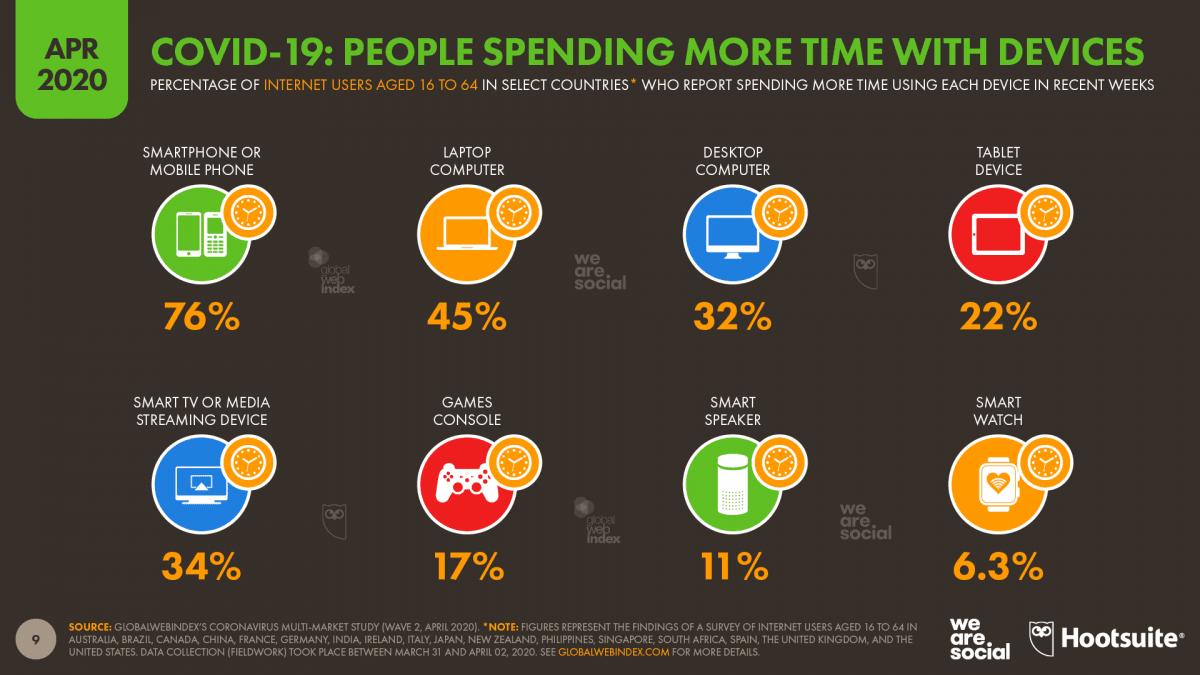
If a pandemic is a good time to get a dog, it’s also a good time to build the dog’s following. Stuck at home, people are spending lots more time online. In one global survey at the end of March, 43% of people said they were browsing social media more because of the pandemic, second only to streaming movies and TV shows.

That social media enthusiasm isn’t equally distributed. In the US, dogs are more popular than cats on and off Instagram, and right now, puppies are ascendant. According to social-monitoring tool CrowdTangle, the number of posts mentioning puppies jumped 38% in the last week of March, compared with the year-to-date weekly average. “Dog” rose a more modest 11%. “Cat,” meanwhile, showed an even smaller increase, slowly and indifferently rising over the next three weeks to a pandemic peak, up 9%.

That’s boosting the value of Dog Instagram, says Loni Edwards, a former lawyer who in 2015 founded a talent company to represent the human beings eager to monetize their pets’ adorability. “People are starting more accounts, they’re following more accounts, they’re liking, they’re engaging more, they’re spending more time on social media, which is just making the space more valuable,” she says.

In an otherwise bleak year for advertising, pet brands have become a bright spot, increasing spending on digital, TV and print promotions by 51% between January and March 23 compared with the same period in 2019, according to MediaRadar. As other Instagrammable industries — travel, beauty, dining, fashion — struggle to adapt their social media strategies to a stay-at-home world, cute animals remain, blissfully uncontroversial and increasingly attractive to advertisers.

“There’s a lot going on in the world. Just being able to take a mental break and see this adorable content is a wonderful thing,” says Edwards.

Hearts & Bones, a rescue based in Dallas and New York City, says it regularly has around 40 dogs in its care. Now there are just three, including Buddy Valastro, a Basset Hound mix named after the Cake Boss star. The organization is experiencing an “unprecedented level of interest in adoption,” it says. Puppies and dogs get snapped up as soon as their photos hit the web.

Shelter-in-place has resulted in animal shelters being emptied out, as the newly housebound seek furry friends to offset the loneliness of lockdown, or take advantage of weeks of work-from-home to raise their pups. Waiting lists at established breeders have surged. Online searches for puppies available for adoption and for sale are up sharply since March.

After searching out dogs online, new owners are eager to share their own. Fluffy white clouds of Samoyeds parade, English Bulldogs wiggle, and shy Shiba Inus get caught peeking out. Photos and, increasingly, videos, capture pups playing, eating, and sleeping. Like anything else on Instagram, it’s a carefully curated version of puppydom; gross parts are rarely shown. A whole new vocabulary — zoomies, bleps, sploots — describes their exploits. Trending hashtags like #TongueOutTuesday are self-explanatory.

“All of our friends have been adopting dogs recently and it’s like you have to start an account,” says Brittni Vega, who started the @harlowandsage account in 2013 to chronicle the contrast between her elderly Dachshund and younger Weimaraner. “It’s just so fun and you get attached to these dogs and it’s fun to see their daily life and nice to see them in happy homes.”

The sudden interest in all things canine has even caught the eye of Wall Street, with financial analysts more accustomed to crunching P/E ratios now pondering the popularity of Pomskies and Goldendoodles. “Prices of easy to look after crossbreeds such as Cockapoos have more than doubled,” declared BCA Research in a note sent to clients last month.

The ProShares Pet Care exchange-traded fund, better known as PAWZ, has surged 53% since the market bottomed in early March, outperforming the broader index. Animal-care prices are now one of the few areas where you can find inflation.

“It’s getting more and more saturated,” says Devon Noehring, who runs a 97,000-follower strong Instagram account for her Corgi pup, Willo. She says she earns about $400 per sponsored Instagram post. The major pet accounts can get up to $15,000 according to Edwards, the agent. “I’ve even started creating YouTube videos to help people who want to get into the Dog Instagram business,” says Noehring.

Golden retrievers and Labradors are America’s favorite breeds, but you wouldn’t know it from Instagram. The most popular pups on the network are French bulldogs, pugs, and bulldogs, with their genetically engineered bug-eyes and smushed faces, according to a study this year. What’s good for the ’gram isn’t always good for the dog, however. Many of these brachycephalic breeds come with significant respiratory issues and other health problems, making actual ownership a more expensive and high-maintenance proposition than social media might suggest.

Hilary Sloan, a rescue advocate who runs the enormously popular @ellabeanthedog account, points out that the media has always had a tendency to spawn trends. Demand for Dalmatians spiked after the release of Disney movies and Cavalier King Charles Spaniels got a boost from Sex and the City. “Social media is part of our daily life in a way that’s maybe more consistent, so it clearly has an impact,” she says.

The popularity of dogs with “merle” coats — a genetic quirk that results in a dappled appearance that looks particularly fetching in photos — seems to have soared in recent years. That fad also has an unfortunate side effect: the accidental breeding of “double merle” dogs at risk of severe hearing and vision impairment, occasionally born without eyes at all. “The number of merle and double merle pit bull-type dogs we have seen recently is astounding,” says Rose Adler, a professional dog trainer who co-runs a rescue organization for deaf and blind dogs called Keller’s Cause.

Social media also doesn’t reward prudence or patience. With many animal shelters emptied out and growing waiting lists for breeders, animal advocates say they’re concerned that eager pup parents will opt for instant gratification via pet stores and puppy mills. Frauds are also on the rise. The Better Business Bureau’s scam tracker showed 1,649 scams involving puppies between March and July 23, nearly triple the 586 logged in the same period last year.

Still, most dog loyalists believe that Instagram can be a rare force for good in the social media universe. Vega says that since the pandemic began, engagement has been higher on her accounts, including @harlowandfosters where she encourages adoption and shows off available dogs. Sloan, who lost her father to COVID-19 (coronavirus disease 2019) this year, feels the platform can help educate people about responsible dog ownership.

August Yocher, Mochi’s owner, is also enthusiastic. She’s used Instagram to track down Mochi’s littermate (@zoeyloaf) and arrange a playdate, and is running giveaways to mark new milestones in followers. “For right now, it’s just a fun thing to do,” she says. “But I get a lot of messages, at least 10 a day, for sponsorships.” — Bloomberg


BSP launches enhanced banknotes

THE BANGKO SENTRAL ng Pilipinas (BSP) launched the latest generation of banknotes equipped with heightened security features, distinction for better recognition and enhanced designs portraying indigenous culture.

Among the key features of the enhanced New Generation Currency (NGC) series are short horizontal lines to help distinguish the denominations, the BSP said. The NGC banknotes series now in circulation was first issued in December 2010.

“These banknotes are equipped with the latest anti-counterfeiting technology and embedded with tactile marks that will make it easier for the elderly and persons with disabilities to differentiate each denomination,” BSP Governor Benjamin E. Diokno said in his speech at the online launch on Wednesday.

“The banknotes without the enhanced features will remain legal tender and shall co-exist with the enhanced banknotes,” the BSP said in a statement.

The BSP said the enhanced banknotes were set to be released to banks after yesterday’s launch.

Each bill has short horizontal bands engraved at the extreme right and left sides of the note. The P50 bill features one pair of marks; two pairs for the P100 bill; three pairs for the P200 bill; four pairs for the P500; and five pairs of the tactile mark for the P1,000 banknote.

“We added tactile marks to the banknotes specifically intended to help the elderly and visually impaired to quickly identify the value or denomination of the banknote,” Mr. Diokno said.

The P500 and the P1,000 bills will now feature a roller bar effect on their value panels, making counterfeiting of these denominations more difficult.

Other features of the enhanced bills include dynamic movement of design patterns as well as color-shifting inks.

The banknotes also feature indigenous Filipino weaves in the windowed security thread to showcase the country’s culture.

“The BSP is confident that, with these features, the public will benefit in terms of the banknote security, its ease of recognition and inclusivity,” BSP Senior Assistant Governor D. Luna said.

Mr. Diokno said central banks generally redesign or enhance their banknotes every 10 years on average to protect the integrity of their currencies. The BSP in December unveiled a P20 coin and an enhanced design for the P5 coin for easier distinction from the P10.

Despite the enhanced features of the bills, Mr. Diokno said the central bank did not see a significant uptick in the cost of producing the new bills.

“We estimate that there is an average increase of 1% in the cost of production,” Mr. Diokno said.

The central bank chief said cash remains the choice for some Filipinos when purchasing and paying for services despite a recent shift towards digital transactions amid the pandemic.

“It is equally our priority to ensure that banknotes and coins are accessible, recognizable, and easily authenticated,” Mr. Diokno.

The BSP has also formed a technical working group to study the feasibility and policy implications of a central bank digital currency, he added. — L.W.T. Noble

Smart dangles 5G service

PLDT, INC.’s wireless arm Smart Communications, Inc. announced on Wednesday that its fifth-generation (5G) service will be commercially available to its subscribers in key commercial districts of Metro Manila starting July 30.

Smart will also be launching its initial lineup of 5G-certified handsets from Huawei, Samsung, RealMe and Vivo.

In a statement, the company said the devices will be available with Smart Signature plans in select Smart Stores.

“Starting July 30th, the 5G mobile phone network of Smart Communications is going live as a commercial service. In this initial phase of its commercial deployment, Smart Signature, Infinity and other Smart postpaid subscribers will be able to enjoy the super-fast data service of Smart 5G in key business districts of Metro Manila using Smart-certified handsets with 5G-activated SIMs,” the wireless services provider said.

Smart’s 5G service will be available in Araneta City, SM Megamall, Mall of Asia Bay Area, and the central business districts (CBDs) of Makati and Bonifacio Global City.

“Smart 5G is also being rolled out in key high-traffic areas such as North Avenue in Quezon City and Taft Avenue in Manila, as well as in Ortigas CBD, and Clark Green City in Pampanga,” the company said.

The announcement was made two days after President Rodrigo R. Duterte threatened to shut down Smart and Globe Telecom, Inc. if they fail to improve their services by December.

In June, PLDT Spokesperson Ramon R. Isberto said the 5G service will be launched by the fourth quarter of the year.

“As we roll out 5G in more areas of the country, this will complement the deployment of our 4G/LTE network, which is already the fastest and most extensive in the country. To date, Smart 4G/LTE and 3G coverage serves 95% of the country’s population,” Alfredo S. Panlilio, PLDT chief revenue officer and Smart president and chief executive officer, was quoted as saying in the statement.

2020 CAPEX TO REACH P70 BILLION
Smart said its 5G deployment plan requires steady investment efforts.

It noted that PLDT and Smart had spent some P260 billion in total capital expenditures (capex) over the last five years.

“In 2019 alone, the PLDT Group’s capex reached a record P72.9 billion. Moreover, the 2020 capex is expected to reach P70 billion despite the slowdown in network rollout due to the quarantine controls imposed in the second quarter of this year,” Smart said.

The capex program has made it possible for both PLDT and Smart to build the infrastructure for the deployment of 4G/LTE and 5G services.

Hastings Holdings, Inc., a unit of PLDT Beneficial Trust Fund subsidiary MediaQuest Holdings, Inc., has a majority stake in BusinessWorld through the Philippine Star Group, which it controls. — Arjay L. Balinbin

Tencent offers $2.1 billion for Chinese search giant Sogou

TENCENT Holdings Ltd. has offered to buy out and take private search engine Sogou, Inc. in a $2.1-billion deal, adding to a slew of Chinese technology giants seeking to delist from US bourses.

Shares of the social media heavyweight climbed as much as 4.7% on Tuesday, buoyed by speculation it will more closely integrate Sogou’s AI technology with its own services and devices to gain an edge on rivals like TikTok-owner ByteDance Ltd.

Tencent has in past years come under pressure from ByteDance and other up-and-coming rivals in the emergent short-video arena. Beijing-based Sogou — whose name translates as “search dog” — has long been the default in a slew of Tencent products including its marquee social app WeChat. It’s also been making a push into artificial intelligence.

A takeover of Sogou also raises the prospect of a lucrative listing in Hong Kong or Shanghai in the future, on the heels of well-received debuts by Alibaba Group Holding Ltd. and JD.com, Inc. It’s become an increasingly attractive route for tech giants such as Jack Ma’s Ant Group, which is speeding toward what could be the city’s biggest float in years. Sogou Chief Executive Officer Wang Xiaochuan in 2018 declared his ambition to list on mainland bourses when regulations permit.

Chinese internet companies are exploring listings closer to home after a proposed US bill threatened to force them to delist from New York by imposing stricter disclosure requirements — a prospect that looks increasingly plausible as the Trump administration amps up action against Beijing on multiple fronts. Online gaming company Changyou.com Ltd. got taken private this year by Sohu.com Ltd., and 58.com, Inc. is being bought out by a private equity consortium for $8.7 billion.

The “market has been anticipating more companies to pursue secondary listing in Hong Kong,” Jefferies analysts led by Thomas Chong wrote. “We consider there will be more synergies between Sogou and Tencent in search and smart devices in the future.”

Tencent is offering $9 in cash for each American depositary share it doesn’t already hold in Sogou, backed by fellow internet giant Sohu. That’s a 57% premium to the target company’s Friday close. Sogou said in a statement it was considering the takeover offer, though Tencent already owns about 39.2% of Sogou but controls a majority of voting power.

Sogou, founded in 2005 and merged with Tencent’s Soso search business in 2013, has counted on its partnership with the larger company to help it catch search leader Baidu, Inc. Its 2017 IPO also helped bankroll a longer-term AI effort — about three quarters of its employees are now involved in research and development, according to its website.

Sohu’s shares gained 40% in New York, their most in a decade, while Sogou leapt a record 48% to close the gap with the offer price. — Bloomberg

RCBC officials face fraud complaint

CURRENT and former officials of Rizal Commercial Banking Corp. (RCBC) face an administrative case filed by a nonprofit organization for alleged fraud.

Respondents for the case are RCBC President and Chief Executive Officer Eugene S. Acevedo, current and former members of the bank’s board of directors, as well as Liza P. Arzaga, a dismissed employee, the lender said in a filing on Wednesday.

The complaint was filed by Inang Nag-aaruga sa Anak Foundation represented by Pangasinan Representative Christopher P. de Venecia and his mother and former solon Ma. Georgina V. Perez-de Venecia.

Other complainants representing the organization include Ma. Asuncion L. Yu, Ma. Teresa P. Cruz-Evangelista, Felipe Ferdinand P. Cruz III, Ma. Asuncion P. Ampil and Veronica F. Roxas.

“Inang Nag-aaruga Sa Anak Foundation and others collectively complain against the respondents for supposedly violating Section 56 of Republic Act (RA) No. 8791, otherwise known as the General Banking Law of 2000, in relation to Section 37 of RA No. 7653, or the New Central Bank Act, as amended, for alleged fraud committed against the complainants…,” RCBC said.

Section 56 of RA No. 8791 lays out unsafe or unsound manners in conducting business that can result in  material loss or damage to depositors, the BSP or financial institutions.

The lender said the issue has “no material impact” on their business or operations. While RCBC is not impleaded in the complaint, the bank said it will monitor the respondents’ filing of answers with the BSP.

“The concerned officers of the bank have already referred the matter to external counsel. We have been advised that we cannot share details regarding this case in view of the confidentiality of the legal proceedings,” RCBC said in a text message.

The case is pending before the Office of the General Counsel and Legal Services-Investigation and Prosecution Group of the Bangko Sentral ng Pilipinas (BSP).

Sought for comment on the case, BSP Deputy Governor Chuchi G. Fonacier said in a text message: “Unfortunately, I cannot share with you the details because of the ongoing legal proceeding.”

BusinessWorld also reached out to Mr. De Venecia but had yet to receive a response as of press time.

RCBC’s net earnings climbed 77% year on year to P2.3 billion in the first quarter, supported by strong core business and trading gains.

The Yuchengco-led lender’s shares closed at P16 apiece on Wednesday, down by four centavos or 0.25% from its previous finish. — Luz Wendy T. Noble

This hearty sandwich will spice up same-old breakfasts — and lunches

By Kate Krader

RESTAURANTS across the country are starting to reopen, but there’s one popular dining category that remains out of commission: outdoor food markets. Places like Smorgasburg in Brooklyn’s Williamsburg neighborhood — where crowds line up for pizza cupcakes and ramen burgers — create an environment that’s impossible to manage under COVID-19 restrictions. While Smorgasburg is morphing into Smorg to Go for takeout only, another wildly popular destination in New York, the Queens Night Market, remains closed.

John Wang left his job as a corporate lawyer at Simpson Thacher & Bartlett to open Queens Night Market five years ago, with the mission of re-creating the stalls he remembered fondly from childhood trips to Taiwan. He’s recently been meeting with the Department of Transportation on ways to bring it back, “but it’s hard to see how to do it without eviscerating the experience,” Wang says. “One-way traffic that doesn’t allow for people to hang out doesn’t seem very fun. Plus, the vendors’ business depends on volume.” On the busiest nights, 20,000 people would come to the market, which had about 60 international stands offering food from Argentina to Kosovo to Nigeria to the Philippines.

For fans like me who badly miss the market, the consolation is an energetic new cookbook, The World Eats Here: Amazing Food and the Inspiring People Who Make It at New York’s Queens Night Market, by Wang and Storm Garner. There are profiles and recipes from such vendors as Alberto Richardson of Treat Yourself Jerk Chicken, whose smoker and Jamaican jerk recipe has been a major attraction at the market, and Maeda Qureshi, who runs Pakistand, a pop-up restaurant whose profits support childhood education charities in Pakistan.

Another go-to vendor is Amy Pryke, a Columbia Business School graduate who parlayed a class project into her Native Noodles stand, inspired by hawker stalls from her native Singapore. Pryke specializes in thick laksa noodles in coconut broth, and that recipe is included.

But there’s another selection in the book that she hasn’t yet served at the market: Roti John, a sandwich that personifies Singapore’s melting-pot cuisine.

Ground meat is stir-fried with cumin, onion, and garlic then fried again with chile-spiked eggs and loaded into a baguette. A final flourish of ketchup enhanced with spicy-sweet Sriracha takes it over the top. The omelet sandwich feels both familiar and adventurous, with spices jammed into every corner — a tasty treat for breakfast, lunch, or dinner.

“I didn’t serve them at Queens Night Market because they’re best made to order,” says Pryke, who’s opening a Native Noodles storefront in Manhattan’s Washington Heights neighborhood in the fall. “I have an academic background, so my focus was how do I bang out as many bowls as possible. But I saw that lines bring in more people, and people wait for something that’s worth waiting for.” She’ll serve Roti John on the lunch menu at her new spot.

For home cooks, Pryke notes that the recipe is very customizable: You can add cheese or spicy mayonnaise, or substitute sardines for meat.

Expert Roti John makers will spread the baguette halves on top of the eggs as they’re cooking and flip the whole thing over in the pan. It takes some practice; I didn’t get it exactly right my first try.

The following recipe is adapted from Pryke and reprinted from The World Eats Here.

ROTI JOHN (OMELET AND MEAT SANDWICH)

Serves 2

3 tbsp. ketchup

3 tbsp. Sriracha

1 tbsp. sugar

⅔ baguette or 2 hero rolls, about 8 inches long

2½ tbsp. canola oil

½ lb. ground beef or lamb, or beef/lamb mix

1 tsp. ground cumin

½ tsp. salt, plus more for seasoning

4 garlic cloves, minced

1 small white or yellow onion, sliced

6 large eggs

2 tbsp. sambal oelek (Southeast Asian chile paste, available at most supermarkets) or chopped seeded chiles

Large pinch of ground black pepper

In a small bowl, combine the ketchup, Sriracha, and sugar with 1 tablespoon of water; set aside.

Split the baguette or rolls lengthwise but do not cut all the way through, leaving a small hinge like a hot-dog bun. If using a baguette, cut in half crosswise for two sandwich buns. Lightly oil a nonstick skillet with ½ tbsp. of the oil and toast the inside of the bread halves, pressing down with a spatula until lightly browned, about 2 minutes.

In a bowl, combine the ground meat and cumin. Heat the remaining 2 tbsp. oil in the skillet. Add the garlic and fry over medium heat until fragrant, about 30 seconds. Add the onion and cook over low heat until translucent, about 6 minutes. Add the meat, raise the heat to medium, and stir-fry until cooked through, about 6 minutes. Season with salt.

In another bowl, lightly beat the eggs. Beat in the sambal oelek (of chilis), salt, and pepper. Pour the eggs into the skillet, covering the meat. When the eggs just start to firm up on the bottom and sides, turn the mixture over with a metal spatula and continue cooking to desired level of done. Transfer to a plate and keep warm. Press the inside of each bread half into the pan to pick up leftover scraps.

Pile the eggs and meat on the buns and spread the ketchup in the center. Close the sandwiches, cut into 4 pieces each, and serve.  Bloomberg

Philippine Arena interchange to reopen Aug. 1 — NLEX Corp.

AFTER being closed due to pandemic community quarantine restrictions, the Philippine Arena interchange in Bocaue, Bulacan will be open again to motorists on Saturday, Aug. 1, NLEX Corp. said.

The tollway company said there will be radio-frequency identification (RFID) sites at strategic areas of the interchange.

“To curb the spread of the coronavirus disease 2019 (COVID-19), the interchange requires contactless transactions through RFID,” NLEX Corp. said in a statement.

As for the cash-paying motorists, the company said they will be required to sign up for an RFID account and have an RFID tag on their vehicles.

“The interchange is surrounded by a mega quarantine facility, a prospective terminal for northern provincial buses — both are inside the Philippine Arena complex, and a molecular testing laboratory located at the western portion. For everyone’s safety, we are implementing the RFID-only policy at the interchange. This would ensure physical distancing through cashless payments,” NLEX Corp. President and General Manager J. Luigi L. Bautista was quoted as saying.

He added: “We are committed to provide our customers with safer and innovative payment solutions such as the RFID. We have several installation sites within the expressway and even offer 24/7 RFID installation for those who are not available during specified business hours.”

NLEX Corp. is under Metro Pacific Tollways Corp., the tollways unit of Metro Pacific Investments Corp., one of three key Philippine units of Hong Kong-based First Pacific Co. Ltd., the others being Philex Mining Corp. and PLDT, Inc.

Hastings Holdings, Inc., a unit of PLDT Beneficial Trust Fund subsidiary MediaQuest Holdings, Inc., has a majority stake in BusinessWorld through the Philippine Star Group, which it controls. — Arjay L. Balinbin

US colleges tap tech to calm students paying for remote classes

COLLEGES are rolling out new technology for a mostly online semester that begins next month, but these efforts are unlikely to impress students paying tens of thousands of dollars for in-person instruction.

The University of Michigan will provide stronger Wi-Fi and new cloud storage accounts to help students learn on campus while maintaining social distance. The University of Southern California (USC) plans virtual 3-D labs for some science courses, while the University of California at Berkeley is giving laptops, webcams and headphones to thousands of students in need.

As the COVID-19 (coronavirus disease 2019) pandemic rages across the US, many schools are making permanent plans to conduct classes virtually this fall. Administrators heeded complaints about lockdown learning during the previous semester and are tapping technology to try to improve the experience. Students doubt e-learning will pass what is shaping up to be the industry’s toughest test yet.

“Online classes kinda suck and there’s no technology that can fix that,” said Annie Tsan, a sophomore at the University of Massachusetts at Amherst.

Without technological updates that make the online classroom more accessible and enjoyable, there’s no guarantee students will stay at their institutions. Some are considering a gap semester or two, withholding tuition payments or transferring. This risks another blow to a higher eduction sector that was already struggling financially before the pandemic.

“70% of our revenue comes from tuition, room and board,” said Zach Messitte, president of Ripon College in Wisconsin. “If 30% of our students decide not to come back, that’s just an enormous revenue hit. This will impact the revenue of schools across the country.”

The University of Michigan’s new Wi-Fi shows the potential and the pitfalls of this technology push by colleges. There will be more bandwidth and the Wi-Fi signal will be extended through additional routers, so even without in-person classes, Michigan hopes students will come to the campus. One proposal even encourages students to park at the college and turn their cars into makeshift study halls.

“I don’t think it’s going to be as impactful as they think,” said Nicholas Silk, a senior at Michigan. “Most people who live on or off campus already have Wi-Fi in their residences. Plus, I don’t even have a car. I won’t be sitting outside of a building just to use campus Wi-Fi.”

Michigan is also partnering with Zoom Video Communications, Inc. and Canvas, a learning-management system from Instructure, Inc., to enable automated transcription during videoconferencing classes. This will help students follow lectures more easily in real time and let them refer back to material after the class ends. Students will also have access to cloud storage from Dropbox, Inc. and Adobe, Inc.’s Creative Cloud software for video and sound editing.

The University of Southern California in Los Angeles is teaming up with startup Labster ApS to provide virtual-reality science labs for students. The labs will function similarly to flight simulators, but be accessible remotely via laptop. Students can use Facebook, Inc.’s Oculus VR headsets to access the labs, though this device is not required. Labster’s 3-D labs focus on biology and cover dissections, medical diagnostic procedures, field sampling and other processes. Chemistry students will use VR software from startup Beyond Labz.

Since the pandemic began, Labster said it has partnered with dozens of colleges, including George Washington University, Fordham University and San Jose State University.

Schools are also using technology to keep less wealthy students connected. The University of California at Berkeley set aside more than $4 million to provide about 3,300 laptops, 800 Wi-Fi hot spots, webcams and headphones in August to those who qualify for a new Student Technology Equity Program.

The University of California at Irvine has sent hundreds of students laptops and Wi-Fi hot spots. Almost 40% of those who attend the college qualify for Federal Pell grants that are given to low-income candidates. Tom Andriola, chief information officer for the University of California System, hopes the effort brings “equity in terms of the ability to access the internet and to watch a livestream lecture, or be able to access systems.”

However, schools are often chosen based on physical resources, such as residence halls, research labs and media-production studios. For students counting on these assets, faster Wi-Fi, a free laptop and virtual reality may not be enough. Although some universities, like Princeton, have provided tuition discounts, many schools still expect students to pay the full amount. Some schools, like USC, even announced tuition increases before they released plans to go online.

A number of students are still deciding if it is worth it to attend classes at all this fall. “If I do not have access to the resources that make USC, USC, there is no reason as to why I should be paying full price to essentially now attend school in my living room,” said Casey Gardner, a senior studying theater at the school. — Bloomberg

Dining In/Out (07/30/20)

Yellow Cab marks National Wings Day

IT WAS National Wings Day yesterday but Yellow Cab is extending the celebration until Sunday.  From July 29 to Aug. 2, buy 16 pieces of wings and get extra four for free. Choose from up to four flavors from Yellow Cab’s options: original Hot Chix, Sweet Soy, Garlic Parmesan, or  Sriracha. Price starts at P649. This limited time offer is available in participating Yellow Cab stores nationwide for dine-in, Curbside pick-up, take-out, and delivery. This is also available via GrabFood, FoodPanda, and LalaFood. All Yellow Cab stores comply with proper operating guidelines to ensure customer safety. For more information, visit https://www.facebook.com/YellowCabPizzaOfficial.

Swiss Miss gives hot chocolate recipes

THERE ARE few things better when being stuck at home than a cup of hot chocolate. And since people are stuck inside for a long time, Swiss Miss has released chocolate drink recipes to shake things up a bit. First there is Peanut Butter Hot Cocoa: pour a sachet of Swiss Miss Milk Chocolate into a mug; add 180 ml hot water to dissolve the cocoa mix; add a tablespoon of creamy peanut butter, and gradually stir until well-mixed; top off with whipped cream. Then there is Caramel Hot Cocoa: pour milk into a mug and heat it in the microwave until it’s hot; add in half a teaspoon of caramel syrup and stir until fully dissolved; pour in a sachet of Swiss Miss Dark Chocolate; top with whipped cream and a drizzle of caramel. For Mocha Hot Cocoa: dissolve a sachet of Swiss Miss Chocolate Hazelnut into a mug of warm milk; add two teaspoons of instant coffee granules and stir until completely dissolved; for added flavor, top off with whipped cream and a sprinkle of cinnamon. For Strawberry Hot Cocoa: heat a glass of strawberry milk in the microwave until hot; stir in a sachet of Swiss Miss Milk Chocolate until well-blended; top off with whipped cream and a sprinkle of cocoa powder. Finally, there is Mallow-loaded Hot Cocoa: mix Swiss Miss Choco Milk Blends (which comes with marshmallows that can be mixed in the drink or used as toppings) with a warm cup of milk; add more mallows and top with whipped cream; coarsely break a Graham cracker into small pieces and sprinkle on top. Check out more recipes and updates by Swiss Miss Philippines on Facebook.

Outdoor dining at Ayala Malls’ The Patio and Stop Bite

DINING OUT has been given a new meaning at Ayala Malls, as The Patio and Stop Bite are now open. These are extended areas in lush gardens or spacious hallways where customers can safely eat outside confined spaces. With the opening of more spaces to accommodate dining, it consequently helps the restaurant merchants who are limited to the mandated seating capacity while providing options for customers who are out for work or on essential runs during the community quarantine. Both The Patio and Stop Bite areas are designed to follow social distancing protocols and strict sanitation measures are undertaken for the comfort and safety of the diners. Jennylle Tupaz, President of Ayala Malls, says that it is one of the initiatives taken to help bring more customer engagement within a safe haven. “We make sure that safety is still a priority inside our malls, while giving our customers more time to enjoy their day outside of their homes. Inside Ayala Malls, all health protocols are being followed, from the temperature checks and physical distancing practices, to our strict sanitation procedures such as regular cleaning. We want to be able to bring our customers safely to the next normal by giving them these little moments of leisure and respite that they have missed in the past months.” There are The Patio locations at the Ayala Malls Circuit Gallery Drive and Circuit Lane Connection, Ayala Malls Solenad Activity Park, and Alabang Town Center Corte and Corte Expansion. The Stop Bite locations are at the TriNoma Food Choices, Ayala Malls Vertis North Levels 2 and 3, UP Town Center Activity Center, Fairview Terraces Food Choices, Market! Market! Activity Center, Marquee Mall Exhibit Space, Ayala Malls Legazpi Food Choices, Ayala Malls Capitol Central Veranda, Abreeza Mall Food Choices.

McDonald’s offers Bold meets Cold combo

BOLD MEETS COLD as McDonald’s Philippines launches its newest combo: the Spicy McNuggets and McDo Shake. Spicy McNuggets have arrived in the Philippines and can be paired with the new McDo Shake which is now available in all McDonald’s stores nationwide. The chicken McNuggets’ classic golden-brown coating is infused with bits of dried pepper. Diner have a choice of sauce: BBQ or Sweet and Sour. Meanwhile, the McDo Shake, which has not been available in the Philippines for decades, is back. It is made from McDonald’s creamy soft-serve ice cream, combined with a rich chocolate sauce or strawberry syrup. This new #McDoBoldMeetsCold combo is available for a limited time only. It is available in all McDonald’s stores nationwide via dine in, take out, drive thru, pick-up, and McDelivery. Also available via GrabFood, foodpanda, and Mangan.ph.