THE approval of a proposed policy pushing for nuclear energy has been relegated to a lower priority as the government focuses on containing the public health and economic fallout from the pandemic, officials said.
Energy Undersecretary William Felix B. Fuentebella said the government is fully focused on arresting the spread of coronavirus disease 2019 (COVID-19).
‘Di siya masyadong nabigyan ng highlight kasi ang tutok ng buong government (sa) COVID (The nuclear policy is not a priority because the government’s focus is on fighting COVID),” he said.
Separately, Energy Secretary Alfonso G. Cusi told reporters that the Department of Energy is still waiting for the approval of President Rodrigo R. Duterte of its proposed executive order pushing for the establishment of nuclear power infrastructure, which it submitted on Feb. 20.
The department wanted the regulatory and legal framework for nuclear power, along with the national policy, to be approved within the present government’s term due to the long gestation period for building nuclear power plants.
“That’s why we ask again that we have to act on it. We won’t be able to do it during this administration but we would like to make sure that the groundwork is completed,” Mr. Cusi said.
Currently, the country’s energy mix includes hydro, solar, wind, biomass, natural gas, geothermal, oil, and coal.
Adding nuclear energy was deemed important due to uncertainty in the energy market, Mr. Cusi said.
“Pwede naman ang coal, ‘di ba? (Coal is available, right?) But that can also be disrupted if, let say, a country stops supplying us coal. Just like us, if we stop exporting coal to our clients, they will (also) be affected,” he explained.
“Mabuti meron tayong LNG (liquefied natural gas), meron tayong hydro, meron tayo ng lahat ng renewables (It’s a good thing we have LNG, hydro and all sorts of renewables), but we need also reliable, dependable baseload,” he said said.
Nuclear power plants are positioned as helping fill in the gap for baseload power, which are plants operating full-time to service the so-called base load of power demand, as opposed to other plants tapped to operate at peak demand only. Baseload plants typically cost the least to operate while peaking plants are more expensive.
Power demand fell 20%-30% during the enhanced community quarantine (ECQ), marked by a plunge in industrial use while residential consumption rose 40% with many workers staying at home. — Adam J. Ang
THE Senate resolution seeking to tax digital platforms, including streaming services, cites the need to address shortcomings in enforcing tax rules on multinationals doing business in the Philippines, its author said.
Senator Ramon B. Revilla, Jr., author of Senate Resolution No. 410, said in the resolution that “there is a need to implement a fair and just taxation scheme, capture transactions of multinational companies related to the digital economy into our tax base, and plug the leakages in our tax laws.”
Mr. Revilla asked the Senate Ways and Means Committee to explore taxes on the Philippine digital economy, which is projected to grow to P25 billion by 2025.
He said Norway, Australia, and Japan, have passed digital service tax laws to “collect taxes from local consumption and use of digital content and services from foreign providers.”
Mr. Revilla also cited a memorandum, issued by the Bureau of Internal Revenue, in which the agency reminded online businesses that their Philippine transactions are likewise subject to tax.
Finance Secretary Carlos G. Dominguez III, has said that those engaged in online transactions are not strictly complying with their tax obligations.
“For instance, the issue on VAT (Value-added Tax) — if you buy floor polisher from the store, there is VAT, but if you buy from Lazada, there is no VAT charge. We are figuring out how to do this,” Mr. Dominguez told Mr. Revilla in a Senate hearing Wednesday.
He also said his department is now studying digital services, particularly internet streaming, and how the government can earn revenue from transactions.
“For Internet streaming, how are we going to identify the transaction and the amount involved? We are studying it,” he said.
House Ways and Means Committee Chairman Jose Maria Clemente S. Salceda of Albay on Tuesday filed the proposed Digital Economy Taxation Act in that chamber.
Mr. Salceda’s bill is projected to generate P29 billion in revenue annually. It will, among others, impose VAT on all services “rendered electronically.”
The DoF has also submitted a “digital economy VAT” proposal to Congress, which is expected to generate P15 billion in revenue in 2021, P16.6 billion in 2022 and P18.4 billion in 2023. — Charmaine A. Tadalan
AN Ateneo de Manila University scientist said he supports clinical trials to study the effectiveness of virgin coconut oil (VCO) in treating coronavirus disease 2019 (COVID-19), calling it a “simple solution” tapping a readily available resource.
In a webinar, Professor Emeritus Dr. Fabian M. Dayrit said that many scientific studies have demonstrated the antiviral properties of VCO and its derivatives when tested against various viruses.
“Coconut oil is not a high-tech cure like drugs and vaccines, but it brings out the power of simple solutions and it has the science to back it up,” Mr. Dayrit said.
During the webinar, Mr. Dayrit said coconut oil derivatives either disintegrate the protective lipid membrane of the virus or inhibit virus mutations or spread within the host.
“In past studies, coconut oil derivatives have been successfully shown to destroy the outer layer of enveloped deoxyribonucleic acid (DNA) or ribonucleic acid (RNA) viruses like the vesicular stomatitis virus, the herpes simplex virus, and the junin virus,” Mr. Dayrit said.
Mr. Dayrit said the virus which causes COVID-19, formally known as Severe Acute Respiratory Syndrome coronavirus 2 (SARS-CoV-2) is a member of the betacoronavirus group, one of the four groups within the coronavirus family.
“The lipid membrane disintegration or the destruction of the virus’ outer layer is a mechanism by which the virus under the betacoronavirus group can be effectively destroyed,” Mr. Dayrit said.
Mr. Dayrit said lauric acid contained within coconut oil has been shown to stop the spread of various types of viruses.
“What we need to determine is how effective (coconut oil) is against this virus itself and curing the disease — COVID-19 — as therapy or as prophylaxis. And in particular what the best dosage is and what the most effective modes of intake are,” Mr. Dayrit said.
At present, there are several studies being conducted on the use of coconut oil against the virus, funded by the Philippine Council for Health Research and Development.
VCO’s effectivity is also being studied in the US and Singapore.
Mr. Dayrit said that the Philippines should look into other applications of coconut oil and other coconut-based products.
“There’s a lot of undiscovered potential in coconuts. I think we should really develop it more. It will benefit our farmers and our country,” Mr. Dayrit said. — Revin Mikhael D. Ochave
Last week, I discussed the Revenue Memorandum Circular (RMC) which extended the deadlines for taxpayers to submit responses or protests to assessment notices, including documents to support requests for reinvestigation. In this article, let’s discuss another guideline released by the BIR concerning tax assessments.
On March 30, RMC 34-2020 suspended the running of the statute of limitations for tax assessments from March 16 until 60 days from the lifting of the state of national emergency. This was echoed by Revenue Regulation Nos. (RR) 7-2020 and 10-2020 and amended by RR 11-2020.
What is the statute of limitations? Under the law, the Bureau of Internal Revenue (BIR) has three years to assess deficiency taxes by issuing a Formal Assessment Notice (FAN). The three years are counted from the last day prescribed by the law to file the returns, or the day the returns were actually filed (including any amendments filed), whichever comes later. Thus, any deficiency tax assessment arising from a FAN that is issued beyond this three-year prescriptive period is considered void.
For income tax assessments, the prescriptive period is applied on an annual basis (i.e., from the filing of the annual income tax return). On the other hand, the prescriptive period for VAT shall be reckoned quarterly, counted from the date of filing of the quarterly VAT returns which is due every 25th of the month following the close of a taxable quarter. For withholding taxes, prescription shall be reckoned from the monthly filing deadlines of the returns.
There are, however, exceptions to the three-year prescriptive period. One is when the taxpayer and the BIR have agreed to extend the period through the execution of a waiver of the defense of the statute of limitations. Executing a waiver to extend the prescription of assessment of taxes is mutually beneficial to the parties. For the taxpayer, the extension provides the taxpayer time to retrieve or prepare the documents to support the tax treatment of its transactions. It also affords the BIR revenue examiners ample chance to evaluate the taxpayer’s records and documents and reduce/cancel assessments before the issuance of the FAN.
Another exception to the three-year period of prescription is the intentional filing of a false or fraudulent return, or failure to file the required return. In these cases, the prescriptive period can be extended from three years to 10 years from the time the falsity, fraud and/or omission is discovered.
Now, let’s discuss the implications of RMC 34-2020 and related RRs on prescribing tax assessments.
Based on the RMC, the World Health Organization’s declaration of the coronavirus disease 2019 (COVID-19) as a pandemic, and the government’s proclamation of a state of national emergency under Republic Act No. 11469, together with Presidential Proclamation Nos. 922 and 929, are circumstances warranting the suspension of the statute of limitations, effectively prohibiting the BIR from issuing tax assessments and collecting deficiency taxes. Under Section 223 of the Tax Code, the running of the statute of limitations can be suspended for the period during which the Commissioner of Internal Revenue (CIR) is prohibited from making the assessment and 60 days after.
Consequently, under RMC 34-2020, RRs. 7-2020 and 10-2020, the statute of limitations was suspended starting March 16, when Luzon was placed under enhanced community quarantine (ECQ), until 60 days from the lifting of the state of emergency. By way of amendment, RR 11-2020 provides that the suspension shall be until “60 days from the lifting of the quarantine.” The term “quarantine” includes, but is not limited to, “community quarantine,” “ECQ,” “modified community quarantine,” and “general community quarantine (GCQ).”
Based on these issuances, if the quarantine runs only until May 31 without further extensions, the statute of limitations shall be suspended up until the 60th day after the lifting of the quarantine, or on July 30. This is a total of 136 days counting from March 16.
The suspension of the statute of limitations under the RMC and RRs may prevent taxpayers from raising the defense of prescription on prescribed tax assessments. However, such a move by the government is understandable. With taxpayers confined at home and many business operations suspended, submission of documents required for tax audits have been put on hold. Taxpayers were given consideration and extended tax filing deadlines because of the limitations imposed by the ECQ. Why shouldn’t the BIR be given the same consideration? After all, BIR examiners also face challenges in continuing tax audits given their limited mobility while under quarantine.
That said, some may argue that taxpayers and the BIR are, in fact, not given the same consideration. While the extension is a welcome relief for taxpayers with ongoing tax investigations, it appears that the BIR examiners may have some advantage in terms of the extension granted.
As I mentioned in last week’s article, taxpayers with ongoing tax audits are given an extension of 30 days from the lifting of the quarantine to submit their protests and additional documents. On the other hand, the BIR is given 60 days from the lifting of the quarantine to validly issue their tax assessments. In fact, since some areas have already transitioned from ECQ to modified ECQ and GCQ, some BIR examiners can now resume working on their tax audit cases even though the 60-day extension period has yet to commence.
To be fair to taxpayers, the BIR might consider giving taxpayers with requests for reinvestigation an additional 30 days (for a total of 60 days) from the lifting of the quarantine to submit supporting documents, consistent with their extension to issue tax assessments. This would ensure that the 60-day period granted to such taxpayers to submit supporting documents is protected regardless of when their due dates fall within the quarantine period.
After all, as a former US Supreme Court Associate Justice put it, fairness is what justice really is.
The views or opinions expressed in this article are solely those of the author and do not necessarily represent those of Isla Lipana & Co. The content is for general information purposes only and should not be used as a substitute for specific advice.
Kathrine Joy Capales is a manager at the Tax Services Department of Isla Lipana & Co., the Philippine member firm of the PwC network.
THE PESO strengthened versus the greenback on Wednesday after oil prices slipped anew and with positive market sentiment due to dovish remarks from US officials.
The local unit finished trading at P50.65 per dollar yesterday, appreciating by five centavos from its P50.70 close on Tuesday, according to data from the Bankers Association of the Philippines.
The peso opened the session at P50.70 versus the dollar. Its weakest showing was at P50.75 while its intraday best was at P50.615 against the greenback.
Dollars traded increased to $919.2 million from the $567.8 million traced on Tuesday.
The peso’s gains came after a fresh decline in oil prices, said Michael L. Ricafort, chief economist of Rizal Commercial Banking Corp.
“The peso closed stronger for the second straight day after a downward correction in global crude oil prices,” Mr. Ricafort said in a text message.
Reuters reported that oil prices slipped on Wednesday on market concerns regarding the lasting economic fallout of the coronavirus disease 2019 (COVID-19). This outweighed signs of recovering demand and production cuts already imposed by major producers.
Brent crude futures for July delivery traded at $34.54 per barrel, down by 11 centavos or 0.3% as of 0031 GMT. US West Texas Intermediate crude futures for July also slipped by 13 centavos, or 0.4% to $31.83 a barrel.
The July contract became the front month after WTI futures for June expired on Tuesday, avoiding the chaos of last month’s May expiry when prices slid into negative territory.
Meanwhile, a trader attributed the peso’s stronger close after dovish signals from key US officials.
“The peso appreciated after [US] Fed[eral Reserve] Chairman Jerome Powell and [US Treasury] Secretary Steven Mnuchin remained dovish in their remarks before the US Senate Banking Committee,” the trader said in an e-mail.
On Tuesday, Mr. Powell said new Treasury-backed Fed lending programs meant for midsize companies and municipal bond markets would be up and running by the beginning of June. He added that the Fed is looking to extend access to credit facilities to additional borrowers, including to states with smaller populations.
Both Mr. Powell and Mr. Mnuchin said the nearly $3 trillion in federal rescue programs unveiled over the past two months were working to support an economy devastated by the novel coronavirus. The officials faced tough questions over whether the government’s plan to quickly reopen the economy could be detrimental for low-wage workers with little protection against the virus.
For today, Mr. Ricafort sees the peso moving around the P50.50 to P50.75 levels while the trader expects the local unit to trade at a range of P50.50 to P50.70. — L.W.T. Noble withReuters
THE MAIN INDEX sustained its uptrend at the close of trading on Wednesday on last-minute bargain hunting amid expectations of further stimulus from the US government.
The benchmark Philippine Stock Exchange index (PSEi) increased 26.11 points or 0.47% to close at 5,581.96 yesterday. The broader all shares index likewise gained 11.65 points or 0.34% to 3,371.47.
“Philippines equities ended higher on last-minute bargain hunting as more talk of stimulus became a catalyst for the market,” Regina Capital Development Corp. Head of Sales Luis A. Limlingan said in a mobile phone message.
“(US Treasury Secretary) Steven Mnuchin plans to use all $500 billion the Treasury was allocated to help the economy, and is willing to take on more risk to do so,” he added.
This resulted in last-minute optimism that lifted the local bourse from trading lower at the start, which brought the PSEi as low as 5,518.52 for the day.
“Prior to the climb, the market has been in the negative territory for the most part of the trading day amid tempered hopes on Moderna’s experimental coronavirus vaccine,” Philstocks Financial, Inc. Senior Research Analyst Japhet Louis O. Tantiangco said via text.
A report by health-focused media Stat raised questions on Moderna’s supposed success in testing its anti-coronavirus disease 2019 (COVID-19) drug, citing vaccine experts that the company failed to produce critical data for scientific assessment.
The report also noted the silence of the National Institute for Allergy and Infectious Diseases on Moderna’s test, causing further speculation that the company’s announcement is unreliable.
Mr. Tantiangco said while the market ended Wednesday with gains, its climb may be unsustainable.“Looking at the overall market breadth, decliners still outnumbered advancers 88 to 84. Zooming into the index, losers still had the lead over gainers, 16 to 10, while 4 index members were unchanged.”
“Given that we only had a few selected stocks carrying the market compared to the number of losers, today’s climb could be unsustainable,” he said on Wednesday.
The top three gainers among PSEi members yesterday were Bank of the Philippine Islands (+3.15%), Globe Telecom, Inc. (+2.89%) and Metropolitan Bank & Trust Co. (+2.80%). Pulling the index down were Robinsons Retail Holdings, Inc. (-2.62%), Alliance Global Group, Inc. (-2.42%) and Universal Robina Corp. (-2.25%).
Of the sectoral indices, mining and oil climbed 51.91 points or 1.15% to 4,541.82; financials added 12.91 points or 1.15% to 1,134.48; holding firms picked up 58.52 points or 1.07% to 5,517.65; and property increased 10.11 points or 0.35% to 2,845.34.
On the other hand, industrials lost 94.13 points or 1.27% to 7,299.29; and services trimmed 3.63 points or 0.27% to 1,324.72.
Value turnover on Wednesday slid to P3.30 billion from P4.05 billion the previous day. Some 316.58 million issues switched hands. Net foreign selling dropped to P109.98 million from P417.76 million the previous day. — Denise A. Valdez
PRESIDENT Rodrigo R. Duterte has threatened to reimpose a lockdown if coronavirus cases spike, as his Health chief said the pandemic entered a “second wave” in the Philippines as early as March.
“We’ll have to just go back to the original program,” the President, who relaxed quarantine rules for some areas outside Metro Manila starting May 16, said in a taped address on Tuesday night.
He said the government would monitor cases in regions where the lockdown had been eased.
Health Secretary Francisco T. Duque III on Wednesday said the country entered a second wave of COVID-19 infections in March, when the Department of Health reported a spike in cases.
“We’re now on the second wave and we’re doing everything to flatten the curve,” he told senators at a hearing.
Mr. Duque said the first wave started in January when local Health authorities confirmed the infection of three Chinese travelers from China’s Wuhan City, where the virus was first detected.
Meanwhile, he said Chinese pharmaceutical company Sinopharm Group Co. Ltd. had offered to include the Philippines in the clinical trial of a newly developed vaccine.
Mr. Duterte locked down the entire Luzon island in mid-March, suspending work, classes and public transportation to contain the pandemic.
People should stay home except to buy food and other basic goods, he said. The President extended the so-called enhanced community quarantine twice for the island and thrice for the capital region where novel coronavirus infections are concentrated.
Metro Manila and key cities and regions were kept under a modified lockdown from May 16 to 30, while some businesses were allowed to reopen with a skeletal workforce.
The Department of Health (DoH) reported 279 new infections yesterday, bringing the total to 13,221.
The death toll rose to 842 after five more patients died, it said in a bulletin. Eighty-nine more patients have gotten well, bringing the total recoveries to 2,932, it added.
Of the 279 new cases, 150 came from Metro Manila, 14 from Central Visayas and 115 from the other regions, DoH said.
Carlito G. Galvez. Jr., chief enforcer of the government’s anti-coronavirus disease 2019 efforts, said the national action plan could be localized.
“Villages with cases will be locked down to preserve our economy,” he said at the same televised address on Tuesday.
Mr. Duterte said that the virus remains a threat in the absence of a vaccine. He said he would raise enough money so the government could buy vaccines once one is developed by next year.
Also yesterday, John Wong, a professor at the Ateneo de Manila University’s School of Medicine and Public Health, said the “wave” in cases refers to the rise and fall in the number of infections.
The first wave happened in January even if there were few coronavirus cases, he said at a news briefing. The second wave, he added, started in the first week of March.
Mr. Wong earlier this month cited “flattening of the curve” after coronavirus infections slowed, which means fewer people need to seek treatment.
Countries worldwide including the Philippine have imposed lockdowns and asked people to observe social distancing to slow the virus spread.
The curve researchers are talking about refers to the projected number of people who will get infected over time.
“A curve that is flattened means instead of going straight up it, plateaus,” Mr. Wong said “The important thing is it never reaches or exceeds the capacity of the health system.” — Gillian M. Cortez, Charmaine A. TadalanandVann Marlo M. Villegas
PRESIDENT Rodrigo R. Duterte won’t sack his National Capital Region police chief even after he was caught violating lockdown rules amid a coronavirus pandemic.
In a taped address aired on Tuesday night, the President said Metro Manila police chief Debold M. Sinas is a “good and honest man” and should not be fired because people threw him a birthday celebration.
“He is a good officer, he’s an honest one, and it’s not his fault someone serenaded him on his birthday,” Mr. Duterte said.
Police filed criminal charges against the Metro Manila police chief last week after he and about 50 policemen were seen breaking quarantine rules during his birthday celebration.
Mass gatherings are prohibited and physical distancing must be observed during the pandemic.
Presidential spokesman Harry L. Roque on Tuesday said the palace would wait for the results of an internal police probe before deciding on the fate of Mr. Sinas and his well-wishers.
Interior and Local Government Secretary Eduardo M. Año had called the birthday event “uncalled for,” adding that government officials should have delicadeza.
Mr. Sinas has denied violating lockdown rules, adding that packed food was served at the event.
Justice Secretary Menardo I. Guevarra last week said the National Bureau of Investigation would probe the incident, adding that state agents must “enforce the laws fairly.” — Gillian M. Cortez
A SON of former President Joseph E. Estrada yesterday denied violating lockdown rules when he gave away fish in his father’s hometown in Manila this month.
In a letter to the National Bureau of Investigation, former Senator Jose “Jinggoy” P. Estrada said he had followed quarantine protocols while distributing milkfish in San Juan City, where he and his father used to be mayors.
Mr. Estrada said he had a quarantine pass and was wearing a mask and personal protective equipment when he did the rounds. “Social distancing procedure was also observed,” he said.
The former senator, who is out on bail for a corruption case that accused him of stealing pork barrel funds in 2013, said he did not mean to violate lockdown rules.
“I do not think that helping feed the starving and poor is a violation of law,” he said in his letter.
Mr. Estrada was arrested on May 3 for breaching quarantine protocols in San Juan City. Government agents sent him a letter on May 15 asking him to explain.
Mr. Estrada, who like his father was an actor before becoming a politician, said he gave away excess fish that his mother had given him. Instead of letting the fish spoil, he gave them away to his constituents to “ease their hunger.” — Vann Marlo M. Villegas
Some common folks theorize that fishing can still be good after a storm. This works on assumptions that: 1.) storms do not necessarily bother deep-sea fish, so bottom fishing is an option; and, 2.) fish don’t get to feed much during a storm and are thus hungry after. So, even if waters are still murky or cloudy after a storm, it can be easy to get fish to bite as long as you get their attention with the right bait.
I am inclined to think that this fishing “sense” can work just as well in business, especially in turbulent times. But, as I noted in my column last week, even the best fishing pole and line and bait will be useless if the fish will simply not bite where you are. Or, there are just no fish to catch there. For it all starts with knowing where to fish.
The same goes for business, of course. It all starts with some idea, based either on a hunch or on data, of a possible market and what that market wants. After all, with a population of over 100 million and with it a consumer base of, say, 30 million, selling any product at a profit of even just 10 centavos to all those consumers every week, then that’s a net of P3 million a week or P12 million a month.
The coronavirus disease 2019 (COVID-19) storm is now still raging and the fish are not biting. But eventually, the storm will end, and we will be left with turbid and murky waters. However, we will also be left with a lot of hungry fish looking to feed. Now is the time to decide and prepare for what fish to catch and where to catch them; with what bait and how to catch them and when. New oceans of opportunity are emerging.
“We expect e-commerce online penetration (in ASEAN) to grow three to four times to anywhere between $90 billion to $120 billion in the next five years,” said resource person Olivier Gergele during a recent webinar with the Philippine Retailers Association. A BusinessWorld report quoted him as saying that e-commerce growth would accelerate after the weakening of traditional retail channels due to the COVID-19 outbreak.
Gergele, a partner at Ernst & Young (EY) Singapore, was also quoted as saying that Indonesia’s e-commerce industry was expected to grow to around $42 billion to $56 billion by 2025 from $13.3 billion in 2019, while Thailand’s industry was expected to grow to to around $16 billion to $21 billion from $5 billion. “Moving forward, as players are able to overcome and practically anticipate the exponential growth, the exponential demand, we can really expect online penetration to see a significant boost,” he added.
As for Philippine retailers, perhaps going online now is not a matter of choice but of necessity. The numbers have been bad since February. And only a few can continue to weather the situation if it persists until the end of the year. Offline retailers, Gergele said, already saw a 20% to 40% decline in foot traffic in February and March. And, I reckon the percentages to be even higher in the months of April to June.
As Gergele noted, “In the Philippines, some retailers have been grappling with early losses of up to 80% in the past month [March]. The sector really requires significant intervention… to survive.”
Gergele added that he expected the roll out of alternative business models to accelerate across Southeast Asia, including “dark kitchens” or food prepared for takeout rather than for restaurant dining, as well as digital community platforms. He also said that the online ecosystem in ASEAN was expected to be profitable in two to three years, shortening the timeline for e-commerce companies, which was usually four to 10 years.
So, the question now is where do we go from here. Some data available indicate a few trends that may be worth monitoring. In the US, for instance, data analytics firm Earnest Research tracked credit card and debit card purchases for nearly six million Americans for the week ending April 1, 2020, and their data showed some interesting results.
As quoted in “Working Paper 2020-59” by the Becker Friedman Institute at the University of Chicago, the Earnest Research data showed that US spending on airlines, hotels, rental cars, taxis, ride sharing, and movie theaters was down 75-95% year on year. Spending on fast food, auto parts, and autos was down 35%, and spending on apparel was down 70%.
At the same time, spending on home improvement, video streaming, gaming, food delivery, meal kits, and online grocers had “boomed.” The “Working Paper,” by Jose Maria Barrero, Nick Bloom, and Steven J. Davis, also noted that “the bulk of these spending cuts and shifts will reverse when the pandemic recedes and the lockdown ends, but some aspects of the shift are likely to persist.”
In the Philippines, BusinessWorld quoted National ICT Confederation of the Philippines (NICP) President Michael Tiu Lim as saying that the pandemic was a “double-edged sword.” While there has been growth in some ICT companies such as food delivery apps, service-oriented apps related to tourism and restaurant reservations have been hard hit. “There are certain sectors in the ICT industry that are doing well, [but] the others will not be doing well. In the overall balance, I think companies that don’t do well outweigh the companies that do well, unfortunately.”
And this, to me, is where our focus should be now. At this point, it appears that creation lags destruction. That COVID-19 is destroying more systems and structures faster than we can create new ones. That COVID-19 is decimating more capital than we can generate to restart the economy and to sustain growth. But there will be a turning point, for sure.
There is no doubt in my mind that more businesses will need to find their way into the ICT space if they wish to survive. But success in that space will also depend a lot on the readiness and the ability, particularly of smaller firms, to do work from home, and to do business online, as well as the availability of reliable technology and connectivity to do business.
At least in the aspect of digital finance, we seem to be moving forward. The value of digital transactions was reported to have almost doubled to P417.68 billion for the months of March and April compared to the year-ago level of P212.61 billion as more Filipinos opted to tap electronic channels amid the Luzon-wide enhanced community quarantine.
In a report, the Philippine Star quoted Bangko Sentral ng Pilipinas (BSP) Governor Benjamin Diokno as saying that more consumers have been shifting to e-payments because of the limitations on people’s movement and activities as a result of the COVID-19 pandemic. He noted that more people now use PESONet and InstaPay, the automated clearing houses for electronic fund transfers under the National Retail Payment System (NRPS) of the BSP.
BSP data show the number of PESONet and InstaPay transactions reached 17.3 million for the months of March and April, or 3.4 times last year’s 5.07 million. In March, PESONet transactions surged 61% year on year to P148.55 billion. In April, the value jumped 88% to P176.26 billion. For InstaPay, transactions surged by 237% to P43.36 billion in March, and by 260% to P49.5 billion in April.
This, to me, is a step in the right direction. As consumers become more comfortable with digital payments and digital financial transactions, they can also be eased into becoming more comfortable with digital or online retail and online services. But crucial now, as professional services firm Accenture noted in a report on COVID-19, is the ability of organizations to adapt to new conditions “to meet the immediate needs of their marketplaces.”
It noted, “…those who have viewed digital commerce as a secondary channel now need to reorient every aspect of their business towards a digital commerce mindset. There exists an opportunity to double-down on digital commerce, augmenting existing offerings and creating new lines of service. While this represents an opportunity to grow revenue, attract new customers and drive channel shift, it depends on digital channels and capabilities having appropriate scale and stability to handle the crush.”
Marvin Tort is a former managing editor of Businessworld, and a former chairman of the Philippines Press Council
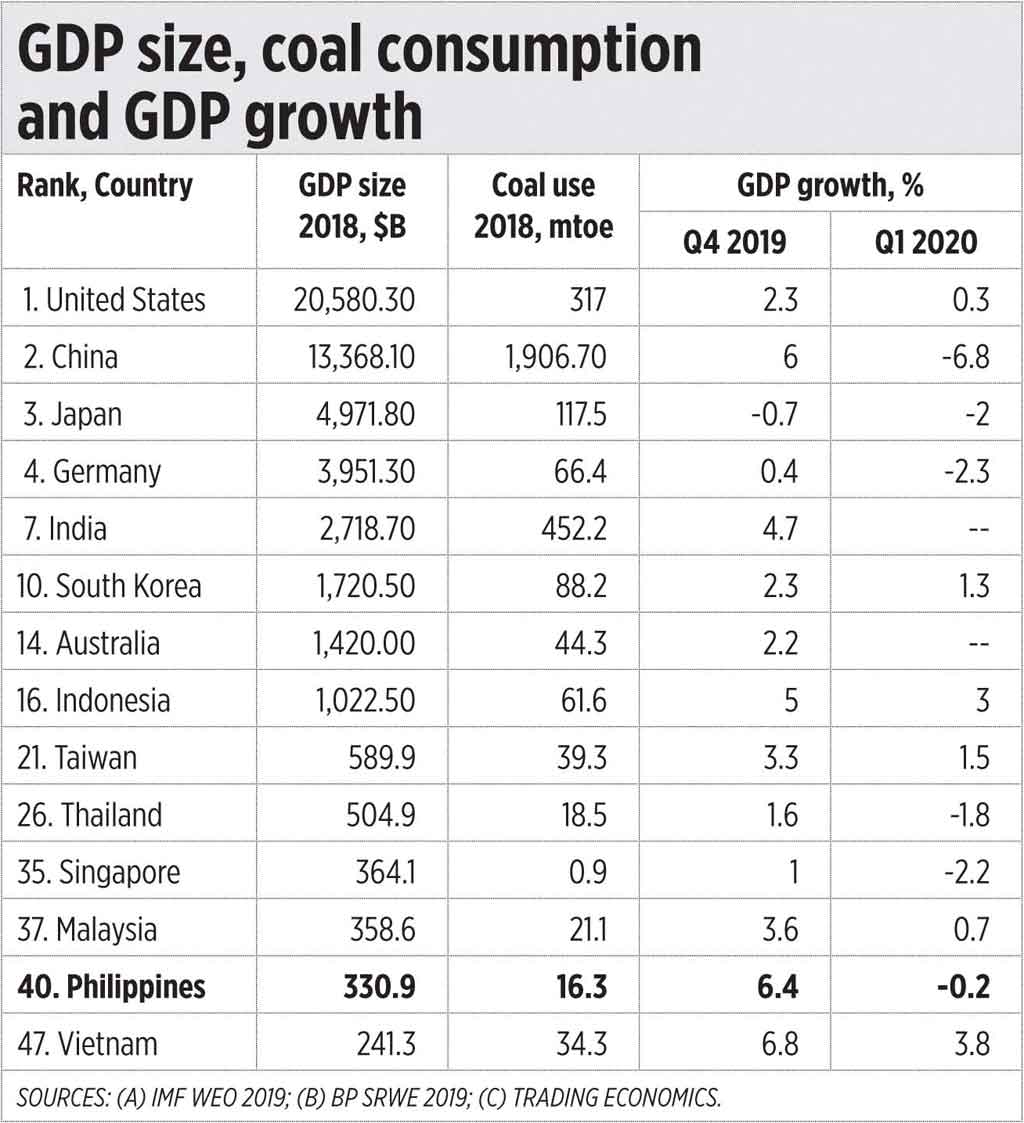
The hard lockdown countries experienced deep economic contraction in their GDP in first quarter (Q1) of 2020: France -5.4%, Italy -4.8%, Spain -4.1%, Belgium -2.8%, Germany -2.3%, and UK -1.6%. In Asia, the hard lockdowners and their contractions are: Hong Kong -8.9%, China -6.8%, Singapore -2.2%, Thailand -1.8%, and the Philippines -0.2%.
Japan is not a hard lockdown country but it still experienced a contraction of -2% because it was already contracting in the previous quarter with -0.7%. Japan is now technically in an economic recession.
The most adversely affected countries in Asia are China and the Philippines. From high growth of 6%+ in Q4 2019, they just went negative the next quarter.
The Department of Finance (DoF) showed sensitivity to the plight of many losing businesses. It has tweaked the CITIRA (Corporate Income Tax and Incentives Reform Act) bill, changed it to CREATE (Corporate Recovery and Tax Incentives for Enterprises Act) bill with the following tax adjustments, among others: corporate income tax (CIT) cut from 30% to 25% by July this year; applicability of net operating loss carry over (NOLCO) extended from the current three years to five years; the 5% gross income earned (GIE) transition has been prolonged from two to seven years to four to nine years.
These are perhaps the deepest tax cuts the Philippines ever experienced. Bravo, DoF.
Now some sectors want to push very parochial interests and want to penalize Philippine businesses with more expensive energy which will be passed on to consumers.
HB 2184 or the “Low carbon economy bill,” authored by Deputy Speaker and Antique Representative Loren Legarda, plans to penalize fossil fuel energy and establish the emission Cap-and-Trade System in the industry and commercial sectors to reduce greenhouse gas emissions. The bill was discussed in a public hearing by the House Committee on Climate Change on Feb. 26.
A quick survey of GDP size and coal consumption would show that this bill is very parochial and anti-business. The Philippines’s coal use in 2018 was only 16.3 million tons oil equivalent (mtoe), among the lowest in Asia. The world’s four biggest economies are also among the world’s biggest consumers of coal energy (see the table).
According to the Department of Energy (DoE) Power Statistics 2019, the country’s total installed power capacity was 25.5 gigawatts (GW). Of this: coal was 10.4 GW (40.8%), oil-based 4.3 (16.9%), natural gas 3.4 (13.5%), hydro 3.8 (14.9%), geothermal 1.9 (7.4%), and solar+wind+biomass 1.7 (6.7%).
The actual electricity generation is not really reflective of this. Out of 106.0 terawatt hours (TWH), total generation from coal was 57.9 TWH (54.6%), natural gas 22.4 (21.1%), geothermal 10.7 (10.1%), hydro 8.0 (7.5%), oil-based 3.7 (3.5%), and solar+wind+biomass 3.3 (3.1%).
So the power source demonized by the low-carbon, cap-and-trade advocates, coal power, constituted only 41% of total capacity but actually produced 55% of total electricity consumption in the country. In contrast, the favored and pampered variable renewables solar+wind+biomass constituted 7% of power capacity but produced only 3% of total electricity consumption.
So this low carbon bill would want even more expensive electricity, a more unstable power supply, and more potential blackouts because it will restrict the already small fossil fuel capacity in the country. The lobbyists want more subsidies and mandates, direct and indirect, to variable renewables that by nature are intermittent and weather dependent. Adding batteries to solve intermittency problems would add extra costs to power. And even so, there are days and weeks that are cloudy and non-windy so there is little or no solar and wind power produced to store in batteries.
Congress, the DoE and the public should ignore parochial and self-serving interests to further penalize the Philippine economy, instead of jump starting it after the downturn caused by the COVID-19 pandemic. Expensive energy to “save the planet” — from whom and from what? From Al Gore and the UN, from less rain and more rain, less floods and more floods, less storms and more storms?
Let the people, let the market, decide the kind of energy that will give them the least cost.
Bienvenido S. Oplas, Jr. is the president of Minimal Government Thinkers
Crop damage caused by Typhoon Vongfong has reached P1.56 billion, affecting 45,430 farmers and fisherfolk, the Department of Agriculture (DA) said on Wednesday.
In a bulletin, the agency said production losses from the storm, locally named Ambo, had reached 69,935 metric tons (MT), covering 28,476 hectares of agricultural areas across six regions.
Among the affected regions were Central Luzon, Calabarzon (Cavite, Laguna, Batangas, Rizal and Quezon), Mimaropa (Mindoro, Marinduque, Romblon and Palawan), Bicol, Eastern Visayas and the Cordillera Administrative Region, it said.
High-value crops such as bananas, papayas, vegetables and other fruits were the hardest hit, accounting for 73% of total losses worth P1.13 billion.
Also damaged were rice, which accounted for 15% at P238.77 million, followed by corn at 8% (P126.03 million).
Damages in the fishery sector reached P41.06 million, while livestock losses hit P23.44 million. — Revin Mikhael D. Ochave