Home Blog Page 8915

BDO taps small merchants to boost cash access points

BDO Unibank, Inc. (BDO) said it plans to tap the country’s small merchants by allowing them to serve as dispensers of cash for BDO card holders within their communities under its Cash Agad program.

BDO said cardholders will have the ability to swipe their cards at sari-sari stores, pharmacies, rice markets and hardware stores to gain access to cash and receive remittances.

Cash Agad will also permit balance inquiries for free. The withdrawal fee is P15 per transaction.

Cash Agad is intended to relieve rural cardholders from the need to take long trips to bank branches, while also allocating some of the fees to its over 8,000 partner-merchants. It did not provide details on the fee-sharing arrangement.

BDO Head of Agency Banking Jaime M. Nasol said the bank will be launching other services through Cash Agad to address the basic needs of all bank clients and support small businesses.

“Yung deposit darating very soon hindi lang na-launch this year gawa ng pandemic. Within the first quarter next year meron nang deposit at bills payment (The deposit service should have been launched this year if the pandemic had not happened. It will be available within the first quarter next year),” he said.

With Cash Agad, BDO expects to serve 25 million card holders, which it considers underserved by only 25,000 ATMs nationwide.

“Many Filipinos are smart and hard-working; they dream of better livelihoods. But they are being held back because of their lack of access to cash and capital,” Mr. Nasol said. — Kathryn Kristina T. Atienza

Peso rebounds on easing of lockdown rules, Budget special session

The peso rebounded Friday after the government eased lockdown rules for minors as young as 15 and senior citizens as old as 65, and as Congress began its special session to tackle the 2021 national budget.

The peso closed at P48.625 against the dollar, compared with its P48.68 finish Thursday, according to the Bankers Association of the Philippines.

The peso opened the session at P48.63. The intraday high was P48.61, while the low was P48.65.

Dollar volume was $587.75 million, against $829.01 million the previous day.

Rizal Commercial Banking Corp. Chief Economist Michael L. Ricafort said in a text message the peso strengthened after the government allowed more people out of quarantine.

“The peso was stronger after the government eased restrictions by allowing more people… to go outside their homes and also eased non-essential travel rules outside the country,” he said.

The government previously prohibited people aged below 21 and above 60 from being in public areas, such as malls.

Mr. Ricafort said the loosening of lockdown rules supports economic recovery along with the reopening of more businesses, including tourism.

Boracay and Baguio started accepting visitors this month as the government began reviving the tourism industry. The Department of Tourism plans to open other areas in Region I.

A trader, who asked not to be identified, said in an e-mail the peso also rose due to the resumption of deliberations on the proposed P4.5-trillion national budget for next year.

President Rodrigo R. Duterte ordered the House of Representatives to conduct four days of special session beginning Oct. 13. The House had suspended its budget hearings during the leadership dispute between former Speaker Alan Peter S. Cayetano and his successor Lord Allan Q. Velasco.

On Monday, Mr. Ricafort expects the peso to trade between P48.55 and P48.70, while the trader expects a range of P48.50 to P48.65. — Kathryn Kristina T. Jose

Robinsons Retail acquires Rose Pharmacy

Gokongwei-led Robinsons Retail Holdings, Inc. is now the new owner of Cebu-based Rose Pharmacy.

On Friday, the retailer said its wholly owned subsidiary South Star Drug, Inc. signed a share purchase deal with Mulgrave Corp. B.V., a unit of Hong Kong-based Dairy Farm International Holdings, Ltd., to fully acquire the famed Visayan drugstore chain.

It is a “very strategic” addition to the listed firm’s portfolio of drugstores, according to South Star Drug Managing Director David Goh.

“Together, we can leverage our scale and synergies to drive wider product assortment, better customer service and offer greater value to our customers across Philippines when they need it most,” he added.

Rose Pharmacy started as a family-run drugstore in 1952 until Dairy Farm bought less than half of the business in 2015, and fully acquired it in 2018. Last year, it recorded P9 billion in net sales from a network of more than 300 stores in Visayas and Mindanao.

The company’s founder John L. Gokongwei, Jr. had admired the drugstore chain for its “strong brand reputation in Visayas and Mindanao,” said daughter and Robinsons Retail President Robina Y. Gokongwei-Pe. The Gokongwei patriarch also started his business in Cebu.

The company’s chief said the deal woud improve its strategic partnership with Dairy Farm, strengthening their position in the Philippine multi-format retailing. The two companies first teamed up for the acquisition of Rustan Supercenters, Inc. two years ago.

“Our acquisition of Rose Pharmacy yet again offers ripe opportunities for innovation through strategic synergies,” Ms. Gokongwei-Pe said.

South Star Drug is the oldest drugstore chain in the Philippines. It was founded in 1937 by the Dy family of Naga City.

In 2012, it entered into a partnership with the Gokongweis’ retail group. Its store count now stands at more than 500.

On Friday, shares in Robinsons Retail fell by 2.6% to close at P65.50 apiece. – Adam J. Ang

AC Energy infuses more funds into Bataan Solar

Ayala-led AC Energy Philippines, Inc. (ACEN) is investing more funds into the development of a solar facility in Bataan.

The power company told the stock exchange on Friday that it signed a subscription deal with its wholly owned subsidiary Bataan Solar Energy, Inc. (BSEI) to acquire P400 million-worth of shares.

“The infusion will be used by BSEI to further the opportunities presented by emerging clean energy technologies, and will be used for various development activities such as but not limited to securing land, permitting, undertaking project studies, project planning, and procuring and installing equipment for new technologies in Mariveles, Bataan,” it said.

It is subscribing 7,999,190 common shares and 71,992,425 Class A redeemable preferred shares that it will pay in tranches. It already settled approximately P99,989,520 in partial payment.

The share purchase is still subject to the approval of the Securities and Exchange Commission (SEC).

The investment in Bataan Solar is part of the company’s P2.2-billion funding program to introduce new energy technologies in the Philippines.

Last month, AC Energy also subscribed shares in Buendia Christiana Holdings Corp., one of its special-purpose vehicles, to buy and develop potential project sites.

It committed to purchase its 2.5 million redeemable preferred B shares worth P250 million to be paid in traches. It made a partial payment of P62.5 million.

The energy firm in August said it was pushing more investments in the country to contribute in raising its renewable power capacity.

“While we are facing significant challenges amidst the current crisis, ACEN remains committed to investing in the country and drive renewables expansion,” AC Energy President and Chief Executive Officer Eric T. Francia said.

The Philippine subsidiary of the Ayalas’ power arm AC Energy, Inc. aims to become the largest listed renewables platform in Southeast Asia. It targets to reach 5,000 megawatts of clean power capacity by 2025.

On Friday, shares in AC Energy were unchanged at P3.48 each. – Adam J. Ang

Seven pharma firms keen on holding trials for coronavirus vaccines

Seven pharmaceutical firms have expressed intention to conduct clinical trials for coronavirus vaccines in the country, Science and Technology Secretary Fortunato S. de la Peña said.

Mr. de la Peña said the biotechnology and pharmaceutical firms executed their confidentiality disclosure agreement (CDA).

“Meaning to say that they are willing to submit all the…needed data on their trials to be able to (be) allowed to conduct clinical trials here in the country,” he said in an online briefing.

He said the sub-technical working group on vaccines had been in talks with 17 companies from seven other countries and had a bilateral agreement with them. Seven of them executed their CDA.

He said these include China’s Sinovac Biotech Ltd. and Russia’s Gamaleya Research Institute of Epidemiology and Microbiology.

Three others were from China, one was from Australia, and one from Chinese-Taipei, he said.

Chinese state-owned Sinopharm, one of the seven firms, however, said it was only interested in supplying the vaccine and not in conducting clinical trials phase three anymore, Mr. de la Peña said.

Sinovac, Gamaleya, and Janssen Pharmaceutical Companies of Johnson & Johnson have applied for phase three clinical trials in the country.

Sinovac application for clinical trials has already been approved by the Vaccine Expert Panel but it still has to pass the ethics board before it can be approved by the Food and Drug Administration, he said. The Russian vaccine, meanwhile, is still in the process of submitting data required.

Mr. de la Peña said Janssen is not among the bilateral partners but it had submitted its clinical trials application. It has yet to complete remaining data needed to proceed with the review by the panel.

President Rodrigo R. Duterte on Wednesday said he already has the money for the vaccine and still has to look for more funds to inoculate the entire population.

Presidential spokesman Harry L. Roque on Thursday said the budget for the vaccines would be borrowed from the Landbank of the Philippines and Development Bank of the Philippines through the Philippine International Trading Corp., pending enactment of next year’s P4.5-trillion national budget.

About P2.5 billion had been allotted for vaccines in the 2021 budget. – Vann Marlo Villegas

House OKs 2021 budget on final reading

By Kyle Aristophere T. Atienza

Congressmen approved the P4.5-trillion national budget for next year on third and final reading in a special session on Friday after days of squabbling over the speakership.

The lawmakers passed the appropriations bill on the last day of the four-day special session called by President Rodrigo R. Duterte, who earlier asked House leaders not to prioritize the measure amid a coronavirus pandemic.

The President had certified the bill as urgent to allow congressmen to fast-track the legislative process. Lawmakers approved the bill on third and final rwading moment after passing it on second reading.

The measure allotted P1.1 trillion — about a quarter of the country’s spending plan — to infrastructure projects to fuel economic recovery amid a coronavirus pandemic.

The Philippine economy shrank by a record 16.5% in the second quarter and is expected to slump by 4.5% to 6.6% this year.

A copy of the budget bill will be sent to the Senate by Oct. 28, appropriations committee chairman Eric G. Yap told reporters.

Senators earlier said the Philippine government would probably operate under a re-enacted budget again next year amid the House leadership squabble.

Failure to pass the budget bill on time means the government must use the same amount of funds provided under the P4.1-trillion appropriations for this year during the first quarter of next year.

It also means new government projects will be delayed and some key services will be affected until the new budget measure is signed.

The House had approved the budget bill on second reading after ousted Speaker Alan Peter S. Cayetano, who has rejected a term-sharing deal he agreed to last year, moved to terminate debates and sessions until Nov. 16.

He created a small committee that would consolidate proposed changes during the break. Congress was supposed to suspend sessions on Oct. 17 and resume on Nov. 16 under its legislative calendar.

The suspension did not prevent supporters of Marinduque Rep. Lord Allan Q. Velasco to elect him as Speaker in a rogue session outside the House building this week.

The House during a special session on Tuesday recalled its second-reading approval of the budget bill after 186 congressmen ratified Mr. Velasco’s election as Speaker.

Meanwhile, Budget officials at Friday’s plenary session said P4.071 trillion or about 99.3% of the country’s 2020 spending plan, had been released to various government agencies as of September this year.

Senator Panfilo M. Lacson earlier warned that potential pork-like allocations could make it into the printed budget bill.

Also on Friday, some congressmen raised concerns about the “dangerous” definition of savings under next year’s spending plan.

This could allow government agencies to get away with the original intent of a project that has yet to be committed for payment, Deputy Minority Leader Carlos T. Zarate, who sought changes in the definition, said.

“These will give the President a blank check by the mere declaration of a state of calamity,” he said in a letter to Mr. Yap. “This will practically rob Congress of its constitutional power over the purse.”

Mr. Zarate has also proposed to prevent the Executive branch from channeling declared savings to intelligence funds.

“This representation believes that aside from the already large amount of intelligence funds appropriated in the 2021 General Appropriations bill, intelligence funds should not be augmented from savings, especially when there are more important matters to be given consideration, like the COVID-19 response,” he said.

Agencies that will get the biggest allocations are the Department of the Interior and Local Government with P246.1 billion, Defense department with P209.1 billion, Health department with P204 billion and Social Welfare department with P171.2 billion.

The Transportation department will get P143.6 billion, Department of Agriculture will get P66.4 billion, Judiciary will have 43.5 billion and Labor department will get P27.5 billion.

The education sector will get the lion’s share of the budget worth P754.4 billion.

Small firms’ bonus subsidy seen to reach P13 billion

The proposed subsidy for micro and small enterprises to cover for the distribution of the 13th month pay may cost up to P13 billion, Labor Secretary Silvestre H. Bello III said, Friday.

Citing data from the Philippine Statistics Authority (PSA), Mr. Bello said there are 5.1 million workers affected by the coronavirus pandemic; but based on the Department of Labor and Employment’s (DoLE) records, there are only 1.3 million.

If the PSA data is used as the basis for computation, the government will have to grant P13.7 billion worth of subsidy and P5 billion if DoLE’s records are used.

“On the basis of that kakailanganin namin, kung sa aming sariling data, a little over P 5 billion, kapag sa based on PSA statistics, we will need P13.7 billion,” Mr. Bello said at an online briefing, Friday. He explained DoLE’s data is based on the notices the department received from employers.

The final figure will be settled upon consultation with the Office of the President and other concerned government agencies, he added.

The proposed subsidy intends to help micro and small enterprises after the Labor department compelled employers to pay employees their 13th month pay on or before Dec. 24, as provided in Presidential Decree No. 851.

Aside from this, Mr. Bello said the department would work on a loan facility that will lend to employers who will not qualify for the subsidy.

“We will encourage the employers to borrow from the banks, especially government banks like Landbank (Land Bank of the Philippines) and DBP (Development Bank of the Philippines),” he said. “We will facilitate a loan facility.”

Mr. Bello on Thursday said the proposal for the subsidy and loan facility will be submitted to the Department of Finance.

This followed the National Tripartite Industrial Peace Council meeting on Tuesday to settle discussions on the 13th month pay.

The meeting was attended by Mr. Bello, Trade Secretary Ramon M. Lopez, the Employers Confederation of the Philippines, and the Associated Labor Union-Trade Union Congress of the Philippines. – Charmaine A. Tadalan

Local shares slip as OFW cash remittances weaken

PHILIPPINE shares closed the week in negative territory as investors mull over the effects of lower cash remittances sent by overseas Filipino workers (OFWs) in August resulting from the coronavirus disease 2019 (COVID-19) pandemic.

The bellwether Philippine Stock Exchange index (PSEi) fell 39.86 points or 0.67% to 5,898.47 while the broader all-shares index dropped 3.71 points or 0.1% to 3,581.91.

Philstocks Financial Inc. Research Associate Claire T. Alviar said the local bourse was affected by the announcement of the Bangko Sentral ng Pilipinas (BSP) on Thursday, which said that remittances fell 4.1% year on year to $2.483 billion as cash sent from the Middle East and Japan declined due to the pandemic.

“One of the sector laggards is the services index where we can see most consumer stocks that are affected by the lower remittance,” Ms. Alviar said in a mobile phone message.

She also noted that the 10.79% jump in the market’s mining and oil index could be attributed to the decision of President Rodrigo R. Duterte to lift the moratorium on petroleum exploration in the West Philippine Sea.

On Thursday, Energy Secretary Alfonso G. Cusi announced that service contractors have been allowed to resume energy-related activities in the area, which were suspended in 2014 due to territorial disagreements.

In a mobile phone message, Timson Securities, Inc. Head of Online Trading and Trader Darren Blaine T. Pangan said the local market ended in negative territory due to lack of significant catalysts.

Mr. Pangan added that in international markets, investors remained cautious on the resurgence of COVID-19 cases globally, which may lead to the reimplementation of stricter lockdown measures.

European countries registered a spike in new COVID-19 cases, as the Czech Republic recorded a one-day increase of 9,544 new cases on Wednesday, while Italy also posted 8,804 new infections on Thursday alone.

According to the latest data from Johns Hopkins COVID-19 resource center, the United States still has the highest number of cases at 7.98 million, followed by India at 7.37 million, and Brazil at 5.17 million.

Back home, the local market’s sectoral indices produced mixed results during Friday’s close. Mining and oil rose 720.57 points or 10.79% to 7,398.21; industrials improved 48.24 points or 0.6% to 8,016.56; and property went up 6.56 points or 0.23% to 2,775.26.

Meanwhile, holding firms retreated 90.94 points or 1.48% to 6,035.42; services shrank 11.33 points or 0.78% to 1,442.05; and financials declined 4.4 points or 0.37% to 1,177.72.

Advancers outpaced decliners 118 against 89, while 46 names ended unchanged.

Value turnover stood at P5.64 billion with 4.89 billion issues switching hands, against 1.52 billion issues worth P5.67 billion on Thursday.

Net foreign selling amounted to P972.17 million, higher compared to P902.75 million during the previous trading day.

“As the market continues to move sideways, support remains at 5,750 while resistance may be pegged at 6,200,” Timson’s Mr. Pangan said. – Revin Mikhael D. Ochave

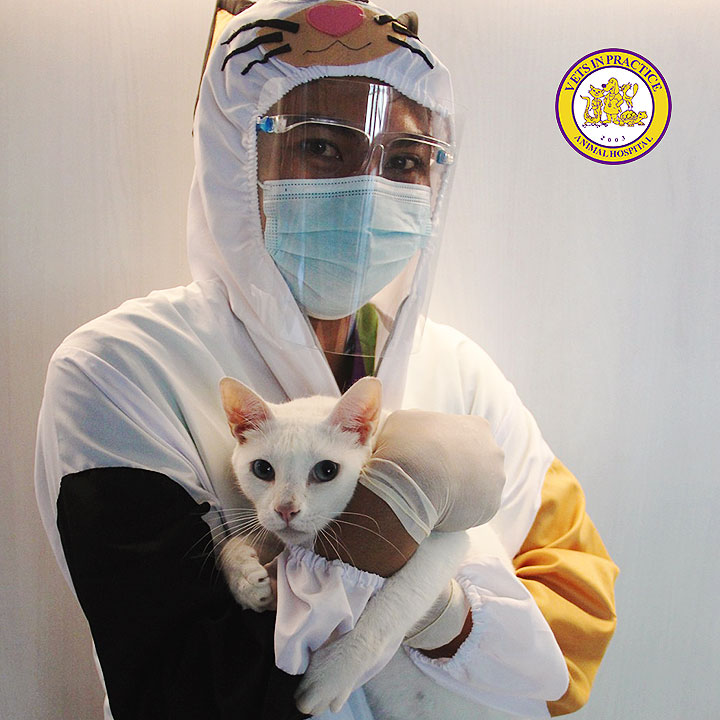
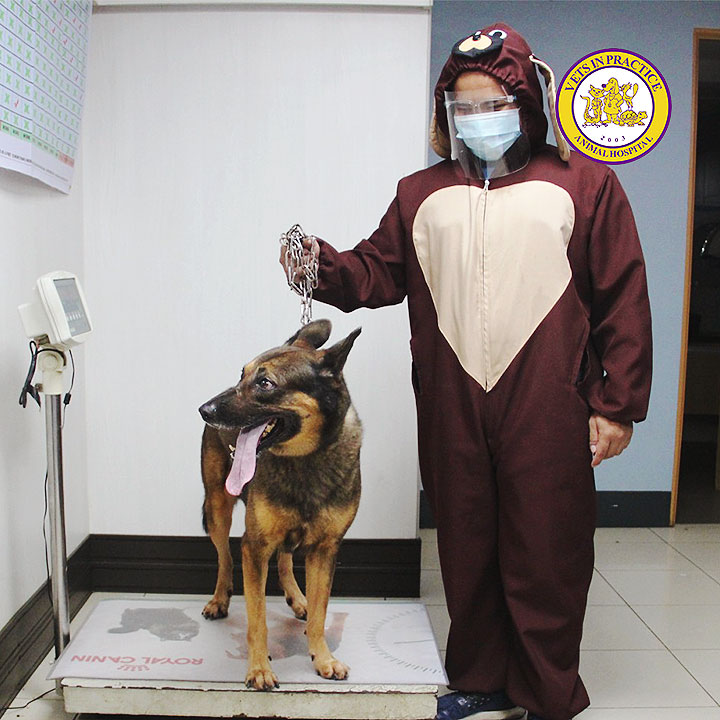
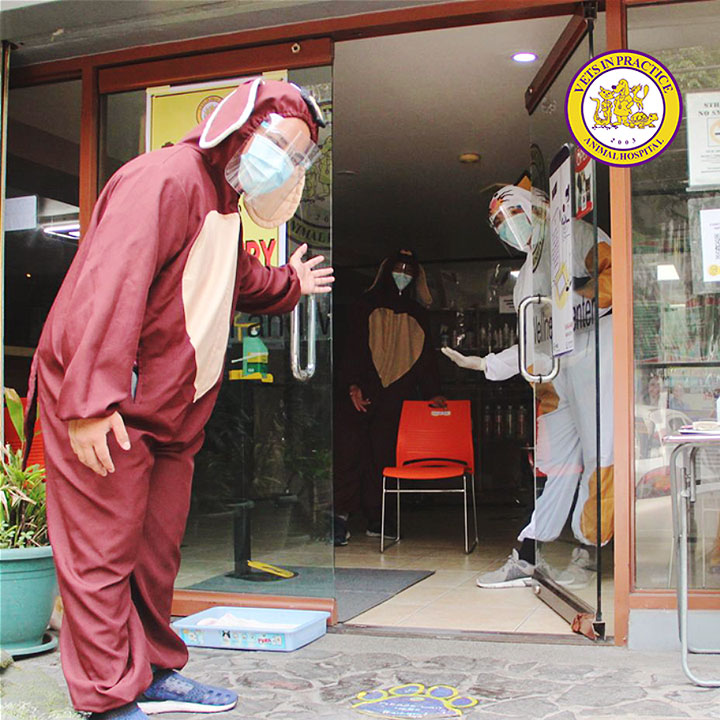
Caring for pets amid COVID-19

PHOTO COURTESY OF VETS IN PRACTICE

Like humans, animals need care and medical assistance, COVID or no COVID. Vets in Practice Animal Hospital (VIP) has a hotline that makes it easier for clients to schedule appointments for their pets. Called Central Hub, it provides access to VIP’s branches in Taguig, Mandaluyong, Quezon City, Alabang, Pasay, and Pasig.

The hotline is a response to the deluge of calls the animal hospital received during the lockdowns. Clients have their requests scheduled, depending on the available slots per branch. While inquiries can also be coursed through the hospital’s Facebook and Instagram accounts, all appointments are directed to Central Hub.

The strictly-by-appointment rule does not apply to emergencies. Clients are advised to seek immediate care for their pets in emergency situations. 

VIP also offers online consultations via Facebook Messenger. “This was especially effective during the stricter quarantine periods,” said Jerome Cruz, VIP senior operations manager, who added there was an “overwhelming” number of requests for consultations, treatment, grooming, and emergency procedures when the hospital reopened two weeks after the latest enhanced community quarantine (ECQ) was imposed. Operations are picking up as clients have adapted to the new normal. A monthly disinfecting schedule is carried out in all six locations, although each can still only cater to a limited number daily.

As a matter of safety for both clients and staff, house calls have been temporarily discontinued.

Other new normal adjustments include providing shuttles for the staff and working with suppliers in getting essential products stocked on shelves. 

Animal industry stakeholders fearing a bottleneck in veterinary medicine are asking government agencies to continue to allow the Bureau of Animal Industry to register veterinary medicine and products. The Food and Drug Administration has its hands full because of the pandemic.

“We’ve had to persevere and continue our operations because we are cognizant of the high demand for our products and services among pet owners,” said Mr. Cruz. — Patricia B. Mirasol

AC Health, 917Ventures urge doctors nationwide to embrace telehealth

The pandemic has fully disrupted healthcare in the Philippines. Thousands nationwide are unable to visit medical centers given the risks, the social distancing measures in place, and even the lack of transportation available. As such, Ayala Healthcare Holdings, Inc. (AC Health), the healthcare arm of the Ayala Group, and 917Ventures, a wholly-owned corporate incubator of Globe, are urging doctors nationwide to embrace telehealth to address the primary healthcare needs of patients.

Many doctors are also struggling to find the chance to talk to patients face-to-face. Thus, Paolo Borromeo, AC Health President, and CEO, said it is time for medical practitioners to explore telehealth services like HealthNow to reach their patients faster, easier, and in a more convenient and safe manner.

“Our goal is to give new opportunities for doctors all over the country, particularly those outside Metro Manila, to meet their patients. With HealthNow, everything is done digitally and the entire process is very simple and easy to use. Ultimately, we believe that health technology is a key enabler to our network and that through this platform, we can provide care whenever or wherever our patients need us,” said Borromeo.

HealthNow, powered by AC Health’s Vigos Health and Globe’s 917Ventures, is a primary care platform that offers telemedicine consultations, online medicine ordering and delivery, and clinic and diagnostic testing booking. It allows doctors to practice their profession anytime and anywhere in order to attend to more patients and support continuity of care while managing their time and schedule.

Vince Yamat, 917Ventures Managing Partner, said: “We are here to help solve problems beyond connectivity in the areas of education, health, e-commerce, and other sectors. That is why we build, operate, and scale new businesses like HealthNow. We believe in the importance of telehealth today more than ever. As patient demand shifts to digital health, we encourage our medical community to join HealthNow so that together we can continue to serve the healthcare needs of the Filipino people.”

The platform provides an opportunity for doctors to reach and serve a wider patient base. Beyond providing access to easy teleconsultation solutions and securing medical records, HealthNow also allows doctors to seamlessly monitor and assist in the journey of their patients.

By joining HealthNow, doctors have free use of an Electronic Medical Record platform which includes medical charting, e-prescription, and doctor and diagnostic referrals. They can also accept virtual consultations and in-person appointments through a schedule management tool.

HealthNow connects a patient to a licensed physician for consultation through the use of video technology. Patients can select their preferred doctors. Once appointment is confirmed, the licensed physician may collect clinical history, create a treatment plan, render medical advice, recommend the conduct of diagnostic procedures and prescribe medication, provide follow-up care, and/or refer the patient to another physician, clinic, or hospital. This is similar to the procedure during a regular clinic visit.

HealthNow also provides a platform that allows users to order medicines from licensed pharmacies and schedule an appointment for outpatient services through partner clinics and laboratories.

HealthNow app is available in Google Play for Android and the App Store for iOS. For interested doctors, they may apply at https://provider.healthnow.ph/.

PH startups shine in regional pitch competition

Update: Edukasyon.ph won the grand prize at Ignite 2020 Cyber’s Wildfire pitch competition. The Gen Z platform helps students make better-informed decisions in their education, career, and life choices. Its website has half a million registered users and attracts 10 million unique visitors annually.

“We are incredibly grateful for this,” said founder and CEO Henry Motte-Muñoz. “My best advice to startups is to never give up. Find your true north. Don’t think of a no as a full setback. Take it as an opportunity to improve.”

Edukasyon.ph beat other category finalists: MyGolana (health tech); NextPay (fintech); 1Export (e-commerce); and Peak (workplace tech). All, save for Peak, are Philippine-based.

The judges for the grand pitch competition are James Tan, general partner of Quest Ventures; Ee Ling Lim, Singapore lead of 500 Startups; Vijay Tirathrai, managing director of Techstar; Tommy Mazenc, investment manager of True Corporate VC; and Hanno Stegmann, DV partner & director of BCG Digital Ventures.


Four Philippine startups won in their respective categories in a pitch competition open to entries from the ASEAN and East Asia.

MyGolana, Edukasyon.ph, NextPay, and 1Export won in the health tech, education tech, finance tech, and e-commerce categories, respectively, of the Wildfire pitch session of Ignite 2020, an international innovation conference.

MyGolana aims to reduce the barriers of access to mental wellness and has a pending patent on its predictive analysis technology for those seeking professional counseling.

It bested Instalimb, Inc. (Philippines), a developer of low-cost 3D printed prosthetics; Hacarus (Japan), an artificial intelligence (AI) solution for manufacturing and medical industries; uHoo (Hong Kong), an app that measures air quality; MedHyve (Philippines), an AI-powered procurement platform for medical institutions; and Genovior Biotech (Taiwan), a manufacturer of biological injectibles.

Edukasyon.ph, a Gen Z platform that helps students make better-informed decisions in their education, career, and life choices, has a website with half a million registered users and attracts 10 million unique visitors annually. It recently closed the second tranche of its Series A financing round with Alternate Ventures, French Partners, Lorinet Foundation, KSR Ventures, Mustard Seed, and others.

Founder and CEO Henry Motte-Muñoz shared that Filipino students and their parents already know the value of education. “They just don’t know where and how to study and how to afford it,” he said. “We help them with that.”

The platform beat Edulab (Japan), an e-testing and exam operation subcontractor; LearnTalk (Philippines), an online platform for learning English; Akadasia (Singapore), a suite of content creation tools for educators; Lasluz (Vietnam), a tutoring service; Proctur (India), a learning management solution; and Cakap (Indonesia), an online platform for learning Bahasa.

NextPay is a digital banking suite offering solutions for the collection of customer payments and invoices, real-time analyses of income, and payment disbursement to employees, bills, and suppliers. The platform was created for the financially-underserved micro, small, and medium enterprises (MSMEs) market, which comprises 99.52% of businesses in the country.

“The Philippines, as you all know, is a cash-based economy. Most businesses actually still have to go to banks to manually deal with cash and checks… because most of the financial services today are for larger companies who can afford them,” said Don Pansacola, co-founder and chief executive officer of NextPay, during his pitch.

NextPay bested Long Term Industrial Development (Japan), an online cooperative system for farmers that provides online financing, trading network, and product transportation options; Trustdock (Japan), an e-KYC (know-your-customer or know-your-client) platform that verifies the identity of customers through ID authentication and facial and voice recognition; Crowd Realty (Japan), an equity crowdfunding marketplace which opens up investment opportunities in real estate by matching project planners and investors; Dealogikal (Philippines), an online supply chain commodity marketplace where different suppliers can compete for a potential client’s order; Platinum Analytics and Technologies (Singapore), a foreign exchange, gold, and cross-assets solutions platforms that that provides tools for risk mitigation, business optimization and integration, and other services; and Global Mobility Service (Japan), an online service that provides more accessible loans in purchasing vehicles for livelihood.

1Export is an end-to-end platform for cross-border trade and fulfillment services that helps micro, small, and medium businesses (MSMEs) by processing their exporting documents, converting their product labels to market-ready standards, fulfilling online orders, and providing them leads through an immigrant network.

“Out of the 1.6 million small and medium businesses in the Philippines, less than 1% are actually exporting, missing the opportunity to sell to a large Filipino diaspora of 8.6 million immigrants around the globe,” said Melissa Nava, the company’s founder and chief executive officer, during the pitch.

1Export raked in $700,000 in revenue in two years with no formal funding, with four times growth in monthly revenues since August 2019 year on year.

Other startups in the e-commerce category were: Qontak (Indonesia), a social CRM technology firm that provides sales and customer service solutions; Xpand (Japan), a company that designs contactless spatial links that blend with the landscape; Lingble (Singapore), a full-service, cross-border e-commerce solution; Last Mile Inc. (Philippines), a shared logistics service innovation company; EAMR (Singapore), a smart marketplace that uses artificial intelligence (AI) to find sellers willing to sell a product within a buyer’s budget; and Otospector (Indonesia), a used car certification platform.

The category winners will compete against each other for a chance to win $5,000 on October 22. — Patricia B. Mirasol and Mariel Alison L. Aguinaldo


BusinessWorld Insights: Internet, Technology and Education: Connecting Schools and Students in the New Normal

What lasting changes can we expect in the education sector and everyone involved as learning through the use of the internet becomes the norm?

Join the third and final session of BusinessWorld Insights on Connectivity with the topic, “Internet, Technology and Education: Connecting Schools and Students in the New Normal”, with speakers PLM President Emmanuel Leyco, IBM Philippines President and Country General Manager Aileen Judan-Jiao, PLDT Enterprise First Vice-President and Enterprise Revenue Group Head Victor Tria, and Tata Consultancy Service TCS iON Sales Director Shashwat Rai; and moderator BusinessWorld Research Head Leo Uy.