Home Blog Page 8772

TNT Tropang Giga seek to level PBA Philippine Cup finals series

By Michael Angelo S. Murillo, Senior Reporter

OUTLASTED in the opener of the best-of-seven PBA Philippine Cup finals series, the TNT Tropang Giga look to redeem themselves and level the affair in Game Two on Wednesday at 6 p.m. at the Angeles University Foundation Sports Arena in Pampanga.

In the thick of the fight for much of Game One on Sunday, TNT lost some step down the stretch which proved to be costly as they slumped to the 100-94 loss in overtime.

Ray Parks Jr. led the way for the Tropang Giga, finishing with 20 points, five steals, four rebounds and four assists before fouling out late in the extra period.

Unfortunately for TNT, Mr. Parks is considered “doubtful” for Game Two after suffering a recurrence of a left calf strain.

Roger Pogoy finished with 19 points and six boards in the series-opener while Jayson Castro had 12 points and five assists and Poy Erram a double-double of 10 points and 10 rebounds.

In the expected absence of Mr. Parks, TNT is hopeful forward Troy Rosario gets to squeeze out of his funk and step up.

A former National University standout and a member of the school’s champion University Athletic Association of the Philippines team in 2014, Mr. Rosario has been struggling of late, beginning with their semifinal clash with the Phoenix Super LPG Fuel Masters.

In Game One of the finals, Mr. Rosario finished with eight points, five rebounds, three assists and a block in 27 minutes on the floor.

Providing a valuable boost, however, is veteran Jay Washington, who had 14 points last time around, including back-to-back triples late in the fourth period that kept TNT in the game.

TNT is back in the finals of the Philippine Basketball Association (PBA) All-Filipino tournament after seven years.

The last time the Tropang Giga made it to the finals of the Philippine Cup, they were still being coached by Norman Black and went on to win the championship, sweeping the Rain or Shine Elasto Painters, 4-0.

But TNT was a finalist in last season’s Commissioner’s Cup, losing to the San Miguel Beermen in six games.

Barangay Ginebra, for its part, has not won the Philippine Cup title since the 2006-07 season. Apart from trying to end the drought, the Kings are also looking to win back-to-back league titles in addition to the Governors’ Cup championship they won previously.

Young Gilas Pilipinas crew proves mettle by going unscathed in Manama

HAD its share of doubters when it was sent to the second window of the 2021 International Basketball Association (FIBA) Asia Cup Qualifiers in Manama, Bahrain, the young Gilas Pilipinas team showed it deserved the opportunity given to it by sweeping its two-game assignment.

The Jong Uichico-coached team of amateur and collegiate stars completed a shutout of Thailand in their joust by taking the second game as well on Monday night in convincing fashion, 93-69.

It was in follow-up to Gilas’ 93-61 victory in its first game of the window on Friday.

The Philippines was steady on both ends once again, despite a better stand from the Thais than that in the opener.

Javi Gomez de Liano of the University of the Philippines led a balanced attack by Gilas, finishing with 19 points on an efficient 87.5% shooting clip on the floor.

His brother Juan finished with 14 points while Dwight Ramos and Matt Nieto had 13 and 12 points, respectively, in the win.

Isaac Go, meanwhile, had a near double-double of nine points and 10 rebounds.

Justine Baltazar only had two points, but pulled down 11 rebounds and had three steals.

For Thailand, it was big man Chanatip Jakrawan who showed the way with 34 points and 12 rebounds.

Just like in the first game, Thailand kept the game close in the first quarter before the Philippines put a firmer grip on the proceedings as the game progressed.

Gilas was on top, 53-34, at the halftime break and just kept its opponent at bay after on the way to the victory.

“We really harped on having our players execute our game plan both offensively and defensively. In our first game, we won big and we were concerned that maybe they will take this game for granted, but they did not,” said Mr. Uichico in the postgame press conference of the kind of mindset they had as they finished their campaign in the Bahrain window of the qualifiers.

With the win, the Philippines secured solo leadership in Group A with a 3-0 record, ahead of second-running South Korea (2-0), and fortified its position for a spot in the FIBA Asia Cup happening in August next year.

As per tournament format, the top two teams in each of the six groupings in the qualifiers advance outright to the Asia Cup.

Apart from solidifying its spot in the continental tournament, the success of the young Gilas Team in Bahrain bodes well for the thrust of the Samahang Basketbol ng Pilipinas’ (SBP) program for the national team, including that for the FIBA World Cup in 2023, which the country is co-hosting with Japan and Indonesia.

“We’re really looking at this as a long-term program for the national team,” said SBP president Al Panlilio in the lead-up to the Manama window and in forming the young squad for the tournament.

The next window of the FIBA Asia Cup qualifiers is scheduled for Feb. 18 to 22 next year, with the Philippines possibly playing host to some games as the SBP offered the country to FIBA as a possible venue. — Michael Angelo S. Murillo

PSC’s webinar series spotlights maternal health

THE Rise Up! Shape Up! web series of the Philippine Sports Commission returns, focusing this time on maternal health.

A weekly webinar streamed via Facebook and YouTube Live at 10:30 a.m., Wednesday’s episode, titled “Beauty, Blooms & Baby Bumps,” will talk about the benefits of proper and movement exercise during pregnancy.

In it, experts will be discussing important exercises and sporting activities during and after pregnancy to help women achieve a better and safer childbirth experience.

“Gone are the days when pregnant Pinays are discouraged from exercising because of unfounded concerns about safety for the baby. We want to correct that myth by providing scientific evidence from birthing professionals and success stories from new moms who managed to work out during pregnancy,” said PSC Commissioner and Women in Sports oversight Celia Kiram of the series’ fifth episode.

Participating in Beauty, Blooms & Baby Bumps are certified birth doula Ma. Beatrice Lina San Luis of Birthingisablessing.ph on pregnant woman’s body empowerment; Aileen Vinoya, a midwife, nurse, owner, and administrator of Marikina Maternity Clinic and Lying In, who will answer some of the frequently asked questions of mothers concerning gentle birthing, nutrition, and physical activities; and yoga and meditation teacher Eileen Tupaz of White Space Mind and Body Wellness Studio, who will guide women to a pregnancy meditation.

Also participating is University of the Philippines College of Human Kinetics dean Francis Diaz, who will share his experience in how he supported his wife to ensure her physical fitness during pregnancy and give important tips and guides for men as a way of support to their partners.

Launched in October, Rise Up! Shape Up! is designed by the PSC campaign to motivate women and girls to integrate simple movement and workouts into their day-to-day living, especially during these times with the pandemic and various quarantine setups.

It also serves to underscore that the sports agency is committed to efforts to help in the nation’s fight against the pandemic.

For more information on Rise Up! Shape Up! visit its official Facebook page at https://www.facebook.com/riseupshapeup. — Michael Angelo S. Murillo

First Jordan Brand store in PHL set to open at BGC

THE already-vibrant basketball scene in the Philippines is set to get added buzz with the opening of the first store of the Jordan Brand in the country at the Bonifacio Global City (BGC) in Taguig.

To officially open its doors to consumers on Thursday, Dec. 3, the new store is looking at introducing a new retail design concept for the local market, inspired by Michael Jordan’s legacy and authentically grounded in basketball culture.

The 4,500-square foot store is home to the best from the Jordan Brand in terms of products, premium product services and experiences.

The store boasts of the largest assortment for Jordan apparel across men’s, women’s and kids. Consumers, too, can access exclusive features, including one-on-one styling services or ‘Custom 23’ to customize Jordan products to help curate their on and off-court looks.

The rooftop of the store, meanwhile, has a basketball court with a stunning mural designed by renowned New York City artist Kimou Meyer.

To highlight the vibrant Filipino culture and flavor throughout the store, art from some of Manila’s most exciting artists are showcased throughout the space. Veejay Villafranca, Jaime Pacena, Raxenne Maniquiz, and AJ Dimarucot bring together the local voice and basketball street elements from the nation’s true obsession through their art.

“Basketball is more than just a sport in the Philippines, it is embedded in the culture. In the high streets of Manila or the local barangays across the country, the passion for basketball inspires and drives the communities,” said Jino Ferrer, Nike Philippines country marketing manager, in a statement.

“This store will help take the future of basketball culture to the next level by inspiring our new generation through the legacy of Jordan, the best innovation and services like never before,” he added.

Recognizing that it is operating under extraordinary times with the coronavirus pandemic, the store is employing a “book and shop” system (https://jordanmanila.as.me/schedule.php) where consumers are asked to book their preferred dates to visit in advance and will be given 45 minutes to go inside and buy the items they want.

This is apart from established government health and safety protocols that are needed to be followed.

Also, to commemorate the launch of the Jordan Brand store in the Philippines, a limited-edition Air Jordan 4 Retro “Manila” sneaker will be made available.

One hundred fifty (150) pairs are up for grabs for the public by way of a raffle. — Michael Angelo S. Murillo

Schroder’s wish

Dennis Schroder could not help but be candid about his desire to start for the Lakers in a virtual presser with scribes yesterday. After having been the first substitute off the bench for the Thunder in the last two years, he felt he had been there and done that, and figured his accomplishments — including finishing second in Voting for the 2019-20 Sixth Man of the Year — warranted a promotion. He didn’t mention it, but he was, no doubt, likewise recalling his last two years with the Hawks, during which time he proved to be a productive member of the First Five.

“I did this off-the-bench stuff already in two years with OKC,” Schroder told members of the media who joined in on the video conference call. “I think I try to move forward, and I think with [All-Stars Anthony Davis] and LeBron [James], I can be helpful as a starter in the PG position.” And he may well be right, although the brand of positionless basketball the Lakers displayed culminating in a championship last October should make him a valuable contributor regardless of when he will get his minutes. It’s a matter of pride, to be sure, hence his decision to get the discussion going even before the trade deal sending him to La-La Land was consummated.

Whether Schroder gets his wish remains to be seen. After all, he’s not replacing a nobody in his desire to start as the Lakers’ playmaker. The role was hitherto performed by James, who wound up doing so well as to lead the National Basketball Association in assists. Moreover, the makeup of the roster is such that he looks to be more effective running pick-and-roll sets with reigning Sixth Man of the Year Montrezl Harrell. Then again, the cream invariably rises to the top, and if there’s one thing head coach Frank Vogel has shown with his stellar stewardship since he joined the purple and gold in May 2019, it’s his capacity to make the most of the talent at his disposal.

The good news is that the Lakers have ample warm bodies familiar with the system. And they’re running it back after having been toughened by the singular experience of winning in a challenging bubble environment. From James to Davis to the rest of the returning cast, there will be more than enough knowledge going around to keep the newcomers toeing the line. Besides, Schroder knows that, in the final analysis, greeting the opening tip is less important than being on the court at the final buzzer — which is what he’ll be doing for certain. He was admittedly on the mark when he said “they brought me in for a reason.” While he “can’t wait to get started,” though, he would do well to acknowledge that it may not necessarily be to start.


Anthony L. Cuaycong has been writing Courtside since BusinessWorld introduced a Sports section in 1994. He is a consultant on strategic planning, operations and Human Resources management,corporate communications, and business development.

The world developed vaccines for COVID-19 at record pace, can it do the same for AIDS and other deadly infectious diseases?

Vaccines usually take decades to develop. Because of the pandemic, governments put in billions to accelerate their development—and now, just 10 months after discovering COVID-19, there are vaccine candidates in Phase 3 with the potential to be licensed before the end of the year. Can the world do the same for non-incentivized vaccines for deadly infectious diseases like AIDS?

By Patricia B. Mirasol

Vaccines for the novel coronavirus are being developed at a record pace, as the world waits for a solution to an infectious disease that, as of writing, has taken more than 1.4 million lives. This focus has relegated other deadly infectious diseases to the backseat. Acquired Immunodeficiency Syndrome (AIDS)-related deaths, for instance, reached 690,000 last year. There is still no vaccine for HIV, the virus that causes AIDS.

“We have in the COVID-19 pandemic a rapid global spread with high incidences of morbidity and mortality, with commitments from world leaders, and with governments quickly putting in billions of dollars to underwrite the risks major companies are taking to accelerate vaccine development,” said Jerome Kim, director-general of the International Vaccine Institute. “Can we do this for [other deadly diseases]? It would be wonderful if we could apply these great technological leaps to global health problems that have been affecting us that are too difficult to solve.”

Moderna Inc. announced on November 16 that its experimental vaccine is 94.5% effective in preventing COVID-19 based on interim data from a late-stage trial. It came on the heels of Pfizer Inc.’s announcement that its vaccine candidate was found to be more than 90% effective in its Phase 3, late-stage study. There are already 10 such vaccine candidates in Phase 3 of clinical trials. 

Dr. Kim said looking at the situation from the perspective of non-incentivized vaccines—vaccines whose development isn’t an urgent priority—makes the picture slightly different.

“The silver lining of the bleak cloud of COVID-19 will be that… countries will be more aware of the threat of infectious diseases. Maybe these same structures we’re using now for COVID-19 can be leveraged against other important global health problems. Maybe these new mechanisms of funding that COVID-19 has put into place will help us with other diseases that need incentivization, that need vaccines developed for,” he said at a Future of Healthcare Week Asia discussion

PROTECTING VACCINE EFFICACY
Vaccines normally take decades to develop, said Melanie Saville, director of vaccine development of the Coalition for Epidemic Preparedness Innovations (CEPI). “It’s incredible that 10 months after discovering COVID-19, we have vaccine candidates in Phase 3 with the potential to be licensed before the end of the year,” she said.

But developing an effective vaccine is just the first step. Countries then have to overcome supply chain challenges and make sure that people get vaccinated.

“We’re looking to get two billion doses by the end of next year by Pfizer. In terms of scale and volume, there’s nothing quite like this that has been done. Are there sufficient glass vials? Are there alternatives to the glass vials? We should be looking at the challenge of packaging,” said David Sarley, senior program officer at the Bill & Melinda Gates Foundation.

Vaccines also have specific storage temperature ranges, so there’s not a lot of margin for error for their handling. Pfizer’s vaccine, for example, must be stored and shipped at minus 70 degrees Celsius.

“Ultra-cold chain hasn’t been required previously of this scale,” Mr. Sarley said. “You have the DRC [Democratic Republic of the Congo], for instance, that has set up a cold chain for the Ebola vaccine, but these are much smaller campaigns.” He added that countries will have to invest in ultracold chain freezers and dry ice production, and that the number of handover points need to be minimized from the manufacturer to the national cold store to the immunization center. 

ENSURING EQUITABLE DISTRIBUTION
To reduce the tendency of vaccine nationalism (or the “every nation for itself” approach to obtaining potential vaccines and remedies for  COVID-19), a global effort has been set up to ensure the fair allocation of the vaccines and to make sure the most vulnerable populations get vaccinated. 

COVAX is co-led by Gavi, the Vaccine Alliance, CEPI, and the World Health Organization. It aims to provide innovative and equitable access to COVID-19 diagnostics, treatments, and vaccines by acting as a platform that will support the research, development, and manufacturing of a wide range of COVID-19 vaccine candidates, and negotiate their pricing. 

Participating countries—regardless of income level—will have equal access to these vaccines once they are developed. The initial aim is to have 2 billion doses available by the end of 2021, which the collaboration said should be enough to protect high risk and vulnerable people, as well as frontline healthcare workers.

The Philippines is part of COVAX.

The world is lucky to have the COVAX solution, Dr. Kim said, especially since several countries have already preordered millions of doses. 

“There is a tendency to protect one’s own population first,” he said. “Support for a global solution will hopefully stand against this. One of the things we know and have to relearn often is that these pandemics cross borders very quickly. It will find unvaccinated populations. This pandemic will not only have a larger toll, it will drag on longer if we don’t find an equitable solution.”

Coronavirus dreams: how anger, sadness, and fear crept in during lockdown — new research

The COVID-19 pandemic has changed nearly every aspect of our lives. Our dreams are no different. Soon after the first lockdowns started, people reported having more dreams than before, with different content. This was explained by the fact that many people were sleeping for longer, and waking without alarm clocks or an immediate schedule.

Other people were experiencing more stress, which can also alter dreaming. Now a new study, published in PLOS, has analyzed hundreds of dream reports before and during lockdown to give detailed results of the pandemic’s impact on dreaming.

It has proven difficult to study dreams during the COVID-19 pandemic. Because it was unexpected, it was a challenge to find baseline dream data with which to compare the pandemic data. A similar problem occurred when researchers aimed to study how dreams changed due to the events of 9/11, and after the 1989 San Francisco earthquake.

One method is to ask participants whether their dreams have changed during the pandemic, compared to previously. This was done in March 2020, when a representative sample in the US was contacted by YouGov. Nearly 30% of the participants reported that they could remember more dreams, whereas only 7.5% reported lower dream recall. People also reported that their dreams had become more negative emotionally. However, only 8% of respondents actually reported that they’d had a dream with content related to COVID-19.

A second method is to collect written descriptions of dreams, called dream reports, and compare them to reports collected several years previously by other authors. An online survey such as this was posted by Harvard Medical School researcher Deirdre Barrett from March to July 2020. It requested the submission of “any dreams you have had related to the COVID-19 coronavirus.”

Dreams from 2,888 people were processed by Linguistic Inquiry and Word Count (LIWC), which is a computerized text analysis method. It identifies emotions, such as happiness or sadness, and other content categories. The study found that pandemic dreams had more negative emotions and fewer positive emotions, compared to pre-pandemic dreams.

The new study, by Natália Mota from the Federal University of Rio Grande in Brazil and colleagues, uses a third method. They collected dream reports from 67 Brazilian participants using the same procedure before and during lockdown. One group of participants had submitted dream reports during September and November 2019, and another submitted them during the Brazilian lockdown in March and April 2020. The two groups of participants were well matched for education level, age, and sex distribution.

The study assessed all dreams recalled by the participants during each period. Dreams were therefore not selected by the participants. This is important because such selection can bias results.

The study also used LIWC to automatically identify emotional words in the dream reports. In total, 239 dream reports were assessed. The researchers discovered that the dream reports during the pandemic were longer, when measured in words, than pre-pandemic reports. They also noted that pandemic dreams had significantly more anger and sadness than pre-pandemic dreams. This effect was found even when the increased length of dream reports was taken into account.

Fascinatingly, the level of anger and sadness in dreams was also related to how much mental suffering the person had related to social isolation during lockdown. This is consistent with the emotional regulation theory of dreaming, which suggests that we process and regulate our emotions when we sleep. Pandemic dreams also had more references to contamination and cleanness. The authors link this to the threat simulation theory, which holds that we practice overcoming threats in the virtual reality of our dreams.

At the end of the study, participants rated how much they observed their dreams or told them to others during the study. It turned out that such behavior happened more in people who were happy (versus sad), energetic (versus tired), peaceful (versus aggressive), altruistic (versus selfish), and creative (versus confused).

This could be because feeling positive makes you more likely to observe and share your dreams. But it may also be that considering your dreams and talking about them has these positive benefits. The latter theory is supported by work we have conducted on the benefits of dream sharing. In particular, we found that discussing a dream for 30 minutes with a friend or family member and relating it to recent waking life circumstances can make the listener feel empathy towards the person sharing the dream. This can help us feel less lonely.

Perhaps people who share pandemic dreams are more likely to take seriously the fear, anger, and sadness they feel—emotions we can often brush away during waking hours. Talking about the dreams with others can therefore be helpful in managing the emotions, rather than suffering in silence.

The authors of the new study conclude that paying attention to and telling our dreams is a “relatively safe way for self-observation and mental health management that can be recommended during this period of uncertainty.” This is evidence for the view that the sharing of dreams with family and friends has benefits for the dreamer and wider society. — The Conversation

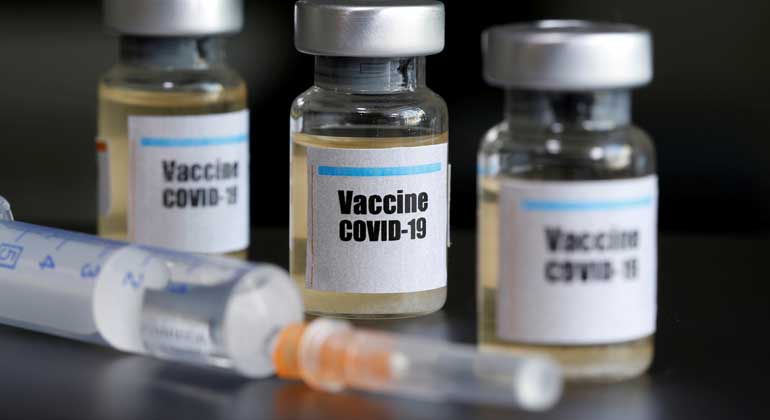
Moderna files for US vaccine authorization, will seek EU nod

Moderna plans to start a new trial to test the vaccine in adolescents before the end of the year, followed by another in even younger volunteers early in 2021. Image via Reuters/File Photo

Moderna Inc. said on Monday it has applied for US emergency authorization for its COVID-19 vaccine after full results from a late-stage study showed it was 94.1% effective with no serious safety concerns.

The US Food and Drug Administration (FDA) said an advisory committee would meet to discuss the request on Dec. 17, making Moderna’s candidate the second highly effective vaccine likely to receive US regulatory backing and a potential roll out this year.

A shot developed by Pfizer Inc. and BioNTech SE that was 95% effective in its pivotal trial is set to be reviewed by a panel of outside experts a week earlier. The FDA will decide on the emergency use authorizations (EUA) after the advisers make their recommendations.

Moderna, which also plans to seek European approval, reported that its vaccine’s efficacy was consistent across age, race, ethnicity, and gender demographics as well as having 100% success in preventing severe cases of the disease that has killed nearly 1.5 million people worldwide.

“We believe that we have a vaccine that is very highly efficacious. We now have the data to prove it,” Moderna Chief Medical Officer Tal Zaks said. “We expect to be playing a major part in turning around this pandemic.”

Of the 196 people who contracted COVID-19 out of over 30,000 trial volunteers, 185 had received a placebo and 11 the vaccine. Moderna reported 30 severe cases, all in the placebo group.

Moderna shares rose 3% in extended trading after closing up 20%. They have gained about 700% this year.

“As the numbers of cases reported grows, confidence grows that this amazing protection will be maintained in a product that can be rolled out to protect the public,” said Alexander Edwards, associate professor in biomedical technology at Britain’s University of Reading.

In addition to filing its US application, Moderna said it would seek conditional approval from the European Medicines Agency and continue to talk with other regulators doing similar rolling reviews.

“Although we await the full details of these results in published form, we can now assume that this vaccine will be approved for use in December,” said Gillies O’Bryan-Tear, chair of policy and communications at Britain’s Faculty of Pharmaceutical Medicine.

He expected Britain’s Medicines and Healthcare products Regulatory Agency to approve the vaccine within two weeks.

‘JUST OVERWHELMING’
Moderna said it was on track to have about 20 million doses of its vaccine ready to ship in the United States by the end of 2020, enough to inoculate 10 million people.

Switzerland’s Lonza Group, which has a contract with Moderna to supply ingredients for the vaccine, rose 4.4%.

The vaccines developed by Moderna and Pfizer/BioNTech use a new technology called synthetic messenger RNA (mRNA) whereas others, such as AstraZeneca’s, employ more traditional methods.

AstraZeneca has announced an average efficacy rate of 70% for its vaccine, and as much as 90% for a subgroup of trial participants who got a half dose, followed by a full dose. Some scientists have expressed doubts about the robustness of the 90% efficacy figure for the smaller group.

Moderna’s final efficacy result was slightly lower than an interim analysis released on Nov. 16 of 94.5% effectiveness, a difference Mr. Zaks said was not statistically significant.

“At this level of effectiveness, when you just do the math of what it means for the pandemic that’s raging around us, it’s just overwhelming,” said Mr. Zaks, who said he cried when he saw the final results over the weekend.

Both the Moderna and Pfizer vaccines proved more effective than anticipated and far superior to the 50% approvable benchmark set by the FDA.

The past few weeks of positive vaccine results have ignited hopes for an end to a pandemic that has battered economies and come as new infections and COVID-19 hospitalizations are at record levels across the United States.

Almost immediately after receiving an EUA, Moderna expects its vaccine to be shipped to distribution points across the United States by the government’s Operation Warp Speed program and drug distributor McKesson Corp.

Distribution is expected to be less complicated than for Pfizer’s vaccine. While it needs to be stored in a freezer, it does not require the ultra-cold temperature or specialized equipment needed for Pfizer’s vaccine.

CONSISTENT ACROSS AGE AND ETHNICITY
Moderna said the 196 COVID-19 cases in its trial included 33 adults over 65 years old and 42 volunteers from racially diverse groups, including 29 Latinos, 6 Blacks, 4 Asian Americans, and 3 multiracial participants. There was one death related to COVID-19 in the placebo group during the trial.

“This is as black and white as an effect on a population will be. Your chances of actually being sick if you’ve been vaccinated are decreased 20-fold,” said Moderna’s Mr. Zaks.

Moderna reported no new side effects since its interim analysis, the most common of which were fatigue, injection site redness and pain, headache, and body aches, which rose after the second dose and were short-lived.

Mr. Zaks said the vaccine caused significant flu-like symptoms in some participants which, “goes hand-in-hand with having such a potent vaccine.” But it has not caused any significant safety concerns so far, he said.

Moderna plans to start a new trial to test the vaccine in adolescents before the end of the year, followed by another in even younger volunteers early in 2021. It hopes to have the vaccine available for adolescents by September, Mr. Zaks said.

Other vaccine makers have said they are studying their vaccines in younger people as well. — Julie Steenhuysen and Michael Erman/Reuters

Globe recreates Christmas for all Filipinos in this year’s fully digital Wonderful World of Globe

Christmas is fast approaching and yet, the realities of celebrating the holidays with a pandemic can be difficult for most Filipino families today. Despite this, the desire to enjoy our usual holiday activities and observe cherished local traditions remain strong in many of us. After all, the true spirit of Christmas is about hope, joy, and the eternal anticipation of good tidings.

Uplifting the lives of Filipinos and rekindling Christmas cheer in everyone’s hearts underscore this year’s Wonderful World of Globe (WWG).  “Our aim is to recreate the Christmas we all love. We take to heart our role in renewing the spirit of connectedness within the Filipino family especially at a time when most of us stay within the confines of our homes.  It is also a great opportunity for each of us to do more for others and continue spreading cheer to everyone we can reach,” said Ernest Cu, Globe President and CEO.

As quick, easy and flexible internet access became the new essential, this year’s WWG is the perfect time to launch the revolutionary product offer of Globe. Surf4ALL is a first-of-its-kind, fully convergent data offer that knows no boundaries across Globe brands.  This promo gives you high GBs for all sites and a shareable GB allocation that is seamlessly accessible to up to 4 users or devices. Now, you can share data with Globe Prepaid, Globe Postpaid, Globe Platinum, Globe At Home Prepaid WiFi, and even TM.

Available through the GlobeOne app, Surf4ALL has 2 promos – Surf4ALL99, which gives you 9GB of shareable data, and Surf4ALL249, with 20GB shared access (15GB + 5GB limited-time bonus data). Both offers are valid for 7 days.  It’s the only data product of its kind in the Philippines today to ensure no one is left behind when it comes to connectivity.  This is the true universal data offer for all Globe customers which makes it possible to be constantly connected regardless of brand, device, and location.

The combination of Globe’s ever-improving network and the innovative Surf4ALL product gives Filipinos the ability to really make the holidays richer and better, by giving them access to daily essentials and services they will find both useful and enjoyable throughout the season.

As online shopping continues to surge in popularity, 917Ventures, the largest corporate incubator in the Philippines, partnered with Puregold to create PureGo, an online grocery shopping platform that delivers groceries at one’s doorstep with a next day delivery promise, using multiple payment options including GCash.

Recreate Togetherness  

Enjoying various content such as video, music, games, and sports can enhance family bonding so Globe partnered with Riot for special data offers for League of Legends: Wild Rift the mobile version of the highly-popular League of Legends.

And, with the continuous expansion of Globe’s 5G service, more exciting forms of innovation can be expected for Globe customers. One of which is coming from the partnership of Globe with Niantic. As the first Southeast Asian telco member of the Niantic Planet-Scale AR Alliance, Globe will drive bigger and better immersive gaming experiences powered by Niantic’s advanced AR real-world platform that will push the boundaries of what can be experienced in a Niantic game with 5G technology. Niantic is an AR company, inspiring people to explore the world together.

Another interesting 5G-enabled service that brings entertainment to a whole new level is from Globe’s official partnership with YouTube VR. This will enable users to watch and explore VR content in-app through the affordable yet effective Globe VR cardboard. This further enhances the customers’ online entertainment experience and online learning at home.

Through a new partnership with HBO GO, Globe offers a raft of award-winning entertainment to the digital Filipino. With HBO GO, Globe customers can watch thousands of hours of shows and movies any time anywhere using their connected device. Filipinos can stream or download HBO Originals, HBO Asia Originals, Korean and Chinese dramas, Hollywood blockbusters, hundreds of hours of kids and family content and more, including Sam Mendes’ war film 1917, Spider-Man: Far From Home starring Tom Holland, Christopher Nolan’s The Dark Knight trilogy and Cartoon Network’s We Bare Bears: The Movie.

Globe also joined hands with Kumu, a Pinoy-centered live streaming platform, which is home of local and global user-generated Pinoy lifestyle content, and digital content partners like GKNB (Game Ka Na Ba?), a gamified FYE (For Your Entertainment) focused on celebrity streams, talk shows, variety content and MYXPH for music. Kumu will also be adding game streaming channels into their mix as part of their offerings on the platform.

Recreate Gift-Giving

What is Christmas without presents?  Gift-giving is a tradition that goes back to the wise men that visited the nativity.  And while everyone loves presents from family and friends, some of the best gifts come when people share their blessings with those they may not know well but who need help.

To help vulnerable communities during the pandemic, Globe Platinum has partnered with World Vision to create the #ForFutureHeroes program. It consists of virtual experiences in collaboration with BGC Arts Center, Electric Studio, and others that allow Globe Platinum customers to pursue their passions at home while making an impact on others. Participation in every activity is matched by Globe Platinum with World Vision school kits filled with DepEd approved learning modules and supplies, so the children of Baseco Compound, Manila can continue their education.

On top of this, Globe Platinum customers have been delighting frontliners, who have worked so tirelessly to keep Filipinos safe all these months, through the Thank-A-Hero program. Apart from sending them treats from Auntie Anne’s, Coco, The Cookie Bar, and JCo Donuts,  Globe Platinum is also preparing a Noche Buena feast for our frontliners, to thank those who will be hard at work all throughout Christmas Eve, keeping Filipinos safe.

Recognizing the pressing demand of educators for a fast, reliable, and affordable internet connection, Globe At Home initiated WiFi2Teach which supports the DepEd’s Distance Learning program through the donation of Globe Prepaid WiFi modems. Modems have been donated to the DepEd to equip selected public school teachers and ensure that education remains unhampered. The program continues as it now works towards raising funds to provide free WiFi modems for public school students. In partnership with Ayala Foundation, for every Globe At Home Prepaid Wifi sold, P100 will be donated to help fund internet connectivity of selected public school students at home.

To give small and medium enterprises the much-needed boost, Globe myBusiness’ Gift Local campaign encourages everyone to patronize local products for their Christmas gift-giving.

GCash brings to life our beloved Christmas traditions with ChristMAS KAYA with GCASH, where celebrations and gift giving are made possible thru innovations like GCash Send Aguinaldo, enabling users to send digital gift envelopes as aguinaldos to their inaanaks and pamangkins, and even gifting insurance thru the app’s GInsure service. In the same spirit of giving and bayanihan, our customers may also donate to typhoon victims using GCash and their Globe Rewards points.

GLife, the newest GCash app feature, likewise, provides more gift and handaan options across different brands and e-commerce platforms, ranging from Lazada, Puregold, DataBlitz, Purego, Boozy, Goldilocks, Goama Games, and more.

It is indeed ‘Merry GCash!’ this Christmas, as GCash is also giving up to 30 million pesos worth of prizes just by using the app. Leading up to a few days to Christmas, consumers can get gifts just by buying load, or using GCredit to pay when they shop on their favorite online platforms. They will also get a chance to win a gift of their choice in the grand raffle.

Recreate Local Traditions

In the past, many Filipino families would look forward to the well-loved tradition on Christmas Day of watching the annual Metro Manila Film Festival which showcases local filmmakers and artists.  This year, Globe and GMovies has partnered with the MMFF and UPSTREAM to recreate the MMFF tradition and bring this year’s nominated films online to Filipino homes around the nation and all over the world.

WWG also banners Filipino talents supported by Globe, celebrating the athletic achievements of such stars as 12-time 8-division boxing world champion and global icon Manny Pacquiao, Tennis child prodigy and Australian Open doubles champion Alex Eala, PH rep to FIBA 3X3 World Tour, Manila Chooks TM Team, ONE Championship’s martial arts stable Team Lakay. Globe also supports a roster of amazing local music artists and local greats with tremendous fan bases like December Avenue, Ben&Ben, SB19, The Juans, and Donnalyn Bartolome.

“We are looking forward to these exciting events that Globe has lined up for year-end and for 2021. Our commitment to our customers remains as we usher in a digital Philippines in the near future. Thank you for the support and for being with us in this journey.” said Jaime Augusto Zobel de Ayala, Chairman of Globe.

Globe believes that with the people’s collective energy and ingenuity, everyone can still make wonderful memories this Christmas and help see them through a new and better normal.

Globe is a signatory to the United Nations Global Compact and has committed to implement sustainability principles hinged on four pillars including One Digital Nation, Care for the Environment, Care for People and Positive Societal Impact. Globe is actively supporting 10 UN Sustainable Development Goals

For more information about Globe, visit www.globe.com.ph

Feeling pressured to buy Christmas presents? Read this (and think twice before buying candles)

Research suggests Christmas gift-giving is less about altruism, and becoming more about social pressure to reciprocate—the expectation that when we receive a gift, we will give one in return. And reciprocity does not necessarily bring happiness.

Christmas marks a peak in consumerism across the West. Despite the COVID downturn, this Christmas the spending frenzy is unlikely to be dampened.

One consumer sentiment survey showed about 12% of people expect to spend more this Christmas than in previous years. About one-third expected to spend less—a similar result to previous years. And retailers are also feeling optimistic: more than one in three expect Christmas sales to exceed 2019 by more than 5%.

All this festive spending creates significant waste, particularly in the form of unwanted gifts.

So before you finish your Christmas shopping, it’s worth considering why we feel forced to spend big on gifts during the silly season, and whether there are better, greener alternatives.

Research by ING found A$400 million worth of unwanted presents were gifted in Christmas 2018, comprising about 10 million items.

Topping the list were novelty items (51%), candles (40%), pamper products (40%), pyjamas or slippers (35%) and underwear or socks (32%).

Charity groups are inundated with unwanted goods directly after Christmas. Not all of these are resold—charities reportedly send about 60,000 tonnes of unwanted items to landfill every year.

This waste comes at a huge cost, not only to household budgets but also to the environment. Recent research on the topic is hard to come by, but in 2007 researchers from the Stockholm Environment Institute examined consumption over the festive season, and found 80 kilograms of carbon dioxide per person could be saved if unwanted gifts were not purchased.

Gift-giving is a complex emotional process. And it’s not necessarily always a positive experience: a 2016 survey found 43% of Australian shoppers felt forced to spend money at Christmas.

Research suggests Christmas gift-giving is less about altruism, and becoming more about social pressure to reciprocate—the expectation that when we receive a gift, we will give one in return. And reciprocity does not necessarily bring happiness. One study dating back to 1990 found those who gave an obligatory gift had negative feelings about the act afterwards.

In particular, some respondents felt their freedom to choose a gift was curtailed by perceived obligations—that they had to reciprocate with a gift of similar type, price or brand. This triggered psychological “reactance”—the unpleasant arousal people experience when their free behaviors are threatened.

Gift-giving can be a way of showing appreciation, but you don’t necessarily need to spend up big. Research shows while gift-givers might expect a gift to be appreciated more if it was expensive, recipients reported no such association.

Or you could spend nothing at all, by regifting an unwanted present. In some circles of contemporary society, regifting is frowned upon. Respondents in one study went so far as to describe regifters as lazy, thoughtless and disrespectful.

However in some cultures, regifting is considered normal. For example, a classic 1922 ethnographic study describes a ritual followed by people of the Massim archipelago in Papua New Guinea. Called Kula, it involves people travelling to a nearby island and presenting residents with shells and necklaces. The recipients would keep the gifts for a time, then pass them to others, and on it went.

To these islanders, keeping gifts destroyed the value created by the act of giving, while regifting maintained it.

There are lots of ways to give a gift without hurting the planet. And since the COVID-19 pandemic forced many activities online, the options are even greater. Here are five options:

  1. Virtual and digital gifts — These range from electronic gift vouchers that allow the receiver to buy what they really want, to subscriptions to streaming services, audiobooks, and even virtual bouquets.

Due to COVID, virtual travel, which began for many as a temporary measure, may now be around to stay. Or you could gift a virtual Christmas event such as cooking classes, cocktail-making experiences, and virtual craft workshops.

  1.  Give an experience —  Experiences are events such as concerts, jet boating, spa treatments or a romantic evening cruise. Research shows experiential gifts contribute more to consumer happiness than material purchases.

Giving experiential gifts also strengthens social connections between givers and recipients.

  1. Regift — Regifting, if done thoughtfully, can be a great way to avoid unwanted presents ending up in landfill.

The practice is actually quite common. One consumer survey shows when people receive unwanted gifts, 25% give them to someone else. And on websites such as Gumtree, you can even buy other people’s unwanted gifts. At the time of writing, products for sale included an unworn Maurice Lacroix men’s watch, an electric drum kit, and a new Samsung smart TV.

  1. Go handmade — Handmade gifts are unique and help forge a connection between the giver and the receiver. And even when you purchase the handmade gift rather than make it yourself, research shows recipients usually perceive that the gift symbolically contains “love.”

Etsy has become the global marketplace for handmade gifts and vintage treasures. But keep in mind that if you order a handmade gift from the other side of the world, transporting it will generate carbon emissions. 

  1. Upcycle — Upcycling prolongs the life of old objects by creatively reshaping them into new products. For example, an old jar might become a hanging plant pot, or a reclaimed door might be repurposed as a tabletop.

Research has found when people are told about the past identity or “story” of an upcycled product, the person feels “special” and demand for the product increases. 

The Conversation

‘Pandemic’ chosen as Word of the Year

NEW YORK — The 2020 prize for Merriam-Webster’s Word of the Year went to an obvious choice: pandemic.

The term had the most online dictionary lookups of any word, Merriam-Webster said on its website, after a year in which at least 1.4 million people globally have died from the COVID-19 pandemic.

“Sometimes a single word defines an era, and it’s fitting that in this exceptional—and exceptionally difficult—year, a single word came immediately to the fore,” the dictionary publisher said.

Pandemic is defined as “an outbreak of a disease that occurs over a wide geographic area (such as multiple countries or continents) and typically affects a significant proportion of the population,” according to Merriam-Webster.com.

The word’s Greek roots are “pan,” meaning all or every and “demos,” meaning people, Merriam-Webster said.

Dictionary lookups skyrocketed on March 11 when the World Health Organization officially labeled COVID-19 a pandemic.

The word “saw the single largest spike in dictionary traffic in 2020, showing an increase of 115,806% over lookups on that day in 2019,” said the company, founded in 1831.

Last year’s winner was “they” as used to describe someone who does not identify as male nor female. That follows winners “justice” in 2018, “feminism” in 2017 and “surreal” in 2016. — Reuters

[B-SIDE Podcast] The future of consumption (a fireside chat from the BusinessWorld Virtual Economic Forum)

Follow us on Spotify BusinessWorld B-Side

On November 25 and 26, BusinessWorld held a two-day virtual economic forum with the forward-looking theme “Forecast 2021: ReBoot. ReThink. ReShape.” 

The event gathered over 40 local and international speakers who discussed the great economic reset as well as the future in a post-COVID era.

B-Side is sharing excerpts from the forum, beginning with this fireside chat between Satish Shankar, regional managing partner for Bain and Company, Asia-Pacific, and Sam L. Marcelo, BusinessWorld multimedia editor.


Over the course of this public health crisis, we’ve witnessed changes in consumption, specifically further shifts to essential goods and digital services. 

Nevertheless, consumption will contribute to growth in Southeast Asia, as Bain & Company estimates that the region will generate a total of US$4 trillion in terms of consumption in the next decade. 

In order to unlock the region’s full potential, it is encouraged that stakeholders ensure efficient and effective recovery from COVID-19, focus on talent development and socio-economic inclusion, upgrade infrastructure to support urbanization and resource management, and push for open and integrated regulation, with a hyper-local approach.

This episode was recorded remotely on November 26. Produced by Nina M. DiazPaolo L. Lopez, and Sam L. Marcelo.

Follow us on Spotify BusinessWorld B-Side