Home Blog Page 8770

2021 budget passage targeted by next week

By Charmaine A. Tadalan, Reporter

THE HOUSE of Representatives and the Senate on Tuesday assured the 2020 national budget will not be reenacted as both chambers target ratification of the P4.5-trillion spending plan for 2021 by next week.

“It’s very tricky to put a timeline on legislation pero ang maganda (but what’s good is) we have enough time. Ideally, I think by next week sana ma-ratify na (hopefully it will be ratified),” Senator Juan Edgardo M. Angara, chair of Senate finance committee, said at a chance interview after the bicameral conference committee tasked to reconcile the House and Senate versions of the national budget.

Mr. Angara said it is crucial to pass next year’s spending plan on time as this year’s budget does not cover items and programs relating to the coronavirus pandemic. 

The government operated on a reenacted budget for more than four months in 2019 due to an impasse between the House and the budget department, and later with the Senate. The 2019 budget was also reenacted for less than a week in 2020, after President Rodrigo R. Duterte signed the 2020 budget only on Jan. 6.

Mr. Angara and ACT-CIS Rep. Eric G. Yap, House appropriations chairman, have been authorized to hold one-on-one meetings to iron out the differences in the budget versions.

The senator assured that members of the bicameral panel will be consulted on the results of the discussions.

Mr. Yap, for his part, said the committee agreed to finish the budget meetings by Friday.

Both chambers also agreed to provide appropriate funding for the procurement of COVID-19 (coronavirus disease 2019) vaccines as well as the government’s response to recent calamities.

The budget, as approved in the Senate, includes P8 billion for vaccines under the Department of Health budget. Another P54 billion has been allocated for vaccines and P21 billion for its storage, transportation and distribution under unprogrammed funds.

It also sets a P21 billion calamity fund and P15 billion for rehabilitation and reconstruction programs of local governments hit by recent typhoons.

“Our goal is ultimately the same: to have appropriate funding for COVID-19 vaccines and to allocate budget for regions severely affected by calamities,” Mr. Yap said in a statement on Tuesday.

He noted Speaker Lord Allan Jay Q. Velasco had requested to increase the calamity fund by P5 billion.

On another item, Mr. Angara said the Senate contingent will follow the  directives of Senate President Vicente C. Sotto III with regards a provision inserted in the budget that will allow the Commission on Elections (Comelec) to waive election procurement safeguards.

“Nothing should affect the conduct of 2022 elections. If ever nga, we should look at giving the Comelec additional powers or even funds to conduct elections in a way that meets the challenges of COVID,” he said.

‘NOT ENOUGH’
Marikina Rep. Stella Luz A. Quimbo, meanwhile, reiterated her push for another law focusing on an economic stimulus package, citing that the proposed 2021 budget is not sufficient to reverse a P3.3-trillion damage caused by the pandemic and recent typhoons.

“The budget call for the 2021 proposed budget ended in June 1. At that time, economic managers did not expect that the damage of COVID would be as big as it is today. The 2021 proposed budget… is premised on a 5.5 contraction of gross domestic product,” Ms. Quimbo said on Tuesday at a hearing of the committee on economic affairs.

The International Monetary Fund (IMF) and the Asian Development Bank (ADB) are forecasting even deeper economic contractions from around 7.3 to 9.5% for the current year, factoring in the devastation of a series of typhoons in October and November.

“We need more economic stimulus… But because the Constitution does not allow any increases in the total proposed budget, we need to secure additional appropriations for another economic stimulus package,” the lawmaker said as she sought the approval of House Bill No. 8031 or the Bayanihan to Arise as One Act (Bayanihan III).

ENERGY
Senator Sherwin T. Gatchalian, for his part, said the Department of Energy will need an additional P46 million to fund studies on potential energy sources.

“We have to invest on research to explore the potentials of emerging energy sources. The outcome of which will have a lasting impact in our daily lives and will save us money in the long run,” Mr. Gatchalian, chair of the energy committee who chaired the Energy Committee, said in a statement on Tuesday.

Of the proposed additional allocation, P20 million will be used for an energy transition study, P20 million for a comprehensive roadmap for electric vehicles, and P6 million for determining the potential of waste-to-energy facilities.  with Kyle Aristophere T. Atienza and Angelica Y. Yang

Coronavirus cases almost 433,000; Ilocos Norte highest

THE DEPARTMENT of Health (DoH) reported 1,298 coronavirus infections on Tuesday, bringing the total to 432,925.

The death toll rose by 27 to 8,418 while recoveries increased by 135 to 398,782, it said in a bulletin.

There were 25,725 active cases, 84% of which were mild, 7.4% did not show symptoms, 5.4% were critical, 2.9% were severe, and 0.30% were moderate.

Ilocos Norte reported the highest number of new cases at 84, followed by the city of Manila at 61, Quezon province at 55, Laguna at 50, and Negros Occidental at 47. The DoH said three duplicates were removed from the total case count while nine recovered cases were reclassified as deaths. One case reported as death was validated as an active case.

About 63.6 million have been infected and about 1.5 million people died of coronavirus worldwide, according to the Worldometers website, citing various sources including data from the World Health Organization (WHO).

About 44 million people have recovered.

Meanwhile, Philippine Foundation for Vaccination Executive Director Lulu C. Bravo said the government should address the vaccine hesitancy of Filipinos.

In a briefing on Tuesday, Ms. Bravo said while vaccines are not 100% safe, the benefits still outweigh the risks.

“It is important that we assure our people that if the vaccines are approved and released by the Food and Drug Administration, there are certain safety mechanisms in place. So, the benefits that you will get from that vaccine will far outweigh the risk,” she said.

The government plans to vaccinate 60 million Filipinos by 2023. — Vann Marlo M. Villegas and Gillian M. Cortez

Nationwide round-up (12/01/20)

Supreme Court head to retire a year ahead of mandatory age

CHIEF Justice Diosdado M. Peralta will be retiring on March 27, 2021, a year ahead of the mandatory retirement age, the Supreme Court (SC) confirmed on Tuesday. SC Public Information Chief Brian Keith F. Hosaka said Mr. Peralta confirmed the “purported letter” to his fellow justices, “signifying his intention to avail of early retirement.” Mr. Hosaka told reporters via Viber, “The Chief Justice did not elaborate further but said that he will make a formal announcement in due time.” Mr. Peralta, appointed by President Rodrigo R. Duterte as chief justice on Oct. 23, 2019, will reach the mandatory retirement age of 70 in 2022. He was appointed by former President Gloria Macapagal-Arroyo as associate justice on Jan. 13, 2009. His career in the judiciary started in September 1994 with his appointment as presiding judge of Quezon City Regional Trial Court Branch 95, a special criminal court on heinous crimes and later on drug cases. He was appointed to the Sandiganbayan in 2002 and became its presiding justice in 2008. Mr. Peralta is the third chief justice appointed by Mr. Duterte, following the ouster of former justice Maria Lourdes P.A. Sereno based on the quo warranto petition filed by Solicitor-General Jose C. Calida. Mr. Duterte previously appointed retired magistrates Teresita Leonardo-De Castro and Lucas P. Bersamin. — Vann Marlo M. Villegas

Rules on removal from terrorist list underway

THE rules for removal of names in the government’s terrorist list under the Anti-Terrorism Act are underway, a Department of Justice official said on Tuesday. “We are in the process of crafting the rules. We hope to submit the rules for the ATC’s (Anti-Terrorism Council) consideration within the month,” Justice Undersecretary Adrian F. Sugay told reporters via Viber. “I understand that there is a meeting set for next week. We will try to finish the rules before then,” he added. Under the law’s implementing rules and regulations, the ATC’s resolutions naming those linked to terrorism will be published in a newspaper, on the online official gazette, and on the council’s official website. A named party may file a verified request for delisting to the council within 15 days from the publication of the list. The request should be on grounds of mistaken identity, relevant and significant change of facts or circumstance, newly discovered evidence, death of designated person, dissolution or liquidation of designated groups, or any other circumstance showing no basis for designation. The Supreme Court is set to conduct oral arguments on Jan. 19 on the more than 30 petitions filed against the law, which took effect on July 18. — Vann Marlo M. Villegas

US gov’t to give P875-M fund for HIV/AIDS program

THE United States government will give $18.2 million or about P875 million worth of assistance to the Philippines for efforts to prevent and control the HIV/AIDS epidemic, its Embassy said on Tuesday. The amount will be provided over two years through the President’s Emergency Plan for AIDS Relief (PEPFAR)-funded program. “The PEPFAR program will address the increasing number of people who are living with HIV in the Philippines, which has the fastest growing HIV epidemic in the Asia-Pacific region,” the Embassy said in a statement, issued on World AIDS day. Citing data from the Department of Health-Epidemiology Bureau of the Philippines, the Embassy said more than 110,000 Filipinos are living with HIV as of this year. About 37,000 have not been diagnosed, while the 18,500 previously diagnosed have not enrolled in life-saving antiretroviral therapy. — Charmaine A. Tadalan

Regional Updates (12/01/20)

Gov’t gears up for influx of returning overseas workers

THE Department of Transportation is preparing for the influx of returning overseas Filipino workers (OFWs) for the December holidays by expanding its one-stop shop for coronavirus testing and the passenger capacity at three international airports. “We added more swabbers and other partner agencies who will service our OFWs,” Transportation Undersecretary Raul L. Del Rosario said in Filipino during a briefing on Tuesday. He added that they are also increasing the number of accredited hotels for the mandatory 14-day quarantine and more vehicles for land transport. The airports currently operating with international flights are the Ninoy Aquino International Airport in Manila, Clark, and Mactan-Cebu. Mr. Del Rosario said about 500,000 Filipinos have returned to the country so far since the one-stop shop was set up in April. — Gillian M. Cortez

Palace to leftist groups: Denounce armed rebellion

MEMBERSHIP to the Communist Party of the Philippines (CPP) is not illegal but involvement with its armed faction, the New People’s Army (NPA), is a “crime,” Palace Spokesperson Harry L. Roque said on Tuesday. “The crime is… a crime of rebellion, taking up of arms against the government, killing civilians and soldiers,” he said during a briefing. “What’s difficult about them is you cannot separate the CPP from the NPA… if you are a member of CPP, you can be legal if you renounce your use of arms,” he added. Mr. Roque’s statements came after President Rodrigo R. Duterte slammed leftist groups on Monday evening during a televised speech, accusing opposition lawmakers and party-list groups of being tied to the armed conflict. — Gillian M. Cortez

98 found COVID positive after mass testing at Batasan Complex

A TOTAL of 98 persons were found positive of the coronavirus disease 2019 (COVID-19) after mass testing was conducted by the House of Representatives at its headquarters, the Batasan Complex, in Quezon City. House Secretary General Mark Llandro L. Mendoza said nearly 5% of the 2,000 lawmakers and employees who underwent RT-PCR (reverse transcription-polymerase chain reaction) testing came out positive for the virus. “Because it was mass testing for all officials, employees and guests entering the Batasan Complex, we caught even the asymptomatic cases who could be transmitters if we didn’t find out they were COVID positive,” he said in a statement. Those who tested positive have been directed to self-isolate while the House administration is now coordinating with the Quezon City government for a more extensive contract tracing, Mr. Mendoza said. Before Nov. 10, the House already registered more than 80 COVID-19 cases, including two lawmakers and three employees who died. Mr. Mendoza said the House will continue to operate under strict health and safety protocols. — Kyle Aristophere T. Atienza

Higher FIRB approval threshold seen weakening CREATE reforms

A CAMPAIGN to raise the investment threshold beyond P1 billion before a project can go before the Fiscal Incentives Review Board (FIRB) would weaken tax reform by removing many investments from scrutiny, according to Action for Economic Reforms (AER), a policy think tank.

In a statement Tuesday, AER said the request of the Semiconductor and Electronics Industries in the Philippines Foundation, Inc. (SEIPI) to increase the threshold for projects going before the FIRB in the Corporate Recovery and Tax Incentives for Enterprises (CREATE) bill is a “self-serving, shallow argument that will render the FIRB toothless.”

“Even if the bicameral conference committee convenes to reconcile the House and Senate versions of the bill, legally, it cannot insert the amendment that some industry leaders are asking for as the amendment cannot be found in either the House bill or the Senate bill,” it added.

The Senate approved Senate Bill No. 1357, its version of CREATE, on third and final reading last week. It proposes to cut the corporate income tax to 25% from 30% currently, with further reductions of one percentage point each year starting 2023 until it falls to 20% by 2027.

The measure also seeks to strengthen the capacity of the FIRB, chaired by the Secretary of Finance, to oversee the grant of incentives by investment promotion agencies (IPAs) and other bodies. The bill as it currently stands delegates investment approval for projects under P1 billion to the IPAs; projects beyond that threshold are to go before the FIRB.

SEIPI President Danilo C. Lachica has called the threshold too low and warned of approval delays and investor withdrawals if the FIRB approves projects at the P1 billion level.

“If you think about it, that P1 billion is like $20 million and that’s way below the expansion, and even the reinvestment cost for multinationals. For one, it clips the authority of the PEZA (Philippine Economic Zone Authority). It will (also) be a disincentive for investors because of the potential red tape,” Mr. Lachica told the Arangkada online forum Tuesday.

SEIPI is targeting an increase in the threshold to at least $1 billion (P48 billion), he said.

“While (existing rules state) that if not approved for 45 days it is considered approved, (the period is) very very long. It’s too low, and it may create bottlenecks and bureaucracy in the process,” he added.

The AER, leaving the authority to approve investments to various independent IPAs could lead to “incoherence, inconsistency, and weakening accountability” and the uncertainty surrounding the decision-making may discourage investors.

“It is but proper that more diligence be put in place for bigger amounts of investments,” said AER Coordinator Filomeno S. Sta. Ana III in the statement. — Beatrice M. Laforga

Lost regional economic output projected at $322.2 billion in 2021

PHILIPPINE STAR/MICHAEL VARCAS

SOUTHEAST ASIA could lose up to $322.2 billion in economic output next year due to the continuing fallout from the pandemic, with the Philippines among the leading losers in the tourism and services industries, the Asian Development Bank (ADB) said.

“The pandemic generated enormous economic losses and our updated results (show an impact not just in) 2020, but we see that 2021 will also be adversely affected,” the bank’s Chief Economist Yasuyuki Sawada said during an ADB Institute webinar Tuesday.

According to his presentation, the region stands to lose at least $260.6 billion in economic output and $364.3 billion on the high side of the estimate range for 2020 due to the coronavirus crisis. Such losses are equivalent to 8.9-12.4% of nominal gross domestic product (GDP).

Next year’s estimated losses could be the equivalent of 5.4-11% of GDP, he said.

The estimates were based on an upcoming policy brief by the ADB, “The Impact of COVID-19 on Developing Asia: The Pandemic Extends into 2021.”

Mr. Sawada said tourism-dependent economies will continue to suffer outsized losses next year due to weak travel demand, as will those dependent on the services sector. The Philippines, Cambodia and Thailand will be Southeast Asia’s top losers in terms of tourism and services, he said.

The Philippines will also see a large drop-off in domestic tourism demand, while Cambodia and Thailand are projected to suffer more severely.

He said the services sector will continue to post the largest losses next year overall, with the Philippines, along with Cambodia and Thailand, to lead the region in declines for the segment.

The business, trade, personal and public services sectors, as well as manufacturing, utilities and construction, are the likeliest to sustain the heaviest losses in the Philippines next year, he said.

Globally, overall potential output losses could hit up to $7.588 trillion or 8.8% of GDP by year’s end, and up to $5.557 trillion or 6.5% of GDP in 2021, according to the ADB.

“While we do expect developing Asia to rebound strongly by 6.8% next year, we cannot anticipate a V-shaped recovery, as it will take some time for countries to recover to pre-pandemic levels of GDP growth,” ADB President Masatsugu Asakawa said in the same forum.

Fear, uncertainty and border closures during the pandemic have dampened economic output, pushing some, including the Philippines, into recession.

Small businesses are also among the hardest hit sectors, and lack of government support can worsen the damage to the sector, said Raghuram Rajan, a Finance professor at the University of Chicago’s Booth School, who served as governor of the Reserve Bank of India in 2013-2016.

Mr. Rajan said the government’s assistance to the sector, along with that provided by Mexico and developing countries in South Asia and Africa, has been “fairly limited,” causing outsized damage to the sector during the lockdown.

“Over and above the damage done by the virus is a damage done by the lack of relief which effectively will make the overall hit to potential growth of these countries significantly larger,” he said.

“Which is why it is really important, especially if you are a poor country, to ensure that the repair and reallocation is done as effectively as possible given the limited resources that these countries have so that the recovery is stronger than it might otherwise be, but also sustained over a longer period,” he added.

Around 73% of micro-, small-, and medium-sized enterprises in the Philippines shuttered operations during the lockdown in April and their access to financing was limited, restricting their ability to raise working capital, the ADB has estimated. — Beatrice M. Laforga

PHL coal-fired power capacity seen increasing by 135% despite moratorium on new projects

POWER generating capacity from coal-fired plants is expected to rise 135% after all plants currently being built become operational, after a moratorium on new builds was declared last month, Clean Air Asia (CAA) said in a report.

The estimate follows Energy Secretary Alfonso G. Cusi’s freeze on new coal-fired projects announced in October.

“The Philippines’ Department of Energy (DoE) announced… that a moratorium on coal will be implemented, but this does not cover planned CFPs (coal-fired power plants), which will result in a 135% increase in coal capacity once all are operational,” CAA, a non-government organization (NGO), said.

CAA also cited the country’s “lenient” regulation of emissions since the Clean Air Act became effective in 2000.

“The NOx (nitrogen oxide) emission standards even for ‘new’ CFPs (those operating after 2000) in the Philippines are still 10 times more lenient than those of India and five times more lenient than those of Indonesia,” the CAA said. It found that the Philippines had the “most lenient” sulfur dioxide emission standards.

“A review of Philippine industry emission standards has been underway since 2018, and is ongoing; however, no timeline for implementation has been discussed,” it said.

According to the NGO, the Philippines currently does not require a thorough health impact assessment (HIA) before approving a coal-fired power plant. “The HIA must be a priority and must be done not only in the application process, but throughout the lifetime of the CFP facility. In discussions about the ‘costs’ of CFP use, the externality costs of the health burden should always be prioritized and quantified as part of the HIA,” CAA said.

The Philippines was one of the CAA report’s five focus countries. Other countries included in the analysis are Bangladesh, Indonesia, Pakistan and Vietnam.

Citing official government data compiled by CAA and the Global Coal Plant Tracker, South and Southeast Asia make up 31% of all planned expansion in coal-fired capacity — with the five focus countries making up almost half of this total.

In a separate statement, the CAA recommended that the Philippines adopt stringent emission standards; improve the transparency of documents and data on CFPs; and enforce policy more diligently.

The Institute for Energy Economics and Financial Analysis (IEEFA) has estimated that around 10 gigawatts of greenfield coal plants will be affected by the DoE’s coal moratorium.

“The impact of the coal moratorium will fall most heavily on the Luzon grid and the project development aspirations of San Miguel and Meralco,” the IEEFA said. — Angelica Y. Yang

LGUs approve 2,220 telecom tower permits; 712 still pending

OVER 2,000 telecommunication tower applications have been approved and processed by local government units (LGUs), with little more than 700 remaining to be processed, Interior Secretary Eduardo M. Año said in a televised meeting with the President late Monday.

He reported approvals for 2,220 applications and pending applications at 712.

President Rodrigo R. Duterte ordered LGUs in August to act immediately on tower permit applications amid pressing demand for more bandwidth during the pandemic.

In a separate briefing Tuesday, Palace Spokesman Herminio L. Roque said the telecommunications industry no longer can blame the slow permit process for poor 2should respond after it urged the government to expedite approvals.

Binibigyan natin ang pagkakataon magpakitang gilas ang mga telecoms dahil ibinigay ng Presidente ang kahilingan nila (We must allow the industry a chance to show what it is capable of after the President granted its request),” he said.

Dapat mapabilis ang pagtayo nila ng tore…baka hindi iyon ang problema kasi hanggang ngayon hindi naman nag-i-improve (The tower erection process should speed up… maybe the permits are not the real problem because there has been little improvement so far),” he added. — Gillian M. Cortez

Dominguez points to rebound next year in pitch to potential Japanese investors

FINANCE Secretary Carlos G. Dominguez III briefed Japanese businesses on the government’s plan to engineer a sharp economic rebound next year as part of a pitch for more investment.

“Next year, we expect our economy to post a strong rebound. The challenges are immense, but we are determined to build back a better economy that our people deserve,” Mr. Dominguez said in a speech Tuesday.

“We hope that the Philippines’ strong fundamentals, fiscal stamina, and effective governance will continue to make us a promising investment destination and a growing market for Japanese investors,” he added.

Mr. Dominguez pointed to early signs of economic recovery such as the sustained increase in foreign direct investment net inflows, which rose 46.9% year on year to $637 million in August, and goods exports snapping a six-month losing streak with a rise of 2.2% to $6.22 billion in September.

He also cited the softer, but still double-digit decline of economic output in the third quarter. Gross domestic product fell 11.5% year on year in the three months to September, after a record 16.5% contraction in the second quarter.

“These green shoots indicate that the Philippine economy is on the mend. The path is clearer to a strong bounce back in 2021. The worst seems to be over for the country,” Mr. Dominguez said.

He said the Philippines and Japan can cooperate closer to boost disaster risk management initiatives.

“While strengthening our health system, we intend to continue finding more ways to revive the domestic economy. We are turning this crisis into an opportunity to boost the competitiveness of our manufacturing and agriculture sectors. We are also accelerating our move to a digital economy,” he said.

Asked to comment, the Japanese Chamber of Commerce and Industry of the Philippines, Inc. had not responded at the deadline.

Japan was the Philippines’ number two trading partner in September, after China.

Reforms have also helped strengthen the economy’s fundamentals, Mr. Dominguez said, such as the implementation of the Comprehensive Tax Reform Program; new ease of doing business policies; increased spending on infrastructure; the national ID system; and the Universal Health Care program.

“Our infrastructure program is a sound strategy strongly supported by our development partners, especially Japan, through soft project loans and official development assistance,” he said.

Mr. Dominguez said passing other stimulus measures will ensure a sustained economic recovery, which includes the P4.5-trillion budget for 2021 and the bill that will allow state-run banks to establish special holding firms which will inject capital in companies deemed of strategic importance. — Beatrice M. Laforga

PPA estimates port traffic 6-10% below normal levels

THE Philippine Ports Authority (PPA) said it estimated port traffic to have declined at between 6% and 10% over the course of the pandemic, though it expects an uptick for the yearend holidays.

In a briefing Tuesday, PPA General Manager Jay Daniel R. Santiago said, “We are still lagging the normal (levels) of previous years… We are about 6 to 10% behind our traffic volume and even our cargo throughput.”

Mr. Santiago added that despite the drop in activity, the PPA remained optimistic because operations did not take a severe hit during the pandemic. Passengers and cargo throughput are expected to increase in the coming weeks.

“It may have decreased slightly but we are also surviving. We expect in the holidays that our passengers and cargo will increase in our ports. We are hoping that our recovery will continue,” he said.

Mr. Santiago said the ports were still operating after they were classified as an essential sector, allowing them to operate even during the strictest phase of the lockdown.

He also reported no layoffs in the industry. — Gillian M. Cortez

Gov’t wants graphic health warnings on vaping, heated tobacco products

LINDSAY FOX/PIXABAY

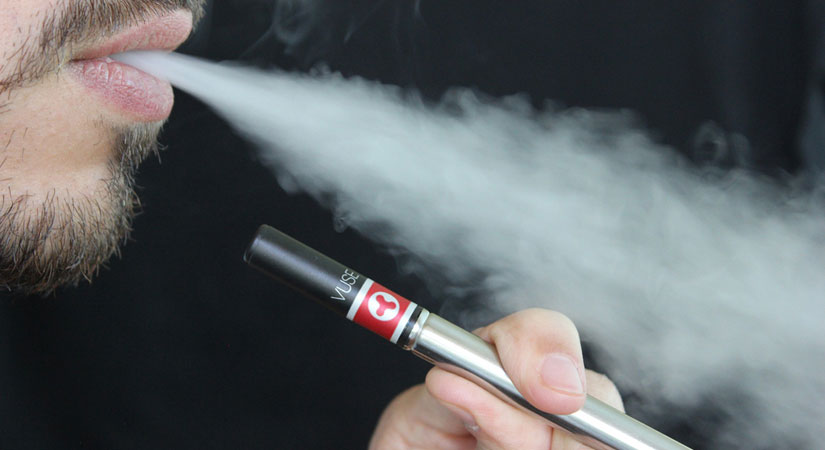
THE GOVERNMENT has ordered manufacturers, importers and sellers of vapor and heated tobacco products to print graphic health warnings on their packaging within 18 months,  according to the implementing rules and regulations of the laws taxing these products which were released Tuesday.

Joint Memorandum Circular (JMC) No. 003-2020, issued by various agencies including the Department of Health (DoH) and Department of Finance (DoF), ordered the health warnings as part of the implementation of the “sin tax” laws. The JMC serves as the implementing rules and regulations for vapor and heated tobacco products taxed under Republic Acts (RA) 11346 and 11467, which both amend the National Internal Revenue Code of 1997.

The rules also limit the sale of such products to persons who are at least 21 years old.

The DoH will issue templates for the health warning, including those for inserts and other advertising, outside packaging and labelling, and other packaging from domestic and overseas manufacturers.

“Manufacturers, distributors, importers and sellers of heated tobacco products and vapor products are given a period of 18 months from the effectivity of the rules to comply with the requirements of the Graphic Health Warnings Law,” according to the circular.

The Graphic Health Warnings Law is otherwise known as Republic Act 10643, signed in 2014.

The circular was issued by the DoH, the DoF, the Bureau of Internal Revenue (BIR), the Department of Budget and Management (DBM), and the Philippine Health Insurance Corp.

The DoH and the Food and Drug Administration (FDA) will act as the regulating agencies for manufacturers, importers, and sellers of such products, with authority over packaging, advertising and distribution of vapor and heated tobacco products. The FDA is also tasked with conducting scientific studies on the health impact of these products.

The DBM will determine how the funds raised from taxes collected from these products will be allocated and released to tobacco-producing provinces, as provided for by law.

The DoF and BIR will also determine the rules for setting floor prices for vapor and heated tobacco products.

RA 11346, signed in July 2019, and RA 11467, signed in January 2020, increased the taxes levied on the so-called “sin” products including vapor and heated tobacco products to raise more revenue for the Universal Health Care program while discouraging consumption of these products.

“Consumers should buy HTPs (heated tobacco products) and ENDs (electronic nicotine and non-nicotine delivery systems) products that pass the certification process of FDA. Product claims and labeling to inform consumers of product content ensures the consumers’ right to information as well as exercise his right to an intelligent choice,” consumer advocacy group Laban Konsyumer, Inc. President Victorio Mario A. Dimagiba said via Viber Tuesday. — Beatrice M. Laforga

Enabling, sustainable, and inclusive mindset to recovery

Into the “next normal,” the usual way of doing things cannot suffice. Our attitudes, the way we behave, and how we put things into perspective matter.

For one, the pandemic has overarchingly taught us and spelled out that government cannot be left on its own in managing the affairs of society. But with intersectoral and multi-stakeholder engagements, crisis and recovery could be a worthwhile and beneficial endeavor.

Stimulating the economy and bringing it to new heights cannot be done through the usual consumption-led approach. But with an investment-driven economy, more and better jobs could be provided to the population. In turn, such an arrangement directly bridges the gap between industry needs and education thrusts.

Recognizing the unique role of the private sector is also the prerequisite of realizing its full potential in catering to the socio-economic welfare of the country. The efficient and effective management of resources via linking society’s supply and demand chains would be at a new level and this is what the private sector specializes in.

Another critical social actor that needs to be emphasized and put in the forefront of recovery and development is civil society. Composed of nongovernmental organizations, the academe, tri-media, think tanks, and independent thought leaders, this represents a balancing force to curb corruption and promote good governance amid recovery.

And at the rate Philippine society is going, a great deal of forward-looking lessons can be gleaned not only from the first session of the Pilipinas Conference launched by Stratbase ADR Institute, dubbed “Rebooting the Economy Post-Pandemic: Cushioning the Long Emergency,” but in the succeeding sessions as well.

To avert further and future crises, a resilient recovery and development plan is needed to envelop an inclusive and multi-stakeholder recovery. Manufacturing, physical and digital infrastructure, consumption, remittances, environment, and agriculture necessitate a proportional emphasis based on the priorities of economy and government.

Aside from the health and economic crises that affronted us, the political health of our system equally requires attention. The loss of transparency, threats to elections, and militarization prod us to unceasingly uphold transparent and accountable governance. In a particular landscape, the rapid digitization of Filipino lives opens the window for the implementation of e-governance. Through e-governance, data could be harnessed and utilized in holding public servants accountable to their constituents.

In setting development goals for recovery, however, consultation should be done with the different sectors in society. Government leaders cannot simply manifest their “strong political will” at the onset of a crisis and then suddenly wane in its duration. In this line, the private sector should steadfastly be the driving force of our economy, while simultaneously promoting social responsibility.

The global economic turmoil was caused by the lockdowns and movement restrictions to impede, if not stop, the spread of the virus. Our country was thrown into an economic tailspin and we are facing economic pessimism and contraction. As a result, the disruption of the supply chain triggered recession and the accelerating velocity of economic activities slowed to a turtle’s pace.

It is noteworthy that the private sector has proven to be a core component of our nation’s recovery. Business leaders will continue to share their short- and long-term outlooks on challenges and threats that we face in a post-pandemic world.

The challenges of 2020 — the decline of traditional growth drivers such as consumption, remittances and services, the technical recession, the pains in striking a balance between economic health and public health, the political health of our system being compromised under “emergency powers,” the weak social protection, the emerging regional political-security environment, the need for climate resilient sustainable communities, and the judicious approach to avert more crisis and promote recovery — should be our springboard onward to 2021.

Crafting the “next normal” must be guided by the chief principle of how to translate challenges and crises into opportunities should the next year prove to be another “long emergency” for Filipinos.

From this new normal, to navigate our society through the crisis and veer toward recovery and growth, demands a rethinking and an eventual changing of mentality.

What we need is an investment-led economy that is capable of making growth more sustainable and inclusive by creating jobs and providing stable incomes to countless Filipinos.

What we need are fruitful government-private sector partnerships and a vibrant citizenship to strengthen society’s resilience.


Victor Andres “Dindo” C. Manhit is the President of Stratbase ADR Institute.