Home Blog Page 8749

England scrapes win in Iceland after late penalty drama

REYKJAVIK — England’s Raheem Sterling converted a 90th minute penalty to snatch a 1-0 win away to Iceland in their opening Nations League match on Saturday after the home side themselves missed a spot kick in stoppage time that would have salvaged a draw.

Sterling got the decisive goal from the spot, after a disappointingly drab game, when Sverrir Ingi Ingason was harshly ruled to have handled the England striker’s shot.

Ingason, who had thrown his body at the close-range strike, was also sent off for the handball, leaving both teams reduced to 10 men after England full-back Kyle Walker picked up a second yellow card in the 70th minute.

But Iceland, who famously beat England at Euro 2016, had their opportunity to get a draw from the League A Group 2 match when Joe Gomez brought down Albert Gudmundsson inside the box.

However, Birkir Bjarnason fired his penalty high over the bar to leave Gareth Southgate’s side with the three points.

“We get the penalty and Raheem’s drive and desire was outstanding and then there’s another lesson we have to learn,” said Southgate.

“We conceded a penalty, we got away with it and we leave with a win that is really important. A bit flat, though, because it feels we got away with it.”

GOAL DISALLOWED
The game, held behind closed doors due to COVID-19 restrictions, had the air of a pre-season friendly with both squads missing some key players and still short of full fitness and sharpness.

Iceland lost their main striker Kolbeinn Sigborsson, whose goal knocked England out of the Euros in France four years ago, due to an injury in the pre-match warm-up.

England centre-forward Harry Kane had the ball in the net in the seventh minute, sliding in to meet a cross from Sterling, but he was ruled to have been offside.

Television replays suggested the goal should have stood with Kane in an onside position, but there was no VAR technology in use to check the decision.

England dominated possession after the break, with Iceland content to defend in numbers, but Southgate’s side created very little with their predictable passing and one-paced approach, causing few problems until the penalty award.

He was pleased to have given a debut start to Manchester City midfielder Phil Foden and to have brought on Manchester United striker Mason Greenwood for his first appearance, but acknowledged his team had been far from at their peak.

“It was a real mixed bag, we started well, we were sharp for 20 minutes. The disallowed offside goal should stand, I think, and that would have had a big bearing,” added Southgate. — Reuters

Johnson leads by one stroke at halfway point in Atlanta

DUSTIN Johnson struggled off the tee but birdied his last hole to card a second round even par 70 and cling to a one-stroke lead at 13-under par halfway through the season-ending Tour Championship in Atlanta on Saturday.

As top seed in the season-long points standings, Johnson started the tournament 10-under with a two-shot lead thanks to the staggered scoring system and was the overnight co-leader with Jon Rahm.

But the hard-hitting Johnson has too often found himself in East Lake’s thick rough the past two days as his usual accuracy from the tee box has been missing.

“I need to drive it a little better over the weekend if I want to win this golf tournament,” Johnson said.

“Obviously, I’m still in a good position, but I’ve got to hit it in the fairway over the next two days if I want a chance to win this. I feel like everything else is really good. I feel like I’m swinging my irons well. I’m rolling it really well.

“If I can get in the fairway a few more times over the next few days, then I think I’ll be all right.”

The leaderboard below Johnson was rearranged on Saturday as South Korea’s Sungjae Im climbed into second place behind seven birdies and a bogey for a round of six-under 64 to sit at 12-under par for the tournament.

Xander Schauffele was also impressive, firing a second round 65 to sit 11-under at the tournament, which will conclude on Monday — the Labor Day holiday in the United States.

Former FedExCup champion Justin Thomas was fourth at 10-under, while PGA Championship winner Collin Morikawa and England’s Tyrrell Hatton were tied for fifth at nine-under.

The winner from this week’s elite 30-player field will be crowned FedExCup champion and take home $15 million. — Reuters

Serena survives Stephens in third-round US Open test

NEW YORK — Serena Williams survived a third-round scare at the US Open to topple 2017 champion Sloane Stephens 2-6 6-2 6-2 and keep alive her bid for a record-equalling 24th Grand Slam title.

A sure-footed Stephens pounced early as third seed Williams struggled with her first serve and committed 13 unforced errors in the first set, claiming an early break for a 2-1 lead.

The 26th seed kept Williams on the run as she saved two break points, with the 38-year-old struggling to find her rhythm.

But the momentum dramatically shifted in Williams’ favour in the second set. The third seed opened a 4-2 lead as she cleaned up her game and kept psyching herself up in the absence of the legions of fans who usually flock to Flushing Meadows.

The stands are empty this year due to the novel coronavirus pandemic.

Williams, who got just half of her first serves in during the first set, appeared increasingly confident as the match went on, dropping just one first-serve point in the third set as the contest slipped through Stephens’ fingers.

Williams next faces Greek Maria Sakkari, who beat her in the third round of the Western & Southern Open just 10 days ago.

“It was intense, I have to say,” Williams, chasing a seventh title at the New York major, said in an on-court interview. “It always brings out the best in my fitness when I play Sloane.”

She sent down a dozen aces including one on her second serve.

“My thing is, just try to stay calm and be more serene,” Williams, a notorious perfectionist, told reporters. “I just knew it was important for me just to keep trying, just to keep going.”

Williams played the match in front of her daughter, three-year-old Olympia, and said she hoped “that she saw her momma fighting.”

“I don’t think she was paying attention, between you and me,” she added. “She may have been playing with some princesses upstairs.” — Reuters

Thiem sees off Cilic to reach fourth round

NEW YORK — Second seed Dominic Thiem staved off a spirited fightback from Marin Cilic to beat the former champion 6-2 6-2 3-6 6-3 on Saturday and reach the fourth round of the US Open.

Thiem had won both his previous meetings with the 31st seeded Croat and quickly stamped his authority on the evening’s final match on the Arthur Ashe Stadium court with two service breaks in each of the first two sets.

“I think the quick start was more because of him,” the Austrian said of Cilic, who was taken to five sets in his opener and four in the last round.

“He had two very tough opening rounds, long matches.”

Cilic regrouped in the third set, however, and once the former world No. 3 found his range, the winners started to flow.

Thiem, who has reached three Grand Slam finals without success, beagn to struggle with his second serve and Cilic broke for the first time in the match to go up 4-2 and then forced a fourth set.

Thiem had to save five break points during the set and converted his only opportunity in the sixth game to nose ahead before sealing the match with a big first serve when Cilic’s return found the net.

“He was returning well and in set three and four, he raised his level a lot,” Thiem said in his on-court interview.

“I didn’t really play worse these sets, but he showed what he’s capable of and that’s why it was really tough… in these matches you need a little bit of luck, from time to time it’s really close.”

Thiem will next meet Canadian Felix Auger-Aliassime, who has not lost a set this week and beat Corentin Moutet 6-1 6-0 6-4 to reach the last-16 of a Grand Slam for the first time.

“I’m not 100% yet. I still have to raise my level if I want to go deeper, especially now against Felix,” said Thiem.

“Next round is going to be our first match. He’s in great shape, played amazing first three rounds.

“Normally I am capable of doing this in the Slams. Hopefully, here as well. Today was a good win against a big champion, great player… that should give me a boost.” — Reuters

Bucks in trouble

There are no ifs or buts. The Bucks are in trouble. After having lost yet again to go down zero to three in their second-round series against the Heat, they face the inevitability of elimination from the 2020 Playoffs. It isn’t simply that they require the right mix of skill, focus,  determination, and no small measure of luck to be the first in National Basketball Association annals to come back from such a deficit. It’s that they don’t seem to be in the right mindset to do so; they’re already backpedaling even as today’s match has yet to commence. Starting and ending with acknowledged leader Giannis Antetokounmpo, they appear overwhelmed by the moment. Under intense scrutiny from all and sundry to deliver exactly as expected, they instead feel compelled to justify the very strategies that enabled them to rule the roost in the first place.

True, the Bucks suffered from the worst of breaks when found themselves up against the Heat in the quarterfinals. Their gritty opponents don’t have any marquee name to boast of outside of seemingly erratic Jimmy Butler, and yet possess precisely the type of game to rattle them — anchored on stubborn, in-your-face defense that has neutralized Antetokounmpo’s mastery of and in the paint and compelled anyone other than him to produce for them. In what has unfortunately become a familiar postseason refrain, however, they don’t seem to have the toughness to keep going under pressure.

In playoff hoops, adjustments aren’t just par for the course; they’re critical to survival and success. And for all the intricacies of head coach Mike Budenholzer’s sets on both ends of the court, he looks unwilling — or unable — to shift gears. If insanity is doing the same thing over and over again while foreseeing different results, then he’s pushing the boundaries of foolishness. There’s a reason they haven’t yet won in three games, but not because they’re not trying their best. It’s because they insist on executing the predictable. The plays that worked in the regular season against 29 other foes have been effectively exposed and countered by the Heat, and it’s time for them to move on and explore other ways to prevail.

From this point on, the Bucks aren’t merely battling to stay in the bubble. They’re aiming to prove, particularly to themselves, that they have the right tools to turn Antetokounmpo’s best years into sustained championship runs. Else, they’ll be entertaining the prospect of losing him to free agency next year. With all due respect to those around him, he doesn’t have enough support to ease the burden he’s carrying. As things stand, he’s hard-pressed to prove his MVP standing against the Heat, whose constant dare for him to beat them from the outside has paid off. Once again, he will be enduring criticism for owning ultimately hollow mantelpieces that fail to mask his most glaring weakness: he has no outside shot, a humongous no-no in today’s partial-to-pace-and-space NBA.

Certainly, the unique campus setup under which the 2020 Playoffs has unfolded doesn’t help the Bucks’ cause. It’s why the other supposed favorites have, likewise, encountered hurdles; the utter absence of any homecourt advantage has scuttled traditional assessments based on hierarchy. Against this backdrop, they’re enjoined to innovate. They can’t improve their talent base, but they can at least up their output by being collectively better than the sum of their parts. And, before anything else, they have to put Antetokounmpo in position to deliver what he can. Otherwise, they won’t just lose the series. They’ll also lose him — and they’ll have only themselves to blame.


Anthony L. Cuaycong has been writing Courtside since BusinessWorld introduced a Sports section in 1994. He is a consultant on strategic planning, operations and Human Resources management, corporate communications, and business development.

Meralco powers NCR’s biggest Covid-19 quarantine center

Meralco crews work round-the-clock to ensure safe, adequate, and reliable supply of electricity to the Solaire-PAGCOR Mega Quarantine Facility. The 525-bed center located in Paranaque City, is the biggest quarantine facility in Metro Manila and is one of the additional COVID-19 facilities to serve Metro Manila, Bulacan, and the Calabarzon Region. The said energization project includes the installation of new metering facilities, four (4) new concrete poles, three (3) spans of covered conductor, and three (3) 333KVA single-phase distribution transformers. Powering quarantine and treatment facilities is one of Meralco’s priority projects this year, as the company continues its relentless support to the government and to the private sector in the fight against COVID-19.


Philippine police draw flak for plan to monitor social media on quarantine

Philippine National Police Lieutenant General Guillermo T. Eleazar (center), head of a task force enforcing quarantine protocols, said that police could use public postings on social media as leads. Photo via Edd Gumban/PhilStar

Philippine police drew criticism from netizens and activists on Sunday for a plan to monitor social media to enforce quarantine rules, with critics accusing the authorities of authoritarianism and double standards.

Philippine National Police Lieutenant General Guillermo T. Eleazar, head of a task force enforcing quarantine protocols, warned of fines and penalties of community service for people violating precautionary measures, while violators of liquor bans will face “additional charges.”

“Police could use public postings on social media as leads, and these will be over and above the police visibility operations we are conducting and will complement tips we get from police hotline,” Mr. Eleazar told Reuters by phone.

Manila ended a second round of strict lockdown measures on Aug. 19 to boost business activity, but people still must wear masks in public and observe one-meter distancing, while children, the elderly and pregnant women are urged to stay at home.

The plan to monitor social media, announced on Saturday, seems to show the police agency “wants to use the pandemic to turn us into a police state, where every action is being watched by the authorities,” Renato Reyes, secretary general of left-wing activist group Bayan (Nation) said on Twitter.

Critics said the plan shows a double standard after a police chief was allowed to keep his post despite flouting a ban on social gatherings in May.

Photographs on the police force’s Facebook page showed Debold Mr. Sinas, chief of the National Capital Region police, celebrating his birthday along with dozens of people without masks sitting close together, with beer cans on their tables despite an alcohol ban. Mr. Sinas apologized.

Mr. Eleazar said criminal and administrative cases have been filed against Sinas for the incident.

The Philippines has recorded 234,570 coronavirus cases, the highest in Southeast Asia, with 3,790 COVID-19 deaths. — Reuters

Singapore tells firms to hire more locals to earn incentives

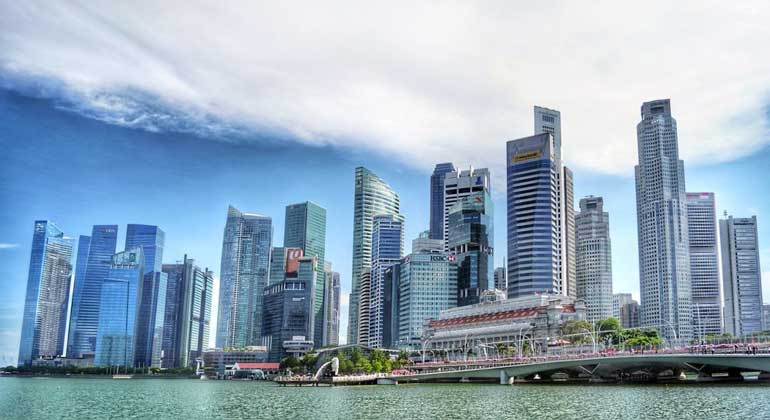
Singapore has drawn on reserves equivalent to more than 20 years of past budget surpluses to combat the blow from the pandemic. Image by Jason Goh / Pixabay

Singapore said it will support companies that hire new local workers in the next six months under a program that’s aimed at boosting the domestic workforce during the pandemic.

The government plans to disburse S$1 billion ($733 million) to encourage companies to “bring forward their hiring plans,” the manpower ministry said in a statement on Friday. The jobs must pay a gross monthly wage of at least S$1,400, and a company’s incentive will be reduced if existing employees leave, it said.

Eligible companies under the Jobs Growth Incentive program will receive wage support of as much as to S$15,000 for each local hire under 40 years old and S$30,000 for older workers. The government will pay 25% of the first S$5,000 of monthly salaries for those under 40 for a year, and 50% for those over that age, it said.

Singapore has drawn on reserves equivalent to more than 20 years of past budget surpluses to combat the blow from the pandemic. The government last month announced additional support measures of S$8 billion—including the S$1 billion Jobs Growth Incentive program—to help businesses and workers, adding to some S$93 billion in earlier pledges of aid for the economy.

The topic of local employment has been in focus recently, with Singapore authorities making several moves to support domestic talent and curb the number of foreign employees on its shores. Last month, the government announced an increase in the minimum salaries for some foreign pass holders, which could make it tougher for companies to hire overseas workers over Singaporean applicants.

The country is facing the worst recession in its history amid the coronavirus pandemic. Singapore’s unemployment rate rose to 2.9% in the second quarter, the highest since a decade ago during the global financial crisis. — Bloomberg

Factory output continues slump with 11.9% drop in July

FACTORY OUTPUT extended its losing streak to a fifth month in July, with an 11.9% year-on-year decline in the Volume of Production Index (VoPI), the Philippine Statistics Authority (PSA) said Friday.

The PSA was reporting preliminary VoPI results, which form part of the PSA's Monthly Integrated Survey of Selected Industries.

The decline was less than the revised 12.5% drop recorded in June, but deeper than the year-earlier decline of 8.5%.

In the seven months to June, the decline in factory output averaged 12%, compared with the 8.8% drop in the year-earlier data.

In a statement, the PSA said the VoPI's July performance departed from the June trend due to a 400% increase in the index tracking the petroleum products industry group in July, after it posted a gain of 16.1% in June. Also posting gains were two other industries – wood and wood products at 14.4% (from 19.9%) and chemical products 0.1% (from 6.3%).

Seventeen out of 20 industry groups registered negative growth in July, with seven posting slower declines: footwear and wearing apparel (-33% from -41.4%); beverages (-21.4% from -22.7%); non-metallic mineral products (-19.4% from -29.9%); printing (- 34.4% from -58.2%); miscellaneous manufactures (-7.2% from -18.8%); basic metals (- 1.9% from -3.8%); and leather products (-28.1% from -36.4%).

Capacity utilization averaged 75.4% in July. Only seven of the 20 sectors registered capacity utilization rates of at least 80%.

In a statement, the National Economic and Development Authority (NEDA) said the July reading marked a third straight month of reduced rates of decline.

"While manufacturing is not yet in positive territory, the trends of the volume and value of production in the last three months indicate an improvement in the trajectory of economic activity. This momentum suggests a gradual recovery of demand in the coming months until the end of the year," Acting Socioeconomic Planning Secretary Karl Kendrick T. Chua was quoted as saying in the NEDA statement.

Following the 38.8% contraction in April, VoPI declined 24.5% in May and 12.5% in June.

NEDA expects factory output "to remain subdued in the near-term as businesses expect the pandemic to have a lingering impact on production."

Sergio R. Ortiz-Luis, Jr., president of the Philippine Exporters Confederation, Inc. (Philexport), said the slower decline in July is "not a surprise" because of the easing in lockdown restrictions. "Hopefully by the end of the year, more jobs would be opened and transportation, such as buses, will be operational," he said in a phone interview.

Rajiv Biswas, Asia Pacific chief economist of IHS Markit, said the near-term outlook for manufacturing is "likely to be weak," noting that Metro Manila and the surrounding provinces have been moving in and out of stricter quarantine regimes.

"The IHS Markit Philippines Manufacturing Purchasing Managers Index (PMI) for August showed that new work inflows contracted sharply in August as movement was further restricted, while some sectors were forced to operate at reduced capacity," Mr. Biswas said in an e-mail.

"According to the survey, a net positive number of businesses expected an increase in output over the coming year. However, business confidence on the outlook remained subdued, reflecting the uncertainty of the path of the pandemic and lockdown measures," he added.

The Philippine manufacturing PMI of 47.3 in August was lower than the 48.4 reading in July and 49.7 in June.

A PMI reading above 50 indicates an expansion in activity; below 50 signals a contraction.

Mr. Biswas said while IHS Markit expects the Philippine economy to rebound next year, the pace and timing of the recovery remains dependent on the regulatory approval of a coronavirus vaccine and the rollout of immunization programs. — Ana Olivia A. Tirona

Japan hoping subway project contributes to ‘V-shaped’ PHL recovery

Japanese Ambassador to the Philippines Koji Haneda expressed the hope that the Japan-backed Metro Manila subway will help the Philippines achieve a “V-shaped” economic recovery, with the project expected to generate thousands of jobs.

“I hope it can help lead the Philippines to a possible V-shaped economic recovery, while it lays down the foundation for a more prosperous next generation. I look forward to marking another milestone with you, our partners, in our quest to make the Metro Manila Subway a staggering success,” Mr. Haneda said Friday after the virtual presentation of the six tunnel boring machines currently in Japan that will be used to construct the Philippine capital’s first subway line.

Transportation Secretary Arthur P. Tugade said the construction and operations of the 34-kilometer subway will generate 9,000 direct jobs and up to 50,000 indirect ones. He also assured the public that the subway, once completed, will not be affected by flooding.

“The ground testing has been done extensively…. Will there be flooding in the subway? No. What is the assurance? JIMT (JIM Technology Corp.) is the assurance. The technology of our Japanese construction partners is the assurance. Their experience is our assurance,” Mr. Tugade said.

He added he wants the “partial operability section” of the project from Barangay Ugong in Valenzuela City to North Avenue in Quezon City completed by December of 2021.

Hangarin po namin na ang partial operability ay magawa bago magtapos ang 2021… Pamaskong handog natin yan na may partial operability (We hope to achieve partial operations as a Christmas gift by the end of 2021),” he said.

The first tunnel boring machine is expected to arrive from Japan in January.

“Each of these gigantic machines can lay down up to 12 meters of tunnel segments per day, and excavate, daily, up to 600 cubic meters of soil,” Undersecretary for Railways Timothy John R. Batan said.

Assistant Secretary Goddes Hope O. Libiran has said the tunneling work is expected to begin in the “second half of the year.”

The Metro Manila Subway will have 17 stations: East Valenzuela, Quirino Highway, Tandang Sora, North Avenue, Quezon Avenue, East Avenue, Anonas, Katipunan, Ortigas, Shaw, Kalayaan Avenue, Bonifacio Global City, Lawton, Senate, FTI, NAIA Terminal 3, and Bicutan.

The government broke ground on the first three stations in February 2019 after the Transportation department signed a P51-billion deal with the Shimizu joint venture, which consists of Shimizu Corp., Fujita Corp., Takenaka Civil Engineering Co. Ltd., and EEI Corp.

The Philippines and Japan signed in March 2018 the first tranche of the P355.6-billion loan for the project.

“We…fully understand that there is much work to be done and more challenges ahead but we assure our partners in the Department of Transportation and the Government of the Philippines that JICA (Japan International Cooperation Agency) is a partner you can trust to provide high-quality and innovative solutions for your country’s development goals and facilitate ‘win-win’ partnerships between the Japanese and Filipino peoples,” JICA Chief Representative Eigo Azukizawa said. — Arjay L. Balinbin

Metro Manila water allocation cut after decline in Angat Dam levels

THE WATER allocation for Metro Manila has been reduced to 46 cubic meters per second (cms) from 48 cms to address the declining water levels in Angat Dam, the National Water Resources Board (NWRB) said.

In a mobile phone message, NWRB Executive Director Sevillo D. David Jr. said Angat Dam experienced low rainfall at its watershed during July and August.

"We reverted to the regular location of 46 cms considering the current level of Angat Dam," Mr. David said.

On Friday morning, water levels at Angat Dam fell 16 centimeters to 179.53 meters, below the dam's minimum operating level of 180 meters and far from its normal elevation of 212 meters, according to the government weather service, known as PAGASA.

However, Mr. David said the agency is looking forward to the rainfall projected by PAGASA.

"We are guided by the near-normal to above-normal rainfall projections of PAGASA for the rest of the year and probable occurrence of a La Niña episode by the last quarter of the year," Mr. David said.

Mr. David said the National Power Corp. (NPC), the National Irrigation Authority (NIA), and PAGASA are monitoring the situation and the possible impact on irrigation and the water supply of Metro Manila, which depends largely on Angat.

"Considering that we are at the middle part of the wet cropping season in Bulacan and Pampanga, coupled with the need for steady supply of water for Metro Manila as a preventive measure against the coronavirus disease 2019 (COVID-19), water allocation for September is currently maintained at 46 cms," Mr. David said.

Mr. David said the NWRB is looking for other sources of water that may assist in meeting the water requirements of Metro Manila such as Laguna de Bay and deep wells.

"We are also expecting some local inflows to the Metropolitan Waterworks and Sewerage System (MWSS) reservoir during this rainy season to complement raw water releases from Angat Dam," Mr. David said.

Mr. David appealed to the public to use water responsibly while Angat levels deteriorate. — Revin Mikhael D. Ochave

Foreign borrowing for pandemic measures hits $8.83 billion

Foreign borrowing to fund pandemic-containment measures hit $8.83 billion in August, the Department of Finance said Friday.

"As of the end of August, the Department of Finance 9DoF) has secured a total of $8.83 billion in financing for our COVID-19 response efforts from our development partners and commercial partners," Finance Secretary Carlos G. Dominguez III told Congress Friday.

Some $5.98 billion was in the form of budget support from the Asian Development Bank (ADB), World Bank, Asian Infrastructure Investment Bank (AIIB), the Development Agency of Banks and the Japan International Cooperation Agency (JICA).

In additipn, the government raised $2.3 billion from global bond offerings, and received $496.36 million in grants and loans from development partners.

"Total borrowing for 2020 and 2021 is projected to reach P3-trillion to support priority expenditure necessary for the country's swift recovery from the COVID-19 crisis and public investment in infrastructure and social services," Mr. Dominguez said. He added borrowing is expected to total P2.3 trillion by 2022.

Mr. Dominguez was speaking before the House appropriations committee during the Development Budget Coordination Committee's briefing on the P4.506-trillion national budget for 2021.

The Department of Budget and Management (DBM) said P1.347 trillion of the budget will go to economic services, P1.663 trillion to social services, P210.6 billion to defense, P724.2 billion to general public services and P560.2 billion to debt service.

Budget Secretary Wendel E. Avisado said P212.39 billion will go to the health system to fund COVID-19 programs under Universal Health Care (UHC).

He also said the 2021 spending plan allocated P1.107 trillion to infrastructure, which is expected to generate 140,000-200,000 jobs next year.

University of the Philippines political science professor Ranjit S. Rye also recommended to the panel an increase in the P2-billion allocation to micro, small and medium enterprises (MSMEs).

Acting Socioeconomic Planning Secretary Karl Kendrick T. Chua said that the proposed Bayanihan to Recover as One bill (Bayanihan II) will inject capital into government financial institutions for lending to MSMEs.

"There is a feature that allots P20 billion for GFIs so they can… multiply (lending) 10 times so that they can reach out to more enterprises," Mr. Chua said. — Charmaine A. Tadalan