Philippine shares ended the trading week in positive territory as investors responded favorably to recent reports on the country’s lower inflation and unemployment rates.
The bellwether Philippine Stock Exchange index (PSEi) rose 12.23 points or 0.21% to 5,785.09 while the broader all-shares index climbed 4.21 points or 0.12% to 3,493.73.
In a mobile phone message, PNB Securities, Inc. President Manuel Antonio G. Lisbona said the market ended in the green as investors focused on favorable labor and inflation statistics.
“Latest unemployment figures are taken as a positive cue for investors to buy the market while the recent inflation rates imply that the national government’s stimulus efforts have not yet caused the prices of commodities to rise,” Mr. Lisbona said.
“The latest inflation rate also keeps the likelihood of the monetary tightening low for the meantime,” he added.
On Thursday, the Philippine Statistics Authority (PSA) reported a 10% unemployment rate for the month of July, which is equivalent to 4.6 million jobless people.
The latest figure is higher compared with 5.4% in the same period last year. It is significantly lower than the record 17.7% in April this year.
PSA chief Claire Dennis S. Mapa said the easing of quarantine restrictions contributed to the current unemployment figures.
Meanwhile, the PSA reported on Friday that the country’s inflation rate eased to 2.4% in August, lower than the previous figure of 2.7% in July.
The PSA said the lower inflation rate was due to the decelerated price increases for the heavily weighted food and non-alcoholic beverages index.
Philstocks Financial, Inc. Research Associate Claire T. Alviar said that aside from the unemployment figures and inflation rates, the local market rose on last-minute bargain hunting.
“Last-minute bargain-hunting lifted the bourse, up by 0.21%. Investors hunted bargains after the PSEi declined near the 5,700 support level,” Ms. Alviar said.
On Friday, most of the market’s sectoral indices declined except for property, which rose 46.25 points or 1.78% to 2,636.27 and holding firms at 35.35 points or 0.59% to 5,998.23.
Mining and oil dropped 170.65 points or 2.76% to 5,992.08; industrials shrank 82.35 points or 1.04% to 7,814.5; services declined 19.48 points or 1.32% to 1,455.41; and financials fell 5.27 points or 0.46% to 1,126.41.
Trading value was at P5.45 billion on Friday with 554.57 million shares changing hands, against Thursday’s P5.27 billion with 961.02 million shares.
Decliners outpaced advancers, 104 versus 77, while 51 names ended unchanged.
Net foreign selling dropped to P770.19 million against P1.12 billion during the previous day.
“We may have to observe next week if the market would hold above the support at the 5,700 area. Nearest resistance may be pegged at the 6,000 level,” Timson Securities, Inc. Head of Online Trading and Trader Darren Blaine T. Pangan said in a mobile phone message.
“We expect the market to move within 5,500 to 5,800 barring any shocks or surprises,” PNB’s Mr. Lisbona said.
— Revin Mikhael D. Ochave
Aboitiz Power Corporation’s fund remittances to its host communities have reached P508.2 million to date, highlighting the organization’s commitment to supporting its stakeholders and helping the country recover from the impact of COVID-19.
Through the Department of Energy’s (DOE) Energy Regulations 1-94 (ER 1-94) program, AboitizPower and its partners have directly downloaded P148.2 million to 174 host beneficiaries across the country, with around P34 million still awaiting turnover.
Meanwhile, another P359.97 million from various AboitizPower-led generation companies, accumulated as of 2019, has already been remitted by the DOE to the host beneficiaries.
“We are glad that these funds are now with our communities as these will ensure they have the resources to fund crucial projects in their areas. Recent developments have also allowed them to use these remittances specifically to bolster their campaign against COVID-19,” AboitizPower President and CEO Emmanuel V. Rubio said.
The ER 1-94 Program is a policy under the DOE Act of 1992 and the Electric Power Industry Reform Act of 2001 (EPIRA), which stipulates that host communities will get a share of one centavo for every kilowatt-hour (P0.01/kWh) generated by power plants operating in its area.
The fund can be used by host beneficiaries for the electrification of areas or households that have no access to power, development and livelihood programs, as well as reforestation, watershed management, health, and environmental enhancement initiatives.
“Given the severity of the COVID-19 crisis, we at the DOE came up with the necessary circular that would enable host LGUs to use their available ER 1-94 funds to augment their COVID-19 response funding. We are pleased to learn that our vision is being fully realized. Malayo ang nararating ng bawat tulong sa panahon nitong pandemya (Every help goes a long way during this pandemic),” DOE Secretary Alfonso G. Cusi said.
With the new circular covering ER 1-94 funds, host LGUs can now use these shares to help manage the effects of the new virus, in accordance with the Bayanihan to Heal as One Act. This includes the facilitation of mass testing by providing and constructing facilities, as well as acquiring proper medical testing kits.
“More than the fact that this is the obligation of power generation companies to its host communities, this is a manifestation of our commitment to supporting our partners in any way we can, especially during these challenging times,” Rubio added.
AboitizPower subsidiaries Therma South, Inc. (TSI) and Hedcor were the latest to remit to their host communities, with about P26 million already downloaded to Davao City alone. Around P36 million has also been remitted by TSI and DOE to other various local governments in the Davao region.
These financial benefits have funded several projects across AboitizPower’s host communities, including COVID-19 initiatives in some cities and municipalities, which AboitizPower and its partner local government units work closely on to identify and implement.
The LGUs of Navotas in Metro Manila, Maco in Davao de Oro, and Nasipit in Agusan del Norte recently turned over relief goods to over 7,600 households in their respective communities through funds from the AboitizPower Oil Business Unit.
AboitizPower’s solar and geothermal units have also helped LGUs in Albay, Batangas, Laguna, and Negros Occidental build holding areas and distribution centers, provide medical and PPE supplies to frontline workers, decontaminate facilities, and distribute relief goods to feed low-income households during the quarantine period.
During this unprecedented time of change, companies needed to adjust to the new challenges and economic conditions through innovative, digital, and contactless strategies. However, as the economy continues to decline due to limited economic activities, social distancing, and stay-at-home measures, several companies had temporarily closed or filed for bankruptcy, mainly those that rely on foot-traffic, physical contact, and large gatherings. Some leaders may have looked back and hoped they invested early in digital, data-driven, and cloud technologies to be adaptive and have a steadfast and agile business function. Pivoting or shifting from the standard practice to a whole new level of business approaches – going digital and implementing a remote distributed workforce of one’s business operations is alone challenging and requires technical knowledge and expertise for businesses – added to that is the financial constraints.
To arrive at the well-planned decisions and proactive business to navigate in the new normal, leaders or business owners must deem to understand how to redefine or restart their business and embark on the Digital Transformation journey for them to stay afloat and recover.
Efforts to sustain business
At this time, probably most businessmen have already been hearing about Digital Transformation and what it can do for business. If there is a time to be responsive and invest in Digital Transformation to strengthen one’s leadership, the time is now. There is no one-size-fits-all solution because a business structure, function, and workforce depend on its industry and maturity. Businesses must take advantage of the unexpected situation to assess opportunities and establish new strategies to mirror the upturned business landscape under the prevailing circumstances—considering the health protocols and compliance with what the government mandates. Restarting or reopening a business will never be the same as the usual work environment in the pre-pandemic period—with safety measures and workplace policies becoming a mandatory commitment. When possible, remote working should be highly encouraged to reduce foot traffic in public and keep the workforce safe in the comfort of their own homes.
Truth be told, the best innovations are created out of specific and urgent needs or problems. Businesses must identify the scope that needs to be strengthened or enhanced, such as budget, operations, workforce, IT infrastructure, supply chain, product or service portfolio, etc. Then, consider planning a change or improvement of business models and approach, leveraging digital capabilities and online channels for services and sales, analyzing the current consumer behavior, or changing or expanding the product portfolio with the integration of enabling technologies.
Significant steps towards Digital Transformation
The key here is to onboard and remobilize the whole workforce as well and get them to be involved in strategic planning, at the same time providing them guaranteed safety and job security. Leaders must nurture their distributed workforce what they would expect from them – guidelines, monitoring, and productivity measurement. By all means, a new workplace environment should also have the right tools and technologies to build a robust and secure workforce environment.
Also, the current consumer behavior has shifted to digital and online activity and presented a high demand for essential goods and services. If possible, alter the brand positioning or product offering that can fulfill current and untapped needs. Then creating a contactless experience as an avenue for sales and supply chain for both employees and customers helps businesses gain a competitive edge in the market.
Crucial short- or long-term business decisions must be made by leaders to survive the following days or months. The survival of businesses requires new business approaches and technology adaptation. Leaders must define a solid plan for reopening that includes current market conditions, scalability, and business resiliency that responds to any unforeseen events – whether it is economic or health crisis.
As technology entrepreneurs perceived it, proactive businesses that gradually adjusted in these prevailing conditions float efficiently in the tidal wave of changes and emerge in a powerful state once the situation subsides.
Jump-starting your Digital Transformation journey
New opportunities and re-structuring the business models today seems like it would be challenging and complex and cost a little or more, but the benefits outweigh the cost and short-lived challenges for a long time. An evolving business is challenging without external help, but government programs, business experts, and technology entrepreneurs are more than willing to support companies thrive in this period.
AMTI, one of the most diversified ICT companies in the Philippines and a Digital Transformation enabler and champion, helps businesses with operational and remote-first challenges through its innovative solutions offerings and consulting services.
Talk to AMTI now to help you analyze your current IT Infrastructure and remote-first work readiness to come up with recommendations and solutions tailored for your business.You may email us at inquiries@amti.com.ph.
FACTORY OUTPUT declined for the fifth straight month in July, the Philippine Statistics Authority (PSA) reported earlier this morning.
Preliminary results of the PSA’s latest Monthly Integrated Survey of Selected Industries showed factory output, as measured by the Volume of Production Index (VoPI), contracting by 11.9% year-on-year in July.
The decline was slower than the 12.5% decline recorded in June, but faster compared to the minus 8.5% reading in July 2019.
Year to date, the decline in factory output averaged 12.1% compared to the 8.8% decline in 2019’s comparable seven months.
In a statement, the PSA said the VoPI’s slower downtrend in July compared to June was brought about by the increases in the indices of three industry groups: petroleum products (400% in July from 16.1% in June); wood and wood products (14.4% from 19.9%); and chemical products (0.1% from 6.3%).
Seventeen out of 20 industry groups registered negative production in July with seven posting slower declines: footwear and wearing apparel (-33% from -41.4%); beverages (-21.4% from -22.7%); non-metallic mineral products (-19.4% from -29.9%); printing (-34.4% from -58.2%); miscellaneous manufactures (-7.2% from -18.8%); basic metals (-1.9% from -3.8%); and leather products (-28.1% from -36.4%).
Average capacity utilization — the extent to which industry resources are used in the production of goods — averaged 75.4% in July. Only seven of the 20 sectors registered capacity utilization rates of at least 80%. — Ana Olivia A. Tirona
INFLATION eased to a three-month low of 2.4% in August, bringing the average inflation to 2.5% so far this year, the Philippine Statistics Authority reported this morning.
Last month’s year-on-year inflation rate was slower than 2.7% in July 2020, but faster than the 1.7% in August 2019.
The latest reading, which was below the median estimate of 2.8% in a BusinessWorld poll conducted last week, fell at the low end of the Bangko Sentral ng Pilipinas’ 2.5%-3.3% forecast range for August. This was also the lowest since the 2.1% inflation rate in May 2020.
“The slowdown in inflation in August 2020 was primarily due to the deceleration in the inflation for the heavily-weighted food and non-alcoholic beverages, which slid at an annual rate of 1.8% during the period from 2.4% in the previous month,” the PSA said in a statement.
Year to date, inflation averaged 2.5%, still within the BSP’s 2-4% target band and slower than the 2.6% forecast for the entire 2020.
Core inflation, which excludes volatile prices of food and fuel, settled at 3.1% in August. This was slower than 3.3% in July, but faster than the 2.9% logged in August 2019.
Food-alone inflation eased to 1.7% from 2.5% the previous month, but was faster than the 0.3% a year ago.
Moreover, inflation for the bottom 30% income households logged in at 2.7%, slower than July’s 2.9%, albeit faster than August 2019’s 1.7%. In the eight months to August, inflation for this segment also settled at 2.7%
The consumer price index (CPI) for the bottom 30% modifies the model basket of goods to reflect the spending patterns of the poor. This compared to the headline CPI which measures inflation as experienced by the average household. — Marissa Mae M. Ramos
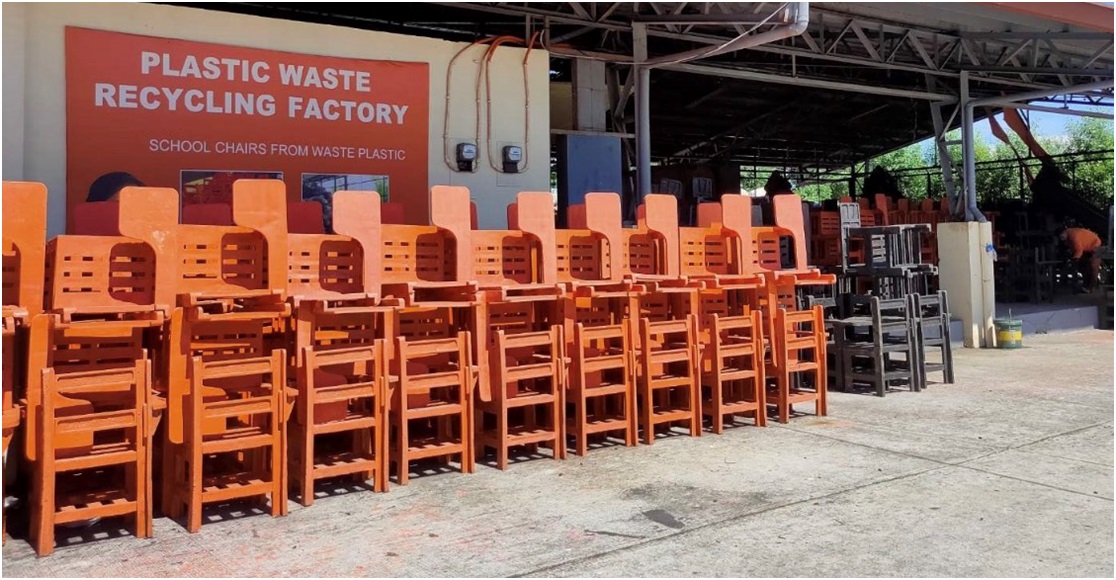
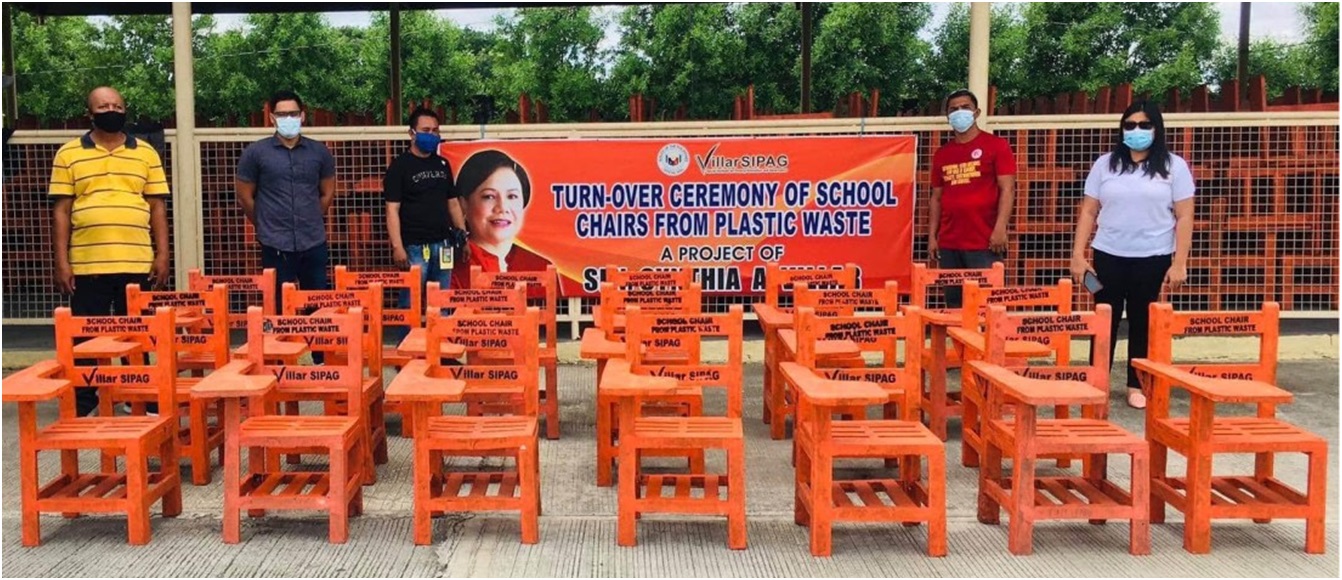
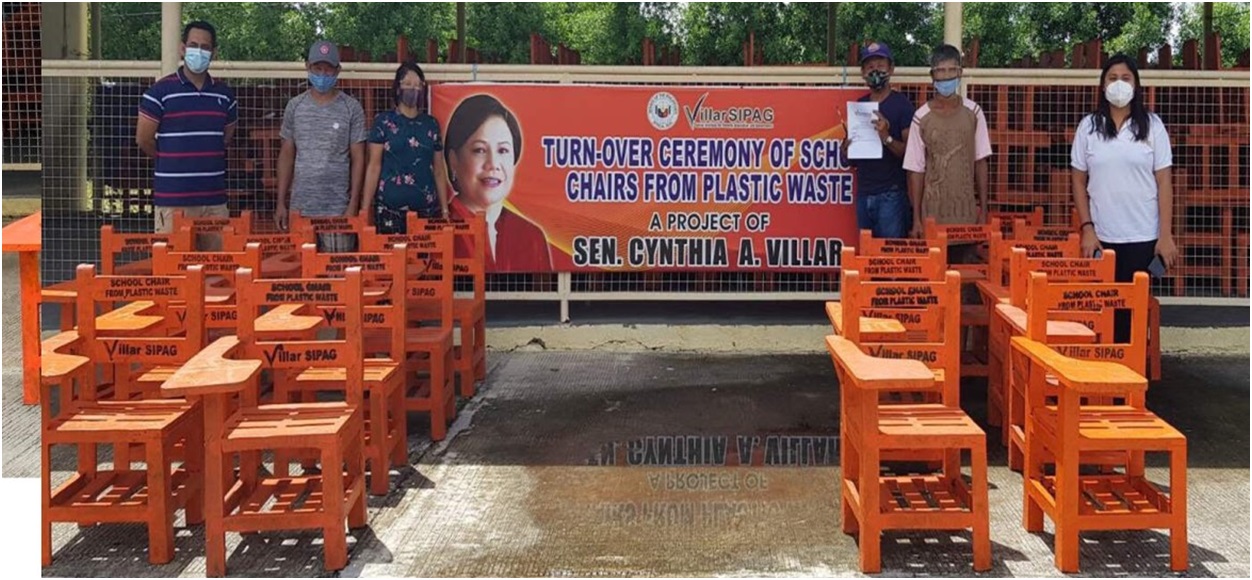
To date, about 1,056,000 kilos of plastic wastes have been collected and turned into armchairs in the plastic recycling program spearheaded by Senator Cynthia Villar. This move has helped provide livelihood while providing solutions to the country’s problem on solid waste management and the lack of chairs in public schools.
The first Villar Social Institute for Poverty Alleviation and Governance (Villar SIPAG) Waste Plastic Recycling Factory was established in Barangay Ilaya, Las Pinas City in March 2013. Two other plastic factories were built in San Miguel, Iloilo and Cagayan de Oro City in 2017 and we increased the capacity of Las Pinas plastic factories to 600 chairs chairs per month.
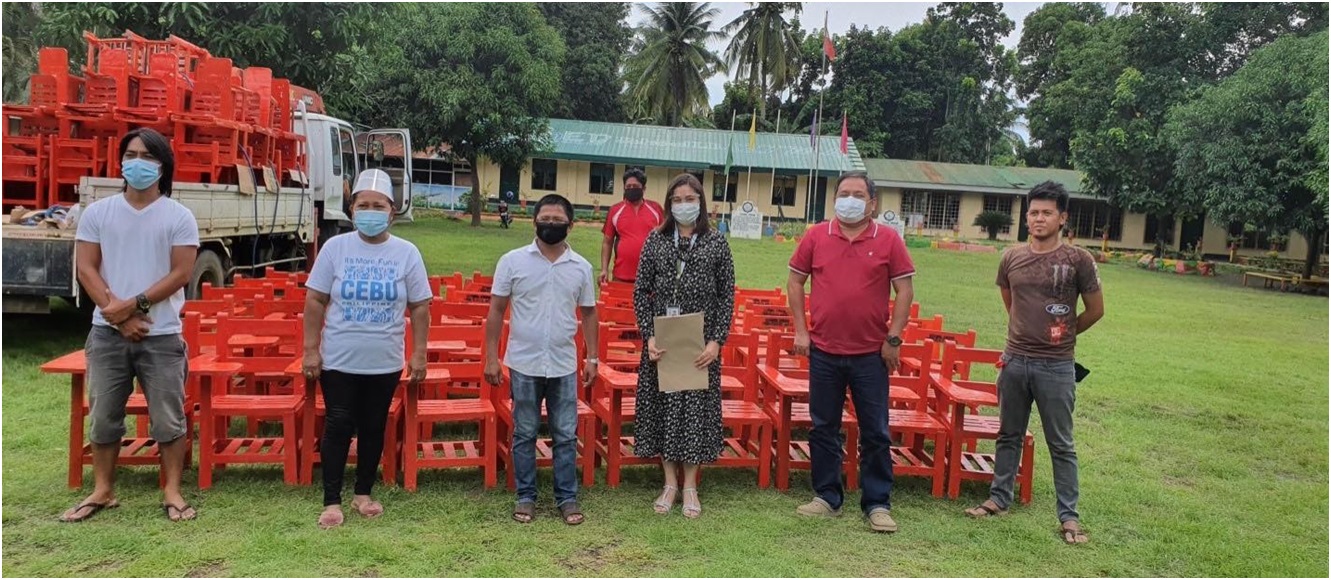
Since then, more than 52,800 chairs have been donated for free to public schools, learning sites and government and non-government associations all over the country.
“In turning plastic wastes into useful furniture like school chairs, we are not only reducing the amount of plastic garbage that goes into our water resources, which harms the environment. We are also able to provide livelihood sources to the poor, because the jobless, the non-skilled and even the physically disabled are employed by the factories,” Villar said.
When it was inaugurated, the Php 6-million Las Pinas plant was only the second of its kind. About 20 kilos of mixed “soft plastics”—such as food wrappers—are needed to make a chair, which can be fashioned to look like wooden pieces and comes with replaceable parts.
Workers from the community are employed to collect and segregate the plastic wastes, which are then shredded, washed, dried, melted and molded in the plant.
Contaminants found in the raw materials are removed in the process. Tests show that armchairs had low levels of lead (42 parts per million) and no traces of mercury.
Villar, chairperson of the Committee on Environment and Natural Resources, emphasized that environmental protection, particularly proper waste disposal and handling and recycling, is very important with or without a pandemic.
“We continue to generate waste even if we are under quarantine. If disposed improperly, waste will overwhelm our landfills and will clog our drainage. This will cause flooding and contribute to the spread of diseases,” she said.
With a capacity to produce 300 chairs a month, the first plastic factory in Las Pinas has manufactured more than 10,800 chairs in 3 years and increased its capacity at 600 chairs per month in 2017 of which are already donated to public schools in Benguet, Apayao, Kalinga, Ilocos Sur, La Union, Pangasinan, Ilocos Norte, Isabela, Cagayan Valley, Compostela Valley, Nueva Vizcaya, Bataan, Bulacan, Nueva Ecija, Zambales, Pampanga, Aurora, Tarlac, Cavite, Laguna, Batangas, Rizal, Quezon, Occidental Mindoro, Oriental Mindoro, Albay, Camarines Norter, Camarines Sur, Catanduanes, Sorsogon, and Masbate.
It also donated to public schools in the National Capital Region; namely, Caloocan, Las Pinas, Makati, Malabon, Mandaluyong, Manila, Marikina, Muntinlupa, Paranaque, Pasay, Pasig, Quezon City, San Juan, Taguig and Valenzuela.
Also in partnership with former Vice President Noli De Castro’s Kabayan Special Patrol,school chairs were distributed to far flung areas and indigenous communities.
Farm schools, TESDA learning centers, private companies, non-government organizations, and civic groups in Luzon are also beneficiaries of the program. We also donated chairs to Iloilo, Capiz, Negros Occidental, Leyte, and Northern Samar.
The latest batch of armchairs manufactured by the Las Pinas plant was donated last month to San Juan Science High School in San Juan City, Longos Elementary School in Malabon City, and Gomburza Elementary School in Caloocan City. Armchairs were also turned over to farm schools and learning sites in San Felipe and San Narciso in Zambales; Calauag, Quezon; and Guimba, Nueva Ecija.
Since the Iloilo plastic factory started operations in 2017, school chairs have been donated to 75 public schools in the provinces of Iloilo, Negros Occidental, Samar, Aklan, Capiz, Romblon, and Antique. Also donated are chairs to ten local government units in the Visayas and a senior citizen’s association in La Carlota.
Villar Sipag Plastic Waste Recycling Factory at Barangay San Jose, San Miguel, IloiloDonation of 50 chairs to the local government unit of Oton IloiloDonation of 50 chairs to the local government unit of San Dionisio, Iloilo
The plastic factory in Cagayan de Oro was able to produce armchairs for public schools, TESDA schools, homeowner’s association, senior citizens’ organization and local government units in Lanao del Norte, Lanao del Sur, Davao del Sur, Davao del Norte, Davao, Misamis Occidental, Misamis Oriental, Bukidnon, Zamboanga del Norte, Cagayan de Oro, and Basilan.
Villar has sounded the alarm on the country’s worsening problem on plastic wastes. Citing a study from the University of Georgia, the Philippines is the Top 3 largest producer of plastic waste leaking into the ocean, next to China and Indonesia.
She authored Senate Bill No. 1331 or the Extended Producers Responsibility (EPR) Act of 2020 which seeks to institutionalize the practice of EPR in waste management. It also amends the 20-year-old Republic Act 9003 or the Ecological Solid Waste Management Act.
“This measure makes sure that the responsibility for the entire life cycle of plastic products rests on the manufacturers. It will mandate manufacturers to recover plastic wastes from their products as a mechanism towards achieving an efficient solid waste management,” Villar said.
The Nacionalista Party senator also authored Senate Bill 333 or the Single-Use Plastic Product Regulation Act, which seeks to regulate the manufacturing, importation, and single-use of plastic products.
“We should encourage Filipinos to be responsible stewards of the environment. There should be a shared responsibility among us when it comes to waste management. There is no exception because we all generate wastes,” said Villar.
Villar Sipag Plastic Waste Recycling Factory at Gran Europa, Barangay Lumbia, Cagayan De Oro CityKabulawan Elementary School, Lagonglon, Misamis OrientalBukidnon National High School, Malaybalay City
The coronavirus disease 2019 (COVID-19) global pandemic is not only a public health crisis; it has also severely affected the economy and financial markets across the world. In third-world nations like ours, the impact is felt especially hard in impoverished areas and poor communities in the countryside. Even those with stable employment, like civil servants and public school teachers, are feeling the crunch, as the pandemic has strained their already meager finances.
And because the government has been dealing with quite a lot of concerns lately, some segments from the private sector have started initiatives to address both the financial and health concerns of those marginalized sectors and rural communities.
In response to the challenges brought about by the COVID-19 pandemic, Sun Life Financial-Philippines Foundation, Inc. (Sun Life Foundation), the philanthropy arm of Sun Life Philippines, has initiated Rise Brighter PH, a program that promotes both financial security and health.
Two-pronged approach
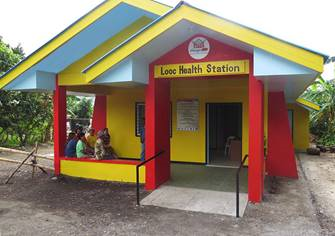
The Baranggay Health Station established in Brgy. Looc, Nasugbu, Batangas
Rise Brighter PH has a two-pronged approach: Sun Pera-Aralan 2020 which is a financial management program catering to public school teachers, and the establishment of Sun Life Barangay Health Stations that will serve as accessible sources of primary health care in poor and rural municipalities. Each program aims to benefit 125,000 individuals within the next five years.
“As Sun Life Philippines marks its 125th anniversary this year, Rise Brighter PH is our way of honoring our lifetime partnership with the Filipino people and letting them know that we remain at their side in these trying times. We have seen Filipinos rise above trials many times over, and we are confident that together, we will prevail,” shares Sun Life Philippines CEO and country head Benedict Sison, who also sits as chairman of Sun Life Foundation.
Personal finance for teachers
For the program’s financial literacy component, the Sun Pera-Aralan 2020 uses the Peso Sobre tool to make saving a habit among public school teachers. In doing so, they can extend their salary until the next payday, and eventually lessen indebtedness. A Facebook community will gather shared experiences and inspiration from teachers enrolled in the program. Volunteer Sun Life advisors will also be on hand for consultations. An initial batch of 10,224 public school teachers has shown measurable success in terms of improved finances. Sun Pera-Aralan was implemented early this year in public schools in cooperation with AHA Behavioral Design, Inc. and the Department of Education (DepEd).
Boosting health care in rural areas
To address the health-care needs of rural communities, Sun Life established Barangay Health Stations. Each unit provides primary services like immunizations, consultations, follow-ups, and health lectures to benefit the immediate community. Barangay health workers and health cluster leaders manning the station will also be given adequate training, aside from having a community-based health and wellness program. A total of eight Sun Life Barangay Health Stations will be constructed across Batangas within the year.
“The Sun Life Foundation’s projects are anchored on our company’s purpose, which is to help Filipinos achieve lifetime financial security and live healthier lives. We earnestly hope that helping fulfill these needs, Rise Brighter PH will empower beneficiaries in their journey towards recovery. Moreover, may it give them hope that despite the challenges we’re currently facing, a brighter future is still on the horizon,” shares Sun Life of Canada (Philippines), Inc. and Sun Life Foundation president Alex Narciso.
PDEA warns: Prescription needed for Chinese medicine Lian Hua Qin Wen capsules
THE PHILIPPINE Drug Enforcement Agency (PDEA) on Thursday warned people against buying the traditional Chinese medicine Lian Hua Qing Wen from the black market or unregistered online sellers, saying this is a regulated drug that requires a prescription. The Chinese medicine that comes in capsule form has recently become popular amid the coronavirus outbreak. PDEA Spokesperson Derrick Carreon said both illegal sellers and buyers could face charges under the Comprehensive Dangerous Drugs Act of 2002. He explained that the medicine contains ephedra, a plant-based substance classified as dangerous, and should only be bought with proper prescription from doctors with a PDEA dangerous drugs license. The Dangerous Drugs Board (DDB) has set regulatory restrictions on the importation and sale of the Chinese traditional medicine. In a resolution, the board said importers or distributors of Lian Hua Qing Wencapsules should first secure a license to import drug preparations containing controlled chemicals. Every batch of importation must also be accompanied by an import permit. — Emmanuel Tupas/PHILSTAR
New PhilHealth chief is ‘sure’ he can purge corruption
NEWLY-APPOINTED Philippine Health Insurance Corp. (PhilHealth) President Dante A. Gierran is confident that he can achieve his main task of addressing irregularities and purging corruption from the agency. Asked during the regular Palace briefing on Thursday if he feels he can accomplish his goal within the remaining term of President Rodrigo R. Duterte that ends mid-2022, he said, “Sigurado yan… Kakayanin ko talaga (That’s for sure… I will really work on it).”In his initial media interviews a day after his appointment Monday, Mr. Gierran acknowledged the gargantuan job of addressing the numerous alleged anomalies that have long plagued PhilHealth, especially given his lack of background on public health. Mr. Gierran, a retired head of the National Bureau of Investigation (NBI), said he aims to lead with “transparency” to regain the public’s trust on the state insurer. “We have to protect whatever is to be protected, with what is left, at the PhilHealth and we have to rule with so much transparency,” he said. Mr. Gierran said he will reorganize PhilHealth as he can perform his role more efficiently if there are no members of the alleged syndicate involved in the anomalous activities. He also said he will support PhilHealth employees and officials who have been working honestly. “As a leader, I have to create an atmosphere and environment where people would not be afraid to communicate with me.” — Vann Marlo M. Villegas
THE COUNTRY’S unemployment and underemployment rates declined in July compared with those seen in April as lockdown restrictions were gradually eased. Read the full story.
Some jeepney drivers remain jobless as public transportation remains limited amid a general community quarantine in Metro Manila. — PHILIPPINE STAR/MICHAEL VARCAS
THE COUNTRY’S unemployment and underemployment rates declined in July compared with those seen in April as lockdown restrictions were gradually eased.
The July rates, however, were still higher when compared with those in the same month a year ago.
Preliminary results of the Philippine Statistics Authority’s July 2020 round of the Labor Force Survey (LFS) put the unemployment rate at 10%. This was lower compared with the record jobless rate of 17.7% in April 2020 and 5.4% in July 2019.
In absolute terms, this is equivalent to 4.571 million jobless Filipinos, lower than 7.254 million in April, but higher than 2.437 million in July last year.
Likewise, the underemployment rate — the proportion of those already working but still looking for more work or longer working hours — was 17.3%, down from 18.9% in April but worse than the 13.6% in July 2019.
This is equivalent to 7.137 million underemployed Filipinos, higher than 6.388 million and 5.799 million in April 2020 and July 2019, respectively.
The size of the labor force was approximately 45.877 million out of the 74.061 million Filipinos aged at least 15 years old, yielding a labor force participation rate (LFPR) of 61.9%. This was higher than the 55.6% in April, but lower than 62.1% in the same survey round last year.
The employment rate, which is the proportion of the employed to the total labor force, registered at 90%. This was higher than the 82.3% in the previous survey round, but lower than last year’s 94.6%. The actual number of employed Filipinos reached 41.306 million as compared with April’s 33.764 million and July 2019’s 42.521 million.
Services accounted for 54.8% of employed Filipinos in July, down from 57.1% in April.
Meanwhile, the employment shares in agriculture and industry jumped to 26.3% and 18.8%, respectively, from 25.9% and 17%.
Working hours averaged 38.2 per week in July, more than the average of 35 hours in April. This, however, remained lower than the 41.8-hour average in July 2019.
Full-time workers, or those who worked for at least 40 hours in a week, made up 56.1% of the total employed in July. This was significantly higher than 29.2% in April 2020, but remained below the 67.9% in July last year.
Part-time workers accounted for 40.6%, up from the 32.4% and 31.3% in April 2020 and July 2019, respectively.
Unemployment rates in July varied widely across regions, ranging from as low as 3.8% in the Bangsamoro Autonomous Region in Muslim Mindanao (BARMM) to as high as 15.8% in the National Capital Region.
For underemployment, BARMM recorded the lowest rate at nine percent while the Mimaropa — the region that includes the provinces of Occidental and Oriental Mindoro, Marinduque, Romblon, and Palawan — posted the highest underemployment rate at 27.2%.
In a statement, Acting Socioeconomic Planning Secretary Karl Kendrick T. Chua said the results in July “show a direct link between the level of quarantine restriction and labor market outcomes.”
“In the first half of May 2020, 78.8% of the economy was placed under ECQ (extended community quarantine). As a result, GDP (gross domestic product) and unemployment worsened to record levels. In contrast, in the first half of July 2020, only 2.1% of the economy was placed under ECQ. The result is a significant reduction in the unemployment rate and the return of some 7.5 million jobs,” Mr. Chua said.
ING Bank N.V. Manila Senior Economist Nicholas Antonio T. Mapa said overall labor trends will take their cue from the pace of economic recovery.
“In July, we did see an improvement in underemployment as a number of workers were able to find work on a limited basis. This may be a move by some employers to provide employment for former workers but on a limited basis. The shift of labor to underemployed from unemployed may also be reflective of the partial lockdowns with some companies operating at half capacity or with restricted hours of operation,” he said in an e-mail to BusinessWorld.
Employers Confederation of the Philippines (ECoP) President Sergio R. Ortiz-Luis, Jr. said that despite the easing of restrictions, recovery may have been dragged by companies choosing not to rehire workers due to lack of mass transportation.
“If the government is able to solve the problem of mass transportation, it would help. Unfortunately, many of our MSMEs (micro, small, and medium enterprises) are closed and we cannot expect that it will be replaced,” he said in a phone interview.
PRE-PANDEMIC LEVEL BY 2022? So far, the unemployment rate averaged 11% in the three survey rounds this year.
Mr. Chua said the unemployment rate is expected to go down to 6-8% next year, assuming 2.4-2.8 million new jobs will be generated next year.
The 2021 forecast also assumes the coronavirus disease 2019 (COVID-19) is contained, quarantine restrictions are eased further, and the government’s recovery programs are implemented quickly.
Mr. Chua also sees the jobless rate to fall to 4-5% in 2022 if the vaccine for COVID-19 will be made available next year. If realized, this would mark the return to pre-pandemic levels when the unemployment rate hit 5.1% in 2019.
The latest projections on the jobless rate are lower than the Development Budget Coordination Committee’s July 28 estimates of 7-8% for 2021 and 8.5%-9.5% for 2022.
“The trend is actually a recovery. We do not expect a U-turn at any time and our assumption lies in the vaccine being available sometime in the middle or third quarter of next year. So we expect by 2022, we would have gone back to our trajectory which is around 4-5% unemployment rate which is also in our planned target,” Mr. Chua told reporters during the briefing.
In the same briefing, Bangko Sentral ng Pilipinas (BSP) Deputy Governor Francisco G. Dakila, Jr. said the July result could reduce uncertainty and prompt banks to ease lending standards.
“Although [the unemployment rate] is still elevated… this is a positive signal that should… reduce the uncertainty facing the business sector and… in bank lending,” Mr. Dakila told reporters.
A BSP study earlier showed the majority of banks tightened overall lending standards in the second quarter — the first following 44 consecutive quarters of broadly unchanged credit standards — when most parts of the country were under strict lockdown.
In an e-mail, UnionBank of the Philippines, Inc. Chief Economist Ruben Carlo O. Asuncion said employment will remain “tepid” as the economy reopens and domestic demand tries to recover.
“[T]he discovery and delivery of an effective vaccine will be key for further improvement of the unemployment rate,” Mr. Asuncion said.
Asian Institute of Management economist John Paolo R. Rivera said full recovery of the country’s labor market may take some time.
“[The second quarter] might have been the worst since it was the period of strictest community quarantine protocols. It cannot be rushed. It will depend on our collective action to contain the pandemic,” he said in a separate e-mail. – Michelle Anne P. Soliman with inputs from Beatrice M. Laforga and Luz Wendy T. Noble
Moody’s Investors Service sees the Philippine economy contracting by 7% this year, as the coronavirus pandemic drags on. — PHILIPPINE STAR/EDD GUMBAN
MOODY’S INVESTORS Service slashed its gross domestic product (GDP) forecast for the Philippines to -7% this year, after a deep recession in the first half dented hopes for a quick economic rebound.
“Our projection of an economic recovery in the second half — while still intact — will be less robust than previously assumed. Combining this view with the sharp contraction over the first six months of 2020, we have lowered our full-year real GDP growth forecast to a contraction of 7.0%, down from our earlier expectation of a 4.5% drop,” Moody’s said in a credit opinion on the Philippines.
Moody’s gave a more pessimistic outlook than the 4.5-6.6% contraction for 2020 projected by the government.
The economy fell into its first recession in 29 years after GDP shrank by 16.5% in the second quarter when most parts of the country were placed under an enhanced community quarantine (ECQ) to contain the coronavirus pandemic.
“The record contraction in the April-June quarter reflected the severe impact of the ECQ on domestic demand with household consumption falling 15.5% and gross fixed capital formation plunging 53.5%, both of which contributed to a collapse in import demand of around 40%,” Moody’s said.
It also cited the bleak labor market conditions and decline in remittance inflows that have dampened consumer spending.
Unemployment in July stood at 10%, representing 4.6 million jobless Filipinos, according to the Philippine Statistics Authority. This is an improvement against the 17.7% seen in April although still beyond the 5.4% recorded in July 2019.
Moody’s also noted the sharp drop in manufacturing conditions as operations have been disrupted by changing quarantine levels.
For 2021, Moody’s expects the country’s GDP to grow by 6.8%, a tad faster than the 6.5% it gave in June.
UNCERTAIN OUTLOOK The credit rater in July affirmed the Philippines’ Baa2 rating, which was given in December 2014. It also maintained a stable outlook, suggesting the rating is likely to be maintained over the next six months or two years.
“The stable outlook reflects the view that the recovery from the acute shock posed by the coronavirus outbreak will restore rapid economic growth relative to peers, complemented by the stabilization and eventual reversal of the deterioration in fiscal and debt metrics,” it said on Thursday.
However, Moody’s admitted the near-term economic outlook for the Philippines remains uncertain as coronavirus infections continued to rise globally, affecting its key trading partners and remittance sources.
“Continued domestic transmission poses risks of a wider return to stricter lockdown conditions, impeding the recovery projected to commence during the second half of 2020,” it said.
The Health department on Thursday reported 1,987 additional coronavirus infections, bringing the total to 228,403.
Moody’s also noted lower remittances from OFWs “could also weigh on incomes and consumption to a greater extent than we currently estimate.”
Remittance inflows dropped 4.2% to $14.019 billion in the first six months of 2020. The central bank projects remittances to decline by 5% this year due to the coronavirus crisis before growing by 4% in 2021. — Luz Wendy T. Noble
More than seven million Filipinos were jobless amid the lockdown in April. — PHILIPPINE STAR/EDD GUMBAN
By Adam J. Ang
ROGER ZUÑIGA, a 28-year-old building worker for Foundation Specialists, Inc., suddenly found himself out of work after being locked down for more than two months at a construction site in Pasay City near the Philippine capital.
He had to walk six kilometers to his employer’s office in the Makati central business district to sign his termination papers and get his last pay on June 6, having worked for the company as a contractual worker for almost a year.
“I had no idea why I was terminated,” Mr. Zuñiga said by telephone. “I was expecting that the company van would take me home to my house in Bulacan because public transportation was still scarce, but that didn’t happen.”
That building worker is among thousands of contract employees who have been asked to go as companies in construction, finance, insurance, retail and fast-moving consumer goods squeeze out temporary staff first to trim costs.
An employer is likely to cite the health crisis in ending employment contracts, but it has also been abused by some, said Rene O. Ofreneo, a labor professor at the University of the Philippines.
“Using authorized cause for job termination is subject to the rules of fair play, good faith and legal norms,” he said.A worker may also get terminated for “just cause,” including wrongdoing.
The Philippines entered into a recession after economic output shrank by 16.5% in the second quarter.
LABOR CRISIS More than seven million Filipinos were jobless amid a coronavirus pandemic in April, driving up the country’s jobless rate to 17.7% — a 15-year record.
As lockdown restrictions loosened, the unemployment rate eased to 10% in July, according to the statistics agency. This is equivalent to 4.6 million jobless Filipinos, lower than the 7.3 million in April but nearly double the 2.4 million a year earlier.
Underemployed Filipinos — those already working but still looking for more work — eased to 17.3% in July from 18.9% in April, but still higher than the 13.6% a year ago. This translates to 7.1 million underemployed Filipinos, slightly higher than the 6.4 million in April.
By sector, services made up the largest share of the employed population at 54.8% in July. Industry accounted for 18.8% and agriculture 26.3%.
Nine of 10 workers who got laid off were contractual employees, according to labor group Defend Jobs Philippines.
“The pandemic is worsening the state of the labor crisis,” spokesman Thaddeus Ifurung said.
“Contract workers don’t have security of tenure,” he said in a Messenger chat. “They’re the first to go when a company downsizes or closes.”
President Rodrigo R. Duterte last year vetoed what could have been a landmark law that sought to end labor-only contracting in the country. He said the measure could place companies at an “impossibly difficult predicament” that would eventually affect workers.
In June, the Philippines again landed on the top 10 dangerous places for workers in the 2020 Global Rights Index of the International Trade Union Confederation, the world’s largest group of labor unions.
The index rates countries based on six criteria, including the lack of guarantee or violations of workers’ rights.
When construction activities resumed in June, Mr. Zuñiga said they were not briefed about safety and health protocols on site.
“We did not have helmets, maybe because we had to wrap up the job and there was no need to enforce safety protocols,” he said. They were also not given face masks, which are now mandatory.
Defend Job’s Mr. Ifurung said companies that neglect their employees’ safety during the pandemic must be penalized.
Workplaces must especially activate their health and safety systems under the so-called new normal. Collective bargaining agreements also provide for sick leaves and health assistance to workers, he said.
Contract workers should be entitled to hazard pay given the dangers of working during the pandemic, said Remigio Saladero, Jr., a member of pro-bono lawyers’ group Pro-labor Legal Assistance Center, Co.
FLOATING STATUS “It’s very unfortunate that despite several promises from the Labor department and demands from labor organizations, contractual workers are still not entitled to any hazard pay,” he said.
A group of business process outsourcing (BPO) employees said more employers have been putting workers under a floating status during the pandemic while directly hiring replacements.
Four of 10 workers have said they were either in a floating status or under a “no work, no pay” setup, according to BPO Industry Employees’ Network.
“There is no guarantee if and when you can be re-profiled and you have to wait for six months of floating before the company finally puts you on redundancy,” group President Mylene Cabalona said in an e-mail. “That is the only time that you get compensated.”
Employees are floated when they fail to meet their productivity targets, she said. Some under a work-from-home arrangement are forced to work on site after their company-issued computer units are pulled out, “which is very risky nowadays,” she added.
The BPO group said four of five outsourcing employees worked from home and many of them have complained about higher utility bills after paying for their own internet.
The group has asked legislators, who earlier probed allegedly poor working conditions in the BPO sector, to pass a bill that will subsidize outsourcing workers.
While BPO companies must keep hiring workers to ensure uninterrupted operations, they should enjoy security of tenure, Ms. Cabalona said.
“Especially in these trying times, companies need to be more compassionate and extend more help to their employees,” she said. “Flexibility for business should never come at the expense of employees.”
Mr. Ifurung said the government must intervene in the country’s gloomy labor situation. Almost 100,000 workers were laid off in the first half, according to the Labor department.
“The government should be able to give them alternative jobs if private companies can’t hire them,” he said. He also urged lawmakers to allot a fund for retrenched workers looking for new positions.
About 10 million Filipinos will have lost their jobs by yearend, according to estimates by the Labor department.
Congress has approved a bill that gives Mr. Duterte special powers to deal with the pandemic, including realigning the budget for anti-coronavirus efforts. It’s only waiting for the President’s signature to take effect.
Meanwhile, three stimulus bills that seek to help the country recover from the pandemic are under consideration — one that will help banks get rid of bad assets, another that allows the government to boost infrastructure spending to create jobs and a third that will help small businesses affected by the crisis.
Mr. Zuñiga, the building worker, was staying at a friend’s house and had yet to go home to his four children in Bulacan.
“After more than two months, I’ve found a construction job in Taytay, Rizal and I’m off to start work soon,” he said. “It’s another contract job, but it’s better than nothing.”


 During this unprecedented time of change, companies needed to adjust to the new challenges and economic conditions through innovative, digital, and contactless strategies. However, as the economy continues to decline due to limited economic activities, social distancing, and stay-at-home measures, several companies had temporarily closed or filed for bankruptcy, mainly those that rely on foot-traffic, physical contact, and large gatherings. Some leaders may have looked back and hoped they invested early in digital, data-driven, and cloud technologies to be adaptive and have a steadfast and agile business function. Pivoting or shifting from the standard practice to a whole new level of business approaches – going digital and implementing a remote distributed workforce of one’s business operations is alone challenging and requires technical knowledge and expertise for businesses – added to that is the financial constraints.
 At this time, probably most businessmen have already been hearing about Digital Transformation and what it can do for business. If there is a time to be responsive and invest in Digital Transformation to strengthen one’s leadership, the time is now. There is no one-size-fits-all solution because a business structure, function, and workforce depend on its industry and maturity. Businesses must take advantage of the unexpected situation to assess opportunities and establish new strategies to mirror the upturned business landscape under the prevailing circumstances—considering the health protocols and compliance with what the government mandates. Restarting or reopening a business will never be the same as the usual work environment in the pre-pandemic period—with safety measures and workplace policies becoming a mandatory commitment. When possible, remote working should be highly encouraged to reduce foot traffic in public and keep the workforce safe in the comfort of their own homes.
 The key here is to onboard and remobilize the whole workforce as well and get them to be involved in strategic planning, at the same time providing them guaranteed safety and job security. Leaders must nurture their distributed workforce what they would expect from them – guidelines, monitoring, and productivity measurement. By all means, a new workplace environment should also have the right tools and technologies to build a robust and secure workforce environment.
 New opportunities and re-structuring the business models today seems like it would be challenging and complex and cost a little or more, but the benefits outweigh the cost and short-lived challenges for a long time. An evolving business is challenging without external help, but government programs, business experts, and technology entrepreneurs are more than willing to support companies thrive in this period.





 That building worker is among thousands of contract employees who have been asked to go as companies in construction, finance, insurance, retail and fast-moving consumer goods squeeze out temporary staff first to trim costs.