Home Blog Page 8677

Filinvest’s FDC Misamis is MisOr’s top real estate taxpayer

Filinvest’s power firm FDC Misamis Power Corporation (FDC Misamis) was hailed and honored anew by the Province of Misamis Oriental as its number one real estate taxpayer for the first three quarters of 2020 in an awarding ceremony held at the Capitol Grounds in Cagayan de Oro City on Monday, December 14, 2020.

The company has been MisOr’s top taxpayer since 2017. For this year, despite the challenges presented by the coronavirus pandemic on its operations, the power firm still diligently paid its obligations remitting over Php 224 million in real property taxes to PHIVIDEC. Of the estimated total taxes paid, Php 51,396,381.30 went to the Province of Misamis Oriental.

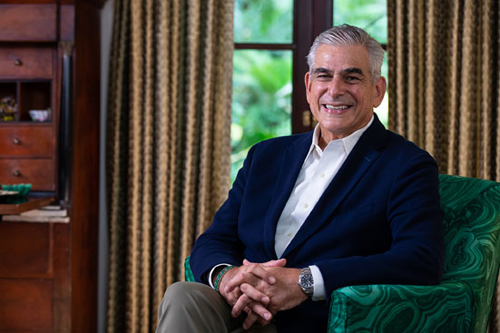
Juan Eugenio L. Roxas, the firm’s President, and Chief Executive Officer expressed gratitude to the Provincial Government.

“This is the third year that we have been awarded as the number one taxpayer of the Province, and we are very honored to receive this award.  Paying taxes is our duty in the first place because we are doing business in this Province. It is not the obligation of the Province of Misamis Oriental to recognize us.”

“Such inspires us to pay not only the correct taxes but consistently to pay on time,” said Roxas.

Local officials noted that the taxes collected will fund multiple development programs beneficial to the Province’s citizens, like improving its education system amidst the new normal.

Governor Yevgeny “Bambi” Emano appreciates all taxpayers, even those small business owners, for their commitment to pay their dues, notwithstanding the losses brought about by restrictions during the imposition of community quarantine. However, Emano cited Filinvest and the Gotianun family for their kindness and sustained support to the local government.

Apart from the RPT, the power firm also remitted more than Php 29 million to its host communities under the Energy Regulations (ER) 1-94 Program of the Department of Energy (DOE).

ER 1-94 allows a community hosting an energy generating facility to have access to a financial benefit of one-centavo per kilowatt-hour (P0.01/kWh) of the total electricity sales. Proceeds are allocated to fund various development projects, including anti-COVID-19 initiatives.

As the country combats the coronavirus, the funds released by the power firm were instrumental in ensuring its neighboring communities’ health and safety.

FDC Misamis, a wholly-owned subsidiary of FDC Utilities, Inc., the utilities and infrastructure arm of the Filinvest Development Corporation, operates a 3x135MW circulating fluidized bed coal thermal plant at the PHIVIDEC Industrial Estate in Villanueva town.

The facility was inaugurated by President Rodrigo Duterte and has been vital in the Mindanao grid’s stability since its commercial operations in 2016.

FDC Misamis commits to remain true to its advocacy of developing sustainable communities while providing reliable, cost-effective electricity the region needs to reignite its economy.

“We will not stop by just settling our regulatory obligations; we will continue to be responsible citizens and help in whatever way we can. As they say, charity begins at home,” Roxas concluded.

Busiest US seaport, buried in imports, plucks out toys to load Santa’s sleigh

LOS ANGELES — Workers at the busiest US seaport are plucking containers of toys off ships and out of massive stacks of cargo swamping docks at the Southern California trade gateway to get holiday gifts under trees in time for Christmas.

“We’ve never had this much cargo,” Gene Seroka, executive director of the Port of Los Angeles, said on Tuesday, when the port announced that imports spiked 25% during the month of November.

With so much cargo flooding in ahead of Christmas, “we’re essentially in a triage situation,” said Mr. Seroka, who worked with a handful of toy makers to expedite toy shipments.

Imports to the Port of Los Angeles have been booming for more than five months as US businesses rebuild depleted inventories of everything from appliances to bicycles, stockpile personal protective equipment and other sought-after goods in a worsening pandemic, and prepare for the winter holiday selling season.

The surge in volume has created congestion that makes it harder for trucks and trains to quickly whisk containers away from the busiest gateway by volume for US trade with China. That then slows down inbound ships.

In November, 50 of the 88 vessels coming to the Port of Los Angeles waited on anchor for 2.5 days before being unloaded. So far in December, about 80% of arriving vessels are anchored for an average of four days, Mr. Seroka said.

Importers told Reuters the log jams are holding up their cargo for up to a month.

The Christmas season is the lifeblood of the toy industry, and the disruption is hitting that sector particularly hard.

“It’s the height of the season,” said Isaac Larian, chief executive of California-based MGA Entertainment.

“As of yesterday, we had 250 containers sitting at the port,” he said. Those boxes, containing LOL Surprise! and other MGA toys, had been delayed three to four weeks.

Mr. Seroka and others at the port have helped get a few containers out every day, Mr. Larian said. — Lisa Baertlein/Reuters 

Tom Cruise rants at Mission: Impossible crew in London over COVID safety

In expletive-filled remarks captured on audio tape obtained by The Sun, Tom Cruise yelled at the crew about lapses of social distancing and other rules that allow movies to be made during the coronavirus pandemic. Image via Eva Rinaldi / CC BY-SA 2.0 / Wikimedia Commons

LOS ANGELES — Tom Cruise let rip over an apparent breach of COVID-19 safety protocols on the London set of the new Mission: Impossible movie, telling crew members they would be fired if they don’t obey the rules, Britain’s Sun newspaper reported on Tuesday.

In expletive-filled remarks captured on audio tape obtained by The Sun, the star and producer of the action film yelled at the crew about lapses of social distancing and other rules that allow movies to be made during the coronavirus pandemic.

A source close to the production said the tape was authentic. Mr. Cruise’s representative declined to comment.

“I’m on the phone with every fucking studio at night, insurance companies, producers, and they’re looking at us and using us to make their movies,” Mr. Cruise told the crew on the set.

“Do you understand the responsibility that you have? Because I will deal with your reason. And if you can’t be reasonable and I can’t deal with your logic, you’re fired,” he added, according to the tape.

The Sun did not say when the incident took place, but the filmmakers arrived in London in early December.

The seventh Mission: Impossible was one of the first movies to shut down production because of the coronavirus when it abandoned filming in Venice, Italy, in February.

Production resumed in September, with filming in Italy, Norway, and London. Mr. Cruise in July personally appealed to Norway’s prime minister to shoot parts of the film in Norway under modified quarantine rules.

The Paramount Pictures film is scheduled to be released in November 2021.

Mr. Cruise told the crew Hollywood was relying on movies like Mission: Impossible to keep the beleaguered industry going.

“We want the gold standard. They’re back there in Hollywood making movies right now because of us! Because they believe in us and what we’re doing,” he said, according to the audio tape.

Mission: Impossible is one of the biggest franchises in Hollywood, with 2018’s Mission: Impossible-Fallout taking more than $791 million at the worldwide box office. — Reuters

Record climate disasters in Asia-Pacific push millions to ‘breaking point’

KUALA LUMPUR — Asia-Pacific has faced a record number of climate-related disasters in 2020, affecting tens of millions of vulnerable people already hit hard by the COVID-19 pandemic, the Red Cross said on Wednesday.

The International Federation of Red Cross and Red Crescent Societies (IFRC) said it had responded to 24 climate-linked crises this year in the world’s most disaster-prone region—up from 18 in 2019—including floods, typhoons, extreme cold, and drought.

“COVID-19 has of course aggravated these impacts, with a taste of the compound shocks we’re expecting in a changing climate,” Maarten van Aalst, director of the Red Cross Red Crescent Climate Centre, told the Thomson Reuters Foundation.

“The pandemic has not only complicated evacuations and disaster response, but also aggravates the economic impact of disasters, especially for the poorest people,” he added.

Southeast Asia was the IFRC’s busiest region in 2020, with 15 emergency responses to disasters including severe floods, storms, and landslides in the Philippines and Vietnam that affected more than 31 million people.

Jess Letch, the IFRC’s emergency operations manager, said the challenge had been to help communities with relief aid while also taking the steps needed to halt the spread of COVID-19.

Mary Joy Gonzales, a resilience project manager with CARE in the Philippines, said her aid agency had worked to provide additional shelter to enable social distancing after one person contracted COVID-19 in an evacuation center it was supporting.

Women have suffered a triple blow, she added, with the pandemic fuelling violence at home just as many lost their jobs and had to look after out-of-school children and elderly relatives while the country was pummelled by destructive storms.

The agency expected that such impacts “will get worse due to climate change,” she told journalists earlier this month.

“We have seen the trend in the past 10 years: typhoons have been becoming stronger and we have lost thousands of lives already,” she said.

Last year, more than 94 million people in the Asia-Pacific region were hit by climate-related disasters, with the area experiencing twice as many emergencies as the Americas or Africa, according to the IFRC’s latest World Disasters Report.

The total number of people affected in 2020 has not yet been released.

INCOMES SUFFER

Home to about 60% of the world’s population, the Asia-Pacific region has borne the brunt of climate disasters, with many people living in vulnerable conditions due to poverty and poor urban planning.

Mr. Van Aalst said countries had become better prepared and equipped to save lives but were still failing to protect the livelihoods of vulnerable communities struck by disasters.

He cited the example of Cyclone Amphan that battered India and Bangladesh in May. Mass evacuations before the storm made landfall prevented a large number of deaths.

But the impact on economic well-being was harsh, especially for the poorest, he noted, with total damages estimated at more than $13 billion.

In Vietnam, CARE’s country director Le Kim Dung said the pandemic had made it harder to bounce back, particularly in rural areas, from widespread floods that had inundated many provinces hit by heavy rains and a series of typhoons since early October.

COVID-19 restrictions also prevented some farmers from selling their produce, while migrants in cities – many of them care workers or street traders – lost their jobs and could not send money back home to keep their families afloat, she added.

“People are used to storms and floods right across Asia, but this year has tested the resilience of tens of millions of people to breaking point,” said the IFRC’s Ms. Letch. — Beh Lih Yi/Thomson Reuters Foundation

One in four people globally may not get COVID-19 vaccines until 2022

ROME — Nearly one in four people may not get COVID-19 vaccines until at least 2022 because rich countries with less than 15% of the global population have reserved 51% of the doses of the most promising vaccines, researchers said on Tuesday.

Low- and middle-income countries—home to more than 85% of the world’s population—would have to share the remainder, said researchers from the Johns Hopkins Bloomberg School of Public Health in the United States.

An effective response to the pandemic requires high-income countries “to share in an equitable distribution of COVID-19 vaccines across the world,” they wrote.

“The uncertainty over global access to COVID-19 vaccines traces not only to ongoing clinical testing, but also from the failure of governments and vaccine manufacturers to be more transparent and accountable over these arrangements,” they added.

As of Nov. 15, high-income nations had pre-ordered nearly 7.5 billion doses of vaccines from 13 manufacturers, the paper said.

This included Japan, Australia, and Canada who collectively have more than 1 billion doses but accounted for less than 1% of current novel coronavirus cases, it said.

Even if leading manufacturers’ vaccines reach their projected maximum production capacity, nearly 25% of the world’s population may not get the vaccines for another year or more, according to the paper.

The People’s Vaccine Alliance coalition last week said pharmaceutical companies should openly share their technology and intellectual property through the World Health Organization (WHO) so that more doses can be manufactured.

The John Hopkins researchers said WHO’s COVAX Facility could play a key role in ensuring fairer access to approved vaccines but it has only secured 500 million doses, far below its target of delivering at least 2 billion doses by the end of 2021.

Launched in April, the global pact aims to pool funds from wealthier countries and nonprofits to accelerate the development and manufacture of COVID-19 vaccines and distribute them equitably around the world.

It has so far secured half of the funding it needs and the United States and Russia—key players in vaccine development and manufacture—have not joined, the Johns Hopkins study said. — Thin Lei Win/Thomson Reuters Foundation

End the year on a high note with ASUS Business

The year 2020 has been one of the longest, most difficult years in recent history, especially for any struggling business. The world seems to be changing so rapidly that entrepreneurs and professionals who fail to adapt fast enough could be left behind.

Yet with everyone so busy trying to stay afloat these trying times, there is all the more reason to seek joy and celebration wherever you can find it. Especially for Filipinos, when the holiday season is a season for hope and new beginnings. Year 2020 does not have to end with uncertainty and doubt.

Knowing the importance of keeping the Filipino holiday spirit alive, ASUS, the leading electronics brand, in partnership with popular e-commerce platform Shopee, is launching its new “ASUS For Business Share 2020” promo, in which customers can win exciting prizes for the holiday season.

The prizes include an ASUS AiO 24, ASUS ExpertBook P1410, ASUS P1 Business Laptop, along with three ASUS ZenWifi routers.

Any purchase of ASUS business laptops, desktops, all-in-one PCs, Chromebooks, and Studiobooks in the ASUS Expert Series Official Store in Shopee from Jan. 1, 2020 to Dec. 31, 2020, is eligible to join the promo.

What’s more, customers who will purchase in the ASUS Expert Series Official Store in Shopee starting Nov. 25, 2020, up to Dec. 31, 2020, will be getting an ASUS Wifi Router (RT-AC1300UHP) worth P4,250 for free, to be delivered 14 working days upon receipt of purchased item/s.

All customers need to do is register at bit.ly/ASUSForBusinessShare2020 and fill out the form with their necessary details. But better hurry, because the registration is only open from Nov. 25, 2020 to Feb. 28, 2021.

After the registration, promo participants must also like and share publicly the “ASUS For Business Facebook Page” with the tags #ASUSBusiness #ASUSExpertBook #TrustTheExpert, and leave their thoughts about the brand’s Expert Series.

The raffle draw will happen on March 5, 2021, in presence of a DTI representative, and the results will be announced on March 15 via the ASUS For Business and ASUS Philippines Facebook pages. The winners will receive an email notification from ASUS Philippines (asuscommercialbusiness@gmail.com) in which the winning participants should reply within 7-10 working days.

Designed with the ever-shifting, ever-changing business landscape in mind, the ASUS Expert Series aims to blend the latest technologies with ASUS’s signature award-winning minimalist designs. The result are notebooks that are the lightest, yet toughest in the world, and desktop PCs with the greatest reliability and manageability.

As the business world continues to change further into 2021, keep you and your business on the cutting edge with the best tools and equipment from ASUS. Whatever the need, there is a perfect ExpertBook or ExpertCenter to fill it.

Visit ASUS Philippines and ASUS For Business Facebook page to learn, or click here to check out the products for ASUS Expert Series:

ASUS Business Website: https://www.asus.com/ph/Business/

Lower electricity rates this holiday season

Power rates down again in December 2020, Second lowest overall power rate since September 2017

The Manila Electric Company (MERALCO) announced today another downward adjustment of power rates as the overall rate for a typical household decreased by P0.0352 per kWh, from last month’s P8.5105 per kWh to P8.4753 per kWh this December.

This is equivalent to a decrease of around P7 in the total bill of residential customers consuming 200 kWh.

This month’s overall rate is also a net rate reduction of P1.3870 per kWh, equivalent to bill reduction of more than P277 for a 200 kWh household, since the start of the year.

This the second-lowest overall power rate in more than three years, or since September 2017.

Lower Generation Charge mainly brought about by lower Luzon grid demand

From P4.2018 per kWh in November, the generation charge decreased by P0.0502 per kWh to P4.1516 per kWh this December.  All sources of supply registered lower charges this month.

Meralco said there was a P0.1881 per kWh reduction in charges from the Wholesale Electricity Spot Market (WESM).  The Luzon grid’s power supply situation improved in November following a drop in demand which decreased due to successive weather disturbances. From October 2020’s peak demand of 10,344 MW, November 2020 peak demand decreased to 9,886 MW. Also, due to the effects of Typhoon Ulysses, the WESM was suspended by ERC from November 12 to 13, 2020.

The cost of power from the Independent Power Producers (IPPs) also decreased by P0.2577 per kWh due to improved average plant dispatch and Peso appreciation.  Charges from Power Supply Agreements (PSAs) also went down by P0.0214 per kWh with the strengthening of the Peso against the US Dollar.

WESM, IPPs, and PSAs accounted for 9%, 39%, and 52% of MERALCO’s energy requirements, respectively.

Movements in Other Charges

Transmission charge for residential customers registered a slight reduction of P0.0044 per kWh due to lower Power Delivery and Ancillary Service Charges. Meanwhile, taxes and other charges registered a net increase of P0.0194 per kWh.

Collection of the Universal Charge-Environmental Charge amounting to P0.0025 per kWh remains suspended, as directed by the ERC.

MERALCO’s distribution, supply, and metering charges, meanwhile, have remained unchanged for 65 months, after these registered reductions in July 2015. MERALCO reiterated that it does not earn from the pass-through charges, such as the generation and transmission charges. Payment for the generation charge goes to the power suppliers, while payment for the transmission charge goes to the NGCP. Taxes and other public policy charges like the Universal Charges and the FIT-All are remitted to the government.

MERALCO continues to serve during General Community Quarantine (GCQ) 

Customers may visit their nearest Meralco Business Center, which will continue to open its doors during the GCQ and accept service applications, payments, and other transactions.

Strict safety measures continue to be implemented, like the “No Mask, No Entry” rule, Social Distancing, and Temperature Check. Frontliners are available and ready but strictly follow Social Distancing guidelines. Visitors can rest assured that these front liners have passed the rapid COVID-19 testing authorized by the Pasig City Health Office. There are also acrylic barriers set up in the Meralco branches to protect both the customer and the frontliner.

But, for maximum safety and convenience, Meralco still encourages customers to use Meralco Online to transact from the safety of their homes. Multiple options for transactions have also been offered by the distribution utility, including the Meralco Mobile App via https://onelink.to/meralcomobile, Meralco Online via www.Meralco.com.ph, and the Meralco authorized payment channels at bit.ly/MeralcoPaymentPartners.

For more information and concerns, customers may visit MERALCO’s website at www.MERALCO.com.ph, its social media accounts, Twitter @MERALCO, and Facebook at www.facebook.com/MERALCO or may also call the MERALCO Hotline at 16211.

Remote working solutions you can trust

Secure your remote workforce with ICS and Dell Technologies

The pandemic has pushed many organizations to shift to remote work.  IT solutions provider Integrated Computer Systems, Inc. (ICS) understands the need to cope with the changes and challenges that come with this. Having been in business for over 40 years, ICS enables organizations to adapt to the changing times by delivering relevant and reliable solutions from top global brands.  The company knows the importance of meeting its customers’ and their stakeholders’ needs, no matter the situation.

ICS is a Titanium Partner of Dell Technologies, which offers mid-size markets a wide range of trusted solutions engineered to simplify digital transformation while securing critical assets.

Trusted devices for remote work

Dell Technologies’ broad portfolio of business notebooks and desktops ensures a flexible, secure remote work experience, empowering customers to expand opportunities and streamline operations – anywhere and anytime, without compromising the productivity, connectivity and security.

Dell helps end-users manage the growing cyber risk with ease and confidence. The SafeID is factory built-in to secure end-user credentials; while SafeBIOS is Dell’s unique off-host BIOS verification tool. SafeData, on the other hand, has unique data protection, control, and monitoring capabilities that work across any application, device, or OS.

Dell Optimizer is an intuitive Artificial Intelligence software that learns and adapts to user behavior, creating a smart and personalized user experience. It automatically improves application performance and responsiveness, extends battery runtime, enhances audio, enables and faster sign-in through ExpressSign-in and modern standby features.

One of Dell Technologies’ premier desktops, the OptiPlex 7070 Ultra, is designed for ultimate flexibility. This desktop features swappable elements and an ultracompact PC module that can be hidden in a stand for a beautiful and sleek desktop experience.

The Latitude 9510 exemplifies a new class of ultra-premium mobility, available in laptop or 2-in-1. This is Dell’s smartest and lightest 15-inch business laptop 1, with a stunning brushed aluminum design, diamond-cut edges, and an Infinity Screen.

Trusted infrastructure for data centers

Dell EMC’s infrastructure solutions let you modernize your data center while keeping it protected. The 2U rack servers, flexible-capacity storage, and turnkey HCIs are designed with security from the ground up and are engineered to meet mid-market demands.

The Dell EMC PowerEdge servers are equipped with exclusive capabilities like Automatic Recovery and Dual Root of Trust in scalable rack and tower configurations. They are built to enable ironclad security in data centers, as well as improved productivity to workforces anywhere they work.

Its storage solutions, namely the Dell EMC PowerVault ME4 and Dell EMC Unity XT, protects data in each array across hybrid, all-flash, and multi-cloud storage environments using built-in, drive-level data-at-rest encryption. With these capabilities, Dell EMC storage solutions optimize workloads, reduces risk, and boosts productivity.

Dell EMC VxRail has built-in security from BIOS to hypervisor with protection for data in use, at rest, and in motion across cloud-ready data centers. The VxRail provides a secure, modern infrastructure built to secure remote workforces and ensure business continuity. This reduces the need for multi-vendor add-on products, thus helping simplify the security landscape of mid-market organizations.

Dell EMC’s trusted infrastructure is backed by CloudIQ, a cloud-based monitoring and advanced analytics feature for your data center. CloudIQ provides real-time actionable insights on your data center’s health, simplifying, and streamlining daily IT management tasks.

Hybrid cloud solutions including the Dell EMC PowerEdge and VxRail, to name a few — can scale to dynamic workforce needs and are equipped with built-in security to protect data wherever it resides.

Trusted data protection

Dell EMC is consistently named a Gartner Magic Quadrant Leader for Data Center and Backup Recovery Solutions for over 20 years, proof of its unmatched performance.2

In the digital workspace where data is a critical asset, businesses can be assured that their data is secure all the time with Dell EMC’s purpose-built data protection solutions.

Dell EMC’s PowerProtect DP Series Appliances deliver powerful backup and recovery of a company’s data, wherever it lives, using a single appliance. This line of appliances also offers grow-in-place expansion in 4TB increments up to 96TB, with an optional hardware kit and simple license keys.

PowerProtect DD Series Appliances, on the other hand, offers small and medium organizations fierce security and support for any workload — to, from, and in the cloud. It sets the bar high for efficient data management from edge to core to cloud, with the ecosystem support and comprehensive data protection that customers have come to appreciate from Data Domain.

All these solutions are engineered for small and medium markets to effectively and securely enable digital transformation in their organizations.

Dell Technologies’ vast array of mid-market solutions is available through Integrated Computer Systems, Inc. ICS adheres to its core values of integrity, commitment, and service, providing customers only the most authentic and high-standard products and services.

Get in touch by emailing info@ics.com.ph, or visit ics.com.ph.

1 Found in https://www.delltechnologies.com/en-us/latitude/index.htm
2 Found in https://www.gartner.com/doc/reprints?id=1-1ZHGKFPJ&ct=200716&st=sb

Built with Purpose, Surviving with Relevance

By InLife

As this surreal and seemingly eternal year wraps up — finally, thankfully — many businesses are scrambling to meet targets, cut losses or simply remain standing. At a time when survival has become a measure of success, three industry leaders reflect on the power of purpose, tenacity and reinvention to carry people through crises.

With 2020 being the most challenging year for business globally, seeing things from the perspective of institutions that have survived world wars, political upheavals, natural disasters and pandemics could offer some hope, if not comfort.

Being at the helm of organizations that have been around for over a hundred years, they know a thing or two about thriving in a difficult situation.

“One advantage, if you view it from the lens of a company with a long history, is that there have been cycles like this before, and there are ways of getting through those cycles. What you need is a capacity for reinvention of your organization and the capacity to keep looking forward and setting the sights forward,” said Jaime Augusto Zobel de Ayala, CEO of Ayala Corp., a family-owned corporation with interests in real estate, telecom, and banking that go back 186 years.

“A crisis has to be managed in a very different way. It needs entrepreneurial ability and innovation capacity to work with uncertainty. You try to build an organization that’s comfortable with those elements,” he added.

Like him, Erramon “Montxu” Aboitiz comes from a long line of capitalists from the 1870s and was the president of Aboitiz Equity Ventures from 2009 to 2019.

“I think, a team that has gone through hardship in the past knows that it has to do what it takes to change to innovate to adapt and, and to survive. The real value of a company with our longevity is the likelihood that we are diversified and have established businesses that to make up for each other,” Aboitiz shared.

“Being part of Philippine business and society for such a long time, we thought that there was more than just making money. Our employees are looking for purpose, not just a paycheck every two weeks,” Aboitiz said, noting that purpose is embedded in the services that Aboitiz Equity Ventures provides.

“Purposes are normally forward-looking, very big in scale, ambitious. Having that to work for — both personally and as an organization — it’s amazing what it will do to help you achieve your goals. So, I always tell people: when you make a decision, ask why you’re making the decision. Does it support your purpose? And if it does, you probably are making the right decision,” Aboitiz said.

The two gentlemen made these comments during an online forum hosted by Insular Life (InLife) recently, to highlight the company’s 110 years anniversary (Nov. 25) and to showcase the reason behind the success of Philippine companies that have reached over a hundred years.

“For us at InLife, the starting point is always our sense of purpose and stewardship. Generating profit is of course important, and we need scale to be financially stable and to create impact. But our purpose does not end there. Quite the contrary, our focus is on the difference we make in the broader society. We help in developing the local economy, in continually looking for ways to offer people life chances, as fellow Filipinos first,  part company owners second (InLife is a mutual company), but never as mere consumers,” said Nina D. Aguas, Executive Chairman of InLife.

Ayala Corp., the oldest company in the Philippines, has had to get back on its feet with little liquidity after the Second World War. It was the parent company of InLife until 1987, when InLife became a fully mutual company, transferring ownership to its Filipino policyholders. Today, InLife is the biggest Filipino insurance company in terms of assets and net worth. InLife’s bancassurance partner, Union Bank, is owned by Aboitiz Equity Ventures, which also has interests in power, property, food, and biofuel.

The three companies’ related history and mutual interests highlight the enduring power of purpose in business. Knowing their “why” has guided them in determining their “what”, which is crucial for industry leaders who are drivers of change in the country.

Clarity of purpose is so important for everyone. To me, ‘built to last’ is a perspective, not an end goal. Decade after decade, you have to go through that period of reinventing yourself, as Jaime mentioned, and reimagining what it could be for the current moment because it evolves over time — what society, as Montxu says, requires of each of us,” said Aguas.

Zoble de Ayala said: “I think we’ve reached a new period in our lives as private institutions. The nature of the corporation, its role in society is continuing to shift. More is expected of all of us now. There will be times when we have to be good at what we are doing but we also have to be institutions that can hold hands, cooperate particularly in difficult times, and address the bigger issues that face us, which we cannot do alone.”

Aboitiz echoes this sentiment: “If our businesses is to survive, it can’t survive as an island. It has to survive with this community, with its employees, with its partners, and with society.”

In these trying times, the three leaders agree, businesses should promote cooperation more than competition, and step up as their broader responsibilities evolve with the needs of the people.


Remittances up for 2nd straight month

MONEY SENT HOME by Filipinos abroad rose for a second straight month, albeit at a slower pace as the global economic slowdown continued, the central bank said on Tuesday.   

Data released by the Bangko Sentral ng Pilipinas (BSP) showed cash remittances coursed through bank channels rose 2.9% to $2.747 billion from $2.671 billion a year ago. This is the second straight month of year-on-year growth of remittances after the 9.3% recorded in September.

The October inflows were also higher by 5.6% than the $2.601 billion in September.

“The growth was attributed to the increase in remittances from land-based workers with work contracts of one year or more to $2.374 billion in October 2020, 3.3% higher than the $2.298 billion recorded in October 2019,” the BSP said in a statement.

Money sent by OFWs with less than a year of contract also inched up 1.2% to $612 million.

Analysts said the remittance trend in recent months proved to be better than expected given the ongoing crisis. UnionBank of the Philippines, Inc. Chief Economist Ruben Carlo O. Asuncion said he was actually expecting a 3.6% decline in inflows for October.

“The big story here is more of the OFWs’ resiliency and the timeless Filipino spirit of family first, such that, crisis times further amplifies this warm tradition,” Mr. Asuncion said in an e-mail.

Meanwhile, ING Bank N.V. Manila Senior Economist Nicholas Antonio T. Mapa said the slower pace of remittance growth in October from the September print may be due to some renewed restriction measures in some host nations as infections surged. These include some industry-specific restrictions for European countries such as the United Kingdom, the Netherlands, and Germany, among others.

Despite this, the recovery of remittance inflows is a welcome development to temper the impact of weaker incomes in the recession-stricken local economy, he said.

“The fact that remittances continue to rise even after 300,000 OFWs were repatriated and the global economy faces recession is truly impressive and a testament to the grit and heart of our modern-day heroes,” Mr. Mapa said in an e-mail.

Meanwhile, cash remittances for the 10 months to October slipped 0.9% to $24.633 billion from $24.858 billion in the same period of 2019.

“By country source, cash remittances from Saudi Arabia, Japan, the United Kingdom (UK), the United Arab Emirates (UAE), Germany, and Kuwait declined, while those from the United States (US), Singapore, Qatar, Oman, Hong Kong and Taiwan increased,” the central bank said.

The biggest remittance market was the US, where 40.2% of the inflows were sourced. Remittances from the US, Singapore, Saudi Arabia, Japan, UK, UAE, Canada, Hong Kong, Qatar and Taiwan made up 78.7% of the total.

“The US economy has largely remained open even amidst the coronavirus outbreak and this has somehow helped with continuing positive levels of OFW remittance inflows,” Mr. Asuncion said.

Cash remittances could fall by 2% this year, based on BSP projections.

Meanwhile, personal remittances — which include inflows in kind — rose 2.5% to $3.044 billion from $2.969 billion a year ago. Year-to-date inflows dipped 1% to $27.346 billion from $27.612 billion in the first 10 months of 2019.

The remaining two months of 2020 will bring in continued growth in remittances given the usual holiday flows, said Mr. Asuncion. He expects remittance could range from a growth of 0.1% to -2% for 2020.

Amid the likely increase in remittances for the Christmas season, OFWs may be forced to send more as the peso appreciation story stretches on, Mr. Mapa said.

The peso has been playing around the P48-per-dollar level in recent weeks. It closed at P48.063 on Tuesday, depreciating by 1.30 centavos from its P48.05 finish on Monday, data from the Bankers Association of the Philippines showed. — Luz Wendy T. Noble

Congress OK’s extension of Bayanihan II validity

Public utility vehicle drivers, who were displaced by the pandemic, register with the Land Transportation Franchising and Regulatory Board service contracting program, Nov. 26. The program is funded by Bayanihan II. — PHILIPPINE STAR/MICHAEL VARCAS

CONGRESS has approved the bill extending the validity of the Bayanihan to Recover as One Act (Bayanihan II) by six months, a few days before the law was set to expire on Dec. 19.

The House of Representatives approved the bill on third reading on Monday evening, while the Senate passed the House version on final reading on Tuesday afternoon.

With 179 affirmative votes, six negatives, and no abstention, lawmakers approved House Bill (HB) No. 8063, which extends the validity of Republic No. 11194 or Bayanihan II until June 30, 2021.

The Senate approved the measures extending the validity of Bayanihan II and the 2020 national budget on Tuesday, after the Finance Committee adopted the House versions.

The House on Monday approved on final reading HB 6656, which extends the effectivity of the P4.1-trillion national budget until Dec. 31, 2021.

President Rodrigo R. Duterte certified the measure as urgent, which allows Congress to skip the three-day interval between the second and third reading approval.

The Senate panel adopted HB 6656 without amendments, but proposed to exclude the special powers granted to Mr. Duterte from the extension of Bayanihan II.

“We cannot agree more with President Duterte on the need to extend the effectivity of Bayanihan II in order to accelerate the country’s socioeconomic recovery from the adverse impact brought about by the COVID-19 pandemic,” Speaker Lord Allan Q. Velasco said in a statement.

Bayanihan II, which took effect in September, allocated P140 billion for relief programs for sectors hit hard by the pandemic and another P25 billion in standby funds.

Mr. Velasco said “a huge portion of the allocation has yet to be released.”

A total of P105.775 billion has so far been released under Bayanihan II, the Department of Budget and Management (DBM) reported.

“If not extended, the government will have to release the remaining funds by Dec. 19, or else the funds will revert to the Bureau of the Treasury,” Mr. Velasco said.

Since March, the DBM has released a total of P498.5 billion in funds to mitigate the effects of the pandemic on Filipinos. This included fund releases under Republic Act No. 11469 or Bayanihan to Heal as One Act (Bayanihan I) which reached P386.1 billion from March to June.

EXTENSION OF BUDGET’S VALIDITY
In Tuesday’s session,  Senator Juan Edgardo M. Angara sponsored the bill extending the 2020 budget’s validity. Citing data from the Budget department, he said some P110 billion of the budget have yet to be released as of Nov. 13.

“With the adoption of the cash budgeting system, that means this P110 billion would need to be released and obligated before the year ends or else these are returned to the national treasury,” Mr. Angara said during the sponsorship speech.

“With just a few weeks left in the year, it would be extremely difficult for agencies with pending releases to submit the requirements.”

The extension of the 2020 national budget would help boost public spending, which was disrupted when Luzon was placed under a strict lockdown starting March to contain the coronavirus pandemic.

“So unfortunately, hindi nagastos this year, that’s why you had the economy contract by roughly 10%,” Senator Ralph G. Recto said in a television interview on Tuesday.

“It would be more difficult to recover, for the economy to recover if the government spent less. Government is 25% of the total economy. The private sector will not be making those investments, which we need.”

The Philippine economy contracted by 10% in the first nine months of the year, amid weak consumption and sluggish government spending.

Congress on Wednesday will go on a month-long break until Jan. 17, 2021. — Kyle Aristophere T. Atienza and Charmaine A. Tadalan

Dutch firm to start preparation work for Bulacan airport in Q1

By Arjay L. Balinbin, Senior Reporter

CONSTRUCTION of the P740-billion airport project in Bulacan is set to begin in the first quarter of 2021, San Miguel Corp. (SMC) said on Tuesday, with land development work to be undertaken by a Dutch company.

The Manila International Airport project “is set to take off in the first quarter of 2021, after it awarded global firm Boskalis a $1.73-billion contract” to restore the land where it will be built, SMC said in an e-mailed statement.

The company in October said groundbreaking for the Bulacan airport would take place “by the end of the year.”

SMC said it selected Dutch firm Royal Boskalis Westminster N.V., through its local unit Boskalis Philippines, Inc., to undertake land development work for the project, which will be built in the coastal areas of Bulakan town, Bulacan.

“Our selection of a global giant in dredging shows how ready, willing, and committed we are to do everything necessary to make sure this airport project is developed properly and sustainably,” SMC President and Chief Operating Officer Ramon S. Ang said in the statement.

Mr. Ang said the mega-airport is expected to be fully completed by 2024.

He noted the Dutch dredging firm, which has been involved in development projects in South Korea, Panama, Indonesia, and Amsterdam, will prepare the area to “withstand potential large earthquakes, local typhoon conditions, and even future sea level rise.”

To recall, SMC’s airport project has faced criticism from various groups over its environmental impact.

The Philippine Institute of Volcanology and Seismology said during a Senate hearing in September that the airport project is at risk of flooding and ground shaking.

Mr. Ang said the company will use engineering intervention to avoid the risks that come with building an airport in a coastal area.

To address such concerns, SMC has tapped Groupe ADP (Aeroports de Paris), Meinhardt Group and Jacobs Engineering Group for the construction of the airport. These firms are behind Singapore’s Changi airport, France’s Charles de Gaulle airport, and the United States’ Hartsfield-Jackson Atlanta International airport.

WRIT OF KALIKASAN
Meanwhile, Oceana Philippines in a statement said fisherfolk and civil society groups filed a petition for a Writ of Kalikasan against SMC’s airport project before the Supreme Court.

The petitioners included Bulacan-based fishermen Teodoro Bacon and Rodel Alvarez, Oceana Philippines Vice-President Gloria Estenzo Ramos, Archbishop Roger Martinez of the Archdiocese of San Jose del Monte, and Aniban ng mga Mangagawa sa Agrikultura led by Renato de la Cruz.

Oceana Philippines said the petition was filed to stop the reclamation of Manila Bay in order to save marine life, endangered birds and mangroves and ecosystems. They also claimed that the airport project did not have an environmental compliance certificate (ECC), as it was SMC’s contractor Silvertides Holdings that was issued an ECC on June 14 last year.

“We have to keep on working together in the protection, rehabilitation, and conservation of Manila Bay, not only for its economic importance and contribution to national food security, and for its historical, cultural, and aesthetic value but to make ecosystems and people resilient to the impacts of climate change,” Oceana’s Ms. Ramos said.

The case respondents include Mr. Ang, Silvertides President Hercules V. Galicia, Environment Secretary Roy A. Cimatu, Environmental Management Bureau Region III Regional Director Wilson L. Trajeco, and Transportation Secretary Arthur P. Tugade.

A Writ of Kalikasan is a legal remedy that protects the people’s constitutional right to a healthy environment.

As of press time, SMC has not yet replied to BusinessWorld’s query for comment.

SMC shares closed 1.08% lower at P137.70 apiece on Tuesday. — with Angelica Y. Yang