Home Blog Page 866

For global mergers and acquisitions, third quarter was one of the best and worst in recent history
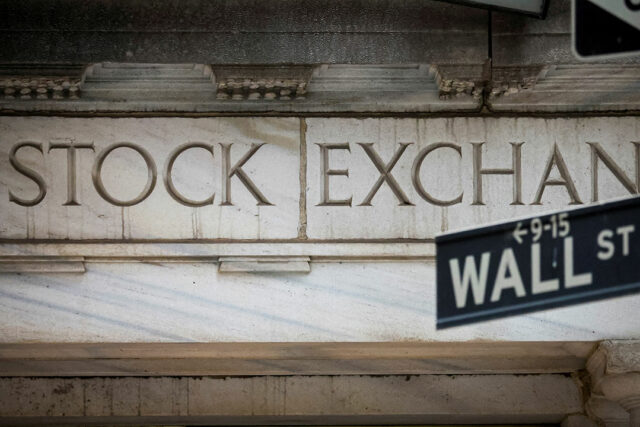
The Wall Street entrance to the New York Stock Exchange (NYSE) is seen in New York City, US, Nov. 15, 2022. — REUTERS

LONDON/NEW YORK/HONG KONG — For dealmakers across the world, the third quarter was one of the best and one of the worst in recent history.

Megadeals tallied a stunning $1.26 trillion in global mergers and acquisitions during the third quarter up 40% year over year making it the second-best third quarter on record by deal value for the three months ended Sept. 30, according to Dealogic data. But a paltry 8,912 deals were signed, down 16% from last year, the worst third-quarter for deal volume in 20 years, data show.

It’s a peculiar time for dealmakers, who came into 2025 with lofty predictions of a banner year following US President Donald Trump’s election. But Trump’s punishing tariffs unleashed on Liberation Day and a continued antitrust crackdown on Big Tech sent markets gyrating in the second quarter, prompting many corporations to delay M&A and IPO plans while the trade negotiations played out.

Pent-up company demand coupled with fresh stock market highs has unleashed a flurry of big deals and IPOs in recent months that have salvaged an otherwise moribund year for the industry. Fewer deals are getting signed, but the average size has surged to $141.4 million during the third quarter, up from $85.5 million during the same time last year, data show.

“The second quarter was lining up to be quite exciting, and then Liberation Day happened right at the beginning. People, understandably, took a little bit of the foot off the pedal, trying to understand the implications,” Naveen Nataraj, co-head of US investment banking at Evercore, told Reuters in an interview. “As the year has progressed, there’s growing comfort that the tariff landscape is going to land in a place that people are able to navigate.”

Several big, splashy initial public offerings that were pulled in April, including ticket reseller StubHub’s $800 million IPO and buy-now-pay-later fintech company Klarna’s $1.37 billion trading debut, helped revive the IPO market earlier this month. Still roughly 987 companies across the world raised some $115 billion in their IPOs so far this year, down 24% and 9% respectively over the same period last year.

In Europe some IPOs are getting done again.

“The relatively subdued IPO issuance we have seen since September last year is mainly because we hadnít seen high-quality, large-cap companies come to market, but now we are starting to see that,” said Martin Thorneycroft, global co-head of equity capital markets at Morgan Stanley.

CHINA DELISTING THREATS IN US
IPOs and second listings in Asia were particularly hot, especially on the Hong Stock Exchange where the largest IPO in the world came with the debut on Tuesday of Chinese firm Zijin Gold International raising $3.2 billion. Companies have raised a total of $23 billion in Hong Kong so far this year, more than three times the value for the same period in 2024, Dealogic data show, as Republicans threaten to delist Chinese stocks in the US

“A fundamental shift in how investors perceive China risk, together with global long-only funds diversifying away from the US, is driving more capital into Hong Kong listings,” said James Wang, head of equity capital markets for Asia excluding Japan at Goldman Sachs.

While the pipeline for IPOs is robust, dealmakers say, there’s one potential glitch for new listings, as the US Congress and the Trump administration are deadlocked in federal budget negotiations and the country faces a potential government shutdown as soon as Wednesday. That would cause a logjam for IPOs as the federal regulators tasked with approving new listings face furloughs.

“The IPO backlog remains strong, and we anticipate a steady flow of IPOs coming to market through year-end,” said JPMorgan’s David Bauer, co-head of equity capital markets for the Americas. “Investors have made money in IPOs year-to-date, however, as market conditions become somewhat more volatile, it will be important to price equity appropriately.

CRYPTO AND AI BOOM
Crypto companies and just about anything tied to them helped fuel the boom in IPOs in September as the industry cashed in on Trump’s easing of regulations in the US Stablecoin issuer Figure raised $787.5 million in its September 10 debut in an IPO that was oversubscribed and upsized.

Just about anything tied to AI was hot in M&A and IPOs, whether it was software companies, infrastructure or chips. Splashy private deals like Nvidia’s $100 billion investment in OpenAI didn’t make Dealogic’s league tables, but plenty of others did, like Israeli software company CyberArk Software’s $24.5 billion acquisition in July of Palo Alto Networks, which uses AI to provide network and cloud security.

“Almost every client, and it doesn’t matter what industry the client is, they are thinking about AI in their M&A strategy,” said Camila Panama, a partner specializing in M&A at Mayer Brown. “There’s a robust pipeline for Q4, so we are anticipating a strong quarter, particularly active in the financial services industry, insurance, as well as in-bound/out-bound Japan deals,” she said.

GOING FOR SCALE IN M&A
Cross-border dealmaking is also making a comeback, rising by 44% to $931 billion, the biggest jump in such M&A since 2021 and a peak not seen since that year.

Companies are going for scale, dealmakers say. Smaller deals under $500 million or so just aren’t moving the needle with shareholders these days, they added.

There were a record number of deals over $10 billion so far this year 49 up 75% from the first nine months of last year, data show. Monday’s $55 billion leveraged buyout of videogame maker Electronic Arts is the most recent mega deal of the quarter, but that wasn’t even the biggest one. That honor goes to Union Pacific’s $88.18 billion acquisition of Norfolk Southern announced in July, according to Dealogic. — Reuters

Franchise Negosyo Para sa Region V (Legazpi) opens on Friday at SM City Legazpi

The Philippine Franchise Association (PFA) is all set to bring the final leg of its premier Regional Franchise Show, Franchise Negosyo Para sa Region V (Legazpi), on Friday, Oct. 3, 2025, at the Mall Atrium area of SM City Legazpi.

Event highlights that attendees can look forward to:

  • 2-day business matching sessions to connect directly with franchisors and service providers
  • Free Seminar on ‘How to Invest in the Right Franchise’ (Oct. 3-4, 2025 at the Mall Atrium area), where you can learn the basics of franchising and how to make wise investment decisions
  • Paid Seminar on ‘How to Franchise Your Business’ (Oct. 4, 2025 at The Marison Hotel), specially designed for existing business owners who are looking to scale up their business through franchising

This highly-anticipated event will bring over 30+ exhibitors representing 200+ proven and successful franchise brands and business solutions. Whether you are looking for an entry point to your entrepreneurial journey or a seasoned business owner, this two-day event will serve as a perfect gateway for learning, networking, and discovering the right franchise for you.

“We are very happy that Franchise Negosyo has finally reached the hands of my fellow Bicolanos,” PFA Director for South Luzon Marco Antonio Soliman shared. “This event brings entrepreneurship closer to more Filipinos, not just in the Metro area of Manila, but also across thriving regions like Bicol.”

Franchise Negosyo Para sa Region V (Legazpi) is expected to draw participants from various places in the Bicol region, including entrepreneurs, aspiring business owners, and investors.

Get access to the participating brands in advance through this link: https://drive.google.com/drive/folders/1WvO8N9r1aMDQRnfEYfQ7JORAe3NH2xN8?usp=sharing

This event is supported by DTI Region 5, OWWA Region 5, Local Economic Development Investment Office — Albay, Albay Chamber of Commerce and Industry, Legazpi Albay Chinese Filipino Chamber of Commerce, Inc., SM Supermalls, SM City Legazpi, 7 Eleven, Carrier, LT & G Credit Line, U-Franchise Sales and Management, Francorp Philippines, Converge ICT, PLDT Enterprise, Gcash, BPI, Hapihap, Powerhouse, Tapa King, and Famous Belgian Waffles.

Media partners: NET 25 Eagle Broadcasting Corp., BusinessWorld, Business Mirror, Mega Mobile (Inquirer Mobile), Inquirer Group of Companies, Asia Journal / Balikbayan Magazine, Philstar Media Group, Philippine Daily Inquirer, Around Bicol, Mr.GeeTv, IAmMhel, Twin Diaries, Probinsyanong Rabasero, and BicoldotPH.

Admission to the event is FREE and open to everyone! Learn more about this event by visiting: https://www.pfa.org.ph/event-details/legazpi.


Spotlight is BusinessWorld’s sponsored section that allows advertisers to amplify their brand and connect with BusinessWorld’s audience by publishing their stories on the BusinessWorld Web site. For more information, send an email to online@bworldonline.com.

Join us on Viber at https://bit.ly/3hv6bLA to get more updates and subscribe to BusinessWorld’s titles and get exclusive content through www.bworld-x.com.

Asian factory activity hit by sluggish demand from US and China

REUTERS

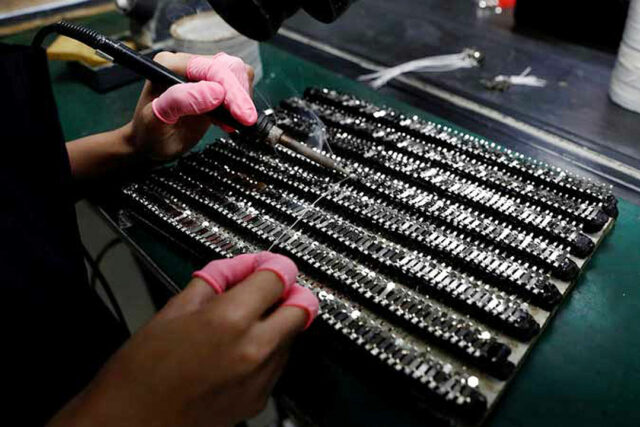
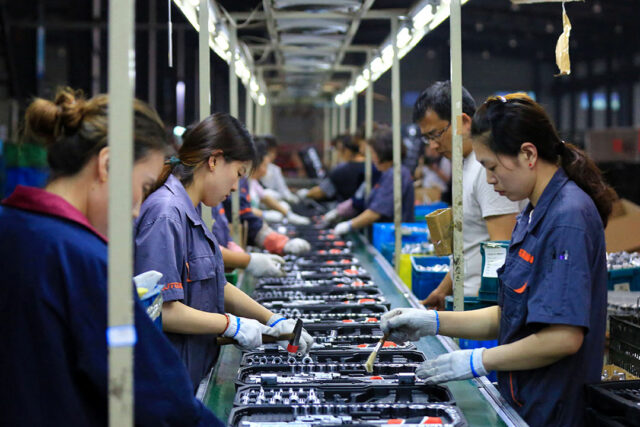
TOKYO — Factory activity shrank in most of Asia’s major economies in September, private surveys showed on Wednesday, as signs of a slowdown in US growth and the expected impact of President Donald Trump’s tariffs added to pressure from weak Chinese demand.

The stress on manufacturers highlights the challenge Asian policymakers face in protecting the export-reliant region from higher US levies, a key policy of the Trump administration that has upended the global trade order and put the brakes on economic growth.

Export powerhouse Japan and global tech hub Taiwan saw manufacturing activity shrink in September, the surveys showed, leaving businesses in Asia – heavily reliant on the US market – on a fragile footing.

Worryingly, China, a key engine of the global economy, also remained in the doldrums.

An official survey released on Monday showed manufacturing activity in the world’s second-biggest economy contracted for a sixth month in September, dragged down by weak consumption and the squeeze from US tariffs.

The prolonged slump underlines the twin pressures on China’s economy: domestic demand has failed to mount a durable recovery in the years since the pandemic while Trump’s tariffs have squeezed Chinese factories as well as overseas firms that buy components.

“The September PMI readings for most countries in Asia remained weak and we continue to expect manufacturing activity in the region to struggle in the near term,” said Shivaan Tandon, emerging markets economist at Capital Economics.

“With growth set to soften and inflation likely to remain contained, we expect central banks in Asia to loosen policy further.”

The S&P Global Japan Manufacturing purchasing managers’ index (PMI) fell to 48.5 in September from 49.7 in August, staying below the 50.0 threshold that separates growth from contraction. It shrank at the fastest pace in six months due to steep falls in output and new orders, the survey showed.

“Overall, the data indicate that unless we see a notable improvement in demand at home and overseas, it’s likely the sector will struggle to see much growth in the near-term,” said Annabel Fiddes, Economics Associate Director at S&P Global Market Intelligence, on Japan’s PMI.

Taiwan’s manufacturing PMI fell to 46.8 last month from 47.4 in August. Factory activity also shrank in the Philippines and Malaysia, the private surveys showed.

By contrast, South Korea’s factory activity expanded for the first time in eight months in September underpinned by improving overseas demand.

Manufacturing PMI in Asia’s fourth-largest economy, released by S&P Global, rose to 50.7 in September from 48.3 in August, moving above the 50-mark for the first time since January 2025.

The outlook for South Korea’s exporters, however, hinges on negotiations to formalise a July deal aimed at reducing US tariffs on Korean imports, including automobiles, to 15% from 25%, in return for South Korea’s investment of $350 billion in the US The talks have stalled due to Seoul’s concerns over foreign exchange implications. — Reuters

Staying put in Vietnam, furniture exporters bet US consumers will absorb tariff blow

REUTERS

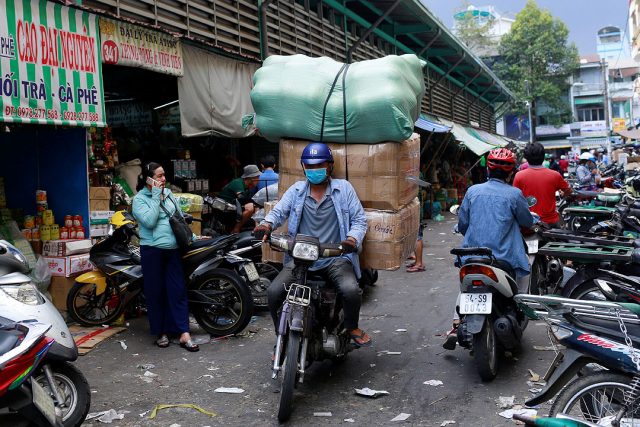
HANOI — Trayton Group signed a deal to relocate most of its furniture production to Vietnam from China the day after Donald Trump was re-elected as US President. New US tariffs would not change the strategy, its head told Reuters.

The mid-sized manufacturer, which declined to disclose its revenues, ships 70% of its furniture to the US, where its sofas and armchairs are sold either under top retailers’ names or with its own Simon Li brand in major chains, including CostcoUS.

Trump signed on Monday a document imposing 25% tariffs on wooden furniture from October 14, which could rise next year to 50% for vanities and kitchen cabinets and to 30% for upholstery. He had earlier said the new duties would take effect on October 1.

Trayton is exposed to the levy on upholstery, said the company’s founder and CEO Simon Lichtenberg, noting that may narrow margins but was likely to be largely absorbed by US consumers who will pay more.

The relocation to Vietnam, from where Trayton currently sends to America 50 containers per week, “remains the right strategy,” he told Reuters, noting US duties are higher for exports from China, where the company still has most of its international workforce of more than 1,000.

China remains the company’s hub for research and development, and spare capacity there could allow it to resume production if Beijing managed to lower tariffs on its exports to the US, Lichtenberg said.

US RELOCATION IS “NEXT TO IMPOSSIBLE”
In a posting on Monday on Truth Social, Trump said: “I will be imposing substantial Tariffs on any Country that does not make its furniture in the United States.”

“It would be next to impossible to produce in the United States” because costs are too high and skilled workers would be hard to find, Lichtenberg said, noting that was out of the question.

Jonathan Sowter, head of Jonathan Charles Fine Furniture, a maker of high-quality wood furniture, which employs 2,500 skilled staff in Vietnam and ships about 60 containers a month to the United States, said he would seek to export more to alternative markets. US tariffs would potentially narrow margins, and higher prices were inevitable, he said.

However, “we would have zero intention to manufacture in the United States,” Sowter added, noting his company’s workforce could not be replicated in America.

VIETNAM TO BE HIT HARD
Trayton’s relocation of a large share of its export-bound production to Vietnam followed similar moves by its main Chinese competitors, including Man Wah Furniture and KUKA Home, which have all transferred capacity from China to its southern neighbour in recent years to avoid US tariffs.

As a result, Vietnam may be on track this year to surpass China as the main supplier of furniture to the United States, US data show.

In the first seven months of this year the Southeast Asian nation shipped furniture worth nearly $8.2 billion to the US, accelerating from 2024, whereas Chinese exports slowed to $8.4 billion in the same period.

The US is the largest market for Vietnam-made furniture and wooden goods, which in turn are Vietnam’s fifth largest export sector to the world’s biggest economy.

Vietnam-based exporters were shocked when tariffs were first announced, but Lichtenberg was less pessimistic, as he hoped the company’s higher-quality products would remain attractive to less cost-conscious buyers.

“Consumers are not very sensitive to furniture prices as they buy them only every few years,” he said. — Reuters

Cultural integrity in the age of artificial intelligence

Our mental models and social environments are being redefined by technology. According to sociologist Melba P. Maggay, it is important to ground AI development in ethical and cultural frameworks.

Filipino concepts like palabra de honor (word of honor) offer a stabilizing framework in a post-truth era, she told BusinessWorld. By embedding our cultural identity into emerging technologies, Filipinos can challenge narratives that “inferiorize” their culture and support a more value-driven approach to innovation.

Interview by Patricia Mirasol
Video editing by Jayson Mariñas

Overcoming early rejections in the food industry

“We got a lot of rejections,” Michelle Tiu Lim-Chan, president and chief executive officer of Mega Prime Foods Inc. said, recalling the days back when they were just starting to build the Mega Sardines brand.

“It was a very humbling experience for us… because we were going there on bended knees, asking, ‘Please put it on your shelves.’ But some of them believed in us,” William Tiu Lim, the company’s founder and chairman, said.

Interview by Edg Adrian Eva
Video editing by Arjale Queral

Philippine Aviation Summit 2025 to spotlight nation’s ascent as regional aviation hub

With the Philippines gaining momentum as one of Asia’s fastest-growing economies, the aviation sector is poised to take center stage at the 2025 Philippine Aviation Summit, happening on Oct. 8-9, 2025, at the Marriott Hotel Manila, Pasay City.

Organized by the European Chamber of Commerce of the Philippines (ECCP) and the Asian Business Aviation Association (AsBAA), the event will convene top government officials, industry leaders, regulators, and international stakeholders to explore the theme: “Steady Flight: Philippine Aviation into the Global Arena.”

The summit will address critical themes such as infrastructure development, public-private partnerships, foreign investment opportunities, regulatory reforms, workforce development, and aviation sustainability.

Among the confirmed speakers at the event are:

  • Hon. Christina Garcia Frasco, Secretary, Department of Tourism (DoT)
  • Hon. Jim Sydiongco, Undersecretary for Aviation and Airports, Department of Transportation (DoTr)
  • Samuel David, Country Manager for the Philippines, International Air Transport Association (IATA)
  • Kurt Edwards, Director-General, International Business Aviation Council (IBAC)
  • Joseph Alcazar, President, Clark International Airport Corp.
  • Atty. Carmelo L. Arcilla, Executive Director, Civil Aeronautics Board

Philippine Airlines joins the summit as Co-Presenter and Official Carrier, while Airbus also serves as Co-Presenter — both reaffirming their roles as key drivers of the country’s aviation growth and connectivity.

The summit is supported by a strong network of event partners, including the Department of Tourism, Department of Transportation, OnePH Aviation, the Civil Aviation Authority of the Philippines, the Delegation of the European Union to the Philippines, Cebu Pacific, and Skytrack Aviation Services — reflecting broad support from both the public and private sectors.

Furthermore, the summit comes at a pivotal time for the country’s aviation landscape. The Philippine aviation industry, now the second in ASEAN in terms of number of airports (90), is undergoing transformative change. With nine major airport projects in development and significant regulatory reforms — including full foreign ownership under the amended Public Service Act — momentum is building to position the Philippines as a regional aviation hub.

Notably, the Business and General Aviation (BGA) sector is also gaining ground, with a fleet of over 600 aircraft supporting industries such as energy, mining, and emergency response. Ongoing modernization efforts in air traffic management and airport infrastructure are expected to elevate operational standards and safety across the industry.

The 2025 Philippine Aviation Summit aims to unlock collaboration, investment, and innovation — paving the way for the Philippines to take flight as a leading aviation hub in Asia.


Spotlight is BusinessWorld’s sponsored section that allows advertisers to amplify their brand and connect with BusinessWorld’s audience by publishing their stories on the BusinessWorld Web site. For more information, send an email to online@bworldonline.com.

Join us on Viber at https://bit.ly/3hv6bLA to get more updates and subscribe to BusinessWorld’s titles and get exclusive content through www.bworld-x.com.

Pope Leo criticizes ‘inhuman’ treatment of immigrants in US

Pope Leo XIV leads the Angelus prayer on his 70th birthday, from the window of the Apostolic Palace at the Vatican, Sept. 14, 2025. REUTERS/Vincenzo Livieri

VATICAN CITYUS – Pope Leo on Tuesday appeared to offer his strongest criticism yet of US President Donald Trump’s hard-line immigration policies, questioning whether they were in line with the Catholic Church’s pro-life teachings.

“Someone who says I am against abortion but I am in agreement with the inhuman treatment of immigrants in the United States, I don’t know if that’s pro-life,” the pontiff told journalists outside his residence in Castel Gandolfo.

The Catholic Church’s position that life is sacred from conception until natural death is one of the 1.4-billion-member denomination’s strongest teachings.

Leo, the first US pope, was responding to a question from a US journalist who asked about the country’s politics.

The White House said Trump was elected based on his many promises, including to deport criminal illegal aliens. “He is keeping his promise to the American people,” spokesperson Abigail Jackson responded in a statement.

Elected in May to replace the late Pope Francis, Leo has shown a much more reserved style than his predecessor, who frequently criticized the Trump administration.

Leo was asked about a decision by the archdiocese of Chicago to give an award to Illinois Senator Dick Durbin, a Democrat who supports abortion rights. The move has attracted vocal criticism from conservative Catholics, including several US bishops.

“It is very important to look at the overall work that the Senator has done,” said the pope.

“I understand the difficulty and the tensions but I think, as I myself have spoken in the past, it’s important to look at many issues that are related to what is the teaching of the Church,” he said.

“Someone who says I am against abortion but says I am in favor of the death penalty is not really pro-life,” said the pope. — Reuters

Trump trade chief Greer says 55% China tariffs a ‘good status quo’

US and Chinese flags are seen in this illustration. — REUTERS

WASHINGTON – US tariffs on Chinese imports of around 55% are a “good status quo,” but the Trump administration would like to find areas where bilateral trade could increase more freely, US Trade Representative Jamieson Greer said on Tuesday.

Greer’s comments at the Economic Club of New York indicated no immediate move towards lowering President Donald Trump’s tariffs on Chinese goods ahead of a November 10 deadline for the expiration of a trade truce between the world’s two largest economies.

“If you ask the president, ‘Do we have a deal with China?’ He would say, ‘Yeah, this is our deal. I’ve got 55% tariffs on it. That’s the deal.’ So that is a good status quo,” Greer said.

But he said he wanted to continue regular discussions with Chinese officials to try to achieve a more balanced trade relationship, where the two sides can increase trade in “non-sensitive goods” such as US agriculture products and Chinese consumer goods.

“I would like to get to a position with them where…we can trade, and we can trade a little more freely and in a little more transparent kind of way,” Greer said.

“But for now, that’s where we are,” he added regarding the 55% US tariff rate including Trump’s first term tariffs on Chinese goods and China’s corresponding rate of over 10% on imports US imports.

Unless US and Chinese officials agree to extend these rates, they are due to snap back to about 145% on the US side and 125% on the Chinese side on November 10 — rates that would virtually halt all US-China trade.

During mid-September talks in Madrid on trade and Chinese video app TikTok, China’s Vice Premier He Lifeng had sought US tariff reductions in exchange for ceding ownership control of TikTok to a US-based consortium, a concession that Greer and US Treasury Secretary Scott Bessent rejected.

Greer said that Chinese negotiators have been “feeling their oats a little bit more” due to China’s leverage over global supplies of rare earth minerals and magnets, and have made more demands.

He also noted that China’s more abrasive “wolf warrior ethos” in diplomacy in recent years is bleeding into US-China economic relations and has put a “political edge” on talks that were more technical in the past.

“But we’re, you know, we’re working through it. We’re meeting with them frequently,” Greer said.

He added that there is a lot of respect on both sides and string communication is helping to avoid policy surprises on both sides. — Reuters

AMLC secures third freeze order vs entities linked to flood-control probe

THE Court of Appeals (CA) on Tuesday released a third freeze order covering the assets of individuals and entities linked to allegedly anomalous government flood control projects, the Anti-Money Laundering Council (AMLC) said.

Under the latest order, assets including 836 bank accounts, 12 e-wallets, 24 insurance policies, 81 motor vehicles and 12 real estate properties have been frozen, “marking the most extensive asset freeze since the probe began,” it said.

The latest freeze order follows two earlier directives that froze 1,563 bank accounts, 54 insurance policies, 154 vehicles, 30 properties and 12 e-wallets.

This brings the total number of frozen assets to 2,778 valued at an estimated P2.9 billion, the AMLC said.

“As of current estimates, the total value of frozen assets stands at P2.9 billion — a figure expected to increase as the investigation deepens,” the AMLC said.

The council, however, did not disclose the number or identity of the entities whose assets were frozen.

“By freezing a wide range of assets — such as bank accounts, e-wallets, vehicles, and properties — the AMLC is disrupting the financial channels used in corrupt activities,” AMLC Executive Director Matthew M. David said.

“Our goal is straightforward: prevent stolen public funds from being dissipated and misused, recover them for the National Government and ensure that those involved in money laundering are held accountable.”

The AMLC secured its first freeze order on Sept. 16 and the second on Sept. 19 following written requests from the Department of Public Works and Highways. The freeze orders are supported by the Anti-Money Laundering Act, as amended, and the Anti-Financial Accounts Scamming Act, which allows the Bangko Sentral ng Pilipinas (BSP) to probe into the bank accounts involved in activities prohibited under the said law.

When assets are frozen, the owner is temporarily prevented from disposing of, transferring, or selling the specific asset or property.

Also on Tuesday, the AMLC signed a memorandum of agreement with the Independent Commission for Infrastructure (ICI) for inter-agency collaboration in the investigations of the anomalous flood control projects.

“With the signing of this memorandum of agreement, the AMLC expresses its full support for the ICI,” AMLC Chair and BSP Governor Eli M. Remolona, Jr. said in a speech at the signing. “This will strengthen inter-agency collaboration and ensure that questionable projects are examined from all angles.”

He said the ICI will probe questionable government infrastructure projects, while the AMLC will handle investigations into possible money laundering and other related illegal schemes.

“Together, we will work to create a future free of corruption. A future that truly serves the Filipino people,” Mr. Remolona said. — Katherine K. Chan

Philippines central bank projects current account deficit at 3.3% of GDP

BW FILE PHOTO

MANILA – The Philippine central bank projected on Wednesday that the country will post a current account deficit equal to 3.3% of gross domestic product (GDP) in 2025, with a balance of payments deficit of $6.9 billion, equivalent to 1.4% of GDP.

In 2026, the current account deficit is expected to narrow to 2.9% of GDP, while the balance of payments deficit is anticipated to be $3.4 billion, representing 0.6% of GDP. — Reuters

Philippine manufacturing PMI deteriorates in September, first contraction in 6 months

REUTERS

FACTORY ACTIVITY in the Philippines contracted for the first time in six months in September, as manufacturers saw a drop in output and new orders, S&P Global said on Wednesday.

The S&P Global Philippines Manufacturing Purchasing Managers’ Index (PMI) stood at 49.9 in September, from 50.8 in August.

A PMI reading below 50 shows a deterioration in operating conditions from the preceding month, while a reading above 50 denotes better operating conditions.

This was the second contraction this year or since the 49.4 reading in March, as manufacturers cut output amid uncertainty surrounding US tariff policies at the time.

The Philippines PMI survey data showed the manufacturing sector moving into negative territory at the end of the third quarter which, despite indicating only a fractional decline, has been highly unusual in the sector’s post-pandemic history,” David Owen, senior economist at S&P Global Market Intelligence, said,”

David Owen, senior economist at S&P Global Market Intelligence, said.

“New orders and output decreased slightly, as firms mentioned a fall in client numbers and a modest drop in production from the suspension of rice imports,” he added.

According to S&P Global, this was only the third time in over four years that the Philippines’ manufacturing PMI fell below 50.” — Aubrey Rose A. Inosante