Home Blog Page 8433

Higher traffic linked to rising virus tally

PEOPLE in Philippine cities have moved more freely after lockdown restrictions were eased, matching a fresh surge in coronavirus infections, according to an Asian Development Bank (ADB) blog.

“Mobility undoubtedly plays a significant role in both the spread and containment of the virus,” according to the blog posted on the ADB website on Monday.

It cited a link between increased traffic jams in Metro Manila and the rising tally of coronavirus infections in the region.

The blog was written by Thinking Machines Chief Executive Officer and lead data scientist Stephanie Sy, along with ADB officials Hanif Rahemtulla and Bruno Carrasco.

Vehicle traffic across Metro Manila, Cebu City and Davao City dropped by 94% between March and May, when many parts of the country were locked down to contain the pandemic, the authors said, citing data from the Waze app.

“We observed that for some of the most congested roads in Metro Manila, traffic flow in July came close to the previous year’s traffic patterns, with some roads only 6% away from previous levels,” the authors said.

“At the road level, we see that although traffic flow dropped in during the strictest restrictions, it began to rise quickly as they were eased, similar to municipality- and city-level patterns in Metro Manila,” they added.

Davao City continued to restrict people’s movement, “and we don’t see a rise in travel as we do across Metro Manila,” according to the ADB blog. Throughout July, people in Davao City were still under a curfew and trips outside for essential shopping were only allowed on certain days of the week and required the use of passes.

On the other hand, Cebu City experienced spikes in COVID-19 (coronavirus disease 2019) cases in June even if mobility remained extremely low, the authors said. “What else could be at play here in the rise of cases? News sources have reported that the epicenter of cases is the Cebu City Jail. This points to the need to consider other factors beyond mobility, including social distancing measures, sanitation and hygiene protocols, testing capacity and access to healthcare services and facilities.”

Metro Manila residents visited groceries and pharmacies more than any other destination outside their homes, followed by workplaces, according to the blog, citing Google mobility data.

“As restrictions ease, businesses are reopening, and people are returning to their regular office hours,” it said. People had avoided recreational destinations such as parks, retail locations and public transport stations from June to July, it added.

Forecast notes from University of the Philippines researchers showed that the average coronavirus infections in the country had risen to 900 per day in the past two weeks of June and to more than 2,000 daily at the start of July, from the less than 500 new cases daily in May.

The strictest form of lockdown has been implemented for most of the country until May, while restrictions have been slowly eased starting June.

Acting Socioeconomic Planning Secretary Karl Kendrick T. Chua earlier warned that recent improvements in economic data such as in external trade “can easily be reversed” if strict lockdowns were imposed again.

The country’s external trade deficit grew to its widest level in five months at $2.076 billion in August.

A SEAT APART
Meanwhile, Cabinet members have approved a plan to allow commuters to sit a seat apart in public transportation to increase capacity, presidential spokesman Harry L. Roque told an online news briefing. The distance may be lowered until commuters can sit next to each other as long as there is a plastic barrier between them, he said.

Rail capacity will be increased to as much as 50%, while provincial buses, motorcycle taxis, ride-hailing services and shuttles will be expanded, he added. Cabinet officials also approved a plan to fast-track service contracting to expand buses and jeepneys.

Mr. Roque said the seven commandments in public transportation recommended by health experts should be enforced strictly to reduce the risk of infection.

These are wearing face masks and shields, no talking, no eating, adequate ventilation, frequent and proper disinfection, no passengers with symptoms and physical distancing.

Also on Tuesday, the Land Transportation Franchising and Regulatory Board (LTFRB) said it has added more routes and allowed more jeepneys to operate in Metro Manila.

The agency opened 44 more routes on Oct. 10 and allowed 4,820 more traditional jeepneys to operate in the capital region.

The number of traditional jeepneys allowed to operate in the metro amid a coronavirus pandemic rose to 27,016, it said in a statement.

There were now 302 routes for jeepneys in Metro Manila, which is still under a general lockdown. The LTFRB said 845 modern jeepneys had also been allowed to operate in 48 routes.

It had also allowed 4,016 bus units and 387 point-to-point buses to operate in 34 routes, and 3,263 UV Express in 76 routes.

The transport agency said 20, 927 taxis and 24,356 ride-hailing cars operate in Metro Manila.

It added that more than 280 provincial buses have been allowed to operate in 12 routes while 40 modern UV Express vehicles were allowed in two routes. — Beatrice M. Laforga, Vann Marlo M. Villegas and Arjay L. Balinbin

COVID-19 infections nearing 345,000 as deaths rise to 6,372

THE DEPARTMENT of Health (DoH) reported 1,990 coronavirus infections on Tuesday, bringing the total to 344,713.

The death toll rose by 40 to 6,372, while recoveries increased by 327 to 293,383, it said in a bulletin.

There were 44,958 active cases, 84.2% of which were mild, 10.6% did not show symptoms, 1.7% were severe, and 3.4% were critical.

Metro Manila reported the highest number of new cases with 580, followed by Cavite with 114, Rizal with 105, Laguna with 100 and Misamis Oriental with 94. The agency said 92% of the new cases occurred in the past two weeks.

Of the new deaths, 13 came from Western Visayas, 10 from the Calabarzon region, and three each from the Cordillera Administrative Region, Caraga, and Metro Manila, DoH said. The Ilocos region and Soccsksargen reported two deaths each, while Bicol, Northern Mindanao and Davao reported one each. One migrant Filipino also died. More than 3.9 million people have been tested for COVID-19 (coronavirus disease 2019), the agency said. — Vann Marlo M. Villegas

House leaders agree to fast-track budget approval after row

SPEAKER Lord Allan Q. Velasco and his predecessor Alan Peter S. Cayetano have agreed to work together to fast-track the passage of next year’s P4.5-trillion national budget after fighting over the position, according to the presidential palace.

The congressmen met with President Rodrigo R. Duterte on Tuesday and agreed to set aside their differences so as not to delay the budget passage, presidential spokesman Harry L. Roque said in a statement.

“In the course of the meeting, the two representatives agreed to work together as one majority in order to ensure the timely passage of the 2021 budget and other priority legislation of the Duterte administration,” he  said.

The House of Representatives during a special session on Tuesday recalled its second-reading approval of the budget bill after 186 congressmen ratified Mr. Velasco’s election as Speaker.

On Monday, the congressmen ousted Mr. Cayetano as Speaker at a session held outside the House.

This was in keeping with a term-sharing deal brokered by President Rodrigo R. Duterte that both lawmakers agreed to last year.

The congressmen moved the meeting from the House building after Mr. Cayetano allegedly refused to open the plenary hall.

Last week, the House approved the budget on second reading after Mr. Cayetano moved to suspend sessions until Nov. 16, apparently to prevent his ouster. He created a small committee to consolidate proposed changes during the break.

Mr. Velasco was not supposed to take over the post until Oct. 14.

Albay Rep. Jose Maria Clemente S. Salceda, who heads the ways and means committee, said recalling the budget was the proper move under the new House leadership.

“There are 18 agencies whose budgets have not yet been discussed,” he said. Lawmakers should be allowed to scrutinize these agencies’ budgets, he added.

“As the dust is subsiding on the speakership row, the resumption of the budget deliberations should be maximized by the House to effectively fight the COVID-19 (coronavirus disease 2019) pandemic and not push for pork-like insertions or allotments,” Minority Deputy Speaker Carlos T. Zarate said in a statement.

“As it is, we would still be on guard in ensuring that  this resumption of session will not  be taken advantage of,” he added.

Some congressmen would seek an extension of the four-day special session to avoid budget delays, House Minority Leader Bienvenido Abante, Jr. said by telephone.

The 2021 budget bill is expected to be passed on third and final reading on Friday. It is expected to be transmitted to the Senate on Nov. 16 . — Kyle Aristophere T. Atienza

Nationwide round-up (10/13/20)

PCOO denies red-tagging solons ‘as an institution’

THE PRESIDENTIAL Communications Operations Office (PCOO) on Tuesday denied red-tagging individuals “as an institution” but did not categorically dismiss that one of its appointed officials has been labelling some House representatives as members of the Communist Party of the Philippines. “Red tagging in the sense that the PCOO is involved in it means that the PCOO is using all its official agencies or platform to disseminate such red tagging, the PCOO as an institution has never red-tagged anybody,” Communications Secretary Martin M. Andanar told a senate panel on Tuesday. The Senate finance subcommittee, led by Senator Richard J. Gordon, was tackling the P1.59 billion proposed budget of the agency, which is lower than this year’s P1.76 billion allocation. The red-tagging issue stemmed from social media posts of Communications Undersecretary Lorraine Marie T. Badoy accusing Makabayan lawmakers as “high ranking party members” of the communist movement. The PCOO budget deliberations in the House of Representatives  was deferred over the issue. Senator Aquilino L. Pimentel III also raised concerns on the dangers of red-tagging individuals. “Red tagging is worse because of the current atmosphere that it might bring violence onto the persons tagged as active members of the communist party,” he said. Ms. Badoy, meanwhile, said the issue has already been brought before the Supreme Court and dismissed. “I’d like to inform you that we were actually brought to court by the NUJP (National Union of Journalists of the Philippines), Gabriela, Rural Missionaries and up to the Supreme Court,” Ms. Badoy said. “The ruling was that there is no — the threat is not real, and it is based on amorphous grounds,” she said.  NUJP Chairperson Nonoy Espina, however, told reporters over phone message that the organization has not sued anyone for red-tagging. — Charmaine A. Tadalan

Jail warden says not enough manpower for Nasino’s 3-day furlough

A MANILA court has given detained activist Reina Mae Nasino a three-day furlough to attend her daughters’ wake and funeral. Her legal counsel, the National Union of Peoples’ Lawyers, announced in a social media post that Manila Regional Trial Court Branch 47 granted her motion for temporary release starting Wednesday.  Ms. Nasino filed the motion on October 9 to visit her baby in the hospital, but the child died due to pneumonia at 8:50 p.m. on the same day. She filed on Monday another motion to be allowed to attend the wake services of her three-month old child. Kapatid, a support group for families and friends of political prisoners, welcomed the decision of the court, thanking the judge “for not failing her this time and for giving her the compassion that some other courts have not given her.” The group’s spokesperson, Fides Lim, said in a statement, “The court’s decision is one of the moves most needed to console a grieving mother and to correct the injustice done to her and her child. From her arrest on November 5, 2019 to the day she lost her firstborn without seeing her alive one last time, Reina Mae undeniably grappled with a lot of pain.”

LESS TIME
However, by afternoon, Kapatid said the Manila City Jail female warden sought less time for the furlough citing insufficient manpower. In a letter to the court, Warden Maria Ignacia C. Monteron said they only have 12 personnel who work as outside force and serve escort duty for other inmates who need to be brought to hospital. She said they are “depleted of personnel” as they are handling 665 inmates. The warden asked the court to reduce the visiting time of Ms. Nasino from a full three days to only 8 a.m. to 3 p.m. on October 14 and the burial on the 16th. Kapatid issued another statement calling on the Bureau of Jail Management and Penology “to provide the necessary support to Warden Monteron.” The court has set another hearing on Wednesday. Ms. Nasino was among the more than 20 political prisoners who filed a petition before the high court in April for their release on humanitarian grounds due to the COVID-19 (coronavirus disease 2019) threat. The Supreme Court in July referred the petition to the respective trial courts where their cases were pending and treated their petition as an application for bail or recognizance. — Vann Marlo M. Villegas

Regional Updates (10/13/20)

Typhoon Ofel expected to make landfall in Samar

THE LOW pressure area east of the country developed into a tropical depression Tuesday afternoon and was located 115 kilometers east-southeast of Guiuan, Eastern Samar as of 4 p.m., weather bureau PAGASA reported. The typhoon, named Ofel, is expected to make landfall over the Eastern Samar-Northern Samar area by Wednesday morning. Storm signal #1 was up in several Samar towns and cities as well Sorsogon in mainland Luzon. PAGASA said Ofel “will likely remain in tropical depression category while traversing the southern portion of Southern Luzon” and will strengthen into tropical storm category “once it emerges over the West Philippine Sea.” It was moving at 15 kilometers/hour with maximum sustained winds of 45 km/h near the center.

US sends another P73-M food aid to Lanao del Sur

THE UNITED States has granted an additional P73 million for food aid to displaced families in Lanao del Sur province, which covers war-torn Marawi City. The assistance, provided through the United States Agency for International Development (USAID), is expected to reach over 8,000 individuals in the area. “With this funding, USAID is providing food aid to more than 8,000 highly vulnerable persons to help meet their essential nutritional needs,” the US Embassy said in a statement on Tuesday. This brings the US government’s total assistance to humanitarian and recovery work in Marawi to P3.1 billion. The aid, intended for food purchases in local markets, will be distributed to families through electronic cash transfer. “The COVID-19 (coronavirus Disease 2019) pandemic has stripped many households of vital sources of income and made those displaced by conflict especially vulnerable,” US Embassy Chargé d’Affaires John Law said. USAID is also implementing the Marawi Response Project for the Lanao community, providing micro-grants to 1,000 displaced entrepreneurs. The project has also helped 3,300 public health workers through trainings and provision of medical supplies and equipment. — Charmaine A. Tadalan

Antique’s rescue truck

@PROVINCEOFANTIQUE

Antique’s Provincial Disaster and Risk Reduction Management Office (PDRRMO) now has its own rescue truck, equipped with a hydraulic crane and various emergency response equipment. Electronic Engineer Benny Abagon, who received the P6.69 million vehicle in behalf of PDRRMO head Broderick Train, said emergency response and rescue operations, especially during storms, will now be quicker and more efficient. The truck was turned over on October 12, a day before the observance of International Day for Disaster Risk Reduction.

Bids sought for port project in San Fernando, La Union

THE BASES Conversion and Development Authority (BCDA) has started soliciting bids for the port expansion project in San Fernando, La Union on Tuesday and submissions will be accepted until Nov. 18. In its announcement, the BCDA said it “intends to apply the sum of P39,762,429.09, inclusive of all applicable taxes and fees, being the approved budget for the contract, for the San Fernando La Union Expansion Project — Construction of Ferry port Terminal.” The BCDA requires the completion of the works in 360 calendar days. Prospect bidders must also have completed a similar project with a contract amount not less than 50% of the BCDA project contract. Bidding is restricted to Filipinos; and partnerships, corporations, organizations or joint ventures with at least 60% interest or outstanding capital stock belonging to citizens of the Philippines. A set of bid documents is available for P25,000, the BCDA said. — Arjay L. Balinbin

E-Painters down Beermen

THE Rain or Shine Elasto Painters made it a winning return to action for them in the PBA Philippine Cup, topping defending champions  San Miguel Beermen, 87-83, on Tuesday at the Angeles University Foundation gym in Pampanga.

One of the last teams to make their debut in the Philippine Basketball Association (PBA) “bubble” at Clark City, Rain or Shine got its campaign to an auspicious start by collectively holding its own against San Miguel.

The E-Painters got off to a fiery start led by sophomore Javee Mocon, sprinting to a 16-0 lead early in the first quarter.

San Miguel, however, would eventually find its footing, charging back to come within five points, 25-20, after the opening 12 minutes.

The Beermen continued with their charge to begin the second canto.

They opened with a 9-4 run to level the count at 29-all by the 6:47 mark, off a bucket from big man Mo Tautuaa.

Beau Belga and rookie Clint Doliguez then conspired for a 7-0 run for Rain or Shine in the next two minutes to give their team a 36-29 cushion.

They would use it as leverage to maintain control and take a 46-41 advantage by the halftime break.

Looking to get a firmer hold of the contest, San Miguel once again launched an aggressive push in the third quarter.

Marcio Lassiter and Mr. Tautuaa towed the Beermen to within two points, 53-51, in the first six minutes.

But like what they had been doing all game long at that point, the E-Painters would find ways to keep their opponents at bay.

Jewel Ponferrada, Sidney Onwubere and Mr. Mocon provided the baskets for Rain or Shine as they went on to take a 67-54 lead entering the final quarter.

Found themselves on the ropes, the Beermen tried to make an effort to wiggle out of it at the start of the fourth.

They would come within four points, 73-69, with 5:45 to go in the contest.

Mr. Mocon, though, provided more breathing space for his team with a triple 30 seconds later to make it a seven-point lead, 76-69.

San Miguel kept angling to sway the tide in its favor after.

The score was at 81-78 with 57 seconds remaining and the E-Painters still ahead.

Kris Rosales made it a four-point lead, 82-78, for Rain or Shine after splitting his free throws with 29 ticks left.

Off a time out, Terrence Romeo would hit a three-pointer to narrow the gap to a point, 82-81, with 27 seconds remaining.

Rain or Shine then sued for time to set up a play.

It was a timeout that bore fruit as Rey Nambatac hit a triple of his own to push the E-Painters ahead by four points, 85-81, with 12 seconds to go.

They would not relinquish the position thereafter as they moved to close out the match.  

Mr. Mocon top-scored for Rain or Shine with a game-high 25 points to go along with six rebounds.

Mr. Rosales had 15 while Beau Belga finished with 12 for the E-Painters (1-0).

Over at San Miguel (1-1) it was Mr. Lassiter who led with 20 points, followed by Alex Cabagnot with 18.

Mr. Tautuaa had a double-double of 17 points and 10 rebounds.

The Rain or Shine-San Miguel was the fifth game to be played since the PBA returned to action for the tournament bubble which is aimed at completing at least one conference in its pandemic-hit season.

Under the bubble, the teams and the rest of the PBA contingent are holed up in Clark City for the duration of the tournament

Both the E-Painters and Beermen will return to action next on Oct. 16 against Terra Firma Dyip and TNT Tropang Giga, respectively. – Michael Angelo S. Murillo

Regulator may extend freeze order vs power cuts to end of the year

BW FILE PHOTO

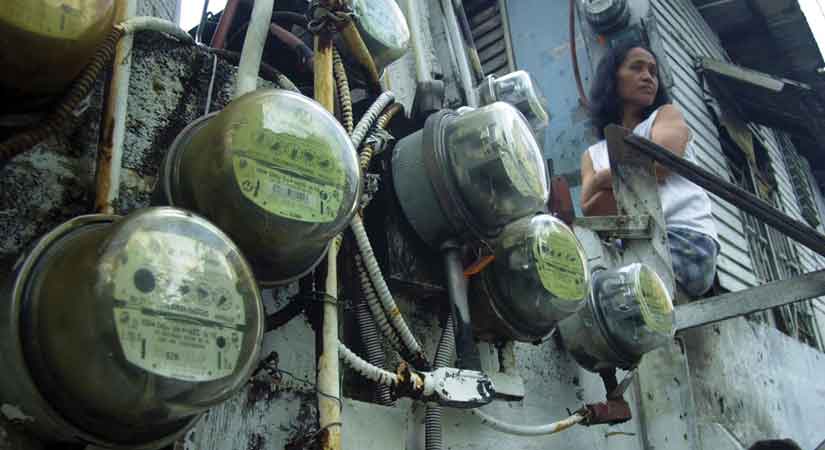
THE Energy Regulatory Commission (ERC) said it will require power distributors to extend the moratorium on power disconnections until the end of the year.

The commission is set to issue an advisory ordering distribution utilities to defer power disconnections to after Dec. 31, its chairperson told Senators during the Department of Energy’s budget hearing Tuesday.

“‘Yan po ‘yung nakalagay sa aming draft ngayon (That’s what we’ve written in our draft advisory),” ERC Chairperson Agnes VST Devanadera said in a reply to a question by Senator Risa N. Hontiveros-Baraquel.

Kasama na po sa i-issue ng ERC ang relaxation ng disconnection policies (The relaxation of disconnection policies is also included in our upcoming advisory),” she said.

Manila Electric Co. (Meralco), the Philippines’ largest power utility, is due to lift its self-imposed moratorium on disconnections on Oct. 31. It first suspended disconnections in April.

“Meralco has always been considerate of the circumstances of its customers, hence the seven months (since the start of the pandemic) of disconnection moratorium being observed,” Lawrence S. Fernandez, Meralco’s head of utility economics, said last week.

The ERC noted the initiative of some power distributors that declared their own moratorium even without a government order.

On Sept. 23, the Department of Energy ordered the energy industry players to continue extending grace periods and enforcing a staggered payment scheme for their customers. This was issued complying with the Republic Act No. 11494, or the Bayanihan to Recover as One Act (Bayanihan II).

Even with the said order, the government is requesting that those with the capacity to settle their electric bills pay them within the due dates.

“We are asking all those who can pay their electric bills to please pay,” Ms. Devanadera said. “And we are also asking the government agencies who have (the) budget for this to please implement their payment to help out the industry,” she added. — Adam J. Ang

Electronics industry backs retention of current tax perks for exporters

THE electronics industry said it supports separate tax regimes which would allow the export sector to retain its current incentives while applying a different system for domestic-only producers.

The Semiconductor and Electronics Industries in the Philippines, Inc. (SEIPI) in a statement Tuesday said that it supports the Philippine Economic Zone Authority’s (PEZA) appeal for two separate tax regimes.

“Retain the current incentives and separate the incentives for domestic versus export industries like electronics,” SEIPI said.

The Corporate Recovery and Tax Incentives for Enterprises Act pending at the Senate proposes to cut corporate income tax as well as rationalize tax incentives.

SEIPI had asked for a “grandfather” clause that would allow current investors to keep their incentives. Currently, investors pay 5% tax based on gross income earned in lieu of national and local taxes — after an initial income tax holiday period.

“Without competitive incentives compared to Vietnam and other ASEAN countries, there will be a small probability of expansion in the Philippines,” SEIPI said.

PEZA in a separate statement Monday said exporters should not be treated equally to companies producing for the domestic market.

“The exporters compete in a global market and face tougher competition from international competitors, while the domestic market only focuses on local consumers with few competitors,” PEZA said.

“In terms of tax incentives, it is a crucial factor for export-based investors as part of ease and cost of doing business. Investors compare tax incentives in different countries.”

PEZA cited the cost-benefit analysis produced by the National Economic Development Authority, which found that incentives increased production, investment, and tax revenue. — Jenina P. Ibañez

Rules on duty exemptions for medical supplies, donated devices issued

THE Department of Finance (DoF) has approved the rules governing tax and duty-free imports of medical supplies and donated devices for use in remote learning.

In a statement Tuesday, it said Finance Secretary Carlos G. Dominguez approved Customs Administrative Order (CAO) No. 12-2020, which will serve as the implementing rules and regulations for the tax-exempt import component of Republic Act (RA) No. 11494 or the Bayanihan to Recover as One Act (Bayanihan II).

The CAO exempts importers and manufacturers from Customs duties, taxes and fees when importing medical products, equipment and supplies intended for the coronavirus containment effort.

The order also applies to devices used for online learning such as personal computers, laptops, tablets and other equipment donated to public schools, including state universities, colleges and the vocational institutions under the Technical Education and Skills Development Authority.

The exemptions will apply retroactively to include imports from June 25, or after RA 11469 or the Bayanihan to Heal as One Act (Bayanihan I) expired.

The DoF said Customs will refund taxes and duties paid for eligible imports cleared starting June 25, but the importer will have to obtain first a tax exemption indorsement from the DoF to avail of the tax relief.

The tax exemptions will be valid until Dec. 19.

Importers and manufacturers will have to secure regulatory clearances from agencies with supervisory authority over the imports, such as the Food and Drug Administration (FDA) and the Departments of Environment and Natural Resources and Health.

The DoF said donated imports of health products with clearances will be “automatically cleared,” while those not subject to FDA’s clearance will no longer need to present a certification.

The Bureau of Internal Revenue has also issued rules on the tax perks available to donors of devices for use in remote learning.

It allows donors to deduct the value of the donations from gross income, while some items are also exempt from donor’s tax and value-added tax. — Beatrice M. Laforga

US businesses say Philippines not keeping up with region in improving business climate

AMERICAN BUSINESSES said they broadly agree with the US State Department’s conclusion that the Philippine investment climate in 2020 is improving, though they believe the improvements are insufficient to keep up with its neighbors.

They added that the State Department report underplayed the impact on investment of the drug war and tax incentive uncertainty.

John Forbes, senior advisor to the American Chamber of Commerce of the Philippines, said in a mobile message Tuesday that the group agrees with the assessment of overall improvement, “but we think not enough to keep up with regional competitors.”

The State Department report found that foreign direct investment (FDI) remains low relative to other countries in the Association of Southeast Asian Nations (ASEAN). It ranked fifth out of the 10 ASEAN economies in terms of FDI  in 2019.

Mr. Forbes said that the report understates the negative impact of President Rodrigo R. Duterte’s drug war, which has killed at least 8,663 people. He added that “the recent unwillingness of the government to accept international arbitral awards” has also had an effect on investor sentiment.

Manila Water Company, Inc.and Maynilad Water Services, Inc. waived almost P11 billion in awards won from arbitration cases against the government, after they were accused of economic sabotage by Mr. Duterte.

The Permanent Court of Arbitration in Singapore in separate cases ordered the government to pay the concessionaires after the government did not reimburse foregone revenues from the regulator’s refusal to allow the concessionaires to raise rates.

Discussing the political and security environment, the report noted terrorist groups in some regions, as well as human rights concerns arising from the drug war.

“The ongoing operation continues to receive worldwide attention for its harsh tactics,” it said.

Mr. Forbes added that the report underplayed the uncertainty surrounding the pending changes in tax incentives, which could upend investors’ cost structures.

The Corporate Recovery and Tax Incentives for Enterprises Act (CREATE) pending with the Senate proposes to cut corporate income tax as well as rationalize tax incentives.

Business groups including the American chamber recently reiterated their call to congress for the grandfathering of current incentives for exporters, such as the 5% tax based on gross income earned in lieu of national and local taxes following an initial income tax holiday period.

“Grandfathering will provide them the confidence to remain in the Philippines long-term,” the business groups said.

While Mr. Forbes said that the report is comprehensive and useful for investors, he notes that it could in the future add more positive information on sectors that have attracted substantial FDI.

The report said the Philippines has been addressing its FDI constraints, including restrictions on foreign ownership and investment and problems with red tape. It said the business environment for exporters under the Philippine Economic Zone Authority has been transparent, and noted the promise of the government’s infrastructure program.

The report noted the “pervasive and long-standing problem” of corruption in both public and private sectors. — Jenina P. Ibañez

LNG imports still ‘best option’ for PHL energy security — DoE

LIQUIFIED NATURAL GAS (LNG) imports remain the best way to address the Philippines’ power needs in the next few years, the Secretary of Energy said.

“While the LNG industry is still in its infancy stage, imports of LNG remains the best option for the Philippines at the moment to assure the country’s future energy requirements will be sufficiently met,” Energy Secretary Alfonso G. Cusi said in a message to the LNG Producer-Consumer Conference 2020.

The Malampaya field off northern Palawan is the country’s only source of natural gas and is expected to be completely depleted by 2027.

“They say that the Malampaya supply can go as far as 2027 but it does not have enough gas for the further expansion needed to provide future natural gas requirements particularly with the plan to expand application of LNG in the industrial, commercial, residential, and transport sectors,” Mr. Cusi said. 

The Malampaya gas-to-power project under Service Contract 38 accounts for 3,200 megawatts of electricity, or 21.1% of gross power generation in 2019. The field is operated by Shell Philippines Exploration B.V., along with its partners, Udenna Group’s UC Malampaya LLC and Philippine National Oil Co.-Exploration Corp.

The government is evaluating various LNG terminal proposals to hold the expected imports that will replace Malampaya’s output.

So far, it signed off on LNG terminal projects put forward by the Lucio Tan Group with Blackstone Group’s affiliate Gen X Energy, First Gen Corp. with Tokyo Gas Co. Ltd., US-based Excelerate Energy, and Energy World Gas Operations Philippines, Inc.

Among the four proposals, the Lopez group’s First Gen is poised to deliver imported natural gas as early as 2022 with the construction of its interim gas terminal starting in the last quarter of this year. The DoE (Department of Energy) last month gave the company the go signal to begin construction.

The DoE is committed to developing the Philippines as a regional LNG hub. In 2017, it passed the Philippine Downstream Natural Gas Regulation which seeks to develop an LNG market. Recently, it issued an LNG investors’ guide to aid in the government’s efforts to raise natural gas capacity. — Adam J. Ang

Near self-sufficiency in food seen possible with reforms like RCEF

AGRICULTURE Secretary William D. Dar said food production needs to be made more sustainable if it is to meet domestic demand, and added that he expects to achieve a level of near self-sufficiency with the help of reforms like the Rice Competitiveness Enhancement Fund (RCEF).

In remarks delivered for World Food Day Monday, Mr. Dar said the country’s current food adequacy level is at about 80% overall, and cited the need for further reforms to meet demand from the growing population.

“Sustainability is the key to producing enough,” he said, noting that the Philippines currently has to import to plug the gaps.

“Given the program on rice tariffication, the Rice Competitiveness Enhancement Fund, and other programs that we are now putting in place… sometime in the future… almost all of the food requirements of the country can be locally produced,” Mr. Dar said.

Mr. Dar also directed the DA’s National Rice Program and Philippine Rice Research Institute to update their plans on changing consumer preferences and requirements.

Citing the Philippine Statistics Authority, the DA (Department of Agriculture) said food production has not kept up with population growth.

“We need to take care of our commodity industry. Local production is the priority, and imports (should) be a last resort,” Mr. Dar said.

Mr. Dar also noted that in the case of rice, some farmers and millers admitted that imported rice is superior in quality and taste.

“This is a development that the DA must consider. What is needed by the country now is not just higher levels of productivity but quality rice as well,” Mr. Dar said.

The DA has targeted a rice self-sufficiency level of 93%, from 86% currently.

According to the DA’s latest food supply outlook, the best-case scenario for the year-end rice inventory is 3.42 million metric tons (MT), equivalent to a 97-day supply.

However, pork and staple fish like round scad (galunggong) are projected to be in deficit at the end of the year.

The yearend pork deficit is estimated at 231,030 MT, equivalent to 45 days’ demand, while the demand for galunggong is expected to outstrip supply by 51,765 MT. — Revin Mikhael D. Ochave