Home Blog Page 83

Navigating the new global norm in financial regulation
IN BRIEF:

• Regulatory divergence is accelerating globally, with the US easing supervisory transitions to support competitiveness and innovation while the EU and UK maintain a stability-focused approach, creating operational complexities for multinational financial institutions.

• Asia-Pacific regulators are pursuing market-specific, stability-oriented strategies and domestic market development rather than mirroring Western regulatory shifts.

Technology, operational resilience, consumer protection, and emerging systemic risks are reshaping oversight, as regulators strengthen frameworks around AI governance, digital assets, fraud prevention, financial crime compliance, and the growing interconnectedness of nonbank financial institutions.

The global financial system is entering a period of intense structural change, driven by competing political priorities, technological disruption, and diverging regulatory philosophies. If past cycles of reform were characterized by coordination and standards-setting, the current environment reflects a more fragmented, multipolar world. This is evidenced by diverging perspectives on competitiveness and innovation between the US, UK and the European Union, underpinned by recent geopolitical and trade policies. In the Asia-Pacific region, regulators gravitate towards a more cautious stance to develop their respective markets.

While this is the case, there has been a common theme emerging from the current shakeup caused by the conflict in the Middle East that has had direct impact on energy security. Regulators are imploring financial institutions to tighten their respective scenario stress testing exercises to make sure their capital buffers are resilient enough, and calling for increased vigilance on energy shock-induced inflation, supply chain disruptions and their impact on their respective portfolios.

In this situation, institutions pursuing cross-border transactions and those that have operations in various jurisdictions must now navigate a landscape where rules are increasingly diverging. The EY 2026 Global Financial Services Regulatory Outlook highlights this shift, along with the implications for supervision, risk management, and long-term competitiveness of financial institutions.

This is the first article of the Financial Regulatory Outlook series, which will discuss insights from the SGV Knowledge Institute event titled “Global Shifts, Local Impact: Navigating the Next Wave of Banking Regulation.”

REGULATORY FRAGMENTATION WIDENS
Global financial regulation is becoming increasingly fragmented as major economies adopt contrasting approaches to competitiveness, innovation, and systemic oversight. The US is moving towards easing supervisory oversight focusing on capital rules, supervisory methodology, decreasing barriers to innovation, and an increased openness towards mergers and consolidation among major US banks.

This supervisory shift signals that the US is prioritizing economic expansion and domestic competitiveness over multilateral alignments that were emphasized after the Global Financial Crisis.

Meanwhile, the EU and the UK are pursuing growth agendas of their own, but one anchored in maintaining stability within the existing regulatory architecture. The bloc’s decision to delay the Fundamental Review of the Trading Book (FRTB) to 2027 reflects its cautious stance, prioritizing prudential safeguards despite market and geopolitical pressures.

This divergence in regulatory direction creates operational challenges for multinational banks, wherein institutions operating across the US and EU face significant asymmetries in capital requirements, reporting timelines, and supervisory expectations. As global standard setters avoid intervening in these geopolitical drivers, firms must adapt to a regulatory landscape where policy alignment is no longer guaranteed. This regulatory fragmentation appears to be the new norm rather than a transitory cycle while institutions wait for the current geopolitical uncertainties to subside.

ASIA-PACIFIC MARKET FOCUS, STABILITY ORIENTATION
In the Asia-Pacific, regulators are pushing for a more independent trajectory, guided by the US push for less stringent regulatory supervision and more by domestic priorities in innovation, regional competitiveness, and financial stability. Hong Kong and Singapore continue to lead in digital assets and sustainability standards, reflecting their continuous push for regional financial regulatory leadership. Their regulatory stance pairs innovation with strong safeguards that heavily focuses on risk assessment, operational resilience, and capturing cross-border flows.

Meanwhile, India is pursuing rapid financial sector development, implementing measures to boost domestic capacity and build a modern regulatory foundation suited to its expanding economy. On the other hand, Japan is emphasizing trust and system security while strengthening regional financial functions, signaling a preference for stability and predictability. Australia stands as a cautious outlier, closely tracking artificial intelligence (AI) governance and digital asset developments abroad as it evaluates potential reforms domestically.

Despite their varied approaches, APAC regulators share a common orientation: to maintain resilience amid geopolitical uncertainty. Many jurisdictions are tightening cyber and operational standards, as seen in the EU-aligned Digital Operational Resilience Act (DORA) efforts and new oversight regimes for critical third-party service providers. This regional focus on digital resilience and local market strengthening underscores a broader shift where the Asia-Pacific is not reacting to Western recalibrations, but designing frameworks tailored to its own structural needs and competitive aspirations.

EMERGING RISKS
Across global markets, regulators are increasingly concerned about risks arising from fast-moving technological adoption, the expansion of digital assets, and growing dependence on third-party service providers. AI remains a focal point of regulatory inconsistency, with more than 40 jurisdictions issuing guidance or conducting supervisory exercises while applying different expectations around transparency and model governance. Firms now must manage dual risks in this area as well as risks arising from AI used in operations and from AI deployed in compliance functions.

Digital assets, particularly stablecoins, are prompting varied responses worldwide. The US Guiding and Establishing National Innovation for US Stablecoins (GENIUS) Act introduces a federal framework emphasizing reserve backing and redemption rights, while Hong Kong, Japan, the EU and UK advance licensing and supervisory regimes customized for their markets. These diverging views are expected to accelerate jurisdictional regulatory arbitrage and reshape business models for digital-native firms.

Operational resilience has also become a supervisory priority. The EU’s DORA regime, the UK’s Critical Third Parties (CTP) framework, and Canada’s operational resilience deadlines all reflect rising concerns about the systemic risks tied to digital infrastructure. Regulators are increasing scrutiny of critical third-party technology providers and intensifying scenario testing. As geopolitical uncertainty heightens vulnerability exposures, firms must build robust, technology-driven controls to withstand disruptions and safeguard business continuity.

CONSUMER PROTECTION, RISK GOVERNANCE, AND NBFIS
Regulators worldwide are strengthening oversight aimed at protecting consumers, enhancing governance, and monitoring emerging threats from non-bank financial institutions (NBFIs). The increasing occurrence of fraud, particularly through digital channels, has led to tougher monitoring, expanded liability expectations, and new obligations for platforms and payment service providers. The UK Financial Conduct Authority’s Consumer Duty continues to influence global standards, with Singapore, Japan, and New Zealand introducing parallel regimes emphasizing fair treatment, transparency, and enhanced complaint handling.

At the same time, supervisors are devoting attention to NBFIs, whose increasing interconnectedness with the regulated banking system raises systemic concerns. The UK’s System-Wide Exploratory Scenario and France’s stress testing exercises reflect efforts to map vulnerabilities in markets where leverage or liquidity mismatches could spill over into traditional finance infrastructure.

The current geopolitical situation has seen a rise of sanctions and asset freezes, and financial crime regulations are expected to continuously evolve. This gives rise to inconsistent reporting requirements in different jurisdictions. While the EU’s Anti-Money Laundering Authority (AMLA) is expanding direct supervision and the Monetary Authority of Singapore (MAS) requires stricter reporting standards, the US Financial Crimes Enforcement Network (FinCEN) has amended its rule on beneficial ownership: foreign entities registered to do business in the US are required to report but are exempt from reporting US citizens as beneficial owners. These are just some of the differing levels of AML compliance that multinational financial institutions operating in different jurisdictions must contend with, and they should have institutional agility to comply.

THE ROAD AHEAD
The regulatory landscape entering 2026 is unlike any in recent memory. It is no longer defined by synchronized reforms, and it is increasingly shaped by national priorities, global geopolitical tensions, and rapid technological change. For financial institutions, success will depend on how agile these institutions are in building robust compliance frameworks, strengthening risk governance, and anticipating divergent rules before they materialize.

At this global crossroads, regulation is no longer merely a compliance exercise. It is now a strategic determinant of an institution’s competitiveness. Firms that understand this shift and adapt accordingly will be best placed to navigate this new global norm in financial regulation.

In the next part of this Financial Regulatory Outlook series, we will be discussing local insights and how Philippine financial institutions will be affected.

This article is for general information only and is not a substitute for professional advice where the facts and circumstances warrant. The views and opinions expressed above are those of the author and do not necessarily represent the views of SGV & Co.


Ruben D. Simon, Jr. is a financial services consulting senior director of SGV & Co.
South Korea asks Gulf nations for steady energy supply, safety of Korean vessels

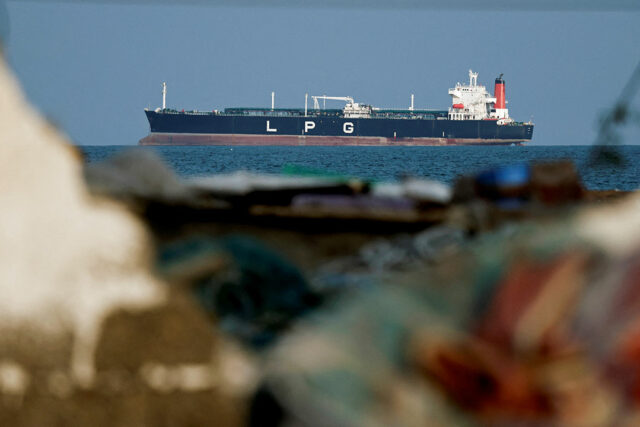
An LPG gas tanker at anchor as traffic is down in the Strait of Hormuz, amid the US-Israeli conflict with Iran, in Shinas, Oman, March 11, 2026. — REUTERS

SEOUL — South Korean Finance Minister Koo Yun-cheol met with envoys from Gulf countries to shore up energy security and the safety of Korean vessels near the Strait of Hormuz, the ministry said on Sunday, as the escalating Iran war disrupts shipping.

In the meeting on Friday, Mr. Koo asked the Gulf Cooperation Council (GCC) ambassadors to ensure a steady supply of oil, liquefied natural gas, naphtha, urea and other critical resources, and to ensure the safety of Korean vessels and crew near the vital Strait, the ministry said in a statement.

The envoys said South Korea is a “top priority” nation and pledged to communicate closely with Seoul to ensure stable supply, the statement said.

Like other Asian economies, South Korea relies heavily on energy imports, including through the Strait of Hormuz, which was a conduit for 20% of the world’s oil before the US and Israel launched the war on Feb. 28. Iran has since effectively shut down the waterway, driving up energy prices and stoking fears of a global recession.

The six GCC member states are Saudi Arabia, the United Arab Emirates, Qatar, Kuwait, Oman and Bahrain. Reuters

US rescues airman whose F-15 was downed in Iran, US officials say

Smoke rises following an explosion, amid the US-Israeli conflict with Iran, in Tehran, Iran, March 7, 2026. — REUTERS/WANA/NASER SAFARZADEH

WASHINGTON/CAIRO — The United States rescued an airman caught behind enemy lines after Iran shot down his F-15 fighter jet, the US government said early on Sunday, resolving a crisis for President Donald J. Trump with the war on Iran in its sixth week.

The rescue is a bright spot for the United States in a war that has killed thousands, sparked an energy crisis and threatened lasting damage to the world economy after Iran virtually shut the vital Strait of Hormuz.

Mr. Trump and Israel on Saturday stepped up pressure on Iran to open the Strait, which usually carries about a fifth of global oil and liquefied natural gas, or face attacks on energy facilities.

TRUMP GIVES IRAN MONDAY DEADLINE FOR PEACE DEAL
The injured airman was the last remaining to be retrieved from the two crew members from the warplane Iran said on Friday it had brought down with its air defenses, triggering a high-profile search by both Tehran and the United States.

“Over the past several hours, the United States Military pulled off one of the most daring Search and Rescue Operations in US History,” Mr. Trump said in a statement posted by White House Press Secretary Karoline Leavitt on X.

Although injured, the colonel “will be just fine,” Mr. Trump said.

The Pentagon did not immediately respond to a request for comment.

Mr. Trump, who has threatened to hit Iranian power plants if his demands were not met, indicated his deadline for Tehran to reach a deal to end the war was around 10 a.m. ET (1400 GMT) on Monday.

“Remember when I gave Iran ten days to MAKE A DEAL or OPEN UP THE HORMUZ STRAIT. Time is running out — 48 hours before all Hell will reign down on them. Glory be to GOD!” he posted on Truth Social on Saturday morning.

As the war has escalated, Mr. Trump has repeatedly mixed hints of diplomatic progress with threats to bomb the Islamic Republic “back to the Stone Ages.”

Adding to the pressure, a senior Israeli defense official said Israel was preparing to attack Iranian energy facilities within the next week, and was awaiting approval from the United States.

But a defiant Iran warned the “entire region will become a hell for you” if the United States and Israel escalated attacks, Iranian media said.

Chances for peace talks, which Pakistan is seeking to broker between Washington and Tehran, appear to remain slim, and polls show low US public support for the war.

IRAN WANTS ‘LASTING END TO ILLEGAL WAR’
Still, Iran’s foreign minister left the door open for the talks.

“What we care about are the terms of a conclusive and lasting END to the illegal war that is imposed on us,” Foreign Minister Abbas Araghchi said on X, adding that Iran had never refused to go to Islamabad, which he thanked for its efforts.

After a fourth attack near the Bushehr power plant on Saturday, Mr. Araghchi warned the United Nations of an “intolerable situation that poses a serious risk of radiological release,” state media said.

Iran has rained drones and missiles on Israel, while targeting Gulf countries allied to the United States, which have avoided directly joining the war for fear of further escalation.

State TV said Iran’s military launched drones at US radar installations and a US-linked aluminum plant in the United Arab Emirates and US military headquarters in Kuwait, in retaliation for deadly attacks on Iranian industrial centers.

Kuwaiti state media, citing the finance ministry, said an Iranian drone hit an office complex for government ministries, causing significant damage but no casualties, in an attack Kuwait Petroleum Corp. blamed for a fire there.

Iran earlier attacked an Israel-affiliated vessel with a drone in the Strait, setting the ship on fire, state media said, citing the commander of the Revolutionary Guards’ navy.

Yemen’s Iran-aligned Houthis also said on Saturday they attacked Israel with a ballistic missile and drones, in a joint effort with Iran’s Revolutionary Guards, the Iranian army and Lebanon’s Hezbollah. It gave no evidence of the damage caused.

Israel did not confirm the attack. — Reuters

Central banks’ inflation mood puzzle: more judgment than science

STOCK PHOTO | Image by Melanie Lim from Unsplash

FRANKFURT/WASHINGTON — The world’s central bankers may be attempting the impossible: to get into the psyche of business executives, labour unions and ordinary households in real time to understand how they are navigating their finances through yet another energy shock.

Policymakers are contemplating whether to jack up interest rates to combat rising inflation. But they will only pull the trigger if they think a surge in energy costs induced by the Iran war will filter into other prices, lifting inflation expectations across the entire economy.

The problem is that measuring such expectations is notoriously difficult. Central banks have a trove of surveys, gauges and indicators at their disposal but all of them have blind spots if not outright faults.

Since the COVID-19 pandemic, they have developed new tools to fill gaps in data about behavior. But measuring expectations remains more an art than an exact science.

That could raise the bar for rate hikes as policymakers are wary of gut-feeling decisions and usually prefer to wait for more evidence to narrow the risk of a policy error.

BEHAVIORS HAVE CHANGED SINCE 2022 INFLATION SPIKE
Policy-makers at the Bank of Canada acknowledged that global uncertainty meant they “would need to rely on judgment more heavily than usual” to plot the path of economy, according to minutes of its March 18 meeting at which it kept rates on hold.

Others describe the effort involved in the process.

“I try hard to get into the thoughts of price-setters and how they are seeing it — trying to calibrate their confidence in pricing power,” Richmond Federal Reserve Bank President Tom Barkin told Reuters.

“The ‘hike’ case would be around inflation expectations starting to finally move,” he said. “I don’t have a sense that they’ve broken out at this point.”

One complication is that behaviors change.

In 2022, consumers and firms had little experience with rapid inflation, making price- and wage-setting a rather rigid exercise.

“But now people have lived through a painful episode of inflation, and this may mean that inflation expectations are more fragile, and so they could be more sensitive to such an energy price shock,” European Central Bank (ECB) board member Isabel Schnabel said in a university lecture on Friday.

For companies, changing their selling prices was a cumbersome process before the pandemic and so they limited adjustments, often to once a year. This became untenable and the frequency of changes sky-rocketed, Schnabel argued.

This makes the frequency and not just the magnitude of such changes a good indicator that expectations are shifting.

Traditionally, central banks relied on surveys and market indicators to assess expectations. But surveys are not done frequently enough to capture rapid changes and their time horizon is often out of sync with that of policymakers.

Market indicators of expected inflation are also imperfect because they include the extra return, or risk premium, investors demand for holding a particular financial instrument. This changes with market sentiment, blurring shifts in actual price expectations.

The stakes are high: investors now expect the ECB to raise rates two or three times this year, the Bank of England twice, and have given up on any Fed rate cuts in 2026.

CENTRAL BANKS INNOVATE TO COVER KNOWLEDGE GAPS
To compensate for such information gaps, central banks have developed an array of new tools. They track expected wage changes, including via major pay deals announced by unions, which may be a signal to others negotiating their own pay.

They survey firms directly and speak to executives to gauge expected behavior, and they take on board ever-larger numbers of external surveys with forward-looking indicators.

Central bank staff track the frequency of price changes, correct existing surveys to fill data gaps and have revised their own projection models to address shortcomings that missed 2022’s inflation surge caused by the pandemic and Ukraine war.

Also key to their judgment call is trying to understand how this inflation shock differs from four years ago.

The consensus on this seems firm: conditions are fundamentally different.

Interest rates are already higher, government purses are tighter, there is growing slack in the labour market and — unlike during the pandemic, when they were unable to spend — households are not sitting on piles of cash.

“We’re coming into this situation with the gradual disinflation that we were having, the labour market is softening (and) growth is a little bit below potential,” Bank of England Governor Andrew Bailey told Reuters.

“And one of the consistent messages we get from businesses is, for most sectors of the economy, a real lack of pricing power.”

Using their enhanced insight, central banks are for now confident that longer-term inflation expectations are holding firm around their targets.

But the longer the war drags on, the longer energy prices will stay high — and as consumers see everyday costs like fueling their cars rise, the more likely it is that inflation expectations will move upwards. When exactly this happens will not be clear, leaving policymakers to judge for themselves.

“Economics itself is not an exact science,” ECB policymaker Primoz Dolenc said. “It’s of course based on analytics but by definition there is also a perception and judgment element.” — Reuters

Overtaxed but underserved: Fixing the Philippines’ tax system to unlock investment

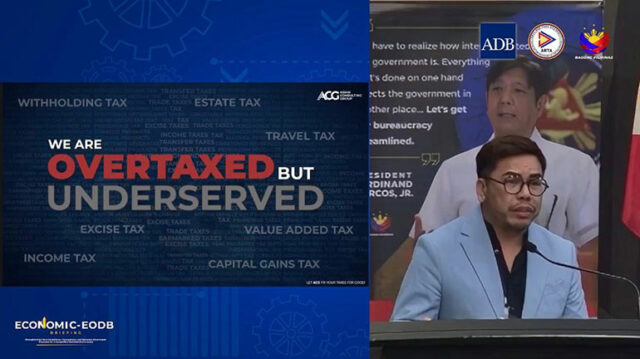
At the 2026 Economic Ease of Doing Business (EODB) Briefing held at the Asian Development Bank (ADB), one message resonated strongly:

The Philippines is overtaxed, yet underserved.

The phrase, highlighted during the presentation of global tax policy expert and Chief Tax Advisor of Asian Consulting Group (ACG) Mon Abrea, reflects a growing sentiment among taxpayers and investors — that while Filipinos face multiple layers of taxes, the ease of compliance and quality of public services remain below expectations.

More importantly, it points to a deeper issue:

The problem is not just how much we tax, but how the system is designed and administered.

Watch his presentation here:

Organized by the Anti-Red Tape Authority (ARTA) in collaboration with the Asian Developmet Bank (ADB), the briefing gathered key government officials, including representatives from the Department of Finance (DoF), Bureau of Internal Revenue (BIR), and Bureau of Customs (BoC), to advance fiscal compliance, transparency, and seamless government processes.

The event was attended by members of the diplomatic corps, foreign chambers of commerce, industry leaders, and policymakers — reflecting strong public-private collaboration in improving the country’s business environment.

A System That Burdens Growth

The Philippines continues to face governance and competitiveness challenges. With a Corruption Perceptions Index (CPI) score of 32/100, investor confidence remains constrained, while businesses deal with:

  • Complex and overlapping tax rules
  • High compliance costs
  • Frequent audits and discretionary enforcement
  • Delays in VAT refunds and approvals

The result is a system that is heavy on compliance, but light on efficiency and service delivery.

This imbalance discourages investment, weakens voluntary compliance, and ultimately limits revenue potential.

Ease of Paying Taxes: The Missing Piece

While reforms have improved ease of doing business, ease of paying taxes remains a key bottleneck.

Globally competitive economies focus not only on tax rates but on predictability, transparency, and efficiency. Countries such as Singapore, Vietnam, and Indonesia have invested heavily in digitalization and streamlined systems to attract investors.

For the Philippines, improving competitiveness requires modernizing tax administration — not just adjusting tax policy.

From Red Tape to Red Carpet

At the EODB briefing, government leaders emphasized that ease of doing business is ultimately about building trust — between the government, taxpayers, and investors.

Transforming the Philippines into an investment destination requires moving from red tape to red carpet.

This means reducing discretion, simplifying processes, and making compliance easier and more predictable.

A Reform Agenda for Competitiveness 

A comprehensive reform agenda was presented to align the Philippines with global standards:

  • AI-driven, risk-based audit to target large-scale tax evasion instead of burdening MSMEs
  • Adoption of the OECD Global Minimum Tax to capture fair revenues from multinational enterprises
  • Reducing VAT from 12% to 10%, while strengthening enforcement to broaden the base
  • Increasing income tax exemptions to provide relief to workers
  • Lifting bank secrecy for tax enforcement to improve transparency
  • Imposing a recovery tax on unexplained wealth to deter corruption

At the institutional level, a more structural reform is proposed:

The creation of a National Revenue Authority, integrating tax and customs systems to improve efficiency, data sharing, and accountability.

Taking the Conversation Global

These reforms are part of a broader effort to position the Philippines as a competitive investment destination.

On Feb. 26, 2026, the Asian Consulting Group (ACG) will launch the 2026 International Tax and Investment Roadshow, covering key cities across Asia, the Middle East, Europe, North America, and Australia.

Alongside it is the launch of the book:

WHY INVEST IN THE PHILIPPINES? — CREATE MORE Edition

A practical guide for global investors, bringing together insights from economic managers, ambassadors, and industry leaders.

The Way Forward

The Philippines has strong economic fundamentals — but unlocking its full potential requires restoring trust in its institutions.

Tax reform is not just about raising revenues.

It is about creating a system that is fair, efficient, and predictable.

Because in today’s global economy, countries do not compete on tax rates alone.

They compete on trust.

And until taxpayers feel that they are served as much as they are taxed, the Philippines will remain overtaxed — but underserved.

To invite Mr. Abrea for interviews or briefings, email consult@acg.ph.

Mon Abrea is a tax policy expert and the founder and chief tax advisor of Asian Consulting Group, advising governments, multinational firms, and investors on tax reform and investment strategy. He holds degrees and executive training from Harvard University, Duke University, and the University of Oxford.


Spotlight is BusinessWorld’s sponsored section that allows advertisers to amplify their brand and connect with BusinessWorld’s audience by publishing their stories on the BusinessWorld Web site. For more information, send an email to online@bworldonline.com.

Join us on Viber at https://bit.ly/3hv6bLA to get more updates and subscribe to BusinessWorld’s titles and get exclusive content through www.bworld-x.com.

Regional fertilizer sourcing to cut exposure to volatile Gulf supply

DA.GOV.PH

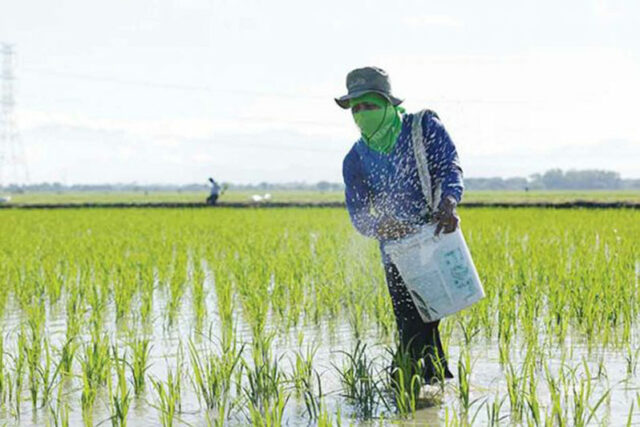
The Department of Agriculture (DA) said nearby countries are viable alternative sources of fuel-derived fertilizer that can reduce dependence on the Middle East.

In a statement Wednesday, the DA said exposure to Middle Eastern fertilizer is at any rate limited to about 20%, with most imports coming from China, Indonesia, Malaysia, and Vietnam.

Iran restricted passage through the Strait of Hormuz, a key chokepoint for oil and inputs such as urea and phosphate, after the US and Israel attacked it in late February.

The DA said ammonium sulfate shipments come entirely from suppliers in Eastern Asia.

“I reviewed all the figures on where our fertilizer comes from. Supply is not the issue — it’s really the price,” Agriculture Secretary Francisco Tiu Laurel, Jr. was quoted as saying in the statement.

The DA said rising global oil prices and freight costs are expected to push fertilizer prices higher, which could in turn drive increases in food prices.

Fitch Solutions unit BMI earlier warned that rising fertilizer prices are leading to reduced fertilizer application across Southeast Asia, with the Philippines particularly vulnerable due to its heavy reliance on imports.

“The Philippines is more fundamentally exposed to an extended disruption to nitrogenous fertilizer supplies given its high reliance on imports,” BMI said.

It added that delays in fertilizer shipments could coincide with key planting periods, posing risks to crop yields.

“With approximately 75% of corn plantings occurring between April and May and around 60% of rice plantings taking place from March to May, delay in fertilizer arrivals past key application windows could pose significant downside risks to the upcoming crop,” it said.

To mitigate the risks, the DA said it is promoting alternative inputs such as biofertilizer, liquid fertilizer, and soil ameliorants, while continuing to diversify import sources.

Among these alternatives are locally-produced biofertilizers developed by researchers from the University of the Philippines Los Baños National Institute of Molecular Biology and Biotechnology and manufactured commercially by Agri Specialists, Inc.

The company estimates that one kilo of the product can replace up to two 50-kilo bags of urea-based fertilizer. The biofertilizer costs about P750 per kilogram, compared with around P2,500 for a single bag of complete fertilizer.

The DA said field trials indicate that farmers can reduce their use of conventional fertilizer without significantly affecting yields when using such alternatives.

“If you used to apply 10 sacks of urea, you might now be able to use only half or even just three (sacks of the alternative fertilizer),” Mr. Laurel said. — Vonn Andrei E. Villamiel

PHL signs LPG deals with US, Canada, Mexico

PHILSTAR FILE PHOTO

The Philippines signed supply deals with the US, Canada, and Mexico for 66 million kilograms (kg) of liquefied petroleum gas (LPG), the LPG Marketers Association, Inc. (LPGMA) said.

LPGMA founder Arnel U. Ty said the association was informed by Energy Secretary Sharon S. Garin that the agreements were government-to-government (G2G), with the Department of Energy (DoE) expected to confirm the order publicly soon.

“Secretary Garin informed us that the government is in contact with the three countries — that their ambassadors, through their communication, informed the Philippine government that they have product to be sold to the Philippines,” he told reporters Wednesday.

The government and the private sector are negotiating the arrival of the LPG shipments, with targeted landing dates of between May 15 and June 1.

The LPG products from the three countries are estimated to cost at least P2.5 billion, Mr. Ty said.

He noted that the shipments will be eventually sold to the private sector.

“(The deals) can initiate new sources that we didn’t have before. Our country used to rely almost entirely on the Middle East for supplys,” he said.

Retailers mostly import their supply from elsewhere in Asia, apart from the Middle East.

Mr. Ty said maintaining a 60-day inventory is “expensive” for the private sector, with suppliers only willing to commit to as much as 40 days, making the G2G arrangement advantageous.

Once the orders arrive, they will add 30 days’ worth of supply, bringing the country’s total inventory to around 60 days.

In a recent briefing, Ms. Garin said the inventory of LPG has increased to an equivalent of 34 days from 23 previously.

“What to expect though in LPG is the increase in price. The price jump is really significant because international logistics have been somewhat disrupted,” Ms. Garin said.

“But what we’re doing now is just to make sure that we have supply. Because this is not only for beverages and restaurants, but also for households,” she added.

Consumers using LPG may have to face higher costs this month, as some retailers raised prices by as much as P402.93 per 11-kilogram (kg) cylinder.

Seaoil Philippines, Inc. said unit Seagas increased its LPG price by P36.63 per kg.

Petron Corp. imposed a P20-per kg hike in LPG prices after factoring in changes to international contract prices.

Solane, meanwhile, announced a hike of P17 per kg for the cooking gas.

The latest price adjustments bring the prevailing LPG price in the National Capital Region above P1,500 per 11-kg cylinder. – Sheldeen Joy Talavera

Manufacturers push for ‘buy local’ campaign

Workers are seen inside a manufacturing facility in Sto. Tomas, Batangas in this file photo taken on March 1, 2023 — PHILIPPINE STAR/KJ ROSALES

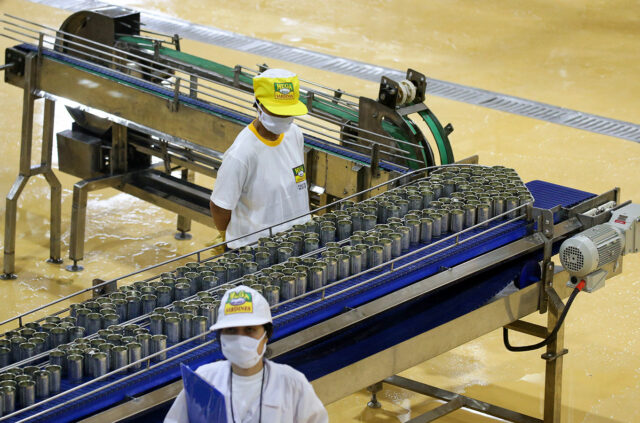
THE Federation of Philippine Industries (FPI) said supply chain disruptions and the weak peso make it necessary to pursue a “buy-local”approach to boost domestic industrial production.

In a statement late Tuesday, FPI Chairperson Elizabeth H. Lee said domestic production and procurement will ‘better position” the economy by building “capacity…to withstand external pressures.”

Foreign exchange volatility and supply-chain disruptions caused by the fighting in Iran cuts across industries and the overall economy, Ms. Lee said.

The peso first weakened past the P60-to-the-dollar level on March 19, about three weeks after the outbreak of fighting in the Persian Gulf.

Ms. Lee cited Republic Act (RA) No. 11981 or the Tatak Pinoy Act, which provides a clear framework for upgrading domestic industries and moving up the value chain.

“Persistent global uncertainty reinforces the economic case for domestic production, with local spending generating broader multiplier effects across employment and supply chains,” Ms. Lee said.

She also noted that RA 9184 or the Government Procurement Reform Act provides a guide for domestic industry preference.

“Its current framework — still largely anchored on price-based evaluation — presents an opportunity for further alignment with industrial development goals,” she said.

Margins of preference for domestically-produced goods may be more strategically utilized to support local industries within established rules,” she said. — Beatriz Marie D. Cruz

Exporters welcome E-TRACC exemption

Trucks enter the port area in Manila. — PHILIPPINE STAR/EDD GUMBAN

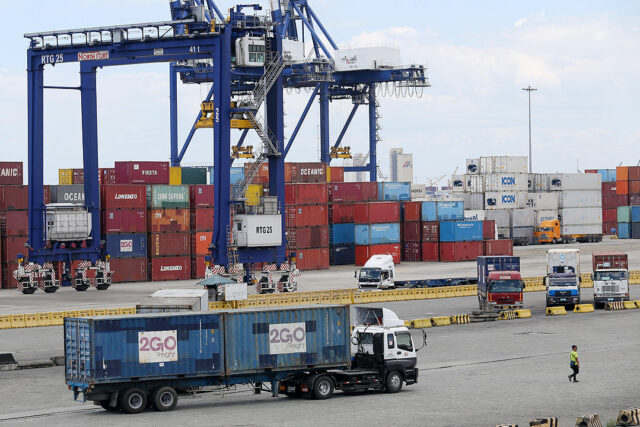
The Philippine Exporters Confederation, Inc. (PHILEXPORT) said it welcomed the exemption of exporters from the Bureau of Customs (BoC) Electronic Tracking of Containerized Cargo (E-TRACC) System.

In a social media post Wednesday, the group said Customs Commissioner Ariel F. Nepomuceno has said that the exemption covers exporters accredited as Authorized Economic Operators and registered with Investment Promotion Agencies.

The announcement was made during the Export Development Council Executive Committee meeting on April 1.

PHILEXPORT said the exemption eases the burden on exporters, who already face high fuel prices, supply chain disruptions, and increased compliance requirements.

“The exemption from ETRACC allows exporters to focus on fulfilling orders efficiently without the added layer of cost and administrative complexity that could hamper our delivery timelines,” PHILEXPORT President Sergio R. Ortiz-Luis, Jr. said in a statement.

Launched in 2020 on the strength of a memorandum circular, E-TRACC is a web-based, real-time monitoring system that uses GPS (global positioning system)-enabled locks to track container movement from port to destination.

The system is designed to ensure that goods reach their intended destination. It features an alarm in case a cargo is diverted.

PHILEXPORT said it supports policies on transparency and trade facilitation, while ensuring that these avoid “unintended consequences on key economic drivers.”

Philippine exports rose 8% year-on-year in February to $7.33 billion, against the 12.8% expansion a year earlier. It was the weakest reading since the 5.5% expansion recorded in August. — Beatriz Marie D. Cruz

BoC exceeds March collection target

The Bureau of Customs said Wednesday that it collected P84.43 billion in March, exceeding the P83.24-billion collection target set for it by 1.4% during the month.

Citing preliminary data, the BoC said collections last month were also 5.1% higher year-on-year.

Commissioner Ariel F. Nepomuceno said that the increase in collections will directly translate into better public services, funding for infrastructure, and support for social programs.

To further improve services, the BoC said it will continue advancing reforms anchored on digitalization, transparency, and ease of doing business.

Quoting Finance Secretary Frederick D. Go, the BoC said that efficient revenue collection and institutional integrity play an important role in sustaining economic growth and ensuring that government resources are maximized. — Justine Irish DP Tabile

New offshore Bicol exploration area to be offered to bidders

PHILSTAR FILE PHOTO

The Department of Energy (DoE) is sounding out potential bidders for a service contract allowing to explore for potential offshore petroleum resources in the Bicol shelf.

In a notice posted on its website, the DoE said interested parties can challenge for a nominated area spanning 1.5 million hectares within the Bicol Shelf Basin, which lies north of Camarines Norte, encompassing Polillo Island, with an upper bound somewhere north of Casiguran, Aurora.

Challengers may submit documents to participate in the bidding until May 18, with bids to be opened the same day.

The Philippine Conventional Energy Contracting Program allows applicants for a petroleum service contract to nominate areas of interest. Alternatively, the DoE may also offer pre-determined areas not covered by any application.

Edgar Benedict C. Cutiongco, president of the Philippine Petroleum Association, said the Bicol Shelf Basin is considered gas-prone and can serve the country’s long-term need for reliable transition fuels.

“The Bicol Shelf spans about 32,500 square kilometers of offshore acreage, with six historical wildcat wells and an estimated 44 million barrels of oil equivalent in undiscovered resources,” he told BusinessWorld.

Mr. Cutiongco said the basin’s location in uncontested waters and proximity to major demand centers “further strengthens its commercial attractiveness.”

“Every effort to explore our own sedimentary basins reinforces the national goal of responsibly developing hydrocarbon resources from within,” he said.

Last year, the government awarded petroleum and hydrogen service contracts for exploration in the Sulu Sea, Cagayan, Cebu, Northwestern Palawan, Eastern Palawan, and Central Luzon.

The awarded contracts represent a potential investment of around $207 million over seven years of exploration. — Sheldeen Joy Talavera

PHL wholesale price growth accelerates to 1.7% in Feb.

PHILIPPINE STAR/ MICHAEL VARCAS

Price growth in wholesale goods accelerated to a two-month high in February, driven by stronger growth in the index of chemicals including animal and vegetable oils and fats, the Philippine Statistics Authority (PSA) reported Wednesday.

Citing preliminary data, the PSA said the general wholesale price index (GWPI) rose 1.7% year-on-year in February.

This was weaker than the 2.9% posted a year earlier, though it accelerated from the 1.6% logged in January.

The February reading was the strongest in two months, or since December’s 1.9%.

In the year to date, the GWPI averaged 1.7%, easing from the 2.9% posted in the first two months of 2025.

Ateneo Center for Economic Research and Development Senior Research Fellow Ser Percival K. Peña-Reyes said the modest increase in GWPI growth was driven by easing inflation pressures combined with short-term supply and demand factors.

“That it is lower than last year indicates easing inflationary pressure overall. That it has slightly increased from January 2026 is likely due to short-term factors like fuel, food prices, or exchange rate changes,” he said via Viber.

John Paolo R. Rivera, a senior research fellow at the Philippine Institute for Development Studies, said the increase likely reflects early spillovers from rising global commodity prices, particularly fuel and raw materials, even as growth remains lower year-on-year due to base effects and moderate demand.

“In short, prices are picking up again but not yet accelerating sharply,” he said via Viber.

Inflation rose to 2.4% in February, from 2% in January and 2.1% a year earlier. It was the strongest reading since the 2.9% posted in January 2025.

The PSA noted the increase in the index of chemicals including animal and vegetable oils and fats to 3.6% from 2.5% in January.

The chemicals including animal and vegetable oils and fats index accounts for 10.1% of the wholesale basket of goods.

“In addition, faster annual increments were recorded in the indices of beverages and tobacco at 2.6% during the month from 2.1% in January 2026, and crude materials, inedible except fuels at 6.5% in February 2026 from 3.1% in the previous month,” the PSA said.

Also accelerating were the index of mineral fuels, lubricants and related materials, to 0.5% in February, a turnaround from the 0.4% drop in January.

The category posting weaker price growth was food, with a reading of 2.5% in February from 2.7% in January, the PSA said.

Manufactured goods classified chiefly by materials also eased to 0.1% from 0.3% in January.

“The February uptick in these components reflects renewed cost pressures coming from upstream sectors, especially raw materials, fuel, and imported inputs, rather than a surge in consumer demand,” Mr. Peña-Reyes said.

He warned that these are “early signals that could later influence retail inflation if sustained.”

“The turnaround in fuel-related items is consistent with the recent rebound in oil prices, which is beginning to feed into wholesale costs,” Mr. Rivera said.

He added that the rise in crude materials points to higher prices for agricultural and industrial raw inputs.

By major island group, bulk prices in the wholesale level were mixed.

Luzon wholesale price growth was steady at 1.5%.

Meanwhile, bulk price growth in the Visayas accelerated to 3.3% from the 1% a year earlier and the 3.2% registered in January 2026. It was the strongest reading since the 5% posted in June 2024.

It also exceeded the 1.7% national average.

On the other hand, GWPI in Mindanao came in at 2%, against 0.7% in February 2025 and 2.3% in January.

Despite surpassing the national average, it was the weakest reading since the 1.6% posted in July 2025.

Analysts expect the upward trend to persist in the near term.

Mr. Rivera noted that wholesale prices are likely to trend “slightly higher, driven mainly by elevated oil prices and transport costs,” though he expects the increase to remain gradual unless global energy prices surge further.

Mr. Peña-Reyes projected that March figures may possibly exceed 1.7%, fueled by exchange rate fluctuations and raw material costs. — Heather Caitlin P. Mañago

ADVERTISEMENT
ADVERTISEMENT