Home Blog Page 8215

Peso ends flat vs dollar on vaccine delays

BLOOMBERG

THE PESO ended flat against the greenback on Tuesday amid cautious sentiment ahead of the release of US inflation data and delays in additional vaccine arrivals.

The local unit closed at P48.555 per dollar, barely moving from its P48.56 finish on Monday, data from the Bankers Association of the Philippines showed.

The peso opened the session at P48.55 against the dollar. Its weakest showing was at P48.58 and its strongest point was at P48.525 versus the greenback.

Dollars exchanged increased to $451.9 million on Tuesday from $373 million the day prior.

Market caution ahead of expected consumer inflation data in the US caused the sideways peso-dollar trading on Tuesday, a trader said in an e-mail.

The US consumer price index was expected to be reported later on Tuesday. In February, it rose by 0.4% from January and by 1.7% a year earlier. Meanwhile core CPI, which excludes volatile items like food and fuel, increased 0.1% from a month ago and by 1.3% from February 2020.

Meanwhile, investor sentiment on delayed vaccine arrivals due to tight global supply also weighed on the peso, Rizal Commercial Banking Corp. Chief Economist Michael L. Ricafort said.

The Philippines received another 500,000 doses of Sinovac vaccines from Beijing on Sunday. However, many vaccine makers, including AstraZeneca, which is manufactured by the Serum Institute of India, has put exports on hold temporarily to focus on domestic demand, Reuters reported. This is a risk to the country’s target to inoculate 70 million Filipinos by year end.

Latest data from the Department of Health showed 922,898 vaccines have been administered, where 872,213 and 50,685 were first and second doses, respectively.

For Wednesday, Mr. Ricafort expects the local unit to move within the P48.51 to P48.59 levels versus the dollar, while the trader gave a forecast range of P48.50 to P48.70. — L.W.T. Noble with Reuters

Sixers top Mavericks, 113-95

PHILADELPHIA 76ERS FB PAGE
JOEL Embiid led the Philadelphia 76ers past the Dallas Mavericks (113-95) on Monday. — PHILADELPHIA 76ERS FB PAGE

Minnesota sports activities postponed

JOEL Embiid had 36 points and seven rebounds to lift the Philadelphia 76ers past the host Dallas Mavericks (113-95) on Monday.

Embiid was 10 of 17 from the field and 14 of 15 from the free-throw line in only 26 minutes.

Furkan Korkmaz added 20 points in just 18 minutes off the bench while Tobias Harris and Shake Milton contributed 10 each for the Sixers.

With the win, Philadelphia moved past the Brooklyn Nets and back into first place in the Eastern Conference.

Luka Dončić led the Mavericks with 32 points, his 19th game this season with at least 30, while Jalen Brunson added 15. Dorian Finney-Smith scored 12 points and grabbed 11 rebounds.

The Mavericks played without Kristaps Porziņģis, who was resting while recovering from a recent knee injury. Dallas fell to 9-10 this season when Porziņģis doesn’t play.

Embiid, who made his first eight free throws, dropped in 1 of 2 with 3:29 remaining in the second quarter to give the Sixers a 51-44 lead.

Embiid carried the Sixers with 23 on their way to a 60-48 advantage at half time. It was the 21st time this season that Embiid has scored at least 20 in the first half.

Without Porziņģis, the Mavericks looked to be out of sync offensively for much of the half. Dončić led the way with 20, but the Mavericks shot just 39%.

When Seth Curry hit a deep 3-pointer with 8:21 left in the third, the Sixers extended their lead to 72-55.

Dallas, which missed 10 consecutive three-pointers during one long stretch, fell behind 88-69 at the end of the third.

The Sixers controlled the tempo in the opening few minutes of the fourth and moved ahead 95-74 following a trey by Korkmaz.

Doncic knocked down a 3-pointer with 6:25 remaining, but the Mavericks still trailed 101-83.

Dallas did close within 104-91 when rookie Josh Green threw down a dunk with 3:45 to go, but Dwight Howard responded with a dunk on the Sixers’ next possession.

MINNESOTA SPORTS
Meanwhile, professional sports in Minneapolis were effectively suspended on Monday following the fatal police shooting of a 20-year-old Black man in the suburb of Brooklyn Center and subsequent outcry.

Major League Baseball’s (MLB) Minnesota Twins, National Basketball Association’s (NBA) Minnesota Timberwolves and the Minnesota Wild of the National Hockey League (NHL) were all set to play at home on Monday.

The shooting on Sunday of Daunte Wright during a traffic stop led to protests through early Monday morning in Brooklyn Center, Minnesota, as police fired tear gas and rubber bullets to disperse the crowd.

The city’s police chief said the shooting appeared to be an “accidental discharge” after the officer drew her gun instead of her Taser during a struggle.

The mayors of Minneapolis and St. Paul on Monday declared a state of emergency and set a curfew from 7 p.m. to 6 a.m.

Following that announcement, the NHL and the Wild released a joint statement that they were postponing Monday night’s game with the St. Louis Blues. The game was rescheduled for May 12.

The NBA said it decided after consultation with the Timberwolves as well as state and local officials that a game between the Minneapolis team and the Brooklyn Nets would also be postponed. — Reuters

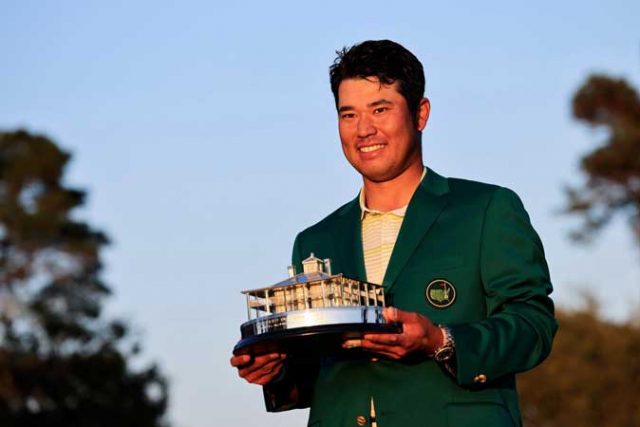
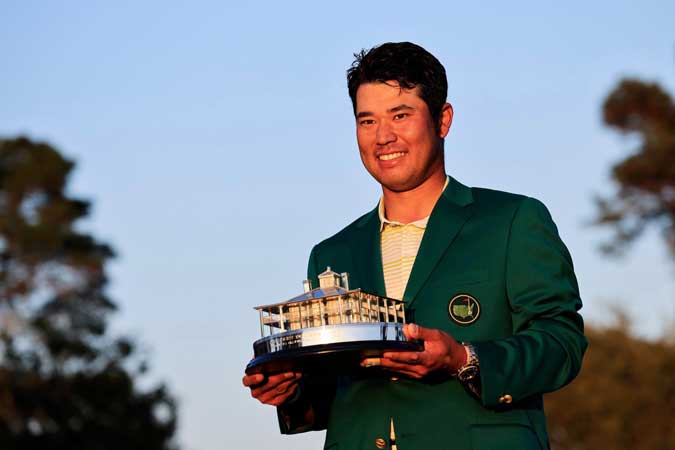
Masters champ Matsuyama open to lighting Olympic cauldron

MASTERS TOURNAMENT FB PAGE
NEWLY crowned Masters champion Hideki Matsuyama said it will be an honor to light the cauldron at the Tokyo Olympics opening ceremony if asked. — MASTERS TOURNAMENT FB PAGE

AUGUSTA, GEORGIA — Hideki Matsuyama cut a solitary figure as he walked alone to the clubhouse to sign his card after winning the Masters on Sunday, even if all of Japan was with him in spirit.

After exchanging hugs beside the 18th green with his small entourage, a stoic Matsuyama was left to himself to sign his scorecard and prepare for a new life that will never be the same after becoming the first Masters champion from Asia.

Even before the winning putt dropped the notion was already being raised, by three-time Masters champion Nick Faldo, that Matsuyama could be chosen to light the cauldron at the Olympics opening ceremony in the Japan National Stadium on July 23.

Matsuyama is finalizing his plans, but is likely to be in the country at that time as a member of Japan’s golf team six days before the Olympic men’s competition starts on July 29.

“If the schedule works out and I am in Japan when that happens and they ask me, what an honor that would be,” Matsuyama said via his interpreter, before adding with typical Japanese humility his thoughts about the Olympic golf.

“If I am on the team, and maybe it looks like I will be, I’ll do my best to represent my country and hopefully, I’ll play well,” he said.

But if Matsuyama has played his way into the hearts of Japanese golf fans by becoming the first man from his nation to win a major championship, he is unlikely to offer up much celebrity fodder.

A very private person, to an extent that he makes Tiger Woods look like an open book, Matsuyama rarely speaks of his family. The Japanese media, who follow his every step, did not even know for seven months that he had married back in 2017.

It was not until Matsuyama announced that wife Mae had given birth to a girl that they found out about his nuptials.

The 29-year-old Matsuyama prefers to let his clubs do the talking and even in the glow of victory was reluctant to acknowledge that he was the greatest player from his country.

“I can’t say I’m the greatest,” he said. “However, I’m the first to win a major and if that’s the bar, then I’ve set it.”

MAJOR PRESSURE
The pressure of sleeping on a four-shot lead caused Matsuyama to wake up much earlier than he had hoped on Sunday, and after some first-tee nerves, he remained inscrutable until the very end.

“I felt really good until I stood on the first tee, and then it hit me that I’m in the last group of the Masters tournament and I’m the leader by four strokes,” he said.

“And then I was really nervous but I caught myself, and the plan today was just go out and do my best for 18 holes.”

It was not until he smoked a drive up the middle at the last that the job was almost done, having the luxury of being able to make a bogey and still triumph.

“He’s not going to double from there,” said one spectator.

“It’s all over,” added another, the near silence broken only by a bird tweeting nearby.

So what had Matsuyama been thinking upon holing the winning putt?

“When the final putt went in, I really wasn’t thinking of anything,” he said.

“But then hugging Xander (playing competitor Schauffele) — then when I saw my caddie Shota (Hayafuji) and hugged him, I was happy for him because this is his first victory on the bag.

“And then it started sinking in, the joy of being a Masters champion.” — Reuters

Team Philippines assured of support — Fernandez

PSC FB PAGE
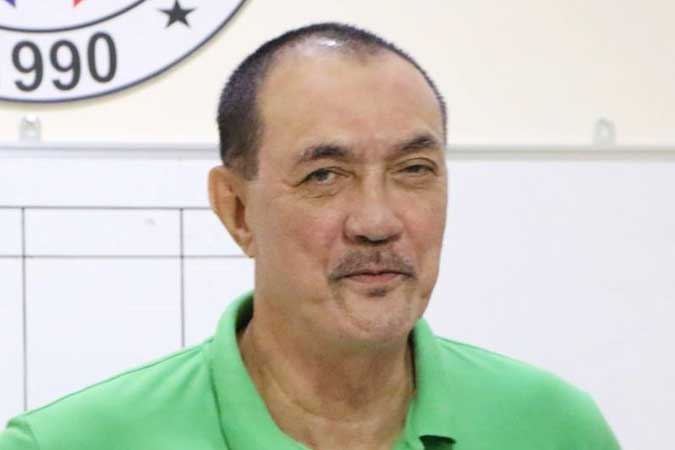
PHILIPPINE chef de mission to the 2021 SEA Games Ramon Fernandez reiterated their commitment to Team Philippines in its preparation by the biennial sporting meet. — PSC FB PAGE

PREVAILING conditions with the pandemic have made Southeast Asian Games (SEA) preparations of Team Philippines difficult, but chef de mission (CDM) Ramon Fernandez assured Filipino athletes continued support in their push.

In the online Philippine Sportswriters Association Forum on Tuesday, Mr. Fernandez shared that work for the SEA Games later this year in Vietnam has been manifold challenging as they grapple with the “limitations” in various forms during these trying times.

“This is a very unique situation. We are encountering this (pandemic) for the first time. Right now, we are just rolling with the punches and working with what is presented to us, adjusting to the varying situations and changes,” said the Team Philippines official.

Mr. Fernandez, however, was quick to say that they are working nonstop in coming up with the best possible setup of preparation for the athletes to produce quality representation in the biennial sporting meet in Hanoi from Nov. 21 to Dec. 2.

The SEA Games CDM, also a commissioner of the Philippine Sports Commission (PSC), said they are continuously coordinating with the various stakeholders, including the national sports associations (NSAs) and the Philippine Olympic Committee.

Mr. Fernandez said the PSC has allotted P200 million for the national athletes’ training and participation of the SEA Games, an amount that may not be enough but something they are trying to work with.

Given such a situation, the PSC official said they have talked to the NSAs if they could do their own fund raising to augment the funding of the training of their respective athletes while also appealing to local government units to come on board and support national athletes in their preparation.

“Teamwork is really needed right now and we are in discussion to come together and come up with the formula to go about things,” Mr. Fernandez said.

He went on to say that LGUs will play a key role, particularly in hosting athletes and teams with stricter lockdown setups in effect, especially in the Greater Manila Area because of the recent surge of coronavirus cases.

Mr. Fernandez said that maybe more LGUs in the provinces could accommodate Team Philippines, mentioning the experience of the fencing, decathlon, archery, weightlifting, and kickboxing teams, among others, which are currently doing their “bubble” trainings in areas in the country with less active coronavirus cases.

Despite the challenges, Philippine Basketball Association legend and former national athlete Fernandez said they will forge ahead and rally behind the athletes.

“We just have to keep a possible outlook. The road is not going to be easy, but we just have to learn along the way and adjust. We believe in the abilities of the Filipino athletes to be ready despite the challenges. We will help them as much as we can,” he said. — Michael Angelo S. Murillo

Team Lakay’s Folayang now focuses on familiar foe Aoki

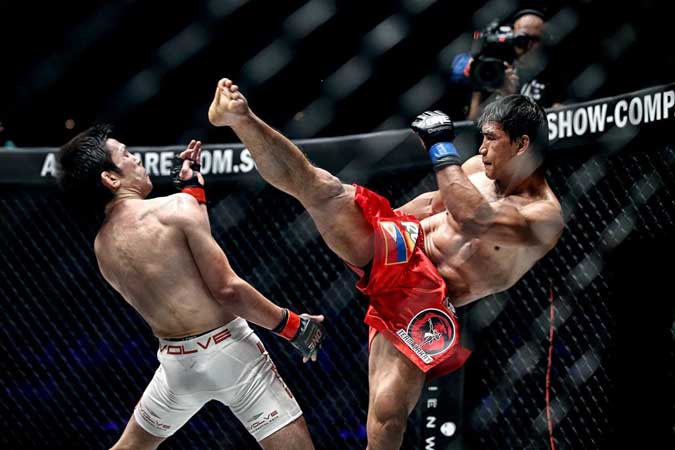
EDUARD Folayang (right) of the Philippines will face off with Japanese Shinya Aoki in ONE Championship for the third time.

By Michael Angelo S. Murillo, Senior Reporter

TEAM Lakay’s Eduard “Landslide” Folayang will take on Japanese legend Shinya “Tobikan Judan” Aoki for the third time in ONE Championship.

Originally set to fight different opponents this month, the two former lightweight champions found their paths meeting anew after “unlikely turn of events.”

Mr. Folayang (22-10) was to face off with Japanese veteran Yoshihiro “Sexyama” Akiyama but the latter had to pull out of the contest due to injury. Mr. Aoki (46-9), meanwhile, was to battle American Sage Northcutt, who was forced to withdraw after reportedly testing positive for coronavirus.

The Folayang-Aoki fight is now part of “ONE on TNT IV” set for April 29 (Manila time).

The contest incidentally will serve as a de facto rubber match after the two combatants split their previous two matches.

Baguio’s Folayang took the first back in 2016, knocking out then ONE lightweight champ Aoki in the third round to become the new champion.

The Japanese then exacted payback in 2019 when he submitted the Filipino by way of arm triangle choke in the opening round to reclaim the lightweight belt.

While surprised to be paired anew with Mr. Aoki, Mr. Folayang said they are now in the process of recalibrating their game plan at Team Lakay and working on his game.

“This will be a monumental test for me. It’s a sudden change of our preparation, but I’m a professional athlete, so I have to be prepared for anything, at any given time. I have to be ready to calibrate for what will be served for that perfect aim,” Mr. Folayang said in a release.

Adding, “I am not a pessimistic person, and I’m a warrior. Naturally, I’m not expecting to lose, but to get the big victory this time.”

“ONE on TNT IV” is headlined by the ONE light heavyweight world championship fight between champion “The Burmese Python” Aung La N Sang and challenger Vitaly Bigdash of Russia.

The event is the fourth and last installment of the “ONE on TNT” series, which is catered to North America apart from the promotion’s traditional audience. Matches in the series are being broadcast both digitally and on television on prime time in the United States.

SBP’s Panlilio highlights PBA’s role as a valuable partner

Al S. Panlilio
SAMAHANG Basketbol ng Pilipinas President Al S. Panlilio — SBP.PH

THE Samahang Basketbol ng Pilipinas (SBP) has been doing a steady job in pushing for the sport’s continued development in the country but admits much of its success should be credited as well to its many partners, one of which is the Philippine Basketball Association (PBA).

Speaking recently in time for the 46th anniversary of Asia’s first play-for-pay league, SBP President Al S. Panlilio underscored how the PBA has been a valuable partner to the national basketball federation.

The SBP official, who is also the board representative of the Meralco team in the PBA, shared that the league has been leader in more ways than one in the development of the sport, and is one of the groups the federation is turning to for inputs as it goes about effecting its programs and activities.

Mr. Panlilio, for one, spotlighted the breakthrough “bubble” that the league held last year to save what was left of the PBA’s pandemic-hit Season 45.

In the bubble, the league successfully holed up all the competing teams and other participants in Clark City in Angeles, Pampanga, for two months amid strict health and safety protocols, with the Barangay Ginebra San Miguel Kings emerging as Philippine Cup champions.

It is the same success that the SBP wants to have as it serves as host to the third and final window of the FIBA Asia Cup in June, Mr. Panlilio said.

Originally set to take place in February in Clark, SBP made the tough decision to cancel the event as quarantine restrictions in the country were raised at that time.

Doha, Qatar, stepped in as replacement host but it, too, had to call things off at the last minute because of coronavirus concerns.

FIBA opened the hosting anew to those who are willing and SBP grabbed on the opportunity and is now looking to do well to have the June 16-20 proceedings staged successfully.

In the bubble window in Clark, SBP will host Group A, where Gilas Pilipinas is bracketed, as well as matches in Groups B and C.

Apart from the Philippines, Group A has South Korea, Indonesia, and Thailand.

Chinese Taipei, Japan, Malaysia, and China comprise Group B and Australia, New Zealand, Guam, and Hong Kong make up Group C.

Mr. Panlilio shared to pba.ph that the PBA could well lend some of its staff for the window — an assistance the SBP appreciates. — Michael Angelo S. Murillo

Olympian Akiko Thomson graces PSC online national summit

THREE-TIME Olympian and eight-time Southeast Asian Games (SEA Games) gold medal-winning swimmer Akiko Thomson-Guevara will lead the discussion in the ninth session of the online Philippine Sports Commission (PSC) National Sports Summit 2021 on Wednesday.

Ms. Thomson-Guevara will talk about the topic “Role of Philippine Olympians in furthering Philippine Sports,” including efforts being done by the Philippine Olympians Association which she is part of.

The discussion, among other things, seeks to provide ideas on opportunities through sports for the Filipino youth as well as how to optimize the asset of the Filipino Olympian to play a meaningful role in the realm of Philippine sports.

“Her stellar career as part of the Miracle of 1991 and as an Olympian, and further using her platform as the head of their organization will truly inspire our participants in the pursuit of improving Philippine sports,” said PSC Chairman William Ramirez of Ms. Thomson-Guevara.

Following her stellar career as an athlete, Ms. Thomson-Guevara remained active in sports in various capacities, including as PSC commissioner from 2010 to 2016.

Originally set to take place last year until the coronavirus pandemic forced it to be deferred and reconfigured, the summit has taken the form of a series of weekly conference-type online sessions hosted by the PSC via Zoom.

The summit is aimed at taking insights of different sports stakeholders and using them as foundations in crafting a sustainable and workable short to long-term plan for Philippine sports.

The PSC said all data gathered from the web series will be processed and studied to create a new set of resolutions to be presented to sports leaders for action. — Michael Angelo S. Murillo

Masters champion

Considering how the betting lines went heading into the Masters, it’s clear that hardly any follower of the sport figured on Hideki Matsuyama putting on the Green Jacket when all would be said and done. In any given season, big money is wagered on golf’s premier event, and not even its second unfolding in the midst of a continuing pandemic did little to stunt speculation on the odds of the usual suspects. Even with all the punting, he attracted close to zero interest, in no small measure because of his spotty record in major championships.

At the Masters, though, Matsuyama hitherto proved that he could hang with the best of the best. True, nine previous appearances did yield one cut. On the other hand, he was likewise able to turn in fifth- and seventh-place finishes among his performances. If nothing else, his scores showed he knew Augusta National — or, at the very least, enough of it — to tame it under the right circumstances. Experience is the best teacher in the pride of Georgia, and his capacity to take in all that it imbibed and imparted enabled him to stay ready.

As things turned out, opportunity did come knocking for Matsuyama last week. After solid, if unspectacular, scores of 69 and 71 to start the tournament, he blitzed the field with a sterling 65 in the penultimate round. Moving Day had him, well, moving up while just about everybody else stayed put or tumbled out of contention. And while the annals of the Masters are littered with examples of would-be champions unable to deal with stress under pressure, he proved he had the right combination of skill and serenity to take the measure of both the course and his opponents.

Indeed, Matsuyama hit the mother lode. He became the first Japanese male golfer to claim a Grand Slam stop, further cementing his status as an icon in the Land of the Rising Sun. And the country needed the boost, to be sure; its hosting of the Olympic Games, already postponed a year due to the novel coronavirus, remains riddled with issues. Which was why, in the countless interviews since his victory, he has made sure to acknowledge his roots, and profess his desire to be a role model for other golfers in the country. As no less than Prime Minister Yoshihide Suga noted, “It was really wonderful. As the coronavirus drags on, his achievement moved our hearts and gave us courage.”


Anthony L. Cuaycong has been writing Courtside since BusinessWorld introduced a Sports section in 1994. He is a consultant on strategic planning, operations and Human Resources management, corporate communications, and business development.

How Japan plans to release contaminated Fukushima water into the ocean

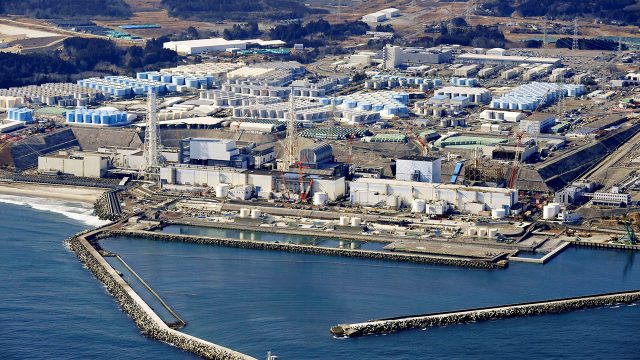
An aerial view shows the storage tanks for treated water at the tsunami-crippled Fukushima Daiichi nuclear power plant in Okuma town, Fukushima prefecture, Japan, Feb. 13, 2021, in this photo taken by Kyodo. Kyodo/via REUTERS

TOKYO – Japan plans to release into the sea more than a million tonnes of radioactive water from the destroyed Fukushima nuclear station, it said on Tuesday. Plant operator Tokyo Electric Power Company Holdings Inc (Tepco) will begun pumping out water in about two years after treatment in a process that will take decades to complete.


CONTAMINATED WATER

Tepco has been struggling with the build-up of contaminated water since bringing three reactors under control after a 2011 earthquake and tsunami knocked out electricity and cooling.

The company has been using a makeshift system of pumps and piping to inject water into damaged reactor vessels to keep melted uranium fuel rods cool.

The water is contaminated as it comes in contact with the fuel before leaking into damaged basements and tunnels, where it mixes with groundwater that flows through the site from hills above. The combination results in excess contaminated water that is pumped out and treated before being stored in huge tanks crowding the site.

Those tanks now hold about 1.3 million tonnes of radioactive water, enough for about 500 Olympic-sized swimming pools.

Efforts to tackle the problem have included building an “ice wall” around the damaged reactors and wells to draw groundwater away before it reaches the reactors. These measures have slowed, but not halted, the buildup of contaminated water.

Over the years, Tepco has also battled leaks, spills, malfunctioning equipment and safety breaches, hindering cleanup efforts expected to run for decades.

In 2018, Tepco admitted it had not filtered all dangerous materials out of the water, despite saying for years they had been removed.


WATER RELEASE

Tepco plans to filter the contaminated water again to remove isotopes, leaving only tritium, a radioactive isotope of hydrogen hard to separate from water. Tepco will then dilute the water until tritium levels fall below regulatory limits, before pumping it directly into the ocean from the coastal site.

Water containing tritium is routinely released from nuclear plants around the world and releasing the Fukushima water to the ocean is supported by regulatory authorities.

Tritium is considered to be relatively harmless because it does not emit enough energy to penetrate human skin. But when ingested it can raise cancer risks, a Scientific American article said in 2014.

The first water release is not expected for about two years, time Tepco will use to begin filtering the water, building infrastructure and acquiring regulatory approval.

Until then, the buildup of contaminated water will continue, with annual costs of water storage estimated at about 100 billion yen ($912.66 million).

Once begun, the water disposal will take decades to complete, with a rolling filtering and dilution process, alongside the planned decommissioning of the plant.


REACTION TO OCEAN RELEASE

Tepco is engaging with fishing communities and other stakeholders and is promoting agriculture, fishery and forest products in stores and restaurants to reduce any reputational harm to produce from the area.

However, environmental groups, including Greenpeace, say the government should build more tanks to hold the water outside the plant instead of choosing the cheaper option of ocean release. Many people have questioned Tepco’s plans because there is a high level of distrust of the company.

Fishing unions in Fukushima urged the government for years not to release the water, arguing it would undo work to restore the damaged reputation of their fisheries.

Last October, the head of Japan’s fisheries unions said releasing the water would have a “catastrophic impact” on the industry.

Neighbouring countries have also expressed concern. On, a foreign ministry spokesman in South Korea, which maintains restrictions on Japanese produce, said it “expresses serious concerns that the decision could bring a direct and indirect impact on the safety of our people and surrounding environment.”

Municipal councils in Busan and Ulsan, South Korean cities close to the sea, have called for the release plan to be scrapped.

In China, a foreign ministry spokesman in October urged Japan to act with a “high sense of responsibility towards its own people, neighbouring countries and the international community”.

To view a graphic of the methods to contain water leaks at the Fukushima site, please click on: http://reut.rs/1QGhFIl


World Bank, Gavi urge countries with excess COVID-19 vaccines to release them

WASHINGTON – World Bank President David Malpass and José Manuel Barroso, chair of the Gavi vaccine alliance, on Monday discussed the importance of countries with excess COVID-19 vaccine supplies releasing them as soon as possible, the World Bank said.

Malpass expressed his desire to work closely with Gavi on a 2022 strategy, including helping expand vaccine production capacity for developing countries, the bank said in a statement.

The two officials also discussed the need for more transparency by countries, suppliers and development partners on vaccine contracts, and regarding national export and supply commitments and requirements, the bank said.

“During their meeting, President Malpass and Mr. Barroso discussed challenges facing acquisition and deployment of COVID-19 vaccines by developing countries and the importance of countries with excess vaccine supplies releasing them as soon as possible,” it said.

Malpass has been outspoken about the need to accelerate vaccinations to contain the pandemic and limit further economic damage. Last week, he warned the slow rollout of vaccines in Europe could weigh on the region’s economic growth.

On Monday, the bank said it had committed $1.7 billion of $12 billion that it has made available for vaccine development, distribution and production in low- and middle-income countries, with around $4 billion expected to be approved by mid-year.

Malpass said those funds could be used to make co-payments to the COVAX vaccine distribution initiative, and to buy additional doses beyond the basic 20% population coverage.

With new variants of the virus emerging, public health officials have warned the world could lose the race between the coronavirus and the vaccines meant to stop it due to the slow pace of vaccinations in developing nations.

The World Health Organization is urging more political will to boost production of COVID-19 vaccines and share supplies, including through stalled intellectual property waivers on vaccines through the World Trade Organization. – Reuters

China’s exports rise at robust pace in March, imports growth highest in 4 years

BEIJING – China’s exports grew at a robust pace in March in yet another boost to the nation’s economic recovery as global demand picks up amid progress in worldwide COVID-19 vaccination, while import growth surged to the highest in four years.

The data suggests the world’s second largest economy will continue to gather momentum as it emerges from the COVID-19-led slump in early 2020, though a lagging consumer rebound and resurgence in COVID-19 cases in many countries have raised risks for the outlook.

Exports in dollar terms soared 30.6% in March from a year earlier, but at a slower pace from a record 154.9% growth in February. The analysts polled by Reuters have forecast a 35.5% jump in shipments.

“Strong foreign demand is likely to be sustained throughout the second quarter as the global economy further recovers,” said Nie Wen, analyst at Nie Wen, economist at Hwabao Trust.

“But with the acceleration in global vaccination efforts, industrial sectors in other countries are gradually restarting. It remains to be seen that if China’s stellar export growth will begin to slide.”

Despite sporadic COVID-19 cases in China’s border cities, authorities have been able to largely contain the virus in a boost to the lagging consumer recovery.

Beijing managed to largely bring the COVID-19 pandemic under control much earlier than many countries thanks to stringent anti-virus curbs and lockdowns at the initial phase of the outbreak last year.

The data showed total imports jumped 38.1% year-on-year last month, the fastest pace since February 2017 on high commodity prices, beating a 23.3% forecast and compared with 17.3% growth in February.

The nation imported 1.02 million tonnes of meat in March, the highest monthly volume since at least January 2020, while imports for soybeans iron ore, copper and crude oil also rose.

China posted a trade surplus of $13.8 billion last month, versus analysts expectations for the surplus to rise to $52.05 billion from $37.88 billion in February.


TRADE CHALLENGES

Official and private manufacturing surveys in China pointed to robust growth, with export orders returning to growth amid improving foreign demand.

However, many analysts believe exports could lose some momentum in the short term and the advantages of orders transferred from other countries due to coronavirus-related disruptions will begin to abate.

Liu Kuiwen, customs spokesman, said that overall trade growth in the second quarter could show the pace slowing due to a higher base comparison in the year-ago period when a jump in pent-up demand boosted the headline figures.

The resurgent COVID-19 infections abroad and constraints in global trade have left some companies grappling with prolonged delivery timeframes and surging prices of raw materials.

Makers of cars and electronic devices from televisions to smartphones are sounding alarm bells about a global shortage of chips, which is causing manufacturing delays as consumer demand bounces back from the coronavirus crisis.

Meng Xianglong, founder of Heji Trade & Credit Research Centre based in the port city of Ningbo, believes the recent surging commodity prices have already deterred some exporters from taking on orders, especially those small firms, in signs of the weaknesses to come for the next couple of months.

“Factories are now facing a squeeze in profits. Even though today’s data are robust, they’re suffering from pains in reality.”

China’s gross domestic product expanded 2.3% last year, the only major economy to post growth in 2020, underpinned by solid demand for goods such as medical and work-from-home equipment.

Still, the massive initial hit from the COVID-19 crisis meant China’s growth in 2020 was still its weakest in 44 years.

This year, China has set a modest growth target of at least 6%, as authorities plotted a careful course out of a year disrupted by COVID-19 and amid heightened tensions with the United States.

China’s trade surplus with the United States slipped to $21.37 billion in March from a $23.01 billion in February.

President Joe Biden said last month that the United States was not seeking confrontation with China over differences on trade.

Brazil, Philippines due to get Pfizer shots from COVAX in Q2 

GENEVA – Some 14.1 million doses of the Pfizer BioNTech COVID-19 vaccine have been allocated to 47 countries and economies for delivery in the second quarter of this year, the Gavi Vaccine Alliance said on Monday.

Brazil, Colombia, Mexico, the Philippines, South Africa, and Ukraine are set to be among the main recipients of the Pfizer vaccine between April and June, according to Gavi, which co-leads the COVAX facility with the World Health Organization (WHO) and other partners.

The COVAX programme offers a lifeline to low-income countries in particular, allowing them to inoculate health workers and others at high risk, even if their governments have not managed to secure vaccines from the manufacturers.

Australia, Britain, Kuwait, and the United Arab Emirates are due to receive their first shots via COVAX with the Pfizer doses, which is “based on current knowledge of COVID-19 vaccine supply availability”, Gavi said in a statement.

The programme delivered nearly 38.4 million doses of COVID-19 vaccines to 102 countries across six continents, six weeks after it began to roll out supplies, Gavi said last Thursday.

Deliveries of the AstraZeneca vaccine to 142 participants under a previously announced round were underway, “with some delays” that may extend deliveries past May, Gavi said on Monday.

Reduced availability delayed some deliveries in March and April, and much of the output of the Serum Institute of India, which makes the AstraZeneca vaccine, is being kept in India, where the number of daily infections is spiralling.

The chief executive of Gavi, Seth Berkley, said last Friday that COVAX aimed to deliver one third of a billion COVID-19 doses by mid-year, on the way to more than 2 billion in 2021. — Reuters