Home Blog Page 8147

House bill filed promoting cheaper ‘biosimilar’ drugs

PXHERE.COM

A LAWMAKER on Tuesday filed a bill that promotes using cheaper biosimilar drugs to provide affordable medical options to the poor.

In a statement on Tuesday, Albay Rep. Jose Ma. Clemente S. Salceda said he filed House Bill 9261 or the proposed Biosimilars Act to expand consumer knowledge on affordable alternatives to similar branded drugs. He added that biosimilars are “competitors’ versions of branded drugs.”

Biosimilar medicines are medicines that are different in terms of molecular size and medical production from generic medicines. It also takes a longer period for biosimilar medicines to reach the market as they require extensive trials and research as opposed to generic medicines.

“Increased education on biosimilars, and publicly available material that compares the costs of biosimilars, will allow patients and healthcare providers to make better informed choices on their healthcare preferences. Education will also improve price competition among pharmaceutical providers, as uncompetitive practices in pricing of biological products comes in part from the inability of patients to compare the prices of such products,” Mr. Salceda said.

If enacted, the bill mandates the health department to ensure resources on biological products, including biosimilar biological products and interchangeable biosimilar biological products, are available to patients, caregivers, and healthcare providers. A list of biosimilar products with their existing prices should also be available for public access and awareness.

Mr. Salceda added that the proposed measure is a response to rising hospital and medical expenses of Filipinos amid the coronavirus disease 2019 (COVID-19) pandemic. “Part of what makes branded drugs expensive is that the consumer is paying for the brand. Healthcare is a matter of life or death, not a matter of one brand being ‘better,’ especially if the chemical composition is practically the same as cheaper drugs,” Mr. Salceda said.

Having cheaper options will also prevent the public from turning to treatments that have no locally proven medical and therapeutic claims against COVID-19.

“The people are desperate for cheaper medicine. That’s why you see this hysteria over unsubstantiated cures for COVID-19. That is not good for the people. We still need proven drugs. But, if the proven drugs have less expensive twins, the public should know these alternatives exist,” he said.

Mr. Salceda added that expanded public knowledge on biosimilar drugs will benefit the poor as they are more exposed to health risks but do not have the capacity to afford healthcare. — Gillian M. Cortez

NGCP: Lack of supply hampers ‘firm’ reserve power

NGCP.PH

By Angelica Y. Yang, Reporter

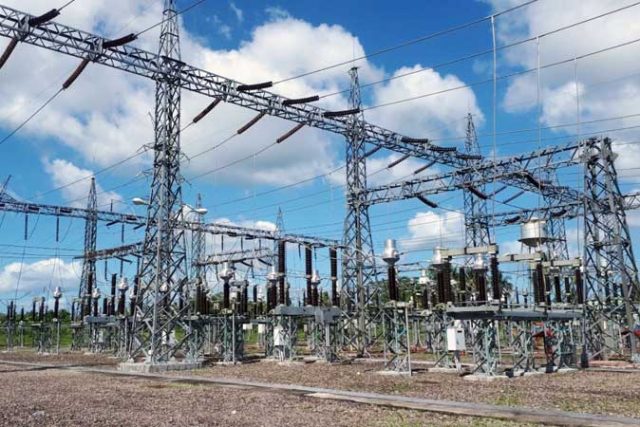
PRIVATELY owned National Grid Corp. of the Philippines (NGCP) said on Tuesday that it had not fully entered into a “firm” contract to buy reserve power, leaving the Energy department hanging after its call days earlier for such ancillary services to be fully contracted ahead of the summer months.

Even though the grid system operator wanted to contract on a firm basis, the supply was not there, said Ronald Dylan P. Concepcion, NGCP special counsel for legal and regulatory affairs, during the virtual hearing called by the Joint Congressional Energy Commission.

“A reserve can only be procured if there is sufficient supply of power. If there is no supply provided by generation companies, there is no reserve or there is no ancillary services to be procured,” Mr. Concepcion said.

“It’s not as easy as procuring ancillary services from a plant that is dedicated for ancillary services as desired by some proponents that will result in a firm contracting of ancillary services to which the NGCP is not totally agreeable with,” he added.

Mr. Concepcion was responding to a question from Senator Sherwin T. Gatchalian, chairman of the Senate energy committee.

Last week, the Department of Energy (DoE) flagged NGCP for not having enough firm-contracted reserves or ancillary services (AS) for the grid as of end-2020.

AS contracted from power generation companies will mean higher costs for NGCP, Mr. Concepcion said. “Definitely, a firm contracting ancillary services will be much more expensive.”

He said ancillary services are not a remedy for the lack of power supply because if a plant shuts down, the availability of supply is affected along with the contracted reserves.

“We are advocating, as of now, a policy to have a mix of firm and non-firm (AS) because… (this) will give us a better mix of reserves,” he said.

He said that NGCP was “continually looking for AS providers” for the Luzon, Visayas and Mindanao grids.

His statement comes days after the DoE said that NGCP was not compliant in terms of the required reserve levels procured under firm AS contracts.

DoE data show that NGCP had only contracted regulating, contingency, and dispatchable reserves of 237 megawatts (MW), 180 MW, and 145 MW, respectively, for the Luzon grid as of the fourth quarter last year.

The Luzon grid’s required capacity for regulating, contingency and dispatchable reserves are at 491 MW, 647 MW, and 647 MW. These reserves are considered as ancillary services.

Based on a 2019 DoE circular, NGCP can procure these types of reserves only through firm contracts.

During the hearing on Tuesday, DoE Secretary Alfonso G. Cusi said that having sufficient reserves in place will solve the problem of having yellow and red alerts.

A yellow alert is issued when reserves fall below ideal levels. This is subsequently downgraded to a red alert — with the possibility of power interruptions — when the supply situation worsens.

Mr. Cusi likened the reserve power under a non-firm contract to a deflated spare car tire.

May spare tire ka, wala namang hangin (You have a spare tire but there’s no air in it) — that is the equivalent of a non-firm reserve. Na-flat-tan ka, may spare tire pero wala namang hangin, anong gagawin mo? (You’ve got a flat tire, and you have a spare tire with no air, what are you going to do?) We’ve been saying from day one that we cannot have a reserve that is not firm, that is not there,” he said.

On the issue of ancillary services, Mr. Gatchalian requested the DoE and the Energy Regulatory Commission to “sit down” and talk about what can be done. “This is a standing policy for a very long time. It’s in EPIRA (Electric Power Industry Reform Act of 2001) and it can be enforced,” he said.

Meanwhile, Mr. Cusi also gave updates about the transmission development plan (TDP), which he described as “another issue.”

“In fact, I have not approved — I did not approve the TDP because of the lack of participation by TransCo (National Transmission Corp.),” he said, explaining that the plan needed the DoE’s approval.

NGCP previously said that the latest version of the TDP will cover 2021 to 2040 and would take into account the needs of the power grid.

Quad vaccine pact for Asia ‘on track’ despite India crisis — US officials

WASHINGTON — An agreement between the United States and three of its closest Indo-Pacific partners to produce up to a billion coronavirus vaccine doses in India by the end of 2022 to supply other Asian countries is “still on track,” senior US officials said on Monday, despite a surge of coronavirus disease 2019 (COVID-19) in India.

“It’s moving forward expeditiously,” a senior administration official told reporters in a briefing call, referring to the agreement last month between the leaders of the United States, India, Japan and Australia, a grouping known as the Quad.

A fact sheet issued after the countries held a virtual summit in March said the United States, through its International Development Finance Corp., would work to finance Indian drugmaker Biological E Ltd. to produce at least 1 billion COVID-19 vaccine doses by the end of 2022.

It said Japan was in discussions to provide concessional yen loans for India to expand vaccine output, and the Biden administration said the doses would go to Southeast Asian countries, elsewhere in the Indo-Pacific, and beyond.

India had urged the other Quad members to invest in its vaccine production capacity in an attempt to counter China’s widening vaccine diplomacy.

India has since become the latest epicenter of the pandemic, threatening to overwhelm its healthcare system. US President Joseph R. Biden, Jr., announced on Sunday Washington would immediately send raw materials for vaccines, medical equipment and protective gear to India to help it respond to a massive surge in coronavirus infections.

The White House said on Monday the United States would start to share up to 60 million doses of AstraZeneca Plc’s coronavirus vaccine with other countries as soon as the next few weeks. — Reuters

AboitizPower eyes 3,900 MW of RE by 2030

ABOITIZ Power Corp. is looking to build around 3,900 megawatts (MW) of renewable energy (RE) in about a decade as it seeks to reach an equal sharing of renewables and thermal energy capacity in its portfolio.

“I think that 50-50 ratio in 10 years is an aspirational target but we will get there with our aim to bring our renewable capacity estimates [to] around 3,900 MW by year 2029 to 2030,” AboitizPower President and Chief Executive Officer Emmanuel V. Rubio said during a media briefing after listed firm’s annual stockholders meeting on Monday evening.

He explained that the target capacity is an estimate of how much the firm can capture with the implementation of the renewable portfolio standards (RPS) program, which mandates electricity suppliers to source agreed portions of their energy supply from renewable resources.

Mr. Rubio earlier said that AboitizPower was working on a pipeline of 1,600 MW worth of hydro, wind and solar projects.

“The 1,600 [MW] is part of the 3,800 to 3,900 [MW] that we’re looking at in the next 10 years,” he said. “[On] the first few projects that we’ll start — we will be starting with solar. We’ll be groundbreaking hopefully within the year for a [solar] project in Cayanga, Pangasinan for 73 MW.”

While the firm does not have a definitive position on generating power from coal, Mr. Rubio said that AboitizPower has “always looked at the option of choosing gas” for the country’s baseload requirements. He said the group was considering gas-related projects in Luzon.

“We already have a team looking at our gas option. We’re doing very early… feasibility studies for gas on at least two locations… We have communicated that in RP Energy (Redondo Peninsula Energy, Inc.), we will not be building coal anymore, but we [are] actually reserving that side for a possible gas option,” he said.

RP Energy is a consortium composed of AboitizPower, Meralco PowerGen Corp., and Taiwan Cogeneration International Corp.

On using coal for power generation, Mr. Rubio said that the fuel source will remain competitive in specific niches “but market forces will decide on that at the end of the day.”

AboitizPower produces its Cleanergy brand from its hydro, geothermal, and solar power generation facilities. The firm aims to significantly expand its Cleanergy portfolio in the next 10 years. By 2030, renewables are seen to account for 65% of the firm’s new capacities.

Shares in AboitizPower at the local bourse inched down 2.42% or 55 centavos to close at P22.20 apiece on Tuesday. — Angelica Y. Yang

Stories of Negrense women

Istorya Namon Subong (Our Stories Now)

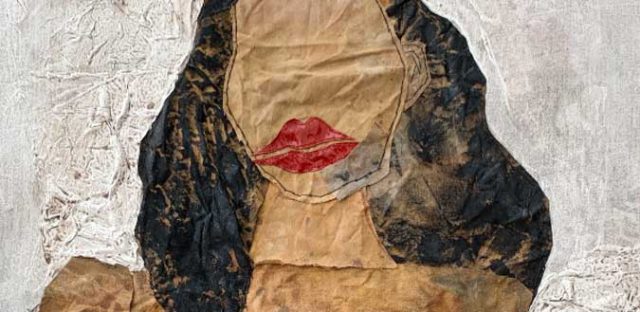
EATING a favorite childhood dish, revisiting a pastime in the summer, cleaning out a closet, reliving travel experiences, and confronting socio-political issues are a few activities that have preoccupied eight women artists from Negros over the past year. These stories found their way into works which will go on exhibit in “Istorya Namon Subong (Our Stories Now)” at Salcedo Auctions’ Private View.

“Istorya Namon Subong” is an extension of the exhibit “Istorya conTEXT:Amon Ni” (Story conTEXT: This is Ours) which was held in the Orange Project (Bacolod) booth at last year’s Art Fair Philippines.

Prompted by the question: “How has the lockdown affected your experience as a Negrense artist?,” artists Moreen Austria, Katarina Estrada, Karina Broce Gonzaga, Elwah Gonzales, Erika Mayo, Megumi Miura, Angela Silva, and Josephine Turalba retell childhood tales, and their personal experiences as Negrense women.

According to its curator Georgina Luisa O. Jocson, the exhibit is a “pictorial anthology of stories authored by eight Negrense women artists in their examination of Ilonggo women’s identities within this past year’s setting and plot of the pandemic.”

“Another challenge I posed to the artists  was to refrain from explicitly depicting personal protective equipment (PPE) or alcohol or sanitizer unless these images were vital to the artists commentary on identity,” Ms. Jocson told BusinessWorld in a group interview held via Zoom on April 19.

“The exhibit really is about the identity of Negrense women. They’re not pandemic works per se,” Ms. Jocson noted.

ON SOUP, BABAYLANS, AND FLOWERS
In their works Katarina Estrada, Karina Broce Gonzaga, and Elwah Gonzales recall childhood memories and stories from Visayan mythology.

Stuck in lockdown in Manila, and unable to visit her home, Ms. Estrada dove into her childhood memories of Bacolod, fondly remembering her grandmother’s las-wa soup and moments with the family at the dining table. Her ink sketches with metal leaf details portray the process from picking the vegetables (Puknit), boiling (Buklan), and serving the soup (Las-wa).

“We are big food people on both my mother’s side and father’s side. The act of cooking is really a show of an expression of love in our family,” Ms. Estrada said during the same interview, recalling the act of dining together was a way of reconnecting which she has missed while under lockdown.

As for Ms. Gonzales, she assumed the role as head of the family early in the lockdown since her parents were in the US and she had to provide for her siblings.

In her portraits Sa Panulok ni Dalikmata (Dalikmata’s points of view) and Dungan sang Babaylan (Soul of a Babaylan), she presents herself as Dalikmata, the Visayan goddess of health, and as the babaylan or pre-colonial shaman who specialized in communicating with spirits of the dead and nature.

“[Elwah] chose to portray her newfound identity as a strong, resilient powerful Negrense woman, through an appropriation of characters from Visayan mythology and pre-colonial history,” Ms. Jocson said, speaking on behalf of Ms. Gonzales.

Like many people who suddenly had time on their hands over the last year, Karina Broce Gonzaga cleaned out her closet. The old clothes and discarded fabrics were used as the medium for her flower portraits.

“I ended up… shredding them which was incredibly satisfying and therapeutic,” Ms. Gonzaga said, adding that the idea of arranging the shredded fabric into flowers was inspired by her visits to her paternal grandmother’s garden.

“This was probably the first project in like a really long time where I got to use my hands again,” Ms. Gonzaga said.

Ms. Gonzaga’s works include illustrations of gumamela, santan, and sampaguita f lowers.

STORIES OF TRAVEL
Angela Silva and Josephine Turalba, meanwhile, traced the experiences of their families in the broader context of personal and collective memory.

Being stuck indoors led Ms. Silva reminisced about travel as she unearthed her mother’s passports. “I was thinking about travel and how I’m cooped up,” Ms. Silva said. “Then, I discovered my mother’s nine passports intact. And as I looked through them, I saw that there was a timeline, and it made it very easy to all of a sudden match everything that I had — photographs, documents — and put them together.

“It dawned on me to use the passports [for the exhibit] because they mean something almost immediately to people — it’s a way to travel and then you can’t,” she added.

Elena Ledesma Silva, whose family had a Negrense haciendero background, used those nine passports as she traveled via cruise ship from the Philippines to the US in the 1930s.

For the exhibit, Ms. Silva came up with a special All About Her collection, composed of two collages and a set of seven artist books to tell the story of her mother and her travels (https://angelasilva.com/all-about-her).

A Manileña, Josephine Turalba revisits the mahjong games which were played to pass the time during summers spent in Negros. Ms. Turalba created a Tawhay (the Hiligaynon term for “tranquility” and “calmness”) mahjong set made up of 146 digital laser-engraved and UV printed tiles. Each tile illustration symbolizes a detail in the history of Sugarlandia.

Mahjong is a past-time… played by many in Negros for generations. It was most popular during a glorious era when the one-crop economy based on the planting, harvesting, and milling of sugar resulted in windfalls for local landowners,” Ms. Turalba wrote of her Tawhay tile guide. “The game has resurfaced during the COVID-19 lockdown, as many families enjoyed playing endless rounds of mahjong in the comfort of their own homes. When playing with the Tawhay set, history is retold and re-learned.”

Aside from the mahjong set, Ms. Turalba created prints (Escalera and Secret Kang) and a mixed medium illustration, Nadumduman mo na? (Do You Remember Now?) depicting Negrense history during the Second World War.

THE REALITY OF NEGROS
As for sculptors Megumi Miura and Moreen Austria and multi-media artist Erika Mayo, they focused on depicting socio-cultural experiences specific to Negros, such as the sudden popularity of online bartering, the plight of sugarcane farmers, and the harsh reality of political activists.

A Filipino-Japanese artist, Ms. Miura pays tribute to the sacadas (migrant sugarcane workers) who would work in the province’s vast sugar plantations during harvest season. Her sculptures also touch on the women sacadas’ other roles such as mothers, and providers. She highlights the workers’ colorful headgear which serves a dual purpose as a protective mask from the harsh sunlight in the field as well, today, as protection from the coronavirus disease 2019 (COVID-19) virus. The logos of luxury brands printed on the headgear is Ms. Miura’s way of showing that despite the sacadas’ toil in the plantations, their roles are often overlooked.

“Before, during, and after the pandemic, their identity remains the same,” Ms. Jocson said of Ms. Muira’s sculptures.

Erika Mayo’s canvasses, Sino Dasun? (Who’s Next?), and Dakpan! Ikaw taya! (Langit Lupa) (Tag! You’re it!) depict the realities faced by political activists.

The red, black, and white portraits represent how women are often silenced when speaking their minds about their oppression.

“When people start to speak out. They [are] immediately called out,” Ms. Mayo said. “When all of these powerful women show their power or leadership, they would call them aswang (an evil mythological creature). Now, they are called terrorists.”

Meanwhile, Ms. Mayo’s Batano ni Inday (Inday’s Weapon), is a metaphor for a woman’s strength and ability to surpass challenges thrown at them.

The inspiration for Moreen Austria’s sculptures began with a mother’s post on a Facebook barter page, offering to trade her extra eyeliner for vegetables during the strict lockdown. The barter page gained traction, eventually gaining over 20,000 members.

“The people just suddenly went crazy over this. It was a phenomenon that had to be captured,” Ms. Austria said. The artist herself traded 12 koi fishes in exchange for a sack of rice.

Ms. Austria’s sculptures show the sense of community in trading goods such as vegetables, plants, and bread.

“It gave me a sense of community [since] all of [you] were just exchanging the goods that you did not want for something that somebody has. So, I just thought that this should be one phenomenon that should be caught in an art form,” she said.

All these works and more are now accessible to people all over the archipelago and beyond because it is online. Ms. Jocson noted that the digitalization of exhibits “kind of levels the playing field for artworks from outside the center (Metro Manila).”

“All of these can be shared from person to person, and post to post. So, that is a very big plus for [other] regions,” she said.

“Istorya Namon Subong (Our Stories Now)” runs both as a limited in-person exhibit at the NEX Tower, Ayala Ave, in Makati City and as an online exhibition until May 8. Safety protocols and social distancing will be strictly enforced while in the gallery. To view the exhibition online, visit https://salcedoauctions.com/exhibition/78/istorya-namon-subong-our-stories-now. — Michelle Anne P. Soliman


Helping stop the pandemic

PHILSTAR

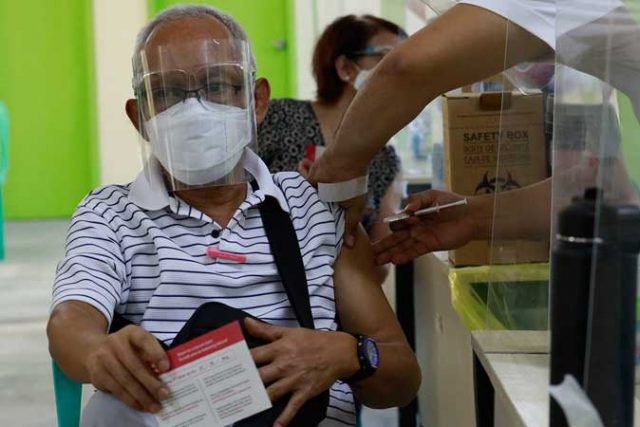
Wearing masks and face shields and social distancing help reduce our risk of being exposed to the virus or spreading it to others. However, these measures alone will not be enough. We need to get vaccinated. Vaccines against coronavirus disease 2019 (COVID-19) will train our immune system so it will be ready to fight the virus if we were exposed to it. (See “Benefits of Getting a COVID-19 Vaccine,” Centers for Disease Control and Prevention, updated April 12, 2021.)

This year’s theme for World Immunization Week (WIW) — “Vaccines Bring Us Closer” — has never been truer than today. WIW is celebrated every last week of April to promote vaccination as a means to help protect people of all ages against vaccine-preventable diseases. While immunization is known as one of the world’s most successful health interventions, nearly 20 million children globally are not getting their vaccines while many adolescents, adults, and elderly miss out on their vaccinations.

According to the Centers for Disease Control and Prevention (CDC), strong confidence in the vaccines within communities leads to more people getting vaccinated, which leads to fewer COVID-19 illnesses, hospitalizations, and deaths. (See “Building Confidence in COVID-19 Vaccines,” Centers for Disease Control and Prevention, March 1, 2021.) If people are vaccinated, there are higher chances that families would need not be separated due to hospitalization.

The International Federation of Pharmaceutical Manufacturers & Associations provides answers to some of the frequently asked questions about COVID-19 vaccines.

DO I NEED TO GET VACCINATED FOR COVID-19 IF I’VE HAD COVID-19 AND RECOVERED?
It may be recommended to get a vaccine even if you had COVID-19. Scientists have not yet figured out how much protection people have after recovering from a COVID-19 infection, or how long the protection may last. Some early studies suggest that immunity after natural infection may fade more quickly in certain people, especially if you have had mild or no symptoms. The data that is currently available suggests that a symptomatic reinfection within 6 months after an initial infection is rare. Therefore, people who have already had COVID-19 may choose to delay vaccination until near the end of this period. When more data on the duration of immunity after natural infection become available, the length of this time period may be revised. If you have concerns, talk to your doctor about whether or not you should get a COVID-19 vaccine.

I HAVE A LOW CHANCE OF HAVING SEVERE COVID-19 ILLNESS AND SYMPTOMS. SHOULD I GET A VACCINE?
Anyone, at any age, can get sick with COVID-19 and become potentially seriously ill or die. While vaccine supplies are limited, public health authorities have prioritized people with the highest risk of exposure to COVID-19, and severe illness from it, to get the vaccine first. According to the World Health Organization (WHO), people at high risk include (1) people aged 60 years and over; and (2) people with a high chance of having serious illness from COVID-19 including those with long-term medical problems like high blood pressure, heart and lung problems, diabetes, obesity, or cancer.

SHOULD I GET A COVID-19 VACCINE IF I’M PREGNANT?
For the moment, based on what we know about the currently authorized or approved vaccines, the WHO and CDC say they do not have any specific reason to believe there will be specific risks that would outweigh the benefits of vaccination for pregnant women. For this reason, those pregnant women at high risk of exposure to SARS-CoV-2 (e.g., health workers) or who have comorbidities which add to their risk of severe disease, may be vaccinated in consultation with their doctor. Vaccine makers and regulatory agencies are carefully tracking what happens to women in the clinical trials who become pregnant and pregnant women who decided to get a COVID-19 vaccine. Pregnant women may be included in future clinical trials. If you are pregnant and have concerns, talk to your doctor about whether or not you should get a COVID-19 vaccine.

WHO SHOULD NOT GET A COVID-19 VACCINE?
Most people will be able to get a COVID-19 vaccine when it’s time for their priority group to get it. However, there is currently no COVID-19 vaccine authorized or approved for children under the age of 16 years. If you have had a serious allergic reaction in the past to medicines, vaccines, or food, you should talk to your doctor before getting a COVID-19 vaccine. You and your doctor will need to consider the possible risks of infection versus the benefits of getting a vaccine. If you have concerns, talk to your doctor about whether or not you should get a COVID-19 vaccine.

SHOULD CHILDREN GET A COVID-19 VACCINE?
Currently, no authorized or approved COVID-19 vaccine can be given to children under the age of 16 years. This is because the data from clinical trials in children under the age of 16 years is not yet available. Some vaccine manufacturers are currently studying the vaccine in younger populations, and so age-based recommendations may change in the future.

On the occasion of the World Immunization Week, we join our partners in the global call to increase confidence in vaccination, and to increase investment for vaccination to help protect the lives of children, adults and the elderly.


Teodoro B. Padilla is the executive director of the Pharmaceutical and Healthcare Association of the Philippines (PHAP). PHAP represents the biopharmaceutical medicines and vaccines industry in the country. Its Members are in the forefront of research and development efforts for COVID-19 and other diseases that affect Filipinos.

PHL fixed broadband ranks 81st out of 177 in Speedtest Global Index

BW FILE PHOTO

THE Philippines’ fixed broadband improved its rank in the Speedtest Global Index by US internet testing and analysis company Ookla, with an average speed of 46.25 megabits per second (Mbps), placing 81st out of 177 countries in March.

The country’s average fixed broadband speed in March was up 20.25% from February.

In terms of mobile internet, the country ranked 86th out of 140 countries, down three points from the previous ranking, with an average download speed of 25.43 Mbps, down from 26.24 Mbps in February.

Leading countries in terms of mobile internet speed are United Arab Emirates (178.52 Mbps), South Korea (170.52 Mbps), Qatar (167.40 Mbps), China (150.40 Mbps), and Saudi Arabia (133.73 Mbps).

The top five countries in terms of fixed broadband are Singapore (234.40 Mbps), Thailand (230.59 Mbps), Hong Kong (224.73 Mbps), Romania (210.82 Mbps), and Monaco (205.44 Mbps).

Vietnam’s mobile internet placed 65th, down 11 places since February, while its fixed broadband (61.24 Mbps) remained 62nd.

Ookla’s Speedtest Global Index compares internet speed data from around the world on a monthly basis.

Data comes from the “hundreds of millions of tests” taken by real people using Speedtest every month, it said.

“We have already seen and verified improvements in our telco sector particularly internet performance,” Information and Communications Technology Secretary Gregorio B. Honasan II said at a virtual Pre-State of the Nation Address forum on Monday.

“The country’s average will continue to go up in the coming years,” he added.

He also said there are now “8,453” free WiFi sites in 17 regions, 80 provinces, 1,109 municipalities and 125 cities as of April 16.

His department targets to establish a total of 67,233 WiFi sites by 2022 in public places and government buildings including schools and hospitals. — Arjay L. Balinbin

Ferdinand Magellan’s death 500 years ago is being remembered as an act of indigenous resistance

Hindi Pasisiil by Matthius B. Garcia — NQC.GOV.PH

THIS week, the Philippines is marking a significant event in the history of European colonialism in the Asia-Pacific region — the 500th anniversary of the death of Portuguese explorer Fernão de Magalhães (more commonly known as Ferdinand Magellan).

The Philippine government is hosting a series of events to mark the role that Indigenous people played in Mr. Magellan’s contested first circumnavigation of the earth in the 16th century.

European history books celebrate the expedition as a three-year Spanish-led voyage, carrying 270 men on five ships. But Filipino commemorations remind audiences that Mr. Magellan died halfway through the expedition in the Philippines and that only one ship with just 18 survivors limped home to Seville.

In particular, Filipinos remember how Lapu Lapu, the datu (leader) of the island of Mactan, inspired a force of Indigenous warriors to defeat Mr. Magellan’s crew — and the Spanish threat to their sovereignty — on April 27, 1521.

The Filipino commemorations show what an Indigenous-centered government approach to imperial history in the Pacific can look like. They also sit in stark contrast to the exhibitions, reenactments, and publications that marked the 250th anniversary of James Cook’s arrival in Australia and New Zealand in recent years.

These commemorations mostly upheld the unique bravery of the British navigator, sidelining potentially deeper discussions of the violence to Indigenous people he and his crew also brought.

Mr. Magellan reached what are now the Philippines in March 1521 after an arduous 100-day Pacific crossing. He set about using a combination of diplomacy and force to get local leaders and their followers to convert to Catholicism and submit to the authority of the far-away Spanish king.

Rajah Humabon of Cebu and other local rulers embraced an alliance with the Spanish, hoping to gain an advantage against their rivals.

Mr. Magellan decided to attack Mactan, however, when Lapu Lapu refused to negotiate. About 60 European sailors and soldiers joined forces with Humabon and attacked Mactan at dawn, but they were met on the beach by Lapu Lapu and his armed warriors.

Weighed down by their armor, the Europeans stumbled in the shallows under arrow fire. Filipino folk histories say that an army of sea animals were also part of the resistance. Octopus wound their tentacles around the legs of the invaders, dragging them to their deaths. The battle was over within an hour.

The events organized by the Filipino government’s National Quincentennial Committee (NQC) to mark Mr. Magellan’s death include a drone show, military parade, and the televised unveiling of a new shrine to Lapu Lapu. All of these commemorations are designed to pay “tribute and recognition to Lapu Lapu and the Mactan heroes.”

The NQC also sponsored a national art competition centered on four themes connected to the Mactan victory — sovereignty, magnanimity, unity, and legacy.

Matthius B. Garcia’s painting, Hindi Pasisiil (Never to be Conquered), recently took the grand prize in the “sovereignty” category.

In his work, the viewer’s eyes are drawn to the strong figure of Lapu Lapu. He is covered in Visayan tattoos and wears the bright red bandana and thick gold chains of a warrior and ruler. He leaps into the center of the canvas, kampilan (sword) raised above his head, leading the charge of men rushing at the European invaders.

Mr. Magellan and his men, decked out in armor over puffy sleeves and stockings, fall over each other and into the sea to their deaths.

The artwork is Indigenous-centered because it was crafted by a Filipino artist for a Filipino audience. It is telling the story of what happened at Mactan from the point of view of the locals rather than the strangers.

Ordinary Filipinos have also been sharing their own artistic representations of the battle of Mactan on the NQC’s Facebook page, such as five-year-old Miguel Alfonso Manzano Noriel’s painting, entitled The Battle of Mactan.

The NCQ has also encouraged children to print paper doll figures of Lapu Lapu and Magellan so they can re-enact the battle of Mactan at home.

In contrast to Garcia and Noriel’s fiery scenes of mayhem, the winning entries in the art competition’s “magnanimity” section remember the compassion that Filipinos showed to the explorers.

In Romane Elmira D. Contawi’s prize-winning painting, a local man holds out fruit to a bedraggled, hollow-eyed white man. The work illustrates the key role locals played in the expedition, giving provisions to Mr. Magellan’s fleet and sharing their expert knowledge on surviving the dangerous seas.

From 2018–20, the Australian and New Zealand governments also sponsored events related to a significant anniversary of European incursion into their lands — the arrival of Mr. Cook’s ship, the Endeavour, in 1769–70.

Some did aspire to take an Indigenous-centered viewpoint. But the majority ended up pushing, at best, a “shared histories” approach. They encouraged audiences to consider “both sides” of the beach when the Endeavour docked on Indigenous shores.

National institutions in Australia held exhibitions entitled “Cook and the Pacific” or “Cook and the First Australians.” The New Zealand centerpiece event was a six-vessel flotilla — three European, three Pasifika — that stopped off at 14 communities to instigate “a balanced telling of a shared Māori and Pākehā history.”

In these performances, Mr. Cook was made to forego some of the limelight, but never to step off his pedestal entirely.

Other memorials did not achieve even this fuzzy sense of mutuality. Pre-existing statues of Mr. Cook, for instance, not only remained standing through the anniversary years, they were often protected from being defaced. In the case of the Mr. Cook statue in Sydney’s Hyde Park, this came in the form of dozens of police officers.

The Philippines’ approach to a more Indigenous-focused and critical form of public history is imperfect. The government has come under attack for silencing “unpatriotic” criticism” of national leaders today — and in the past.

And the government was criticized for its handling of the death of another Ferdinand — the Philippines’ former president Ferdinand Marcos, who ruled the country through martial law for nearly a decade. He was given a hero’s burial to the outrage of many.

Similarly, public histories that happily remember 16th-century rebellions against Spanish conquistadors so as to “uplift the cultural confidence of the Filipino people” can render invisible some modern Indigenous struggles for autonomy, particularly in the Philippines’ Islamic south. There is only room for patriotic versions of the country’s history that emphasize unity.

Despite these serious concerns, the Filipino approach to the era of European expansion offers a refreshing contrast to the dominant stories about Mr. Cook in Australia and New Zealand. It is not simply adding in Indigenous voices or awarding Indigenous people co-star status on commemorative occasions.

Rather, the Filipino attitude to Mr. Magellan flips colonial history on its head by focusing on Indigenous resistance.

The promise of decolonized public histories in the Pacific is not to punish, shame, or settle scores. It is instead intended to help forge as-yet undreamed futures for the region that place original sovereigns at their heart.


Kate Fullagar is a Professor of History while Kristie Patricia Flannery is a Research Fellow at the Institute for Humanities and Social Sciences, at the Australian Catholic University.

BSP extends effectivity of relief measures for banks amid crisis

BW FILE PHOTO

THE CENTRAL BANK has extended the implementation of a higher single borrower’s limit and less stringent rules on recognizing bad loans to continue providing relief to lenders as the coronavirus crisis stretches on.

In Memorandum No. M-2021-026 signed by Bangko Sentral ng Pilipinas (BSP) Deputy Governor Chuchi G. Fonacier, the central bank said the Monetary Board approved on April 22 the extension of these current regulatory relief measures as “an interim measure pending the full operationalization of the Financial Institutions Strategic Transfer (FIST) Act in 2021.”

The circular said the higher single borrower’s limit of 30% (from 25%) will remain in effect until Dec. 31. A previous issuance said the higher limit would be enforced only until March 31.

The BSP also eased the recognition of some loans as part of past due or nonperforming, allowing banks to exclude them from classification until Dec. 31. These types of credit include loans that should have been reclassified as past due as of March 8, 2020 and those that have become past due or nonperforming six months from March 8, 2020 up to March 31, 2021.

Loans are considered nonperforming when they are left unpaid for 30 days or more.

The BSP said banks availing of the relief measure on loan classifications should disclose this to the regulator starting from the reporting period ending on April 30 in the case of the supplemental report that will accompany the Solo Financial Reporting Package. Meanwhile, in the case of the supplemental report that will accompany the Capital Adequacy Report, this should be disclosed starting from the reporting period ending on June 30.

The central bank has also encouraged banks to restructure loan accounts with the consent of borrowers and to offer less heavy payment schemes as the pandemic continues to affect economic activity.

“The restructuring arrangement should be based on terms agreed upon by the bank and the borrower, considering, among others, the latter’s paying capacity and cash flows or sources of repayment, including the changes in the timing and amount of their borrower’s cash flows,” the BSP said.

The government did not impose a mandatory loan moratorium when it put Metro Manila and nearby provinces under lockdown in the past month amid a fresh surge in infections. The BSP, however, encouraged banks to provide assistance to borrowers through renewing, restructuring, or extending terms of loans.

The banking industry’s nonperforming loan ratio stood at 4.05% as of end-February, the highest since the 4.09% in October 2009.

While the ratio is expected to go beyond 5% this year, BSP officials have said the banking sector remains stable and well-capitalized, with lenders’ capital ratios still beyond minimum regulatory requirements.

BSP Governor Benjamin E. Diokno earlier said they expect banks to sell at least P152 billion in nonperforming assets to take advantage of Republic Act No. 11523, which allows them to offload bad assets to FIST corporations. — L.W.T. Noble

Abbott rapid test

THE Office of Civil Defense is procuring and distributing the Abbott Panbio coronavirus disease 2019 (COVID-19) Ag Rapid Test Device for the detection of the SARS-CoV-2 virus in people who have been exposed. Forty-five hospitals and local government units in Metro Manila and nearby provinces recently received these tests, which are ideal for communities. Individuals have the option of a nasal swab for collection of specimens, making the process less invasive and more convenient. The test — which is authorized for use by healthcare professionals — requires no instrumentation and provides results as early as 15 minutes. Negative results do not preclude COVID-19 infection and cannot be used as the sole basis for treatment or other management decisions. Results from a clinical study by Abbott of 508 samples demonstrated that Panbio COVID-19 Ag with a nasal swab has a 98.1% sensitivity and 99.8% specificity on people who were suspected of exposure to COVID-19 or had symptoms in the last seven days. Panbio is included in the Emergency Use List of the World Health Organization. More details at facebook.com/Abbott.

PhilWeb returns to profitability with P7-M income

PHILWEB Corp. generated P7.15 million in net attributable income for the first quarter of the year, a reversal of the P1.53-million loss incurred in the same period in 2020 as gaming activities improved to “pre-quarantine levels.”

The 19 eGames (electronic games) sites converted back to the company’s electronic gaming system and the acquisition of 16 more eBingo (electronic bingo) venues and two accredited eBingo machine providers also boosted the company’s results for the first quarter, PhilWeb said in a regulatory filing on Tuesday.

Revenues increased by 8.4% to P137.94 million from P127.24 million, while cost and expenses declined by 1.6% to P121.47 million from P123.45 million year on year.

PhilWeb’s EBITDA (earnings before interest, taxes, depreciation, and amortization) amounted to P28.91 million in the first quarter, up by 97.9% from the P14.6 million seen in the first three months of the previous year.

The company is an accredited service provider of the Philppine Amusement and Gaming Corp. (PAGCOR) and has an operational network of 69 eGames outlets and 22 eBingo outlets by the end of last year.

Some 85 eGames venues are using the company’s electronic gaming system, while 68 eBingo sites are using its eBingo machines.

PAGCOR recently gave PhilWeb the go signal to operate its remote gaming platform “to allow high-value customers to enjoy PhilWeb gaming products outside of eGames venues.”

On Tuesday, PhilWeb shares at the stock exchange went up by 3.47% to close at P2.68 apiece. — Keren Concepcion G. Valmonte

Kanye’s Yeezy sneakers snag world record $1.8 million in private sale

Kanye’s Yeezy sneakers — SOTHEBYS.COM

NEW YORK — The Kanye West sneakers that sent athletic shoes strutting down fashion runways sold for $1.8 million, a new world record price for a pair of sneakers, Sotheby’s announced on Monday.

The American rapper’s 2008 “Grammy Worn” Nike Air Yeezy samples were prototypes for a line developed by West and Mark Smith for Nike. They were revealed during West’s performance at the 2008 Grammy Awards.

The buyer was sneaker investing platform RARES, which paid the highest publicly recorded price for the pair. RARES is a leader in fractional ownership, allowing users to invest in sneakers by buying and trading shares in them.

The private sale shattered the current auction record for sneakers, far above the $560,000 that Sotheby’s scored in May 2020 for a pair of 1985 Air Jordan 1’s, designed for and worn by basketball player Michael Jordan.

The black leather, size 12 Nike Air Yeezy 1 Prototypes have a Yeezy forefoot strap and the brand’s signature Y medallion lace locks in pink.

They were put up for sale at Sotheby’s by New York collector Ryan Chang.

Mr. West ended his collaboration with Nike in 2013 and took the brand to Adidas, where the Yeezy brand of sneakers brought in an estimated $1.7 billion in sales in 2020, according to Forbes.

“Our goal in purchasing such an iconic shoe — and a piece of history — is to increase accessibility and empower the communities that birthed sneaker culture with the tools to gain financial freedom through RARES,” said Gerome Sapp, RARES co-founder and CEO. —  Reuters