Home Blog Page 8050

Green lane for vaccinated tourists eyed

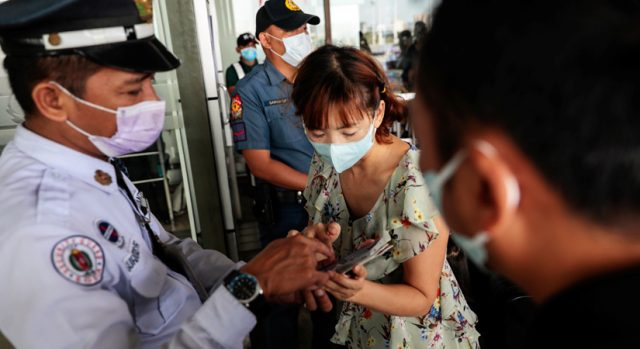
Passengers wearing protective masks, following confirmed cases of coronavirus in the country, arrive at the departure area of the Ninoy Aquino International Airport. -- REUTERS

The Tourism department on Friday said it had recommended that a green lane for vaccinated tourists be set up. 

“The green lane will pave the way for the reopening of our tourist destinations to leisure travelers who are now fully vaccinated,” Tourism Secretary Bernadette Romulo-Puyat said in a statement. 

“It will give the jobs back to many of our tourism workers and gradually revive the tourism industry under safe conditions,” she added. 

The agency said it was studying protocols for inbound international travel for people who have been fully vaccinated. 

It said some countries have eased border restrictions and opened up major destinations to fully vaccinated foreign visitors. 

The Bureau of Immigration has said more international flights might resume in the next few months. — Arjay L. Balinbin 

Traffic expected as NLEX starts bridge repairs

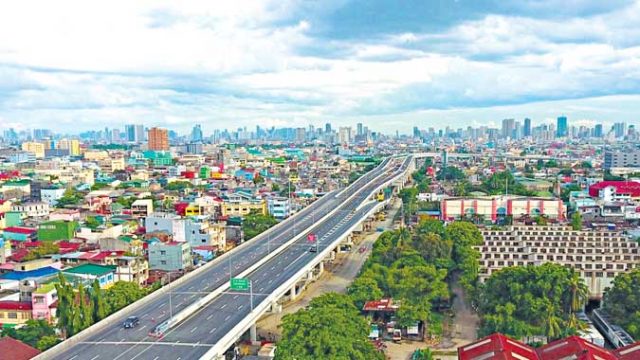
NLEX Harbor Link, Segment 10 — PHOTO BY WALTER BOLLOZOS/THE PHILIPPINE STAR

Motorists may experience delays as NLEX Corp. has started repairs on Meycauayan and Bigaa bridges in Bulacan province, both built in the 1960s, the company’s top official said on Thursday. 

In an e-mailed statement, the tollway company said the bridge rehabilitation projects seek to provide safer travel. 

“We always look after the safety and convenience of our motorists. Both bridges were built in the 1960s and it is high time that we replace the girders and slabs to strengthen the structures,” NLEX Corp. President and General Manager J. Luigi L. Bautista said. 

The rehabilitation of the 45-kilometer Meycauayan bridge is expected to be completed by September. 

Meanwhile, the rehabilitation of the 64-kilometer Bigaa bridge in Balagtas is expected to be finished by August. 

“To keep the traffic flowing as efficiently as possible, works on both bridges are being undertaken in stages, beginning with the southbound portion, then to be followed by the northbound portion. Three lanes have remained passable to motorists while works are ongoing,” NLEX Corp. said. 

“Motorists may experience temporary delays since lane closures and counterflow are being implemented in the said areas,” it added. 

NLEX Corp. is part of Metro Pacific Tollways Corp., the tollway unit of Metro Pacific Investments Corp. (MPIC). MPIC is one of three key Philippine units of Hong Kong-based First Pacific Co. Ltd., the others being Philex Mining Corp. and PLDT, Inc. 

Hastings Holdings, Inc., a unit of PLDT Beneficial Trust Fund subsidiary MediaQuest Holdings, Inc., has a majority stake in BusinessWorld through the Philippine Star Group, which it controls. — Arjay L. Balinbin 

Senate OK’s bill on child sexual abuse

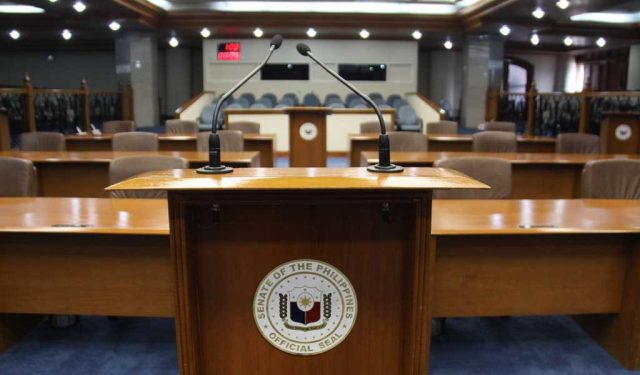
BW FILE PHOTO

The Senate on Thursday approved on second reading a bill seeking to strengthen the country’s law against sexual abuse of children online. 

The Senate approved Senate Bill 2209, which will repeal the Anti-Child Pornography Act of 2009 and amend the Anti-Photo and Video Voyeurism Act of 2009. 

The committees on women, science and technology and finance approved the measure on Tuesday. 

Senator Risa N. Hontiveros-Baraquel, who endorsed the bill to the plenary, said the bill penalizes the use of digital or analog communications to sexually abuse and exploit children. 

Cases of online child sexual abuse almost quadrupled in the Philippines at the height of a coronavirus pandemic from March to May 2020, according to data from the Department of Justice. 

The Philippines was also among the top 10 countries that produced child porn in 2016, Ms. Baraquel said in her sponsorship speech, citing a report by the United Nations International Children’s Emergency Fund (UNICEF). — Vann Marlo M. Villegas 

Gov’t Q1 tax effort improves

BW FILE PHOTO

The share of tax collections in the country’s economic output rose to a record first quarterl level of 14.41% in January to March, according to the Department of Finance (DoF), a sign of improved economic activity amid a coronavirus pandemic. 

State tax revenue went up by 0.44 percentage point during the quarter from a year earlier, the agency said in a bulletin. 

The DoF traced the improvement to fiscal reforms under the government of President Rodrigo R. Duterte. 

“These reforms made the country one of the few emerging economies to maintain investment grade rating and avoid a credit rating downgrade which would have pushed up interest rates and delayed nascent economic recovery,” it added. 

The P470-billion revenue generated by the Bureau of Internal Revenue (BIR) accounted for 10.81% of gross domestic product (GDP), up from 10.52% in the first quarter of last year. Customs collections worth P149 billion translated to a tax effort of 3.43% from 3.27%. 

Including revenue from nontax sources, the government’s total revenues fell by 1.14 percentage points to 16.03% of GDP in the first quarter from a year earlier. 

Meanwhile, the state’s total expenditure effort climbed by 4.32 percentage points to 23.42%. State spending rose by 19.9% to P1.018 trillion. 

This resulted in a budget deficit equivalent to 7.4% of GDP, which ballooned from just 1.94% in the same period last year. Economic managers have capped the ratio this year to 9.4%  

“The country should continue to adopt fiscal reforms, particularly tax reforms still pending in Congress, to sustain these fiscal gains,” the DoF said. 

“Due to fiscal reforms, the country was able to fund the unprecedented fiscal requirements imposed by the pandemic and, at the same time, protect its strong macroeconomic fundamentals,” it added. 

Mr. Duterte has enacted a measure that will gradully lower the corporate income tax to 20% from 30%, while streamlining the country’s incentive system. 

Two sin tax laws have also been passed since 2019 that increased the excise taxes on tobacco, cigarettes and vapor products and alcoholic beverages.  

These meaures followed the flagship tax law that slashed personal income tax, while increasing the excise taxes on various goods and services such as fuel, cars, tobacco, sugar-sweetened beverages and cosmetics, among other products. 

Lenders’ suspicious transaction reports surge

BW FILE PHOTO

Suspicious transactions reported by Philippine banks and other financial institutions have risen in the past eight years, and are expected to grow by 26% and 44% this year and in 2022, according to the country’s anti-laundering agency. 

These reports are expected to hit 1.2 million this year and 1.8 million in 2022 unless the Anti-Money Laundering Council (AMLC) does something about it, it said in a report. 

Suspicious transaction reports rose by 63% last year to 1.01 million from a year earlier as reports filed b by pawnshops more than doubled to 149,935, the council said. 

Money service businesses’ reports also almost tripled to 139,757 STRs in 2020, while electronic money issuers’ reports doubled to 144,294. 

The increase in reports filed by these industries alone hit 237,352 STRs in last year, which was more than the 143,457 increase filed by universal and commercial banks. 

Suspicious transaction reports involving crimes such as the online sexual exploitation of children surged by 40 times, the council said. 

Covered institutions reported fewer suspicious transaction reports at the start of the lockdown in March to May last year, but these started increasing again as quarantines were eased in June. — Isabel B. Celis 

BSP raises P110 billion from 28-day bills

The Philippine central bank raised P110 billion at the auction of its short-term debt paper on Friday, even as rates rose on higher US Treasury yields. 

The Bangko Sentral ng Pilipinas (BSP) fully awarded the 28-day debt as bids reached P135.1 billion. The auction was 1.23 times oversubscribed, while demand was bigger than P120.9 billion at last week’s auction. 

The bills fetched an average rate of 1.7746%, higher than 1.7739% a week earlier. This marked the first uptick in the rates of BSP securities after eight straight weeks of decline. 

The asking range of banks fell to 1.7525-1.79% on Friday from 1.7625-1.8%. 

The central bank uses the short-term bills and term deposit facility to mop up excess liquidity in the system and guide short-term interest rates. 

“The results of the BSP bill auction remain in line with the BSP’s view that market conditions remain normal and financial system liquidity continues to be ample,” central bank Deputy Governor Francisco G. Dakila, Jr. said in a statement. 

Offshore developments may have pushed the rates up, said Michael L. Ricafort, chief economist at Rizal Commercial Banking Corp. 

He said the local rates reacted to the higher US Treasury yields amid growing inflation concerns and hints from the Federal Reserve of a possible tapering of its bond-buying program.  

Benchmark 10-year US Treasury yields hit 1.68% on Wednesday and eased to 1.63% on Thursday, based on the latest data from the US Treasury department. 

Some US policymakers have said the US central bank might have to start talking about reducing its bond purchases at some point, Reuters reported, citing minutes of the Federal Reserve’s April meeting released this week.  

The rise in yields might have also been due to the loosening of quarantine restrictions in Metro Manila and nearby provinces until the end of May, Mr. Ricafort said. 

Metro Manila, Bulacan, Cavite, Laguna and Rizal were placed under a general community quarantine from May 15 to May 30. 

“Looking ahead, the BSP’s monetary operations will remain guided by its assessment of the latest liquidity conditions and market developments,” Mr. Dakila said. 

Diokno says BSP in no hurry to adopt digital currency

The Bangko Sentral ng Pilipinas (BSP) will continue to study the possibility of developing its own digital currency but will seek to build up its capacity to handle digital-currency operations. 

“We are developing our capacity to adopt it but we are not in a hurry at the moment,” Governor Benjamin E. Diokno said during the Institute of International Finance’s Asia-Pacific summit Friday, in response to a question about developing a central bank digital currency (CBDC). 

“We remain supportive of financial innovations brought about by technological advancements knowing that new and promising enhancements to the delivery of our mandate may still arise and therefore, we will look at it as we consult with other central banks,” Mr. Diokno added. 

The central bank is in possession of the results of a study conducted by technical working group formed before the pandemic, but he did detail the findings. 

Late last year, Mr. Diokno had said the BSP will continue to assess the issue of a digital currency but may not move to issue one within the next five years. 

CBDC is centralized, issued, and regulated by a central bank, and can serve as a medium of exchange or store of value. It is deemed less prone to price volatility unlikeh decentralized cryptocurrencies like Bitcoin. 

It may also act as a representation of actual paper-based currency notes. Central banks in China, Sweden, and Singapore are among those considering the issue of CBDCs. 

The BSP has cited potential benefits of such an issue, including broader financial inclusion with the decline of bills and coins, additional options for monetary policy action, and heightened competition and innovation in the financial system. 

Some of the risks include privacy violations, higher banking costs, money laundering, terrorism financing and other cybersecurity issues. 

On the bank’s financial inclusion goals, Mr. Diokno said the BSP retains its target of 50% share of digital for all financial transactions, and 70% penetration of financial accounts in the adult population by 2023. 

“With the pandemic, we will accomplish such goals earlier than originally envisioned, so that may be before the end of 2022,” he said. – Beatrice M. Laforga 

Peso weakens after pickup in infrastructure spending

THE PESO weakened Friday after a pickup in infrastructure spending was taken by traders to mean an increase in dollar outflows stemming from expanded imports of raw materials and capital equipment. 

The peso closed at P47.945 against the dollar Friday, against the Thursday finish of P47.94, according to the Bankers Association of the Philippines.  

Week-on-week, the peso retreated from its P47.81 close on May 14. 

The peso opened Friday at P47.85. The low was P47.93, while the high was P47.84.  

Dollar volume was $941.25 million on Fridayagainst $979.8 million a day earlier.  

The government increased infrastructure spending in the second half of 2021, with the building program intended as a key component of the economic recovery. 

Rizal Commercial Banking Corp. Chief Economist Michael L. Ricafort said the associated capital outlays could affect the peso’s performance because they will lead to outflows of foreign currency. 

However, an offsetting positive was the decline in crude oil prices in anticipation of lifting of sanctions against Iranian, thereby reducing the Philippines’ oil import bill, Mr. Ricafort added. 

A trader said the market retains an overhang from an impending move by the Federal Reserve to possibly taper its asset purchases. 

Mr. Ricafort gave a forecast range of P47.88 to P47.98 for Monday, with the range for the week seen at P47.75 to P48.05. – Isabel B. Celis  

Financial regulators wary of ‘unconventional interventions’ sparking future crises

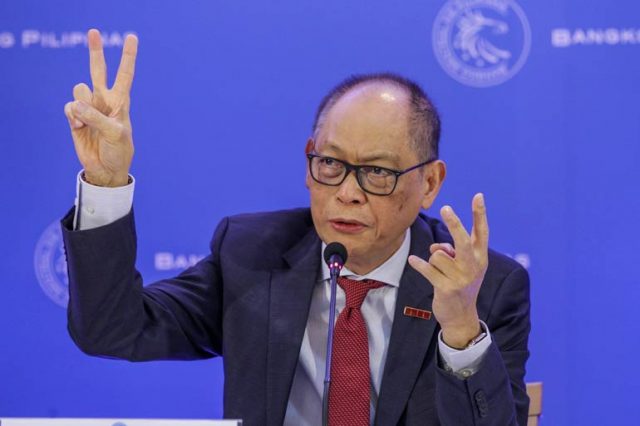
Bangko Sentral ng Pilipinas (BSP) Governor Benjamin E. Diokno — PHILSTAR/GEREMY PINTOLO

Regional financial regulators believe the economic downturn resulting from the pandemic could warrant “unconventional interventions” from governments beyond the normal toolkit for dealing with crises, which in themselves could also be sources of future financial instability. 

Benjamin E. Diokno, governor of the Bangko Sentral ng Pilipinas (BSP), co-chaired a meeting Tuesday of the Regional Consultative Group for Asia (RCGA), during which participants sought to map out likely scenarios for the economic crisis moving forward.  

The participants recognized the need for “unconventional interventions” that could affect market conditions over time.  

“What is clear is that there remain systemic risks, both risks to the financial system and risks by the financial system itself,” Mr. Diokno said in a statement, without elaborating. 

Regulators typically deal with crises with monetary and fiscal tools that raise the supply of money in the system through various means of policy easing, or else make life easier for businesses by relaxing the tax regime to stimulate growth. The danger of excessive easing is that too much money could end up circulating in the financial system, generating asset bubbles and stoking inflation. An overly lax tax regime could impact government revenue and make it less capable of meeting obligations. 

The RCGA members said a balance needs to be struck between the response to the current needs of the market while guarding against any possible longer-term implications.   

“The questions have sharpened as we now see clearer, but apparently more divergent paths in front of us,” Mr. Diokno said.   

“Knowing how these different paths affect each one of us will require a lot of discussion to fully appreciate its holistic interactions,” he added.   

The meeting was attended by representatives from 17 Asian economies.   

The FSB was established in 2009 to organize the reform of the financial system after the 2007-2009 global financial crisis. The RCGA is one of six regional committees created by the FSB in 2011. Isabel B. Celis 

House panel agrees to adopt Senate two-year estate tax amnesty

The House committee on ways and means has recommended that the chamber House approve the Senate’s amendments to House Bill 7068, which extends the estate tax amnesty application period by two years from the original deadline of June 14. 

June 14 is the deadline stipulated in Republic Act 11213 or the Estate Tax Amnesty Act.   

On Sept. 15, 2020, the chamber approved on third reading House Bill 7068, which also called for a two-year extension of RA 11213.  

The House later sought to extend it by a further two years, amending the tax amnesty deadline to four years from the original “two years from the effectivity of the Implementing Rules and Regulations of this Act.”  

On Thursday, however, the Senate approved on third reading its version of the bill under Senate Bill 2208 which set the new deadline at June 14, 2023.  

This representation poses no objection significant enough to merit the constitution of a bicameral conference committee,” House Committee on ways and means chairman Jose Ma. Clemente S. Salceda wrote in anaide memoire to Speaker Lord Allan Jay Q. Velasco and Majority Leader Ferdinand Martin G. Romualdez, dated May 20 and made public Friday.   

Mr. Salceda said the extension is a “vital piece of our COVID-19 bounce back puzzle. The estate tax amnesty will be critical to economic recovery, as it would allow property owners with unsettled estates to access bank financing or to liquidate their property to finance other needs.”   

“Having estates settled will unlock the value of such properties and allow credit arising from them to be used to finance economic activities. COVID-19 quarantines also took away significant filing time from potential filers for estate taxes, such that availers did not have full opportunity to complete the estate tax amnesty process for the entire period allowed by the law.,” he added.  

The House version of the bill reinstated the provision that only one return may be filed for estates involving multiple generations of decedents, which had been vetoed by President Rodrigo R. Duterte when he signed the act.  

The Senate version deleted the provision, but “the President is likely to veto the same provision again if it were kept,” Mr. Salceda said.  

The Senate also removed the requirement for heirs to submit “proof of settlement,” which Mr. Salceda said “is immaterial, as the Bureau of Internal Revenue can simply require such proof to be presented if so needed.” – Bianca Angelica D. Anago 

DoE asked to detail plans for after end of Shell role in Malampaya

THE DEPARTMENT of Energy (DOE) needs to reveal its plans to maintain energy continuity after the contract of Malampaya gas field operator Shell Philippines Exploration B.V. (SPEx) ends in 2024, a legislator said. 

Senator Sherwin T. Gatchalian said in a statement that he filed Senate Resolution No. 724 on May 18 directing the Senate Committee on Energy to conduct an inquiry on the DoE’s plans with the approach of the end of the Shell service contract. 

“Given the significant role that the Malampaya project plays in the Philippines’ energy security, it is imperative that the DoE apprise the Filipino public on Malampaya’s operations — the remaining natural gas reserves and the government’s plans for continuous energy supply, likewise on the pending request for the extension of Service Contract (SC) No. 38,” Mr. Gatchalian said. 

“The inquiry will also look into the status of the sale of the stake of SPEx and the basis for the DoE’s decision if it approves the sale,” he added. 

On Thursday, Shell Petroleum N.V. announced that it signed an agreement with Malampaya Energy XP Pte. Ltd., for the sale of its 100% stake in SPEx.  

Malampaya Energy XP Pte. Ltd. is a subsidiary of Udenna Corp. led by Dennis A. Uy.  

SPEx holds a 45% interest in SC 38, which covers the Malampaya gas field. Other companies that have an interest in the contract are UC 38 LLC – another Udenna Corp. subsidiary – with 45%, and the Philippine National Oil Co. Exploration Corp., with 10%. 

According to Shell, the consideration of the sale is $380 million with additional payments of up to $80 million between 2022 to 2024 contingent on asset performance and commodity prices.  

The transaction is targeted for completion by the end of the year, subject to agreement by the parties and regulatory approval 

Mr. Gatchalian said the DoE should also review and evaluate the transfer of interests of the consortium members to comply with Presidential Decree No. 87. 

“It is critical for the DoE to ensure that whoever gets hold of Shell’s interest should have, not just similar experience or capacity, but more so the technical, financial and legal capability to operate the Malampaya project or to be a service contractor,” Mr. Gatchalian said.  

Mr. Gatchalian said the Malampaya project is the country’s most significant oil and gas development, accounting for 19.16% of the Philippines’ electricity in 2020. – Revin Mikhael D. Ochave   

“It has also provided a crucial source of income for the government with a total net national government share amounting to P261.68 billion since it began commercial operations in 2002 until 2019,” Mr. Gatchalian said.   

BusinessWorldsought the comment of DOE on the matter but has not responded as of deadline time.   

Bill creating Philippine CDC approved by House panel 

PHILIPPINE STAR/MICHAEL VARCAS

The House committee on appropriations approved on Friday House Bill 6096 or the Center for Disease Control and Prevention (CDC) Act, which seeks to establish an agency that will take the lead in handling infectious diseases such as coronavirus disease 2019 (COVID-19).

The proposed CDC Act, listed as priority legislation in the 2020 State of the Nation Address of President Rodrigo R. Duterte, was also approved by the House committee on health on March 5.

The Department of Health expressed its support for the bill earlier this month.

The bill was filed in January 2020, before the COVID-19 outbreak in the Philippines.

Its author, Representative Jose Ma. Clemente S. Salceda, who also chairs the ways and means committee, said in a statement that he expects the bill to be signed this year as “the Senate has begun committee discussions on the bill…(and) (w)ith plenary approval looming in the House.”

The CDC is proposed as a separate agency supervised by the Health Emergency Coordinating Council, with the health secretary as its chair.

Mr. Salceda said the mandate of the Philippine CDC must be focused on fighting infectious diseases as health crises are “not just a doctor’s specialty anymore.”

“There are health crises where cases have the potential to escalate in numbers and scope very quickly, and where coordinated efforts at containment and treatment are required immediately. That will often include law enforcement, community management, and a whole swathe of other disciplines. So, we need a more holistic public health preparedness and response framework,” he said. – Bianca Angelica D. Anago