Home Blog Page 7986

We need to close the vaccination gap


FREEPIK
FREEPIK

BY THE END of May 2021, only 2.1% of Africans have received at least one dose of a COVID-19 vaccine. We need to close the vaccination gap between advanced economies and developing countries to avoid what Tedros Ghebreyesus, head of the World Health Organization (WHO), has called “vaccination apartheid.” Doing so is both morally right and in everyone’s interest.

Therefore, we need global multilateral action to increase the production of vaccines and accelerate the roll out worldwide. Since the beginning of the pandemic, this is the path chosen by the European Union (EU). It is now also the path defined by the G20 leaders at the Global Health Summit in Rome on May 21.

The pandemic is still killing thousands of people every day and at the current pace, the whole world will not be vaccinated before 2023. Yet, a widely vaccinated world population is the only way to end the pandemic; otherwise, the multiplication of variants is likely to undermine the effectiveness of existing vaccines.

Vaccination is also a prerequisite for lifting the restrictions that are holding back our economies and freedoms. These restrictions penalize the whole world, but they weigh even more heavily on developing countries. Advanced countries can rely more on social mechanisms and economic policy levers to limit the impact of the pandemic on their citizens.

If the vaccination gap persists, it risks reversing the trend in recent decades of declining poverty and global inequalities. Such a negative dynamic would hold back economic activity and increase geopolitical tensions. The cost of inaction would for sure be much higher for advanced economies than what we collectively would have to spend to help vaccinate the whole world. Therefore, the EU welcomes the $50-billion plan proposed by the International Monetary Fund in order to be able to vaccinate 40% of the world population in 2021 and 60% by mid-2022.

To achieve this goal, we need closely coordinated multilateral action. We must resist the threats posed by “vaccine diplomacy,” linking the provision of vaccines to political goals, and “vaccine nationalism,” reserving vaccines for oneself. In contrast to others, the EU has rejected both since the beginning of the pandemic. Until now, we have been the only global actor that is vaccinating its own population; exporting large volumes of vaccines; and contributing substantially to the vaccines’ rollout in low-income countries. Europeans can be proud of this record.

In 2020, the EU supported the research and development of vaccines on a large scale and contributed significantly to the new generation of mRNA vaccines. The EU then became a major producer of COVID-19 vaccines with, according to the WHO, around 40% of the doses used globally so far. The EU has also exported 240 million doses to 90 countries, which is about as much as we have used within the EU.

The EU with its member states and financial institutions — what we call “Team Europe” — is also donating vaccines to neighbors in need, particularly in the Western Balkans. It aims to donate at least 100 million more doses to low- and middle-income countries before the end of 2021, as agreed at the last European Council. With €2.8 billion, Team Europe has also been the main contributor to the COVAX facility, which enables poorer countries to access vaccines; around one-third of all COVAX doses delivered so far have been financed by the EU. However, this effort is still far from sufficient to prevent the vaccination gap from widening.

To fill this gap, countries with the required knowledge and means should increase their production capacities, so that they can both vaccinate their own populations and export more vaccines, as the EU is doing. In cooperation with vaccine manufacturers, we are working to increase the EU vaccine production capacities to more than 3 billion doses a year by the end of 2021. Our European industrial partners have committed to deliver 1.3 billion doses of vaccines before the end of 2021 to low-income countries at no profit and to middle-income countries at lower prices. They have also committed themselves to further deliver over 1.3 billion doses for 2022 — many of which will be delivered through COVAX.

All countries must avoid restrictive measures that affect vaccine supply chains. We also need to facilitate the transfer of knowledge and technology, so that more countries can produce vaccines. For our part, we are strongly encouraging European producers to do so, especially in Africa. I participated at the Paris summit on financial support for Africa on May 18, where the continent’s leaders stressed that Africa imports 99% of its vaccines. This has to change. Team Europe is launching an initiative to this end — backed by €1 billion in funding from the EU budget and European development financial institutions — with African partners to boost manufacturing capacity in Africa for vaccines, medicines, and health technologies.

Voluntary licensing is the privileged way to ensure such transfer of technology and know-how. If it turns out to be insufficient, the existing TRIPS Agreement and the 2001 Doha Declaration already foresee the possibility of compulsory licensing. According to some countries, these flexibilities are however too difficult and too slow to use. To speed up these technology transfers, the EU will come forward with a new proposal in the World Trade Organization framework by early June.

The COVID-19 pandemic has reminded us that health is a global public good. Our common global COVID-19 vaccine action to close the vaccination gap must be the first step toward genuine global health cooperation, as foreseen by the Rome Declaration recently adopted at the Global Health Summit.


Josep Borrell is the EU High Representative for Foreign Affairs and Security Policy, and Vice-President of the European Commission.

Longer supply shortage seen as China’s factories squeezed

REUTERS

ERIC LI’s factory making glass lampshades for companies including Home Depot, Inc. is being stretched to its limits with sales doubling their pre-pandemic level.

But like many Chinese manufacturers, he doesn’t plan to expand operations — a reticence that could slow the pace of China’s economic growth this year and prolong a shortage of goods being felt around the world as demand picks up.

Surging prices of raw materials means “margins are compressed,” explains Mr. Li, owner of Huizhou Baizhan Glass Co. Ltd., in the southern Chinese province of Guangdong, which makes about $30 million in annual revenue. With the global economic recovery still uneven, “the future is very unclear, so there is not much push to expand capacity,” he adds.

The combination of higher input prices, uncertainty about export prospects and a weak recovery in domestic consumer demand meant Chinese manufacturing investment from January to April was 0.4% below the same period in 2019, according to official statistics (comparing to 2019 strips out the distortion of last year’s pandemic data).

Due to the vast size of China’s manufacturing sector, that poses a risk both to the nation’s growth — which is currently predicted to reach 8.5% in 2021, according to a Bloomberg tally of economists’ estimates — and to a global economy that’s grappling with supply shortages and rising prices.

FALLING PROFITS
Weaker-than-expected investment could have a “sizable” impact on GDP (gross domestic product) growth this year, said Citigroup, Inc.’s China economist, Li-gang Liu. Lower investment may dent imports of capital goods and equipment from developed economies like Japan and Germany, “which in turn could drag their economic recovery and rebound as well,” he added.

AnHui HERO Electronic Sci & Tec Co. Ltd. is one of those companies feeling the squeeze. Based in the eastern province of Anhui, the company manufactures capacitors used to make electronic circuits, with sales mainly in the domestic market. Jing Yuan, the founder, says orders are up as much as 30% year-on-year, but profits are down 50% due to increasing materials costs that are not easily passed onto clients.

The company is under “huge cash pressure” as it needs to pay half a month in advance of delivery in order to secure copper and other metals, which they previously paid for months after receiving, he said. “The commodity issue has to be addressed by the government,” he added.

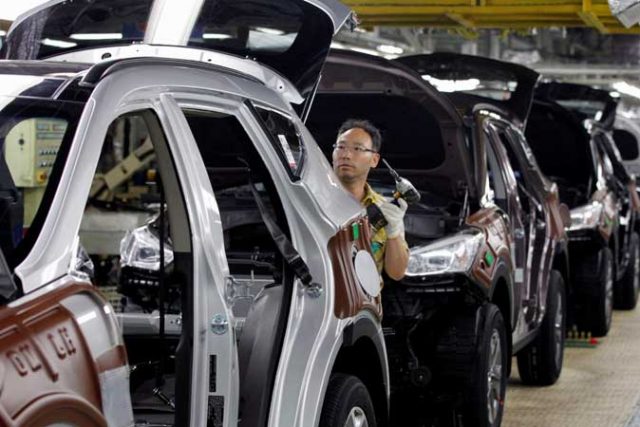
Input shortages mean some manufacturers aren’t able to make use of their existing facilities, so expansion would be of little use. Chinese electric vehicle maker Nio, Inc. suspended production at one of its factories last month, due to a shortage of microchips.

Modern Casting Ltd., which makes iron and steel products in Guangdong, issued a note to clients this month saying it would not be able to meet its current orders due to high raw material costs. A member of staff who answered the phone at the company’s office confirmed the note, but declined to give further details.

TRANSITION
On top of the higher input costs, Chinese companies face a bumpy transition toward domestic consumer spending to sustain its post-pandemic recovery.

Exports, China’s strong-suit last year, may begin to slow as vaccine roll-outs cause consumers in wealthy countries to shift spending back to services. Meanwhile, the growth rate of Chinese consumer spending has yet to fully recover.

Investment sentiment among Chinese small and medium-sized enterprises is below levels seen even in 2018-9 when uncertainties from the US-China trade war were a brake on expansion plans, according to a regular survey of more than 500 Chinese companies by Standard Chartered Plc.

“Demand is still mainly underpinned by exports, so domestic companies are aware that this is not sustainable,” said Standard Chartered’s China economist, Lan Shen.

While some export-oriented sectors have been pushed to their limits, large amounts of slack remain for manufacturers targeting Chinese consumers due to subdued domestic demand.

Retail sales growth was 4.3% in April on a two-year average basis, which strips out base effects from the pandemic, less than half pre-pandemic growth rates. Overall capacity use at China’s manufacturers fell to 77.6% in the first quarter from 78.4% in the previous three months, with the automotive sector hit hardest by overcapacity following three years of declining sales volumes.

Even for electric vehicles whose sales are surging, most companies have already built their capacity and will now focus on incremental upgrades. “The majority of the investment has been done,” said Jochen Siebert of JSC Automotive Consulting.

China ordered state-owned companies to expand last year, with their investment growth of 5.3% in 2020 from the prior year easily outstripping the 1% increase in private investment. But for a sustainable pick-up in investment, the market, not the state, needs to feel confident.

Carsten Holz, an expert on Chinese investment statistics at the Hong Kong University of Science and Technology, estimates that privately-owned companies have accounted for 87% of manufacturing investment in 2015, the most recent year of available data. They are more sensitive to input costs.

“There is a pandemic plus insecurity about future trade given a new US administration, neither of which is conducive to investment that relies on long-term growth prospects,” Mr. Holz said.

MIXED POLICIES
Transport bottlenecks are also a challenge for export-oriented manufacturers. Gordon Gao, who exports gardening products from China, said that he has had to reject 80% of orders this year due to port delays. In one case, an order placed before mid-February could only be shipped three months later when a client finally secured a container.

Beijing has tried to improve conditions for private companies by ordering a crackdown on speculation to curb commodity prices and easing access to bank loans.

Yet the government continues to gradually withdraw fiscal and monetary stimulus measures introduced amid the pandemic last year. It set a relatively unambitious target of “above 6%” growth for this year, and the Communist Party’s Politburo signaled last month it would prioritize reforms to control house prices and debt growth.

“The policy stance has definitely shifted away from supporting growth and back toward de-risking the financial sector,” said Adam Wolfe, an economist at London-based Absolute Strategy Research. “The risks for economic growth seem tilted to the downside, especially for capital-intensive, construction-linked sectors.”

For manufacturers such as Mr. Li, a longer period of domestic growth and control over input prices will be needed before capacity expansion is on the cards. While his company of 200 workers took on new permanent staff before the pandemic, for now he’d rather pass the risks of investment on to others.

“I wouldn’t do that now, I would rather hire some temporary workers and outsource the rest,” he said. — Bloomberg

Rising global temperatures ‘inexorably closer’ to climate tipping point — United Nations

REUTERS

THERE is now a 40% chance that global temperatures will temporarily reach 1.5 degrees Celsius above pre-industrial levels in the next five years — and these odds are rising, a U.N. report said on Wednesday.

This does not yet mean that the world would already be crossing the long-term warming 1.5-degree threshold set by the Paris Climate Accord, which scientists warn is the ceiling to avoid the most catastrophic effects of climate change. The Paris Accord target looks at temperature over a 30-year average, rather than a single year.

But it does underscore that “we are getting measurably and inexorably closer” to that threshold, said U.N. World Meteorological Organization (WMO) Secretary-General Petteri Taalas in a statement. Taalas described the study as “yet another wakeup call” to slash greenhouse gas emissions.

Every year from 2021 through 2025 is likely to be at least 1 degree Celsius warmer, according to the study.

The report also predicts a 90% chance that at least one of those years will become the warmest year on record, topping 2016 temperatures.

In 2020 — one of the three warmest years on record — the global average temperature was 1.2 degrees Celsius above the pre-industrial baseline, according to an April WMO report.

“There’s a little bit of up and down in the annual temperatures,” said Gavin Schmidt, director of NASA’s Goddard Institute for Space Studies in New York City. “But these long term-trends are unrelenting.”

“It seems inevitable that we’re going to cross these boundaries,” Mr. Schmidt said, “and that’s because there are delays in the system, there is inertia in the system, and we haven’t really made a big cut to global emissions as yet.”

Almost all regions are likely to be warmer in the next five years than in the recent past, the WMO said.

The WMO uses temperature data from multiple sources including NASA and the National Oceanic and Atmospheric Administration (NOAA).

Weather that was once unusual is now becoming typical. Earlier this month, for example, NOAA released its updated “climate normals, “ which provide baseline data on temperature and other climate measures across the United States. The new normals — updated every 10 years — showed that baseline temperatures across the United States are overwhelmingly higher compared with the past decade.

Temperature shifts are occurring both on average and in temperature extremes, said Russell Vose, chief of the climatic analysis and synthesis branch at NOAA’s National Centers for Environmental Information. Over the next five years, these extremes are “more likely what people will notice and remember,” he said.

Warming temperatures also affect regional and global precipitation. As temperatures rise, evaporation rates increase and warmer air can hold more moisture. Climate change also can shift circulation patterns in the atmosphere and ocean.

The WMO report predicts an increased chance of tropical cyclones in the Atlantic Ocean, that Africa’s Sahel and Australia will likely be wetter, and that the southwest of Northern America is likely to be drier.

The projections are part of a recent WMO effort to provide shorter-range forecasts of temperature, rainfall and wind patterns, to help nations keep tabs on how climate change may be disrupting weather patterns.

Looking at marine and land heat waves, ice sheets melting, ocean heat content rising, and species migrating toward colder places, “it’s more than just temperature,” Mr. Vose said. “There are other changes in the atmosphere and in the ocean and in the ice and in the biosphere that all point to a warming world.” — Reuters

Nonito Donaire shoots for WBC bantamweight title on Sunday

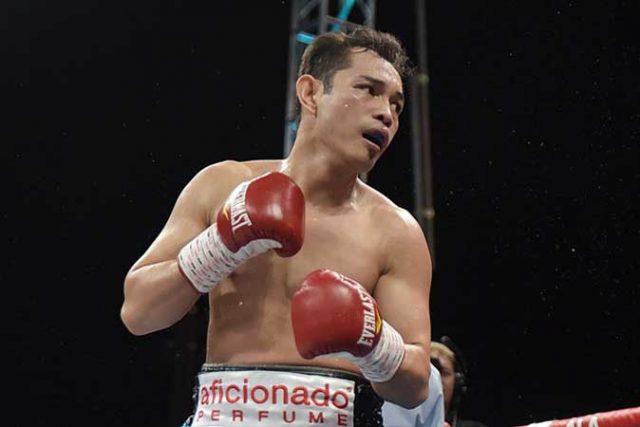
NONITO “The Filipino Flash” Donaire challenges French champion Nordine Oubaali for his WBC bantamweight title on Sunday (Manila time). — ALVIN S. GO

By Michael Angelo S. Murillo, Senior Reporter

MULTI-DIVISION boxing champion Nonito “The Filipino Flash” Donaire looks to enhance his legacy by adding the World Boxing Council (WBC) bantamweight title to his list of achievements when he goes up against reigning champ Nordine Oubaali of France on Sunday (Manila time).

The 38-year-old Donaire (40-6, 26 KO) is out to show that he is still a top-class talent even at this late stage of his career in the Showtime title showdown happening at the Dignity Health Sports Park in Carson, California.

Mr. Donaire, a champion fighter in flyweight, bantamweight, super bantamweight and featherweight, will mark his ring return with the Oubaali fight after a year-and-a-half of inaction.

The Bohol native last fought in November 2019, losing the World Boxing Association super bantamweight title to Japanese Naoya Inoue by unanimous decision.

He is now angling to return to the top by seizing the WBC title from Mr. Oubaali (17-0, 12 KO), who has had two successful title defenses since becoming champion in July 2019.

For local boxing analyst Nissi Icasiano, the Oubaali fight is a venture worth taking for Mr. Donaire, and that the Filipino fighter has what it takes to get it done against his younger opponent.

“For Nonito Donaire, it’s no longer a question of how dangerous the fight is. At this point of his career, he knows that every fight that he takes from here on has its own risk, but it’s a risk worth taking,” said Mr. Icasiano in an online interview with BusinessWorld.

“Nonito Donaire is a kind of boxer that you should never count out. He has this uncanny ability to reinvent himself, which is why he is still slugging it out with the best of his division at 38… It just goes to show how brilliant and special Nonito Donaire is as a fighter,” he added.

While Mr. Donaire’s status as a Hall-of-Fame boxer is already secured, Mr. Icasiano believes a win in his latest fight will only add further luster to the career of The Filipino Flash.

“A win here will definitely put Nonito Donaire at a different level in terms of his status as a boxer… Nonito won a title at flyweight in 2007, got a super flyweight belt two years later, got a taste of bantamweight gold against Fernando Montiel, added the super bantamweight and featherweight straps into his collection later, and managed to move down to 118 to win gold again. It’s an amazing feat.”

Mr. Icasiano compared Mr. Donaire to legendary American fighter Henry Armstrong, who won titles in different divisions beginning in 1938.

The analyst went on to say, against French champion Oubaali, Mr. Donaire’s experience should serve him well but he must not let his guard down.

“He (Donaire) still has good power and speed at his age. He’s experienced at picking off his opponents when they move into firing range with enough power, doing some damage in the process. However, he is becoming easier to hit as he gets older,” Mr. Icasiano said.

“Oubaali is underrated. He does everything well but doesn’t really excel at anything. Donaire’s experience will do him favors in this fight.”

Donovan Mitchell returns to spark Jazz vs Grizzlies; Sixers race to 2-0 series lead

UTAH JAZZ guard Donovan Mitchell (45) reacts during the second half against the Memphis Grizzlies in game two. — REUTERS

DONOVAN Mitchell returned to lead a balanced attack that overpowered a career-best, 47-point performance by Ja Morant and allowed the Utah Jazz to even their Western Conference playoff series against the Memphis Grizzlies with a 141-129 victory on Wednesday night in Salt Lake City.

Mitchell, who finished with a team-high 25 points, bombed in five 3-pointers in 10 tries. Teammates Mike Conley and Joe Ingles buried three apiece as the top-seeded Jazz, who led the NBA in the regular season in both most 3-pointers made and fewest allowed, dominated the eighth-seeded Grizzlies from beyond the arc to offset an upset loss in the series opener.

With Mitchell still nursing a sprained right ankle, Memphis shocked the West’s regular-season champs by holding them to 12-for-47 (25.5 percent) accuracy on 3-pointers in Game 1.

But Utah came out firing in the rematch, nailing 10 treys in the first half alone en route to a 74-54 lead at the break.

76ERS 120, WIZARDS 95
Ben Simmons had 22 points, nine rebounds and eight assists, Joel Embiid added 22 points and seven rebounds and host Philadelphia took a 2-0 series lead with a victory over Washington.

Tobias Harris contributed 19 points and nine rebounds for the top-seeded Sixers. Furkan Korkmaz added 13 points and Matisse Thybulle registered five blocked shots and four steals off the bench.

Bradley Beal led the eighth-seeded Wizards with 33 points, while Rui Hachimura and Daniel Gafford added 11 each. Early in the fourth quarter, Russell Westbrook (10 points, 11 assists) appeared to injure his right ankle and was helped to the locker room.

KNICKS 101, HAWKS 92
Derrick Rose scored 26 points off the bench to lift host New York to a victory over Atlanta to even the series at 1-1.

Julius Randle recorded 13 of his 15 points in the third quarter and added 12 rebounds for the Knicks, who erased a 15-point deficit to even the best-of-seven series at one win. Game 3 is on Friday in Atlanta.

Trae Young, who scored 20 of his 30 points in the first half for the Hawks, was serenaded with boos every time he touched the ball. The Madison Square Garden faithful’s response was a result of Young putting his fingers to his lips to silence the crowd following Atlanta’s 107-105 victory in the series opener on Sunday. — Reuters

Strict safety protocols in effect for FIBA ‘bubble’ in Clark — BCDA

TEAMS, like those from Korea and Thailand, should expect strict implementation of health and safety protocols to guard against the coronavirus during the FIBA Asia Cup Qualifiers in Clark in June, the BCDA said. — FIBA

EXPECT strict safety protocols to be implemented when the country hosts the third and final window of the FIBA Asia Cup Qualifiers at Clark City in Angeles City, Pampanga, in June.

This was shared by the Bases Conversion and Development Authority (BCDA) as it pushes for the successful staging of the five-day tournament, done in a “bubble” setup to guard against the coronavirus, happening from June 16 to 20 that will see nine teams from different countries and territories in Asia competing.

Along with its subsidiary Clark Development Corp. (CDC), the BCDA said it has been closely coordinating with the Samahang Basketbol ng Pilipinas, national government, and the local governments of Pampanga and Angeles City in readying the areas that will serve as hosts for the qualifiers.

The tournament is expected to receive over 600 local and foreign players, coaches and tournament staff for its duration.

In going about preparing, the BCDA said it is taking cue from its experience of successfully hosting the tournament bubble of the Philippine Basketball Association (PBA) last year, which ran from October to December.

“Hosting the PBA bubble in Clark last year gave BCDA and CDC the experience of mounting sporting events in the face of COVID-19. This time, with the arrival of foreign teams for the FIBA Asia Cup, BCDA and CDC will step up to the challenge and leave no stone unturned. Health and safety measures will be strictly enforced to protect all athletes and staff, and to eliminate the possibility of spreading the virus,” said BCDA President and Chief Executive Officer Vince Dizon in a statement.

The BCDA is also being guided by the directives on physical activities and sports amid the pandemic, which were jointly crafted by the Philippine Sports Commission, Games and Amusements Board, and Department of Health.

For the staging of the FIBA Asia Cup Qualifiers, the BCDA said, the movement of players, coaches and staff will be limited to within the airport, hotels and the Angeles University Foundation Sports and Cultural Center where the tournament will be held. The designated hotels are Quest Hotel & Conference Center in Mimosa and Lohas Hotel in Redwood Villas, both in the Clark Freeport Zone.

The 200 foreign delegates from the eight countries are scheduled to arrive on June 13. They will be quarantined the next day, then practices will be held on June 15. Visiting teams will depart on June 21.

They are required to take RT-PCR tests 12 days, seven days and two days before departure to the Philippines. They must also secure RT-PCR tests on the day of arrival, four days after arrival, and before departure if required by the country of destination.

Members of the Gilas Pilipinas team, which are to compete in Group A of the tournament, are covered by the protocols. And so do FIBA and SBP personnel, hotel, transport and ancillary staff, and other staff from TV5, PLDT and Smart, who are official partners of FIBA.

“This is a team effort. Everyone, including the government, LGUs, organizers, athletes and staff must play their part to ensure the success of the FIBA bubble,” Mr. Dizon said.

The FIBA Asia Cup Qualifiers were originally set to take place in Clark in February until the emergence of new variants of the coronavirus forced their cancelation.

The SBP eventually was able to secure its hosting in June, later boosted by the approval of the Inter-Agency Task Force for the Management of Emerging Infectious Diseases on May 6 for it to proceed.

Playing in the tournament are teams from the Philippines, Korea, Thailand, and Indonesia in Group A, Chinese Taipei, Japan, and China in Group B, and Hong Kong and Guam in Group C.

The FIBA Asia Cup will be held in Jakarta, Indonesia, in August. — Michael Angelo S. Murillo

Gilas Pilipinas 3×3 looks to finish strong at FIBA OQT

GILAS PILIPINAS 3x3 tries to earn a respectable finish at the FIBA Olympic Qualifying Tournament in Austria on Friday. — FIBA

ITS goal of making it to the Olympic Games now rendered a long shot, Gilas Pilipinas 3×3 looks to play better and have a respectable finish when it treks back on Friday for the final half of its assignments at the International Basketball Federation (FIBA) Olympic Qualifying Tournament (OQT) in Austria.

Dealt back-to-back losses in Day One of the qualifiers on Wednesday, the Philippine national men’s 3×3 team tries to at least avert being shut out in the competition with its remaining matches in Pool C against the Dominican Republic and France.

Gilas just could not get its game going early in each of its first two games in the tournament in Graz, leaving the team playing catch-up and eventually losing to Qatar (12-21) and Slovenia (11-21) in that order, on opening day.

The team of Joshua Munzon, CJ Perez, Mo Tautuaa and Leonard Santillan tried hard to overcome the early deficits it was handed with but could not get the momentum it was angling for.

Gilas fell behind, 0-7, at the start of the game versus Qatar, and never recovered from it after.

Abdulrahman Saad led the Qataris with 10 points, padded by four deuces, while Nedim Muslic had nine.

Messrs. Perez and Munzon scored five points each while Messrs. Santillan and Tautuaa had one apiece in the loss against Qatar.

Things did not get better for the Filipinos against Slovenia, with Gilas buried, 3-15, at one point as it struggled on both ends.

Simon Finzgar scored nine points while Gasper Ovnik and Anze Srebovt chipped in six apiece for the Slovenians while Mr. Munzon led the Philippines with seven.

Gilas battles the Dominican Republic on Friday at 6 p.m. in a match-up of winless teams in Pool C and France later at 8 p.m.

After Day One matches, France and Qatar are on top of Pool C with 2-0 records, followed by Slovenia at 1-1. The Philippines and Dominican Republic have identical 0-2 cards.

In the FIBA OQT, three Olympic spots are up for grabs. Tournament format calls for each team playing the other four in their respective pools. The top two teams from each pool qualify for the crossover quarterfinals and then play knockout games all the way to the semifinals.

The semifinals and the third-place games will be known in the FIBA 3×3 OQT as the Olympic Ticket games.

Three-on-three basketball is making its Summer Games debut in Tokyo this year. — Michael Angelo S. Murillo

Villarreal wins Europa League after marathon shootout vs Man United

GDAŃSK, Poland — Villarreal goalkeeper Geronimo Rulli kept his composure to score in a nerve-shredding, seemingly never-ending shootout then denied David de Gea as his side won their first major trophy by beating Manchester United (11-10) on penalties in the Europa League final on Wednesday.

After a tense encounter finished 1-1 following extra time, Argentine Rulli stepped up after every on-field player scored their spot kicks and he comfortably beat Spaniard De Gea, who finally buckled under the pressure in the unfamiliar role of taking rather than facing a penalty. In the first European final to be played in front of a crowd in two years amid the COVID-19 pandemic, Villarreal survived a tough second half before going on to edge the longest shootout in any European final.

The win gave Villarreal coach Unai Emery a record fourth title in the competition, leaving United without a trophy since their Europa League triumph in 2017.

Gerard Moreno stretched to reach Dani Parejo’s free kick and steered the ball past De Gea to open the scoring in the 29th minute, only for United to level when Edinson Cavani poked the ball home after collecting Marcus Rashford’s deflected shot on 55 minutes.

The shootout win also booked Villarreal’s place in next season’s Champions League, saving them from competing in the new UEFA Conference League which they had qualified for by finishing seventh in La Liga.

Villarreal were playing their first ever major final and coach Emery recognized United were favorites due to their more storied history, but urged his side to “keep breaking down barriers” after four semifinal exits.

Emery is renowned for his diligent study of opponents and although United made the stronger start, his side managed to minimize their strengths, ensuring Bruno Fernandes was deprived of space to create danger and Cavani had little wiggle room.

Their only chances in the first half were wayward shots from Scott McTominay and Luke Shaw and while Villarreal did not exactly sparkle, they made their one chance count from a free kick given away by Cavani.

It was Moreno’s 30th goal of the season and saw him become Villarreal’s joint-top scorer of all-time alongside Giuseppe Rossi.

Villarreal were the better side in the first half of extra time after Emery made all five changes before fulltime, contrasting with Solskjær, who did not make his first change until the 100th minute.

The five substitutes he did make all scored their penalties in an enthralling shootout, but the 11th kick was a bridge too far for De Gea. — Reuters

Inter are Italian champions again — so why might Conte leave?

ROME — Italian media predicted the imminent end of coach Antonio Conte’s time at Inter Milan on Wednesday, even as the club basked in the glow of becoming Serie A champions again after an 11-year-wait.

Milan-based Gazzetta dello Sport ran the headline “Conte-Inter divorce” and predicted a separation within the next 48 hours.

Corriere dello Sport wrote that the relationship was “finished” and that lawyer Angelo Capellini, who deals with contracts and negotiations, was at the club offices for a second consecutive day to oversee a contract termination.

Sky Italia reported that a mutual agreement for Conte’s exit, a year before his contract expires, was being worked on.

The reports followed revealing comments from Conte’s assistant Cristian Stellini after the 5-1 win over Udinese on Sunday when Inter, having already sealed the title at the beginning of May, got to lift the trophy.

“We are enthusiastic about continuing but when you have a top coach, he requires a top project too,” Stellini told DAZN.

“The sale of top players could change things, but it’s up to the club to make clear what the situation is.”

Stellini’s comments struck at the heart of the issue: Conte would like to stay and Inter would like to keep him, but his ambitions are at odds with the club’s financial situation.

Speculation around the manager’s future has been rife for months, to the extent that he stopped attending news conferences towards the end of the season to avoid fielding awkward questions.

BLOCKBUSTER SIGNINGS
Conte’s two seasons at the club have been very impressive: he led Inter to runners-up finishes in Serie A and the Europa League in his debut campaign, before winning the title this year.

Since the former Chelsea manager took over in 2019, Inter have splashed out on blockbuster signings of players such as Romelu Lukaku, Nicolo Barella, Christian Eriksen and Achraf Hakimi.

Investment in Conte’s squad accelerated their path to success and the coach wants that to continue to achieve his next target of making a mark in Europe, following a disappointing Champions League group-stage exit this season.

However, Inter are now looking to cut costs after taking a big financial hit during the coronavirus pandemic.

Club president Steven Zhang made a plea to players and staff to give up two months’ wages this month but it was rejected.

Inter have since secured €275 million ($336.35 million) from Oaktree Capital Management to help stabilize the situation but cuts will continue.

They are now reportedly looking to trim the wage bill by 15-20% and make €70-€100 million from player sales before next season.

Some less-used squad players will go, but it appears likely that one of the club’s star performers will need to be sold to reach the financial targets and Hakimi, Lukaku and Lautaro Martinez are among those being linked with moves away.

None of this is what Conte, a ferociously competitive and ambitious character, signed up for. — Reuters

Few obstacles lie between Nadal and record 21st major

MADRID — Rafa Nadal has already hoisted the French Open trophy a jaw-dropping 13 times and with the tantalizing prospect of increasing his Grand Slam haul to 21 — thus becoming the most successful player in men’s tennis — it is difficult to see anyone stopping him in Paris.

The Mallorcan will turn 35 during the tournament but shows little sign of slowing down. By triumphing in Barcelona and Rome for a 12th and 10th time respectively, he won two of the four tournaments he had entered in the run-up to the claycourt major.

Andrey Rublev and Alexander Zverev may have comfortably beaten Nadal in Monte Carlo and Madrid respectively, but as anyone who has encountered Nadal at Roland Garros knows, beating the Spaniard in a best-of-five-set claycourt match is the ultimate challenge in tennis.

Since his debut Paris appearance in 2005, it has happened only twice.

Those searching for weaknesses in Nadal’s armour could take heart from the Spaniard’s losses to Rublev and Zverev as well as the fact he recently dropped sets on clay against Denis Shapovalov and Kei Nishikori. Nadal being outclassed 6-1 on red dirt is also a rare sight, as was the case in the second set of the Rome final against Novak Djokovic.

But he has a habit of truly coming into his own at Roland Garros, as his 100-2 win-loss record testifies.

He shrugged off injury problems on his way to victory in 2019 and also blasted his way to the 2020 title without dropping a set in the rescheduled tournament last October despite hardly playing any matches in the run-up due to coronavirus concerns.

While other players complained of the unfamiliar autumn conditions in the French capital, Nadal stormed his way to the final before thrashing Djokovic (6-0, 6-2, 7-5) to tie Roger Federer’s men’s record of 20 Grand Slam titles.

Nadal said he had a “complete” tournament in Rome and was in optimal shape for the looming trip to Paris, which he called “the most important place in my career”.

“I’ll be working on things that I need to improve and I also need to relax on a mental level,” he said.

“Winning always gives you a boost and it’s evidently better to arrive at Roland Garros with this trophy in my arms.”

Two-time French Open finalist Alex Corretja believes the only thing standing in Nadal’s way to yet another title could be the physical strain of energy-sapping matches in the latter rounds.

“It’s getting closer to be more and more difficult for him but winning Barcelona and especially Rome was crucial to him, to feel like, okay, I am still the best on clay ever,” Corretja, who will commentate on the tournament for Eurosport, told Reuters.

“Imagine Rafa faces (Stefanos) Tsitsipas in quarterfinals, Novak in the semis and (Dominic) Thiem in the final, there’s a big doubt about how fresh he would be. It could affect the result.

“But Rafa is the only one who knows how to deal mentally with these tough draws, especially on clay, how to recover, play important moments. To play him over five sets on clay is like a nightmare because he brings such a high energy from the beginning.” — Reuters

Snakebitten

Forget the spin from the Clippers. From just about any angle but their own, it was clear that they tried to avoid tussling with the Lakers in the first round of the playoffs by ending the regular season with defeats to the lowly Rockets and Thunder. Which is just fine; after all, they want to go deep in the playoffs, and if taking two steps back is what they need to do in order to forge three ahead, then well and good. In the highly competitive Western Conference, any move that can get them a leg up against the opposition is a welcome one.

There was just one problem with the Clippers’ plan, however: They severely underestimated the capacity of the Mavericks to keep pace with them. And they shouldn’t have, really. For one thing, they didn’t just lose the regular season series one and two against Rick Carlisle’s charges; in so doing, they emerged with a minus-57 aggregate. For another, they stood to face red-hot competition that went 12 and four prior to dropping a meaningless match heading into the playoffs. Staying confident is one thing. Harboring irrational self-assurance is quite another.

True, the Clippers are loaded. As hobbled as Kawhi Leonard may be, he remains one of the National Basketball Association’s best players and proven postseason beast. And he just so happens to be backstopped by fellow All-Star Paul George, a deep roster, and an excellent coaching staff led by 2016 champion Tyronn Lue. On the other hand, they’re also troubled by a past they can’t seem to overcome. There’s no such thing as being snakebitten, but they come close to proving it; including last year’s playoffs, in which they suffered debilitating setbacks in three consecutive would-be clinchers to crash out of the conference semifinals, they’re embarrassed owners of a five-game losing streak.

Which, in a nutshell, is why the Clippers need to do the improbable if they want to retain a modicum of the respect they feel they’ve already earned in a city that will always deem them second best. They need to win four of the next five contests against the Mavericks, three at the capacity-crowd American Airlines Arena. They need to contain Luka Dončić, much easier said than done despite the reputations of Leonard and George as lockdown defenders. And, above all else, they need to exceed themselves by, well, not being themselves.

The good news is that the Clippers have two more days to plan their comeback. They know what’s at stake, and it’s far more than merely the best-of-seven affair. There’s a reason they’re in the Lakers’ shadow, and there’s a reason they can’t seem to escape it. Needless to say, they will have to address these reasons, and fast. Else, all they will have done in the end is validate why they’re carrying excess baggage, and why Leonard would just as soon carry his own out the door when free agency beckons in July.


Anthony L. Cuaycong has been writing Courtside since BusinessWorld introduced a Sports section in 1994. He is a consultant on strategic planning, operations and Human Resources management, corporate communications, and business development.

Airbnb makes booking more flexible, adjusting to Filipinos’ domestic travel demands 

More than 100 upgrades rolled out in latest release  

Filipinos have been seeking affordable and family-friendly domestic travel during the pandemic and hosting in Airbnb to support themselves and their local communities, according to Airbnb surveys conducted in 2021. 

“After a year of isolation, there’s a huge, pent-up demand for travel. It has become important to our sanity,” said Nate Blecharczyk, co-founder and chief strategy officer of Airbnb, in a May 27 virtual roundtable organized by the platform. 

The online platform addressed changes in travel demands through its 2021 release, which consists of over 100 upgrades across the system. This includes more flexible ways to plan trips and search for accommodations, a streamlined process of becoming a host, and double the number of customer support agents. 

“Airbnb, alongside the Philippine host community, is making sure that when people are ready to travel again, they will be welcomed with open arms,” he said, acknowledging that the tourism and travel industry has had to grapple with restrictions and shifts in tourist behavior due to the coronavirus disease 2019 (COVID-19) pandemic. 

EASIER FOR GUESTS AND HOSTS
An Airbnb survey conducted by YouGov in 2021 revealed that family vacations were cited as the primary reason for travel this year for 6 out of 10 Filipinos. An earlier survey showed that around 62% of guests stayed in an Airbnb listing with family in 2020. 

This ease of movement was attributed to remote work as the “new normal.” “Because remote work trends are making people less tethered, travel plans are more flexible,” said Mr. Blecharczyk. This means people are able to stay anywhere they like for longer periods of time as long as they remain connected online. 

Airbnb’s upgraded search function reflects this change, allowing users to search with flexible dates, matching, and destinations. One can enter a general description, like “a homestay in a family villa for a weekend in August,” rather than a specific date and destination. 

Since health and safety are top of mind, guests can also narrow search results down to lodgings operated by hosts who have completed Airbnb’s enhanced cleaning training. “Once they complete the program, they receive a certification,” said Mr. Blecharczyk. 

In addition to addressing the concerns of guests, Airbnb is also catering to the growing number of hosts all over the world. In the Philippines, a survey from the first quarter of 2021 found that 57% of Airbnb hosts used the income they earned from hosting to stay in their homes. 

The platform’s 2021 release streamlines the onboarding of new hosts to 10 steps compared to the dozens of steps previously required. To further support newcomers to the home-sharing scene, Airbnb launched Host Clubs, a social network that encourages collaboration between veteran hosts, guests, small business owners, and community leaders. 

Of over 300 of these clubs across the world, seven are in the Philippines: Baguio, Cebu, Lapu-Lapu, Metro Manila, Quezon, Rizal, and Western Visayas. These clubs ensure that travel remains an important economic driver in local communities, said Mr. Blecharczyk.  

‘ALL ABOUT DOMESTIC TRAVEL’
Tourism Secretary Bernadette Romulo-Puyat said in her opening remarks that the Asia-Pacific region has among the strictest travel restrictions in the world, according to the United Nations’ World Tourism Organization. This implies that recovery for travel in the region will lag the rest of the globe. 

Still, Ms. Puyat maintained that the prospects are hopeful. “The Philippines has already had a robust domestic travel industry, with its revenues accounting for 10.8% of tourism’s 12.7% contribution to the country’s gross domestic product in 2019,” she said. 

As for Airbnb’s part in the industry, Mr. Blecharczyk referenced a research study by Oxford Economics that revealed 39,000 Airbnb listings in the Philippines in 2019 contributing to about $1 billion in economic impact. The same study showed that Airbnb directly and indirectly supported over 160,000 jobs in the country that year. 

While the brunt of the pandemic on the tourism industry has yet to be quantified, there is no doubt that it has suffered. “The situation is steadily improving, but it remains volatile,” said Ms. Puyat. 

Mr. Blecharczyk also maintained a positive yet careful stance regarding recovery. He noted that Airbnb weathered the pandemic by giving travelers more control over their environment. “During the pandemic, it’s all domestic travel. There is very little cross-border travel. Coming out of it, we will eventually meet somewhere in the middle. But they won’t go back to the way things were before,” he added. — Brontë H. Lacsamana