Home Blog Page 7881

Suiting up

As sure as night follows day, Trey Young will suit up in the Hawks’ match against the Bucks tonight. It doesn’t matter that a magnetic resonance imaging scan he underwent after Game Three of the Eastern Conference Finals revealed a bone bruise in his right foot. He may be listed as questionable, but it’s also the condition of the red and yellow heading into the pivotal set-to. Absent his unique shot- and playmaking prowess, they don’t stand a chance.

To be sure, the Hawks looked well on their way to victory the other day. Empowered by a capacity crowd of 16,650 at the State Farm Arena, the hosts started strong and needed all of the first three and a half minutes of the set-to to erect a double-digit lead. And though the Bucks would eventually claw back and stay close, they appeared to have the capacity to dictate the pace and thereby keep the momentum — until, that is, Young suffered from a sprained ankle off a freak turn of events with 36 ticks left in the third quarter. He was backpedaling out of bounds after the ball was stolen from him when he stepped on the foot of referee Sean Wright, in his words a “freaky bad accident.”

Nonetheless, the unforeseen development proved to be the difference for the Hawks; then up by three, they found themselves outscored by 14 the rest of the way. Meanwhile, Young, missing what he termed his “blow-by speed,” could do no better than score three points on one-of-four shooting in the span; just as crucially, he had zero assists along with a foul and a turnover in a minus-15 line over the last eight minutes and 44 seconds of the contest. In other words, the sprained ankle made him mortal. Before it slowed him down, he had been good for 32 markers (on 11-of-19 shooting from the field) and four dimes.

Which, in a nutshell, is why Young will not be missing tipoff of Game Four. He’s not one of the toughest players in the National Basketball Association for nothing, and he knows the Hawks need him on the court for them to at least have a fighting chance against the powerhouse Bucks. How well he does may be in question, but this much is clear: Hurting or not, he won’t not try.


Anthony L. Cuaycong has been writing Courtside since BusinessWorld introduced a Sports section in 1994. He is a consultant on strategic planning, operations and Human Resources management, corporate communications, and business development.

Addressing the Philippine education crisis

BW FILE PHOTO

Part 2

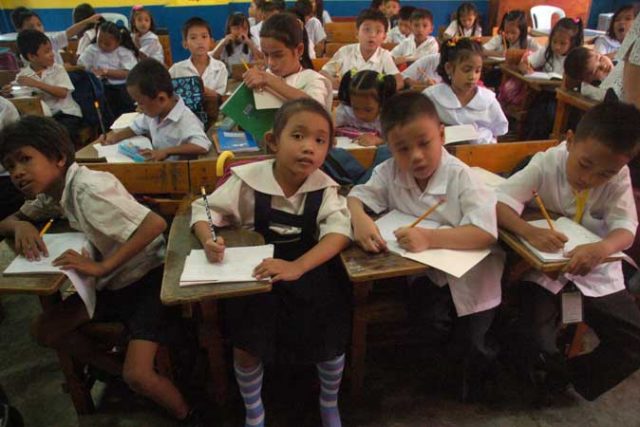
Even before the pandemic, there were worrying signs of an education crisis in the Philippines. The most widely disseminated news about the crisis came from a report of the Program for International Student Assessment (PISA) of the Organisation for Economic Co-operation and Development (OECD) in 2018 which showed Filipino students ranking the lowest among 79 countries in mathematics, science, and reading. In math and science Filipino 15-year-old students obtained 353 points and 357 points, respectively, against the 489 OECD average for both categories. The OECD 2018 PISA Country Note for the Philippines stated: “Fifteen-year-old students in the Philippines scored lower in reading, mathematics, and science than those in most of the countries and economies that participated in PISA 2018… No country scored lower than the Philippines and the Dominican Republic… Over 80% of students in the Philippines did not reach a minimum level of proficiency in reading, which is one of the largest shares of low performers amongst all PISA-participating countries and economies.” These tests started to be administered in 2000 and are repeated every three years. In the 2018 tests, the Philippines ranked second to the last (Dominican Republic) in math and science. In reading it ranked last.

In another international test, the 2019 report of the Trends in International Mathematics and Science Study (TIMMS), our Grade 4 students obtained the lowest scores in mathematics and science among the 58 countries involved in the study. There was a clear deterioration from 2013 to 2019. The Philippines scores decreased by 61 points (from 358 in 2003 to 297) and by 83 points (from 332 in 2003 to 249) in mathematics and science achievement, respectively. A third international test, the Southeast Asia Primary Learning Metrics (SEA-PLM) Program 2019 Main Regional Report revealed that only 10% of our Grade 5 students met the proficiency standards of reading, 2% writing, and 17% in mathematics. The same report showed that more than half of our Grade 5 students are taught by teachers who got training in the language of instruction from in-service trainings or none at all.

It is reasonable to expect that this poor performance of Filipino students will be exacerbated as a result of the public health emergency during the ongoing pandemic. Under the new normal, the many lockdowns have resulted in zero face-to-face interaction, and students have been forced to rely on learning materials to continue their education. This has resulted in a learning crisis in which poor content quality in modules and distance learning materials are prevalent. Because of widespread loss of employment and decreased incomes, especially among the C, D, and E households, some 2.7 million pupils have dropped out of school. Among those who have managed to continue schooling, a big number have no access to learning devices necessary for online instruction. To make matters worse, public expenditures on education and training have suffered budget cuts as these compete with health needs.

In a report to a joint committee of members of the Philippine Business for Education (PBEd) and some legislators, former Secretary of Education Armin Luistro painted a bleak picture of our pupils enrolled in basic education. Among learners, 52% are in poor health, 44% suffer from insufficient nutrition, and 37% lack sleep. In September 2020, during the height of the pandemic, 30.7% suffered from hunger. There are 1.9 million pupils who are wasted and 309,000 severely wasted. Among the learners, 65% are bullied, 26% are lonely, and 20% are unsafe. As regards the quality of teaching, 40% are absent teachers and 35 to 60% delay their classes. Because of paucity of learning materials, 20% of the pupils have to share textbooks.

These serious challenges to learning among our youth can be partly explained by the inadequacy of public expenditures on education. PISA estimates that government spending per learner in the Philippines is just 10% of the OECD average. In 2020, spending on education was 13.5% of the government budget, down from 17% in 2017. The ideal percentage is 20%. Among our peers, such as Thailand, Vietnam, and Malaysia, the equivalent percentage is over 20%. As regards spending on education as a percentage of GDP, the Philippines also lags behind our East Asian neighbors which spend five to 10% of GDP on public education, compared to our 3%. It is hoped that the increase in the incomes of the LGU units of some P225 billion in 2022 as a result of the Mandanas ruling will be substantially channeled to public education.

To be realistic, it will take herculean efforts for the Government to reach levels of expenditures on public education that approximate those of developed countries and even our East Asian peers. After all, quality education is just fourth in priority among the so-called Sustainable Development Goals (SDGs).

The first is No Poverty. The second is Zero Hunger. The third is Good Health and Well Being.

Quality Education is fourth.

It is understandable that more of the government’s limited budget will go to address the first three priorities. The most direct solution to poverty is investing more in agricultural and rural development, which also addresses the No Hunger goal if agricultural productivity is increased significantly through providing small farmers with more farm-to-market roads, irrigation systems, post-harvest facilities, and all the resources they need to get more productivity from their small holdings. Because of the experiences during the pandemic, it is reasonable to expect that expenditures on health will for the immediate future be given priority over education. It is, therefore, imperative that the Government mobilize the private sector to invest heavily in education.

What the Bureau of Internal Revenue (BIR) just did through RR 5021 is manifestly counterproductive. I fully agree with Senators Sonny Angara and Ralph Recto that the BIR made an erroneous interpretation of the CREATE bill by increasing the income tax rate on so-called propriety educational institutions that are run by stock corporations to 25% from the current 10%.

Private educational institutions, whether not-for-profit or for-profit, are providing what is known in economic parlance as a “public good.” When they educate an individual, they are not just benefiting the pupil or student but the whole of society. Education has significant external economies, that is, benefits to the entire society over and above the good done to the individual consumer of the service. In the language of the millennials today, we should consider an educational institution organized for profit as a “social enterprise.” Those who put up a for-profit educational institution are benefiting society in the same say that a non-profit school or university is doing. The only difference is that the former has a more practical way of sustaining its existence by generating some profit.

Those of us who put up not-for-profit schools have to be forever begging and soliciting donations, which eventually will cut down the taxes collected by the Government since most of these donations are tax deductible. There is also no guarantee that the not-for-profit institutions can sustain their operations by being completely dependent on the generosity of donors. The for-profit educational institutions make a significant contribution to society by delivering a public good in a sustainable way. They do this by generating some profits for the stockholders. In a society like the Philippines in which the Government is always short of funds to deliver public goods like public works, public health, and public education, the finance authorities should refrain from taxing schools organized for profit. In fact, I would even extend this reasoning to for-profit hospitals and other medical facilities, especially if they devote part of their facility to charity wards. These social enterprises are just taking the place of the Government that is unable to deliver all the public goods it has the obligation to provide to the general population.

To be continued.


Bernardo M. Villegas has a Ph.D. in Economics from Harvard, is Professor Emeritus at the University of Asia and the Pacific, and a Visiting Professor at the IESE Business School in Barcelona, Spain. He was a  member of the 1986 Constitutional Commission.

bernardo.villegas@uap.asia

Stepping up pandemic response and sustainability in mining communities

STOCK PHOTO | Image by David Hellmann from Unsplash

The COVID-19 pandemic induced the sharp decline in economic activities that crippled businesses, widened our pre-existing social inequalities, and inflicted hardship on the most vulnerable. Despite these, the pandemic also presented an opportunity to assess untapped resources that can be harnessed to move forward sustainably and inclusively.

Before the pandemic, businesses had already reinvented themselves to better balance economic goals and prevailing issues such as public health, climate resilience, and environmental stewardship. Amid the pandemic, businesses have gone beyond their core operations to provide unsolicited assistance to the most vulnerable communities of the country.

In remote and isolated areas, the Philippine mining industry’s COVID-19 responses have been quick and impactful. The mining companies’ deep-rooted relationship with the members of the communities, as well as their financial capabilities and technical expertise, enabled immediate and effective action on their communities’ concerns.

On public health, large-scale metallic mining companies swiftly realigned their funds and spent over P380 million in COVID-19 responses last year, benefiting over 1.1 million households and nearly 300,000 frontliners all over the country. The companies also constructed new or repurposed their existing facilities to serve as isolation and treatment areas.

For example, Philex Mining Corp. (PMC) and its subsidiary Silangan Mindanao Mining Co., Inc. (SMMCI) supported the communities and local government of Benguet and Surigao del Norte, respectively. The companies supplied much-needed medicines and financial assistance to community members and employees. Similarly, to aid medical frontliners, personal protective equipment or PPEs were given to different local hospitals of Benguet, Baguio, and Surigao del Norte.

In Nueva Vizcaya and Quirino, despite being non-operational since July 2019, OceanaGold Phils., Inc. built a P10.8-million first-class isolation facility that can accommodate multiple people. The facility comes complete with medicine for patients with respiratory problems and equipped with oxygen and rapid antigen test kits.

Similarly, Nickel Asia Corp. (NAC) and its affiliates Cagdianao Mining Corp. (CMC) and Taganito Mining Corp. (TMC) donated P18 million to the Philippine National Red Cross to build a molecular testing laboratory in Caraga. TMC also donated some rapid anti-body test kits (RATs) to help detect COVID-19 cases in Surigao del Norte.

To boost the national and local government’s COVID-19 vaccination programs, mining companies will also procure the vaccines, not just to employees, but also for their host and neighboring communities of their mining sites, all of which are in remote areas.

Mining companies did not only provide appropriate health protection to their employees and communities, but also provided aid to the local governments in laying and implementing the necessary steps to ensure their long-term sustainable economic recovery.

On the environment, through the Chamber of Mines of the Philippines’ (COMP) adoption of the Toward Sustainable Mining (TSM) principles and practices, mining companies address the concerns on environmental rehabilitation and conservation. TSM is a set of tools and indicators to drive performance and ensure that key mining risks are managed responsibly. It also aims to enable mining companies to meet society’s needs for minerals, metals, and energy products in the most socially, economically, and environmentally responsible way.

As frontliners in magnifying the need to rehabilitate and restore the forest, the mining sector, through the Mining Forest Program, was able to plant 36.87 million seedlings in mined-out and other areas as of May 31, 2020, and this is with an impressive survival rate of 91.58%.

On climate resilience, Filminera Resources Corp. and PhilGold Processing and Refining Corp. distributed food to almost 400 families in Masbate who were among the hardest hit by typhoons Rolly and Ulysses. The companies also donated P5 million to help rebuild damaged houses and distribute relief goods following the 6.6 magnitude earthquake in Masbate.

On development, the mining sector provides underdeveloped areas an opportunity to prosper in a new environment that benefits all linkages needed to support mining projects. Mining investments create a multiplier effect that cascades to the national and local economies in terms of taxes, infrastructure development, employment, and linked industries. Taken together, they can certainly make a serious dent in the government’s poverty alleviation agenda.

In fact, in 2016, data from the American Chamber of Commerce of the Philippines, shows that pending foreign direct investments (FDI) for mining in the Philippines amount to a total of $23 billion. Notably, these investments are in far greater number than the 2017 FDI of $10.26 billion, 2018 FDI of $9.95 billion, and 2019 FDI of $7.65 billion.

Now, with the lifting of the moratorium on mining permits, we are one step closer to effectively reaping the untapped economic potential of the country’s vast mineral endowments. However, to fully achieve this and attract worthy investments, the mining industry must adopt, in full-scale, the TSM. At the same time, inconsistent and ambiguous regulatory hindrances such as the open-pit mining ban, a misguided policy that is not supported by science, should be resolved. It is also imperative that the legitimate mining industry, despite being unfairly suppressed for decades by an unstable policy regime, go beyond their mandated responsibilities and practically becomes the government’s proxy in developing infrastructure and eventually a thriving mining community where there was zero economic activity. Definitely, there is a need for a balanced partnership between the government and the mining sector, a strategy that would reflect on a more equitable, inclusive, and sustainable future.


Victor Andres C. Manhit is President of the Stratbase ADR Institute.

What to do about lower Philippine remittances

PHILIPPINE STAR/ MIGUEL DE GUZMAN

BEFORE THE coronavirus pandemic, remittances to the Philippines grew steadily each year for almost two decades. But the COVID-19-led global economic crisis has seen less money being sent home. While the situation is improving, such transfers remained at or below their pre-pandemic levels in recent months.

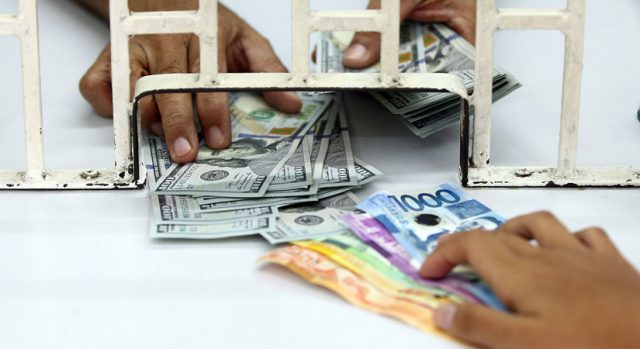
Every month, millions of Filipino households receive money from family members working abroad. Overseas Filipinos send around $30 billion in remittances (P1.5 trillion) home each year, though official statistics likely underestimate their actual amount. This money is an important lifeline for many families, used to finance daily consumption such as food and household needs, educational and medical expenses. Some households even manage to save a portion of the remitted amounts.

Remittances poured into the Philippines during previous economic crises, such as the Asian Financial Crisis in 1997-98. But the current health and economic crisis has been different. It has affected every part of the world, limiting the benefits attributed to the geographic diversification of workers. The crisis has impacted the health of migrant workers, and inflicted widespread job losses as many businesses had to suspend operations or shut down, and host countries tried to preserve jobs for locals. And, with travel restrictions and closed borders, new deployment has become more difficult.

Unlike previous crises, the Philippine peso strengthened against the US dollar over the course of the pandemic. With a strong peso, the same amount remitted in foreign currency yields comparatively lower amounts when converted to peso. Indeed, the fall in remittances since March 2020 has been considerably worse when measured in peso than in US dollar.

Given the negative effects of the pandemic on workers globally, it is remarkable that remittances to the Philippines have held up as well as they have. Many observers had forecast a much deeper fall. Three possible reasons come to mind as to why the data surprised on the upside.

First, it is a reminder of the strength of the family bond of the Filipino diaspora, most of whom chose to go abroad to earn higher incomes so that they can provide better for their families. Overseas Filipinos send money home whenever possible.

Second, the data may not be telling the full story. Remittances that would usually have been brought into the country in person — and therefore not recorded in official data — had to be sent through formal channels such as banks or money transfer operators as borders were closed. One indication of this phenomenon is the outsized increase of remittances sent through the United States last year, home to many correspondent banks and money courier offices.

Third, Filipinos returning to the Philippines because of lost jobs, the uncertain health situation in their host countries, or fear of border closings, could have sent all their savings home if they were uncertain about returning overseas for work. This situation would have led to a temporary boost in remittances.

While the overall drop in remittances was less than expected, the slowdown would still have lasting economic impacts. The consequences will be felt especially on the household level, with limited effects for some, but a total loss of income for others. Because the largest part of remittances is spent instead of saved, the slowdown would amplify weak domestic consumption, pulling down an already frail economy. Some households could be out of income for daily living expenses, intensifying economic hardships, raising inequality and poverty, and lowering investment in human capital such as education and health.

Policy should address the impacts from the remittance slowdown, especially at the household level. While Philippine authorities have already provided some assistance to displaced overseas Filipinos, further policy considerations could include expanding the coverage of social safety nets, strengthening domestic labor markets to absorb and integrate returning workers, and supporting the upskilling and reskilling of returning and prospective candidates to align skills with the demands of post-pandemic economies.

The deployment of overseas Filipinos — and with it the recovery in remittances — will take time to return to previous levels. Temporary factors will taper off, labor markets around the world will take time to recover, closed borders will continue to deter migration, and lost deployment opportunities will not be immediately offset. At the same time, the economies of some host countries are starting to rebound, amid falling virus cases and good vaccination progress.

Overseas Filipinos will continue — as they have in past crises — to play an important role in helping the Philippines overcome the current economic crisis, but there will be gaps which can be filled by the government in the form of mass deployment of vaccines, fiscal support for those left behind, and policy measures to adjust to post-pandemic norms. 


Anne Oeking is an economist in the Regional Surveillance team at the ASEAN+3 Macroeconomic Research Office in Singapore.

Regulating bayanihan

PHILIPPINE STAR/ MICHAEL VARCAS

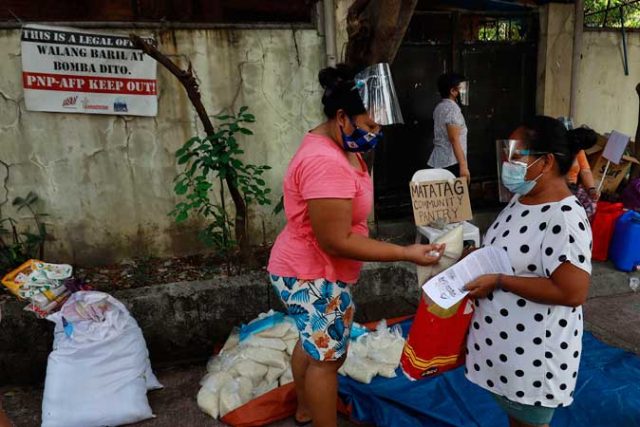
When the President announced stricter quarantine measures in the National Capital Region and its nearby provinces last March, people were mandated to observe strict home quarantine thereby restricting movement to accessing essential goods and services.1 The stricter quarantine measure also meant the limitation of work to permitted industries, resulting in an unexpected halt of wages to most. The uncertainty coming from the sudden suspension of work and influx of income gave rise to the individual-led initiative — the Maginhawa Community Pantry, a movement encouraging people to give goods based on what their means permit and to get goods based on what their needs require. Taking inspiration from the Maginhawa Community Pantry and guided by the same principle, several other community pantries have sprouted all over the country. It was bayanihan (community spirit) in practice. While novel, the initiative still sparked disagreements on the necessity for its regulation.

Laws intending to regulate activities for charitable and public welfare purposes exist in this jurisdiction considering that the act of solicitation may be abused by unscrupulous individuals. Verily, in Centeno v. Villalon-Pornillos, G.R. No. 113092, Sept. 1, 1994, the Supreme Court viewed that “solicitation of contributions under the guise of charitable and benevolent purposes is grossly abused” is a matter of common knowledge.

Under the Solicitation Permit Law, any person, corporation, organization, or association desiring to solicit or receive contributions for charitable or public welfare purposes shall first secure a permit from the Department of Social Welfare and Development (DSWD).2 Pursuant thereto and to its power to regulate fund drives, public solicitations and donations for charitable or welfare purposes,3 the DSWD issued Memorandum Circular No. 017-14 providing the Revised Omnibus Rules and Regulations on Public Solicitation to regulate any activity intended to generate funds, or goods and assistance from the public for charitable or public welfare purposes4 by requiring the individual or entity to secure a permit from the DSWD upon the submission of requirements.5 Individuals and entities issued a solicitation permit are mandated to strictly adhere to the principles of conduct in solicitation activities by prioritizing the best interest of the beneficiaries, being accountable for the solicitation of charitable and public funds, and respecting the integrity, privacy, and pride of their clients and patrons, among others.6 Pursuant to these principles, the individual or entity granted the solicitation permit is required to maintain an accurate and detailed book of accounts,7 and to submit to the DSWD a fund utilization report upon the expiration of the authority to conduct the solicitation.8 Notably, solicitation activities undertaken only in one city or municipality are exempted from the requirement to secure a permit.9

Likewise granted the authority to regulate activities for charitable and welfare purposes are city and municipal mayors. Under the Local Government Code, city and municipal mayors shall have the power to issue permits, without need of approval from any national agency, for the holding of activities for any charitable or welfare purpose.10

Pursuant to the local chief executive’s power to regulate activities for charitable or welfare purposes, guidelines were set in place by the local government of Quezon City, the origin of the first-known community pantry in the country, through a Memorandum dated April 23, 2021. Thus, a person or group intending to operate a community pantry is strongly encouraged to give written notice and to coordinate with the barangay where the pantry is located.11 While giving notice is encouraged, it is expressly stated that no barangay or city government permit or clearance shall be required for the pantry to operate provided the community pantry provides food to the public for free.12 Law enforcement intervention is likewise discouraged except in cases of manifest breach of health or safety protocols.13 Likewise emphasized is the need to strictly adhere to COVID-19 health protocols which includes wearing of face masks and face shields as well as the implementation of physical distancing among the persons in a queue.14

In the same vein, in a televised broadcast, the Secretary of the Department of the Interior and Local Government, possessing the power to establish and prescribe rules, regulations and other issuances and implementing laws on the general supervision of local government units and on the promotion of local autonomy,15 stated guidelines in organizing a community pantry which, among others, include compliance with law and ordinance and observance of minimum health protocols. Items such as alcohol, cigarettes, and illegal items are not to be included in the items to be distributed in a community pantry. Lastly, to shed light on the regulation of the community pantry, the Department of the Interior and Local Government Secretary clarified that while a permit is not required, coordination with the local government unit shall be observed to ensure compliance with local ordinances. What is clear in the guidelines imposed by the national and local government is that there should be observance of minimum health protocols.

The novelty of the community pantry therefore led to the sentiment that it should not be subject to regulation in as much as there is no law specifically regulating it.

The power to regulate any activity rests primarily upon the Congress pursuant to the State’s police power. Police power is the authority to enact legislation that may interfere with personal liberty or property in order to promote general welfare, or in the negative, the inherent and plenary power in the State which enables it to prohibit all that is hurtful to the comfort, safety, and welfare of society.16

For there to be a valid exercise of police power, there must be a lawful subject and the power must be exercised through lawful means.17 Not only must it be shown that the interests of the public in general requires interference by the State18 but also that the means employed must be reasonably necessary for the accomplishment of the purpose and must not be unduly oppressive of private rights.19 Thus, in the absence of a concurrence of a lawful subject and lawful means, a measure should be considered an arbitrary intrusion on private rights20 violative of the constitutional right to due process which guarantees that no person shall be deprived of life, liberty, or property without the due process of law.21 As applied, the absence of a law governing the concept of a community pantry restricts the imposition of regulations on the activity. Should it appear that the activity requires regulation by the State, the measures employed must be commensurate with the purpose for which the activity is regulated. Besides, whether or not the community pantry is a proper subject of regulation is a matter best left to the Congress to decide.

The concept of a community pantry is laudable in granting immediate relief to people greatly affected by the negative effects of the pandemic. While the intention to regulate the activity is being done with noble intentions, the regulation of such efforts have the ability of hindering relief to those in need of immediate assistance. In these unprecedented times, compassion must tempter the harshness of the law without however compromising public health. The country is in the middle of a pandemic after all.


1 Omnibus Guidelines on the Implementation of Community Quarantine in the Philippines with Amendments as of April 15, 2021, Sec. 3(2).

2 PRES. DECREE NO. 1564, series of 1978, Sec. 2.

3 EXEC. ORDER NO. 292, Book IV, Title XVI, Chapter 1, Sec. 3(13).

4 DSWD Memorandum Circular No. 017-014, Sec. 4.17.

5 DSWD Memorandum Circular No. 017-014, Sec. 6.1.2.

6 DSWD Memorandum Circular No. 017-014, Sec. 5.

7 DSWD Memorandum Circular No. 017-014, Sec. 10.8.

8 DSWD Memorandum Circular No. 017-014, Secs. 10.4 and 10.5.

9 DSWD Memorandum Circular No. 017-014, Sec. 6.2.1.

10 REP. ACT NO. 7160 (1991), as amended, Secs. 444 and 455.

11 Office of the Mayor of Quezon City, Memorandum dated April 23, 2021, Clause No. 1.

12 Office of the Mayor of Quezon City, Memorandum dated April 23, 2021, Clause No. 1.

13 Office of the Mayor of Quezon City, Memorandum dated April 23, 2021, Clause No. 8.

14 Office of the Mayor of Quezon City, Memorandum dated April 23, 2021, Clause No. 2.

15 EXEC. ORDER No. 292, Book IV, Title XII, Chapter 1, Sec. 3.

16 The Provincial Bus Operators Association of the Philippines et al. v. Department of Labor and Employment et al., G.R. No. 20275, July 17, 2018.

17 Kilusang Mayo Uno v. Aquino III, G.R. No. 210500, April 2, 2019.

18 City of Manila v. Laguio, Jr., G.R. No. 118127, April 12, 2005.

19 White Light Corp. et al. v. City of Manila, G.R. No. 122846, Jan. 20, 2009.

20 Ibid.

21 1987 CONST., Art. III, Sec. 1.

This article is for informational and educational purposes only. It is not offered and does not constitute legal advice or legal opinion.


Kris Sarah M. Jeruta is an Associate of the Litigation and Dispute Resolution Department of the Angara Abello Concepcion Regala & Cruz Law Offices or ACCRALAW.

(632) 8830-8000

kmjeruta@accralaw.com

Indonesia’s COVID-19 situation nears ‘catastrophe’ — Red Cross

REUTERS
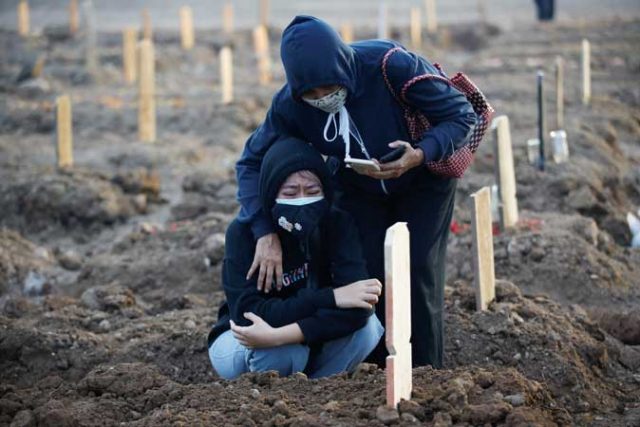
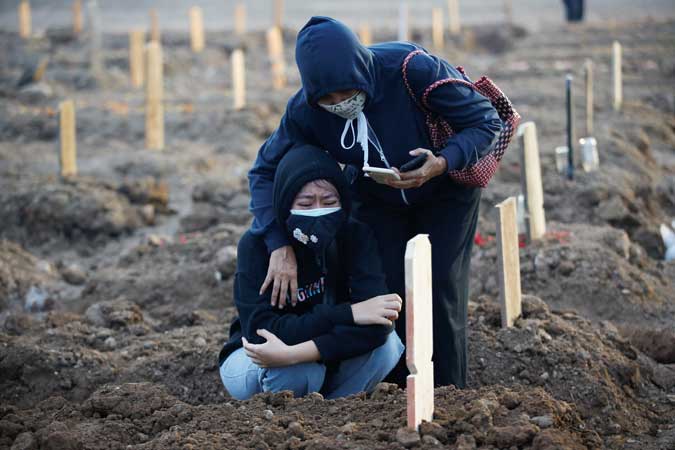
A girl mourns after the funeral of her 56-year-old father who passed away due to coronavirus disease (COVID-19), at the burial area provided by the government for COVID-19 victims, in Jakarta, Indonesia, June 28. — REUTERS/WILLY KURNIAWAN

JAKARTA — Indonesia’s coronavirus disease 2019 (COVID-19) surge is on the edge of a “catastrophe” as the more infectious Delta variant dominates transmission and chokes hospitals in Southeast Asia’s worst epidemic, the Red Cross said on Tuesday.

Indonesia has reported record daily COVID-19 infections of more than 20,000 in recent days, in a new wave of infections fueled by the emergence of highly transmissible virus variants and increased mobility after the Muslim fasting month.

“Every day we are seeing this Delta variant driving Indonesia closer to the edge of a COVID-19 catastrophe,” said Jan Gelfand, head of the Indonesian delegation of the International Federation of Red Cross and Red Crescent Societies (IFRC), urging better vaccine access globally.

Hospitals in several designated “red zone” areas have reported overcapacity, including the capital Jakarta, with its isolation beds 93% occupied as of Sunday.

“Hospitals are full because of the case surge caused by mobility and loosening health protocol adherence, worsened also by the Delta variant,” said senior health ministry official Siti Nadia Tarmizi, when asked about the IFRC’s assessment.

The Delta variant was first identified in India and has been blamed for big spikes in infections in many countries.

Indonesia is banking on mass vaccinations as a means of tackling the virus, but only 13.3 million of the 181.5 million targeted for inoculation have received the required two doses since January.

Indonesia’s health minister is leading a push for stricter controls as infections surge to unprecedented levels, sources familiar with government discussions have told Reuters.

Citing unnamed sources, The Straits Times newspaper on Tuesday reported the government will tighten restrictions starting on Wednesday, prohibiting restaurant dining and requiring negative polymerase chain reaction tests for domestic air travel.

Asked for confirmation of that, Ms. Nadia of the health ministry said: “Wait for the official announcement.” — Reuters

Vietnam economy picks up in Q2, but virus could weigh on outlook

REUTERS
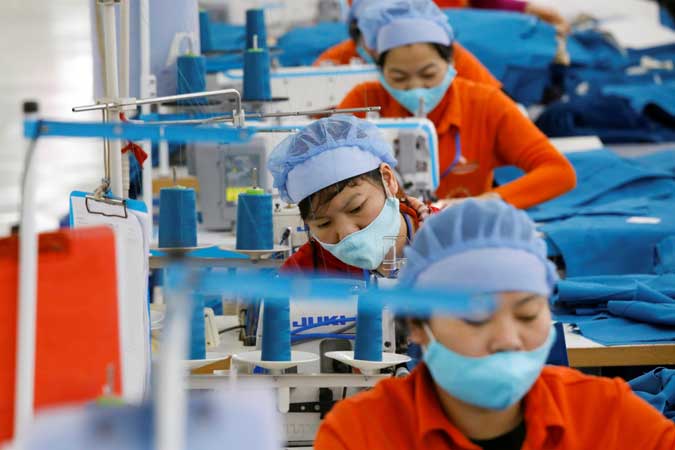
WOMEN work at Hung Viet garment export factory in Hung Yen province, Vietnam, Dec. 30, 2020. — REUTERS

VIETNAM’s economic growth accelerated in the second quarter (Q2) on resurgent global demand, even as the country’s worst outbreak of the pandemic temporarily shuttered key manufacturing hubs.

Gross domestic product (GDP) rose 6.61% in the second quarter compared to a year earlier, up from a revised 4.65% in the first quarter, the General Statistics Office said Tuesday. That compared to the median estimate of 7.2% in a Bloomberg survey of six economists.

Growth picked up on increases in industrial output as demand recovered in global markets, and as favorable weather boosted agricultural products, Nguyen Thi Huong, head of the General Statistics Office, said in a briefing in Hanoi. Increased government spending also helped drive the expansion, she said.

The country’s benchmark stock index was up 0.4% at the noon break. The dong currency was stable, trading at 23,023 per dollar as of 12:29 p.m. local time, according to prices from banks in Hanoi compiled by Bloomberg.

Vietnam was successful at limiting infections during the early months of the pandemic, but an outbreak that began in late-April forced the temporary closure of industrial parks housing key electronics manufacturing hubs. Tenants included units of Foxconn Technology Group and suppliers of Samsung Electronics Co. and Apple, Inc.

“Looking past the jump in year-on-year growth due to a weak base for comparison, GDP data suggest that Vietnam is facing a heavy economic toll from its efforts to control the virus,” Gareth Leather, senior Asia economist at Capital Economics Ltd., wrote in a research note. “With sporadic outbreaks continuing, the economy is likely to suffer further in the months ahead.”

The economy expanded 5.64% for the first six months of the year, below the government forecast of 5.8% growth, which was already revised down from January’s 6.22% outlook for the first half. The government expects GDP to grow 6%-6.5% for the full year.

The economy would need to expand at a 6.3% clip over the next six months to reach 6% growth for the full year, said Le Trung Hieu, head of the GDP dept. in the statistics office.

“The 6% target is challenging” but Vietnam should be able to meet it, with no need to revise the target downward, he said. “The government is stepping up with measures to boost growth in the second half.”

The State Bank of Vietnam said last week it will hold policy rates stable in the second half of the year and pursue flexible monetary and currency policies, as it remains vigilant about rising inflation. The monetary regulator is seeking to shore up the economy amid Vietnam’s worst coronavirus outbreak and slow vaccine rollout.

Consumer prices rose 2.41% in June from a year earlier. The government aims to cap average inflation at 4% this year.

“Rising inflation reduces the likelihood of further interest rate cuts, in our view. We also do not expect rate hikes, despite improving economic and credit growth,” Standard Chartered Plc economist Tim Leelahaphan said in a research note. “However, the possibility of a rate hike may gradually emerge if inflation and growth accelerate faster than expected.” — Bloomberg

Mixing Astra and Pfizer shots creates strong immune response

PHILIPPINE STAR/ MICHAEL VARCAS

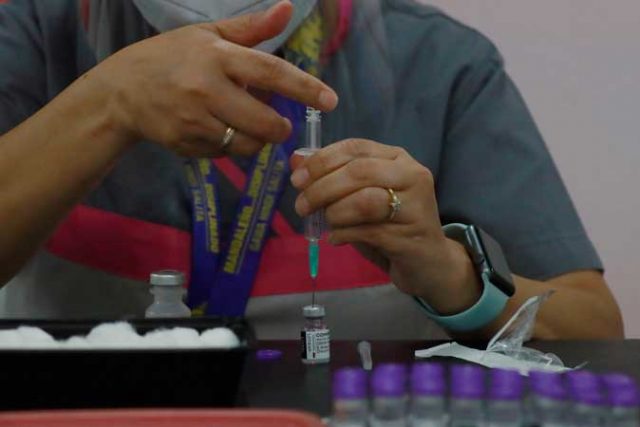
MIXING doses of COVID-19 vaccines from Pfizer, Inc. and AstraZeneca Plc creates a strong immune response, according to results from a University of Oxford study, a finding that could enable greater flexibility in the use of scarce supplies.

A mixed schedule of the Pfizer shot followed by the Astra vaccine, and vice versa, resulted in high concentrations of antibodies against coronavirus disease 2019 (COVID-19) when given four weeks apart, researchers reported Monday in the Lancet medical journal.

Doctors and public health officials have been analyzing various ways to extend vaccine supplies — by delaying the time between first and second doses, for example — as many low- and middle-income nations try to figure out how to cope with vaccine scarcity. The ability to mix doses might help countries with supplies of different vaccines assist one another.

The order in which people got the vaccines affected the results. Astra followed by Pfizer produced higher levels of immune antibodies and T-cells than Pfizer followed by Astra.

Both of the mixed vaccine schedules summoned more antibodies than two doses of Astra, the study found. The best T-cell response came from Astra followed by Pfizer, and the highest antibody response was seen from two doses of Pfizer. 

“This argues for flexibility in use of these schedules, where local circumstances require it,” Matthew Snape, an Oxford professor who led the trial, said in a press briefing. “This is giving everybody options.”

Shots of AstraZeneca’s vaccine are currently spaced out by 12 weeks in the UK, which broadens accessibility and appears to boost vaccine effectiveness. Also, a study from Oxford released Monday showed that gapping shots by as long as 10 months improved responses even further. Results from a test of the mixed doses at 12-week intervals will be available “within the next month or so,” Mr. Snape said at the briefing.

The trial involved 830 volunteers age 50 and over and tested the vaccines only against the variant first identified in Wuhan. Further testing against additional coronavirus strains could be useful for informing which vaccines and combinations to use in potential winter booster shots, Mr. Snape said. Further research from the program will look at combining vaccines from Moderna,  Inc. and Novavax, Inc.

Last month, early research from the study found that mixing doses of Pfizer and Astra increased side effects, such as fatigue and headaches. However, the findings from the Lancet study said that these were short-lived. — Bloomberg

SFO offers free COVID-19 jabs to passengers of any nationality

Image via Håkan Dahlström/CC BY 2.0/Wikimedia Commons

Passengers arriving at and departing from San Francisco International Airport (SFO) can get a free jab of the single-dose Janssen (Johnson & Johnson) coronavirus disease 2019 (COVID-19) vaccine, as part of the airport’s vaccination program. 

“All individuals 18 years of age and older, including arriving and departing passengers of any nationality or country of residence, are welcome!” said the SFO website. 

Qualified individuals can get the vaccine at the SFO Medical Clinic, Monday to Friday, 8 a.m. to 5 p.m.   

According to the SFO website, eligible passengers must be at least 18 years of age and older and have no previous history of receiving the COVID-19 vaccine by a different manufacturer. Passengers who have received any monoclonal antibodies or convalescent plasma to treat COVID-19 are also advised to wait at least 90 days before getting the vaccine to avoid interfering with previous treatments. Those severely or immediately allergic to any ingredient of the vaccine are likewise strongly advised not to receive their shots to avoid complications.   

More information is available at www.flysfo.com/travel-well/vaccination-site-sfo or www.flysfo.com/ph/pagpapabakuna.  Walk-ins will be accepted on a first come, first-served basis. 

Procter & Gamble Philippines: A force for good, a force for growth

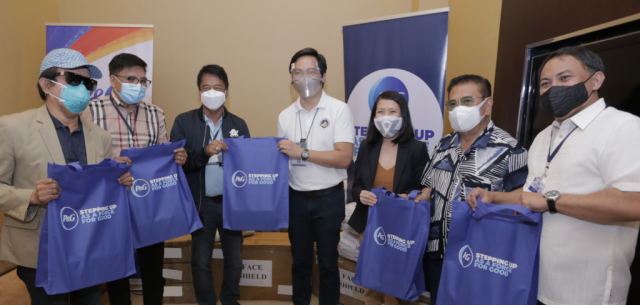
IATF-EID accepts P&G hygiene product donations with representatives from the League of Municipalities of the Philippines Hon. Mayor Valentino Patron of Batangas, Hon. Mayor Frederick Vida of Cavite, Hon. Mayor Edgar Ramos of Laguna, Hon. Mayor Ramon Preza of Quezon, Hon. Mayor Ceasar Ynares of Rizal, President of League of Municipalities of the Philippines Chavit Singson, Cabinet Secretary and IATF Co-Chairperson Karlo Nograles, and P&G Philippines’ Country Government Relations Head Atty. Mimi Malvar.

During times of darkness does light shine the brightest. The bayanihan spirit during the COVID-19 pandemic has given rise to countless volunteer groups, support campaigns for healthcare workers on the frontlines, and even community pantries to support the most vulnerable. Organizations like the World Bank pledged support for local economic development and maintain its focus on vulnerable and marginalized groups, including indigenous peoples and women.

The pandemic also saw massive collaborations between the public and private sector. Numerous companies from the private sector are working hand in hand with the government to aid communities most affected by the pandemic and implement the vaccination program, as with the Taskforce T3 public-private sector pandemic partnership.

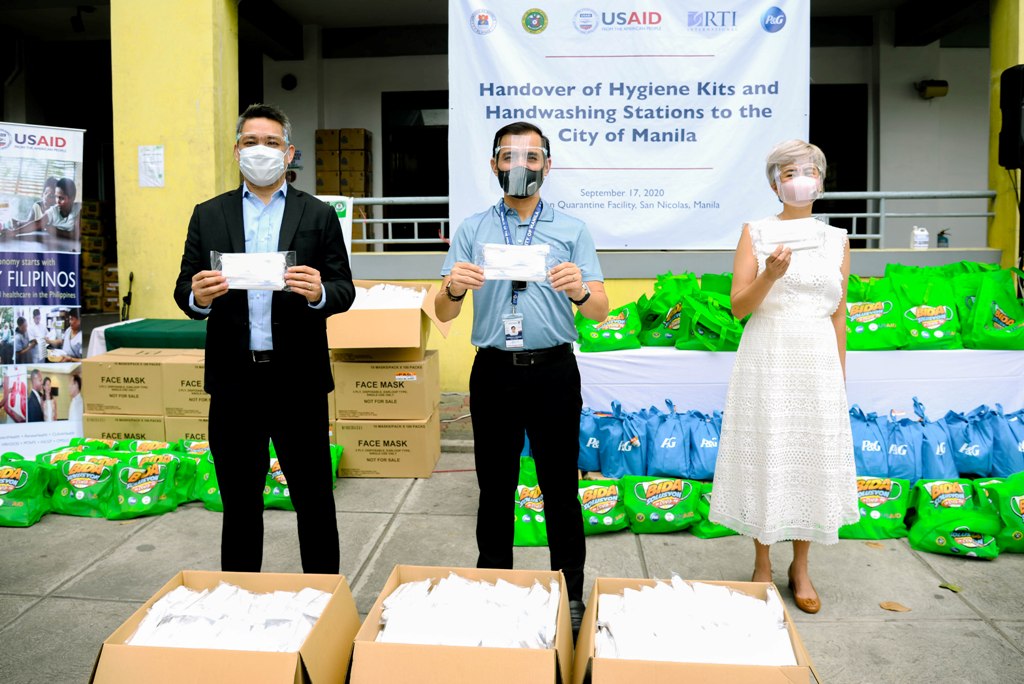
P&G donates medical grade face masks to city of Manila

As a company relied on by many Filipinos for their health and hygiene needs, Procter & Gamble Philippines knows the significance of the role it plays in helping the country amid the crisis. The company behind trusted names like Safeguard, Ariel, and Head & Shoulders, is doing its part to support Filipinos during the crisis, especially those in the frontlines of the pandemic.

“Big companies play a pivotal role during crises because they are usually in a better position to weather crises, lead positive action and step up to be a force for good. We have business resources and technical expertise to help our countrymen and the country. It makes it possible that even in a crisis, companies like ours can care for our employees, be partners with the government, and serve our consumers,” P&G Philippines President and General Manager Raffy Fajardo said in an interview.

A purpose focused on people

Even as millions of Filipinos were directly affected by COVID-19, millions more were vulnerable and left without an income due to the economic impact of the consequent community quarantines. As a top multinational employer, P&G recognizes its responsibility over the welfare of the Filipinos it employs.

This is why P&G ensured job security and employment at the onset of the pandemic, keeping its employees at full pay while continuing to hire over 500 people in last year. For P&G, their people will always be their #1 priority.

Taking care of its people also allows P&G to keep sight of their mission during the crisis: continuing to serve the needs of consumers and improving Filipinos’ daily lives through its brands and the benefits they provide.

“Antibacterial soap is a basic daily health and hygiene essential, but more so over the past year. When Safeguard demand surged unexpectedly at the onset of the ECQ, we worked very hard to provide this basic essential as quickly as possible because handwashing with soap is the easiest and cheapest habit anyone can do to prevent getting sick,” said Mr. Fajardo.

Recognizing the criticality of providing quality hygiene products to keep families and communities safe, P&G not only made sure their products were available for its everyday consumers but also donated thousands of hygiene kits to government agencies like the Department of Health, Inter-Agency Task Force for the Management of Emerging Infectious Diseases (IATF), Philippine National Police and the Metropolitan Manila Development Authority, as well as local government units in NCR and Cabuyao, and organizations like the Philippine Red Cross. It was also the biggest private company partner of the DoH for the nationwide prevention campaign “BIDA Solusyon sa COVID-19.” P&G lent its manufacturing, marketing and advertising expertise and resources to produce educational materials. It also constructed 30 handwashing stations in public spaces and areas around Metro Manila with Manila Water Foundation under its #SafeWash movement.

“Especially during disasters and challenging times such as this COVID-19 pandemic, our brands are uniquely positioned to help provide the comforts of home, health, and hygiene. We are committed to understand what our consumers and communities need, the barriers they have, and to provide innovative solutions for them,” Mr. Fajardo said.

Supporting Filipinos through the pandemic and beyond

Right at the onset, when the country was still caught unaware by the pandemic, P&G had seen to the support of Filipino healthcare workers. Even before the IATF required face masks in public, the company dedicated its manufacturing technical expertise to repurpose its plant to produce medical-grade face masks for healthcare workers on the frontlines.

This gave P&G enough equipment to safeguard its employees and ensure their safety while they continued to serve essential health and hygiene products for the country. Since then, the company has donated around three million face masks to the government and organization partners.

This June, P&G is continuing its support of frontliners through the second wave of major contributions. This Force for Good effort will support hospital frontliners against COVID-19 in hospitals like the Philippine General Hospital (PGH), Dr. Jose Rizal Memorial Hospital, East Avenue Medical Center, Lung Center of the Philippines, and hospitals in Cabuyao.

On top of hygiene products like Safeguard soaps, Vicks First Defence, haircare and laundry brands, PPEs, and face masks for frontliner use, P&G is donating funds to support the construction of urgently needed decontamination showers and the COVID-19 interim ER sewer ejection system of the PGH.

Vicks’ newest innovation that helps to stop a cold by trapping and inactivating cold virus, donated to hospitals to help protect frontliners and staff

The company will also support the efforts of the Philippine Red Cross in their Emergency Field Hospital in Lung Center and will send community pantry care packs and hygiene kits to World Vision Philippines.

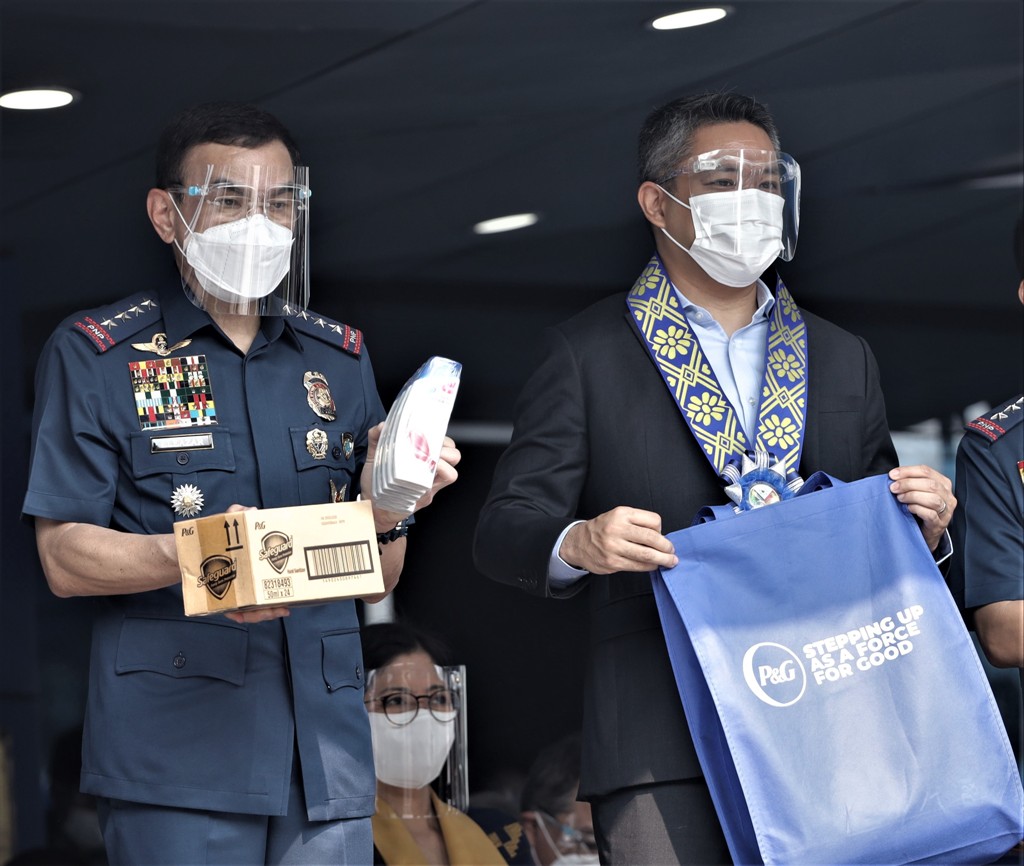
P&G Philippines President and General Manager Raffy Fajardo turning over thousands of P&G face masks and hygiene kits with Head & Shoulders and Safeguard to PNP Chief Police General Guillermo Eleazar

“We are one with the country in not just fighting COVID but in recovering even after it. We do this by continuously investing in and supporting people, the economy, and the country in the good times, but most especially during the bad so we can weather the crisis together. This is how P&G is stepping up to be a Force for Good and a Force for Growth,” Mr. Fajardo added.

P&G has procured and committed vaccines for all their employees and dependents who choose to get vaccinated and will continue its capital investments with the construction and expansion of P&G’s distribution center even in the challenging landscape.

These unprecedented level of investments for their corporate citizenship programs is “the right thing to do” for P&G.

“Doing good uplifts communities and the country. It creates a cycle of good and growth where everybody — our employees, consumers, the country, and our business — thrives,” Mr. Fajardo concluded

Leisure & Resorts World Corporation sets schedule of its stockholders’ meeting on July 30

Are Chinese COVID-19 shots effective against the Delta variant?

BEIJING – Many countries from China to Indonesia and Brazil rely heavily on Chinese vaccines to inoculate their people against COVID-19, but there are growing concerns about whether they provide enough protection against the Delta variant, first identified in India.

Below are views from China’s health experts about the effectiveness of home-grown vaccines against the Delta, which is becoming the globally dominant variant, and virus preventive measures China is taking.

DO CHINESE VACCINES WORK AGAINST DELTA?

China has not provided vaccine effectiveness results against the variant based on large-scale data in clinical trials or real-world use, nor offered detailed information from lab tests, but Chinese experts are urging people to get inoculated as soon as possible.

The lack of detailed data on the Chinese vaccines against the Delta has hobbled any meaningful peer reviews by foreign experts.

Researchers found that Chinese vaccines are somewhat effective in reducing the risk of symptomatic and severe cases caused by Delta, Zhong Nanshan, a epidemiologist who helped shape China’s COVID-19 response, told reporters.

It is based on analysis of infections in Guangzhou city, and Zhong told Reuters the results are preliminary and the sample size is small.

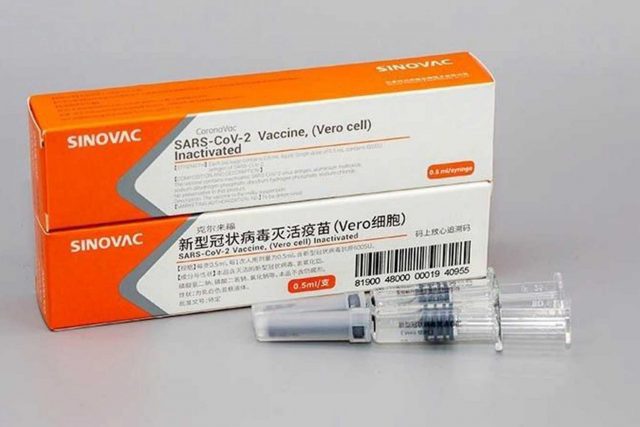
Sinovac spokesman Liu Peicheng told Reuters preliminary results based on blood samples from those vaccinated with its shot showed a three-fold reduction in neutralizing effect against the Delta.

He said a booster shot following the two dose-based regimen could quickly elicit stronger and more durable antibody reaction against the Delta. However, he didn’t provide detailed data.

Antibodies triggered by two Chinese vaccines are less effective against the Delta compared with other variants, Feng Zijian, former deputy director at the Chinese Center for Disease Control and Prevention, told state media last week.

Feng did not provide details including the name of the two vaccines.

The shots could still offer protection, since none of those vaccinated in southern Guangdong province, where China’s first cases of the Delta variant were found, developed severe symptoms. All severe cases are from unvaccinated people.

Jin Dong-Yan, a virologist at the University of Hong Kong, said Feng’s comment alone is not enough to back up the claim that Chinese vaccines are effective against severe cases, as more data is needed.

Indonesia, which has reported record daily cases recently due to a surge in the Delta variant, saw hundreds of medical workers infected by the COVID-19 despite being vaccinated with Sinovac’s shot, officials said earlier this month.

It was not immediately clear, however, if the Indonesian medical workers were infected by the Delta variant.

HOW DO THEY COMPARE WITH WESTERN SHOTS?

A study by Public Health England (PHE) found in May the Pfizer-BioNTech vaccine was 88% effective against symptomatic disease from the Delta two weeks after the second dose.

That compared with 93% effectiveness against the Alpha variant, first identified in Britain.

Two doses of the AstraZeneca vaccine were 60% effective against symptomatic disease from the Delta compared with 66% effectiveness against the Alpha, PHE said.

There is no substantial data showing how protective Johnson & Johnson’s single-dose COVID-19 vaccine is, and U.S. infectious disease experts are weighing the need for booster shots using mRNA vaccines.

HOW SEVERE WAS THE GUANGDONG OUTBREAK?

Guangdong, China’s major manufacturing and export hub, became the country’s biggest cluster of Delta cases since reporting its first locally transmitted Delta variant infection in May.

The Delta infections included 146 cases in Guangdong’s capital Guangzhou and several cases from the southern tech hub of Shenzhen and nearby Dongguan city.

No new domestic transmissions of any variant have been reported in the province from June 22.

WHAT CHINA HAS DONE?

Guangdong, which has 126 million people, has fast-tracked its vaccination effort since the outbreak. It had administered just 39.15 million doses as of May 19, but the number shot up to 101.12 million by June 20.

Guangzhou, Shenzhen and Dongguan quickly sealed off neighborhoods where those who were infected and their contacts visited and launched multiple rounds of mass testing, following the protocols observed during previous outbreaks.

The cities also required those travelling out of the province to show proof of negative COVID-19 test results.

Zhong, the epidemiologist, said that without effective control measures 7.3 million people in Guangzhou city would have been infected in the first 20 to 30 days after the initial case. — Reuters

ADVERTISEMENT
ADVERTISEMENT