Home Blog Page 7793

PSG knocks holder Bayern out of Champions League to reach semifinals


PARIS SAINT-GERMAIN ACADEMY GERMANY FB PAGE
KYLIAN Mbappé and Paris St.-Germain reached the Champions League semifinals after defeating holder Bayern Munich. — PARIS SAINT-GERMAIN ACADEMY GERMANY FB PAGE

PARIS — Paris St.-Germain (PSG) reached the Champions League semifinals despite a 1-0 home defeat by holder Bayern Munich on Tuesday as it progressed on away goals after a 3-3 aggregate result in a thriller that was on a knife edge until the final whistle.

Bayern striker Eric Choupo-Moting scored the only goal before the interval, but it was not enough to overturn the German side’s 3-2 loss in last week’s first leg.

Mauricio Pochettino’s PSG side, which struggled at times in Munich, had the clearest chances but lacked efficiency, with Neymar hitting the woodwork twice and Kylian Mbappé’s speed proving tough to handle but with no end product.

PSG kept its composure in a nerve-wrecking finale to book a last-four spot against Manchester City or Borussia Dortmund, which play on Wednesday, as it aims to reach the final for the second year in a row in its third semifinal appearance.

Bayern eventually paid for the absence of injured talismanic striker Robert Lewandowski and forward Serge Gnabry, who had tested positive for the coronavirus, while PSG managed to live without captain Marquinhos and influential midfielder Marco Verrati.

“Now, we’re in the semifinals and we can dream big,” said Neymar.

Pochettino added: “We were very focused. It was a really tough match — I’m really happy because the players deserve big credit. To win and qualify for the semifinals is an amazing moment for us.”

COUNTER THREAT
PSG’s home form has been a cause for concern this season, but this time, it did not freeze and proved extremely dangerous on the break throughout the match.

Without the injured Marquinhos, Danilo started alongside Presnel Kimpembe in central defense for the French champion while Bayern was also without Leon Goretzka in the midfield.

Bayern applied the pressure early on, but PSG threatened on the counter with Mbappé and Neymar having the early chances in an error-strewn start.

The visitors had their first attempt in the 25th minute when Leroy Sane’s curled short from outside the box went just wide.

PSG came then close on a quick break as Bayern goalkeeper Manuel Neuer denied Neymar in a one-on-one after the Brazilian had been found unmarked by Mbappé.

Neymar was at it again three times in a handful of minutes with a powerful shot that Neuer deflected onto his post, a superb curled effort that crashed against the bar and another attempt that hit the post after he was played through by Mbappé.

But Bayern then went in front as Choupo-Moting headed home after PSG keeper Keylor Navas deflected David Alaba’s shot into the path of the former PSG player, giving the German champions the lead on the night five minutes before the break.

PSG went close again early in the second half when the excellent Ángel Di Maria controlled Mbappé’s cross and sent the ball past a flying Neuer across the goal only for Neymar’s stretch to come up inches short as he tried to slide it home.

Mbappé thought he had equalized in the 78th minute after being played through by Neymar from just inside Bayern’s half, but a VAR review confirmed Italian referee Daniele Orsato’s decision to rule it out for offside.

Flick’s team created danger in the box repeatedly in the closing stages, but the home defense held firm as PSG avenged last year’s 1-0 final defeat by Bayern. — Reuters
Lightweight world championship fight headlines ‘ONE on TNT II’

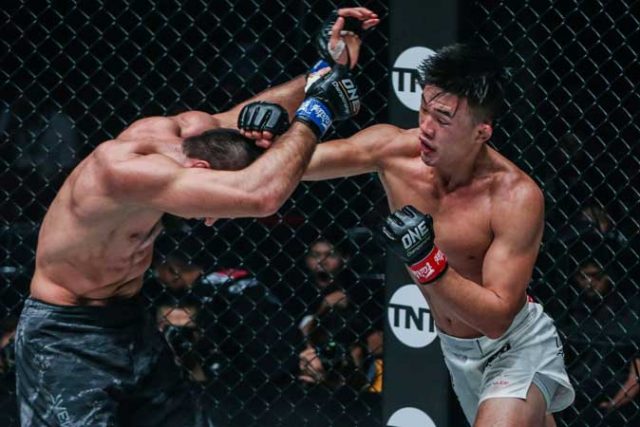
REIGNING ONE Championship world lightweight champion Christian Lee — ONE CHAMPIONSHIP
REIGNING ONE Championship world lightweight champion Christian Lee defends his title against Timothy Nastyukhin in the headlining fight at “ONE on TNT II” on Thursday in Singapore. — ONE CHAMPIONSHIP

REIGNING ONE Championship world lightweight champion Christian Lee defends his title against Timothy Nastyukhin in the headlining fight at “ONE on TNT II” on Thursday in Singapore.

The second offering of the four-part “ONE on TNT” series of the promotion, the fight will see Mr. Lee (14-3), representing Singapore, make his second title defense this time against number three contender Nastyukhin (14-4) of Russia.

Mr. Lee successfully defended the lightweight title in October last year over Moldovan Iuri Lapicus by way of technical knockout in the opening round.

He won the title in May 2019 over Japanese legend Shinya Aoki.

Looking to seize the title is Mr. Nastyukhin, who is currently riding a two-fight winning streak in ONE. His last victory came over Pieter Buist of The Netherlands last November by unanimous decision.

The other fight in the main card of “ONE on TNT II” is the atomweight muay thai clash of American Janet Todd and Anne Line Hogstad of Norway.

Lead card fights, meanwhile, will have featherweight Shinechagtga Zoltsetseg of Mongolia against Yoshiki Nakahara of Japan, South Korean flyweight Kim Kyu Sung versus Chinese Wang Shuo, and bantamweight Mitchell Chamale (United States/Guatemala) against Shuya Kamikubo (Japan).

The “ONE on TNT” series is a breakthrough offering of ONE Championship which sees its fights shown digitally and on television on prime time in the United States.

“ONE on TNT II” will be shown in the country live on One Sports at 8:30 a.m. with an encore telecast on April 18 at 12 a.m. over TV5. — Michael Angelo S. Murillo

Kevin Durant, Nets cruise past Timberwolves

BROOKLYN NETS FACEBOOK PAGE
KEVIN Durant led the shorthanded Brooklyn Nets to a comfortable 127-97 victory over the Minnesota Timberwolves on Tuesday in Minneapolis. — BROOKLYN NETS FACEBOOK PAGE

KEVIN Durant scored 31 points on 11-for-15 shooting to lead the shorthanded Brooklyn Nets to a comfortable 127-97 victory over the Minnesota Timberwolves on Tuesday in Minneapolis.

The Nets snapped a five-game losing streak at Minnesota and beat the Timberwolves for the second time in the past 16 days.

The game was played without any fans in attendance at the Target Center after being rescheduled from Monday in the wake of the police shooting of Daunte Wright, which sparked protests around the city of Minneapolis.

In his third game back after missing the previous 23 with a hamstring strain, Durant played 27-plus minutes and led a Nets squad which was without James Harden (right hamstring strain), Kyrie Irving (personal reasons), LaMarcus Aldridge (illness), and Tyler Johnson (right knee soreness).

Brooklyn shot 46-for-91 (50.5%) from the field including 15-for-36 from three-point range and recorded 31 assists, marking its 19th game this season with 30 or more. The Nets cruised from the second quarter on against Minnesota, which was without center Karl-Anthony Towns.

Timberwolves coach Chris Finch said pregame that Towns opted out of playing on Tuesday to spend time with his family as he mourns the one-year anniversary of his mother’s death as a result of the coronavirus.

Rookie Anthony Edwards led Minnesota with 27 points and eight rebounds while D’Angelo Russell finished with 15 points off the bench.

The Nets, who are without Spencer Dinwiddie (partially torn right ACL) likely for the remainder of the regular season, played what became the first of back-to-back games before heading to Philadelphia.

Brooklyn used a 16-1 run to open a 23-point lead to start the second quarter and led by as many as 45 points in the fourth quarter.

Joe Harris scored 23 points and went 5-for-8 from three-point range while Landry Shamet totaled 19 points, five rebounds and five assists off the bench. DeAndre Jordan had 13 points and seven rebounds and shot a perfect 5-for-5 from the field.

Brooklyn’s Chris Chiozza left the game after playing 14 minutes with a hand injury. — Reuters

Are China’s COVID shots less effective? Experts size up Sinovac

PHILIPPINE STAR/ MICHAEL VARCAS

The lower protection rates of China’s coronavirus disease 2019 (COVID-19) vaccines have raised concerns about shots that are key to inoculation rollouts from Brazil to Indonesia, especially after their efficacy was questioned by one of the most senior Chinese health officials.

Bloomberg spoke to two experts about the vaccines, zeroing in on the Sinovac Biotech Ltd. shot, which has been the focus of a crisis in confidence after it posted efficacy levels of just above 50% in a final-stage trial in Brazil — the minimum required by leading global drug regulators. Other Chinese immunizations have delivered rates between 66% to 79%, still far below the shots developed by Pfizer Inc., Moderna Inc., and even Russia’s Sputnik vaccine that have logged protection rates of more than 90%.

More than 30 countries have rolled out the Sinovac shot, most of them in the developing world, but also Hong Kong. The vaccine is key to China’s own mammoth push to inoculate 560 million people — 40% of its population — by the end of June.

The good news is the vaccines work extremely well in combating severe COVID-19 infections, according to Fiona Russell from the Murdoch Children’s Research Institute in Melbourne and Paul Griffin, a professor from the University of Queensland in Brisbane. Bloomberg asked them key questions about the merits of the Sinovac shot. Their comments have been edited and condensed for brevity.

HOW EFFECTIVE IS THE SINOVAC VACCINE REALLY?
Russell: The Sinovac study was to look at how the vaccine works against the entire range of clinical symptoms, from mild infections to severe ones, including death. The efficacy data of about 50% is for very mild disease, requiring no treatment. For infections requiring some medical intervention, it’s about 84% and for moderate-to-severe COVID cases, it’s 100%.

That’s what you expect from COVID vaccines — higher efficacy against more severe infections and lower against milder ones. From what I can see, it looks like a very worthwhile vaccine. The problem with the data is it didn’t include many old people or many people with co-morbidities.

Griffin: My impression is the efficacy seems likely to be above the minimum threshold set by the World Health Organization but less efficacious than a number of other leading vaccine candidates. While it may be less effective against symptomatic COVID (mild infections), the efficacy in severe cases is very high, which is an incredibly valuable property of any vaccine, including this one.

WHY DOES IT HAVE VARYING EFFICACY RATES IN DIFFERENT STUDIES?
Russell: This has caused a bit of confusion. The trials were done in Brazil, Indonesia, and Turkey. Each of the studies have come with different results. In Brazil, you’ve got the P.1 variant circulating and so potentially the vaccine efficacy may be different due to that. I’m not familiar with what was circulating in Turkey or in Indonesia at the time of the study but that could obviously change the results.

Also, it’s very hard to directly compare results from different trials because they have to be interpreted in the context of the study design. The case definitions — the way a COVID-19 case is identified in a clinical trial — they used were different, so were the endpoints of the studies.

Griffin: This shows how variables in clinical trials can impact the results. Different strains circulating in a nation are a big variable that can alter the efficacy readout. Virus strains are vitally important in determining vaccine efficacy.

WHAT CAN BE DONE TO IMPROVE THE VACCINE?
Russell: The recommended schedule for two doses of the Sinovac shot in the trial was two weeks, though some people spread it longer than that, even one month apart. Theoretically, tweaking the schedule is definitely an option. Mixing vaccines — starting with one type and then boosting it with a different one — is another option but there’s a lot more we need to know about those variations.

Griffin: It’s very likely that the dosing interval is critically important and certainly sounds like it was a variable in Sinovac’s clinical trials as well. We need another clinical trial to ascertain whether adding another booster increases efficacy. In terms of heterologous boosting — using a mix of different vaccines — the research is underway. A lot of people are optimistic but until we have the data, it’s hard to know.

IS IT POSSIBLE TO REACH HERD IMMUNITY WITH SINOVAC?
Russell: That depends on a number of things — the circulating variant, the coverage required and the degree to which the vaccine prevents virus transmission. But we don’t have a lot of data yet on transmission.

Griffin: If we have a less effective vaccine, we are going to need to inoculate more people to achieve that. Its potential to reduce virus transmission is likely to be less too but again, without good data it’s hard to be sure. With very high coverage, even a moderately effective vaccine is perhaps better than a highly effective vaccine with poor coverage. So, it depends on the uptake among other factors.

SHOULD PEOPLE TAKE THE SINOVAC VACCINE?
Russell: I would have no hesitation, provided it secures regulatory authority approval. For protecting people from ending up in hospitals, Sinovac’s shot looks terrific as the efficacy data for preventing hospitalization and death is 100%.

Griffin: Yes. While it may mean that we don’t reduce the cases overall or achieve herd immunity, we will still be successful in reducing severe COVID infections and therefore, the burden on the health care system. If the vaccine is approved by the relevant regulators, then I think we need to have faith that it’s safe and effective in that population.

If there are multiple vaccines available, then people could potentially opt for one that has demonstrated superiority in clinical trials. But if that’s not possible, then having this vaccine is better than not being vaccinated at all. — Bloomberg

GoDaddy launches e-store product for small businesses

GoDaddy

GoDaddy, a domain registrar and web hosting company, launched an e-store product that allows small businesses to create their own virtual storefront and manage all their online needs in one place. 

In a survey conducted by the company on the Filipino entrepreneur, they found that 1 out of 3 businesses was created in response to the pandemic. Sixty percent also said technology is essential in ensuring their ventures weather crises, with 38% looking at getting into e-commerce, and 69% looking to learn more about social media tools. 

“As a brand, we are a one-stop-shop,” said  Tina Shieh, GoDaddy’s marketing director for Asia Pacific. “We have domain services, professional emails, security offers… so customers can better manage all the tools they need in one place.” 

The e-store product features social media integration, support for various payment modes, options for different shipping methods, chat platform integration, SSL (Secure Socket Layer) certification, and built-in marketing tools. It has a customizable drag-and-drop interface that connects to social media pages with single-click buttons. It also has more than 40 payment providers onboard — including Stripe, Square, and PayPal — with alternative payment methods available for cash on delivery and e-wallets.

GoDaddy offers a one-month free trial that doesn’t require credit card information so that customers can figure out what suits their needs and technical skills. 

To protect sellers from bogus buyers, the e-store has a management feature that allows the entry of customer data. Payment providers that have ownership verification can also help minimize fraud.

“Digital strategy is all about omni-channels,” Ms. Shieh said at the launch. “Start with a message you can control, and then consolidate all the components of digital into one platform.” 

GoDaddy E-Store’s starter plan is priced at P795 per month; its premium plan, P1,299 per month. Discounted rates are offered to new customers on the website.

Biden administration proceeding with $23 billion weapon sales to UAE

WASHINGTON – U.S. President Joe Biden’s administration has told Congress it is proceeding with more than $23 billion in weapons sales to the United Arab Emirates, including advanced F-35 aircraft, armed drones and other equipment, congressional aides said on Tuesday.

A State Department spokesperson said the administration would move forward with the proposed sales to the UAE, “even as we continue reviewing details and consulting with Emirati officials” related to the use of the weapons.

The Democratic president’s administration had paused the deals agreed to by former Republican President Donald Trump in order to review them. The sales to the Gulf nation were finalized right before Trump left office.

The Trump administration told Congress in November it had approved the U.S. sale to the UAE as a side deal to the Abraham Accords, a U.S.-brokered agreement in September in which the UAE agreed to normalize relations with Israel.

In the last months of the Trump administration, Israel reached deals with the UAE, Bahrain, Sudan and Morocco as part of the accords.

The $23.37 billion package contained products from General Atomics, Lockheed Martin Corp and Raytheon Technologies Corp, including 50 F-35 Lighting II aircraft, up to 18 MQ-9B Unmanned Aerial Systems and a package of air-to-air and air-to-ground munitions.


YEMEN CONFLICT

Some U.S. lawmakers have criticized the UAE for its involvement in the war in Yemen, a conflict considered one of the world’s worst humanitarian disasters, and worried that the weapons transfers might violate U.S. guarantees that Israel will retain a military advantage in the region.

Israel said it did not object to the sales.

A legislative effort to stop the sales failed in December, as Trump’s fellow Republicans in Congress backed his plans.

The Trump administration then finalized the massive sale to the UAE on Jan. 20, about an hour before Biden was sworn in as president.

The Biden administration announced the review in late January and the UAE said then it had anticipated the review and welcomed joint efforts to de-escalate tensions and for renewed regional dialogue.

The State Department spokesperson said on Tuesday the estimated delivery dates on the UAE sales, if implemented, were for after 2025 or later.

The government anticipated “a robust and sustained dialogue with the UAE” to ensure a stronger security partnership, the spokesperson said in an emailed statement.

“We will also continue to reinforce with the UAE and all recipients of U.S. defense articles and services that U.S.-origin defense equipment must be adequately secured and used in a manner that respects human rights and fully complies with the laws of armed conflict,” the statement said.

The Biden administration is also reviewing its policy for military sales to Saudi Arabia, including some Trump-era weapons deals, in light of the Saudi involvement in Yemen and other human rights concerns.

It has not released the results of that review. In February, U.S. officials told Reuters the administration was considering cancelling past deals that posed human rights concerns and limiting future sales to “defensive” weapons. – Reuters

Level up your gaming experience with vivo Y20s [G]

Games provoke various sensations in every stage. During the challenges, players participate with full of excitement and energy. Then marvelous feels would arise when they achieve victory.

Yet in the virtual arena, the electronic device would also have a large impact on the gaming experience. Thus, players expect them to match their abilities for a great sensation in both competing and winning.

Focusing on helping the users take part in different games through an affordable device, global technology company vivo launches the vivo Y20s [G]. This new smartphone is now available for purchase for only P9,999 in select vivo stores and kiosks nationwide and at vivo’s official Lazada and Shopee stores.

Aside from being able to go through the notable gaming features firsthand, customers who will purchase the vivo Y20s [G] until April 15 will get a free True Wireless Stereo (TWS) earphones worth P2,499, which can accompany the users with a good audio experience during the game.

Among the gaming necessities added in vivo Y20s [G], the most advantageous is the inclusion of the MediaTek Helio G80 octa-core gaming processor. It is an ideal feature for mobile gamers since it ensures sustained performance and longer gameplay. 

Moreover, the MediaTek Helio G80 improves several types of gaming by creating a highly responsive user experience, fast artificial intelligence performance, great accuracy in engine positioning, and boosted connectivity for an increased speed response between the smartphone and cell tower.

Users can also have a better game in vivo Y20s [G] with the assistance of Multi-Turbo 3.0. Remarkably, this feature can foresee the system abnormalities caused by third-party applications and solve these problems even before they take place.

Since there is an obvious anticipation of active gaming in this new smartphone, vivo prepared it with HyperEngine Game Technology. It is responsible for accelerating the game load times and fixing latency issues by managing multiple networks.

Additionally, vivo already expected the installations of various gaming programs. Hence, gamers may not find this an issue in vivo Y20s [G]. The smartphone has a capacity of 6GB and 128 GB RAM + ROM to accommodate several digital needs of a gamer.

Speed improvements and generous storage of mobile phones are not the only features that matter in mobile games. The players also look forward to having a prolonged gaming time with good visual quality. Hence, vivo Y20s [G] contains a battery of 5000mAh and 18W fast charging features for an extensive playing time. Also made with a 6.51-inch HD+ display, this smartphone can show an excellent view of the game.

Developed with the gamers in mind, the vivo Y20s [G] can thus provide an efficient virtual involvement in the game. Its distinctive features allow the users to constantly sense the thrill from the start of the game, during the challenges, until the finish line.

To have that optimum gaming experience, along with the free TWS earphones, avail of the vivo Y20s [G] in vivo stores and kiosks nationwide now. Y20s [G] is also available for purchase at vivo’s official Lazada and Shopee stores.

For more details about the vivo Y20s [G], visit www.vivo.com/ph or follow vivo Philippines on FacebookTwitter, and Instagram

New Zealand to end livestock exports due to animal welfare concerns

WELLINGTON – New Zealand said on Wednesday it will stop the export of livestock by sea following a transition period of up to two years, citing animal welfare concerns for a decision that will affect major trading partners including Australia and China.

The ban was welcomed by animal welfare groups, but the peak farming industry body said it was caught by surprise and was unaware of any breaches of standards.

Live exports by sea represent about 0.2% of New Zealand’s primary sector exports revenue since 2015 has averaged around NZ$60 million ($42.32 million) per year from 2015 to 2019. New Zealand exported 113,285 cattle by sea last year.

“We have not been able to guarantee the safety of these animals at sea and that’s an unacceptable risk for New Zealand,”

Agriculture minister Damien O’Connor told reporters, adding that key trading partners were informed of the decision.

“I recognise the importance of our trade relationships with our international partners and we’re committed to working with them as we transition away from the shipment of livestock,” he said.

Asked if there were concerns the move would upset China, a top importer of live cattle, Mr. O’Connor said: “This is not about China. It’s about animal welfare and our reputation.”

Simone Clarke, executive director of World Animal Protection New Zealand, said the decision was a “significant moment in our history for animals, one which other governments around the world must now follow.”

However, Wayne Langford, a spokesman for Federated Farmers of New Zealand, said the industry body “has no information about any breaches of the high standards relating to livestock exports.”

New Zealand said last year it was reviewing live exports when it introduced interim measures following the capsizing of a ship bound for China that killed nearly 6,000 cows and 41 of the 43 crew members.

Mr. O’Connor said despite improvements to processes, the long sea voyages to northern hemisphere markets continued to pose animal welfare challenges. – Reuters

TikTok founder’s $60 billion fortune places him among world’s richest people

Just last year, the world’s most valuable startup, ByteDance Ltd., was being squeezed from all sides.

The Trump administration wanted the Chinese firm, which owns the ubiquitous TikTok video-sharing platform, to get rid of assets. Beijing was cracking down on tech businesses, and India blacklisted some of its social-media apps.

For all the obstacles, ByteDance kept growing. Now its founder, 38-year-old Zhang Yiming, is among the world’s richest people — a distinction that lately has carried increased risks in China.

Shares of the company trade in the private market at a valuation of more than $250 billion, people familiar with the dealings have said. At that level, Zhang, who owns about a quarter of ByteDance, could be worth more than $60 billion, placing him alongside Tencent Holdings Ltd.’s Pony Ma, bottled-water king Zhong Shanshan and members of the Walton and Koch families in the U.S., according to the Bloomberg Billionaires Index.

ByteDance, famous for its short-video apps and news aggregator Toutiao, more than doubled revenue last year after expanding beyond its core advertising business into areas such as e-commerce and online gaming. It’s now weighing options for the initial public offering of some businesses.

“Zhang is someone who’s known for thinking long-term and not easily dissuaded by short-term setbacks,” said Ma Rui, partner at venture-capital firm Synaptic Ventures. “He is set on building an enduring, global business.”

During its last fundraising round, ByteDance reached a $180 billion valuation, a person with knowledge of the matter said. That’s up from $20 billion about three years ago, according to CB Insights. But in the private market, some investors recently were asking for the equivalent of a $350 billion valuation to part with their shares, people familiar have said. The company’s value for private-equity investors is approaching $400 billion, the South China Morning Post reported. That would mean an even bigger fortune for Zhang.

ByteDance representatives didn’t respond to requests for comment.

It’s a tough time to be wealthy in China as the government seeks to rein in the country’s most powerful corporations and their billionaire founders. Just ask Jack Ma: After opening an antitrust probe, regulators fined Alibaba a record $2.8 billion and the central bank ordered an overhaul of his Ant Group Co. fintech empire so it’d be supervised more like a bank. On Tuesday, China ordered 34 internet companies to rectify their anti-competitive practices in the coming month.

While ByteDance hasn’t been singled out as a target, its dominance in social media and war chest for deal-making are sensitive areas the government is looking into.

“There are no more silly games in the U.S. with Trump and potential bans or forced asset sales,” said Kirk Boodry, founder of investment research firm Redex Holdings. “But the pressure on tech-share prices and China in particular might make $250 billion a tough sell,” he added, referring to ByteDance’s value in private transactions.

Born in the southern Chinese city of Longyan, Zhang, the only son of civil servants, studied programming at Tianjin’s Nankai University, where he built a following on the school’s online forum by fixing classmates’ computers. He joined Microsoft Corp. for a brief stint after graduating, later calling the job so boring he often “worked half of the day and read books in the other half,” according to an interview with Chinese media. He went on to develop several ventures, including a real estate search portal.

His breakthrough came in 2012, when working in a four-bedroom apartment in Beijing he created ByteDance’s first hit — a joke-sharing app later shut down by censors. It then turned to news aggregation before winning over more than 1 billion global users with its short-video platforms TikTok and Chinese twin app, Douyin. In the process, it attracted big-name investors such as SoftBank Group Corp., Sequoia Capital and proprietary-trading firm Susquehanna International Group, making it a rarity among Chinese internet startups that usually get absorbed into the wider ecosystems of Tencent and Alibaba Group Holding Ltd.

NOVEL CONCEPT
One of Zhang’s earliest supporters, Susquehanna has become ByteDance’s largest outside backer with a 15% stake, according to a Wall Street Journal story in October. The initial bet was made at the start of 2012, when ByteDance’s news app Toutiao was just a concept that Zhang had drawn up on napkins, according to a 2016 blog post by Joan Wang, who led that investment for Susquehanna’s Chinese venture-capital unit.

With TikTok facing scrutiny in the U.S. and India, Zhang has put more effort into ByteDance’s nascent and fast-growing Chinese businesses, which range from gaming to education to e-commerce. That helped it increase sales to about $35 billion last year and operating profit to $7 billion, a person familiar with the results said.

Investors are eyeing the IPO of some of ByteDance’s businesses after Chinese competitor Kuaishou Technology raised $5.4 billion in February in the biggest internet listing since Uber Technologies Inc., with its market value now nearing $140 billion. Last month, ByteDance hired former Xiaomi Corp. executive Chew Shou Zi as its chief financial officer, filling a long vacant position that will be crucial for its eventual market offering.

But for Zhang, it’s not all about immediate payoffs. The affable founder is known for his business philosophy of “delaying satisfactions” as he puts the focus on long-term growth — a message he stressed again during his spiel to employees at the company’s ninth anniversary celebration last month.

“Keep an ordinary mind, that’s something that sounds easy but important to do,” he said. “Put in the plainest words, when hungry, eat, when tired, sleep.” — Bloomberg

Taiwan says its chip firms will adhere to new US rules blacklisting China supercomputing entities

Semiconductor chips are seen on a printed circuit board in this illustration picture taken Feb. 17, 2023. — REUTERS

TAIPEI – Taiwan said on Wednesday its chip companies will adhere to U.S. rules after Washington added seven Chinese supercomputing entities last week to an economic blacklist and after a Taipei-based chipmaker halted orders from one of the entities named.

The U.S. Commerce Department said the seven Chinese entities were “involved with building supercomputers used by China’s military actors, its destabilizing military modernisation efforts, and/or weapons of mass destruction programs.”

Companies or others listed on the U.S. Entity List are required to apply for licenses from the Commerce Department that face tough scrutiny when they seek permission to receive items from U.S. suppliers.

Tech-powerhouse Taiwan’s firms are major suppliers of semiconductors globally, and Economy Minister Wang Mei-hua said they would follow Taiwanese and U.S. rules.

“Our companies, whether producers or exporters, must accord with our country’s rules. Of course the United States has new rules, and our companies will pay attention and accord with the key criteria of the U.S. rules,” she told reporters.

The U.S. move came amid its rising tensions with China over Taiwan. China has never renounced the use of force to bring the democratically ruled island under its control.

It also came amid a global shortage of semiconductors that has thrust Taiwan centre-stage into the technology supply-chain.

On Tuesday, Taiwan’s Alchip Technologies Ltd said it had stopped production for all products related to Tianjin Phytium Information Technology, which is on the new U.S. list.

Alchip, which said 39% of its revenue last year came from Phytium, added that it was collecting “detailed documents for our U.S. counsel to determine if the products are subject to EAR (Export Administration Regulations)”.

A U.S. Bureau of Industry and Security “permit will be obtained for Phytium’s products if necessary”, it added.

Its shares tumbled 9.9% on Wednesday, bringing losses to more than a third of their value since the Commerce Department’s announcement last week.

Separately, Hong Kong’s South China Morning Post reported that Taiwan Semiconductor Manufacturing Company Co Ltd (TSMC) , the world’s largest contract chipmaker, has suspended new orders from Phytium.

TSMC said it could not confirm the report, and declined further comment.

TSMC shares were down 0.5% on Wednesday, outperforming a 1.1% fall in the broader Taiwanese stock market. – Reuters

Philippines may miss growth target as COVID cases surge

By Michael Varcas, The Philippine Star

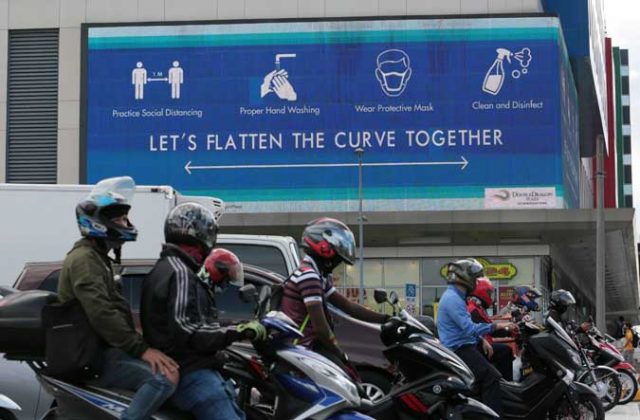
The Philippines may miss its target of at least 6.5% economic growth this year after a resurgence of COVID-19 infections forced the capital into a two-week lockdown, Economic Planning Secretary Karl Chua said.

“We were a healthy economy before COVID. Now, we’re struggling,” Chua said in an interview Tuesday. “We were too risk averse: We shut down a big part of the economy when other countries didn’t need to do that.”

The Philippines, which implemented one of the world’s longest and strictest lockdowns last year, suffered its worst-ever recession in 2020, prompting a push for a sustained reopening. First-quarter gross domestic product performance may be close to zero compared to a year earlier, but will be a lot better than the final three months of 2020, when the economy contracted 8.3%, Chua said.

Metro Manila and the adjacent provinces of Bulacan, Cavite, Laguna and Rizal — the engine of the nation’s economy — were placed back in lockdown for two weeks from late March as daily cases surged to a record. Data due next month should guide economic managers in reviewing their full-year targets, Chua said.

The economy can still recover in coming months by reopening areas with fewer infections, accelerating government spending and speeding up vaccinations for front-line staff in sectors like transportation, tourism and manufacturing, Chua said.

“We will recover because we know the medicine and the dosage that will allow us to do so, and we will pursue that immediately,” the economic planning chief said. Movement restrictions this time are less stringent than the curbs imposed last year at the beginning of the pandemic, as public transport is now open and most employees can go to work, he said.

In December, economic managers projected that Philippine GDP would grow 6.5% to 7.5% this year, following last year’s record slump. Bangko Sentral ng Pilipinas Governor Benjamin Diokno, in a Bloomberg Television interview on April 8, said he estimates that the economy will grow 6%-7% this year.

The strict movement curbs in Manila and surrounding areas, which were eased starting April 12, could shave 0.8 percentage points off of full-year GDP and leave some 250,000 people jobless. A looser lockdown, where more businesses can open, is in place in the capital region and nearby provinces until the end of April. — Bloomberg

February NPL ratio highest in 11 years

BW FILE PHOTO

By Luz Wendy T. Noble, Reporter

LENDERS’ bad loans rose for the second straight month in February, bringing the nonperforming loan (NPL) ratio to its highest since 2009 as borrowers had difficulty making payments amid the coronavirus pandemic.

Bad loans are expected to peak by the second half of this year, according to S&P Global Ratings. However, it noted that improvements in borrowers’ capacity to pay remain clouded by the pace of economic recovery which depends on the successful handling of the coronavirus disease 2019 (COVID-19) and the mass vaccination drive. 

Gross NPLs held by banks surged 80% to P431.266 billion in February from P239.902 billion a year earlier, based on preliminary data from the Bangko Sentral ng Pilipinas (BSP). It also increased by 9.05% from the P395.465 billion in January.

This brought the NPL ratio to 4.08% in February, from 2.2% logged a year ago. This is the highest since the 4.09% NPL ratio recorded in October 2009.

“With borrowers now no longer able to rely on the cover provided by the loan moratorium, we will begin to see the pickup in this ratio quicken to some extent,” ING Bank N.V. Manila Senior Economist Nicholas Antonio T. Mapa said in an e-mail.

Loans are deemed nonperforming once they are left unpaid at least 30 days beyond the due date. They are considered as risk to lenders’ asset quality as these have high risk of default.

Analysts said the worst is not over for lenders as asset quality is likely to further deteriorate in the coming months, showing the fuller impact of the pandemic on borrowers. A 60-day loan moratorium provided for under Republic Act No. 11494 or the Bayanihan to Recover as One Act has already expired.

“The industry’s NPL ratio will likely increase to 6% in 2021,” Nikita Anand, an analyst at S&P Global Ratings,  said in an e-mail to BusinessWorld.

Ms. Anand said banks’ consumer, and small business loan portfolios will continue to see high new NPL formation, as renewed lockdown measures are expected to hurt borrowers.

“Many small businesses have had to shut shop as revenues plunged with the lockdowns. Household incomes have been disrupted due to job losses and salary cuts. Most new NPLs since COVID-19 have come from the consumer segment, reflecting the loss of household incomes from the sharp economic contraction,” she said.

As nonperforming loans edged up, lenders’ total loan portfolio contracted by 3% to P10.579 trillion from P10.91 trillion from a year ago and by 0.37% from the P10.618 trillion in January.

Past due loans in February reached P551.472 billion, climbing by 71.3% from the P321.862 billion last year. This brought the ratio to 5.21% from 2.95% in the same month of 2020.

Restructured loans also surged by more than six times (346%) to P200.986 billion from P45.045 billion a year earlier. With this, its ratio reached 1.9%, up from the 0.41% in February last year.

As NPLs increased, banks beefed up loan loss reserves by 70% to P373.631 billion from P218.785 billion a year ago.

Meanwhile, banks’ NPL coverage ratio, which measures the allowance for potential losses due to bad loans, dropped to 86.64% from 91.2% in February 2020.

For Ms. Anand, the bad loan pileup scenario may only peak by the second half of this year, under a base case of renewed economic activity. This, together with low interest rates could improve debt servicing ability of borrowers by 2022.

However, she cautioned that a weaker-than-anticipated recovery due to a prolonged pandemic and slow vaccination could be a downside risk to this view.

S&P downgraded its outlook for Philippine growth this year to 7.9% (from 9.6%) as the inflation spike is seen to weigh down on the country’s consumption-driven economy.

“If the economic recovery was delayed, the private sector will face renewed pressure, particularly among corporate sectors hit hardest by the pandemic. Such strains would mean weaker companies may have to restructure their debt and even go out of business, and that would ultimately impinge on their lenders,” she said.

The S&P analyst warned that continued weakness in the economy may also affect corporate credit quality which has remained “steady thus far.” In this scenario, debt servicing of corporates in pandemic-hit sectors such as lodging and food services, retail, transportation, and entertainment and recreation will be more challenged.

Ms. Anand also said that banks will stand to benefit from the recently enacted Financial Institutions Strategic Transfer (FIST) Law by giving them a chance to focus more on growth opportunities rather than spending resources on recovering loans. However, she said the success of the measure will still depend on its execution and lenders’ willingness to sell their bad assets.

“FIST could prove effective for small and midsize banks, as typically their resolution and recovery mechanisms are underdeveloped compared to larger banks,” she said.

Republic Act No. 11523 gives tax incentives for banks that will sell their nonperforming assets to FIST Corporations. BSP Governor Benjamin E. Diokno has said banks are expected to offload at least P152 billion in nonperforming assets through the measure.

Mr. Mapa said that while the FIST Law may ease NPL buildup, the root cause of the bad loans remains tied to the weak economic environment.