Home Blog Page 7755

UnionBank to issue social bonds
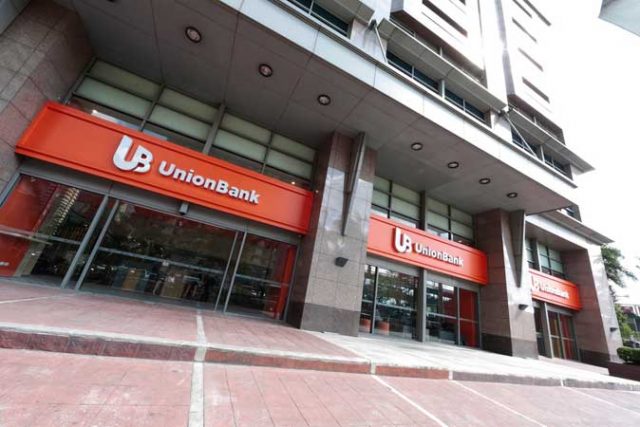
UNIONBANK of the Philippines, Inc. is set to issue social bonds to finance small business loans through a $150-million investment from the International Finance Corp. (IFC) 

The dollar-denominated bonds have a seven-year tenor and will be issued under the bank’s sustainable finance framework, the Aboitiz-led lender said in a statement. 

The deal is IFC’s first pandemic response social bond investment in Asia, which is expected to help create jobs in the MSME sector. 

“Our goal in issuing this bond is to support the recovery of micro-, small-, and medium-sized enterprises (MSMEs) from the coronavirus disease 2019 (COVID-19) pandemic. It could not have come at a better time, as this market segment has been hit particularly hard by the current crisis,” UnionBank Chief Financial Officer Jose Emmanuel U. Hilado was quoted as saying. 

“In the wake of the COVID-19 crisis, the use of social bonds to generate financing to meet the needs of vulnerable underserved people, including small businesses, will be critical to helping spur the recovery,” Alfonso Garcia Mora, Vice President, Asia and Pacific at IFC, said. 

UnionBank will use the proceeds from the bond issue to extend credit to over 2,000 MSMEs hit by the pandemic and boost available funding for MSMEs through the bank’s supply chain financing platform. 

The bonds conform with International Capital Markets Association (ICMA) social bond principles and the ASEAN Social Bond Standards, as confirmed by a second-party opinion provided by research and ratings company Sustainalytics.  

As of 2020, IFC has issued 53 social bonds in public and private markets in 11 different currencies. The World Bank Group unit has also backed 153 eligible projects worth $4.3 billion through its social bonds since 2017. 

UnionBank’s social bonds are the second of its kind to be issued in the country. In August 2020, Bank of the Philippine Islands raised P21.5 billion through its COVID-19 Action Response or CARE bonds also meant to help finance MSME loans. 

MSMEs made up 99% of the roughly one million business establishments in the country in 2018, based on data from the Department of Trade and Industry. They also accounted for 5.7 million or 63.19% of the new jobs that year. 

UnionBank’s net earnings jumped by 78% to P4.7 billion in the first quarter from a year ago. 

Its shares went down by 45 centavos or 0.59% to close at P76.05 apiece on Friday. — L.W.T. Noble 
BSP makes full award of short-term bills

BW FILE PHOTO

THE CENTRAL BANK fully awarded its offer of 28-day bills on Friday, with yields inching lower on investors’ strong appetite for safe assets due to concerns on the Delta variant of the coronavirus disease 2019 (COVID-19). 

The Bangko Sentral ng Pilipinas (BSP) awarded P100 billion as planned in one-month bills on Friday. Demand reached P162.51 billion, lower than the P186.61 billion in tenders seen in the previous auction. 

Lenders asked for yields ranging from 1.745% to 1.7705%, down from the 1.77% to 1.789% band logged at last week’s auction. This caused the average rate of the one-month paper to decrease by 2.42 basis points to 1.7602% from 1.7844% previously. 

The BSP bills and the term deposit facility are used by the central bank to gather excess liquidity in the financial system and guide market rates.  

Yields on the BSP securities declined due to safe-haven demand amid tighter restrictions imposed by the government amid a rise in Delta variant infections in the country, Rizal Commercial Banking Corp. Chief Economist Michael L. Ricafort said. 

The high bids for the BSP securities also reflect the excess liquidity in the financial system, Mr. Ricafort added. 

Presidential Spokesperson Herminio L. Roque, Jr. on Friday said Metro Manila will be under general community quarantine “with heightened restrictions” until July 31. 

There were 47 recorded cases of the Delta variant in the Philippines as of Thursday, where eight are active while three have died. — L.W.T. Noble 

Central bank orders LYKA to halt payment operations

THE BANGKO SENTRAL ng Pilipinas (BSP) has ordered social media platform LYKA to stop its operations as it is not registered as an operator of payment system (OPS). 

“The BSP has directed LYKA to suspend activities as an OPS and invited the company to apply for registration with the BSP before it is allowed to continue with its operator of payment system activities,” BSP Governor Benjamin E. Diokno said in a briefing on Friday. 

The central bank said in a statement that the operators of the app “have already expressed their willingness to register with the BSP as an OPS.” 

LYKA is a platform launched in the Philippines by a Hong Kong-based company that allows users to convert likes and the number of activities or posts by a user into Gift cards in Electronic Mode or GEMs that they can use to pay for goods or services at selected merchants. 

“The Monetary Board has ascertained that these activities make LYKA an OPS and it’s thus required to register with the BSP, yet to date, it is not registered with BSP,” Mr. Diokno said. 

Based on BSP regulations, OPS include cash-in providers, merchant acquirers, payment facilitators, payment gateways, platform providers, bills payment service providers and entities facilitating payments for goods and services. 

BSP Circular 1049 requires all OPS to register with the central bank as provided under Republic Act No. 11127 or The National Payment Systems Act.  

The central bank on Friday also reminded the public to transact only with BSP-registered OPS, which are listed on its website. 

COMPLAINTS ON FINANCIAL TRANSACTIONS 

Meanwhile, complaints related to financial transactions received by the Bangko Sentral ng Pilipinas reached nearly 12,000 in the first half of the year, Mr. Diokno said in the same briefing. 

“In 2021, around 31% were resolved in favor of the consumer, another 32% are still for evaluation in coordination with the client, while 21% is still awaiting action, or reply from the concerned financial institution,” he said. Complaints that were not resolved in favor of the client comprised only 13% of the total.” 

The central bank is also backing a law that will give it the power to adjudicate claims and impose restrictions on unreasonable charges by supervised institutions. 

The proposed Financial Consumer Protection Act will give financial regulators the authority to conduct hearings on money claims, significantly helping financial consumers recover justified losses from financial transactions faster. It will also give them power to determine reasonable interest rates, fees and charges.  

House Bill 6768 was already approved by the House of Representatives in June last year. Counterpart bills have been filed in the Senate and are currently pending in the committee level. — LWTN 

Peso down on Delta variant worries, tighter restriction measures

PHILSTAR FILE PHOTO

THE PESO weakened on Friday as the government reported more cases of the Delta variant of the coronavirus disease 2019 (COVID-19) in the country. 

The local unit closed at P50.34 per dollar on Friday, sinking by 20.5 from its P50.135 finish on Thursday, based on data from the Bankers Association of the Philippines.  

It also depreciated by 10.5 centavos from its P50.235-a-dollar finish last week. 

The peso opened Friday’s session at P50.10 against the dollar. Its weakest showing was at P50.35, while its intraday best was at P50.075 versus the greenback. 

Dollars exchanged declined to $804.6 million on Friday from $948.95 million on Thursday. 

The trader attributed the peso’s depreciation to escalating worries over rising Delta variant cases in the country. 

The Palace on Friday said Metro Manila will be under general community quarantine “with heightened restrictions” until July 31 to prevent the further spread of the Delta variant, which has already sickened 47 in the country. 

The Philippines has also expanded its travel ban on countries with rising cases of the Delta variant of COVID-19 to include Malaysia and Thailand. 

Meanwhile, Rizal Commercial Banking Corp. Chief Economist Michael L. Ricafort said the peso weakened as the dollar continued to strengthen against major currencies. 

The dollar was set to end the week with small gains after a turbulent few days when currencies were buffeted by shifting risk appetite, with the market’s focus now on next week’s US Federal Reserve meeting, Reuters reported. 

The dollar index was up 0.2% for the week, rising slightly on Friday to stand at 92.891. 

But that was off a 3-1/2-month high of 93.194 hit on Wednesday, after strong Wall Street earnings helped investors regain some of the confidence lost to earlier worries the Delta variant of the coronavirus could derail the global economic recovery. — LWTN with Reuters 

DBP grants P730-M loan for new Quezon hospital

COURTESY OF DBP FACEBOOK PAGE

DEVELOPMENT Bank of the Philippines (DBP) extended a P730-million loan for a new seven-storey hospital in Quezon to boost healthcare capacity in the province. 

The loan will be used for the construction and development of Allied Care Experts (ACE) Medical Center Sariaya, Inc. which will be the first Level 2 hospital in Quezon, the bank said in a statement. 

Healthcare institutions are placed under this classification when they provide facilities such as an intensive care unit and have specialist doctors. 

Once completed, the hospital will have a 104-bed capacity. It is projected to improve the bed-to-population ratio in Quezon to 1:1,134 from the current 1:1,175 ratio. Sariaya town currently has only two community hospitals with a total bed capacity of 30. 

“DBP supports this latest ACE project as it will help address the pressing need for higher quality medical care in Sariaya and the entire Quezon. Financing infrastructure projects that will produce a ripple effect in communities remains a top priority for DBP, especially during these challenging times,” DBP President and Chief Executive Officer Emmanuel G. Herbosa said in a statement. 

The Sariaya unit will be the ninth branch of ACE Medical Center nationwide. 

DBP, which has been designated as the country’s infrastructure bank by the government, saw its net income fall by 30.4% to P3.9 billion in 2020 from P5.6 billion in 2019 due to higher loan loss provisions and operating expenses. 

It is the sixth-largest bank in the country in terms of its assets with $1.042 trillion as of end-2020. — LWTN 

DoF says BIR, BoC digitalization efforts boosted tax administration

FINANCE SECRETARY Carlos G. Dominguez III — PRESIDENTIAL PHOTO/ TOTO LOZANO

THE EFFORTS of the Bureau of Internal Revenue (BIR) and Bureau of Customs (BoC) to digitize their processes helped them improve tax administration, Finance Secretary Carlos G. Dominguez III said on Thursday. 

“On the part of the Department of Finance, our revenue agencies have fully embraced digitalization. Through the help of the private sector, we have set up a number of e-payment and e-filing channels to improve tax collection and administration, curb corruption, and strengthen the business climate in the country,” he said in his speech at an online forum on Thursday. 

The BIR collected P1.034 trillion in the first half, exceeding its target for the period by 1.61%. Meanwhile, Customs also exceeded its P291.833-billion goal for the first half by 3.7% after collecting P302.74 billion. 

Mr. Dominguez said the improved electronic platforms of the BIR allowed almost 100% of taxpayers to file their annual income tax returns (ITRs) online. In 2015, only 10% of tax returns were filed electronically, he said. 

BIR data showed 1.43 million ITRs were filed electronically this year to account for 99.5% of total returns, up from 89.99% in 2020 and 80.38% in 2019. 

The surge in online filings started even before the pandemic, with the number of electronic filings growing from just 58.25% of total ITRs in 2018, 51% in 2017-2016, and 10% in 2015. 

Aside from ITRs, the BIR also allows electronic filing for other major tax types like value added tax (VAT) and percentage tax. It also offers online payment channels via the Development Bank of the Philippines’ PayTax Online, Land Bank of the Philippines’ Link.Biz Portal, UnionBank of the Philippines, Inc.’s online web and Mobile Payment Facility, and via mobile wallets GCash and PayMaya. 

“The Bureau of Customs, for its part, recently launched the Philippine Customs Modernization Project supported by the World Bank. This is a major step towards aligning our processes and standards with the best customs services in the world,” Mr. Dominguez said. 

The BoC launched the P5-billion project in March aiming to automate its processes to improve its tax administration, boost collection, enhance trade facilitation, and lower trade costs. 

Moving forward, the Finance chief said the government is still working on other programs to achieve its target to fully digitalize country’s tax system. 

He said the United States Trade and Development Agency is helping the BIR roll out digital reforms, while South Korea is assisting in the bureau’s plan to set up an electronic invoicing system. 

The government is also considering to replicate Russian Federal Tax Service’s VAT monitoring and collection scheme to help the BIR achieve “world-class tax administration.” 

“In our digitalization efforts, we always encourage close collaboration with the private sector. We believe that the private sector’s expertise and initiative to adopt digital innovations will help us anticipate the changes in the digital economy. The private sector can help us provide a more nurturing policy environment for fintechs,” Mr. Dominguez said. — Beatrice M. Laforga 

DoTr-TRB inks agreement for Marilao East Service Road construction

DEPARTMENT of Transportation (DoTr) Secretary Arthur P. Tugade — PRESIDENTIAL PHOTO

THE Department of Transportation (DOTr) via the Toll Regulatory Board (TRB) has inked a memorandum of agreement (MoA) for the construction of the Marilao East Service Road.   

The department is working with NLEX Corp., the Department of Public Works and Highways (DPWH), and the Marilao municipal government for the project, which will span from Barcelona Academy, Inc. in Barangay Lias to the Mario Santiago Road in Marilao, Bulacan.  

DOTr Secretary and TRB Chair Arthur P. Tugade signed the MoA along with DPWH Region 3 Director Roseller A. Tolentino, Bulacan Fourth District Representative Henry R. Villarica, NLEX President and General Manager J. Luigi L. Bautista, Marilao Mayor Ricardo M. Silvestre, and Meycauyan Mayor Linabelle Ruth R. Villarica.  

The Marilao East Service Road Project will take up a portion of the North Luzon Expressway’s (NLEX) right of way. The MoA lets the project use the area temporarily as it waits for DPWH Region 3 to acquire its own right of way lots for the permanent Marilao East Service Road.   

The areas covered by the project will still be part of NLEX and access will remain limited.   

“Subject to the terms and conditions, access to the NLEX may be reasonably regulated, restricted, or prohibited by the DOTr-TRB. At all times during the effectivity of this agreement, DPWH Region 3 and the government of Marilao in Bulacan shall exert its utmost efforts to abide by NLEX Corp.’s reasonable regulations regarding ingress to NLEX,” the MoA said. — KCGV 

Golden Rice gets biosafety permit

GOLDEN RICE has received a biosafety permit for the planting of the genetically modified grain seeds for commercial production, the Philippine Rice Research Institute (PhilRice) said.  

The permit, which attests that the Vitamin A-infused rice has passed the biosafety standards of five departments including the Department of Agriculture, was issued on July 21. 

PhilRice Executive Director John C. De Leon was quoted as saying in the statement that the permit allows Golden Rice seeds to be “planted for commercial production.”  

However, this will still be subject to the terms and conditions of the Department of Agriculture’s Bureau of Plant Industry, he said. 

Mr. De Leon added that Golden Rice still needs to be registered under the National Seed Industry Council, which clears the registration of seed varieties based on consistent and good field performance. They will also have to complete other requirements such as increasing seed production. 

Golden Rice is part of the “Healthier Rice Project” of the PhilRice and International Rice Research Institute (IRRI). Mr. De Leon said the variety was developed to curb vitamin A deficiency. 

IRRI Director for Research Ajay Kohli said the modified grain underwent rigorous research and regulatory review, noting it is as “safe as ordinary rice” which contains beta-carotene, a source of Vitamin A. 

PhilRice in November said it expects Golden Rice to begin commercial propagation by 2023 depending on the progress of its application. — A.Y. Yang 

Shares decline on lockdown fears

COURTESY OF PHILIPPINE STOCK EXCHANGE, INC.

SHARES ended the week in the red as the government said it could close the country’s borders again to prevent a fresh surge in coronavirus disease 2019 (COVID-19) infections due to the Delta variant. 

The 30-member Philippine Stock Exchange index (PSEi) lost 55.88 points or 0.85% to close at 6,520.74 on Friday, while the all shares index declined by 36.43 points or 0.89% to finish at 4,038.51. 

“Philippine shares were sold once more as investors stayed on the sidelines to see how the Delta variant would spread and what would be the government’s response to this,” Regina Capital Development Corp. Head of Sales Luis A. Limlingan said in a Viber message.   

“The market is pricing in the Delta variant’s spread and a lockdown’s impact on the economy. Nevertheless, [the PSEi’s] recovery from early morning loss shows some buying appetite,” First Metro Investment Corp. (FMIC) Head of Research Cristina S. Ulang said in a separate Viber message.  

The Health department on Thursday confirmed the local transmission of the Delta variant in the country. The Philippines has 47 reported cases of the Delta variant of COVID-19. 

President Rodrigo R. Duterte told CNN Philippines that the government is planning to close the country’s borders if another infection surge happens. He said he is set to meet with the national task force against the pandemic is scheduled on Saturday. 

Metro Manila, Ilocos Norte, Ilocos Sur, Davao de Oro, and Davao del Norte were placed under general community quarantine “with heightened restrictions” starting Friday until the end of the month. 

Most sectoral indices closed in the red on Friday except for services, which inched up by 1.27 points or 0.08% to 1,552.37. 

Meanwhile, property shed 64.46 points or 2.07% to 3,042.54; financials went down by 17.76 points or 1.23% to 1,415.62; mining and oil dropped by 112.54 points or 1.17% to 9,486.53; industrials lost 93.78 points or 1.01% to close at 9,159.48; and holding firms declined by 33.42 points or 0.5% to end at 6,550.32.   

Value turnover surged to P8.9 billion with 2.22 billion shares switching hands on Friday, from the P3.69 billion with 1.4 billion issues seen on Thursday.   

Decliners outnumbered advancers, 172 against 41, while 24 names closed unchanged.   

Foreigners turned buyers with P4.37 billion in net purchases on Friday from the P338.64 million in net outflows seen the previous day.   

FMIC’s Ms. Ulang expects the market to remain weak and the PSEi to trade between 6,300 to 6,600 as investors await the government’s decision on travel restrictions and possible economic stimulus measures should a lockdown be implemented. — Keren Concepcion G. Valmonte 

Rower Nievarez through to quarterfinals

Filipino rower Cris Nievarez booked a spot in the quarterfinals of the men’s single sculls rowing competition at the Tokyo Olympics after finishing third in heat no. 5 of the qualification phase on Friday. -- Cris Nievarez Facebook page
Filipino rower Cris Nievarez booked a spot in the quarterfinals of the men’s single sculls rowing competition at the Tokyo Olympics after finishing third in heat no. 5 of the qualification phase on Friday. — Cris Nievarez Facebook page

Cris Nievarez kicked off the Philippine campaign in the Summer Olympic Games with a strong third-place performance Friday, just enough to advance to the quarterfinals of the Men’s Single Sculls Rowing Competition.

The plan was to finish in the top 3 of Heat no. 5 and Nievarez did just that when he submitted an impressive time of 7:22.97 in the 2000-meter courses to clinch a berth in Sunday’s quarterfinals.

“It feels great. It’s the first race and first action. I’m very happy. This is for the Philippines,” said Nievarez, who had two world-class rowers in front of him – Croatia’s Damir Martin (7:09.17), the 2016 Rio Olympics silver medalist, and Russian Alexander Vyazovkin (7:14.95), the world indoor champion.

The top three in all of the six heats in the men’s singles scull advanced to the quarterfinals.

Those who missed the top three will battle it out in Saturday’s repechage where the top two performers move on to the quarterfinals.

A native of Sariaya in Quezon, Nievarez is the only Southeast Asian qualifier in men’s singles sculls and one of only two Asians left after the preliminaries — the other one being Ryuta Arakawa, who placed second in the final heat.

Pfizer shot halts severe illness, allows infection in Israel

Pfizer Inc.’s COVID-19 vaccine provided a strong shield against hospitalization and more severe disease in cases caused by the contagious delta variant in Israel in recent weeks, even though it was just 39% effective in preventing infections, according to the country’s health ministry.

The vaccine, developed with BioNTech SE, provided 88% protection against hospitalization and 91% against severe illness for an unspecified number of people studied between June 20 and July 17, according to a report Thursday from the health ministry.

The data could be skewed because of different ways of testing vaccinated groups of people versus those who hadn’t been inoculated, according to the report.

“The heavily skewed exposure patterns in the recent outbreak in Israel, which are limited to specific population sectors and localities,” means the analysis may not be able to take all factors into account, said Ran Balicer, chairman of Israel’s national expert advisory team on Covid-19 response. “We are trying to complement this research approach with additional ones, taking additional personal characteristics into account. But this takes time and larger case numbers.”

Still, the data are likely to fuel debate over whether booster shots should be given to people who’ve already been vaccinated — something Pfizer has said it plans to request in the U.S. Israeli authorities said earlier this month they’ll only give a third round of shots to people with weakened immune systems.

CONTRASTING STUDIES

The data out of Israel, which had earlier access to vaccines than most anywhere else in the world, contrast with a study out of the U.K. That paper, published this week in the New England Journal of Medicine, found that two doses of the Pfizer-BioNTech vaccine offer 88% protection against symptomatic disease caused by the delta variant and 94% against the alpha variant that was first discovered in Britain. Public Health England also previously found that the Pfizer and BioNTech shot was 96% effective against hospitalization.

Pfizer and BioNTech are confident in the protection and safety of the two-dose vaccine, Pfizer said in a statement on Friday. BioNTech is conducting a review of study data on the vaccine, a spokeswoman said.

Analysis of the companies’ more than 43,000-person clinical trial shows that effectiveness against symptomatic infection dips over time, from 95% in the first two months to the low- to mid-80% range four to six months after the second dose, Pfizer said.

The delta variant first emerged in India and is spreading around the globe, sometimes infecting those already fully vaccinated against Covid. The mutation has promted some countries to step up inoculation campaigns and rethink plans to loosen curbs on businesses, activity and travel.

Israel has had one of the world’s most effective immunization drives, with 57% of the population fully vaccinated, but has seen a recent surge in infections due to delta. Critical cases have also climbed, but remain a fraction of the peak earlier this year.

Prime Minister Naftali Bennett has urged vaccine holdouts — who number some 1.1 million people — to get inoculated, calling it the most effective way to defeat the delta strain. The government has also reinstated some restrictions for indoor events and plans to ban flights to several countries with rising infection rates, including the U.K. and Cyprus. — Bloomberg

Cambodia’s cyclos bring meals on three wheels to virus-hit Phnom Penh

PHNOM PENH – “Take what you need, donate what you can” is the slogan written on a glass fronted cabinet full of food, water and essential daily items carried by Cambodian cyclo taxi driver Chim Prich.

Hit hard by coronavirus movement restrictions, Cambodian cyclo drivers are flocking to the streets of the capital, Phnom Penh, with mobile food banks that allow residents crippled by the pandemic’s economic hardships to pick up free food and essentials.

“Thanks to the kindness of those more fortunate who provided these foods and necessities, I can deliver them to poor people like trash collectors, beggars, street sweepers and anyone else who is struggling to make enough money to buy food,” Chim Prich said.

Cyclos, three-wheeled pedal-powered rickshaws, have long been a popular choice for visitors keen to take in the sights and enjoy the buzz of Phnom Penh at a leisurely pace. But the coronavirus pandemic’s devastating impact on global travel has crushed tourist numbers, cutting driver’s incomes.

Hao Taing, a 21-year-old student in Phnom Penh, came up with the idea of the mobile food banks after seeing the cyclo drivers struggle.

“It brings me great joy to run this project, and I’ve received a lot of love and support from people both here and abroad,” Hao Taing said. A full-time student, Hao Taing spends his days working on the project and his nights studying.

“It’s not easy,” said Hao Taing, who added that he hoped the initiative would help Cambodia’s iconic cyclos survive the pandemic.

For their efforts, Hao Taing’s organisation Local4Local, which relies on donations, pays the cyclo drivers a small wage of around $17.50 a week to deliver food, water and other essentials to Phnom Penh’s most vulnerable people.

The initiative includes 10, colourful, hand-painted pantries placed atop the cyclos that are then stationed across various points in the city so those in need can take, and those who have the means can donate.

“I feel like I’ve been reborn,” said Ny Koy, a 63-year-old beneficiary of the project.

“No one has given food to me everyday like this. I’m so thankful. Now I can sleep well at night” – Reuters