Home Blog Page 7751

IPOPHL adopts EU goods and services trademark classification system

THE INTELLECTUAL Property Office of the Philippines (IPOPHL) said it is adopting the European Union’s (EU) goods and services trademark classification system to improve the business trademark application process in the Philippines.

The agency in a statement Monday said that the database contains 78,000 terms describing the nature of a good or service, which is part of the trademark application process. All terms in the database are automatically accepted by the IPOPHL and all trademark offices in the EU.

“This will set the limits of the trademark protection sought for and help IP offices determine whether a mark is confusingly similar to another, a conflict which is grounds for rejection,” IPOPHL said.

The database also integrates the most updated version of an international trademark classification system called the Nice classification to align the local system with global trademark filing.

The adoption of the database will make the process smoother for businesses filing at intellectual property offices in the EU, or ease the process for foreign applicants filing in the Philippines, IPOPHL Director General Rowel S. Barba said.

“This will eliminate the risk of being objected to or the application getting delayed over classification or description errors… which… would mean paying for a new application and waiting longer for a decision,” he said.

“For EU businesses, this greater harmonization between IPOPHL and EU-based IP offices can bring ease in trademark protection, possibly motivating them to set up more shops in or introduce more brands to the Philippines through export.”

The database expansion, he added, will help those that have registered marks to monitor whether their trademarks are being infringed.

IPOPHL is the 17th intellectual property office outside of the EU to use the database. — Jenina P. Ibañez

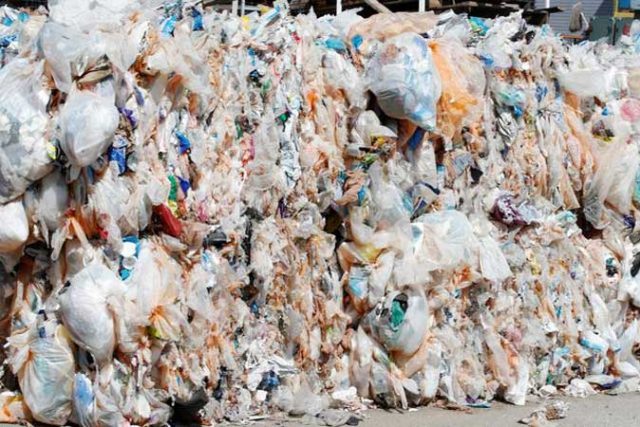
The Recycling Myth: Big Oil’s solution for plastic waste littered with failure 

REUTERS

BOISE, Idaho — In early 2018, residents of Boise, Idaho were told by city officials that a breakthrough technology could transform their hard-to-recycle plastic waste into low-polluting fuel. The program, backed by Dow, Inc., one of the world’s biggest plastics producers, was hailed locally as a greener alternative to burying it in the county landfill.

A few months later, residents of Boise and its suburbs began stuffing their yogurt containers, cereal-box liners and other plastic waste into special orange garbage bags, which were then trucked more than 300 miles (483 kilometers) away, across the state line to Salt Lake City, Utah.

The destination was a company called Renewlogy. The startup marketed itself as an “advanced recycling” company capable of handling hard-to-recycle plastics such as plastic bags or takeout containers — stuff most traditional recyclers won’t touch. Renewlogy’s technology, company founder Priyanka Bakaya told local media at the time, would heat plastic in a special oxygen-starved chamber, transforming the trash into diesel fuel.

Within a year, however, that effort ground to a halt. The project’s failure, detailed for the first time by Reuters, shows the enormous obstacles confronting advanced recycling, a set of reprocessing technologies that the plastics industry is touting as an environmental savior — and sees as key to its own continued growth amid mounting global pressure to curb the use of plastic.

Renewlogy’s equipment could not process plastic “films” such as cling wrap, as promised, Boise’s Materials Management Program Manager Peter McCullough told Reuters. The city remains in the recycling program, he said, but its plastic now meets a low-tech end: It’s being trucked to a cement plant northeast of Salt Lake City that burns it for fuel.

Renewlogy said in an e-mailed response to Reuters’ questions that it could recycle plastic films. The trouble, it said, was that Boise’s waste was contaminated with other garbage at 10 times the level it was told to expect.

Boise spokesperson Colin Hickman said the city was not aware of any statements or assurances made to Renewlogy about specific levels of contamination.

Hefty EnergyBag, as the recycling program in Boise is known, is a collaboration between Dow and US packaging firm Reynolds Consumer Products, Inc., maker of the program’s orange garbage sacks and popular household goods such as Hefty trash bags, plastic food wrap and aluminum foil. Hefty EnergyBag said in an e-mailed response to questions that it “continues to work with companies to help advance technologies that enable other end uses for the collected plastics.” It declined to answer questions about Renewlogy’s operations, as did Dow spokesperson Kyle Bandlow. Reynolds did not respond to requests for comment.

The collapse of Boise’s advanced recycling plan is not an isolated case. In the past two years, Reuters has learned, three separate advanced recycling projects backed by other major companies — in the Netherlands, Indonesia and the United States — have been dropped or indefinitely delayed because they were not commercially viable.

In all, Reuters examined 30 projects by two-dozen advanced recycling companies across three continents and interviewed more than 40 people with direct knowledge of this industry, including plastics industry officials, recycling executives, scientists, policymakers and analysts.

Most of those endeavors are agreements between small advanced recycling firms and big oil and chemical companies or consumer brands, including ExxonMobil Corp., Royal Dutch Shell Plc and Procter & Gamble Co. (P&G). All are still operating on a modest scale or have closed down, and more than half are years behind schedule on previously announced commercial plans, according to the Reuters review. Three advanced recycling companies that have gone public in the last year have seen their stock prices decline since their market debuts.

PLASTIC BOOM
Many advanced recycling projects have emerged in recent years in response to a global explosion of plastic waste. More than 90% gets dumped or incinerated because there’s no cheap way to repurpose it, according to a landmark 2017 study published in the journal Science Advances.

Not only is this garbage choking landfills and despoiling oceans, it’s contributing to global warming because it’s made from fossil fuels https://www.reuters.com/investigates/special-report/health-coronavirus-plastic-recycling. At a time when demand for transport fuel is under pressure from government vehicle-efficiency mandates and the rise of electric cars, the oil industry is doubling down on plastics. Plastic production — which industry analysts forecast to double by 2040 — will be the biggest growth market for oil demand over the next decade, according to the Paris-based International Energy Agency.

A number of US and European cities have already levied bans or consumer fees on single-use plastic bags. Pressure is also building for “polluter-pays” laws that would shift the cost of waste collection from taxpayers to the companies that make and use plastic. Earlier this month, Maine became the first US state to pass such legislation.

Enter advanced recycling. Also known as “chemical recycling,” advanced recycling is an umbrella term for processes that use heat or chemicals to turn plastic waste into fuel or reclaimed resin to make new plastic.

The American Chemistry Council (ACC), an industry group whose membership is dominated by plastics makers, says polluter-pays measures would hurt the economy. It’s urging US lawmakers instead to ease regulations on and provide incentives to advanced recycling companies.

As of July, 14 US states had passed these kinds of laws. At least $500 million in public funds has been spent since 2017 on 51 US advanced recycling projects, the environmental group Greenpeace said in a report last year. Boise’s government, for example, has spent at least $736,000 on garbage bags for its program, according to purchase orders and invoices between May 2018 and April 2020 obtained by Reuters through public records requests.

The ACC says these technologies are game-changers because they could potentially process all types of plastic, eliminating expensive sorting and cleaning.

“The potential is enormous,” said Joshua Baca, vice-president of the ACC’s plastics division. The ACC this month called on Congress to develop a national strategy to reduce plastic waste, including “rapid scaling” of advanced recycling.

However, the Reuters review found some advanced recycling companies struggling with the same obstacles that have bedeviled traditional recyclers for decades: the expense of collecting, sorting and cleaning plastic trash, and creating end products that can compete on price and quality with fossil fuels or virgin plastic.

Transitioning from the lab to the real-world chaos of dirty and improperly sorted household plastic waste has proven too much for some of these newcomers, said Helen McGeough, a London-based senior plastic recycling analyst at Independent Commodity Intelligence Services, a data and analytics firm.

“People have entered into this, perhaps not understanding the processes properly, the waste that they are handling, and so that’s why some things have failed,” McGeough told Reuters.

Advanced recycling is in its infancy, and as with any emerging technology, setbacks are to be expected, a dozen industry players said.

So far, some of their own research shows it’s no panacea.

An assessment of the Hefty EnergyBag program was commissioned by Reynolds. It compared the environmental impact of recycling plastic waste through a heating process known as pyrolysis — the approach Renewlogy used — to two traditional ways of handling it: burning it in cement kilns or putting it in a landfill.

The study, published on the Hefty EnergyBag program’s website last year, found that in Boise’s case, pyrolysis fared worst among the three in terms of its overall global warming potential. That measure estimated the greenhouse gas emissions of the whole process, from manufacturing the garbage bags and transporting the waste to the energy used in the recycling process.

A narrower analysis, looking just at the final recycling process and its contribution to global warming, found that pyrolysis scored better than landfilling but was worse than burning plastic in a cement kiln.

“These types of studies will really push the chemical recyclers to think about their operations,” said Tad Radzinski, president of Sustainable Solutions Corporation, the consultancy which conducted the study.

The study noted its calculations came from various sources, including a US-based pyrolysis plant that has experience processing the Hefty EnergyBag materials. Asked whether Renewlogy’s plant was the one it examined, Sustainable Solutions said it could not name the plant because of a non-disclosure agreement with that facility.

Reynolds and Dow had no comment about the study.

Renewlogy said it supplied no data to Sustainable Solutions. “Our numbers are vastly different from those used in the report,” Renewlogy said in response to Reuters’ questions.

CASHING IN ON TRASH
Advanced recycling projects have mushroomed globally, especially since 2018. That’s when China, once the top buyer of the world’s used plastic, banned these imports because its recyclers were overwhelmed. Other countries, too, are shutting their doors to foreign waste, putting pressure on the developed world to deal with its own garbage.

The boom is also being fueled by investors looking for the next hot green-tech industry.

Most of the advanced recycling firms involved in the projects reviewed by Reuters use a form of pyrolysis, the process of breaking down matter using high temperatures in an environment with little or no oxygen.

Pyrolysis has been tried before on plastic. British oil giant BP Plc, German chemical maker BASF SE and US oil company Texaco, Inc. — now owned by Chevron Corp. — all separately dropped plans to scale up waste-to-fuel pyrolysis technologies more than 20 years ago due to technical and commercial problems.

BASF said it now believes such an endeavor is viable. It said in October 2019 it invested 20 million euros in Quantafuel <QFUEL-ME.OL>, a Norway-based plastic-to-fuel company listed on the Oslo Stock Exchange.

Some scientists challenge the assertion that melting unsorted plastic made from a variety of chemicals is good for the environment.

In addition to consuming large amounts of energy, “pyrolysis can generate toxic waste, such as dioxins,” said Hideshige Takada, a geochemist and professor at the Tokyo University of Agriculture and Technology who has studied pollutants in waste for decades.

Nor has pyrolysis proven capable of transforming unsorted garbage into high-quality fuel and clean plastic resin, says Susannah Scott, a chemistry professor at the University of California, Santa Barbara, who receives funding from the plastics industry to perform recycling research.

Plastics have long been stamped with the numbers 1 to 7 inside the familiar “chasing arrows” logo to help traditional recyclers separate the waste before processing it.

Scott said melting different numbered plastics together through pyrolysis produces a complex blend of hydrocarbons that must then be separated and purified for reuse. That process requires a lot of energy, she said, and typically yields products that don’t measure up to the quality of the original material.

With pyrolysis, “the value of what you’re making is so low,” Scott said.

Advanced recyclers say they’re overcoming these problems with innovations in energy efficiency and purification.

Of two-dozen companies whose projects were reviewed by Reuters, three have gone public in the last year: PureCycle Technologies, Inc., Agilyx AS <AGLX-ME.OL> and Pryme B.V. <PRYME-ME.OL>. The market value of all has declined since their debuts.

One of the hardest hit has been PureCycle, a Florida-headquartered advanced recycling startup that went public this year through a special purchase acquisition company. It ended its first day of trading on March 18 with shares up 13% to $33, giving it a market capitalization of around $3.8 billion.

But its shares tumbled 40% on May 6, the day short-seller Hindenburg Research published a report calling the recycler’s technology “unproven” and its financial projections “ridiculous.” PureCycle shares have since regained some ground.

PureCycle said the same day that Hindenburg’s report was “designed to drive down the stock price in order to serve the short seller’s economic interests.” It declined further comment about the report.

Hindenburg declined to comment.

According to its website, PureCycle uses a “ground-breaking” recycling process developed by P&G, maker of Gillette razors and Head & Shoulders shampoo, to turn a particular type of waste plastic, polypropylene, back into resin. PureCycle is around two years behind schedule on its first commercial plant, which its CEO Mike Otworth told Reuters on March 6 was due to slower-than-expected debt financing and the coronavirus pandemic.

P&G declined to comment.

The ACC, the chemicals trade group, continues to promote the potential of advanced recycling. Last year, it spent $14 million lobbying members of Congress on various issues, the most the organization has ever spent, according to OpenSecrets.org, a non-profit initiative that tracks money in US politics.

Until her two-year term ended in December, Renewlogy’s Bakaya was the chair of the ACC’s advanced recycling unit.

ONE TO WATCH
Bakaya grew up in Australia after her father emigrated there from India, she told business podcast Upside in 2020. She attended Stanford University and the Massachusetts Institute of Technology (MIT), graduating from the latter in 2011. She became a prominent figure in advanced recycling, promoting her technology on media forums such as National Geographic and the BBC.

Bakaya garnered a string of accolades, including making Fortune’s “40 under 40: Ones to Watch” list in 2013.

She declined to be interviewed for this story.

Bakaya said in a TEDx talk in 2015 that she initially set up a company called PK Clean to recover oil from “mixed, dirty landfill-bound plastic.” PK Clean later changed its name to Renewlogy, Bakaya said in an interview with MIT in 2017.

Steve Case, co-founder and former chief executive of AOL, Inc., invested $100,000 in PK Clean in 2016, according to a blog he authored on the website of his venture capital firm Revolution. The governor’s office in Utah said it gave a total of $200,000 in grants in 2016 and 2017, while Salt Lake City’s Department of Economic Development provided $350,000 in loans in 2015 to PK Clean, according to Peter Makowski, acting director of business development for the department.

Revolution did not respond to requests for comment. The Utah governor’s office said the program under which PK Clean received the grants had ended and it was no longer funding the company. Salt Lake City said its loans to PK Clean have been repaid.

Boise first sent plastic waste to Renewlogy in June 2018, followed by at least five more truckloads in the following months, minutes of meetings of Boise’s Public Works Commission show. In June 2019, Boise said in a statement it had temporarily stopped sending its waste to Renewlogy while the Utah plant upgraded its equipment. Hefty EnergyBag said Renewlogy left the program for good in December 2020. Renewlogy did not respond to questions about how much of Boise’s plastic waste it had recycled.

Reuters made an unannounced visit to Renewlogy’s Salt Lake City operation in mid-May. On a Monday afternoon, there was little visible activity outside the facility; the front parking lot contained five passenger cars, two of which had flat tires. The back lot contained dozens of bales of plastic waste dotted with faded orange recycling bags stacked next to rusty oil drums and a wheelbarrow full of glass jars containing a murky liquid.

Renewlogy co-founder Benjamin Coates emerged from the building to speak to a reporter. Asked about the status of the company, Coates said opponents of chemical recycling were trying to damage the industry by pushing “conspiracy theories” about the technology. He directed further questions to Bakaya before telling Reuters to leave the premises.

Jeremiah Bates, owner of a tire shop next door to Renewlogy, said the recycling plant didn’t appear to have been active for at least six months and that he had complained to Coates and the local fire marshal about the debris piling up out back.

Renewlogy did not respond to questions about Bates’ assertions.

An inspector from the Salt Lake City Fire Prevention Bureau, Jose Vila Trejo, visited the recycling facility on Feb. 12, according to his inspection report. Vila Trejo told Reuters that his tour of the plant turned up no fire hazard because there were no machines present that could generate heat, flames or sparks.

“They were basically shut down,” Vila Trejo said. “There was no equipment in there.”

Renewlogy confirmed to Reuters that Vila Trejo inspected the building in February. It said the facility had not shut down and that there was equipment at the site.

Renewlogy said it shares the Salt Lake City premises with other companies that work on pyrolysis of wood and other waste, and that much of the junk Reuters saw on the back lot belonged to other firms that it declined to name. Renewlogy added that it continues to operate its plant as a testing facility to develop new plastic recycling technologies.

Reuters exclusively reported in January that an advanced plastic recycling project in India, which was a collaboration between Renewlogy and a charity funded by plastic makers, collapsed last year.

Renewlogy later this year plans to launch another plastics recycling facility, this one in Phoenix, Arizona, according to its website. Joe Giudice, assistant public works director at the City of Phoenix, confirmed the facility was due to start being set up in August. More taxpayer money is due to flow to the company.

The Arizona Innovation Challenge, a state-funded program, in 2017 awarded Renewlogy a $250,000 grant, funds that will be dispersed when Renewlogy sets up in Phoenix, the Arizona Commerce Authority, which runs the program, told Reuters.

Giudice said Phoenix would not be sending Renewlogy any film plastics due to uncertainty over whether they could be easily recycled.

Renewlogy said it would be “starting very small” and would be “validating each step before scaling up.”

BOUND FOR THE DEVIL’S SLIDE
Back in Boise, the Hefty EnergyBag program continues, but Renewlogy is no longer involved. Waste in those orange Hefty bags now helps fuel the Devil’s Slide, a cement plant in Morgan, Utah, part of the US unit of Holcim, a European multinational firm. The company told Reuters it has been burning Boise’s plastic since March 2020 as a replacement for coal.

Hefty EnergyBag has forged similar arrangements with cement makers in Nebraska and Georgia, according to the environmental study of the program commissioned by Reynolds.

Environmental groups tracking chemical pollutants say incinerating plastic this way produces significant carbon emissions and releases dioxins associated with the chemicals in the plastic. This is in no way “recycling,” said Lee Bell, advisor to the International Pollutants Elimination Network (IPEN), a global network of public interest groups working to eliminate toxic pollutants.

Bandlow, the Dow spokesperson, said the Hefty EnergyBag program was helping to “transform waste into valuable products.” He declined to respond to questions about the environmental impact of burning plastic in cement kilns.

Jocelyn Gerst, a spokesperson for Holcim’s US operations, said the emissions levels of the plastic waste it burns are “the same or lower than traditional fuel,” and that it had a state permit to incinerate plastic. The US Environmental Protection Agency said it does not have any data to show that “substitution of plastic waste for coal makes a significant difference in air emissions.”

Back in Idaho, Anne Baxter Terribilini, a resident of Meridian, a Boise suburb, said she initially was eager to participate in the Hefty EnergyBag program, but was disillusioned to learn that her plastic waste now ends up in a cement kiln.

“I hate to feel like we are being lulled into complacency, believing that we are having a positive impact on the environment, when really we aren’t,” she said.

Boise officials said they’ve been transparent with the public about the handling of their plastic waste. Haley Falconer, Boise’s sustainability officer, said the city has learned from the setbacks. In hindsight, she said, it would have been better to build a customized recycling program with a local partner so that Boise could control where its waste was going.

But the city has no place else to put its plastic garbage, so it’s sticking with the Hefty EnergyBag program, Boise’s McCullough said.— Reuters


Food security NGO calls for more ecozones focused on fisheries 

THE NATIONAL and local governments need to collaborate with industry to establish economic zones dedicated to fisheries, food security advocacy group Tugon Kabuhayan said.

Tugon Kabuhayan convener Asis G. Perez said in a virtual briefing Monday that producers also need facilities that will support production and postharvest operations.

“With government support and provision of fiscal incentives, the fisheries and aquaculture industry can generate more jobs. We are ready to venture in the promotion of consumption of processed commodities both domestically and internationally,” Mr. Perez said.

Mr. Perez said there are 379 operating economic zones, 22 of which are agro-industrial, citing Philippine Economic Zone Authority (PEZA) data.

Incentives are authorized by Republic Act No. 7916 or the Special Economic Zone Act of 1995 for ecozone locators.

Incentives include exemption from national and local taxes on their imports, tax credits for import substitution, income tax holidays, and tax-free imports of capital equipment, construction materials, specialized office equipment and vehicles, and professional instruments.

Mr. Perez said of the 22 agro-industrial zones, only those run by Shemberg Biotech Corp. and Alsons Aquaculture Corp. deal with fisheries.

Shemberg is engaged in seaweed processing while Alsons units manufacture feed and grow fish, shrimp and other aquaculture species for export.

“Despite these incentives, the uptake for locating or establishing export processing zone for aquaculture and fisheries appears to be limited,” Mr. Perez said.

“While tuna, seaweed and shrimp remain the country’s top (fisheries) export commodities, accounting for 63% or 153,667 metric tons (MT) of total volume and 58% or $531.33 million (by) value… no tuna or shrimp-related industry is PEZA registered,” he added.

Tugon Kabuhayan said the Philippines can become a dominant exporter while still bringing economic growth to local communities.

It said producers are ready to venture into promoting the consumption of processed commodities in all markets.

“This will definitely contribute to more job creation. In our estimate, even if only half of the urban population patronizes deboned milkfish (bangus), this will create additional 7,000 jobs in a year. What more if we sell deboned bangus and other value-added aquaculture products to other countries?” it said.

The Department of Agriculture (DA) and PEZA signed a memorandum of agreement in 2019 to industrialize agribusiness and promote domestic production, manufacturing and exports, and to lower import dependence.

“Both DA and PEZA recognize the need for cooperative effort in promoting and supporting investment in agricultural-oriented activities through the granting of fiscal and non-fiscal incentives and development of agro-industrial, aquamarine, and agro-forestry special ecozones,” Agriculture Secretary William D. Dar said at the time. — Revin Mikhael D. Ochave

Taxpayers’ basic rights: Right to due process and equal protection of the law

It is innate in every human being to have basic rights. They can never be taken away. They are valid and universal. In the corporate context, taxpayers are entitled to due process. Whether they be small or big businesses, they are entitled to the right to due process and equal protection of the law.

In a recent Supreme Court decision (G.R. No. 222476, promulgated on May 5, 2021), the court reiterates the importance of the procedural and substantive rules on assessment of national internal revenue taxes.

In this case, the taxpayer’s assessment of income tax, value-added tax, expanded withholding tax, fringe benefits tax and improperly accumulated earnings tax (IAET) were cancelled because due process was violated.

It is always important that any taxpayer follow and take note of these procedural and substantive rules on assessment. While in this case, the taxpayer properly responded and protested the Formal Letter of Demand (FLD) or Final Assessment Notice (FAN), the subject assessment was invalid and illegal due to the violation of procedural due process.

WHAT IS PROCEDURAL DUE PROCESS?
Like in any normal tax assessment, the rule on serving notice must first be observed. The issuance of Notice of Discrepancy or NoD, Preliminary Assessment Notice or PAN, Formal Letter of Demand or FLD, Final Assessment Notice or FAN, and Final Decision on Disputed Assessment or FDDA are vital. They play an important role in any tax assessment process. Failure to issue or absence of any of these notices is always a fatal defect in an assessment case.

Thus, it is important that taxpayers know the procedural rules to protect their right to due process.

Recently, the BIR issued RR 22-2020 which provides guidelines on the issuance of NoD to inform taxpayers in writing of any discrepancies and provide the taxpayer ample time to present supporting documents and explain any alleged discrepancies. All necessary documents must be submitted within the prescribed period.

For the issuance of PAN, the taxpayer must be given 15 days to respond upon receipt of the notice. This recent case reiterates that the notice must actually be received by the taxpayer or his authorized representative. A mere assumption of its receipt without proof that the letter was actually received can cause the assessment to be invalid. As such, failure to observe this procedure violated the due process requirements.

For the issuance of FAN/FLD, on the other hand, the taxpayer is given 30 days from the receipt of the FLD/FAN to file an administrative protest.

While it is true that these notices must be served to taxpayers, voluntary payment of some tax deficiencies if not all, may be viewed as acknowledgement of tax deficiencies. Voluntary payment of questioned deficiency taxes on an assessment cuts the running of interest charges. However, it is not an outright waiver of the right to question the validity of such assessment notices.

Indeed, the taxpayers have every right to take action and avail of remedies as long as they do so within the allowed time prescribed by law.

LACK OF FACTUAL BASIS
In this recent case, the taxpayer consistently protested the IAET assessment due to lack of factual basis. Section 228 of the Tax Code, as amended, and pursuant to elementary due process, the taxpayer must always be informed in writing and the facts upon which an assessment is based; otherwise, the assessment is cancelled. The taxpayer must be knowledgeable that IAET is imposed on certain taxpayers. IAET shall not apply to banks, insurance companies, publicly-held companies and other taxpayers covered by special laws such as PEZA registered entities. 

Please note the IAET has been repealed by virtue of the CREATE Law, which took effect on April 11, 2021 after its publication on March 27, 2021.

Time and again, in any BIR assessment cases, these procedures must be observed. One missing step may render an assessment void. Always be informed about the legal and factual basis. As taxpayers, we must know our basic constitutional rights to due process and equal protection of the law. Remember, knowledge is power.

Let’s Talk Tax is a weekly newspaper column of P&A Grant Thornton that aims to keep the public informed of various developments in taxation. This article is not intended to be a substitute for competent professional advice.


Maricel P. Katigbak is a senior manager of Tax Advisory & Compliance division of P&A Grant Thornton, the Philippine member firm of Grant Thornton International Ltd.

pagrantthornton@ph.gt.com

Nesthy Petecio has work cut out against Irie in gold medal match

NESTHY PETECIO — REUTERS

By Michael Angelo S. Murillo, Senior Reporter

FILIPINO women’s featherweight boxer Nesthy A. Petecio has a solid shot at winning the country’s second gold medal in the Tokyo Olympic Games but will have her work cut out for her, said one local fight analyst.

Ms. Petecio, 29, will take on a familiar foe in Sena Irie of Japan in the featherweight gold medal match on Tuesday at 12:05 p.m. at the Kokugikan Arena.

It will be the fourth encounter between the boxers in the last two years, with the Japanese holding a 2-1 lead in their head-to-head matchup.

For fight analyst Nissi Icasiano, the fact that Ms. Irie currently has the upper hand over Ms. Petecio speaks a lot of what the Filipino bet will be dealing with in the Olympic final.

“The style of Nesthy Petecio inside the ring is what we call in boxing lason (poison) because Petecio is a master boxer. Her style is a bad matchup for any boxer who will share the ring with her, especially the slugger-type pugilists. She will make you miss and she will make you pay for it. Being an in-ring technician, Nesthy can make her opponents question or doubt their abilities,” Mr. Icasiano said in an online interview with BusinessWorld.

“But the problem here is when she gets out of her box and starts to be aggressive, especially when her opponents are much taller than her. She becomes hittable and predictable. And one of the aspects that she has to worry about in her gold medal matchup against Sena Irie is height. Not as tall as Irma Testa (Petecio’s opponent in the semifinals), but in their past three fights, Irie didn’t have difficulties fighting at her own pace and imposing her long reach,” he added.

Mr. Icasiano went on to say that for the gold medal match, Ms. Petecio has to be on top of things and has the right approach.

“In this case, you will often hear the line: ‘Get inside and bring the fight to them.’ But remember, it’s easier said than done. Maintaining her base will be the key. Doubling up the jab, mixing in feints, and demonstrating unpredictability and variety in punches thrown can confuse the taller Japanese, who may be waiting to establish an opening to tee off a counter. Quick shorter steps forward will also help Nesthy, instead of aggressively swinging for her punches,” the analyst said.

Despite the tough challenge Ms. Petecio will be facing in the Irie fight, Mr. Icasiano is still confident of the Davao del Sur native’s chances.

“Absolutely. Nesthy has the chance to win this fight. Mentally, she’s hungry to even things out with Irie. Moreover, she has the momentum after coming off a win in the semis. You can add the Hidilyn Diaz factor in winning the gold medal,” he said.

Mses. Petecio and Irie first met in April 2019 at the ASBC Asian Confederation Boxing Championships in Thailand, where Ms. Irie scored a close split decision win.

They met anew six months later at the World Women’s Boxing Championships in Russia, with Ms. Petecio winning by majority decision to claim the world title.

Their last fight was in March 2020 in the Olympic Qualifiers in Amman, Jordan, where top seed Ms. Petecio absorbed a unanimous decision loss to Ms. Irie.

Meanwhile, also seeing action on Tuesday at 10:15 a.m. is flyweight boxer Carlo Paalam against Uzbekistan’s Shakhobidin Zoirov for a spot in the semifinals where they will be assured of an Olympic medal.

Mr. Paalam, 23, advanced to the quarterfinal round of the flyweight division after he defeated Mohamed Flissi of Algeria by unanimous decision in the Round of 16 on Saturday.

He made up for his height disadvantage with speed and precision in counter-punching to get the better of his opponent en route to the convincing victory.

All of the five judges scored the three-round fight, 30-27, in favor of the Bukidnon native.

Obiena looks to perform better as he goes for Olympic gold

FILIPINO pole-vaulter Ernest John U. Obiena goes for gold in the Tokyo Olympic Games on Tuesday and is looking to perform better to help his cause.

Qualified for the men’s pole vault finals by landing in the top 14 in the qualification round at the Olympic Stadium in Tokyo on Saturday, 25-year-old Mr. Obiena shared that he was not entirely in his element in the qualifying but still thankful he got to deliver when needed to.

“I was just feeling very sluggish, which is really strange. I didn’t feel like myself until the bar moved at 5.75m at the first attempt,” Mr. Obiena communicated to local sports media after his event from Japan.

Mr. Obiena cleared 5.75 meters in Group A of the qualifying event, good for fifth place and 10th overall.

He did it in his third and final attempt after fouling in his first two tries.

Mr. Obiena also cleared 5.5m and 5.65m in the qualifiers.

“For the next round, I’ll talk to my coach about our game plan. I know he’s gonna be mad right now (Saturday) for what I did. I didn’t follow some of his calls, and I was struggling mentally, then I didn’t feel that confident,” he said, “I don’t know what happened, I need to ask my coach, he would know what went wrong.”

In the finals, Mr. Obiena, the only Asian to qualify, will be up against a very tough field, which includes world no. 1 and record-holder Armand Duplantis of Sweden, no. 3 Piotr Lisek of Poland, no. 4 Renaud Lavillenie of France, no. 5 Christopher Nilsen of the United States, and no. 7 Thiago Braz of Brazil, the Rio Olympic champion.

All cleared 5.75m in the qualification round just like Mr. Obiena, who is currently the world number six-ranked pole vaulter and the first Filipino to qualify for the Tokyo Olympics in 2019.

The finals of the men’s pole vault is set for 6:20 p.m. — Michael Angelo S. Murillo

Knott exits Olympics after missing cut in 200m run

SPRINTER Kristina Marie Knott of the Philippines exited the Tokyo Olympic Games on Monday after missing the cut in the 200-meter run. — SEAG NETWORK FB PAGE

SPRINTER Kristina Marie C. Knott of the Philippines exited the Tokyo Olympic Games on Monday after missing the cut in the 200-meter run.

Ms. Knott, 25, competed in the preliminaries at the Olympic Stadium where she clocked 23.80 seconds, fifth and last in her heat.

Only the top three finishers in each of the seven heats and the next three fastest times get to advance to the semifinals set for later on Monday.

The 23.80 seconds that the Filipino-American Ms. Knott had was off her personal best and Philippine record of 23.01 seconds.

While disappointed, Ms. Knott took everything in strides and vowed to come back better and stronger.

“Whenever you get your butt whipped, you take things into consideration. It was definitely a learning experience. I’m grateful to have been here and represent the Philippines. This is just the beginning for sure,” she was quoted as saying by One Sports after her run.

Ms. Knott, born to a Filipino mother who hails from Cavite, qualified for the Olympics by gaining a universality place from World Athletics.

In the lead-up to her Olympic debut campaign, she worked out at the Transcosmos Track and Field stadium in Isahaya City in southern Nagasaki.

Her preparation was overseen by coach Rohsaan Griffin and strength and conditioning coach Carlo Buzzichelli.

She now turns her focus to other competitions, including the Southeast Asian Games next year and down the line the Olympics in Paris in 2024. — Michael Angelo S. Murillo

Gilas Pilipinas ends up fourth in 2021 King Abdullah Cup

GILAS PILIPINAS finished in fourth place in the recently concluded 2021 King Abdullah Cup in Amman, Jordan. — FIBA

GILAS Pilipinas finished in fourth place in the 2021 King Abdullah Cup after losing to Tunisia, 80-68, in the fight for third at the Prince Hamza Hall in Amman, Jordan, Sunday.

The Philippine national men’s basketball team competed and tried hard to salvage a third-place finish in the 10th edition of the Cup but could not sustain the charge they made late in the game to bow to the Tunisians.

Carl Tamayo paced the attack of Gilas, who played without naturalized player Angelo Kouame, finishing with 14 points.

Gilas rallied back from as much as 16 points down, coming within three points, 69-66, with 4:22 left in the game.

Tunisia, however, recovered and created further separation anew from which the Philippines could not recover from.

SJ Belangel was the other Gilas player in double-digit scoring with 12 points.

Isaac Go had nine points while Dwight Ramos finished with seven.

For Tunisia, which with the win avenged its 74-73 loss in the preliminary to Gilas, it was Jawher Jawadi and Omar Abada who took charge.

Mr. Jawadi ended up with 21 points and six rebounds, while his backcourt partner Abada came through with 19 and six boards.

Host Jordan topped the five-nation, six-team pocket tournament with Egypt finishing second.

Saudi Arabia is the other team which competed in the tournament which took place from July 26 to Aug. 1. — Michael Angelo S. Murillo

Italy hails new sprint king, as drama unfolds at airport

LAMONT Marcell Jacobs of Italy celebrates after winning gold. — REUTERS

TOKYO — Lamont Marcell Jacobs won the most coveted crown in athletics on Sunday, giving Italy its first 100 meters gold on a night of high drama in Tokyo.

As Jacobs stormed to the first Olympic title of the post-Usain Bolt era, the fate of a Belarusian sprinter’s Tokyo Games was playing out at a nearby airport.

Krystsina Tsimanouskaya, who had been due to compete in the women’s 200 meters on Monday, told Reuters she had sought the protection of Japanese police at Tokyo’s Haneda airport after being taken to the airport against her wishes.

She said the Belarusian coaching staff had taken her to the airport to board a flight back home after she had complained about national coaches at the Tokyo Olympics.

“I will not return to Belarus,” she told Reuters in a message over Telegram.

The Belarusian Olympic Committee said in a statement that coaches had decided to withdraw Tsimanouskaya from the Games on doctors’ advice about her “emotional, psychological state.”

In a video published on Telegram by the Belarusian Sport Solidarity Foundation, Tsimanouskaya asked the International Olympic Committee (IOC) to get involved in her case.

An IOC spokesperson said the governing body had seen media reports and was looking into it. The spokesperson said it had asked Belarus’ Olympic committee for clarification.

A Reuters photographer witnessed the athlete standing next to Japanese police.

Jacobs’ European record 9.80 second run ended Fred Kerley’s bid to become the first American winner since Justin Gatlin in 2004. Kerley took silver in a personal best 9.84, while Canada’s Andre de Grasse 9.89 earned him a bronze.

“I’ve won an Olympic gold after Bolt, it’s unbelievable,” said the sprinter, who was born in the United States but moved to Europe with his Italian mother when he was a month old.

Gianmarco Tamberi made it double gold for Italy with an emotional, and unusual, high jump victory in a night to remember. The 29-year-old shared the gold with Qatar’s world champion Mutaz Essa Barshim.

Tamberi, who broke his ankle days before the Rio de Janeiro Games in 2016, hugged everyone he could find on the track. Draped in an Italian flag, he was also the first to embrace Jacobs after his 100m win.

Italy ended the day in the top 10 of the Olympics medal tally with four golds. China was on top with 24 golds, the United States second with 20. Japan were third with 17 and Australia fourth with 14.

DAY OF FIRSTS
It was a day of firsts across Tokyo’s sporting arenas. In gymnastics, Artem Dolgopyat won the men’s floor exercise delivering Israel’s first Olympic title since 2004, and only second ever.

Rebeca Andrade, a surprise silver medalist in the all-around, went one better in the vault to give Brazil its first ever women’s title in gymnastics.

American Simone Biles was not competing, having earlier announced her decision to also pull out of Monday’s floor exercise final as she continued to deal with the mental health issues that have limited her to a single vault in Tokyo.

Emma McKeon continued Australia’s success on the final day of competition in the pool to become the first female swimmer to win seven medals at a single Olympic Games when she won golds in the 50m freestyle and 4×100 medley relay. — Reuters

Choco Mucho soars to sixth straight victory

Kat Tolentino led the Choco Mucho Flying Titans to their sixth straight victory in the PVL Open Conference with a straight-set win over the Black Mamba-Army Lady Troopers on Monday. (PVL Media Bureau) 

The Choco Mucho Flying Titans soared to their sixth straight victory in as many matches in the Premier Volleyball League Open Conference by defeating the Black Mamba-Army Lady Troopers in three sets, 25-19, 25-23, 25-19, in Monday action at the PCV Socio-Civic & Cultural Center in Bacarra, Ilocos Norte.

The lone unbeaten team in the Open Conference to date, the Flying Titans kept their unblemished record intact by steadily frustrating the Lady Troopers on both ends throughout the match.

Choco Mucho is now one win away from securing a spot in the semifinals.

Kat Tolentino showed the way for the Flying Titans, scoring 18 points, all from attacks.

Choco Mucho made an early move to close out the contest in the third set, racing to an 18-7 advantage.

But the Lady Troopers did not go down without a fight, narrowing their deficit to just four points, 23-19.

It was the closest they would get however, as two failed attacks by Black Mamba-Army afterwards handed the win to the Flying Titans.

Maddie Madayag finished with 11 points for Choco Mucho while Ponggay Gaston and Bea De Leon tallied 11 and eight points, respectively.

For the Lady Troopers, who dropped to 2-4 in the tournament, it was Honey Royse Tubino and Jean Balse-Pabayo who top-scored with 10 points apiece.

Choco Mucho takes on next the Creamline Cool Masters in a marquee match of league-leaders on Wednesday at 6 p.m. while Black Mamba-Army plays the Chery Tiggo Crossovers in the 3 p.m. joust on the same day. — Michael Angelo S. Murillo

Yulo narrowly misses out on medal 

REUTERS

Gymnast Carlos H. Yulo fell short of a podium finish at the Tokyo Olympics, ending up in fourth place in the men’s gymnastics vault finals on Monday.

Mr. Yulo, 21, finished with a score of 14.716, higher than the 14.712 he had in the qualifying round.

Shin Jea-hwan of South Korea won the gold medal with a score of 14.783, while Denis Abliazin of the Russian Olympic Committee secured the silver with the same score. Artur Davtyan of Armenia bagged the bronze with a score of 14.733.

The fourth-place finish capped what was a tough run for Mr. Yulo, whose medal hopes were dashed at the onset when he was unable to advance to the finals of six out of seven events in artistic gymnastics, including the floor exercise.

Prior to the Olympics, Mr. Yulo won the gold medal in the floor exercise at the 2019 World Artistic Gymnastics Championship. 

Mr. Yulo won seven medals in the 2019 Southeast Asian Games, including two gold medals for all-around and floor exercise.

He spent the last couple of years training in Japan under coach Munehiro Kugimiya. – Michael Angelo S. Murillo

Better and smarter

BW FILE PHOTO

Our economy has been brought to its knees by COVID-19 since March 2020. It contracted last year by 9.6%. The country’s GDP shrank by 4.2% in the first quarter this year; Q2 results may turn out better, but with the Delta variant surging the world over and gaining momentum here, we can’t predict how things will turn out for us between now and December, and beyond.

The economy was averaging an annual growth of 6.4% between 2010 and 2019. But strict countrywide lockdowns in 2020 caused businesses to close and kept stranded workers from their sources of income here and abroad. Prolonged lockdowns dislocated supply chains, in turn, disrupting economic drivers worldwide, particularly the travel and tourism industry, small- and medium-scale businesses, services and the real property sector.

Unemployment climbed to 8.7% in April 2021, equivalent to 4.14 million Filipinos. Inflation hit 4.5% in May, well ahead of the government’s target of 2% to 4%. Our trade deficit was $2.73 billion, the 10th straight month that exceeded $2 billion, based on data from the Philippine Statistics Authority.

Consequently, the World Bank cut its GDP growth forecast for the country this year from 5.5% to 4.7%. The ADB shares that guarded outlook, forecasting growth of 4.5% in 2021. Moody’s is slightly higher at 5.8%. Contrast that to the government’s optimistic projection of between 6-7% which was revised downward from 6.5-7.5%.

So, we ask ourselves — after almost 18 months of struggling with the pandemic, what aren’t we getting right? What are the downside risks that we continue to face despite the passage of time? Let me cite four factors:

1. DYSFUNCTIONAL GOVERNMENT

Who is orchestrating the “whole-of-government” effort? We’ve undergone a distressful, delayed, incoherent, and disorganized response to COVID-19. Policy directions haven’t translated into seamless and professional execution at the national and local levels. No one sees a team effort; we mostly witness “sound bite” governance.

Over 1.56 million Filipinos have been infected by COVID and its variants to-date, and it’s bound to surge as Delta romps unchallenged. Our COVID-fatigued society is taking on more risk to get back to work while the government’s national and local gatekeepers seem to still lack cohesion and cogent strategies to beat the virus.

2. UNDERDEVELOPED AND NEGLECTED HEALTHCARE SYSTEM

There’s a clear imbalance between the private and public health sectors, resulting in unfair and unequal access to health services of the poor. Private facilities are better equipped and treatment is easily obtained; hence, around 2/3 of medical professionals choose to work there. But its carrying capacity has been tested to its limits by COVID-19.

It’s worse for the public sector. Inadequate funding and endemic corruption (e.g., procurement, storage and insurance anomalies) have kept many citizens from accessing basic health services. Rural facility upgrades are mainly face lifts, instead of real improvements in equipment, medicines, and supplies.

Moreover, Filipino medical staff emigrate to countries with better pay and facilities. The Philippines is, in fact, the biggest supplier of medical personnel in the world. The downside is a growing shortage of reliable medical professionals to care for 109 million Filipinos today and counting.

3. NO VACCINE R&D AND PRODUCTION FACILITIES

Countries with the wherewithal are hoarding vaccine supply. After 18 months, only a quarter of the world’s population have been vaccinated. Over here, about 30 million doses have been received, good for 15 million Filipinos. How many more Filipinos need to be jabbed to gain the relative protection of immunization?

The proportion of our population that must be vaccinated against COVID-19 to begin inducing herd immunity is not known. And even those who have been fully vaccinated are now hearing that they have to take a third dose to boost immunity against Delta. That places have-not countries like us at the mercy of those who have.

4. INFORMATION AND COMMUNICATIONS CHALLENGES

We’re battling various crises. Our health crisis has turned into an economic crisis. Additionally, the failure to inform and communicate has led to a crisis in confidence in government’s capacity to protect and secure. Government’s crisis management is reactive, not pro-active.

The pandemic is a war that must be won. Thorough, accurate, and timely delivered information is essential. A war is waged through leadership, a well-thought-out strategy and up-to-date plans that the public trusts and rallies to. Unity is forged in that manner. That’s what “whole-of-nation” requires, without which the war will be lost.

Gaining the public’s trust and confidence is strategically important. Messages that people understand, accept, and relate to are key to earning their buy-in. I suspect many are resisting vaccination because of the deficit in quality information, the surplus of misinformation, and insufficient communication platforms to deliver content.

The work is cut out for the government and the private sector to get their act together in a real public-private partnership. A united effort in waging the war against COVID is essential under the umbrella of good governance. It starts there for better protection; to bring us on the road to recovery; and prepare us for future global crises that are bound to follow.

The Inter-Agency Task Force’ Secretary Charlie Galvez is swimming upstream, needing better all-around support from national institutions and local governments. The “whole-of-government” concept hinges on unity of purpose, integrative leadership, 24/7 management, and sustained teamwork. The smokestacks are still evident and some stacks aren’t even smoking.

Today’s global events strike an eerie resemblance to the Spanish flu pandemic a century ago that led to the Great Depression and World War 2. With Delta, we’re facing a possible global depression with geopolitical fissures translating into war preparations. Leadership and management skills must be better and smarter to face future hardships if we’re to survive.

Singapore’s a good role model to pattern after. And thank God for our own Hidilyn Diaz who lifted the country’s low morale over her shoulders in Tokyo. She showed us how focused preparations, hard work, perseverance, and the will to win produce outstanding results despite formidable odds.

This article reflects the personal opinion of the author and does not reflect the official stand of the Management Association of the Philippines or MAP.


Rafael “Raffy” M. Alunan III is a member of the MAP, Chair of Philippine Council for Foreign Relations, Vice-Chair of Pepsi-Cola Products Philippines, Inc., and he sits on the boards of other companies as Independent Director.

map@map.org.ph

rmalunan@gmail.com

map.org.ph

ADVERTISEMENT
ADVERTISEMENT