Home Blog Page 7731

US top diplomat Blinken to court Southeast Asia in virtual meetings
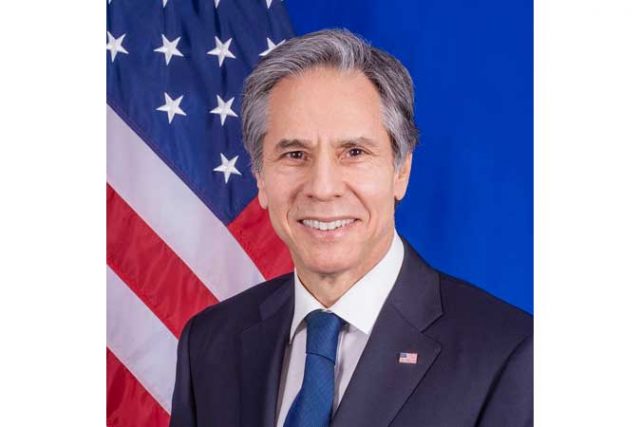
United States Secretary of State Antony Blinken — COURTESY OF FACEBOOK/ANTONY BLINKEN

WASHINGTON — United States Secretary of State Antony Blinken will meet virtually with Southeast Asian officials every day this week, a senior state department official said on Saturday, as Washington seeks to show the region it’s a US priority while also addressing the crisis in Myanmar.

The top US diplomat will attend virtual meetings for five consecutive days, including annual meetings of the 10 foreign ministers of the Association of Southeast Asian Nations (ASEAN) and other nations and separate meetings of the Lower Mekong subregion countries Myanmar, Cambodia, Laos, Vietnam and Thailand.

“I think it’s a clear demonstration of our commitment to the region,” said the official, who briefed Reuters on condition of anonymity.

In recent years top US officials have not always attended ASEAN meetings and have sometimes sent more junior officials to the region’s summits.

The virtual meetings come after the Biden administration in its early days was seen as paying little attention to the region of more than 600 million people, which is often overshadowed by neighboring economic giant China, which the administration sees as its major foreign policy challenge.

But that has been partly addressed by recent visits to the region. Deputy Secretary of State Wendy Sherman visited Indonesia, Cambodia and Thailand in May and June, Defense Secretary Lloyd Austin was in Vietnam and the Philippines last week, and Vice President Kamala Harris is set to visit Singapore and Vietnam.

“That steady flow of high-level engagement is going to pay dividends. It’s noticed,” the official said, adding that countries in the region “notice when we don’t show up and that’s when you start hearing some complaining maybe about not taking them seriously or taking them for granted.”

The official said that donations of COVID-19 vaccines to the region had been a “game changer in terms of how our image is perceived.”

On Sunday, the United States shipped 3 million doses of the Moderna COVID-19 vaccine to Vietnam and it has sent doses to other Southeast Asian countries too, but an agreement it reached in March with Japan and Australia and India to provide a billion doses to the region stalled due to an Indian export ban.

By mid-week the United States will have donated 23 million doses to countries in the region, which is experiencing a surge of the coronavirus with vaccination rates well below countries in the West, the official said.

But none of those doses have gone to Myanmar, formerly known as Burma, where military generals staged a coup on Feb. 1 and detained elected leaders including Nobel Laureate Aung San Suu Kyi, sparking sanctions from Washington and other Western capitals.

The meetings will see Mr. Blinken in the same virtual meetings as representatives of Myanmar’s military government, but the official said rather than bestowing legitimacy on those officials, this was an opportunity to get messages to the military government.

“We’re not prepared to walk away from ASEAN because of the bad behavior of a group of generals in Burma,” the official said, adding that US officials were also engaging with the National Unity Government that opposes the military government there. — Reuters

Two Sumatran tigers recovering from coronavirus

JAKARTA — Two Sumatran tigers at an Indonesian zoo were recovering from COVID-19 after they tested positive in mid-July, the Jakarta government said in a statement on Sunday, adding that authorities were trying to find out how they were infected.

Tino, a 9-year old tiger, and Hari, a 12-year old, were tested for coronavirus after both showed flu-like symptoms, had trouble breathing and lost their appetite, the statement said.

The tigers had undergone around 10 to 12 days of treatment and were gradually showing signs of recovery, Jakarta’s Head of the Parks and City Forest Office, Suzi Marsitawati, said.

“Their appetites have returned and they are back to being active,” Ms. Suzi said, although both tigers remain under close observation.

She said authorities are doing tracking and tracing to figure out how the tigers were infected.

“When the animals started to show symptoms, the Ragunan zoo was already closed due to emergency mobility restrictions,” Ms. Suzi said, referring to the Jakarta zoo.

She added that none of the caretakers and workers had tested positive with coronavirus around the time the animals were infected.

Indonesia has suffered the worst coronavirus infection in Southeast Asia with over 3.4 million infections and more than 94,000 deaths since the start of the pandemic. — Reuters

Latest software and development trends for 2021

Source: Pexels

Life in the software development sector never stands still. There are always several new, innovative, and disruptive technologies out there, ready to make our lives easier. 2021 may only be halfway through, but we’ve already seen some interesting trends emerge.

Microservices and Docker containers

Microservices refer to a way of building applications whereby each component can function independently and within the app. It’s a very distinct way of designing different kinds of software. Instead of looking at the big picture, the developer seeks to create single-function modules that also work when combined with others.

The trend for this kind of development has increased recently as companies and developers attempt to become more streamlined in their work while moving to a more DevOps-centred approach. A good example of this is the use of Docker containers. These create fast solutions for developers looking at how to improve docker performance. Using these kinds of containers is one of the leading ways to develop software right now, and is a part of this general trend. They are handy for those wanting to maximize speed during the development process.

Expansion of the Internet of Things

Juniper Research has estimated that by the end of 2021, more than 40 billion interconnected devices will be functioning on the Internet of Things, including over 30 billion new devices. The concept was first introduced 20 years ago, but today it has grown beyond all expectations. Many of us use IoT devices such as smartwatches, speakers, digital home controls, mobile-linked CCTV, and more without realizing they’re IoT technology.

The rollout of 5G has been a big boost for the sector, and in 2020 the average household has 10 connected devices. The current leader in terms of IoT devices is Google Home which has 48% of the market share.

The increased popularity of low code development

Low code development is a term that describes the development of low code applications and software. Essentially, it provides ‘blocks’ of code that carry out various functions. The coder can then assemble these blocks to create an application or similar. This allows various creations to develop without the need for coding. It’s instrumental when a program or app has repetitive coding or a basis that is commonly used elsewhere.

The key benefits of using this approach are the fact that it significantly reduces development time. It also allows coders to spend more time on complex or specialist bits of code. Additionally, it enables individuals to create new apps without authoring, testing, and experimenting with scripts.

Progressive web apps

There may have been times when you’ve accessed a mobile website, only to find it’s slow and unresponsive. This can be really frustrating. Many companies have sought to create web apps that are standalone applications downloaded from the App Store. But this requires downloading, installing, accepting terms and conditions, and giving the app access to parts of your device. A progressive web app works from within the browser and doesn’t require downloading.

The difference is that it’s designed to appear like an app and offer a higher level of service and usability. Think of it like a boosted application. These apps are secure, internet-free, easy to use, and always up-to-date. They are also growing significantly in popularity.

With just less than six months remaining, who knows what exciting developments the rest of 2021 has in store.

Eumir Marcial KOs opponent for a sure Olympic bronze medal

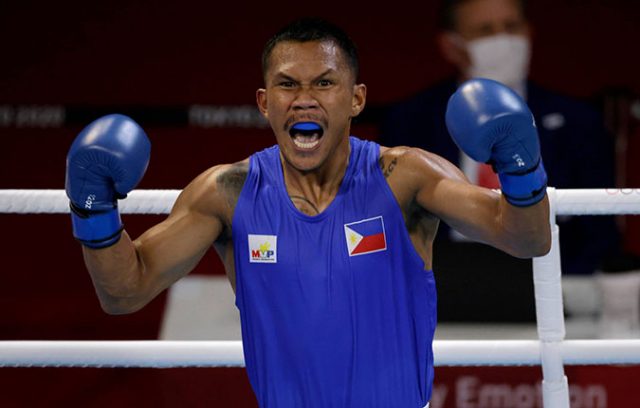
Eumir Marcial of the Philippines reacts after winning his fight against Arman Darchinyan of Armenia at the Tokyo Olympics, Aug. 1. -- REUTERS/Ueslei Marcelino

Filipino middleweight boxer Eumir Felix D. Marcial advanced to the semifinals of the Tokyo Olympic Games after knocking out Armenian Arman Darchinyan in the opening round of their quarterfinal clash at the Kokugikan Arena, Sunday.

The Zamboanga native stopped his opponent with a well-timed right hook with 49 seconds left in the first round that instantly sent Mr. Darchinyan to the canvas.

The win assured Mr. Marcial of at least a bronze medal in Tokyo.

In the semifinals on Aug. 5, Mr. Marcial will face Oleksandr Khyzhniak of Ukraine. – Michael Angelo S. Murillo

4 steps to starting a business built on education

Start your business and join a community

The last several months have shuffled everyone’s priorities and have made us all focus on the necessities. But despite the world being turned inside-out, education has stayed at the forefront of everyone’s minds. Before we found our preferred online delivery services, we made sure that students had the right tools to continue their studies. Before we longed for restaurants, malls and travel, we first ensured that learning did not stop.

For this reason alone, it’s no surprise that the education sector has continued to thrive. And if you’re one of those people that have considered getting into the business, here are some initial steps you need to take:

1. Look at the market

The question you need to first ask is, “Is there an open opportunity that I can take here?” And also, “Are the needs I’m servicing for the long haul and are they actionable?”

If the answer is yes, then you’re on the right track. And when it comes to making education a business, our experiences have proven that education is a service that can be catered to humanity’s collective situation—whether on-ground, remote, or in intimate, less crowded settings.

2. Assess your own expertise

It’s no secret that even the world’s leading entrepreneurs need help in handling the different facets of their businesses, and you are just the same.

Before you make the dive into starting your business, take a look at yourself and consider where you thrive. Think about whether you’d prefer to stay behind the scenes or at the forefront of all the action. Try to decide whether you can handle the organization and logistical responsibilities. Examine your history to see which part of education leaves you feeling most fulfilled.

Assessing your expertise will not only place you in the right corner of your business, it will show you where your weaker points are, too—which then point you in the right direction when you’re looking for others to help you out.


3. Decide on your mission

Nothing will take you further in business and in life than having a purpose and a mission to fulfill. This might be as simple as expanding your personal goals of educating children into having a fully-fledged education program that helps nurture students’ skills under your belt. At the same time, it could simply be about offering and giving the youth the best possible chance at succeeding inside and outside their classroom, during and after their formative educational years.


4. Look for a partner

Building something from the ground up is a respectable endeavour. But by looking into and partnering up with a trusted and established educational program, you are getting an added value into your business. You are having a stronger foothold in the market through extra brain power during major decision-making, additional set of hands for the groundwork, and new pair of eyes that will help you look at things from a fresh, professional perspective.

When you know what you want, you’ll know what to do. And with several options ready for your consideration, the monumental task of starting your own educational business becomes a little more attainable.

Kumon Philippines invites everyone with a commitment to nurturing children’s development and growth to open up their own Kumon Centers and become Franchisee-Instructors themselves. Click here to learn more.


Join us on Viber to get more updates from BusinessWorld: https://bit.ly/3hv6bLA

Nesthy Petecio heads to Olympic gold medal match

Filipina boxer Nesthy Petecio reacts after winning her fight against Irma Testa of Italy at the Tokyo Olympic Games, July 30. -- REUTERS/Ueslei Marcelino

Another Olympic gold medal for the Philippines is within reach after featherweight boxer Nesthy A. Petecio secured a spot in the finals at the Tokyo Olympic Games on Saturday.

Ms. Petecio, 29, defeated Irma Testa of Italy by split decision, 4-1, in the women’s featherweight semifinal bout at the Kokugikan Arena in Tokyo.

Four judges each scored the fight, 29-28, for the Filipino boxer, while one saw it, 28-29, for Ms. Testa.

The Filipina boxer bucked a slow start to edge the taller Italian, and now heads to the gold medal match set for Aug. 3.

Ms. Petecio sized up her opponent for much of the opening round before turning up the heat in the next two rounds, connecting on a barrage of blows to the body and head.

She now has the chance to duplicate the feat of weightlifter Hidilyn Diaz, who won the country’s first-ever gold medal on July 26. She is already assured of a silver medal, the Philippines’ first Olympic medal for a female boxer.

In the finals, Ms. Petecio will face either Karriss Artingstall of Great Britain or Sena Irie of Japan, who were set to fight later on Saturday. – Michael Angelo S. Murillo

Carlo Paalam books spot in Olympic flyweight quarterfinals

Filipino flyweight boxer Carlo Paalam advanced to the quarterfinals in the Tokyo Olympic Games after he defeated Mohamed Flissi of Algeria by unanimous decision in the Round of 16 on Saturday. -- One Sports

Filipino flyweight boxer Carlo Paalam advanced to the quarterfinals of the flyweight division in the Tokyo Olympic Games after he defeated Mohamed Flissi of Algeria by unanimous decision in the Round of 16 at the Kokugikan Arena, Saturday.

Mr. Paalam, 23, made up for his height disadvantage with speed and precision in counter-punching to get the better of his opponent en route to the convincing victory.

All of the five judges scored the three-round fight, 30-27, in favor of the Bukidnon native.

The win was in follow-up to Mr. Paalam’s split decision win, 4-1, over Ireland’s Brendan Irvine in the Round of 32 early this week.

Mr. Paalam was the third Filipino boxer to reach the quarterfinals in the Tokyo Games after women’s featherweight Nesthy A. Petecio, who was to fight later on Saturday for a spot in the gold medal game, and middleweight Eumir Marcial, who is to see action in the quarters on Sunday.

The flyweight quarterfinal round is scheduled on Aug. 3. – Michael Angelo S. Murillo

Obiena advances to Olympic men’s pole vault finals

Filipino pole vaulter Ernest John Obiena advanced to the final round of the men’s event in the Tokyo Olympic Games after finishing among the top 12 in qualification action at the Olympic Stadium, Saturday.

Mr. Obiena, 25, cleared 5.75 meters in Group A of the qualifying event, finishing in fifth place and 10th overall.

He did it in his third and final attempt after fouling in his first two tries.

Mr. Obiena also cleared 5.5m and 5.65m in the qualifiers.

“Thank you for all your prayers, after some nerve wracking moments, I made it to the finals… Thank you Lord for listening to our prayers,” he wrote in a Facebook post after advancing to the medal round.

The finals will be held on Aug. 3.

He will be up against the likes of world number one Armand Duplantis of Sweden, Piotr Lisek of Poland (#3), Renaud Lavillenie of France (#4) and Christopher Nilsen of the United States (#5), who all cleared in 5.75m in the qualification round.

Mr. Obiena is currently the world number six-ranked pole vaulter and the first Filipino to qualify for the Tokyo Olympics in 2019. – Michael Angelo S. Murillo

Metro Manila under strict lockdown to contain Delta variant

PHILIPPINE STAR/ MICHAEL VARCAS

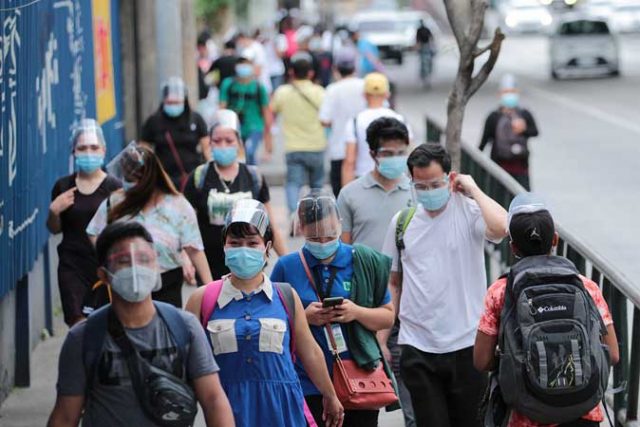
Manila and nearby cities would go back to the strictest lockdown level from Aug. 6 to 20 amid a fresh surge in coronavirus infections that may have been spurred by a more contagious Delta variant. 

The presidential palace announced the decision as the Department of Health (DoH) reported 8,562 COVID-19 infections on Friday, the highest in more than two months. This brought total cases to 1.58 million, 61,920 or 3.9% of which were still active. 

The Philippine economy could lose more than P200 billion during the two-week enhanced community quarantine, the National Economic and Development Authority said in a statement. 

It would also increase the number of poor people by as many as 177,000 and add 444,000 jobless Filipinos, Socioeconomic Planning Secretary Karl Kendrick Chua said in a Viber group message. 

The government should use the next three weeks to fast-track vaccinations in high-risk areas, Mr. Chua said. “This way, the enhanced community quarantine will be an investment to pave the way for a recovery once we control the Delta spread.”  

The government also extended the travel ban on India, where the variant was first detected, and its neighbors until mid-August, presidential spokesman Herminio L. Roque, Jr. told a televised news briefing on Friday. 

Covered by the ban aside from India are Pakistan, Nepal, Sri Lanka, Bangladesh, Oman, the United Arab Emirates, Indonesia, Malaysia and Thailand. 

More restrictions were imposed in the capital region starting July 31, including a ban on indoor and al fresco dining at restaurants. 

Physical religious gatherings were also banned, while necrological services, wakes and funerals for those who died of causes other than COVID-19 would be allowed but limited to immediate family members, the palace said. 

Public transportation will continue but only only authorized persons will be allowed to travel into and out of the National Capital Region, Cavite, Bulacan, Laguna and Rizal. 

Outdoor tourist attractions, beauty salons, parlors, barber shops and nail spas may continue to operate at 30% capacity. Indoor sports and tourist attractions won’t be allowed. 

The OCTA Research Group from the University of the Philippines earlier urged the government to impose a “circuit breaker” lockdown to contain a fresh surge in coronavirus infections that may be due to the Delta variant. 

It said about 1,000 cases were being reported daily in Metro Manila. Health authorities have debunked the claim, saying there was no evidence of a surge. 

The death toll rose to 27,722 on Friday after 145 more patients died, while recoveries increased by 2,854 to 1.49 million, the Health department said in a bulletin. 

There were 61,920 active cases, 94% of which were mild, 1.2% did now show symptoms, 2.1% were severe, 1.49% were moderate and 1.2% were critical.   

DoH has reported 216 Delta variant cases, but there could be more undetected cases because of the slow pace of the country’s genome sequencing. 

Only 7% of of 110 million Filipinos have been fully vaccinated against COVID-19. The government seeks to fully immunize as many as 70 million people by year-end. 

Albay Rep. Jose Maria Clemente S. Salceda said lockdowns should only be imposed as a last resort. 

Enhanced community quarantines only work when done early enough,” he said in a statement. “It does not work in response to a wave, because its impact is lagged. We’ll see its benefits only a month later.” — with Russell Louis C. Ku 

BSP vows to back economy with accommodative stance

The Philippine central bank will keep a supportive monetary policy amid a slower-than-anticipated economic recovery, its governor said on Friday. 

“High-frequency indicators suggest that the economy is gradually recovering from the adverse effects of the pandemic, but it would appear that the recovery is slower than anticipated,” Bangko Sentral ng Pilipinas (BSP) Governor Benjamin E. Diokno told a forum. 

“As such, the BSP will maintain its accommodative stance for as long as necessary to support and sustain the economy’s recovery,” he added. 

The central bank would watch risks to inflation and the growth outlook and would adjust policy settings when needed to maintain financial stability, he said. 

The central bank kept the key policy rate at a record low of 2% at its meeting on June 24, citing threat from the coronavirus and a recovery that had just started. 

“There are still risks to our growth outlook as the presence of the Delta coronavirus variant might give rise to renewed restrictions, similar to what is happening in select cities in Asia, Europe and Oceania,” Mr. Diokno said. 

Economic output fell by 4.2% in the first quarter after a record 9.6% contraction in 2020. 

The central bank chief said there were “promising signs of recovery, including the growth in exports and foreign direct investments (FDI). 

Exports rose by 21.4% to $29.35 billion in January to May from a year earlier, while FDI inflows jumped by 56.3% in the first four months to $3.056 billion. 

Meanwhile, Mr. Diokno said headline inflation was beyond their 2-4% target “due to transitory factors,” but should remain within estimates over the policy horizon. 

“We reiterate that increases in prices owing to supply shocks are best dealt with by supply-side interventions,” he said. 

Meanwhile, July inflation was expected to exceed the central bank’s target for the seventh straight month amid rising oil, food and electricity prices, Mr. Diokno said. 

The consumer price index is expected to rise by 3.9% to 4.7% this month, likely at 4.3%, he told reporters in a Viber message. Inflation in June was 4.1%  and 2.7% a year earlier. 

“Higher prices of domestic petroleum products and key food items along with the upward adjustment in Manila Electric Co. electricity rates and a weaker peso are the main sources of upward price pressures for the month,” Mr. Diokno said. 

Inflation was 4.4% in the first half. The central bank will hold its next policy-setting meeting on Aug. 12. 

BSP fully awards one-month bills

BW FILE PHOTO

The Philippine central bank raised P100 billion on Friday as it fully awarded its short-term securities, with yields rising due to concerns about a looming strict lockdown in the capital region. 

The 28-day securities of the Bangko Sentral ng Pilipinas (BSP) were oversubscribed as it fetched bids worth 117.75 billion. But demand failed to beat the P162.51 billion in tenders at the auction last week. 

Accepted rates were from 1.735% to 1.9279%, wider than 1.745% to 1.7705% last week. This caused the average rate to rise by 1.67 basis points to 1.7769% 

The central bank uses its bills and term deposit facilityto mop up excess liquidity in the financial system and guide market rates.   

The yields increased as investors got worried about the effect of the strict lockdown from Aug. 6 to 20 on the economy, said Michael L. Ricafort, chief economist at Rizal Commercial Banking Corp. — Luz Wendy T. Noble 

SEC creates office for fintech innovation

The Securities and Exchange Commission (SEC) on Friday launched a new office under its Corporate Governance and Finance Department (CGFD) that will focus on regulating the use of financial technology (fintech) within the country.

“The commission has supported new and emerging business concepts while taking a proactive stance against any excessive risk buildup to ensure market integrity,” SEC Chairperson Emilio B. Aquino said in a media briefing on Friday.

The PhiliFintech Innovation Office (PIO) will be creating policies for existing and new fintech innovations.

New fintech firms applying for registration will need to reach out to the PIO. Existing fintech companies that have been operating sans the proper regulation or authorization and those that will introduce new products will also be facilitated by the PIO.

The innovation office can also provide “regulatory clarifications” or “regulatory guidance” to fintech firms, wherein it can guide these firms to which regulations apply to them and even assist them in registration.

It also aims to “capacitate the commission with technical expertise” to regulate these fintech innovations, while promoting an “innovative culture” in the commission.

“The SEC established its innovation office… modeled after existing frameworks, structures, and the best practices of other jurisdictions, but we have customized it to fit the fintech landscape here in the Philippines,” SEC Commissioner Kelvin Lester K. Lee said.

The PIO will document and analyze fintech business models to allow the SEC to formulate appropriate regulatory responses to protect investors and to promote the growth of these firms.

Participants will also be allowed to pitch regulations through industry

consultations or “Present Me Anything Sessions,” either with the PIO or the commission. The commission aims to work closely with industry participants.

The PIO is working on a “Regulatory Genome Project” with the University of Cambridge.

“It is a transformation initiative to sequence the world’s vast amount of regulatory data and text, create a comprehensive repository of information to be used by agencies, regulators, and businesses around the world,” Mr. Lee said.

It is also conducting a “domestic industry mapping,” to document local fintech participants that are under the SEC’s jurisdiction.

“We will also endeavor to finalize the DAO (digital asset offerings) and DAX (digital asset exchange) rules with the commission’s own Markets and Securities Regulation Department,” Mr. Lee said, adding that the PIO will also work with the CGFD for memorandums on online lending apps.