Home Blog Page 7686

Staying put, looking forward
PHILIPPINE STAR/MICHAEL VARCAS

The year 2020 may very well be the longest any of us has ever experienced. Filipinos of all walks of life were faced with new adversities, many of which remain unresolved as we approach 2021’s halfway point. Nevertheless, changes brought about by the COVID-19 pandemic also brought about new forms of creativity, accountability, and connectivity, with many Filipinos embracing the new aspects of our circumstances. With scientists working on medical solutions, we have a responsibility to create solutions in our respective industries for our respective stakeholders.

In order to create these solutions, a comprehensive understanding of how drastically society has been changed is critical. To learn how Filipinos feel about a rollercoaster year, EON conducted a nationwide survey, “Filipinos in the New Reality: Life After a Year of Quarantine.” This survey asked 6,000 Filipinos across the country about what has changed for the better and for the worse since the first set of lockdowns in March last year, interrogating respondents on what new systems have benefited their lifestyles as well as which gaps have endured or even widened. A summary of the findings of this research follows, which we hope will inform the decisions of those in positions of power toward making a “better normal” as sustainable as possible.

We begin with the obvious — the country has emerged from a year of quarantine consumed with feelings of sadness, fear, and regret over the state of affairs. While respondents note a vast number of changes to their routine since March 2020, the majority cite the inability to leave the house as a key difference, with many Filipinos frustrated at how physical restrictions have impacted their ability to attend mass or hang out in shopping malls. Still, Filipinos demonstrate their ability to make the best out of unpredictable situations, with many sharing the tremendous role which family support has played from both psychosocial and financial angles. Though Filipinos lament their newly limited mobility, their fears center over the health and protection of their family, with more respondents afraid their loved ones will catch COVID-19 than afraid of the pandemic’s impact on their work and livelihood.

This is not to say that Filipinos are not feeling the impact of COVID-19 on their finances. On the contrary: a clear majority note that expenses have risen due to the pandemic and that frugal living has been essential. Of the Filipinos surveyed who confirmed their debt, a majority express the desire to work harder, but many also indicate they are simply unable to pay lenders back and are out of options. Potential solutions to financial issues manifest in social media, with many confirming that financial constraints owing to the pandemic have inspired a new interest in setting up online businesses. Still, while we can’t say for sure if COVID-19 is the only cause of our financial distress, we can definitely state that it did not help anyone’s situation.

In sifting through the data, the Filipino people have provided us, we see that issues are just as comprehensive as the efforts our people utilize to solve them. When asked how to move forward, Filipinos reveal that they are anything but single-issue thinkers. Respondent sentiments run a considerable gamut, with Filipinos calling on the government to do away with corruption, calling on the business community to create more jobs, and calling on one another to be vigilant about one another’s safety. It is clear to the people that fixing one crack in our broken system is not enough: respondents stress the importance of financial literacy, thorough research on political candidates, and proper hygiene. The diversity of issues and solutions raised by those who engaged in our research sends a powerful message: Filipinos are keenly aware of the world around them, and are not shy at all to share what they believe it takes to make 2021 more prosperous than the year which preceded it.

With so many dimensions to the pandemic, the question is what is to be done. I would argue first that the average Juan dela Cruz is already doing all they can. Our research shows that Filipinos have utilized a variety of coping mechanisms for each of the issues brought about by this pandemic, whether it’s immersion in social media to pass the time confined at home or whether it’s exploring online business opportunities to make up for economic shortfalls. It is also quite clear from what respondents have said that Filipinos comply as diligently as possible with safety protocols and urge their countrymen to maintain the same standard. I would thus hesitate to continue messaging which attributes our issues to a lack of discipline. The people work with what they are given, and for many it has only been enough to survive.

For those of us privileged enough to worry more about quarterly financial projections rather than when barangay assistance will arrive, I implore you all to demonstrate empathy to your employees like never before. Too many business leaders have used COVID-19 as an opportunity to showcase their ability to pivot in the face of crisis; too few have indicated efforts to connect to the deep emotional and physical wounds afflicting their staff. The data make the overwhelming hopelessness washing over our countrymen quite clear, and while many commit to working even harder to make a living, this resilience should not come at the cost of mental and spiritual stability. If we cannot be there for the people who make our businesses operate on a daily basis, we cannot call ourselves successful business leaders.

Lastly, truth in messaging is non-negotiable, whether leading a company, organization, or political movement. Innovations brought about by the pandemic have afforded the public greater accessibility to their leaders, with social media tearing away the walls separating decision-makers from their constituents. The importance of meaning what you say — and doing it soon after you say it — cannot be overstated at a time where so many of us are losing loved ones at a rapid pace. Tensions have never been this high and the consequences of this “better normal” have been chillingly real for too many of our kababayan. We owe it to ourselves as leaders to advocate for truth, guide those who follow us on the right path, and strive in all that we do to empower and safeguard the Filipino from misinformation. I hope readers will rise to this call-to-action and look forward to the collaborations which will strengthen our country in the days to come.

This article reflects the personal opinion of the author and does not reflect the official stand of the Management Association of the Philippines or MAP.


Junie S. Del Mundo is Chair of the MAP Health Committee, Vice-Chair of the MAP CEO Conference Committee, and Chair and CEO of The EON Group.

map@map.org.ph

junie.delmundo@eon.com.ph

map.org.ph

An epidemic of community pantries

PHILIPPINE STAR/ MICHAEL VARCAS
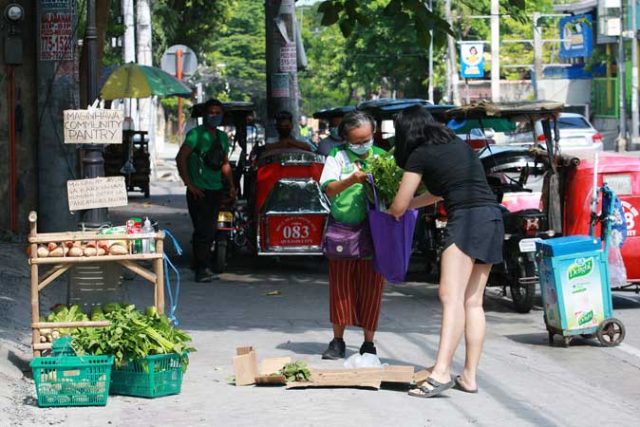
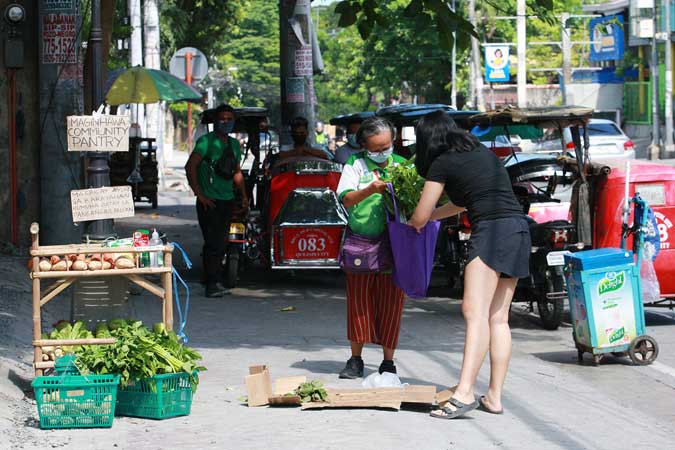
ANA PATRICIA NON helps a vendor pack vegetables from her community pantry along Maginhawa St., Quezon City on April 15. — PHILIPPINE STAR/ MICHAEL VARCAS

On April 14, Ana Patricia Non brought out of her house on Maginhawa St., Quezon City a cart filled with fresh vegetables, canned goods, eggs, and non-food items. On the cart was a piece of cardboard oh which was written “Maginhawa Community Pantry. Magbigay ayon sa kakayahan, kumuha batay sa pangangailangan” (Give what you can, take what you need).

That day, several passersby, attracted by the food cart and the message on the piece of cardboard, stopped by. Urged by Patricia, they picked up a few items and walked on. Word got around the neighborhood such that in the days following, hundreds came to take from the “pantry,” which was starting to look more and more like a neighborhood market as it expanded from a cart to a long row of makeshift stands behind which were Patricia’s growing number of volunteer helpers.

The Maginhawa Community Pantry inspired other communities to put up their own pantries. Community pantries mushroomed all over Metro Manila. There are now community pantries in the Visayas and Mindanao and even in faraway Timor Leste.

The word “epidemic” is generally taken to mean the rapid spread of disease to a large number of people in a community or region within a period of time. The word originally meant something affecting a disproportionately large number of individuals within a population, community, or region at the same time. So it is right to say that the rapid replication of the Maginhawa Community Pantry is an epidemic.

Like the coronavirus, the Maginhawa virus has also mutated. There is now the Bugallon, Pangasinan variant — a combination pantry/medicine cabinet on a bicycle. There is the Iligan City variant, halal pantry.

Malcolm Gladwell wrote in his book The Tipping Point that the confluence of three factors starts the epidemic of an idea: the personality of the person who came up with the idea, the novelty of the idea, and the relevance of the idea to the general population.

Patricia may not be in the same class as other well-known civic leaders. She does not have the stature of Dr. Vicky Belo whose name is synonymous with aesthetic surgery. Dr. Belo, whose patients are mostly showbiz celebrities and ritzy matrons, renders her service for free to poor individuals with cleft lips and palates. She recently volunteered her services to the government’s

vaccination program.

Patricia is far from being as popular as the actress Angel Locsin, an acknowledged philanthropist and a known human rights advocate. But she is notable enough in her community. She is known to be sincere, capable, and dedicated to whatever endeavor she undertakes. The 26-year-old UP College of Fine Arts graduate has given free art workshops to poor young people and to political prisoners.

The community pantry idea is a translation into action of the bayanihan spirit, which is a trait of the Filipino to help others in need without expecting any reward. That spirit has been translated in many ways many times in many parts of the country. In the olden times, when houses in the countryside were made of light materials, bayanihan meant helping the homeowner relocate his house. In contemporary times, bayanihan is demonstrated many times when private individuals supply health workers with personal protective equipment and send them food.

Still, the community pantry is a novel translation of that spirit. Patricia could have simply distributed food packs, or she could have written on the cardboard on her food cart, “Libreng gulay, de lata, at iba pa” (Free vegetables, canned goods, and other items).

But one whoever avails herself of the free items leaves feeling she left behind her dignity. The “community pantry” somewhat mitigates that feeling. One who takes something from the community pantry is presumed to place something else. Also, the shareholder of the pantry is free to choose what food she will provide her family instead of getting a ready-to-eat meal in a box from a fast-food chain. That is the novelty of the Maginhawa Community Pantry, that is why the idea spread like the coronavirus.

Community pantries serve thousands of hungry jobless individuals. It is estimated that four million Filipinos remain unemployed because of the lockdown imposed to contain the spread of COVID-19. The community pantry was put up as a collective action to alleviate widespread hunger, Patricia said. She added that one of the possible reasons why the project trended online is because a lot of Filipinos could relate to the idea.

Agents of the Duterte Administration have branded community pantries as disguised platforms for communist propaganda. Lt. Gen. Antonio Parlade, spokesman of the National Task Force to End Local Communist Armed Conflict (NTF-ELCAC), which is under the direct command of President Duterte, accused the people behind the Maginhawa Community Pantry as being funded by communists. Former communist cadre Shane Valdez even told the Philippine News Agency that Patricia was a member of a communist terrorist group. She claimed Patricia has a hidden agenda which that is why she didn’t use “Bayanihan” for the name of her pantry. What wild communist logic!

Neither Gen. Parlade nor Shane Valdez presented any evidence to substantiate their allegations. Gen. Parlade, who is chief of the Armed Forces of the Philippines Southern Luzon Command, can send operatives of the Intelligence unit of that Command to Maginhawa to pretend to be volunteers and pantry shareholders to gather evidence that can expose Patricia’s supposed communist financial backers and her hidden agenda. The Maginhawa Community Pantry has been in full operation for almost two weeks now, yet Gen. Parlade has not come up with any evidence that would prove his claim.

That is why civil society groups have been led to believe that Gen. Parlade’s baseless accusation is really a disguised attempt to put an end to the community pantry epidemic because it is causing extreme embarrassment to the Duterte Administration.

Community pantries fill the gaps in the way the Duterte Administration is addressing the problems of unemployment and hunger. Little to no financial assistance has been given to the country’s poor who have been struggling to stay alive all throughout this protracted lockdown. As Senator Francis Pangilinan said, the community project serves as a sad reminder that people can only rely on each other in times of need. Senator Richard Gordon remarked that the government is put to shame because private citizens are doing what it should be doing.

The COVID-19 epidemic has shown the government to be incompetent. The Community Pantry epidemic is showing it to be inutile.


Oscar P. Lagman, Jr. is a retired corporate executive, business consultant, and management professor. He has been a politicized citizen since his college days in the late 1950s.

10 reasons to lift the lockdown

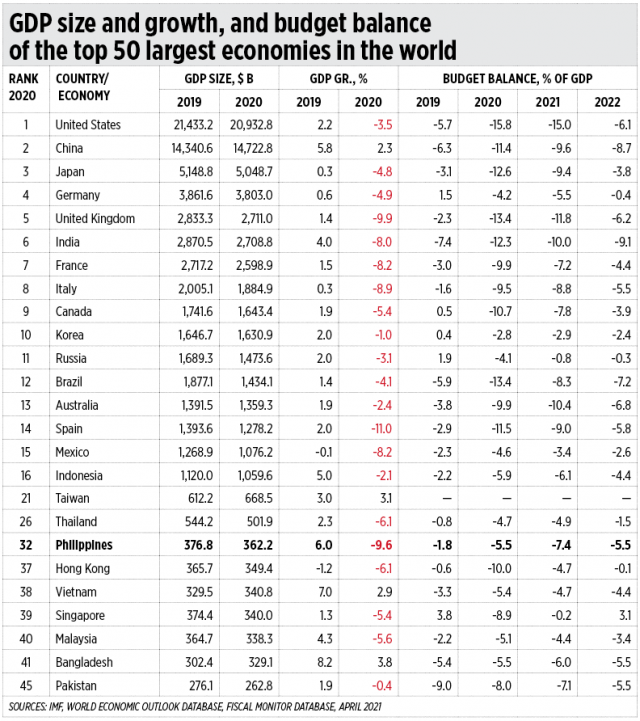
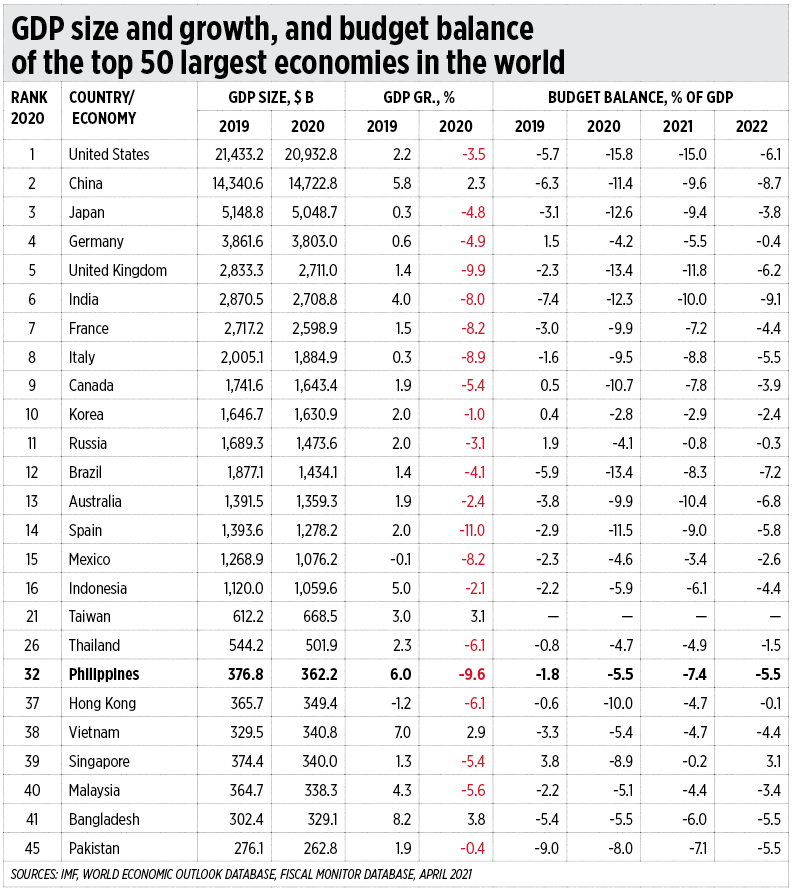
In 2020, the Philippines was the 32nd largest economy in the world, it had the worst performing economy in Asia with its GDP contracting by 9.6%, and was the fourth worst performing economy among the world’s top 50 largest economies, next to Spain with -11%, Argentina with -10%, and the UK with -9.9%.

The prolonged lockdown by many governments around the world forced them to overstretch their spending, leading to high budget deficits (expenditures larger than revenues) in 2020. The high deficits to GDP ratios are expected to continue in 2021 and begin to taper off by 2022 and beyond, assuming there are no new large-scale lockdowns and closures of many businesses for whatever reason/s (see the table).

Many countries in the world are expected to have lower budget deficits in 2021 compared to their 2020 levels except the Philippines and a few other countries. Our -5.5% of GDP in 2020 is expected to rise to -7.4% this year.

10 REASONS TO LIFT THE LOCKDOWN
It is possible to lift the lockdown nationwide or at least move to the least restrictive Modified General Community Quarantine (MGCQ) starting May 1, for these reasons.

One, our economic contraction in 2020 was very deep, the deepest since the Philippines government started recording GDP data, and the deepest in Asia.

Two, the National Economic Development Authority (NEDA) estimated that foregone wages of workers come to about P19.6 billion per week under the strict Enhanced Community Quarantine (ECQ) and P14.7 billion per week under the next quarantine level Modified ECQ (MECQ). We cannot continue with this kind of jobs and income losses.

Three, indefinite business closures have soured the Philippines’ investment environment. The Philippine stock market remains the worst performing in Asia Pacific, with a year-to-date (ytd) contraction of -10.7% vs. Indonesia’s 0.6%, Thailand’s 7.2%, Singapore’s 12.3%, as of April 23.

Four, the sprouting of hundreds of community pantries nationwide, with voluntary food donations by private citizens with zero government funding for the poor means many Filipinos now are hungry and become poorer.

Five, there are existing prophylaxis (preventive) and early treatment drugs for homecare, outpatient care to avoid hospitalization. These include ivermectin which has many studies showing high efficacy and safety (see https://ivmmeta.com/), even the old hydroxychloroquine (see https://hcqmeta.com/), proxalutamide (https://c19colchicine.com/) and so on. The Concerned Doctors and Citizens of the Philippines (CDC PH) has medical protocols for prophylaxis, early treatment and late treatment for COVID-19 cases.

Six, the physical health of many people suffers with prolonged inactivity and staying at home with insufficient sunlight. See “Physical inactivity is associated with a higher risk for severe COVID-19 outcomes: a study in 48,440 adult patients,” https://bjsm.bmj.com/content/early/2021/04/07/bjsports-2021-104080.

Seven, many people are suffering from mental health issues because of the prolonged closure of schools and offices, the inability to casually communicate and see their officemates, classmates, and friends.

Eight, many of the restrictions imposed by the government have no scientific, no medical and clinical studies saying that they work: the lockdown and closure of many businesses, mandatory use of face shields, curfews, the prohibition of people below 18 years old from entering malls and restaurants, crossing provincial boundaries and checkpoints, and so on.

Nine, the economic burden of new or higher taxes, new or higher regulatory fees, fines and penalties, will be severe on the people. Government’s outstanding debt has increased significantly, from P8.22 trillion in 2019 to P10.25 trillion in 2020, and P10.40 trillion as of February this year.

Ten, the people’s Constitutional freedom of mobility, freedom to be economically productive, continue to be restricted if not outrightly prohibited by the government via these indefinite lockdowns. The people’s freedom cannot be hostaged indefinitely by indefinite lockdowns by the state.


Bienvenido S. Oplas, Jr. is the president of Minimal Government Thinkers

minimalgovernment@gmail.com

Countries vow to send aid to India

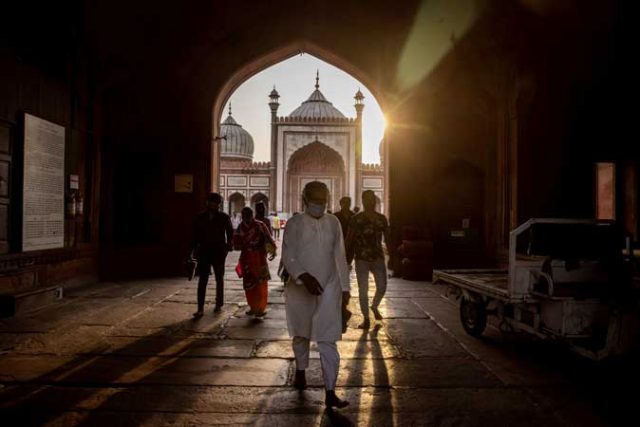
People leave after offering prayers on the first day of the Muslim fasting month of Ramadan, amidst the spread of the coronavirus disease (COVID-19), at Jama Masjid in the old quarters of Delhi, India, April 14, 2021. — REUTERS/DANISH SIDDIQUI
REUTERS

NEW DELHI — India’s new coronavirus infections hit a record peak for a fifth day on Monday as countries including Britain, Germany and the United States pledged to send urgent medical aid to fight the crisis overwhelming its hospitals.

Infections in the past 24 hours rose to 352,991, with overcrowded hospitals in Delhi and elsewhere turning away patients after running out of supplies of medical oxygen and beds.

“Currently the hospital is in beg-and-borrow mode and it is an extreme crisis situation,” said a spokesman of the Sir Ganga Ram Hospital in the capital.

On Sunday, Prime Minister Narendra Modi urged all citizens to get vaccinated and exercise caution, while hospitals and doctors have put out urgent notices saying they were unable to cope with the rush of patients.

In some of the worst-hit cities, including the capital, bodies were being burnt in makeshift facilities offering mass services.

Television channel NDTV broadcast images of three health workers in the eastern state of Bihar pulling a body along the ground on its way to cremation, as stretchers ran short.

“If you’ve never been to a cremation, the smell of death never leaves you,” Vipin Narang, a political science professor at MIT in the United States, said on Twitter.

“My heart breaks for all my friends and family in Delhi and India going through this hell.”

On Sunday, President Joseph R. Biden said the United States would send raw materials for vaccines, medical equipment and protective gear to India. Germany also joined a growing list of countries pledging to send supplies.

India, with a population of 1.3 billion, has a tally of 17.31 million infections and 195,123 deaths, after 2,812 deaths overnight, health ministry data showed.

But health experts say the death count is probably far higher.

Politicians, especially Mr. Modi, have faced criticism for holding rallies attended by thousands of people, packed close together in stadiums and grounds, despite a brutal second wave of infections.

Several cities have ordered curfews, while police have been deployed to enforce social distancing and mask-wearing.

Still, about 8.6 million voters were expected to cast ballots on Monday in the eastern state of West Bengal, in the penultimate part of an eight-phase election that will wrap up this week.

Voting for local elections in other parts of India included the most populous state of Uttar Pradesh, which has been reporting an average of 30,000 infections a day. — Reuters

COVID vaccine brand matters if you’re traveling abroad

REUTERS
PEOPLE walk past the Trevi Fountain amid the pandemic in Rome, Italy, April 24. — REUTERS

WITH the resumption of global travel on the horizon, some people are discovering that their choice of vaccine could determine where they’re allowed to go.

Already, the European Union is planning to allow Americans vaccinated with shots approved by their drug agency to enter over the summer, European Commission president Ursula von der Leyen suggested in a New York Times interview Sunday.

This means that those who have shots by Chinese makers like Sinovac Biotech Ltd. and Sinopharm Group Co. Ltd. are likely to be barred from entry for the foreseeable future, with stark consequences for global business activity and the revival of international tourism.

As inoculation efforts ramp up around the world, a patchwork of approvals across countries and regions is laying the groundwork for a global vaccine bifurcation, where the shot you get could determine which countries you can enter and work in.

For Chinese citizens who venture abroad regularly, and western nationals wanting to pursue business opportunities in the world’s second-largest economy, a dilemma is emerging about which shot to opt for. China so far recognizes only Chinese-made shots, and its vaccines are not approved in the US or Western Europe.

Hong Kong citizen Marie Cheung travels to mainland China regularly for her work with an electric vehicle company, a routine that’s been interrupted by lengthy mandated quarantine stays since the pandemic began.

Of the two vaccine options available in the city — one from Sinovac and another developed by Pfizer, Inc. and BioNTech SE — Ms. Cheung plans to sign up for Sinovac for easier movement in and out of the mainland. Meanwhile, her British husband will go for the Pfizer-BioNTech shot, she says to boost his chances of visiting family in the UK

“For people who need to work in or return to the mainland, the Chinese vaccine is the only option for them,” Ms. Cheung said. “Westerners will only choose the vaccine recognized by their home country.”

For millions of people worldwide who can’t choose which vaccines they get, the risk of more places becoming selective about which shots they recognize, especially given the vaccines’ varying efficacy rates, creates the possibility that even fully inoculated, people’s travel could still be limited — with consequences for international business activity and the tourism industry.

“A global division of peoples based around vaccine adoption will only exacerbate and continue the economic and political effects of the pandemic,” said Nicholas Thomas, associate professor in health security at the City University of Hong Kong. “It will risk the world being divided into vaccine silos based on vaccine nationalism rather than medical necessity.”

MUTUAL RECOGNITION
Many countries have shut their borders amid the pandemic, some allowing entry only to citizens, and even then with weeks-long quarantines after arrival. While vaccines are seen as the way to remove those entry barriers, considerable uncertainty remains over how, or if, nations will differentiate the at least 11 shots available worldwide.

Governments from China to Europe are discussing vaccine passports — easily accessible and verifiable certifications stating that an individual has been inoculated — but it’s unclear if countries will pursue universal recognition of all shots, or be selective on which they choose to recognize, particularly with the rise of virus variants and questions over whether the current crop of vaccines are as effective against them.

China eased visa application requirements for foreigners who had been inoculated with Chinese shots in March, including the ability to skip COVID tests or fill out travel declaration forms. The country’s homegrown vaccines are only available in some countries, like Brazil, Pakistan and Serbia. You can’t get Sinovac or the other Chinese shots in the US.

But in a sign that Beijing may be cognizant of the economic costs of being selective on vaccines, the Chinese embassy in Washington said this week that travelers who had taken certain Western shots could still enter the country if they were departing from Dallas in Texas. State media has indicated that the Pfizer-BioNTech shot is likely to be approved mid-year.

“We do think that it’s important to get a very high percentage of the community vaccinated and the best way to do that is to offer choice,” said Ker Gibbs, president of the American Chamber of Commerce in Shanghai. As a key market and source of business for companies around the world, China’s border restrictions — among the world’s strictest — have “had a major impact on our ability to conduct business,” he said. 

“Just speaking with our members, mobility is a high priority for us both in terms of allowing our executives to come in and out of China, but also to have their dependents travel back to China,” Mr. Gibbs said. “That’s been a big problem.”

China isn’t the only place that’s restricting access to people with certain vaccinations. Iceland omitted Chinese and Russian vaccines from the list of those it approves for entry.

The question of vaccine recognition is a key one for tourism-dependent countries, with the $9 trillion global travel industry effectively paralyzed since the pandemic began.

China’s approach to this issue may impact their decision-making, as Chinese tourists have been among the biggest groups of foreign visitors to travel hot spots in Southeast Asia, Australia and New Zealand and capitals as far away as Paris before the pandemic.

STEEP DROP
There were 155 million outbound tourists in 2019 spending more than $133 billion abroad, according to the China Tourism Academy, a government think tank and subsidiary of the Ministry of Culture and Tourism. While Indonesia, home to Bali, and Thailand have approved and are administering Chinese shots, New Zealand and Australia — which has seen its relations with China deteriorate the past year over the virus and trade — do not.

“I don’t know how practical it will be for Western countries to recognize Chinese vaccines given the geopolitical environment,” said Ether Yin, a partner at Trivium China, a Beijing-based consultancy. “But there won’t be a true resumption of global travel or economy without the inclusion of China, plus dozens of economies who used Chinese vaccines.”

Katy Niu, a 26-year old Chinese citizen, is a skiing enthusiast and frequent traveler living in Beijing. It’s unclear whether she’ll be returning to international slopes like those in Japan’s Hokkaido anytime soon. Prior to the pandemic, she used to travel internationally at least three times a year, from shopping on Paris’s Champs Elysées to relaxing on a Southeast Asian beach.

Ms. Niu hasn’t gotten a vaccine yet, saying she didn’t feel any urgency since she’s not currently able to travel — and doesn’t see it opening up in the near future.

“If other countries don’t recognize the Chinese vaccine, does that mean vaccination is not going to make a difference?” she said. “We are not offered a Western vaccine anyways — we don’t have a choice.” — Bloomberg

Thailand starts tightening coronavirus measures

REUTERS
SUN SETS in Bangkok amid the coronavirus disease 2019 (COVID-19) outbreak, May 15. — REUTERS

BANGKOK — Thailand has suspended issuing travel documents from India over concerns of imported coronavirus cases, as more venues were closed in Bangkok on Monday as part of efforts to contain a third wave of infections in the Southeast Asian nation.

India on Monday set a global record for coronavirus cases for a fifth straight day with 352,991 new infections, as its caseload crossed 17 million and with hospitals running out of oxygen, beds and anti-viral drugs.

The Thai embassy in New Delhi said in a statement that certificates of entry for non-Thai nationals travelling from India will be suspended until further notice.

The Civil Aviation Authority of Thailand (CAAT) denied reports that private jets carrying wealthy people from India were flying into Thailand.

“We confirm that no chartered flights from Indian millionaires have sought permission from the CAAT to come to Thailand,” it said in a statement on the weekend.

There would be four repatriation flights from India to Thailand in May, CAAT said.

Thailand is dealing with its own outbreak and reported 2,048 new cases on Monday, bringing its total infections to 57,508 and 148 coronavirus-related fatalities.

Of the cases reported on Monday, 901 were in Bangkok, which has been the epicenter of the outbreak.

Parks, gyms, cinemas and day-care centers in Bangkok were ordered to shut starting on Monday until May 9.

A 20,000 baht ($635) fine was also introduced for not wearing masks in public with new measures being considered to rein in the outbreak. — Reuters

Hong Kong, Singapore to start long-delayed travel bubble next mont

REUTERS

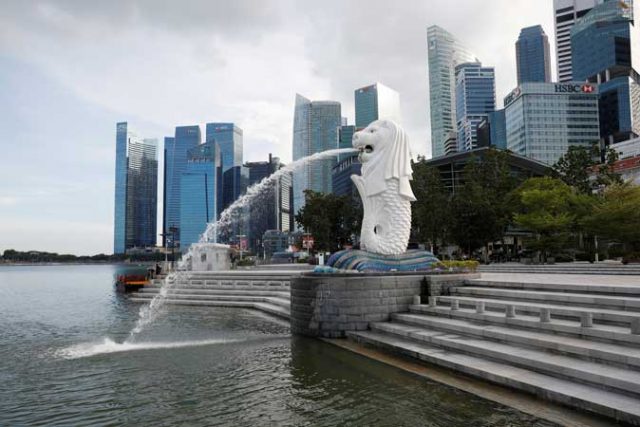
HONG KONG/SINGAPORE — A long delayed travel bubble between Hong Kong and Singapore will begin on May 26, the two cities said on Monday, as they moved to re-establish overseas travel links and lift the hurdle of quarantine for visiting foreigners.

The bubble between two of Asia’s biggest financial hubs had been slated to begin last November but was suspended after a spike in coronavirus cases in Hong Kong.

The scheme will start with one flight a day into each city, with up to 200 travellers on each flight, Hong Kong’s Commerce Secretary Edward Yau and Singapore’s Transport Minister Ong Ye Ku said at simultaneous press events.

Those wanting to travel from either city must test negative for COVID-19 before departure and on arrival. Hong Kong residents can also only fly to Singapore at least 14 days after they have had two doses of COVID-19 vaccine.

Travellers on the route – which attracted 15-20 flights a day each way before coronavirus – won’t have to quarantine and there will be no restrictions on the purpose of travel.

However, if the seven-day moving average of the daily number of unlinked local COVID-19 cases is more than five for either Singapore or Hong Kong the scheme will be suspended, Yau and Ong said.

“The re-launch … signifies that gradual resumption of cross-border travel is achievable through mutual collaborations among different places,” said Yau.

For Hong Kong, which has banned non-residents since March 2020, the deal with Singapore is its first bilateral resumption of travel ties with another city.

Eligible Hong Kong residents in the mainland and Macau will be exempt from quarantine in the Asian financial city from as early as this week, Secretary for the Civil Service Patrick Nip said on Monday. Singapore already has some pacts on essential business and official travel, and has opened unilaterally to general visitors from countries including Brunei Darussalam, China and New Zealand. Singapore has also been discussing an air travel bubble with Australia.

Both Hong Kong and Singapore said they are in talks with places including New Zealand and Australia for similar travel bubbles. The Asian cities have brought the local virus situation largely under control compared with other developed cities.

New cases, however, have inched up in the past week, with Hong Kong reporting local transmission of a COVID-19 variant with the N501Y mutated strain and Singapore investigating possible COVID-19 reinfection cases at a migrant worker dormitory. The dormitories were at the centre of Singapore’s outbreak last year with thousands of cases.

Singapore work permit holders employed in construction, marine shipyard or process sectors, many of whom live in dormitories, are excluded from the bubble.

Cathay Pacific and Singapore Airlines would be the carriers for the initial flights, authorities said.

“To get this bubble up successfully, I think we’ll have a significant signalling effect to the rest of the world,” said Singapore’s Ong. — Reuters

Irving and Durant lead Nets past Suns; Wizards win eighth in a row

BROOKLYN NETS FB PAGE
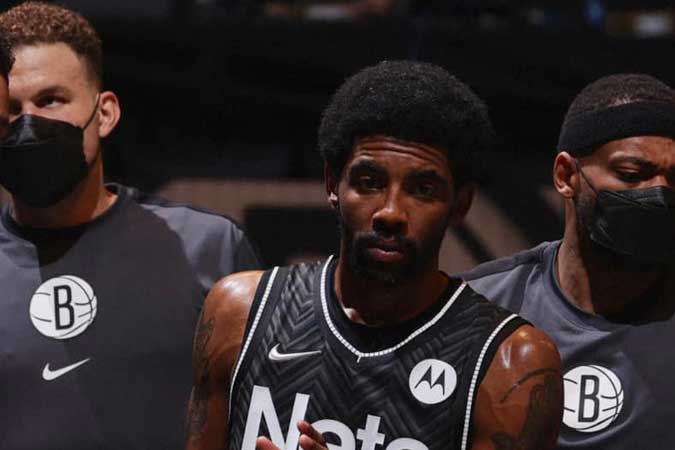
KYRIE Irving had 34 points with 12 assists as the Brooklyn Nets earned a 128-119 victory over the visiting Phoenix Suns on Sunday. — BROOKLYN NETS FB PAGE

KYRIE Irving had 34 points with 12 assists, while Kevin Durant scored 33 points after a brief time away, as the Brooklyn Nets earned a 128-119 victory over the visiting Phoenix Suns on Sunday in a showdown between two of the top teams in the NBA.

Blake Griffin scored 16 points, as the Nets backed up their standing as the top team in the Eastern Conference.

Devin Booker scored 36 points for Phoenix, while Deandre Ayton scored 20 points with 13 rebounds, as the Suns dropped consecutive games for the first time since late January.

Phoenix, which entered as the No. 2 team in the Western Conference, is now 2-2 on a five-game East Coast trip with a final game at the New York Knicks on Monday.

Durant, who entered as a substitute with eight minutes remaining in the first half, showed little rust after missing the last three games with a thigh contusion. He was 12 of 21 from the field in 28 minutes of action.

After trailing by as many as 13 points in the second quarter, the Nets entered the fourth period with a slim 97-92 lead. They pushed it to 102-92 less than a minute into the fourth quarter on a shot inside and a three-pointer from Durant, who set the tone for the final 12 minutes. The Nets outscored the Suns (31-27) in the fourth quarter.

The Nets pushed the advantage to 109-95 with just over eight minutes remaining after a tip-in by Jeff Green and held off the Suns from there.

Green and Joe Harris scored 10 points each for the Nets, while DeAndre Jordan had 12 rebounds. Irving, who was 5 of 7 from three-point range, reached 30 points for the 15th time this season. The Nets won the season series 2-0 over the Suns, with Durant and Irving not on the court for Brooklyn’s 128-124 victory at Phoenix on Feb. 16.

The Nets, who shot 13 of 28 (46.4 percent) from three-point range, won without James Harden, who missed his 10th consecutive game with a hamstring injury. Brooklyn is now 6-4 over those 10 games.

WIZARDS ON A ROLL
Meanwhile, Bradley Beal scored 33 points and the Washington Wizards rallied past the visiting Cleveland Cavaliers (119-110) for their eighth straight win.

The Wizards, who trailed by eight early in the fourth quarter, closed the game with an 11-2 run.

Russell Westbrook had 14 points and 11 assists, and Robin Lopez and Raul Neto scored 14 points each for Washington (27-33). Beal was 13 of 24 from the field.

Darius Garland scored 28 points and Jarrett Allen added a career-high 27 points and 12 rebounds for the Cavaliers, who were without guard Collin Sexton (concussion), their leading scorer.

The Cavaliers (21-39) have lost five of six. — Reuters

PSC expresses readiness to support athletes in their Olympic push

“WE are ready to support our athletes.”

This was the clear message of Philippine Sports Commission (PSC) Chairman William Ramirez as Filipino athletes step up their push in the next couple of months in qualifying for the Tokyo Olympics.

Speaking at an online media briefing on Monday, Mr. Ramirez expressed their agency’s readiness to support athletes in their pursuit of their Olympic dreams despite limitations being presented by the pandemic.

The PSC, Mr. Ramirez said, is making sure that ample budget is allotted for upcoming international competitions, including the rescheduled quadrennial Summer Games, while also facilitating in the training of national athletes in accordance with prevailing health and safety protocols.

“As far as budget for international competitions, there is no problem with that. The DBM (Department of Budget and Management) has allotted a budget for their campaign,” said Mr. Ramirez.

The sports official said some P350 million have already been released for the athletes’ international campaign from a total DBM budget of “more or less P700 million.”

To date, seven athletes have already qualified for the Tokyo Olympics, happening from July 23 to Aug. 8.

They are pole vaulter EJ Obiena, gymnast Caloy Yulo, boxers Eumir Felix Marcial, Irish Magno, Nesthy Petecio and Carlo Paalam, and weightlifter Hidilyn Diaz.

The number of qualified Filipino athletes is seen to rise with the different qualifiers set in the coming months for sports like skateboarding, taekwondo, karate, golf, weightlifting, judo, archery, athletics, aquatics, and triathlon.

PSC national training director Marc Velasco, meanwhile, shared that given that face-to-face training for athletes in the country is limited right now because of the pandemic, they are making sure that they give ample support to the athletes, including for their mental health.

He was happy to report that the athletes are responding well and showing focus and hard work as they prepare for upcoming tournaments.

Mr. Velasco cited the national taekwondo team, which is the last team to leave the training bubble at the INSPIRE Sports Academy in Calamba, Laguna, as one example.

“The taekwondo team will be flying to its competition abroad in the next few days and so far, we have not heard or seen difficulties with their athletes. And it is good to see that our athletes are resilient given the limitations. They are steadfast in trying to qualify for the Olympics,” the official said.

Despite the challenges, the PSC is still confident that Filipino athletes will perform at their best come the Olympics.

“Predicting the outcome of the Olympics for our athletes is hard. But those who have already qualified are performing well,” said Mr. Ramirez.

“They have been preparing for this. Their preparation actually had been extended for a year because of the pandemic. And that will play into our hands,” Mr. Velasco, for his part, said.

Adding, “We are giving everything to our Olympic athletes. And, yes, like what Chairman Ramirez said, we are ready to support them.” — Michael Angelo S. Murillo

Swab testing for national volleyball team tryouts ongoing

PILIPINAS BEACH VOLLEYBALL
AS part of health and safety protocols for the national volleyball team tryouts this week in Subic, beach volleyball players like Sisi Rondina (left) and Bernadeth Pons are undergoing swab testing for the coronavirus. — PILIPINAS BEACH VOLLEYBALL

THOSE invited for the national volleyball team tryouts in Subic later this week are now being swab-tested for the coronavirus as part of health and safety protocols.

All the athletes, coaches, officials, and staff participating in the tryouts from April 28 to 30 are undergoing RT-PCR tests for the next three days at the Mall of Asia Arena before being allowed to proceed to the tryouts.

Testing started on Monday with the invitees for women’s volleyball and the staff of the Philippine National Volleyball Federation (PNVF) who will oversee the tryout bubble.

The men’s volleyball tryout participants will have their turn on Tuesday, while the invitees for women’s and men’s beach volleyball will undergo testing on Wednesday.

Tryouts for the men’s and women’s volleyball teams are set on Wednesday and Thursday at the Subic Gym, while those for the men’s and women’s beach volleyball squads are scheduled on Friday at the Subic Tennis Courts.

“These RT-PCR tests are first and foremost on the PNVF’s list of priorities for these tryouts. The health and safety of everyone in the Subic bubble is paramount to the federation,” said PNVF President Ramon Suzara in a statement.

For the tryouts, invited were 40 women and 40 men for indoor volleyball while 20 women and 20 men were invited for beach volleyball.

Local volleyball officials are looking to assemble formidable squads that will see action in the 31st Southeast Asian Games in Vietnam from Nov. 21 to Dec. 2.

National coaches Odjie Mamon (volleyball women) Dante Alinsunurin (volleyball men), Paul Jan Doloiras (beach volleyball women), and Rhovyl Verayo (beach volleyball men) will supervise the tryouts.

The PNVF assured that the tryouts are to be conducted in coordination with Subic Bay Metropolitan Authority officials and Philippine Red Cross officers to ensure that safety and health of all participants are guarded. — Michael Angelo S. Murillo

Nadal outlasts Stefanos Tsitsipas to claim 12th Barcelona Open title

FACEBOOK.COM/BARCELONAOPENBANCSABADELL
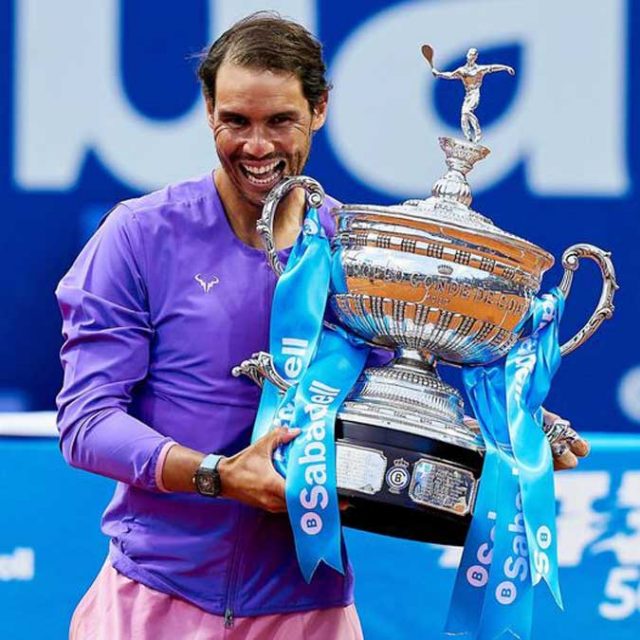
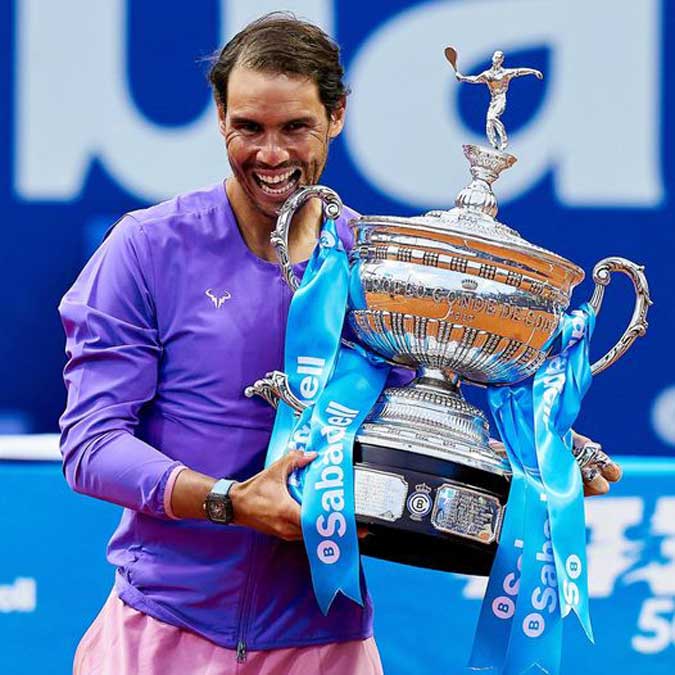
RAFA Nadal claimed a record-extending 12th Barcelona Open title on Sunday with a 6-4, 6-7(6), 7-5 victory over Stefanos Tsitsipas.— FACEBOOK.COM/BARCELONAOPENBANCSABADELL

BENGALURU — Rafa Nadal saved a match point before defeating Stefanos Tsitsipas (6-4, 6-7(6), 7-5) to claim a record-extending 12th Barcelona Open title on Sunday, ending his Greek opponent’s nine-game unbeaten start to the European clay court swing.

Having collected his first title of the 2021 season, Nadal, 34, will leapfrog Russian Daniil Medvedev to take back the world number two spot in the updated ATP rankings on Monday.

Nadal was on the brink of defeat in the 10th game of the final set, but recovered to win three straight games to overcome Monte Carlo champion Tsitsipas after three hours and 38 minutes — making it the longest Association of Tennis Professionals (ATP) Tour match of the year.

Tsitsipas, who won his previous meeting with the Spaniard in the Australian Open quarterfinals in February, fought hard to stay in the match and saved two match points before winning the second-set tiebreak to force the decider.

Nadal improved his unbeaten record to 12-0 in finals at one of his favorite ATP events where the main showcourt carries his name.

The 20-time Grand Slam winner will be back in action at next month’s ATP Masters 1000 tournaments in Madrid and Rome and will look to carry the momentum into the French Open, where he will be seeking a record-extending 14th Roland Garros title. — Reuters

Buntan out to solidify standing as a contender in ONE Championship

ONE CHAMPIONSHIP
FILIPINO-AMERICAN Jackie Buntan returns to ONE Championship action this week where she looks to solidify her standing in the promotion as a contender in the muay thai strawweight division. — ONE CHAMPIONSHIP

FILIPINO-AMERICAN muay thai fighter Jackie Buntan makes her ONE Championship return this week where she looks to solidify her standing in the promotion as a contender in the strawweight division.

Off an impressive victory in her last fight in the ONE Super Series in February, California-based Buntan tries to raise her stock further in her battle with Belarusian Ekaterina Vandaryeva on Thursday, April 29, at “ONE on TNT IV” in Singapore.

The event is the final installment of the “ONE on TNT” series where ONE Championship’s fights are shown in the United States, apart from the promotion’s usual audience, on prime time.

It is an opportunity that Ms. Buntan is looking to take full advantage of in pushing for her burgeoning career.

“My family is beyond proud and excited for me to compete on ONE’s TNT show. Being signed to martial arts’ biggest stage is one thing, but adding the factor of competing on a live TNT show, they are ecstatic and almost in shock that my dreams are coming to fruition,” said Ms. Buntan.

“I feel completely honored and grateful for the opportunity to be on ONE’s fourth show that will be aired on TNT!” she added.

Ms. Buntan, 23, loudly introduced herself in the Super Series field with a unanimous decision victory over Wondergirl Fairtex of Thailand where she dominated right from the start. She now looks to be building on it.

While representing the United States, the Filipino-American nak muay still recognizes her Filipino roots and appreciates the support that she has been getting here.

“The Philippines [has] shown nothing but love and support. It definitely adds to my confidence, not only as a fighter, but as a person. Having the nation of the Philippines rocking with me and supporting me just proves to me that I can make people excited and proud just by doing what I love to do,” she said.

Adding, “Being able to represent my bloodline and heritage means the world to me. Being a Filipino-American competing in ONE Super Series is a great opportunity for me to not only chase after my dreams as a fighter, but also to open doors for the younger generation and prove that through hard work and resilience, you can make the life you want for yourself.”

Headlining “ONE on TNT IV” is the ONE Light Heavyweight World Championship clash between reigning champion “The Burmese Python” Aung La N Sang and replacement opponent and middleweight champ Reinier De Ridder of the Netherlands.

Also fighting in the event is Filipino lightweight Eduard Folayang against Japanese veteran Shinya Aoki. — Michael Angelo S. Murillo