Home Blog Page 7666

House panel clears franchise of Manila Water and Maynilad 

BW FILE PHOTO

A HOUSE panel on Monday approved the franchise grant of water concessionaires Maynilad Water Services, Inc. and Manila Water Co., Inc.; however, this was opposed by a lawmaker for being too immediate.

The House Committee on Legislative Franchises on Monday approved House bills 9367 and 9313, which grant the franchise of Maynilad and Manila Water, respectively. The panel voted 23-2 for Manila Water and 19-2 for Maynilad.

If legislated, the bills will extend the authority of Maynilad and Manila Water to establish, operate, and maintain waterworks and sewerage in Metro Manila and nearby provinces.

Bayan Muna Rep. Carlos Isagani T. Zarate opposed the speedy grant of the franchise at committee level, adding that the bills were approved before thorough discussions on amendments were made and before crucial stakeholders have yet to air their issues.

He added that the importance of the presence of representatives from Department of Finance, Department of Justice (DoJ), and the Office of the Government Corporate Counsel who did not appear in the hearing. The said departments were involved in the water concession negotiations with the two water service providers.

“This happened even when the Metropolitan Waterworks and Sewerage System-Corporate Office (MWSS-CO) had raised issues on the bills, and, the amendments being proposed by the sponsors have yet to be fully discussed,” he said in a statement on Monday.

“Representatives from the Office of the President should have been invited to discuss the implications of the revised concessionaire agreements between the Duterte administration and the two (2) water concessionaires. We have yet to fully scrutinize the texts and annexes of the new deals and if they are detrimental to Filipino consumers,” he added.

President Rodrigo R. Duterte first offered the two concessionaires new contracts last year after the DoJ found onerous provisions in the original concession agreements, which was blamed for high water rates. The same department was also tasked to draft the new contracts, which were signed by Manila Water and Maynilad this year. — Gillian M. Cortez

K-pop megaband BTS renews Grammy challenge with ‘Butter’

SEOUL — South Korean megaband BTS said on Friday it was renewing its quest to win a Grammy Award with its new single “Butter,” building on its success last year, when it became the first Korean pop group to win a Grammy nomination.

And as soon as the song launched, the group’s fans, known as the Army, started showing their appreciation for the song. Twitter announced that BTS fans had Tweeted about “Butter” over 31 million times on launch day, and had made more than 300 million Tweets in the month leading up to the single’s release.

“Butter” was released on May 21, followed by a world premiere performance on May 23 at the 2021 Billboard Music Awards. During the three hours of the awards show, fans worldwide sent over 14.4 million Tweets related to BTS, Twitter said in a statement.

BTS won the Top Duo/Group, Top Selling Song, and Top Song Sales Artist awards at the Billboard Music Awards. It also won the Top Social Artist award for the fifth year in a row.

In a breakthrough year in the United States in 2020, the seven-member boy band was nominated but did not win an award, and instead performed its hit song “Dynamite” at the Grammy ceremony.

“Of course we would like to win a Grammy. That’s still valid and we are aiming to work for it once again with ‘Butter,’ and hoping for good results,” songwriter and rapper Suga told a news conference in Seoul.

He said “Butter,” the group’s second English-language single following “Dynamite,” was a funky summer track.

Vocalist Jimin said he regretted BTS could not meet fans for the eighth anniversary of the group’s debut next month, which will be celebrated virtually rather through a live concert because of the coronavirus disease 2019 (COVID-19) pandemic. “I’ve felt somewhat isolated being unable to see fans due to the current situation, but we continue to think hard about how we can show our different aspects and satisfy them,” he said.

Leader and rapper RM said: “For us, the biggest topic is what function BTS can serve, why we exist and which values we should pursue under this new normal era and for the industry.” — Reuters

3 Robinsons Malls now ‘safety seal’ certified

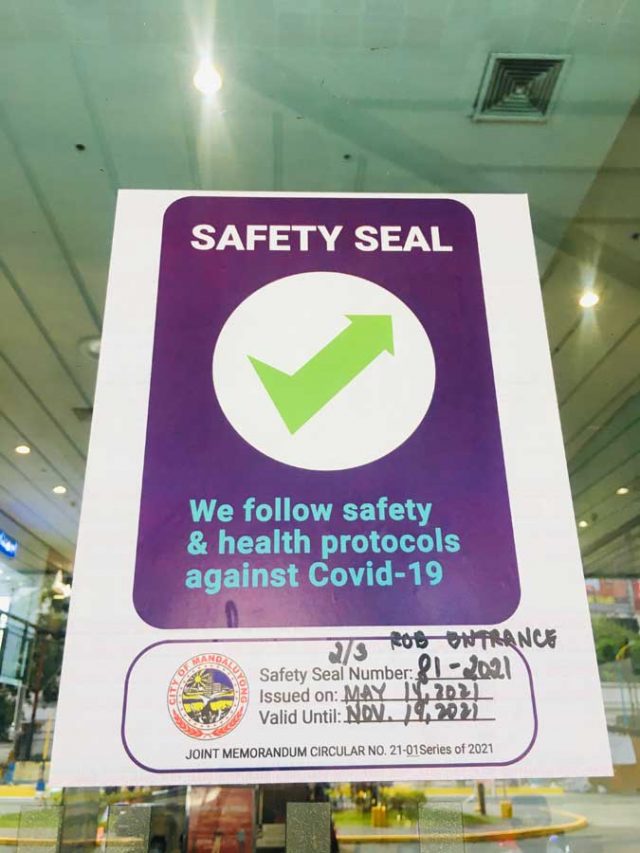
THREE ROBINSONS MALLS have recently been given the “safety seal” by the departments of Interior and Local Government, Health, Trade, Tourism, and Labor.

Receiving the “safety seal” means Forum Robinsons, Robinsons Place Tuguegarao, and Robinsons Place Malolos have complied with government-mandated safety and health protocols against coronavirus disease 2019 (COVID-19).

“The Safety Seal guarantees that these Robinsons Malls are safe to the public and minimum public health standard measures are strictly set in place,” the mall operator said.

Gov’t fully awards T-bill offering on strong demand from market

BW FILE PHOTO

THE GOVERNMENT fully awarded the Treasury bills (T-bills) it offered on Monday as demand for safe assets remained high amid ample liquidity in the market.

The Bureau of the Treasury (BTr) borrowed P25 billion as planned via the T-bills on Monday as total tenders reached P75.844 billion, making the offer over three times oversubscribed. However, this was lower than the P83.6 billion in demand seen during last week’s offering.

Broken down, the government raised the programmed P5 billion from the 91-day debt papers as bids for the tenor reached P16.965 billion. The three-month T-bills fetched an average rate of 1.269%, down by 0.1 basis point (bp) from the 1.270% quoted last week.

The Treasury also made a full P8-billion award of the 182-day securities it offered on Monday as it received some P20.288 billion in tenders. The six-month T-bills fetched an average rate of 1.541%, inching up from the 1.54% seen at the previous auction.

Lastly, the government awarded P12 billion as planned in 364-day T-bills from P38.595 billion in tenders. The average yield of the one-year papers slipped by 1.4 bps to 1.796% from the 1.81% quoted at last week’s offering.

The Treasury opened its tap facility to raise an additional P5 billion via the one-year tenor to accommodate the strong demand for the papers.

At the secondary market, before the auction, the three-month, six-month and one-year T-bills were quoted at 1.3045%, 1.5436% and 1.8385%, respectively.

National Treasurer Rosalia V. de Leon told reporters via Viber after the auction on Monday that the BTr fully awarded the T-bills on Monday as “liquidity remains strong,” with P34 billion worth of government securities due to mature this week.

A bond trader said investors are flocking to safe-haven assets like government securities as the country’s outlook remains uncertain due to the ongoing coronavirus pandemic.

“Demand is still there on adequate liquidity, and without other investment alternative given the current situation,” the bond trader said in a separate Viber message.

The government last week slashed its growth target for this year and the next, as the renewed spike in coronavirus disease 2019 (COVID-19) cases and strict lockdown curbs hobble the economy’s recovery.

In its 179th meeting on Tuesday, the Development Budget Coordination Committee (DBCC) downgraded its gross domestic product (GDP) growth target to 6-7% from 6.5-7.5% penciled in last December 2020. However, this was still an improvement from the record 9.6% contraction in 2020.

Economic managers expect the economy to return to its pre-crisis level by next year. Next year’s GDP is expected to grow by 7-9%, lower than the previous target of 8-10%. The economy’s growth is seen to slow to 6-7% in 2023 and 2024.

The economy remained in a recession in the first quarter after contracting by 4.2%. This marked the fifth consecutive quarter of decline due to the coronavirus pandemic.

Meanwhile, the DBCC maintained a 2-4% inflation target range for this year until 2024.

Monday’s T-bill auction was the last one scheduled for May.

The BTr raised P217.4 billion from the local bond market this month, excluding the results of the tap facility offering on Monday. This breached the programmed P170 billion for the month after it upsized its award on several occasions and opened its tap facility every week.

Broken down, the Treasury raised P127.4 billion from its T-bill auctions, higher the initial plan to raise just P100 billion, while it borrowed P90 billion via the T-bonds, higher than the programmed P70 billion.

The government is looking to borrow P3 trillion this year from local and external sources to help fund its budget deficit seen to hit 8.9% of gross domestic product. — IBC

AC Energy to power Pacific Synergy’s Laguna plant

ACENERGY.COM.PH

AYALA-LED AC Energy Corp. said on Monday that it had committed to supply over 28,900 megawatt-hours of renewable energy (RE) to the Laguna-based plant of consumer goods firm Pacific Synergy Food & Beverage Corp.

Under the deal, AC Energy will provide 100% RE to support Pacific Synergy’s plant during its peak operating hours for the next two years. The Ayala Corp. unit’s supply will come from its wind, solar and geothermal portfolios, the firm said in a press release.

The agreement will help eliminate an estimated 1,500 tons of carbon dioxide equivalent for the duration of the deal, which translates into offsetting the emissions of over 320 cars per year, AC Energy said.

It marks Pacific Synergy’s first RE purchase for its electricity requirements.

“The switch to renewable energy through our partnership with AC Energy is a major milestone for us, not only in reducing the carbon footprint of our expanding operations, but also in supporting the sustainable development and low-carbon future of the country,” Pacific Synergy President Charles Stewart Lee said.

“We are proud to enable the development of new renewable energy plants and encourage the growth of the green energy sector and help create much needed jobs,” he added.

In the same statement, AC Energy said that its retail renewable electricity program allows firms to “green” their sources by directly buying energy from the operating RE plants, purchasing carbon credits to offset emissions, and becoming “direct enablers” of the energy transition as their investments are channeled into the construction of more RE facilities.

AC Energy Executive Director and Head of Commercial Operations Roman Miguel G. de Jesus said Pacific Synergy’s move to source RE has boosted the program.

“We aim to rapidly expand these positive switches to green energy in the Philippines and across the region and play a meaningful role in the green-led recovery,” he said.

AC Energy aspires to become the largest listed RE platform in Southeast Asia as it targets to reach a net attributable capacity of 5,000 MW by 2025. The company currently has around 1,200 of attributable capacity in the Philippines, with renewables accounting for more than half.

In the first quarter, its attributable net income rose by 54% to P829.32 million from the P539.58 million in the same period in 2020, on the back of higher revenues from electricity sales.

AC Energy shares at the local bourse inched down by 0.71% or five centavos to close at P6.97 apiece on Monday. — Angelica Y. Yang

Entertainment News (05/25/21)

Friends: The Reunion to air on HBO and HBO GO

FILIPINO fans can view the special at the same time as the US on Thursday, May 27, 3:01 p.m., exclusively on HBO GO, with a same-day broadcast on HBO at 9 p.m. Friends stars Jennifer Aniston, Courteney Cox, Lisa Kudrow, Matt LeBlanc, Matthew Perry, and David Schwimmer return to the iconic comedy’s original soundstage, Stage 24, on the Warner Bros. Studio lot in Burbank for the first time in 17 years. Friends: The Reunion finds the cast joined by moderator James Corden and a star-studded roster of special guests as they relive the show’s fan-favorite and unforgettable moments. Friends: The Reunion, an HBO Max Original, will feature a variety of special guests including David Beckham, Justin Bieber, BTS, James Corden, Cindy Crawford, Cara Delevingne, Lady Gaga, Elliott Gould, Kit Harington, Larry Hankin, Mindy Kaling, Thomas Lennon, Christina Pickles, Tom Selleck, James Michael Tyler, Maggie Wheeler, Reese Witherspoon, and Malala Yousafzai.

Dear Evan Hansen movie announced

THE GENERATION-DEFINING Broadway musical comes to the cinema, with Tony, Grammy, and Emmy Award winner Ben Platt reprising his role as an anxious, isolated high schooler aching for understanding and belonging amid the chaos and cruelty of the social-media age.  Directed by Stephen Chbosky (The Perks of Being a Wallflower, Wonder), Dear Evan Hansen was adapted for the screen by the show’s Tony winning writer Steven Levenson, with music and lyrics by the show’s Oscar Grammy, and Tony-winning songwriting team of Benj Pasek and Justin Paul (La La Land, The Greatest Showman). Featuring Grammy winning songs, including “You Will Be Found,” “Waving Through a Window,” “For Forever,” and “Words Fail,” Dear Evan Hansen stars six-time Oscar nominee Amy Adams, Oscar winner Julianne Moore, Kaitlyn Dever (Booksmart), Amandla Stenberg (The Hate U Give), Colton Ryan (Apple TV+’s Little Voice), Nik Dodani (Netflix’s Atypical), DeMarius Copes (Broadway’s Mean Girls) and Danny Pino (NBC’s Law & Order: Special Victims Unit). Universal Pictures will bring Dear Evan Hansen to Philippine cinemas soon. 

DepEd TV airs on GMA’s digital channel

DEPED TV, the Department of Education’s (DepEd) platform for multimedia classes, started airing classes for its blended learning program officially on GMA’s digital channel on May 24. Students staying at home can watch educational programs Mondays to Saturdays from 7 a.m. to 7 p.m. on Channel 7 on the GMA Affordabox and GMA Now, as well as on other digital TV receivers. GMA Network provides this digital channel for free. DepEd TV has been airing on test broadcast since early this year. Episodes will be lessons in Filipino, Math, English, and Science, with different time slots for each grade level. Select episodes and lessons will also be Mother Tongue-Based so learners can better understand their lessons. DepEd TV will also broadcast quick tips on dealing with COVID-19 throughout the day to keep students informed on safety protocols amidst the pandemic. For  updates, visit GMA Network’s official website at www.gmanetwork.com.

Dru Chen drops new single, ‘Eiffel Tower’

SINGAPORE-based singer/songwriter Dru Chen’s new single, “Eiffel Tower,” is a romantic ballad on his visions of Paris and laying one’s heart on the line for something which is never quite guaranteed. “It was written during a time of intense vulnerability, when life and love went through tumultuous ups and downs,” said Dru Chen in a statement. The R&B track was jointly written by Joel Tan of Gentle Bones and Dru Chen, and solely produced by Dru Chen. “Eiffel Tower” is now available on music streaming platforms.

Ben&Ben releases ‘Magpahinga’ music video

AWARD-winning actor Joel Torre and actress-filmmaker Bela Padilla play father and daughter in the music video of Ben&Ben’ latest song,  Magpahinga,” a lovingly sparse ballad that embraces the importance of healing on one’s own terms. The nine-piece collective have released the “Magpahinga” music video on YouTube which touches on delicate matters such as death, grief, and the final moments spent with a loved one. The “Magpahinga” music video is out now on YouTube and all other video platforms.

SM promos, events for summer

SM SUPERMALLS celebrate summer with mall-wide sales and more. SM’s 3 Day Sale will be held in select SM malls from May 28 to 31, offering discounts of up to 70%. SM malls in Davao (Dine in Colors), General Santos (Dine in the Wild), Naga (Aquaholic Summer), and Baguio (Camp under the Sky) will offer a chance to dine outdoors amid a colorful backdrop. SM malls will also hold a Summer Paw-ty for pets at Paw Park at SM City Lucena and SM Center Lemery. There will be pet parades, meet-and-greet activities, and pet essentials shopping. Watch movies outdoors at the rooftop of SM CDO Downtown Premier with Movies at the Sky Park. Themed outdoor spaces in select SM malls like the Summer Wonderland at the Skypark at SM Seaside City Cebu are set to beat the summer heat with friends. Still stuck at home? Shop for summer essentials and have them delivered next day via SM Malls Online Beta App. Currently available for SM Megamall, North EDSA and Mall of Asia. For all other SM Malls, order via their personal shopper partners by calling SM Customer Care at 8876-1111 or by sending a Viber message at 0922-876-1111. For the latest news, promos, and activities, visit www.smsupermalls.com or like and follow @smsupermalls on all social media platforms.

Exhibitions, live talks to mark Interior Design Week

DE LA SALLE-College of Saint Benilde is commemorating Interior Design Week with a series of live talks and exhibitions on the theme “Siklab: Blazing Horizons.”

Among the speakers are interior designer and entrepreneur Ivy Almario, industrial design professor Marlon Barnuevo, Jerlyn Antinor of Bond Design Studio Japan, freelance licensed practitioner Sharlene Lanzarrote, Philippine Pastel Association founder Julius Legaspi, Michael Pizarro of Michael Pizarro Interior Design, artist and curator Mary Montenegro, Design Eight Five Two Limited Co-Founding Partners Peter Lampard and Norman Ung, WeaveManila, Inc. President Ann Tagle Hernandez and professional life coach Trixie Esguerra.

The Guild of Rising Interior Designers, the official organization of Interior Design from the college’s School of Design and Arts, will host the webinars. The webinars will be livestreamed on the official Facebook page of The Guild of Rising Interior Designers until May 28.

Virtual exhibitions will be on view on the organization’s website at https://bein.benilde.edu.ph/.

The race to avert disaster at China’s biggest ‘bad bank’

IT WAS PAST 9 p.m. on Financial Street in Beijing by the time the figure inside Huarong Tower there picked up an inkbrush and, with practiced strokes, began to set characters to paper.

Another trying workday was ending for Wang Zhanfeng, corporate chairman, Chinese Communist Party functionary — and, less happily, replacement for a man who very recently had been executed.

On this April night, Mr. Wang was spotted unwinding as he often does in his office: practicing the art of Chinese calligraphy, a form that expresses the beauty of classical characters and, it is said, the nature of the person who writes them.

Its mastery requires patience, resolve, skill, calm—and Mr. Wang, 54, needs all that and more. Because here on Financial Street, a brisk walk from the hulking headquarters of the People’s Bank of China, a dark drama is playing out behind the mirrored façade of Huarong Tower. How it unfolds will test China’s vast, debt-ridden financial system, the technocrats working to fix it, and the foreign banks and investors caught in the middle.

Welcome to the headquarters of China Huarong Asset Management Co., the troubled state-owned ‘bad bank’ that has set teeth on edge around the financial world.

For months now Mr. Wang and others have been trying to clean up the mess here at Huarong, an institution that sits — quite literally — at the center of China’s financial power structure. To the south is the central bank, steward of the world’s second-largest economy; to the southwest, the Ministry of Finance, Huarong’s principal shareholder; less than 300 meters to the west, the China Banking and Insurance Regulatory Commission (CBIRC), entrusted with safeguarding the financial system and, of late, ensuring Huarong has a funding backstop from state-owned banks until at least August.

The patch though doesn’t settle the question of how Huarong makes good on some $41 billion borrowed on the bond markets, most incurred under Mr. Wang’s predecessor before he was ensnared in a sweeping crackdown on corruption. That long-time executive, Lai Xiaomin, was put to death in January — his formal presence expunged from Huarong right down to the signature on its stock certificates.

The bigger issue is what all this might portend for the nation’s financial system and efforts by China’s leader, Xi Jinping, to centralize control, rein in years of risky borrowing and set the nation’s financial house in order.

“They’re damned if they do and damned if they don’t,” said Michael Pettis, a Beijing-based professor of finance at Peking University and author of Avoiding the Fall: China’s Economic Restructuring. Bailing out Huarong would reinforce the behavior of investors who ignore risk, he said, while a default endangers financial stability if a “chaotic” repricing of the bond market ensues.

Just what is going on inside Huarong Tower? Given the stakes, few are willing to discuss that question publicly. But interviews with people who work there, as well as at various Chinese regulators, provide a glimpse into the eye of this storm.

Huarong, simply put, has been in full crisis mode ever since it delayed its 2020 earnings results, eroding investor confidence. Executives have come to expect to be summoned by government authorities at a moment’s notice whenever market sentiment sours and  the price of Huarong debt sinks anew. Wang and his team must provide weekly written updates on Huarong’s operations and liquidity. They have turned to state-owned banks, pleading for support, and reached out to bond traders to try to calm nerves, with little lasting success.

In public statements, Huarong has insisted repeatedly that its position is ultimately sound and that it will honor its obligations. Banking regulators have had to sign off on the wording of those statements — another sign of how serious the situation is considered and, ultimately, who’s in charge.

Then there are regular audiences with the finance ministry and the other powerful financial bureaucracies nearby. Among items usually on the agenda: possible plans to hive off various Huarong businesses.

Huarong executives are often kept waiting and, people familiar with the meetings say, tend to gain only limited access to top officials at the CBIRC, the banking overseer.

The country’s apex financial watchdog — chaired by Liu He, Xi’s right-hand man in overseeing the economy and financial system — has asked for briefings on the Huarong situation and coordinated meetings between regulators, according to regulatory officials. But it has yet to communicate to them a long-term solution, including whether to impose losses on bondholders, the officials said.

Representatives at the People’s Bank of China, the CBIRC, Huarong and the Ministry of Finance didn’t respond to requests for comment.

FOCUS ON BASICS
A mid-level party functionary with a PhD in finance from China’s reputed Southwestern University of Finance and Economics, Wang arrived at Huarong Tower in early 2018, just as the corruption scandal was consuming the giant asset management company. He is regarded inside Huarong as low-key and down-to-earth, particularly in comparison to the company’s previous leader, Mr. Lai, a man once known as the God of Wealth.

Hundreds of Huarong staff, from Beijing division chiefs to branch employees in faraway outposts, listened in on April 16 as Mr. Wang reviewed the quarterly numbers. He stressed that the company’s fundamentals had improved since he took over, a view shared by some analysts though insufficient to pacify investors. But he had little to say about what is on so many minds: plans to restructure and shore up the giant company, which he’d pledged to clean up within three years of taking over.

His main message to the troops: focus on the basics, like collecting on iffy assets and improving risk management. The employees were silent. No one asked a question.

One employee characterized the mood in his area as business as usual. Another said co-workers at a Huarong subsidiary were worried the company might not be able to pay their salaries. There’s a widening gulf between the old guard and new, said a third staffer. Those who outlasted Mr. Lai and have seen their compensation cut year after year have little confidence in the turnaround, while new joiners are more hopeful about the opportunities the change of direction offers.

Others joke that Huarong Tower must suffer from bad feng shui: after Mr. Lai was arrested, a bank that had a branch in the building had to be bailed out to the tune of $14 billion.

Dark humor aside, a rough consensus has begun to emerge among senior management and mid-level regulators: like other key state-owned enterprises, Huarong still appears to be considered too big to fail. Many have come away with the impression — and it is that, an impression — that for now, at least, the Chinese government will stand behind Huarong.

At the very least, these people say, no serious financial tumult, such as a default by Huarong, is likely to be permitted while the Chinese Communist Party is planning a nationwide spectacle to celebrate the 100th anniversary of its founding on July 1. Those festivities will give Mr. Xi — who has been positioning to stay in power indefinitely — an opportunity to cement his place among China’s most powerful leaders including Mao Zedong and Deng Xiaoping.

Huarong is “nowhere near” defaulting, the managing editor of Caixin Media wrote in an opinion piece on Saturday. Neither the Ministry of Finance nor Chinese regulators would allow it, Ling Huawei wrote.

What will come after that patriotic outpouring on July 1 is uncertain, even to many inside Huarong Tower. Liu He, China’s vice premier and chair of the powerful Financial Stability and Development Committee, appears in no hurry to force a difficult solution. Silence from Beijing has started to rattle local debt investors, who until about a week ago had seemed unmoved by the sell-off in Huarong’s offshore bonds.

COMPETING INTERESTS
Huarong’s role in absorbing and disposing of lenders’ soured debt is worth preserving to support the banking sector cleanup, but requires government intervention, according to Dinny McMahon, an economic analyst for Beijing-based consultancy Trivium China and author of China’s Great Wall of Debt.

“We anticipate that foreign bondholders will be required to take a haircut, but it will be relatively small,” he said. “It will be designed to signal that investors should not assume government backing translates into carte blanche support.”

For now, in the absence of direct orders from the top, Huarong has been caught in the middle of the competing interests among various state-owned enterprises and government bureaucracies.

China Investment Corp. (CIC), the $1-trillion sovereign fund, for instance, has turned down the idea of taking a controlling stake from the finance ministry. CIC officials have argued they don’t have the bandwidth or capability to fix Huarong’s problems, according to people familiar with the matter.

The People’s Bank of China, meantime, is still trying to decide whether to proceed with a proposal that would see it assume more than 100 billion yuan ($15.5 billion) of bad assets from Huarong, those people said.

And the Ministry of Finance, which owns 57% of Huarong on behalf of the Chinese government, hasn’t committed to recapitalizing the company, though it hasn’t ruled it out, either, one person said.

CIC didn’t respond to requests for comment.

The banking regulator has bought Huarong some time, brokering an agreement with state-owned lenders including Industrial & Commercial Bank of China Ltd. that would cover any funding needed to repay the equivalent of $2.5 billion coming due by the end of August. By then, the company aims to have completed its 2020 financial statements after spooking investors by missing deadlines in March and April.

“How China deals with Huarong will have wide ramifications on global investors’ perception of and confidence in Chinese SOEs,” said Wu Qiong, a Hong Kong-based executive director at BOC International Holdings. “Should any defaults trigger a reassessment of the level of government support assumed in rating SOE credits, it would have deep repercussions for the offshore market.”

The announcement of a new addition to Wang’s team underscores the stakes and, to some insiders, provides a measure of hope. Liang Qiang is a standing member of the All-China Financial Youth Federation, widely seen as a pipeline to groom future leaders for financial SOEs. Liang, who arrived at Huarong last week and will soon take on the role of president, has worked for the three other big state asset managers that were established, like Huarong, to help clean up bad debts at the nation’s banks. Some speculate this points to a wider plan: that Huarong might be used as a blueprint for how authorities approach these other sprawling, debt-ridden institutions.

Meantime, inside Huarong Tower, a key item remains fixed in the busy schedules of top executives and rank-and-file employees alike. It is a monthly meeting, the topic of which is considered vital to Huarong’s rebirth: studying the doctrines of the Chinese Communist Party and speeches of President Xi Jinping. — Bloomberg


Central Azucarera income up nearly 4.6% to P170M

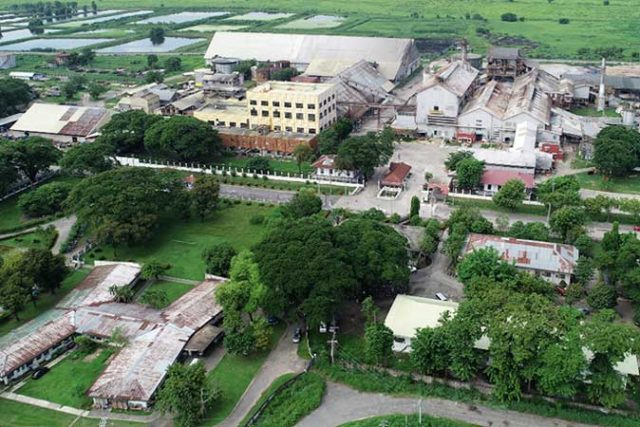
CENTRAL Azucarera de Tarlac, Inc. reported a 4.6% increase in net income to P169.67 million for the third quarter of its fiscal year that will end in June despite posting lower revenues.

Its revenues for the January-to-March period fell 14.3% to P561.63 million compared with the P655.62 million it had the year earlier, the listed sugar company said in a stock exchange disclosure on Monday.

For the nine-month period, Central Azucarera said its net income declined by 22.4% to P37 million against P47.69 million a year earlier on the back of higher operating expenses and lower revenues.

Revenues for the July-to-March period dropped 1.6% to P893.29 million from P907.71 million as a result of low demand and prices.

“A controlled inventory management was implemented to optimize margins since demand and sugar prices remain low during the period. Revenues are expected to rise soonest quarantine restrictions ease in the succeeding months,” the company said in the disclosure.

Sugar sales, which had the highest share of the revenues, dropped 15% to P319.4 million from P376.7 million as a result of unsold remaining inventory at the end of the quarter and lower sugar prices.

Some of the company’s other revenue sources include alcohol sales at P282.8 million, molasses at P121.5 million, and industrial services at P31.4 million.

On Monday, shares of Central Azucarera at the stock exchange fell 0.46% or six centavos to end at P12.96 apiece. — Revin Mikhael D. Ochave

Indiana Jones’ fedora and Harry Potter’s glasses to be auctioned in California

The Fedora worn by actor Harrison Ford in the film Indiana Jones and the Temple of Doom is “one of the hottest items in our auction,” said Matt Truex, Marketing Manager at the Prop Store.

SANTA CLARITA, California — Indiana Jones’ fedora and Harry Potter’s eyeglasses are among over 1,200 film and television memorabilia items going under the hammer in June at the Prop Store in California.

Matt Truex, Marketing Manager at the Prop Store, said the auction was the biggest they had ever held and he expects keen interest from collectors.

“One of the hottest items in our auction is this original Indiana Jones, Harrison Ford fedora hat from Indiana Jones and the Temple of Doom, the second film. This is valued in auction for $250,000 to $350,000,” Mr. Truex told Reuters.

Bidders will be able to view the full catalog of items being auctioned via Zoom and make their purchases online and by phone.

Among the hundreds of items, collectors will find memorabilia from films like Terminator 2: Judgment Day, Batman, Elf, Top Gun, and The Muppets.

“We’ve even got pieces for comic art collectors,” Mr. Truex added.

Harry Potter’s wand and eyeglasses, worn by Daniel Radcliffe during production on Harry Potter and the Deathly Hallows, promise to be one of the most sought-after items.

“This is the first time that the Warner Brothers’ archive has released Harry Potter’s wand and glasses to auction. The exciting part for this as well is that 100% of the hammer price proceeds for these two pieces are going to go to charity and both of them are valued at $30,000 to $50,000 each,” Mr. Truex said.

Mr. Truex said fans without deep pockets should not be discouraged, as there are collectibles going under the hammer for most budgets.

“We’ve got something for every price range from the hundreds of thousands to the low hundreds,” he said. “But the hope is that with 1,300 lots, anybody that’s a fan of these films can come and walk away with something that they love.”

The Prop Store said the live auction over three days, from June 29 to July 1, is targeting in excess of $6.1 million. — Reuters

Filipinos prefer the US as source of COVID-19 vaccines

SIX of 10 Filipinos prefer coronavirus vaccines made in the US, according to a Social Weather Stations (SWS) poll. Read the full story.

Filipinos prefer the US as source of COVID-19 vaccines

The Philippines ranks 37th out of 207 economies in administered COVID-19 vaccination doses

The Philippines ranks 37<sup>th</sup> out of 207 economies in administered COVID-19 vaccination doses