Home Blog Page 7663

Ferdinand Magellan’s death 500 years ago is being remembered as an act of indigenous resistance

Hindi Pasisiil by Matthius B. Garcia — NQC.GOV.PH

THIS week, the Philippines is marking a significant event in the history of European colonialism in the Asia-Pacific region — the 500th anniversary of the death of Portuguese explorer Fernão de Magalhães (more commonly known as Ferdinand Magellan).

The Philippine government is hosting a series of events to mark the role that Indigenous people played in Mr. Magellan’s contested first circumnavigation of the earth in the 16th century.

European history books celebrate the expedition as a three-year Spanish-led voyage, carrying 270 men on five ships. But Filipino commemorations remind audiences that Mr. Magellan died halfway through the expedition in the Philippines and that only one ship with just 18 survivors limped home to Seville.

In particular, Filipinos remember how Lapu Lapu, the datu (leader) of the island of Mactan, inspired a force of Indigenous warriors to defeat Mr. Magellan’s crew — and the Spanish threat to their sovereignty — on April 27, 1521.

The Filipino commemorations show what an Indigenous-centered government approach to imperial history in the Pacific can look like. They also sit in stark contrast to the exhibitions, reenactments, and publications that marked the 250th anniversary of James Cook’s arrival in Australia and New Zealand in recent years.

These commemorations mostly upheld the unique bravery of the British navigator, sidelining potentially deeper discussions of the violence to Indigenous people he and his crew also brought.

Mr. Magellan reached what are now the Philippines in March 1521 after an arduous 100-day Pacific crossing. He set about using a combination of diplomacy and force to get local leaders and their followers to convert to Catholicism and submit to the authority of the far-away Spanish king.

Rajah Humabon of Cebu and other local rulers embraced an alliance with the Spanish, hoping to gain an advantage against their rivals.

Mr. Magellan decided to attack Mactan, however, when Lapu Lapu refused to negotiate. About 60 European sailors and soldiers joined forces with Humabon and attacked Mactan at dawn, but they were met on the beach by Lapu Lapu and his armed warriors.

Weighed down by their armor, the Europeans stumbled in the shallows under arrow fire. Filipino folk histories say that an army of sea animals were also part of the resistance. Octopus wound their tentacles around the legs of the invaders, dragging them to their deaths. The battle was over within an hour.

The events organized by the Filipino government’s National Quincentennial Committee (NQC) to mark Mr. Magellan’s death include a drone show, military parade, and the televised unveiling of a new shrine to Lapu Lapu. All of these commemorations are designed to pay “tribute and recognition to Lapu Lapu and the Mactan heroes.”

The NQC also sponsored a national art competition centered on four themes connected to the Mactan victory — sovereignty, magnanimity, unity, and legacy.

Matthius B. Garcia’s painting, Hindi Pasisiil (Never to be Conquered), recently took the grand prize in the “sovereignty” category.

In his work, the viewer’s eyes are drawn to the strong figure of Lapu Lapu. He is covered in Visayan tattoos and wears the bright red bandana and thick gold chains of a warrior and ruler. He leaps into the center of the canvas, kampilan (sword) raised above his head, leading the charge of men rushing at the European invaders.

Mr. Magellan and his men, decked out in armor over puffy sleeves and stockings, fall over each other and into the sea to their deaths.

The artwork is Indigenous-centered because it was crafted by a Filipino artist for a Filipino audience. It is telling the story of what happened at Mactan from the point of view of the locals rather than the strangers.

Ordinary Filipinos have also been sharing their own artistic representations of the battle of Mactan on the NQC’s Facebook page, such as five-year-old Miguel Alfonso Manzano Noriel’s painting, entitled The Battle of Mactan.

The NCQ has also encouraged children to print paper doll figures of Lapu Lapu and Magellan so they can re-enact the battle of Mactan at home.

In contrast to Garcia and Noriel’s fiery scenes of mayhem, the winning entries in the art competition’s “magnanimity” section remember the compassion that Filipinos showed to the explorers.

In Romane Elmira D. Contawi’s prize-winning painting, a local man holds out fruit to a bedraggled, hollow-eyed white man. The work illustrates the key role locals played in the expedition, giving provisions to Mr. Magellan’s fleet and sharing their expert knowledge on surviving the dangerous seas.

From 2018–20, the Australian and New Zealand governments also sponsored events related to a significant anniversary of European incursion into their lands — the arrival of Mr. Cook’s ship, the Endeavour, in 1769–70.

Some did aspire to take an Indigenous-centered viewpoint. But the majority ended up pushing, at best, a “shared histories” approach. They encouraged audiences to consider “both sides” of the beach when the Endeavour docked on Indigenous shores.

National institutions in Australia held exhibitions entitled “Cook and the Pacific” or “Cook and the First Australians.” The New Zealand centerpiece event was a six-vessel flotilla — three European, three Pasifika — that stopped off at 14 communities to instigate “a balanced telling of a shared Māori and Pākehā history.”

In these performances, Mr. Cook was made to forego some of the limelight, but never to step off his pedestal entirely.

Other memorials did not achieve even this fuzzy sense of mutuality. Pre-existing statues of Mr. Cook, for instance, not only remained standing through the anniversary years, they were often protected from being defaced. In the case of the Mr. Cook statue in Sydney’s Hyde Park, this came in the form of dozens of police officers.

The Philippines’ approach to a more Indigenous-focused and critical form of public history is imperfect. The government has come under attack for silencing “unpatriotic” criticism” of national leaders today — and in the past.

And the government was criticized for its handling of the death of another Ferdinand — the Philippines’ former president Ferdinand Marcos, who ruled the country through martial law for nearly a decade. He was given a hero’s burial to the outrage of many.

Similarly, public histories that happily remember 16th-century rebellions against Spanish conquistadors so as to “uplift the cultural confidence of the Filipino people” can render invisible some modern Indigenous struggles for autonomy, particularly in the Philippines’ Islamic south. There is only room for patriotic versions of the country’s history that emphasize unity.

Despite these serious concerns, the Filipino approach to the era of European expansion offers a refreshing contrast to the dominant stories about Mr. Cook in Australia and New Zealand. It is not simply adding in Indigenous voices or awarding Indigenous people co-star status on commemorative occasions.

Rather, the Filipino attitude to Mr. Magellan flips colonial history on its head by focusing on Indigenous resistance.

The promise of decolonized public histories in the Pacific is not to punish, shame, or settle scores. It is instead intended to help forge as-yet undreamed futures for the region that place original sovereigns at their heart.


Kate Fullagar is a Professor of History while Kristie Patricia Flannery is a Research Fellow at the Institute for Humanities and Social Sciences, at the Australian Catholic University.
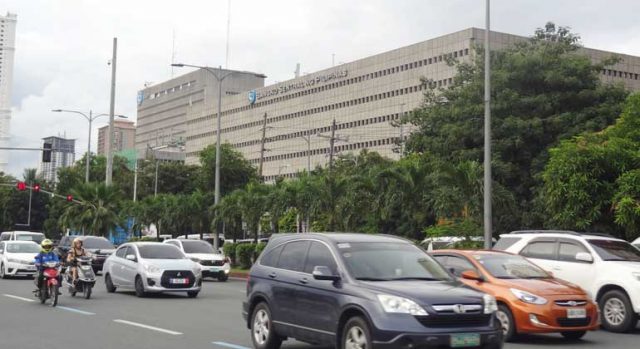
BSP extends effectivity of relief measures for banks amid crisis

BW FILE PHOTO

THE CENTRAL BANK has extended the implementation of a higher single borrower’s limit and less stringent rules on recognizing bad loans to continue providing relief to lenders as the coronavirus crisis stretches on.

In Memorandum No. M-2021-026 signed by Bangko Sentral ng Pilipinas (BSP) Deputy Governor Chuchi G. Fonacier, the central bank said the Monetary Board approved on April 22 the extension of these current regulatory relief measures as “an interim measure pending the full operationalization of the Financial Institutions Strategic Transfer (FIST) Act in 2021.”

The circular said the higher single borrower’s limit of 30% (from 25%) will remain in effect until Dec. 31. A previous issuance said the higher limit would be enforced only until March 31.

The BSP also eased the recognition of some loans as part of past due or nonperforming, allowing banks to exclude them from classification until Dec. 31. These types of credit include loans that should have been reclassified as past due as of March 8, 2020 and those that have become past due or nonperforming six months from March 8, 2020 up to March 31, 2021.

Loans are considered nonperforming when they are left unpaid for 30 days or more.

The BSP said banks availing of the relief measure on loan classifications should disclose this to the regulator starting from the reporting period ending on April 30 in the case of the supplemental report that will accompany the Solo Financial Reporting Package. Meanwhile, in the case of the supplemental report that will accompany the Capital Adequacy Report, this should be disclosed starting from the reporting period ending on June 30.

The central bank has also encouraged banks to restructure loan accounts with the consent of borrowers and to offer less heavy payment schemes as the pandemic continues to affect economic activity.

“The restructuring arrangement should be based on terms agreed upon by the bank and the borrower, considering, among others, the latter’s paying capacity and cash flows or sources of repayment, including the changes in the timing and amount of their borrower’s cash flows,” the BSP said.

The government did not impose a mandatory loan moratorium when it put Metro Manila and nearby provinces under lockdown in the past month amid a fresh surge in infections. The BSP, however, encouraged banks to provide assistance to borrowers through renewing, restructuring, or extending terms of loans.

The banking industry’s nonperforming loan ratio stood at 4.05% as of end-February, the highest since the 4.09% in October 2009.

While the ratio is expected to go beyond 5% this year, BSP officials have said the banking sector remains stable and well-capitalized, with lenders’ capital ratios still beyond minimum regulatory requirements.

BSP Governor Benjamin E. Diokno earlier said they expect banks to sell at least P152 billion in nonperforming assets to take advantage of Republic Act No. 11523, which allows them to offload bad assets to FIST corporations. — L.W.T. Noble

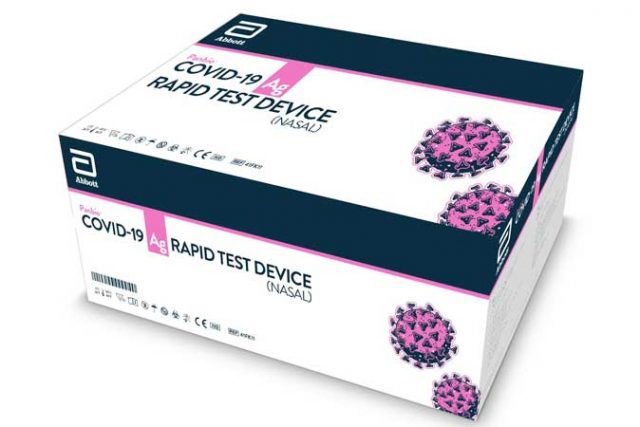
Abbott rapid test

THE Office of Civil Defense is procuring and distributing the Abbott Panbio coronavirus disease 2019 (COVID-19) Ag Rapid Test Device for the detection of the SARS-CoV-2 virus in people who have been exposed. Forty-five hospitals and local government units in Metro Manila and nearby provinces recently received these tests, which are ideal for communities. Individuals have the option of a nasal swab for collection of specimens, making the process less invasive and more convenient. The test — which is authorized for use by healthcare professionals — requires no instrumentation and provides results as early as 15 minutes. Negative results do not preclude COVID-19 infection and cannot be used as the sole basis for treatment or other management decisions. Results from a clinical study by Abbott of 508 samples demonstrated that Panbio COVID-19 Ag with a nasal swab has a 98.1% sensitivity and 99.8% specificity on people who were suspected of exposure to COVID-19 or had symptoms in the last seven days. Panbio is included in the Emergency Use List of the World Health Organization. More details at facebook.com/Abbott.

PhilWeb returns to profitability with P7-M income

PHILWEB Corp. generated P7.15 million in net attributable income for the first quarter of the year, a reversal of the P1.53-million loss incurred in the same period in 2020 as gaming activities improved to “pre-quarantine levels.”

The 19 eGames (electronic games) sites converted back to the company’s electronic gaming system and the acquisition of 16 more eBingo (electronic bingo) venues and two accredited eBingo machine providers also boosted the company’s results for the first quarter, PhilWeb said in a regulatory filing on Tuesday.

Revenues increased by 8.4% to P137.94 million from P127.24 million, while cost and expenses declined by 1.6% to P121.47 million from P123.45 million year on year.

PhilWeb’s EBITDA (earnings before interest, taxes, depreciation, and amortization) amounted to P28.91 million in the first quarter, up by 97.9% from the P14.6 million seen in the first three months of the previous year.

The company is an accredited service provider of the Philppine Amusement and Gaming Corp. (PAGCOR) and has an operational network of 69 eGames outlets and 22 eBingo outlets by the end of last year.

Some 85 eGames venues are using the company’s electronic gaming system, while 68 eBingo sites are using its eBingo machines.

PAGCOR recently gave PhilWeb the go signal to operate its remote gaming platform “to allow high-value customers to enjoy PhilWeb gaming products outside of eGames venues.”

On Tuesday, PhilWeb shares at the stock exchange went up by 3.47% to close at P2.68 apiece. — Keren Concepcion G. Valmonte

Kanye’s Yeezy sneakers snag world record $1.8 million in private sale

Kanye’s Yeezy sneakers — SOTHEBYS.COM

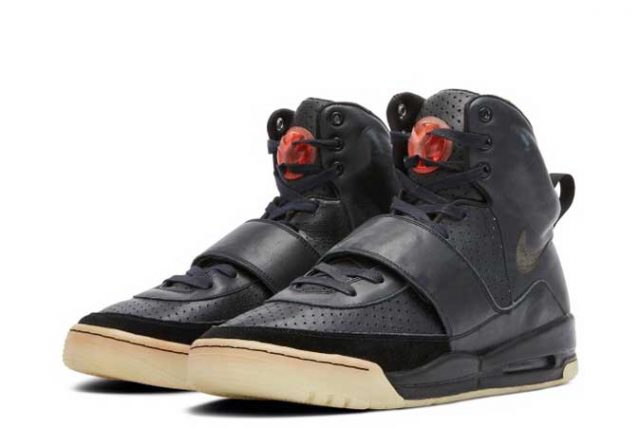
NEW YORK — The Kanye West sneakers that sent athletic shoes strutting down fashion runways sold for $1.8 million, a new world record price for a pair of sneakers, Sotheby’s announced on Monday.

The American rapper’s 2008 “Grammy Worn” Nike Air Yeezy samples were prototypes for a line developed by West and Mark Smith for Nike. They were revealed during West’s performance at the 2008 Grammy Awards.

The buyer was sneaker investing platform RARES, which paid the highest publicly recorded price for the pair. RARES is a leader in fractional ownership, allowing users to invest in sneakers by buying and trading shares in them.

The private sale shattered the current auction record for sneakers, far above the $560,000 that Sotheby’s scored in May 2020 for a pair of 1985 Air Jordan 1’s, designed for and worn by basketball player Michael Jordan.

The black leather, size 12 Nike Air Yeezy 1 Prototypes have a Yeezy forefoot strap and the brand’s signature Y medallion lace locks in pink.

They were put up for sale at Sotheby’s by New York collector Ryan Chang.

Mr. West ended his collaboration with Nike in 2013 and took the brand to Adidas, where the Yeezy brand of sneakers brought in an estimated $1.7 billion in sales in 2020, according to Forbes.

“Our goal in purchasing such an iconic shoe — and a piece of history — is to increase accessibility and empower the communities that birthed sneaker culture with the tools to gain financial freedom through RARES,” said Gerome Sapp, RARES co-founder and CEO. —  Reuters

Emerging Asia’s central banks could delay rate hikes until 2022

EMERGING ASIA’S central banks are expected to opt for supporting their economic recoveries rather than tackling volatile price swings this year.

All eight emerging Asian economies, including India and Indonesia, are seen holding benchmark interest rates steady through 2021, according to the median forecasts from Bloomberg surveys of economists.

Higher real interest rates will allow some of Asia’s central banks to stand pat, while for others a recent pickup in inflation is set to moderate. Much depends on the path of global interest rates, and the Federal Reserve’s meeting this week will be keenly watched by the region’s policy makers.

“To support economic recoveries, Asian central banks are expected to maintain their accommodative stance and avoid hinting at future rate hikes,” said Duncan Tan, rates strategist at DBS Banking Group Ltd.

Considering that recent inflation prints have been elevated, Bangko Sentral ng Pilipinas and Reserve Bank of India seem most likely to hike for inflation reasons, Mr. Tan added.

After cutting its key interest rate by 200 basis points (bps) last year, the Philippine central bank has held steady since November, even with inflation running above the bank’s 2%-4% goal. The BSP has estimated that average price gains this year would be slightly above target, while Governor Benjamin Diokno has signaled the bank will keep policy on hold while its loose monetary settings work their way through the economy.

“The real policy rate will likely average close to -3% in 2021, and as the economy gradually reopens, even marginal demand-side price momentum would call for a less accommodative policy stance,” said Joseph Incalcaterra, chief Asean economist at HSBC Holdings Plc. in Hong Kong.

INDIA, SOUTH KOREA
For India, which is suffering the world’s worst COVID-19 outbreak, wholesale price inflation quickened in March at its sharpest pace since late 2012, reflecting upward pressure from higher commodity prices and firmer input costs. Meanwhile, consumer prices last month rose 5.52% from the same time last year, beating expectations though still within the Reserve Bank of India’s 2%-6% target range.

South Korea is also a popular pick to be among the first in the region to normalize monetary policy, even if that means waiting until after 2021, as it has carried a relatively lower virus caseload and benefited disproportionately from the global electronics boom.

“We still believe Korea will be one of the earliest to have better progress on its vaccine drive,” said Angela Hsieh, an economist at Barclays Bank Plc in Singapore. “Improved mobility should help support the recovery in private spending and labor market, which is still the missing factor for the Bank of Korea to consider normalization.”

The differing growth and inflation expectations are playing out in markets. Foreign investors net invested a record 9.1 trillion won ($8.2 billion) in South Korean listed debt in March, with rate swaps already pricing in about 100 bps of hikes over the next three years, making a selloff unlikely. India and Philippines, however, have seen a combined net outflow of more than $4 billion year-to-date in their bond markets, based on the data available.

Much of the emerging Asia policy track will depend on vaccination progress — with many economies suffering from a dearth of supply — and on how quickly some of the region’s economies can damp a recent surges in cases. Meanwhile, their economies are generally better positioned than elsewhere in the emerging-market world, with hearty foreign reserves and thriving goods trade as two buffers that will give central bankers some room to consider normalizing rates.

Analysts are generally reluctant to pin their bets on any one economy as the first hiker in emerging Asia, given the multitude of uncertainties and the generally low-inflation atmosphere. It’s difficult to see Asian central banks being “gung-ho” about raising rates unless they’re battling rapid capital outflows, said Selena Ling, head of Treasury research and strategy at Oversea-Chinese Banking Corp. in Singapore.

Like the Federal Reserve, “an inflation overshoot will be largely perceived as temporary and by itself should not trigger a recalibration” in this region, Ling said. “At this juncture, with the virus mutations and resurgent COVID cases, most would hesitate to be ahead of the curve.”

For bond investors, “it might not be an end of world though,” said Kiyong Seong, an Asia rates strategist at Societe Generale in Hong Kong. “It is quite doubtful if emerging markets central banks will be able to hike their policy rate substantially in this cycle,” he said. “If the market is pricing in a reasonable degree of tightening, bond investors will weather well.” — Bloomberg

Smile Train speech app

SMILE TRAIN, a nonprofit organization and charity providing corrective surgery for children with cleft lips and palates, developed a free cleft palate speech app in Filipino. The interactive app uses stories, games, and songs for them to improve their speech. The app lowers the burden on families with limited means to travel for therapy. Fun encourages children to practice more often to yield better speech outcomes. The app contains videos teaching the correct placement, manner and voicing of the target sounds. A video about common speech errors is also included to help parents, caregiver and patients be familiarized with the sounds. By this, they will be able to discriminate the correct from the incorrect productions. The app provides opportunities to practice the high pressure sounds in isolation, syllable, word and sentences level. It also has stories to practice the use of sound in connected speech practice. Visit smiletrainspeechapp.com.

Discovery World unit, Samal Shores enter management deal

DISCOVERY Hospitality Corp. (DHC) has signed a contract with Samal Shores, Inc. to manage the latter’s resort project in Davao del Norte’s Samal island that is set to open next year.

“The opening of Discovery Samal is part of the commitment of DHC to widen our reach across strategic locations,” DHC Chief Operating Officer and Discovery World President Jose C. Parreno, Jr. said in a statement on Tuesday.

The contract will add the upcoming project to the portfolio of hotels and resorts under the property management company of publicly listed Discovery World Corp. Samal Shores is a subsidiary of CSG Holdings Corp.

DHC currently manages Discovery Primea, Discovery Suites, Discovery Shores Boracay, and Club Paradise Palawan.

Once the agreement is finalized, DHC’s portfolio expansion across the country will total 690 rooms and a conference capacity of 2,018 for engagements.

Discovery Samal will be located on a land spanning five hectares along the coast of the Island Garden City of Samal, boasting of views of the Davao Gulf.

It will be about 30 minutes away from the Francisco Bangoy International Airport.

Slated to open in 2022, Discovery Samal will feature 162 villas and “plush” accommodations, four meeting rooms, a convention center good for up to 1,000 guests, all-day dining, a seafood specialty restaurant, and a bar and lounge.

“This is a new way for us to offer more outdoor experiences for dynamic guests looking for more recreational vacations,” Mr. Parreno added.

The project is designed by Architect Edgardo L. Ledesma, Jr. and is embellished by interior designer Manny Samson of Emesaé Design Corp.

Discovery World shares at the local bourse declined by 0.30% or P0.01 on Tuesday, closing at P3.29 each. — Keren Concepcion G. Valmonte

Fashion designer Alber Elbaz dies from COVID-19

Alber Elbaz — (PORTRAIT CREDIT: A.KOO) VIA RICHEMONT.COM/

LUXURY fashion company Richemont on Sunday confirmed the death of designer Alber Elbaz, saying the former creative director at French fashion house Lanvin had died from coronavirus disease 2019 (COVID-19).

Among Elbaz’s creations were the dress worn by Meryl Streep when she accepted her Oscar for Best Actress in 2012 for The Iron Lady, while other celebrity fans included Nicole Kidman, Julianne Moore and Kate Moss, according to Women’s Wear Daily.

“It was with shock and enormous sadness that I heard of Alber’s sudden passing,” said Richemont chairman Johann Rupert, who described Mr. Elbaz as a beloved friend. “Alber had a richly deserved reputation as one of the industry’s brightest and most beloved figures. I was always taken by his intelligence, sensitivity, generosity and unbridled creativity,” Mr. Rupert added.

The designer, who was known for his work at fashion house Lanvin from 2001 to 2015, died on Saturday in Paris, WWD reported. He was 59.

Since 2019 he had been working on a fashion joint venture with Richemont called AZ Factory, a company aimed at producing smart women’s fashion by blending traditional craftsmanship with technology.

Mr. Elbaz was born in Morocco and raised in Israel from the age of one. He launched his fashion career in 1985, working in New York with designer Geoffrey Beene. In 1996 he became the design director at Guy Laroche in Paris, before joining Yves Saint Laurent as creative director of its ready-to-wear brand Rive Gauche. In 2001, he joined Lanvin, where he earned critical and commercial success based on his principle of putting women first.

During his 14-year tenure, Mr. Elbaz was credited with reviving the French couture house’s fortunes, with modern takes on silk cocktail dresses and colorful, feminine designs. “It was just about giving ease to women,” he said of his dresses with industrial zips and raw edges, two of the hallmarks he established for Lanvin.

Lanvin sales slumped following his departure in 2015 and the brand was eventually bought by China’s Fosun. — Reuters

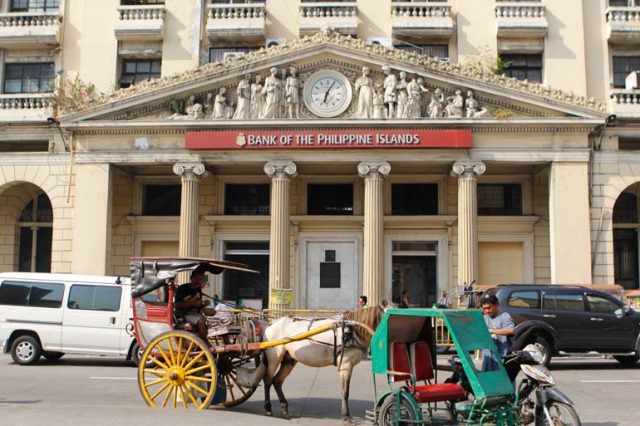
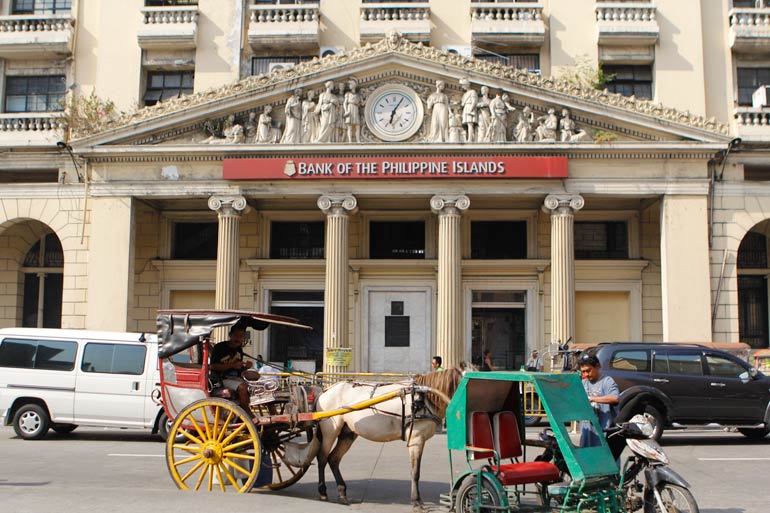
BPI to seek regulatory approval for merger with BFSB by Sept.

BANK of the Philippine Islands will apply for regulatory approval for its planned merger with its thrift unit within the year. — BW FILE PHOTO

THE MERGER between Bank of the Philippine Islands (BPI) and its thrift unit BPI Family Savings Bank (BFSB) will now be up for regulatory approval after the listed lender’s stockholders okayed the plan.

BPI said in a filing on Tuesday that at least two-thirds of its stockholders — which constitutes a quorum — approved the planned merger, which was announced by the bank in January, on April 22.

“Next steps include the regulatory filings with the Bangko Sentral ng Pilipinas (BSP), SEC (Securities and Exchange Commission), BIR (Bureau of Internal Revenue), PDIC (Philippine Deposit Insurance Corp.) and PSE (Philippine Stock Exchange) before the end of September 2021,” the bank said.

The lender said the transaction will be effective once the SEC issues a Certificate of Merger.

“BFSB is 100% owned by BPI. Since it is not listed, the basis of the exchange will be the net asset value of BFSB as of Dec. 31, 2020 and the price of BPI shares as of Dec. 29, 2020,” BPI said in its filing.

“After the issuance of shares, the investment in the subsidiary account will be canceled, and treasury will be recognized for the newly issued BPI common shares,” it added.

The plan of merger was approved by BPI’s board of directors on Feb. 24 and was signed on March 23 by BPI’s former president Cezar P. Consing and BFSB President Maria Cristina L. Go.

“The merger of BPI and BFSB will create considerable value to the customers, employees and shareholders of the two entities. The customers of the combined BPI and BFSB will have access to all the products, via all the digital and physical channels, of both entities,” BPI said.

“The employees of the merged entity will have the ability to work across a larger, more varied bank; and potential synergies will create shareholder value,” it added.

BFSB has P278 billion in assets, making it the country’s largest thrift bank. It has about 3,000 employees with a portfolio focused on housing and auto loans.

Its parent BPI’s net income declined by 21.64% to P5 billion in the first quarter from P6.381 billion in the same period a year earlier.

BPI’s shares closed unchanged at P83 apiece on Tuesday. — L.W.T. Noble

TMC air medical services

THE Medical City (TMC) partnered with Ascent, an on-demand helicopter service, to provide air transfers between its facilities. Patients and personnel can fly to and from TMC locations and dedicated Ascent hubs within minutes. For example, The Medical City in Ortigas is now only 25 minutes away from its Clark branch. Ascent’s air services will include transport of medical personnel and sensitive medical cargo, such as organs or fragile medical equipment.

AC Energy’s 63-MW solar farm in Zambales goes online

AC ENERGY Corp.’s 63-megawatt (MW) GigaSol Palauig solar farm in Zambales has begun commercial operations, making it the first of five new plants that the Ayala-led company scheduled to go online this year.

“Despite the challenges in construction amidst the pandemic, GigaSol Palauig has begun generating power for supply to the Luzon grid,” AC Energy said in a regulatory filing on Tuesday.

The P2.39-billion solar facility will generate over 90 million kilowatt-hours (KWh) of clean power to support the country’s power demands, the firm said.

“The Palauig solar farm is the first of AC Energy’s five new plants to begin operating in 2021, making it quite an exciting year for the company’s Philippine operations,” Jose Maria P. Zabaleta, AC Energy chief development officer, said in the disclosure.

“This is all the more important as these new plants can help offset some supply shortfalls in recent months, and help to reduce the elevated prices seen in the market caused by these shortages,” he added.

AC Energy said it had also begun the construction of a 72-MW solar farm in Arayat-Mexico in Pampanga. The project, which is a joint venture with Citicore Solar Energy Corp., has a projected cost of P2.75 billion. The solar facility is set to begin operations by the summer of 2022.

The developments in the Central Luzon area are in line with the company’s renewables growth strategy. The firm earlier said that its 2025 plan is to exceed 5,000 MW of attributable capacity and generate at least half of its power from renewables.

In a separate disclosure on Tuesday, AC Energy said that it signed a deed of agreement with its parent firm AC Energy and Infrastructure Corp. (ACEIC), which will subscribe to 16.69 billion common shares at P5.15 apiece in the listed company. The total transfer value amounts to P85.92 billion.

After the transaction, ACEIC will own 76.03% of AC Energy’s capital stock from 55.99% at present.

In turn, AC Energy will own 100% of the outstanding common and redeemable preferred shares of AC Energy International, Inc.

On its website, the company said that it hopes to add 1,400 MW to its attributable capacity “with the planned infusion of AC Energy International.”

Shares of ACEN in the local bourse shed 0.99% or 7 centavos to finish at P6.98 apiece on Tuesday. — Angelica Y. Yang