Home Blog Page 7613

Peso continues to rally vs dollar on slower-than-expected inflation print

BW FILE PHOTO

THE PESO appreciated versus the greenback for the fifth straight day as inflation was steady in April and as the daily tally of coronavirus cases remained low.

The local unit closed at P48.025 per dollar on Wednesday, appreciating by 1.3 centavos from its P48.038 finish on Tuesday, data from the Bankers Association of the Philippines showed.

The peso’s close on Wednesday was its best since Feb. 15’s finish of P47.93 per dollar.

The local unit opened the session at P48.03 versus the dollar. Its weakest showing was at P48.13, while its intraday best was at P47.96 against the greenback.

Dollars traded jumped to $1.2 billion yesterday from $730.7 million on Tuesday.

The slower-than-expected April inflation print boosted market sentiment and supported the peso, a trader said in an e-mail.

Headline inflation stood at 4.5% for the second straight month in April, the Philippine Statistics Authority (PSA) reported on Wednesday.  However, this was faster than April 2020’s 2.2%.

April headline inflation was slower than the median 4.7% in an analyst poll BusinessWorld conducted late last week and settled within the Bangko Sentral ng Pilipinas’ (BSP) own 4.2-5% estimate.

Year to date, inflation averaged at 4.5%, still above the BSP’s 2-4% target as well as its inflation forecast of 4.2% for the year.

Inflation eased in the indices of food and non-alcoholic beverages at 4.8% in April from 5.8% in March; and alcoholic beverages and tobacco at 12% from 12.1%.

On the other hand, annual increases were noted in housing, water, electricity, gas, and other fuels (1.5% from 0.9%); furnishing, household equipment and routine maintenance of the house (2.1% from 1.9%); health (3.1% from 2.9%); transport (17.9% from 13.8%); communication (0.3% from 0.2%); and restaurant and miscellaneous goods and services (3.4% from 3.1%), PSA data showed.

The easing number of new coronavirus infections also boosted the peso versus the dollar, Rizal Commercial Banking Corp. Chief Economist Michael L. Ricafort said.

The Health department reported 5,685 new coronavirus cases on Wednesday to bring the total to more than 1.073 million. Meanwhile, active cases stood at 66,060.

For Thursday, Mr. Ricafort gave a forecast range of P47.97 to P48.07 per dollar, while the trader expects the local unit to move within the P48 to P48.10 range.

Philippines OK’s emergency use for Moderna

THE PHILIPPINE Food and Drug Administration (FDA) on Wednesday approved the emergency use of Moderna, Inc.’s coronavirus vaccine.

The benefits of using the vaccine “outweigh the known and potential risks,” FDA Director General Rolando Enrique D. Domingo told an online news briefing.

The drug is 94% effective against the coronavirus, he said, citing phase three clinical trials.

Moderna filed an application for emergency use on April 26 through Zuellig Pharma Corp., the local distributor and importer of its vaccine.

Moderna’s coronavirus vaccine is the seventh to be approved for emergency use by the Philippines after those made by Pfizer, Inc., China’s Sinovac Biotech Ltd., AstraZeneca Plc, Russia’s Gamaleya Research Institute of Epidemiology and Microbiology, Johnson & Johnson, Inc. and India’s Bharat Biotech.

Potential side effects from the Moderna vaccine were “mild and transient, similar to common reactions.”

US Ambassador Jose Manuel G. Romualdez last month said the Philippines would take delivery of about 20,000 doses of the vaccine made by Moderna. The first batch of Moderna vaccines are expected to arrive by mid-June.

The Department of Health (DoH) reported 5,685 coronavirus infections on Wednesday, bringing the total to 1.07 million.

The death toll rose by 178 to 17,800, while recoveries increased by 8,961 to 993,042, it said in a bulletin.

There were 62,713 active cases, 1.2% of which were critical, 94.4% were mild, 1.8% did not show symptoms, 1.6% were severe and 1.02% were moderate.

The agency traced the low tally to fewer samples processed by laboratories at the weekend.

DoH said 22 duplicates had been removed from the tally, 17 of which were tagged as recoveries. It added that 112 recoveries were reclassified as deaths. Five laboratories failed to submit data on May 5.

About 11.3 million Filipinos have been tested for the coronavirus as of May 3, according to DoH’s tracker website.

The coronavirus has sickened about 155 million and killed 3.2 million people worldwide, according to the Worldometers website, citing various sources including data from the World Health Organization.

About 132.5 million people have recovered, it said.

Meanwhile, Health Undersecretary Maria Rosario S. Vergeire said the agency wants travelers to be tested for the coronavirus seven or eight days upon arrival, when viral load is high.

Under current protocols, inbound travelers must get swabbed on the fifth day of their quarantine.

INDIA TRAVELERS
Ms. Vergeire told an online news briefing six passengers from India who arrived before the travel ban had tested positive for coronavirus.

The samples of the six passengers out of 110 passengers who got tested had been sent for genome sequencing. Six more passengers had not been found.

The Philippines imposed a 16-day travel ban on India starting on April 29 due to a surge in cases there.

Experts have said new variants including a “double mutant” first detected in India had caused the spike in cases there, Reuters reported last month.

The Philippines targets to vaccinate millions of residents in Manila, the capital and nearby cities and provinces this year as vaccine supply issues hinder it from achieving herd immunity for the entire country, the presidential palace said on Tuesday.

The government expects herd immunity in the National Capital Region and the provinces of Laguna, Rizal, Cavite and Bulacan by November, vaccine czar Carlito G. Galvez, Jr. said.

The government earlier said it was seeking to vaccinate as many as 70 million Filipinos this year.

Mr. Galvez earlier said the country needed to inoculate three million people weekly to achieve herd immunity this year.

The country needs to get at least 15 million vaccines every month to achieve the goal, he said at a televised meeting with President Rodrigo R. Duterte on Monday night.

The government has set up 5,000 vaccination sites that can give 100 shots a day, a major requirement to achieve herd immunity, he said. He added that the country needs to have as many as 50,000 vaccinators.

Mr. Galvez said the country is set to take delivery of about 3.3 million doses of vaccines monthly starting June to allow the government to vaccinate at least 120,000 Filipinos daily.

About 92% of the 4.4 million vaccines in the country have been sent out, Mr. Galvez said. About 1.9 million vaccines have been injected.

Mr. Galvez said the vaccines from India might get delayed due to the crisis there, where thousands die daily amid a fresh surge in coronavirus infections. — Vann Marlo M. Villegas

Manila bans travelers from Sri Lanka, Nepal, Bangladesh, Pakistan

PHILSTAR

THE PHILIPPINES on Wednesday banned travelers from Pakistan, Bangladesh, Nepal and Sri Lanka to prevent the spread of a double-mutant coronavirus first discovered in India, according to the presidential palace.

“All passengers coming from or who have been to Pakistan, Bangladesh, Nepal and Sri Lanka within 14 days immediately preceding arrival in the Philippines shall be prohibited from entering the country,” according to a copy of a memo issued by Executive Secretary Salvador C. Medialdea.

The  ban will be for a week starting May 7.

Filipino and foreign passengers merely transiting through these countries won’t be barred from entering Manila as long as they stayed in the airport the whole time.

Nepal is being overwhelmed by a coronavirus surge as India’s outbreak spreads across South Asia, the International Federation of Red Cross and Red Crescent Societies said on Wednesday.

Hospital intensive care units in India’s other neighbors including Pakistan and Bangladesh were full or close to capacity, as the outbreak spreads, it said in a statement.

Meanwhile, the Civil Aviation Board (CAB) has increased the limit on international arrivals at the international airport in Manila to 2,000 passengers from 1,500 daily.

The new policy takes effect this month, according to a copy of the agency’s May 3 advisory released by Philippine Airlines on Wednesday.

“Airlines operating at the Ninoy Aquino International Airport that will exceed the allowed capacity will be meted with the appropriate penalty,” CAB said.

“While this is an improvement, the increase is on the conservative side,” Philippine Airlines spokesperson Cielo C. Villaluna said in a statement.

“Philippine Airlines had to cancel 200 international flights to Manila throughout mid-March to April. And our cancellations continue.”

The flag carrier last week said it was planning to mount non-stop flights between Manila and Tel Aviv by October.

The company is eyeing twice weekly nonstop flights to Tel Aviv’s Gurion international Airport using its Airbus A350 aircraft.

Philippine passport holders can travel to Israel visa-free for as long as 90 days. — Arjay L. Balinbin

Canada urged to cut anti-terror aid to Duterte government

HUMAN rights advocates and critics of President Rodrigo R. Duterte have asked Canada to cut anti-terrorism aid to the Philippines, which they said was being used to stifle dissent.

The Filipinos cited rampant killings and arbitrary arrests of activists during a hearing by Canada’s parliamentary subcommittee on international human rights on Wednesday morning Manila time, the International Coalition for Human Rights in the Philippines (ICHRP) said in an e-mailed statement.

“Perjured testimonies, fabricated evidence, questionable search warrants are used for arbitrary arrests and detention,” Karapatan Philippines Secretary-General Christina Palabay told the body. “We eat death, rape and sexual violence threats online and offline. Canadian dollars and taxes should not be used to kill and silence us.”

She said 15 of her colleagues were among the 394 civilians who died under the Duterte government’s counterinsurgency campaign in the past five years.

She added that 68% of 703 political prisoners in the country had been arrested during Mr. Duterte’s rule.

The Canadian body held the hearing to look at the human rights situation in the Philippines, the human rights group said.

Presidential spokesman Herminio L. Roque, Jr. did not immediately reply to a text message seeking comment.

The hearing was held almost two months after nine Filipino activists were killed in a police raid in the Southern Tagalog region.

“Majority of those killed are land rights, indigenous and environmental activists,” Ms. Palabay told the subcommittee. “These figures add to the thousands killed in the government’s drug war, creating a climate of fear and impunity in the country.”

Mr. Duterte last year signed a measure expanding crimes against terror, which critics said was being used to silence the President’s critics.

Ms. Palabay said community pantries and kitchens, relief and fact-finding missions, universities, journalists, doctors, lawyers, church people and opposition members have been labeled communists.

“In our view, this is a murderous campaign in violation of the principle of distinction between civilians and combatants under international humanitarian law and a militarist or strongman approach which trumps civilian authority and interests,” she said.

“We implore the Canadian government to take action on these concerns with urgency, as our country further descends into an authoritarian state.”

“As we face the coronavirus, there’s an equally dangerous and insidious virus of lies unleashed in our information ecosystem,” Filipino journalist Maria Ressa told the committee. “It’s seeded by power wanting to stay in power, spread by algorithms motivated by profit,” she said, citing state attacks on the press.

“The virus of lies is highly contagious, and they infect real people, who become impervious to facts. It changes the way they look at the world. They become angrier, more isolated.” — Kyle Aristophere T. Atienza

Duterte picks new police chief

PHILSTAR

PRESIDENT Rodrigo R. Duterte has picked Lieutenant General Guillermo Lorenzo T. Eleazar as the next national police chief, according to the presidential palace.

“Gen. Eleazar’s track record of professionalism, dedication and integrity speaks for itself,” presidential spokesman Herminio “Harry” L. Roque, Jr. said in a statement. “We are therefore confident that he will continue the reform initiatives of his predecessors.” 

Mr. Eleazar will replace outgoing police chief Debold M. Sinas, who will retire on May 8 after sitting as police chief for only six months.

Mr. Eleazar, the No. 2 official of the national police as deputy chief for administration, will lead the institution that has been marred by allegations of corruption and human rights violations. — Kyle Aristophere T. Atienza

Anti-red tape agency to smoothen accreditation process for vaccination sites

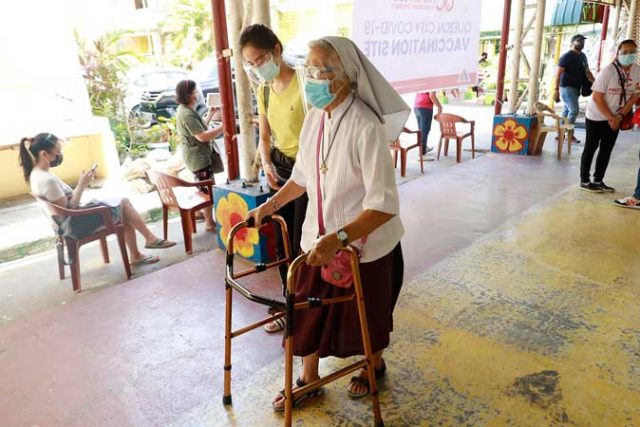
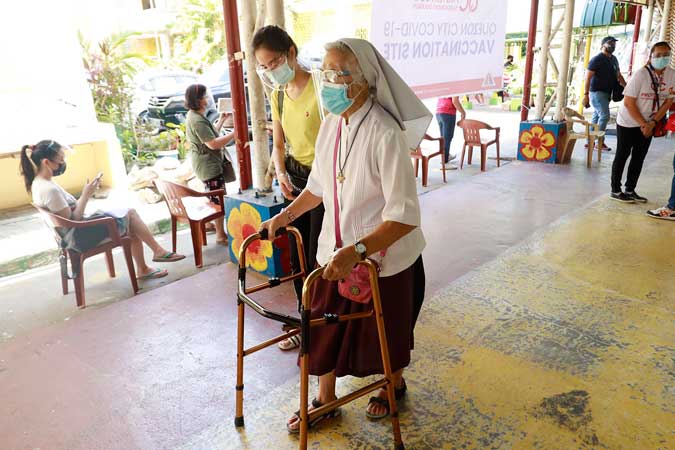
PHILIPPINE STAR/ MICHAEL VARCAS
PUBLIC schools such as the Old Balara Elementary school in Quezon City pictured here are among the common sites across the country used by government for its coronavirus vaccination program. — PHILIPPINE STAR/ MICHAEL VARCAS

THE ANTI-RED Tape  Authority (ARTA) is studying putting up one-stop shops for the processing of accreditation for coronavirus vaccination sites in response to alleged delays.

ARTA made the statement following a Philippine Daily Inquirer report where Chinese General Hospital Manila Administrator Samuel Ang said hospitals have been noting excessive requirements to set up the sites.

“We would like to reach out to Dr. Ang and other possible stakeholders to discuss thoroughly their experiences in setting up a vaccination site,” ARTA Director General Jeremiah B. Belgica said in a statement on Tuesday.

“There might be a need, too, to establish a green lane or one-stop-shop for those who wish to offer their public and private hospitals as additional location for the government’s anti-COVID inoculation program,” he added.

Similarly, ARTA last month started looking into speeding up the process of  permit applications for firms that are interested in setting up local vaccine manufacturing.

Mr. Belgica in his statement said government agencies should treat procedures relating to the coronavirus disease 2019 (COVID-19) pandemic response with urgency.

“Otherwise, they will be investigated and will possibly face administrative or criminal sanctions,” he said.

BPOS
Meanwhile, 100 outsourcing firms are expecting COVID-19 vaccine deliveries for employees starting this quarter after signing agreements involving the national government and private sector groups.

Deliveries of AstraZeneca, Moderna, and Novovax vaccine doses will start this quarter and will continue in the second half of the year, the Information Technology & Business Process Association of the Philippines (IBPAP) said in a statement Tuesday.

IBPAP partnered with the International Container Terminal Services, Inc. (ICTSI) Foundation to procure a million doses of the Moderna vaccine for the companies’ employees and their dependents.

“Assistance was also extended to micro, small, and medium enterprises (MSMEs) by aggregating and facilitating their orders,” IBPAP said.

The industry group also worked with the Financial Executives Institute of the Philippines, the Management Association of the Philippines, and the Makati Business Club.

“We cannot underscore enough the importance of a timely, efficient, and widespread rollout of the vaccine in the continued growth of the Philippine IT-BPM (information technology and business process management) industry,” IBPAP President and Chief Executive Officer Rey E. Untal said.

Outsourcing was one of the sectors allowed to operate at limited capacity on site during the strictest lockdown imposed last year.

Outsourcing revenue rose just 1.4% to $26.7 billion last year from the 2019 figure, IBPAP data showed. To compare, the sector’s revenues jumped 7.1% in 2019, beating industry targets.

The government due to global supply constraints cut its inoculation target to 50-60 million Filipinos by the end of the year from the previous 70 million goal. — Jenina P. Ibañez

Businesses required to submit monthly report on COVID-19 monitoring

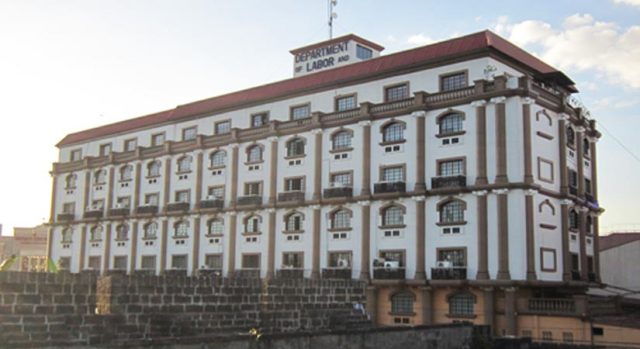
PHILSTAR

THE LABOR department reminded employers to submit a monthly report of their compliance to coronavirus disease 2019 (COVID-19) health protocols, including data on work-related accidents and illnesses.

In an advisory dated May 3, Labor Secretary Silvestre H. Bello III said businesses are required to submit their Work Accident/Illness Report (WAIR) COVID19 Form online through the Department of Labor and Employment’s (DoLE) Establishment Report System.

“Employers are likewise reminded that WAIR COVID 19 form shall be submitted every 30th of the month with or without any COVID-10 case in their workplace to DoLE,” he said.

Mr. Bello said this is pursuant to the joint memorandum with the Department of Trade and Industry requiring regular surveillance reports.

In a briefing on Wednesday, Department of Labor and Employment (DoLE)-Information and Publication Services Director V Rolly M. Francia said the advisory is meant to be a follow-through.

He said DoLE will also continue to conduct inspections “so we can guarantee if there is sufficient compliance from the workplaces.”

NO POLICE CLEARANCE
In another development, DoLE has officially rejected the proposal of Philippine National Police chief Debold M. Sinas to require a police clearance before transacting with the Labor department.

In a letter signed by Mr. Bello, the department said the formal dismissal for the proposed National Police Clearance (NPC) requirement was a result of consultation and survey of concerned stakeholders.

“While good-intentioned, requiring DoLE’s clientele to secure NPC to avail of our services will do more harm than good. In fact, in a rapid survey conducted among our stakeholders, 94% of the employers and workers are not in favor of making the NPC a requirement to DoLE transactions,” Mr. Bello said.

Mr. Francia said 56 representatives were consulted and surveyed. “There are 38 representatives from labor and 18 representatives from employers.” — Gillian M. Cortez

PHL touts better system vs online child exploitation after US partnership

PHILSTAR

THE COUNTRY now has a more organized and responsive system for addressing online child exploitation following a four-year partnership with the United States, Philippine Justice Secretary Menardo I. Guevarra said.

“Through the CPC (Child Protection Compact Partnership), the Philippine government has been able to carve out a more targeted and focused response to OSEC (online sexual exploitation of children) by identifying key objectives and adjusting critical resources in order to address priority responses in the prevention and prosecution of OSEC cases as well as the protection of victim survivors,” Justice Secretary Menardo I. Guevarra said during the recent final high-level dialogue on the partnership.

The partnership, wherein the US pledged P237 million while the Philippine Department of Justice spent about P44.6 million, was a four-year program that concluded on April 11.

The Philippine Justice department reported that over the last four years, 312 child victims of online sexual exploitation were identified while 97 perpetrators of trafficking crimes were arrested.

US Embassy in the Philippines Chargé d’Affaires John Law said, “Our strong partnership with the Philippine government and civil society organizations has built a solid foundation reflected in various efforts aimed at eliminating all forms of exploitation against children. I remain confident that this Partnership will become even more effective at combating many forms of abuse against children in the years to come.”

Mr. Guevarra said in a mobile message on Wednesday that the Philippines and the US would “have to conclude a new agreement” if the CPC were to be renewed. — Bianca Angelica D. Añago

Upgraded Calbayog Airport seen to complement Tacloban gateway

INAUGURATION of renovated/expanded Calbayog airport, seen complementing Eastern Visayas’ main regional airport in Tacloban + launch of new taxiway in Mactan-Cebu airport — DTI.GOV.PH

THE UPGRADED Calbayog Airport in Samar, inaugurated on Wednesday, is seen to complement the Tacloban City Airport that serves as the main gateway to the Eastern Visayas Region.

The expansion of the Calbayog Airport includes a bigger terminal building with a capacity for 450 passengers from only 76 and a runway that can accommodate bigger aircraft.

Transportation Secretary Arthur P. Tugade said the airport’s improvement is expected to boost the economy of the coastal city of Calbayog as well as the rest of Samar, which was one of the worst hit areas when super typhoon Haiyan, known locally as Yolanda, struck in 2013.

Meanwhile, Mr. Tugade also led the inauguration ceremony on Wednesday of the new taxiway at the Mactan Cebu International Airport (MCIA) in Central Visayas.

“The extended taxiway is expected to increase passenger traffic and aircraft movement in the General Aviation area of the MCIA. This will likewise accommodate wide-body aircraft in preparation for future expansions,” the Transportation department said in a statement.

The MCIA is the second busiest airport in the country after the Ninoy Aquino International Airport in the capital — MSJ

50 Chinese working in steel company arrested in Sarangani for misrepresentation

FIFTY Chinese nationals were arrested in Sarangani province by immigration officials on Friday after they were found to have falsely represented themselves as “skilled servicemen” who will conduct short-term work in a steel company.

Of the 50, only one was able to prove that he is a permanent resident of the Philippines, while “the rest of the 49 will be charged for violation of the Philippine Immigration Act of 1940,” Immigration Commissioner Jaime H. Morente said in a statement.

Under Section 23 of the law, “An immigration visa, or a passport visa, or a Reentry Permit, obtained by fraud or willful misrepresentation of fact shall be subject to cancellation by the issuing officer or by the Board of Commissioners.”

Mr. Morente said concerned citizens reported the presence of the foreigners in the region, prompting the bureau’s Mindanao Intelligence Task Group to look into the matter.

Investigations revealed that the foreigners secured work permits from the bureau in March claiming to be “skilled servicemen that would conduct short-time work in the company,” Mr. Morente said.

“However, when we conducted an audit, we confirmed that they falsified their documents and misrepresented themselves,” he added.

The Bureau of Immigration said “31 of the 50 foreigners were found to be conducting manual labor, while 18 were found to have been engaged in work inconsistent with their permit.”

The 49 foreigners are temporarily in a holding facility in Saranggani Province while waiting to be transferred to the warden facility of the Bureau of Immigration. — Bianca Angelica D. Añago

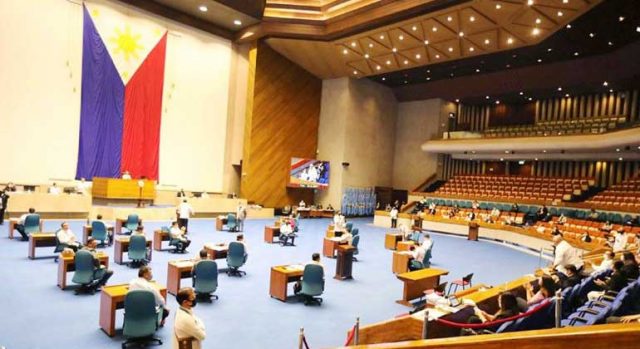
Belt-tightening measures proposed to fund stimulus

PHILSTAR

A KEY legislator has proposed that the government implement austerity measures in order to afford the third stimulus package, with economic managers still scrambling to identify funds for a measure that would become the third Bayanihan law if passed.

“Right now… naghahanap po ng excess fund sa mga ahensiya (the economic managers are looking at funding sources from agency budgets),” Marikina City Rep. Stella Luz A. Quimbo said at a televised news briefing.

Iyong mga hindi naman ganoon ka-essential na gastusin ng mga agencies, halimbawa po iyong mga kunwari may mga travel… baka naman puwedeng ipagpaliban muna dahil talagang hindi naman safe mag-travel pa sa ngayon (We can look at some non-essential agency spending items like travel, which could be foregone for now given the restrictions on travel),” according to Ms. Quimbo, a former economics professor at the University of the Philippines.

At least three committees at the House of Representatives have approved the proposed Bayanihan to Arise as One Act or Bayanihan III, which sets aside about P405.6 billion to help the country recover from the economic downturn caused by the pandemic.

Speaker Lord Allan Q. Velasco has said the chamber will fast-track the approval of the measure once session resumes on May 14.

Ms. Quimbo said President Rodrigo R. Duterte may certify the bill as urgent once economic managers figure out how to fund it.

Ang pinakamagandang mangyari ay ma-certify as urgent ‘yan ng Pangulo. Pero sa tingin ko po, mangyayari ‘yan as soon as ma-identify nang maayos ng ating economic managers ang fund sources. Ngayon, admittedly, ‘yan ang pinakamalaking obstacle (The biggest obstacle to an urgent certification is finding the funds for the stimulus package),” she said.

Aside from taking in excess capital and more dividends from government-owned and -controlled corporations, Ms. Quimbo said the measure could also be funded by savings from the 2020 and 2021 national budgets.

Also on Wednesday, Senator Franklin M. Drilon said about P500 billion from the 2021 national budget could be realigned to fund the bill.

“Potentially, we can review about P500 billion in the budget for activities which have not been undertaken,” he told ABS-CBN News Channel.

Mr. Drilon said Congress can review the funds allotted for the programs of the government’s anti-communist task force and other contingency funds in the 2021 budget.

He said however that legislators need to validate whether the funds have been disbursed.

Terry L. Ridon, convenor of infrastructure think-tank InfraWatchPH, said the funds earmarked for some pending infrastructure projects could also be used.

“The first way forward is to reconsider all pending non-urgent infrastructure projects, the funds for which can be used for government’s social programs for the pandemic,” he said in a Facebook messenger chat.

“Government, through Congress, can do whatever is necessary to respond to a continuing public emergency. For historical context, infrastructure funding in 2013 was realigned by Congress to respond to Yolanda,” he said. “Congress and Malacañang can do the same to address the coronavirus crisis.”

“This balancing act ensures that infrastructure projects can still provide day jobs to marginalized families while resolving real gaps in the government social response to the pandemic,” Mr. Ridon said.

John Paolo R. Rivera, an economist at the Asian Institute of Management, said the bill, if passed, could boost household spending and economic productivity.

“Passing Bayanihan III will definitely ramp up our economy. With its pump priming effect to both demand- and supply-side, it will stimulate consumption and production that will allow our economy to move faster than it is now and reach growth targets,” he said in a Viber message.

“Delaying this means delaying economic growth too,” Mr. Rivera said, noting that the bill is more urgent now after Philippine inflation came in at 4.5% in April. — Kyle Aristophere T. Atienza

‘Food holiday’ threats brushed off as DA assures Metro Manila supply is adequate

REUTERS

THE DEPARTMENT of Agriculture (DA) said the flow of agricultural produce to Metro Manila will continue even with hog raisers threatening to declare a so-called “food holiday” to protest inadequate government help in addressing the African Swine Fever (ASF) outbreak and plans to import more pork.

Agriculture Spokesman Noel O. Reyes said farmers and fisherfolk will continue to produce food and asked those planning to declare a food holiday to abandon the idea.

“We should help each other during this time, especially with the pandemic. We are hoping that it will not push through,” Mr. Reyes said in a radio interview Wednesday.

“The threat of a holiday is unfounded and baseless. We are encouraging our farmers, fisherfolk, and those in agribusiness trade to continue the delivery of agricultural products to Metro Manila,” he added.

Nicanor M. Briones, Pork Producers Federation of the Philippines, Inc. Chairman-Elect, said in a separate radio interview that the idea of declaring a food holiday arose after the “failure” of the DA to address the issues of the local hog sector such as the ongoing ASF outbreak. 

Mr. Briones said that aside from pork products, the planned food holiday will include other products such as chicken, fish, vegetables, and rice.

“There is no final date yet on when the food holiday will be. But we are looking at doing it for around three to five days,” Mr. Briones said.

“There is support from other farmers such as poultry raisers, fishermen, and crop farmers,” he added.

Earlier in the year, the DA projected a pork deficit of around 400,000 metric tons (MT) after the ASF outbreak depleted hog inventories.

As a result, President Rodrigo R. Duterte signed Executive Order No. 128 on April 7 that lowered the tariff rates on pork imports within the minimum access volume (MAV) quota to 5% in the first three months and 10% in the following nine months.

Tariff rates for out-of-quota pork imports were also reduced to 15% in the first three months and to 20% in the succeeding nine months.

After one year, the tariff rates of both in-quota and out-of-quota pork imports will return to their previous levels of 30% and 40%, respectively.

MAV is applied to farm commodities that are charged lower tariffs under the World Trade Organization trading system.

Mr. Duterte also submitted a recommendation to Congress to increase the MAV import quota by 350,000 MT, on top of the current 54,210 MT allocation, in order to augment supply.

The DA also implemented a suggested retail price for imported pork shoulder (kasim) of P270 per kilogram and imported pork belly (liempo) of P350 per kilogram.

The Department of Finance and the National Economic and Development Authority have said at Senate hearings of the Committee of the Whole that the entry of more pork imports at lower tariffs will not kill the hog industry while benefiting consumers.

Finance Secretary Carlos G. Dominguez III told senators that the government will lose P13.68 billion in potential revenue due to lower tariffs, but will result in consumer savings of P67.38 billion.

Socioeconomic Planning Secretary Karl Kendrick T. Chua said the volume of pork imports will be moderated by the lack of cold storage capacity. — Revin Mikhael D. Ochave