Home Blog Page 7576

adidas celebrates Pride Month with ‘Love Unites’ collection
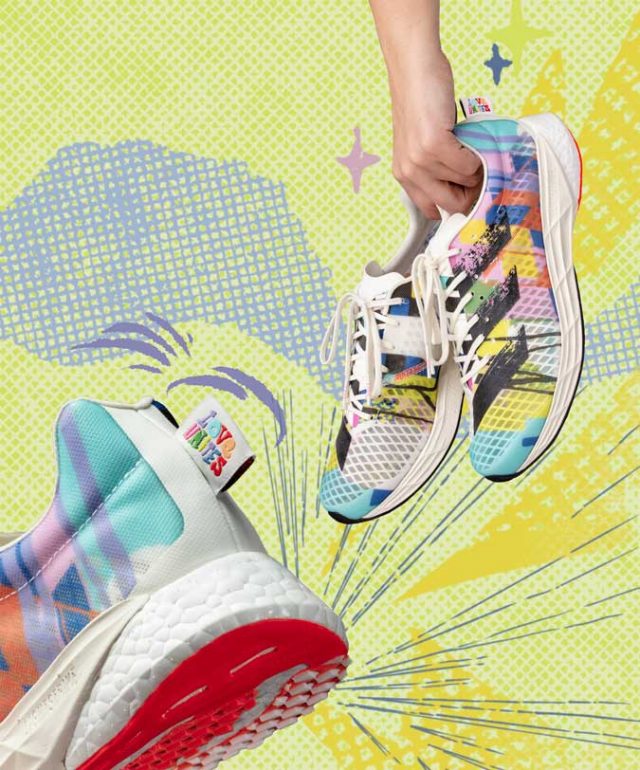

ADIDAS’ 30-plus collection ‘Love Unites’ draws inspiration from the DIY culture that has played an important role in LGBTQ+ sport communities.

IN CELEBRATION of Pride Month 2021 this June, adidas recently released its “Love Unites” collection in the local market.

A 30-plus collection, Love Unites draws inspiration from the do-it-yourself (DIY) culture that has played an important role in LGBTQ+ sport communities. It was also released alongside a global campaign spotlighting influential members and allies of the community.

The collection is an extension of the first-ever adidas Pride Pack released in 2015, which served to symbolize the brand’s rich history in sport and merging it with its long-standing support for the LGBTQ+ movement.

The DIY aesthetic highlighted in Love Unites, adidas said, features fluid geometries and expressive and layered graphics.

These can be seen in special Pride colorways of classic adidas silhouettes like Nizza, Forum, UltraBoost 5.0 DNA and AdiZero Pro V1 as well as a colorful lineup of apparel from bucket hats and jumpsuits to sports bras, shorts, and jerseys.

adidas said in coming up with its latest Pride Pack, it was also important that it gets to sustain its push in helping break down barriers for LGBTQ+ communities, including ending homophobia and transphobia in sport, which they have been doing in partnerships with organizations like Athlete Ally and Stonewall UK.

For this year’s “Love Unites” campaign, it has teamed up with a collective of athletes and artists who have made strides forward as champions of inclusivity.

They include Layshia Clarendon, the first openly transgender professional basketball player; Amanda Zahui B, professional basketball player and vocal supporter of the Black Lives Matter movement; Ashlyn Harris and Ali Krieger, professional soccer players, teammates, and married couple; Tom Daley, former world champion 10m diver and current World Series champion; Thebe Magugu, a  South African fashion designer; and Cody Rigsby, a famed fitness trainer.

The adidas “Love Unites” collection was released in the country on June 1 and is available on http://adidas.com/loveunites. For more details, visit https://www.facebook.com/adidasPH. — Michael Angelo S. Murillo
BSP outlines application process for COE to sell assets under FIST Law

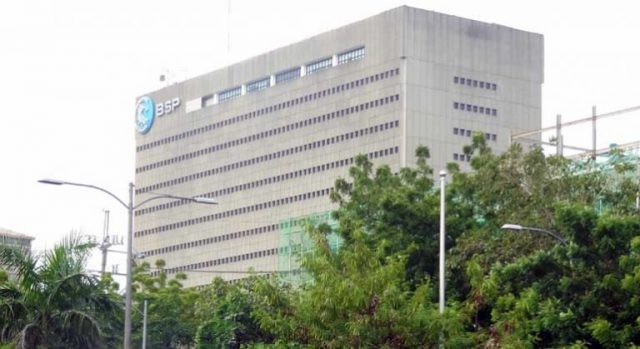
BW FILE PHOTO

THE CENTRAL BANK has released rules to guide financial institutions on the process of securing a certificate of eligibility (COE) for the nonperforming assets (NPAs) they seek to offload through Republic Act (RA) 11523 or the Financial Institutions Strategic Transfer (FIST) Law.

Memorandum No. M-2021-034 signed by Bangko Sentral ng Pilipinas (BSP) Deputy Governor Chuchi G. Fonacier on June 4 outlined the process for the submission of the master list of eligible NPAs and the application for COEs, which financial institutions will need to offload their bad assets.

Based on the guidelines, the central bank will assess COE applications received on or before Feb. 24, 2023, provided that transactions involved were done within the two-year effectivity of the FIST Law from Feb. 18, 2021 to Feb. 18, 2023.

“The BSP, Securities and Exchange Commission (SEC) and BIR (Bureau of Internal Revenue) shall coordinate to ensure the integrity of the COE,” the memorandum said.

The guidelines said a COE will be issued by the BSP to prove the eligibility of NPAs for the availment of tax exemptions and privileges under the FIST Law. These NPAs include NPLs and real and other properties acquired (ROPA) of BSP-supervised financial institutions.

“Prior to the filing of an application for COE, the BSP-supervised financial institution shall coordinate with the BSP, through the appropriate supervising department, its intention/plan to sell/transfer its NPAs pursuant to the FIST Act and its implementing rules and regulations, and to develop a reconciled and final master list of eligible NPAs,” the central bank said.

The BSP will process COE applications within 20 working days from the submission by a BSP-supervised financial institution as long as they come with the complete requirements. A duplicate copy of issued COEs will also be provided to the SEC and BIR.

The BSP said financial institutions should first accomplish a master list of eligible NPAs before applying for a COE. A final master list, which could be initial or updated, should include their eligible NPAs on or before a quarter-ended reference date and should be submitted to the central bank after two to three months.

Under RA 11523 and BSP Circular No. 1117 Series of 2021, NPAs which can be offloaded to FIST corporations are loans and assets of financial institutions that will be recognized as nonperforming until Dec. 31, 2022.

“Once the Master List is validated and verified as acceptable, the BSP shall provide the BSP-supervised financial institution with a copy of the Final Master List as reference for its COE application,” the central bank said.

For the COE application, the BSP has set specific processing fees for financial institutions: P50,000 for universal and commercial banks, P20,000 for thrift banks, P15,000 for rural and cooperative banks, and P10,000 for nonbank financial institutions.

Meanwhile, a processing fee of P5,000 will be applicable for a dation in payment or dacion en pago arrangement — or settling of debt through other modes of payment — by an individual or corporate borrower.

The same P5,000 rate will be applicable for transfers that involve a single-family residential unit ROPA, an empty lot ROPA or a nonperforming loan secured by a real estate manager for the said single-family residential unit or empty lot.

Signed in February, the FIST Law offers tax incentives for transactions related to offloading bad assets of lenders to FIST corporations, including exemption from the payment of documentary stamp tax, capital gains tax, creditable withholding income taxes and value-added tax, among others.

The central bank expects banks to sell at least P152 billion in NPAs through FIST Law to clean their balance sheets.

Among the country’s major lenders, Bank of the Philippine Islands, Rizal Commercial Banking Corp. and the Philippine National Bank earlier said they are open to offloading their bad assets through the law. — L.W.T. Noble

Citicore to make 30 MW available for green energy option program

UNSPLASH
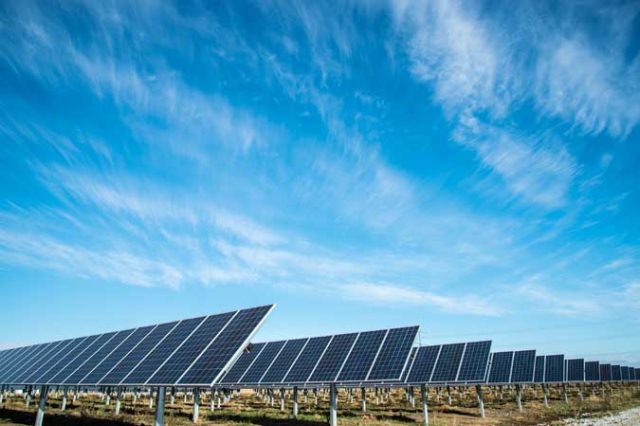
RE firm operates eight solar farms with 163-MW installed capacity. — UNSPLASH.COM

RENEWABLE energy (RE) firm Citicore Power, Inc. said over the weekend that it plans to dedicate an initial 30 megawatts (MW) from its solar portfolio for the government’s green energy option program (GEOP).

“Beginning third quarter of this year, about 30 MW will be initially used for GEOP, as this will become available due to expiration of an existing contract,” Citicore, through its corporate affairs department, told BusinessWorld in a text message on Sunday.

The firm clarified that the capacity would come from its solar farms, but did not state which of its facilities will be providing the 30-MW allotment. At present, Citicore operates eight solar farms across the country with an aggregate installed capacity of 163 MW and are fully contracted.

The Department of Energy (DoE) previously named Citicore Power’s retail electricity supplier Citicore Energy Solutions, Inc. as one of the 10 entities that qualified for the GEOP.

Launched in 2018, the GEOP is a voluntary mechanism that allows users consuming at least 100 kilowatts of power to source their supply from retail electricity suppliers that sell power from renewable sources.

“To be included in the DoE’s GEOP… list is indeed a very welcome development for Citicore,” Citicore President Oliver Y. Tan said in a statement issued on Friday.

“Due to the ill effects of climate change, there is a growing consciousness to shift to clean and RE among consumers and given that GEOP advocates the consumers’ rights to choose, we believe that our diverse portfolio provides us with a distinct advantage… We can cater to those who prefer solar, hydro, or biomass energy sources,” he added.

The firm also owns 100% of the Rio Norte Hydro Corp., which is developing the 19.7-MW run-of-river hydro projects in Echaque, Isabela, and 60% of Citicore Candlewick Biomass, Inc., which uses sustainable techniques in producing wood biomass products that can be used as alternatives to fuel.

Citicore previously said that its subsidiary Citicore Solar Energy Corp. signed a deal with Ayala-led AC Energy Corp. to build a 50-MW photovoltaic solar facility in Arayat and Mexico, Pampanga. The plant is expected to go online this November.

In February, Citicore reported that it was allocating P4 billion as capital expenditures for solar and hydro projects. Of the amount, some P2.5 billion will go to solar projects, and P1.5 billion will be allotted for hydro projects. — Angelica Y. Yang

Lexus NX 300: A buttery-smooth drive with a stress buster

PHOTO FROM LEXUS PHILIPPINES

OF THE BRAND’s five current SUV models, the NX was the fourth Lexus to debut (in 2014), making it the second newest crossover from Japan’s premiere luxury brand, after the subcompact UX (which came out in 2018). The earlier three models (the midsize RX and the full-size LX and GX) predate the NX by a lengthy 19 years to a whopping 26 years.

This makes the fact that the NX has now become the second best-selling Lexus SUV worldwide (after the RX) an impressive achievement.

Chalk it up partly to its ideal size. The NX is the compact crossover in the Lexus lineup, which puts it squarely in the size-and-price sweet spot of a vast majority of buyers, which are mostly those who have older (or even adult-aged) children but don’t need the extra space and size of the RX.

These are also people who desire a distinctively designed SUV (I freely use both “crossover” and “SUV” to describe the NX because it capably covers the differences between the two) that has arguably the most comfortable ride in its class. It’s a luxury brand, after all. And what could be more luxurious than a smooth, plush ride in a heavily soundproofed cabin?

Lexus is renowned for producing among the quietest, most refined, and most comfortable automobiles in the world, which makes them ideal for the high-stress conditions of Metro Manila traffic. And which is why I looked forward to testing the Lexus NX in our metro streets.

The Lexus NX is available in three variants: the hybrid NX 300h (P3.688 million), the NX 300 F Sport (P3.718 million) flagship, and my test unit, the NX 300 (P3.218 million).

Style-wise, while I’m a big fan of the Lexus spindle grille design language, I have always preferred its execution on the sedans and coupes. I feel that the aggressive front has a slight disconnect with the bulkier dimensions of an SUV, which is why the spindle grille looks relatively better on the smaller NX and UX than their three bigger siblings — at least for my taste.

In any case, the NX cuts a distinctive profile from any angle, thanks to that bold front end, the sculpted fenders, that arrowhead rear quarter window, and the angular character lines that run through the doors.

Under the hood of the NX 300 (and the NX 300 F Sport) is a twin-scroll-turbocharged direct-injection 2.0-liter inline-four developing an impressive 235hp and 350Nm of torque (mated to a six-speed automatic delivering power to all four wheels). A four-cylinder motor will never be as smooth as a V6 or V8, but leave it to Lexus to employ its cutting-edge NVH-suppression measures to banish any untoward noise or vibration. The generous outputs also gave the NX 300 an agile responsiveness that belies its grace and smoothness. Its generous torque is available at a very flat spread from as low as 1,650rpm all the way to 4,000rpm, which means that a slight prod on the throttle is enough to get the NX smartly moving. Zero-to-100 kph time is a surprisingly brisk 7.1 seconds.

Power delivery is one thing, but where the NX likewise shines is in its exceptional road-holding manners. The front MacPherson strut/lower arm and rear double wishbone suspension has been tuned to perfectly balance ride and handling. The springs, stabilizer bars and bushings have been tweaked for improved turn-in response and steady-state cornering while the finely tuned shock absorbers help deliver that trademark Lexus buttery-smooth ride.

Inside, you’ll find a very spacious and artisan-crafted cabin where most of the surfaces you can touch are leather-covered and plushly padded. Nearly all the controls and switches inside the NX, including the drive mode selector, shift knob and door handles, have a metallic satin finish, enhancing the premium look and feel of the cabin.

On the center console is an enlarged touch pad with a thoughtful padded and leather-covered wrist support, a charger tray for wireless smartphone charging, and USB ports with higher amperage for faster charging. The beautifully minimalist analog clock nestled within the A/C control display boasts a dark gray dial and satellite control, which automatically adjusts the time in different time zones.

On the safety front, eight air bags line the cabin while wide-angle cornering lights provide additional illumination when turning. Drive Mode Select also lets you choose from five different modes: Normal, Eco, Sport, Sport +, and Custom — the latter allowing you to decide on the car’s powertrain, Adaptive Variable Suspension, power steering, and air-conditioning settings. A foot-actuated power tailgate opens automatically for hands-free convenience.

The NX was designed to meet the expectations of those looking for a capable crossover that delivers an engaging on-road driving experience while still capable of tackling more challenging terrain. Knowing that you have a competent vehicle when the need arises is empowering. If the weather turns nasty or if road conditions degrade to less than ideal — two conditions that happen all too often in the Philippines — then having a vehicle that is more than up to the task of getting you to your destination without drama is indeed an asset. All that luxury, comfort, refinement and that legendary Japanese reliability are just the icing on the cake.

Free shipping, promos, and discounts mark 6.6 sale

SHOPEE Mid-Year sale, running from June 6 to July 7 (6.6, 7.7. Shopee has a penchant for repeating dates) will see users enjoying free shipping, daily ₱1 deals, and up to 20% cashback from certain brands.

“Shopee welcomes the second half of the year with a bang as we launch the Shopee 6.6-7.7 Mid-Year Sale,” said Martin Yu, Director at Shopee Philippines, during a press conference last week. “We’re proud of all the milestones we’ve achieved in the first half of the year, and starting with this campaign, we look forward to reaching new ones. With our supersized 6.6-7.7 Mid-Year Sale and TV Special, Shopee aims to spread joy to Filipinos, cater to their needs, and remain a valued partner to our brands and sellers.”

Mr. Yu made a case for brands to jump onto the platform. According to him, “Shopee saw its top-selling brands achieve up to thirty-fold uplift in orders,” he said. Meanwhile, at the last Mega Shopping Sale (3.3-4.4), Mr. Yu reported a six-fold increase in “items sold across the region.”

Mr. Yu also announced the regular payday sales at Shopee (every 15th day of the month, following the payday calendars of many companies). “We want Filipinos to look forward to payday shopping with the same anticipation and excitement as our monthly mega sales,” he said during the press conference.

Shoppers can look forward to discounts up to 90% on brands such as P&G Beauty, Olay, NIVEA Philippines, Abbott Philippines, Equal Philippines, Maybelline, Del Monte, Mentos and Chupa Chups, Colgate-Palmolive, Havaianas Philippines, Unilever Beauty, OPPO, vivo, Enfagrow, GSK, Deerma Official Store, Colourette, Revlon, The SM Store, Nestle, and Xiaomi.

A TV special hosted by Shopee Ambassador Willie Revillame, aired yesterday on June 6, was broadcasted live from Araneta Coliseum, and gave away P1 million and a house and lot; among many other prizes. — JLG

Cebu Pacific carries new batch of COVID-19 vaccines from China

FOURTH batch of vaccines brings total transported doses to 3.5 million.

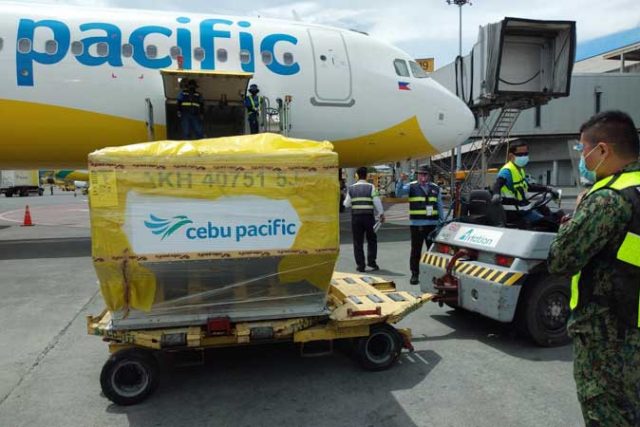
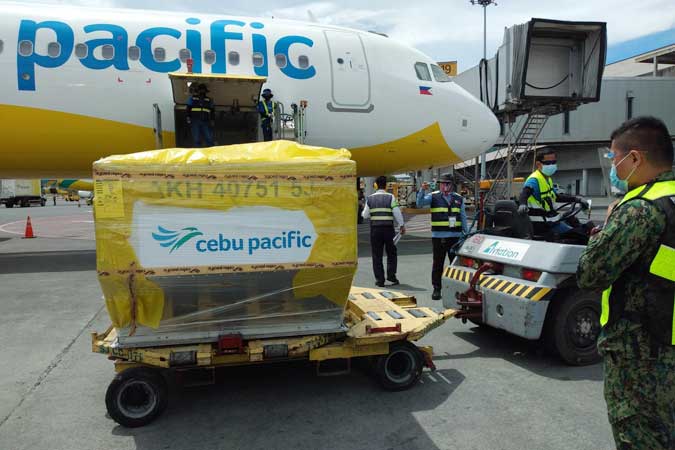
CEBU Pacific on Sunday transported a million coronavirus disease 2019 (COVID-19) vaccines to Manila from China.

The airline transported this fourth batch of vaccines in partnership with the Department of Health to reach a total of 3.5 million doses sent to Manila from China and another 1.1 million doses to various part of the Philippines.

The vaccines were inspected by authorities on arrival on Sunday morning before being transferred to cold storage vans and facilities.

Cebu Pacific, operated by Cebu Air, Inc., also recently carried 51,800 vaccine doses to Puerto Princesa, Cagayan de Oro, Cotabato, Zamboanga, and Tuguegarao.

“We are keen to transport the vaccines, whether internationally or domestically, so that our national vaccination campaign meets its targets,” Cebu Pacific Chief Strategy Officer Alex Reyes said.

With the new shipment, the country has received around 6.5 million doses of the vaccine developed by Chinese firm Sinovac Biotech Ltd.

Airlines are eyeing simpler travel guidelines for vaccinated individuals to speed up the recovery of sectors affected by the pandemic. Cebu Pacific last month said that travel requirements should be standardized to ease domestic travel. — Jenina P. Ibañez

China to make climate information disclosure mandatory

CHINA aims to make disclosing climate and carbon emission information disclosure mandatory in the future, after first testing it with some commercial banks and listed companies, central bank Governor Yi Gang said.

“Our goal is to make a uniformed disclosure standard, and in the future, we will go in the direction of mandatory disclosure of climate-related information,” Mr. Yi said on Friday during a panel discussion at the Green Swan conference hosted by the Bank for International Settlements.

President Xi Jinping’s pledge to make China carbon neutral by 2060 means the world’s top-polluting nation will need a drastic shift from fossil fuel to clean energy. The People’s Bank of China is seeking to contribute to that change by developing green finance and addressing related financial risks.

To cut emissions, the country will need an estimated 2.2-trillion yuan ($343 billion) of investment every year by 2030, and the figure will rise to 3.9-trillion yuan for the three decades leading to 2060, Mr. Yi said in April.

The PBOC has conducted stress tests to assess climate risks and provided policy incentives for banks to extend loans for green projects, according to Mr. Yi. It is also assessing the impact on inflation forecasts from the economy’s transition to green energy, he said.

The PBOC will publish the stress test results in the future, according to Mr. Yi. The review is part of broader testing that the central bank plans to conduct on all 4,024 banks this year to gauge their readiness to deal with potential shocks.

Mr. Yi also said China’s green bond taxonomy is about 80% similar to a separate one produced by the European Union. The PBOC and the EU are working on converging their taxonomies for green investment, with the aim of publishing a jointly recognized classification standard by the end of this year, he said in March.

The PBOC is tasked to ensure the country’s transition to green energy is a smooth one, avoiding “sudden moves” that may trigger crises, Mr. Yi said.

China and other large developing countries need to set an emission cap and clear roadmaps as soon as possible, in order to show their determination and ensure their promises will be delivered, former PBOC governor Zhou Xiaochuan said in a speech earlier at the conference. China also must rely on more investment in research and development to cut emission, he said. — Bloomberg

IWC, Mercedes-AMG release titanium chronograph

The IWC Pilot’s Watch Chronograph Edition is enrobed in titanium. — PHOTO FROM IWC

A tried-and-tested partnership delivers on time

HERE COMES another attractive piece of wrist candy, courtesy of two internationally renowned brands.

After first forging a partnership in 2004, IWC (International Watch Company) Schaffhausen and Mercedes-AMG have consistently leveraged their reputation and expertise to produce memorable, desirable timepieces over the years. Beginning with the Ingenieur Collection AMG, a procession of significant releases and collaborations have followed — various AMG Special Edition models, cockpit clocks, other special edition watches, and racing projects, plus experiences as well. And, owing to the success of one Lewis Hamilton in Formula 1 racing, even casual observers today should be familiar with the IWC and its affinity with Mercedes-AMG.

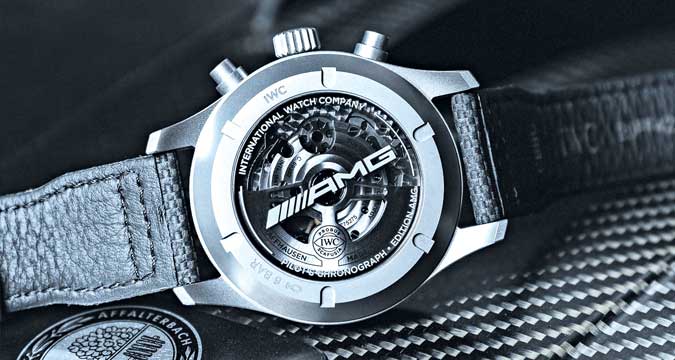
Recently, another chapter was opened in the partnership, as the two European brands jointly revealed the IWC Pilot’s Watch Chronograph Edition “AMG.” The 43mm wristwatch is the first of its kind for IWC (with 85 years of history in this type of timepiece) to be encased in Grade 5 titanium, lending a matte-gray finish to the watch. Described IWC Schaffhausen CEO Christoph Grainger-Herr during the product’s recent global launch, “It’s a material directly derived from automotive engineering — a material that’s extremely hard, lightweight and very scratch-resistant indeed.” At the heart of the automatic-winding timepiece is IWC’s in-house 69385 caliber with a frequency of 28,800vph/4Hz and power reserve of 46 hours. It utilizes woven carbon fiber for its dial, something “directly derived from AMG’s aero components.” It gets black hands and a black leather strap, along with a sapphire crystal with an arched edge. This in turn receives anti-reflective coating on both sides.

Sub-dials count off hours, minutes, and seconds; and the racing-inspired black dial contrasts with the Silver Arrow-inspired sub counter calling to mind motorsport instrumentation. Flip the watch to reveal a tinted crystal case back emblazoned with a large Mercedes-AMG logo. A black embossed calf leather strap with contrast stitching and folding clasp keeps the watch on the wrist.

Mr. Grainger-Herr said that IWC’s affinity with everything automotive “runs really deep, and goes all the way back to history.”

Of the partnership with Mercedes-AMG, he explained, “(It) also has something to do with (our) unique location here in the east of Switzerland,” explained the executive. “We are removed from the western valley of Switzerland, much closer to the German automotive industry just up the road. Now, we’ve been a longstanding partner with Mercedes-AMG and there’s only a short one-hour motorway run that is connecting us to Affalterbach, the home of AMG.”

For his part, AMG CEO Philipp Schiemer declared, “IWC is our longest standing partner over 17 years. I think this is not usual in the industry, and I think the reason why is because we share the same values.”

Both companies admit to being technology-driven, while creating “very emotional products.” Mr. Schiemer continued, “With IWC you are not just looking at the time, you want to have a smile in your face. It’s the same with driving an AMG. When you enter the car, you don’t think about where to go. You just enjoy the ride.”

The Pilot’s Watch Chronograph Edition “AMG” is now available for pre-order from www.iwc.com, through IWC boutiques, and authorized retail partners.

Journey of lesbian magazine Curve hits screens this Pride month

IMDB.COM
IMDB.COM

LONDON —  Frances “Franco” Stevens was just 23 when she launched a glossy lifestyle magazine for lesbians in 1991, after raising funds by taking cash out on credit cards and betting on the horses.

The gamble paid off and now 30 years on, documentary Ahead of the Curve celebrates Curve magazine’s groundbreaking history and explores its future.

“At that time … there was nothing that showed lesbians in the positive everyday view,” Ms. Stevens, who started the magazine in San Francisco, told Reuters.

“I would say the biggest controversy we had with starting was putting the word lesbian on the front cover because that meant every time somebody wanted to buy it, they were essentially coming out to anyone standing around them, anyone who saw it in their house.”

Ms. Stevens, who was initially rejected by her family for being a lesbian, said it was a risk to bring out the magazine at the time, but she was young enough to think there would be time to bounce back if it flopped.

“It was in my wildest dreams that it would last for five years. And now here it is 30 years later,” she said.

Subscriptions soared and over time mainstream advertising deals came in and famous faces like tennis player Martina Navratilova and singer Melissa Etheridge posed for the cover.

But it wasn’t all plain sailing.

Originally called Deneuve, the magazine had to change its name following a lawsuit from legendary French actress Catherine Deneuve and in 2010 Ms. Stevens sold the magazine after an accident left her disabled.

She bought it back 10 years later and it is now part of Ms. Stevens’ newly formed organization The Curve Foundation, which aims to keep giving a voice to LGBTQ women.

“After so long, to still hear women say that it (Curve) saved their lives … makes it all worthwhile,” she said.

Ms. Stevens, who is married to one of the film’s directors, said the documentary’s release is timely given movement restrictions due to the coronavirus disease 2019 (COVID-19) pandemic.

“With the movie coming out in Pride month and people still feeling this kind of disjointed feeling of uncertainty, that’s what we felt in the ‘90s when I first started the magazine,” she said. “We need community more than ever right now.” — Reuters

Organic farmers offered low-cost certification

ATI.DA.GOV.PH

THE Department of Agriculture (DA) said it launched a quality assurance system offering low-cost certification for small farmers and fisherfolk to make their organic products more marketable.

Agriculture Secretary William D. Dar said the Participatory Guarantee System (PGS), a feature of Republic Act (RA) 11511, which amended RA 10068 or the Organic Agriculture Act, is intended to open doors to more agriculturists seeking to maintain a sustainable and environment-friendly organic operation.  

“The PGS will significantly reduce the cost of maintaining organic certification and actively involve our small farmers and fisherfolk with like-minded stakeholders and advocates of organic agriculture by maintaining the integrity of organic products available in the market,” Mr. Dar said in a statement.

According to the DA, the system certifies producers as active practitioners of organic agriculture, and serves as an alternative to third-party certification.  

It added that the PGS was developed by organic agriculture practitioners and encourages social networking and knowledge exchange.

“The new system also directly contributes to the farm consolidation (objective) of the DA and will increase the local availability of certified organic products of small and medium farmers… (freeing up) large-scale organic producers (to) shift to export markets,” Mr. Dar said.

“We need to ensure that small organic farmers and fisherfolk are not passive participants. We need to actively engage them in the implementation and give due recognition to their experience and expertise,” he added.

President Rodrigo R. Duterte signed RA 11511 on Dec. 23 with the intent of improving the national organic agriculture program and encourage the consumption of organic products with an educational awareness initiative for consumers.  

Aside from the creation of the PGS, the law also created the National Organic Agriculture Program — National Program Coordinating Office to manage the implementation of the program and serve as the planning and administrative secretariat of the National Organic Agriculture Board. — Revin Mikhael D. Ochave

Yields on gov’t debt drop on steady May inflation

YIELDS ON government securities (GS) mostly declined last week following the release of May inflation data, which showed that the average rise in prices was steady for a third straight month.

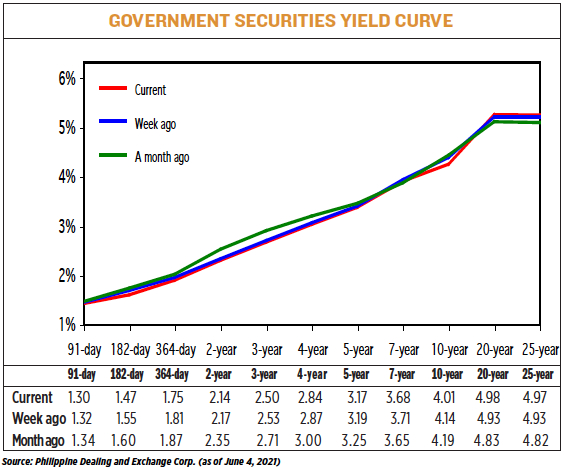
Bond yields, which move opposite to prices, edged down by an average of 3.08 basis points (bps) week on week, based on data from the PHP Bloomberg Valuation Service Reference Rates as of June 4 published on the Philippine Dealing System’s website.

A bond trader said yields mostly moved lower last week as inflation concerns eased.

“[Last Friday’s] data confirmed that view as CPI (consumer price index) may have seen its peak,” the trader said in a Viber message.

“Yields slightly dropped across the curve with a pickup in activity week-on-week as dealers and investors continued to put their excess liquidity into work and hunted for bargains across the GS curve,” Robinsons Bank Corp. peso sovereign debt trader Kevin S. Palma said in a separate Viber message.

He said this market activity was shown by the robust demand seen at last week’s Treasury bills (T-bills) and 20-year Treasury bond (T-bond) auctions that “somewhat boosted sentiment and catalysts on the direction of yields.”

“Icing on the cake is the local CPI for the month of May, which clocked in as expected at 4.5%,” Mr. Palma added.

Inflation was steady for the third straight month at 4.5% in May, the Philippine Statistics Authority reported on Friday, matching market expectations.

The figure was within the 4-4.8% estimate by the Bangko Sentral ng Pilipinas (BSP) for that month and also matched the median estimate in a BusinessWorld poll.

Year to date, inflation was 4.4%, higher than the 2-4% target of the BSP and its revised forecast of 3.9% for the year. May was the fifth month in a row that inflation went beyond target.

Meanwhile, institutional investors continued to swamp government securities, as seen in the bids for the Bureau of the Treasury’s (BTr) offerings last week.

The BTr raised P21 billion from its offer of T-bills last week, higher than its P15-billion program, after it accepted more non-competitive bids for all the tenors amid a decline in rates.

Total bids for the short-tenored securities stood at P87.173 billion on Monday, making the offering over five times oversubscribed.

On the other hand, the Treasury raised P35 billion as planned via the reissued 25-year T-bonds it auctioned off on Tuesday. The offer was nearly two times oversubscribed as bids reached P61.914 billion. ​

At the end of trading on Friday, rates mostly dropped across the yield curve, except for 20- and 25-year T-bonds, which went up by 4.68 bps and 4.11 bps, respectively, to fetch 4.976% and 4.9709%.

The short end of the curve went down as the 91-, 182-, and 364-day T-bills declined by 1.95 bps, 8.05 bps, and 5.73 bps, respectively, to yield 1.3026%, 1.4738%, and 1.7548%.

At the belly, yields on the two-, three-, four-, five, and seven-year bonds decreased by 2.92 bps, 2.81 bps, 2.55 bps, 2.11 bps, and 3.09 bps, respectively, to 2.1407%, 2.4984%, 2.8435%, 3.1716%, and 3.6775%.

The rate of the 10-year T-bond likewise dropped by 13.48 bps to 4.0086%.

For this week, the trader said the market will likely focus on how fast the country can reopen given the recent uptick in cases.

“External factors will also be a factor as we look at how fast US economy recovers,” the trader said.

Mr. Palma said reinvestment requirements due to the P121.8 billion in retail Treasury bonds maturing on June 13 will drive demand for government securities in both primary and secondary markets this week.

“T-bill auction results should guide direction for short dates, while the seven-year [bond] reissuance auction results and US Treasury yield movements will then dictate the tempo for the belly to the long-end of the curve,” he added.

The Treasury is looking to raise P15 billion from the T-bills on Monday and P35 billion from an offering of reissued seven-year T-bonds on Tuesday. It wants to borrow P215 billion from the domestic market this month: P75 billion via T-bills and P140 billion from T-bonds.

The government plans to raise P3 trillion this year from onshore and offshore sources to plug a budget deficit expected to hit 8.9% of gross domestic product. — B.T.M. Gadon

Emerging-market stocks in pole position to gain as world reopens

A BULLISH case is building for emerging-market stocks, which have trailed their developed-nation peers this year, with strategists saying the asset class is better positioned to benefit from a global reopening.

There are already signs the gap is narrowing, with the MSCI Emerging Markets Index last month outperforming the MSCI World Index for the first time since January.

Relatively attractive valuations, a weaker dollar and expectations that global supply chains will whir back into high gear are burnishing the appeal of developing-nation equities. The surge in global commodity prices is adding to optimism that improving growth will help boost cyclical shares in these markets.

“Investors who missed out on the strong US and EU consumer and cyclical equity bull run so far this year should consider investing in EM stocks,” said David Chao, a global market strategist in Hong Kong at Invesco Ltd., which oversees about $1.4 trillion. “Rising inflation expectations and bond yields should drive continued investor rotation from growth to cyclical assets – EM economies are more cyclical in nature.”

Analysts see the MSCI EM index, which is trading at 14 times forward earnings, rallying about 20% over the next 12 months, according to data compiled by Bloomberg. That’s almost double the advance seen for the developed-nations’ gauge, which has a valuation multiple of about 20.

At the same time, 12-month forward earnings estimates for EM shares have jumped by about 40% from a June 2020 low.

“Expectations for the year ahead remain high,” said Emily Whiting, an investment specialist for emerging markets & Asia Pacific equities at JPMorgan Asset Management in London. “A successful vaccine rollout leading to a resumption of normalcy in the developed world and parts of EM. With that, comes optimism for corporate earnings and equity markets.”

Not everyone is convinced emerging markets will outperform.

Risks include a vulnerability to escalating inflation, and a potential pullback in commodity prices, said Mathieu Racheter, an emerging-market strategist at Julius Baer Group Ltd. in Zurich. Investors looking for EM exposure may want to consider sticking to value stocks in Asia, particularly in like China, India and South Korea, Racheter said.

The MSCI EM gauge is trailing the developed-nations index by about four percentage points so far this year.

Developing-nation stocks are also seen benefiting relatively more from expectations that commodities will extend gains as vaccine rollouts help economies rebound after grinding to a halt due to the pandemic. Materials and energy shares carry a weightage of almost 14% in the MSCI EM Index, versus about 8% for the MSCI World gauge, data compiled by Bloomberg show.

An index of global commodities has surged about 20% this year as prospects for the global recovery have improved. Cyclical stocks, which include sectors such as auto makers, clothing stores and restaurants, are seen getting a boost as growth gathers momentum and inflation concerns dim the appeal of technology shares.

“Emerging markets are still one of the better ways to get exposure to the global-growth story,” said Marija Veitmane, senior multi-asset strategist at State Street Global Markets in London.

Boston-based State Street favors metals and miners in Latin American countries such as Brazil and Chile over Eastern Europe. Invesco’s Chao said he prefers emerging markets in Europe, and Brazil. — Bloomberg