



How PSEi member stocks performed — June 10, 2021

Here’s a quick glance at how PSEi stocks fared on Thursday, June 10, 2021.


Peso weakens vs dollar ahead of US inflation

THE PESO weakened versus the greenback for a third straight day on Thursday on safe haven demand as the market awaits the release of US inflation data, which could dictate the pace of the Federal Reserve’s tapering.
The local unit closed at P47.765 per dollar on Thursday, shedding 3.4 centavos from its P47.731 finish the day prior, data from the Bankers Association of the Philippines’ website showed.
The peso opened Thursday’s session at P47.72 versus the dollar. Its weakest showing was at P47.777 while its peak for the session was at P47.68 against the greenback.
Dollars traded inched up to $680.2 million on Thursday from the $675 million seen on Wednesday.
The peso retreated versus the greenback ahead of the release of latest US inflation data, Rizal Commercial Banking Corp. Chief Economist Michael L. Ricafort said on Thursday.
Meanwhile, a trader attributed the peso’s weakness to risk-off sentiment due to the risk of taper tantrum as the Fed looks to wind down its asset purchases.
The US Labor department was due to report May inflation data overnight. In April, US inflation stood at 0.8%, which was its quickest pace since June 2009.
Economists said the data will likely show the consumer price index (CPI) increased 0.4% last month after surging 0.8% in April, which was the largest gain since June 2009, Reuters reported.
In the 12 months through May, the CPI is forecast accelerating 4.7%. That would be the biggest year-on-year increase since September 2008 and follow a 4.2% rise in April. The anticipated jump will partly reflect the dropping of last spring’s weak readings from the calculation. These so-called base effects are expected to level off in June.
Inflation could also get a boost from employers raising wages as they compete for scarce workers, despite employment being still 7.6 million jobs below its peak in February 2020. There are a record 9.3 million unfilled jobs.
Federal Reserve Chair Jerome Powell has repeatedly stated that higher inflation will be transitory. The US central bank slashed its benchmark overnight interest rate to near zero last year and is pumping money into the economy through monthly bond purchases.
The Fed has signaled it could tolerate higher inflation for some time to offset years in which inflation was lodged below its 2% target, a flexible average. Its preferred inflation measure, the personal consumption expenditures price index, excluding the volatile food and energy components, increased 3.1% in April, the biggest rise since July 1992.
For Thursday, Mr. Ricafort gave a forecast range of P47.70 to P47.80 per dollar, while the trader expects the local unit to move within the P47.65 to P47.80 band. — with Reuters
PSEi drops on profit taking after market’s rally
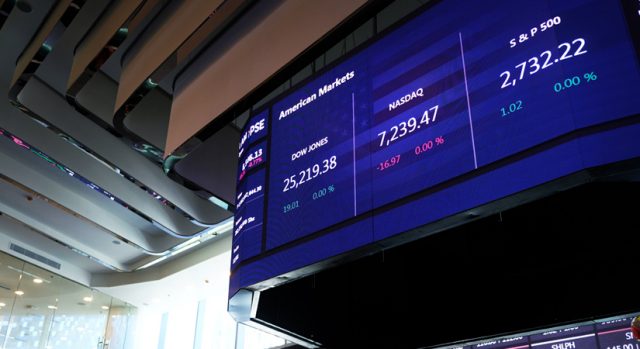
PHILIPPINE shares declined on Thursday as the market corrected and as investors pocketed their profits following a two-day rally.
The bellwether Philippine Stock Exchange index (PSEi) went down by 26.83 points or 0.38% to close at 6,875.71 on Thursday, while the broader all shares index shed 5.85 points or 0.14% to finish at 4,154.36.
“Market went on profit taking today after it moved substantially up in the last two days of trading,” Diversified Securities, Inc. Equity Trader Aniceto K. Pangan said in a text message on Thursday. “This is considered a healthy correction.”
“The market was unable to sustain its position at the 6,900 level, showing this to be a strong resistance so far,” Philstocks Financial, Inc. Senior Research Analyst Japhet Louis O. Tantiangco said in a Viber message.
Meanwhile, AAA Southeast Equities, Inc. Research Head Christopher John Mangun said profit taking was expected as the week is about to end.
“The general sentiment continues to turn more optimistic as new COVID-19 (coronavirus disease 2019) cases begin to decline again after we saw higher cases in the last two weeks,” Mr. Mangun said in an e-mail. “The continuous progress in the rollout of vaccines also added to the optimism.”
The Health department reported 7,485 new infections on Thursday, bringing the country’s case tally to 1,293,687. Active cases stand at 56,921.
The country on Thursday received one million doses of the CoronaVac vaccine, which was made by China-based Sinovac Biotech Ltd. It was also expecting around 2.2 million doses of the Pfizer, Inc. and BioNTech SA vaccine.
Majority of sectoral indices closed in the red except for services, which rose by 6.54 points or 0.42% to 1,540.17; and industrials, which gained 10.02 points or 0.1% to end at 9,251.30.
Meanwhile, mining and oil shaved off 82.62 points or 0.86% to end at 9,471.34; property lost 29.33 points or 0.85% to 3,418.77; financials went down by 9.56 points or 0.65% to close at 1,456.43; and holding firms declined by 27.05 points or 0.38% to 6,917.86.
Value turnover went down to P7.40 billion with 3.06 billion issues traded on Thursday, from the P7.58 billion with 2.02 billion shares that changed hands the previous day.
Decliners outnumbered advancers, 118 versus 97, while 47 names closed unchanged.
Foreigners turned sellers anew on Thursday, logging P2.67 million in net outflows versus the P1.09 billion in net purchases seen on Wednesday.
Diversified Securities’ Mr. Pangan said he expects profit taking to continue on Friday and placed the PSEi’s support at 6,840.
Meanwhile, AAA Southeast Equities’ Mr. Mangun said the 30-member index may still close the week with some gains.
“There is stronger conviction now that the economy is on a better path to recovery than six months ago as we are seeing gains in almost all industries,” he said. — K.C.G. Valmonte
DTI seeking more funds for small business loans
THE TRADE department is seeking additional funding for small business loans, saying that it expects to commit P5 billion to finance such companies by the end of June.
The program for businesses affected by the economic downturn caused by the coronavirus disease 2019 (COVID-19) has tallied P4.5 billion worth of loans for 30,408 applicants, the Department of Trade and Industry (DTI) said in a statement Thursday.
“In view of this, there is a need to replenish this fund if we are to lend out to more MSMEs (micro-, small-, and medium-sized enterprises) affected by the pandemic,” Trade Secretary Ramon M. Lopez said.
The COVID-19 Assistance to Restart Enterprises (CARES) program of the Small Business Corp. draws P1 billion from the 2021 General Appropriations Act and P4 billion from Bayanihan II, or the Bayanihan to Recover as One Act.
Expecting these funds to be fully committed by the end of this month, Mr. Lopez said it “will be requiring replenishment as the country continues to rebuild economically from the ongoing worldwide pandemic.”
He said small businesses should continue to apply for such loans.
“With this microfinancing program providing collateral-free and interest-free loans to businesses affected by the pandemic, our MSMEs can begin to rebuild their respective businesses and take part in the recovery that has started around the world,” he said.
Another P6 billion in loans reserved for tourism businesses are still being issued. The DTI is working with the Tourism department to promote the program.
“The two agencies expect an acceleration in the utilization of CARES for travel as more tourism economic activities are starting to reopen with the easing of community quarantine restrictions,” the DTI said.
Tourism businesses have been reluctant to apply for the loans, the Tourism Congress of the Philippines said in January. The DTI earlier this year said fewer small businesses had been applying for the loan program due to low business confidence. — Jenina P. Ibañez
NGCP: Power bills to rise if DoE enforces rules on full reserves

THE contracting of ancillary services (AS) will not solve the issue of low power supply, the National Grid Corp. of the Philippines (NGCP) said Thursday, and warned that consumers will see “astronomical” increases in their electricity bills if the company follows the energy department’s proposal to take out reserve contracts that fully cover expected demand.
Earlier Thursday, Energy Secretary Alfonso G. Cusi said that the lack of adequate cover via contract reserves have worsened the power situation over the past few weeks. The NGCP placed the Luzon grid on red alert for three consecutive days in late May and early June, as rotating outages hit portions of the island.
“The red alerts experienced on May 31 and June 1 were due to generation deficiency since several power plants went on forced or unplanned outages while others were running on de-rated capacities. AS contracting will not solve this supply problem, new power plants will,” NGCP President and Chief Executive Officer Anthony L. Almeda said during a public hearing on the power situation Thursday.
Mr. Almeda said AS, which come in the form of regulating, contingency and dispatchable reserves, are “only there to address fluctuations in the grid.”
“It is not meant to run as baseload power or augment the lack of supply… AS is not extra energy, nor is it replacement power for power plants that go down. If power supply is not enough to meet the needs of the consumers, how can there still be power for AS?” he said.
He also claimed that the entity has become the “whipping boy for the power shortage issue to protect vested interests within the industry.”
“NGCP has constantly been bullied not just over the past couple of days, but in the past years — being used as the scapegoat; the easy target to blame for the issue. We were blamed for not contracting enough AS, as if it were the solution to the problem,” Mr. Almeda said.
NGCP Spokesperson Cynthia P. Alabanza has said that the company has contracted most of its reserves through a combination of firm and non-firm arrangements.
“With the exception of a contingency AS which is short by 11% (or 72 megawatts) of the required levels, NGCP has contracted more than enough capacity to meet its obligations,” she said.
Under a 2019 department circular which details the AS rules, the grid operator can only procure regulating, contingency and dispatchable reserves “through firm contracts.”
“This will not create additional supply. It will just change the pricing and charging framework,” Ms. Alabanza said, of the Department of Energy rule compelling the system operator to fully contract reserves.
Ms. Alabanza said that, if NGCP implements a 100% firm-contracted requirement for AS, power rates are expected to “astronomically rise,” according to the group’s initial calculations.
“There will be an increase equivalent to P0.64 per kilowatt hour (kWh) for Luzon, P0.54/kWh for Visayas, and P1.39/kWh for Mindanao. For a household consuming 200 kWh, this would mean an additional P128 in electric bills of consumers from Luzon, P108 for those in Visayas, and P278 for those in Mindanao,” she explained.
POWER PLANT OUTAGES
During the hearing, Mr. Cusi said that the rotating brownouts last week were mainly caused by power plants going on forced outage.
“Nagkasabay sabay po ang pagkawala ng supply galing sa ilang malalaking planta. (The big plants went down at the same time). That is the ultimate cause, we are already investigating these power plants and we have asked the assistance of the Department of Justice, Philippine Competition Commission and the Energy Regulatory Commission to determine if there was collusion,” he said.
He said charges are forthcoming if collusion is found.
However, other factors which worsened the rotating brownouts included the de-rating of several plants which provided reduced output, and the absence of adequate reserves, he said.
“The lack of adequate contracted reserves further aggravated the situation. Dun po nagkaroon na (Because of these, there were) automatic load drops. The cause of these load drops is lack of ancillary reserves.”
According to Mr. Cusi, the department was in communication with the NGCP about the reserve situation in four years ago, but the lack of AS still remains to be “a major problem.”
“We are demanding that NGCP… comply with their concession agreement by contracting the required reserves. Compliance by NGCP… to ensure adequate ancillary services is mandatory and not optional. By not contracting the reserves, NGCP is enjoying benefits without accepting the burden required by its franchise,” Mr. Cusi said.
The department has flagged the system operator for its non-compliance with the reserve rules after noting its compliance as of the end of 2020.
Energy department estimates released in April indicate that the NGCP had contracted regulating, contingency, and dispatchable reserves of 237 megawatts (MW), 180 MW, and 145 MW, respectively, for the Luzon grid as of the fourth quarter of 2020.
The Luzon grid norms for regulating, contingency and dispatchable reserves are 491 MW, 647 MW, and 647 MW. — Angelica Y. Yang
PHL meat imports rise 26.7% in first five months led by pork

MEAT IMPORTS in the first five months rose 26.7% year on year to 440,018.87 metric tons (MT), led by a sharp increase in pork shipments.
According to the Bureau of Animal Industry (BAI), pork imports in the first five months rose 146.7% to 215,883.30 MT.
Buffalo imports rose 52.1% to 19,635.60 MT during the period.
Turkey imports rose 15.6% to 710.28 kilograms.
The BAI said chicken imports fell 23.3% to 136,822.39 MT in the five months to May.
Imports of mechanically deboned meat (MDM) from chicken, used in the production of processed meat products such as sausages and dimsum, fell 33.8% t0 71,836.20 MT.
Beef imports declined 0.4% to 66,678.76 MT, while duck imports fell 18.4% to 53.89 MT. Lamb imports dropped 71.9% to 236.66 MT.
Jesus C. Cham, Meat Importers and Traders Association president, said in a phone message that the imports reflect the severity of the pork shortage.
“Imports of pork belly and cuts increased much more than the by-products. This shows the stronger purchasing power of the middle class, although the lower classes seem to be consuming more than last year,” Mr. Cham said.
The Philippine Statistics Authority estimates that the hog inventory as of April 1 was 9.55 million animals, 22.6% lower from a year earlier, due to the effects of the African Swine Fever (ASF) outbreak.
The government’s response was to bring in pork imports at lower tariffs.
On May 10, President Rodrigo R. Duterte signed Executive Order (EO) No. 133 that increased the minimum access volume (MAV) quota of pork imports to 254,210 MT, from the previous 54,210 MT, after the Department of Agriculture (DA) estimated a looming pork deficit of 388,790 MT.
MAV is the quota for farm commodities that can be imported at favorable tariffs under the World Trade Organization system.
Another initiative to augment pork supply was EO 134, signed by Mr. Duterte on May 15, which adjusted the tariff rates of pork imports for one year.
He lowered the tariff on pork imports within the MAV quota to 10% in the first three months and 15% over the subsequent nine months. Out-of-quota pork imports were to be charged 20% and 25% over the same periods.
Before the EO, the tariffs on pork within the MAV quota were 30%. Out-of-quota pork paid 40%.
Mr. Duterte also signed Proclamation No. 1143 that declared a state of calamity nationwide due to the effects of ASF.
Jerome D. Ong, Philippine Association of Meat Processors, Inc. vice-president, said in a statement that lower chicken imports, particularly MDM, were expected after the Philippines imposed restrictions on European sources such as the UK and Germany.
“Limited supply from the few remaining sources led to spiraling MDM prices, at levels 150-200% higher than last year’s,” Mr. Ong said.
“We continue to appeal to the DA and the Bureau of Animal Industry to relax restrictions in accordance with World Organisation for Animal Health guidelines, so that trade may slowly normalize, and our sector can continue to provide steady supply of affordable meat protein to the masses,” he added.
Mr. Ong also said higher pork import volumes help meat processors manage their costs and minimize price adjustments.
“The ultimate victor here is the Filipino consumer who now has access to more affordable pork,” Mr. Ong said. — Revin Mikhael D. Ochave
Building permit approvals rise 1.4% in 1st quarter

APPROVED building permit applications increased 1.4% from a year earlier in the first quarter to 33,627, signaling improvement in construction demand, according to preliminary data issued by the Philippine Statistics Authority.
The building projects covered by the permits were equivalent to 6.44 million square meters, valued at P80.02 billion. Floor size and value totals were down 23% and 12.1%, respectively, from a year earlier.
UnionBank of the Philippines, Inc. Chief Economist Ruben Carlo O. Asuncion said the decline in overall value and scope of building projects “may mean that potential (start of) momentum for the industry is still far off,” he said in an e-mail.
“But, the uptick in permits is a great sign going in the right direction,” he added.
Residential permits accounted for 69.5% of the total, with their number rising 6.2% to 23,364 during the period.
Single homes made up 89.4% of total residential construction, and accounted for 20,881 permits, up 6.3%.
Apartment/accessoria building project approvals rose 4.8% to 2,127, while approvals for duplexes and quadruplexes rose 24.9% to 321.
Residential condominium permits fell 44% to 14.
Meanwhile, non-residential construction starts declined 13.5% to 5,297 in the first three months.
Within this segment, commercial construction declined 12.1% to 3,570. This category accounted for 67.4% of non-residential construction during the period.
Institutional, industrial, and agricultural building permits also declined 19.3% (to 897), 19.3% (to 459), and 17.7% (to 209), respectively.
Bucking the trend was permit approvals for “other non-residential” buildings, which increased 25.6% to 162.
Applications to make additions to standing structures dropped 30.4% to 872, while alteration and repair permits rose 7.7% to 4,094.
Calabarzon — composed of Cavite, Laguna, Batangas, Rizal, and Quezon provinces — accounted for 21.7% of approved building permits in the first three months at 7,288. It was followed by the Ilocos Region (11.9% or 4,015) and Central Luzon (11.1% or 3,722).
“As the economy continues to reopen and as more vaccines come and people actually get the jab, the succeeding quarters for construction may continue to improve and we may see momentum gaining very soon,” Mr. Asuncion said. — Bernadette Therese M. Gadon
Eligibility rules eased for potential tractor suppliers

THE eligibility rules have been eased for prospective suppliers of four-wheel tractors to the farm mechanization program, with the Department of Agriculture (DA) requiring that they need to have been present in the market for 10 years instead of 25-30 previously.
Agriculture Secretary William D. Dar said he signed Memorandum Order No. 34 on May 12 which eased the “market presence” requirement for distributors or manufacturers.
“The policy democratizes the procurement process and makes the bidding more competitive,” Mr. Dar said in a statement Thursday.
“It avoids allegations of tailor-fitting the bidding process to favor a few suppliers. It also responds to complaints of prospective bidders as the 25-year to 30-year market presence requirement has (prevented) them from participating in the DA farm mechanization program,” he added.
Various arms of the agriculture bureaucracy have not harmonized their market presence standards for procurement. The Philippine Center for Postharvest Development and Mechanization and the DA field offices in Regions 1, 3, and 6 require 30 years; the Sugar Regulatory Administration 25 years; and the DA field office in Region 2 10 years.
The DA added that bidders for tractor contracts need to provide a minimum one-year warranty, meet Philippine National Standards and Philippine Agricultural and Biosystems Engineering Standards, provide after-sale services, conduct maintenance, and prove their products have no history of major breakdowns. — Revin Mikhael D. Ochave
Thailand extends ban on hog, pork imports from Philippines
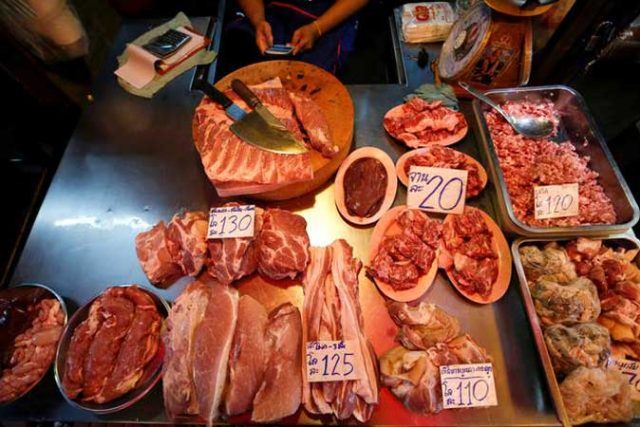
THAILAND has extended an import ban on live pigs and carcasses from the Philippines as an African Swine Fever (ASF) containment measure.
The import ban was originally set to end in late April but was extended to August due to the continued presence of ASF in the Philippines, Thailand said in a notification to the World Trade Organization Wednesday.
“This emergency measure is to protect the domestic livestock industry,” Thailand said.
The Philippine hog industry does not expect to be affected by the ban.
Edwin G. Chen, president of the Pork Producers Federation of the Philippines, said in a mobile message that its members do not export to Thailand.
Meat Importers and Traders Association President Jesus C. Cham said the same, noting that Thailand has a strong agriculture industry of its own.
Cases of ASF are still detectable in 19 barangays in the Philippines, the Bureau of Animal Industry said Tuesday, down from more than 2,700 affected barangays since August 2019.
Pork prices have soared due to the curbing of supply as a result of the ASF outbreak.
President Rodrigo R. Duterte last month approved a recommendation to temporarily reduce import duties on pork for a year to increase supply.
Under Executive Order No. 134, the tariff rates for pork products were reset to 10% for imports within the minimum access volume quota and 20% outside the quota for the first three months. The tariffs will rise to 15% for in-quota and 25% for out-of-quota pork imports between the fourth and 12th months.
The Samahang Industriya ng Agrikultura association wrote to the Tariff Commission in March seeking higher import duties, noting that importers were profiting from a tariff rate that it said has no impact on the retail price of prime pork cuts. — Jenina P. Ibañez
Design bids solicited for PNR Bicol project

THE Transportation department has started seeking bidders for the detailed design and construction contract of the China-funded Philippine National Railways (PNR) South Long Haul Project (Banlic to Daraga package).
“The Department of Transportation of the Republic of the Philippines intends to apply a loan to People’s Republic of China amounting to P142.481 billion being the approved budget of the contract to payments under the design and build contract for PNR South Long Haul Project (Package 1, Banlic to Daraga),” the department said in its invitation to bid.
“Bidders shortlisted by the government of the People’s Republic of China may obtain further information from the Department of Transportation,” it added.
The P175-billion PNR South Long Haul Project, also known as PNR Bicol, is a 639-kilometer railway system connecting Manila to Legazpi, Matnog, Sorsogon, and Batangas City.
The Transportation department said shortlisted bidders may obtain a complete set of bid documents on June 4 upon payment of the applicable fees.
A pre-bid conference will be conducted on June 11.
The Bids and Awards Committee Secretariat will accept bids on or before 10 a.m., June 25, 2021, at its office in Paco, Manila.
Bid opening will be conducted immediately after the deadline for submission of bids lapses.
The bidding format was described as “limited competitive bidding” using non-discretionary “pass/fail” criterion.
“Only those bids that passed the technical proposals criteria will be subjected to the second step of evaluation or the opening of financial proposals,” it said.
The department requires completion of the works within 36 months.
Bidders should have completed a contract similar to the project within the last 20 years.
The department, according to its website, expects partial operations in the second quarter of 2022, while full operability is expected in 2025.
The project, once completed, will support economic growth and benefit 100,000 passengers per day, the department said.
“It will cut travel time from Manila to Bicol from 12 hours via car to just six hours,” it added. — Arjay L. Balinbin